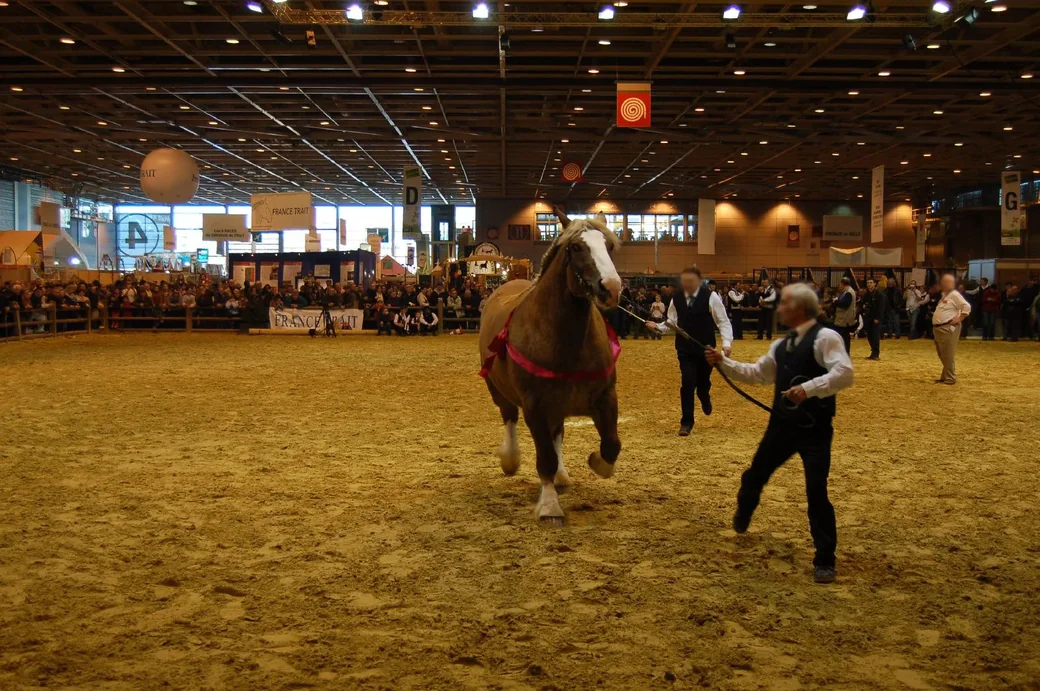
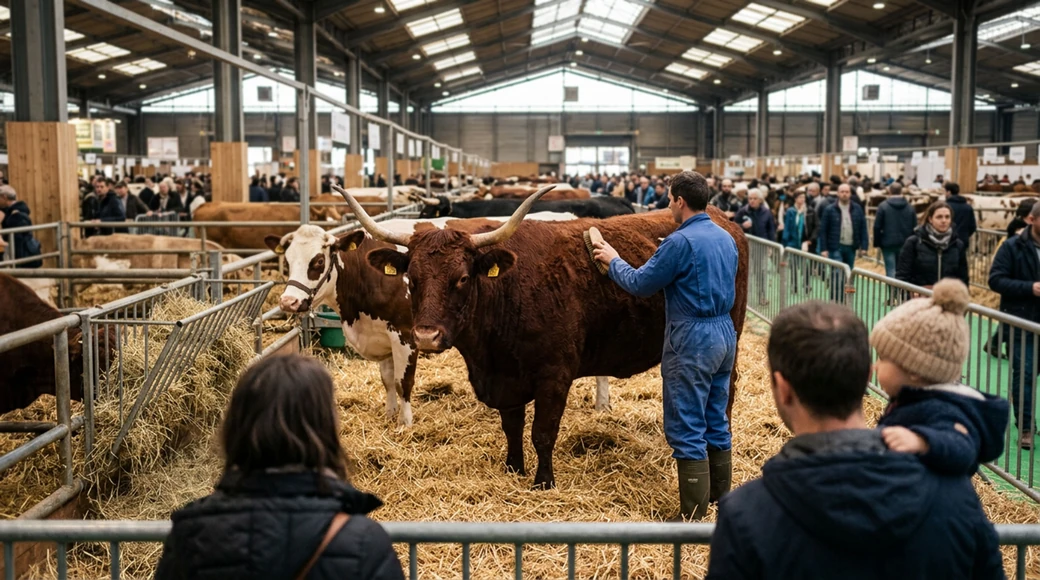
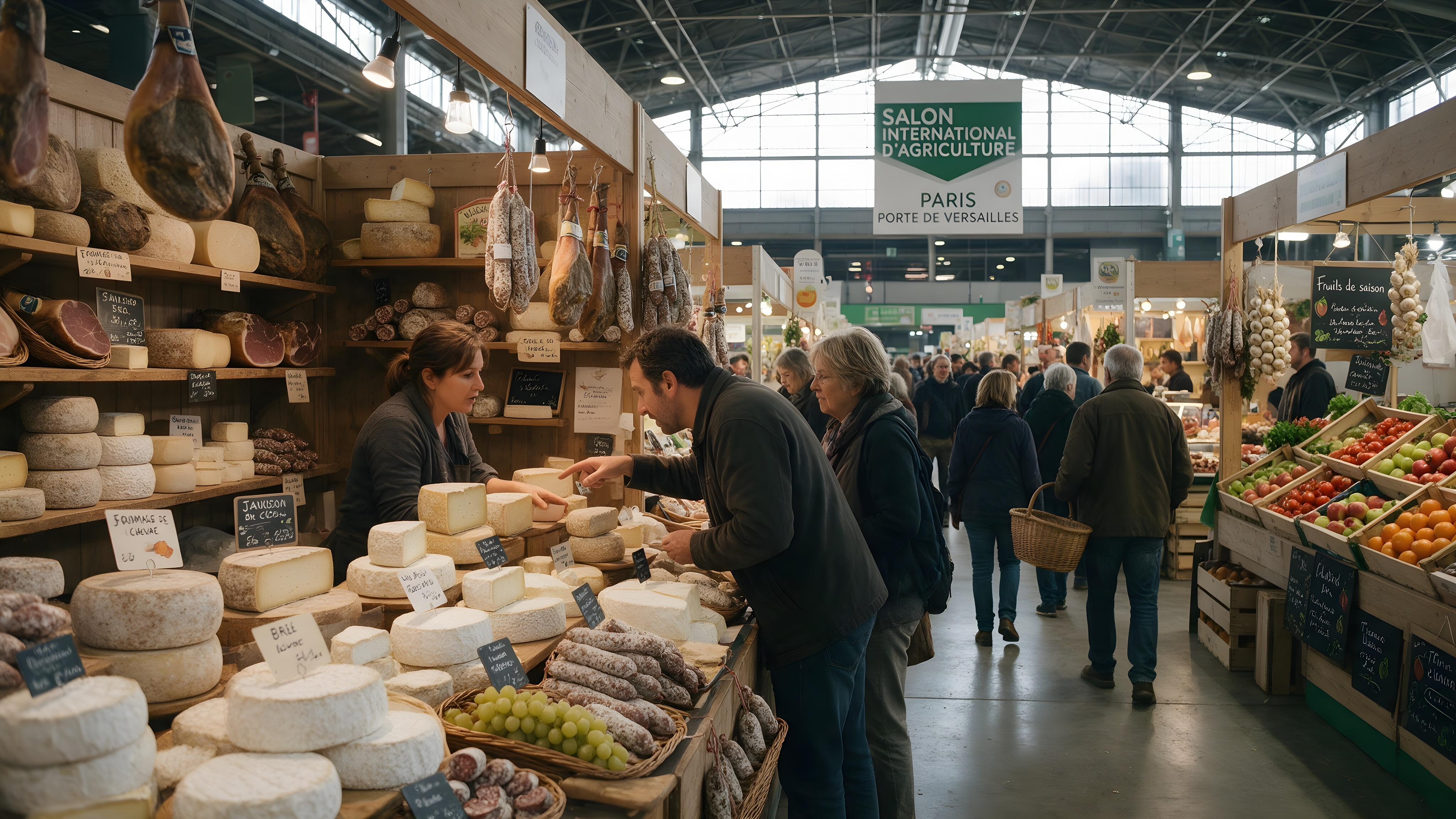
Paris International Agricultural Show, visitors walking among livestock pens and regional food stands inside the exhibition halls

Paris International Agricultural Show

ParisFeb 27, 2027 – Mar 7, 2027↻ Annual
Duration:9 daysType:
Harvest & Agriculture Festivals
Admission:From 17 EURLocationAnnual event — exact dates may vary each year

One of the world's great agricultural shows, held at Porte de Versailles in Paris. Nearly 4,000 animals, over 1,000 exhibitors, and lively halls of French regional food and wine typically draw around 600,000 visitors a year to this beloved Parisian institution.

About This Festival

What Is the Paris Agricultural Show?

The Salon International de l'Agriculture is France's great annual celebration of farming life, with roots reaching back to a livestock competition held in 1870 and earlier traditions dating to 1844. In a typical year it welcomes around 600,000 visitors, earning it the affectionate nickname “the biggest farm in France.” Long linked to state agricultural bodies overseeing France's major exhibitions, it sits somewhere between a trade fair, a farmers' showcase and a national institution, making it one of the most important agricultural events anywhere in the world.
The History of the Salon: From Poissy to Porte de Versailles

The story begins in 1844 with a competition for fattened animals in Poissy, west of Paris. In 1870, the event was formalized in the capital as the Concours Général Agricole, and in 1925 it moved permanently to the Parc des Expositions at Porte de Versailles. The modern Salon International de l'Agriculture as we know it today was launched in 1964, and it has grown steadily ever since. A cherished custom sees the French President and leaders of the country's political parties visiting the show, particularly in election years, to meet farmers and discuss agricultural issues face to face. Despite its rural subject, Paris has long embraced this show as one of its own great institutions.

When and Where to Find the Show

The show traditionally runs for about nine to ten days, straddling late February and early March each year. It takes place at Paris Expo Porte de Versailles, a sprawling exhibition complex in the 15th arrondissement, right at the southern edge of the city. Spread across seven pavilions on some 16 hectares, it is one of the largest indoor venues in Paris. Getting there is easy: Metro Line 12 stops directly at Porte de Versailles, and Tramway Lines 2 and 3 as well as Bus Lines 39 and 80 also serve the venue.

A Day at the Show: What to Expect

The show is organized around four thematic zones: livestock, food products, vegetable and crop production, and agricultural services, alongside colorful regional French pavilions and a handful of international country pavilions. The livestock on show spans eight species — cattle, sheep, goats, pigs, horses, donkeys, dogs and cats — representing well over 300 recognized breeds. Each edition also invites a different country as guest of honor, giving it a dedicated pavilion to showcase its own food and farming traditions alongside the French regions. A highlight of any visit is watching livestock judging competitions, where breeders present their finest animals for expert evaluation. Political tradition often adds extra buzz, as the French President and party leaders make their rounds through the halls. Families love it too: children can see, and sometimes gently interact with, farm animals up close. Each edition also crowns a particular breed as the show's prize animal and poster star, a tradition dating back to 2011 that puts one specific cow's face on posters, tickets and social media for months beforehand; the honor comes with a catch, since the chosen breeder must find time for a heavy schedule of media appearances in the run-up to the show.

Food and Tasting Halls: A Feast of French Regions

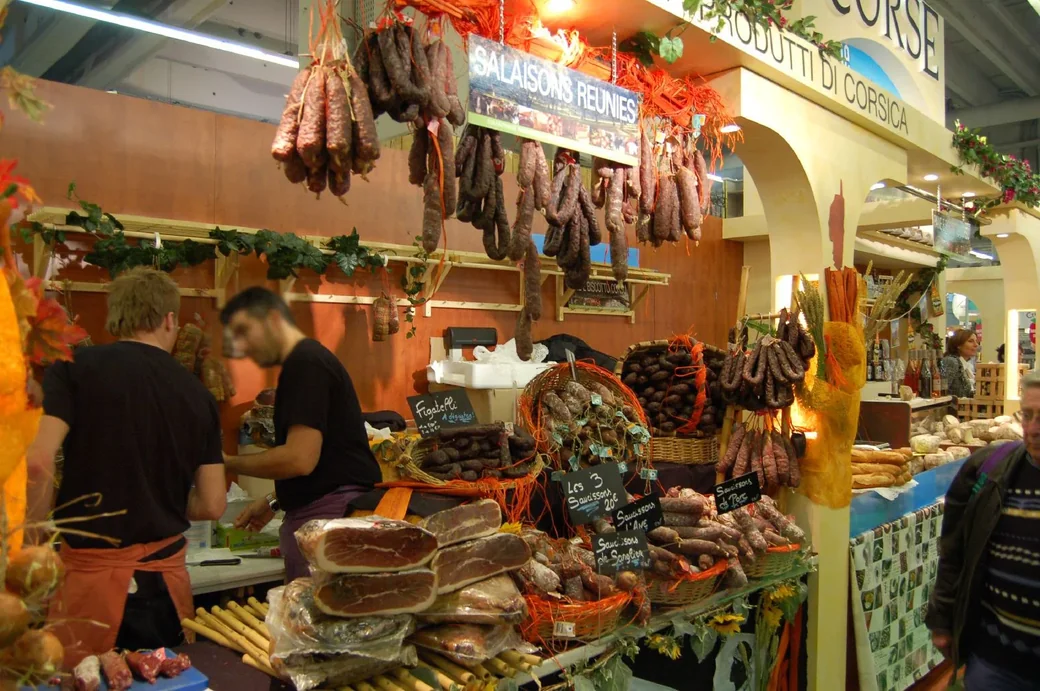
For many visitors, the food and tasting halls are the true heart of the show. Producers from every corner of France set up stalls piled with regional specialties, pouring wine and slicing into wheels of cheese and cured meats for visitors to sample before buying. It is a rare chance to taste your way across the country in a single afternoon, chatting with the very farmers and artisans who made what you are eating. Bring an appetite, and expect to leave with a bag full of treats from producers you would otherwise never have discovered.

Practical Visitor Guide

A ticket is required for entry, so plan to buy yours in advance. For the calmest experience, aim for a weekday morning, since weekends bring the biggest crowds. Set aside at least half a day, though many visitors happily spend a full day exploring all four zones. The entire show takes place indoors, so it is a great option whatever the weather is doing outside. The halls are large and geared toward general accessibility. Getting there is straightforward by Metro Line 12, tram, or bus, and the show is very welcoming for families with children.

Etiquette Around the Animals

The animals are the stars of the show, and a little courtesy goes a long way in keeping them calm and comfortable. Always ask the farmer or handler before touching an animal, and follow any instructions posted near the pens. Keep your voice low and movements gentle around livestock, since the halls can already be noisy and busy. If you want to take photos, be mindful with flash near the animals, as sudden bright lights can startle them. These small courtesies help make the experience pleasant for the animals, their handlers, and fellow visitors alike.

Where to Stay Near the Show

Hotels cluster in and around the 15th arrondissement, close to the Porte de Versailles convention district, making it easy to walk or take a short ride to the halls each morning. Because the show fills much of this district with visitors and exhibitors alike, it is wise to book your room well ahead of time. Staying more centrally in Paris is also a great option: with Metro Line 12 running directly to Porte de Versailles, you can base yourself almost anywhere along the line and reach the show with a single, direct ride.

What to Bring and How to Plan Your Visit

Comfortable walking shoes are essential, since the halls are enormous and you will easily rack up the steps moving between zones. Come hungry, ready to enjoy the tasting halls, and bring a sturdy bag or two for all the producer goods you will likely want to carry home. Both cash and card are useful to have on hand at the various stalls. Before you go, it is worth deciding which of the four zones matter most to you, since trying to see everything in one pass can feel overwhelming. First-time visitors often find that a full day, or even two shorter visits, gives them the most satisfying experience.

Insider Tips for a Better Visit

Weekday mornings are noticeably quieter than weekends, when the halls fill up fast with local families and enthusiasts. Opening days sometimes coincide with high-profile political visits, which can add a special buzz to the atmosphere, though you may notice extra security near the entrances on those occasions. Venture away from the main aisles to the smaller regional-producer stands, which tend to be far less crowded and just as rewarding as the bigger names. Finally, do not skip the livestock judging arenas: they are among the most photogenic and least touristed corners of the whole show.

Good to Know

Good to Know

This is widely regarded as one of the largest and most important agricultural shows anywhere in the world, an especially remarkable feat given that it unfolds entirely indoors in the middle of a major capital city. Nearly 4,000 animals are brought on site for the occasion, transforming the exhibition halls into a genuine working farm for over a week. The near-institutional tradition of presidential and political visits adds a layer of national significance rarely seen at other agricultural fairs, reflecting just how deeply farming and food remain woven into French public life.

Practical Information

When

Late winter into early spring, in the last days of February and first days of March, for about nine days each year.

Where

Paris Expo Porte de Versailles, in the 15th arrondissement of Paris.

Cost

Paid entry; a ticket is required for all visitors (exact rates are set by the organizer).

Tips

Go on a weekday morning if you want smaller crowds, and wear comfortable shoes as the halls are vast.

About this show

Tracing back to a farming competition first held in 1844 and formally established in 1870, this is often called “the biggest farm in France,” a nickname earned by its nearly 4,000 animals and true countryside atmosphere inside the city.

Accommodation and hotel options during Paris International Agricultural Show

Accommodation and hotel options around the event venue, with their prices, are shown by Stay22 as a map and a list. Cookies are used. Your consent is remembered on every page; you can turn it off at any time in the cookie settings.

Keep Exploring

Travel essentials for Paris

Flights, transfers, car rental, eSIM and insurance — compare your options

Flights

Find the best route

Transfers

Airport & city ground transport

Car Rental

Drive at your own pace

eSIM

Stay connected on arrival

Insurance

Cover your trip