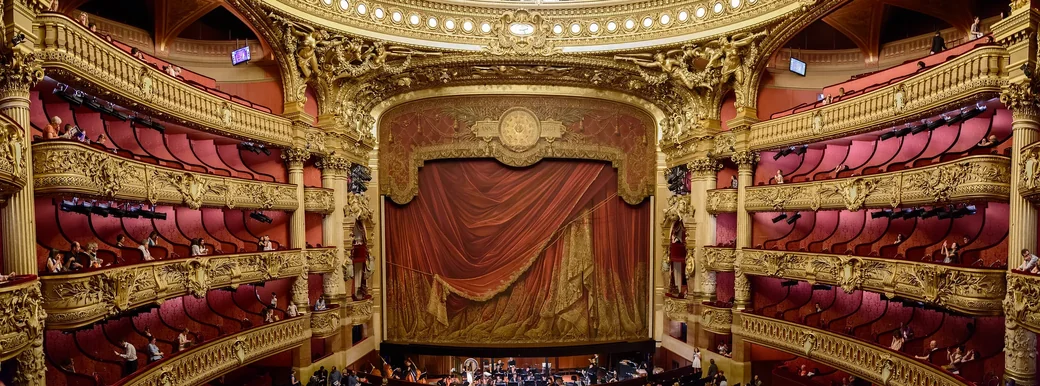
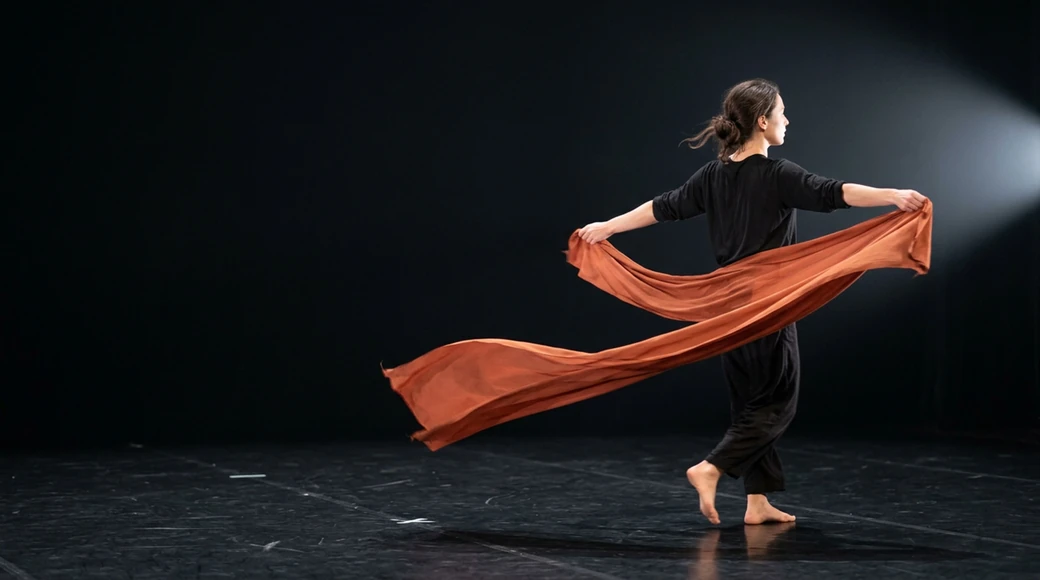
Festival d'Automne in Paris, an audience watching a contemporary performance on stage during the autumn arts festival

Festival d'Automne à Paris

ParisSep 11, 2026 – Dec 19, 2026↻ Annual
Duration:100 daysType:
Music, Stage & Performance Events
Admission:From 8 EURLocationAnnual event — exact dates may vary each year

Paris's landmark contemporary-arts festival, staging theatre, dance, music, opera, visual arts and cinema across roughly sixty venues citywide every autumn. Founded in 1972, it has grown into one of Europe's most influential multidisciplinary festivals.

About This Festival

What Is the Festival d'Automne à Paris?

The Festival d'Automne à Paris is one of the city's flagship contemporary-arts events, bringing together theatre, dance, music, opera, visual arts and cinema in a single autumn season. Founded in 1972, it has no single home: each edition unfolds across roughly sixty partner venues throughout Paris, presenting more than fifty productions that range from bold new commissions to major international touring works. Its multidisciplinary format and consistently ambitious programming have made it a fixture of the European cultural calendar. More than 175,000 seats are offered to the public each season.
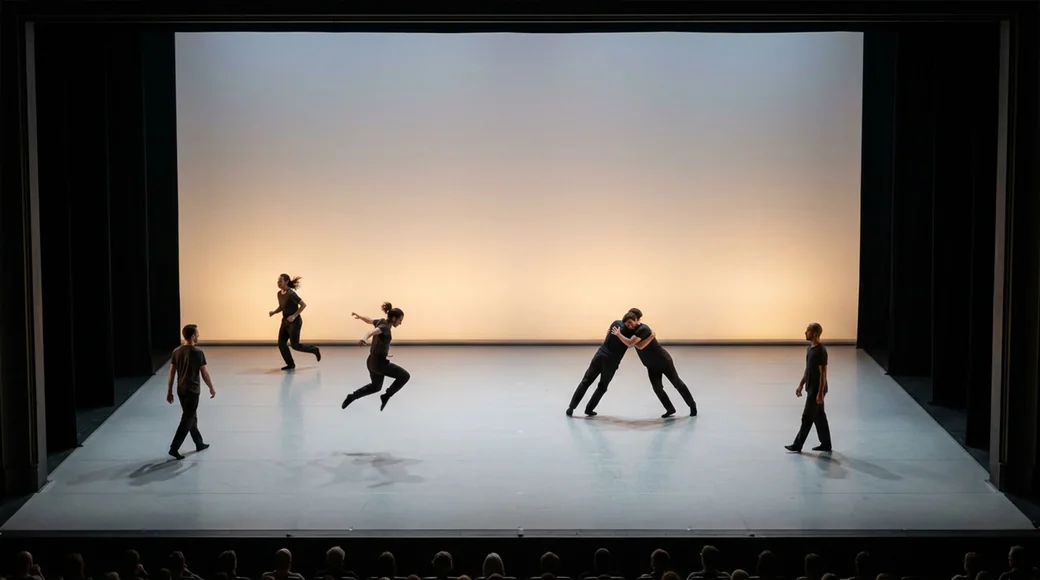
The History of the Festival d'Automne à Paris

The festival was founded in 1972 by Michel Guy, with the backing of Culture Minister Jacques Duhamel, who wanted Paris to have a major contemporary-arts festival able to rival those of Berlin, Vienna, Amsterdam and Venice. Michel Guy led the festival until his death in 1990; Alain Crombecque took over in 1992 and directed it until 2009. Since 2011, Emmanuel Demarcy-Mota has been general director, with Francesca Corona as artistic director since 2022. What began with small, specialist audiences has grown over the decades into an internationally recognized institution, now combining public support with private patronage to sustain its ambitious programming.

A Festival Without Walls: Venues Across Paris

Held every year from September to December, the Festival d'Automne à Paris has no single venue. Instead, its season unfolds across roughly sixty partner theatres, museums and historic sites throughout Paris, letting each production find the space that suits it best. Landmark partner venues over the decades have included the Théâtre de la Ville, the Bouffes du Nord, the Centre Pompidou, the Sainte-Chapelle and the Théâtre de l'Odéon, among many others. Visitors should expect to travel between different neighborhoods over the course of the season rather than returning to one address.

How the Festival d'Automne Season Unfolds

Rather than a single continuous event, the Festival d'Automne is a curated season: a rotating lineup of theatre, dance, music, visual arts and cinema presented as a sequence of individual productions across its partner venues. Programming favors bold, contemporary work over familiar repertoire, and the festival has a long history of staging unconventional, site-specific productions that make full use of the unusual spaces it performs in. Visitors typically pick and choose individual shows that interest them rather than following a single daily schedule.

Practical Tips for Visiting the Festival d'Automne

Tickets for the Festival d'Automne are booked separately for each show, directly through the presenting venue rather than a single central box office, so it's worth checking each production's own booking page. Many venues offer a special discounted rate for visitors under 30 and students, with no booking fee. Because demand for popular and site-specific shows can be high, booking well ahead is recommended. As the program brings together work from many countries, some productions are performed in their original language, so check the surtitle situation for each show if you don't speak French.

Legendary Artists Who Shaped the Festival d'Automne

Over more than five decades, the Festival d'Automne has hosted many of the artists who defined contemporary performing arts. Choreographer Merce Cunningham and director-designer Robert Wilson both featured in the very first 1972 edition and became festival regulars, while director Peter Brook developed long-running work at the Bouffes du Nord. Directors Patrice Chéreau, Tadeusz Kantor and Giorgio Strehler, composers Pierre Boulez, John Cage and Iannis Xenakis, and other pioneering figures have all left their mark on its stages, cementing the festival's reputation as a home for era-defining contemporary work.

Insider Tips for Festival d'Automne Regulars

Regular festival-goers keep an eye out for the season's full lineup announcement each year, since the program is unveiled well ahead of opening and includes many productions that only run for a handful of dates. Smaller and site-specific shows, staged in unusual or intimate venues, tend to sell out fastest, so early booking pays off. Because the festival unfolds across dozens of venues citywide, following it from show to show is also a rewarding way to explore a different Paris neighborhood with each outing.

Good to Know About the Festival d'Automne à Paris

The Festival d'Automne à Paris is widely regarded as one of Europe's most influential contemporary performing-arts festivals, built on its founders' original ambition to give Paris a festival worthy of standing alongside those of Berlin, Vienna, Amsterdam and Venice. Over more than fifty years, it has served as a launchpad and creative home for major twentieth- and twenty-first-century artists across theatre, dance, music and visual art, many of whom premiered or developed landmark work within its season.

A Festival That Owns No Theatre — and Why That Matters to You

The single most important thing to understand about this festival is structural: it has no building. Since its creation it has never owned a venue, and instead produces or co-produces each work with the theatre, museum or concert hall that hosts it. That is why there is no festival site to visit, no central box office and no wristband. Each performance is sold by the venue staging it, on that venue's own website and at its own price, which is also why ticket prices for the same festival can differ considerably between a small hall and a major opera house. Practically, this means you cannot buy into the festival as a whole: you choose individual works first, then book each one separately, and the earliest-selling shows are gone long before the season begins.

The Portraits: The Best Way In for a First-Time Visitor

A programme of seventy-odd projects and hundreds of performances across dozens of venues is impossible to approach by browsing, and visitors who try usually end up picking whatever is nearest and leaving unconvinced. The festival provides its own solution: each edition is built around a small number of Portraits, cycles devoted entirely to one artist or company, with several of their works presented across different venues over the season. Choosing one Portrait and seeing two or three pieces within it gives a coherent experience rather than a random sample, and it is how regular attendees actually use the festival. A recent edition, for example, built Portraits around a Moroccan choreographer, a Canadian composer and an Australian theatre company. The alternative entry point is a single spectacular commission, of which each season has one or two.

September, October, November: Three Different Festivals

Running from September to December, with some exhibitions continuing into January, the season is long enough that when you come changes what you get. September is the opening stretch, lighter in programming and easier to book into at short notice, and it overlaps with the wider reopening of the Paris cultural season, so there is plenty happening outside the festival too. October is the densest month, when the major commissions and the Portrait cycles are usually concentrated and when tickets are hardest to obtain. November and early December are quieter in the city generally but still full in the programme, which makes them the best value: the same calibre of work, cheaper flights and hotels, and shorter queues everywhere else in Paris. The one thing all three share is that booking well ahead is what determines what you actually see.

Will You Understand It? Language, Surtitles and Safe Choices

This is an international festival, which means much of the theatre programme is performed in languages other than French, and some of it in languages that are not widely spoken anywhere. Surtitling is common but not universal, and where it exists it is usually in French only, occasionally in English. For a visitor who reads neither, the text-based theatre is a real risk. The reliable parts of the programme are the ones where language is not load-bearing: dance, contemporary music, performance and the visual-arts exhibitions, all of which make up a substantial share of any edition and are where the festival's international reputation largely rests anyway. If you do want theatre, check the individual venue's page for the performance language and surtitle language, since the festival's own listing does not always make this obvious.

If Everything Is Sold Out: The Exhibitions Nobody Books

Performances sell out, but the visual-arts strand does not work that way, and it is the part visitors overlook. Alongside the staged programme each edition includes exhibitions and installations hosted in museums and art centres, and unlike a play or a concert these run continuously for weeks rather than on two or three specific nights. There is no single performance to miss, no booking window to catch, and in most cases you simply walk in during normal opening hours on whatever day suits you. For anyone who has arrived in Paris to find the show they wanted is unavailable, this is the reliable fallback: the same festival, the same curatorial thinking, no ticket race. It is also the most flexible option for a short trip, since an exhibition can be fitted into an afternoon between other plans rather than dictating an entire evening.

Accessibility Varies by Venue, Not by Festival

Because the festival has no premises of its own, it also has no single accessibility standard, and this catches people out. The venues span everything from recently built cultural centres with full step-free access, lifts, adapted seating and hearing loops, to nineteenth-century theatres where the cheaper seats are up several flights of stairs and there is no lift at all. Suburban partner venues, often purpose-built in the 1970s and 1980s, tend to be markedly better equipped than the historic halls in the centre. The rule is simple: accessibility questions go to the venue, not to the festival, and wheelchair spaces at the smaller theatres are limited in number and should be reserved at the same time as the ticket rather than mentioned on arrival.

Getting Home After a Suburban Venue

The partner venues are spread well beyond central Paris, across the departments that ring the city, and this is where planning most often goes wrong. A performance that starts at eight and runs two hours without an interval can finish close to the point where the last suburban train or the final metro of the night becomes a real constraint, and a missed connection in an outer suburb is an expensive taxi rather than a short walk. The venues are used to this and generally schedule with the network in mind, but the margin can be narrow. Check the last departure from the nearest station before booking anything outside the city proper, and treat a late-finishing show in an outer department as a decision about the whole evening rather than just the ticket.

Where to Stay: Let the Tickets Decide the District

This is the one Paris festival where the usual advice is inverted: rather than picking a district and then finding events nearby, book the performances first and choose accommodation afterwards, because the venues are scattered and there is no centre of gravity to be near. In practice, a base with good late-evening transport matters more than proximity to any one theatre, which points to the central arrondissements along the main metro axes rather than a specific quarter. Autumn is a comfortable time to be in the city: September and October are shoulder season, November is one of the quietest and cheapest months of the year, and the whole central range from hostels to apartments is available without pressure. Booking a few weeks ahead is normally enough, unlike the tickets themselves.

Practical Information

When

Held every year from September through December, in a season that unfolds over several months each autumn.

Where

The festival has no single venue. Its season is spread across roughly sixty partner theatres, museums and historic sites throughout Paris and the wider region, with each show taking place at its own address.

Cost

Tickets are sold per show rather than as one all-access pass. Most venues offer a special discounted rate for visitors under 30 and students, with no booking fee.

Tips

Book early for smaller and site-specific shows, which tend to sell out fastest. If you don't speak French, check the language and surtitle details for each production before booking.

About this festival

Founded in 1972 to give Paris a contemporary-arts festival to rival those of Berlin, Vienna, Amsterdam and Venice, it has since become one of Europe's most influential multidisciplinary festivals, hosting many of the era's defining artists.

Accommodation and hotel options during Festival d'Automne à Paris

Accommodation and hotel options across Paris, with their prices, are shown by Stay22 as a map and a list. Cookies are used. Your consent is remembered on every page; you can turn it off at any time in the cookie settings.

Keep Exploring

Travel essentials for Paris

Flights, transfers, car rental, eSIM and insurance — compare your options

Flights

Find the best route

Transfers

Airport & city ground transport

Car Rental

Drive at your own pace

eSIM

Stay connected on arrival

Insurance

Cover your trip