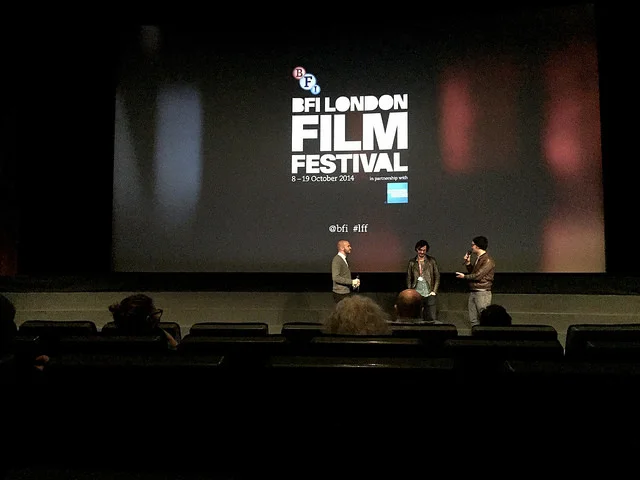
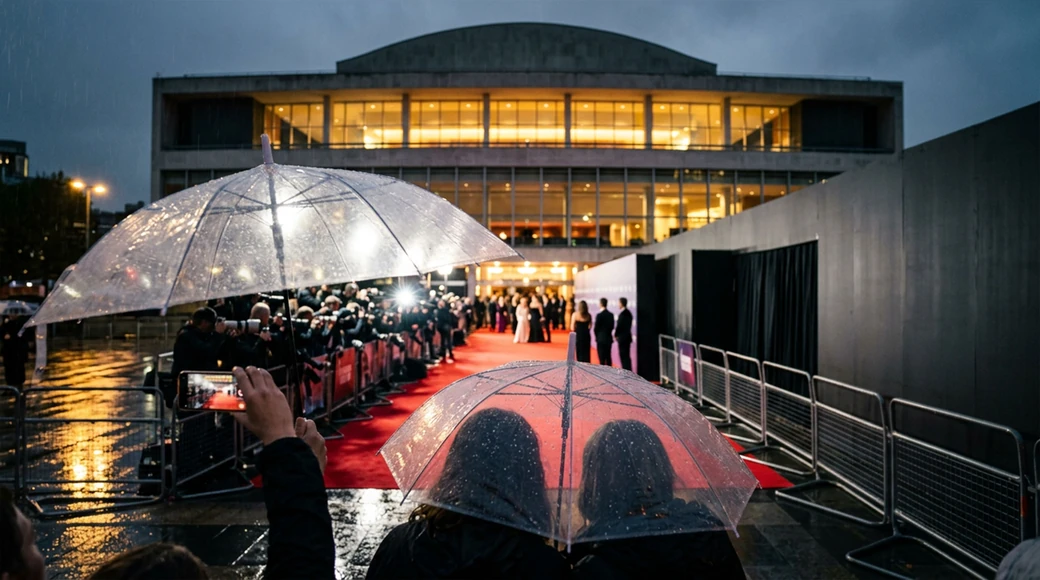
BFI London Film Festival, with a red carpet premiere in the glow of cinema lights and film lovers gathering beneath festival banners on an autumn evening

BFI London Film Festival

LondonOct 7, 2026 – Oct 18, 2026↻ Annual
Duration:12 daysType:
Film, Literature & Visual Arts Festivals
Admission:From 6 GBPLocationAnnual event — exact dates may vary each year

London's flagship public film festival, run by the BFI: red-carpet galas at the Royal Festival Hall, hundreds of films, talks and immersive works across the South Bank and the West End, plus partner screenings in other cities.

About This Festival

BFI London Film Festival: What It Is and Who Can Attend

The BFI London Film Festival, usually shortened to LFF, is one of the biggest public film events in the country. It is run by the BFI (British Film Institute), a cultural charity and the lead organisation for film and the moving image. Every October it fills the South Bank and parts of the West End with new features, documentaries, shorts, series, restored classics and immersive works from around the world. Almost every title is shown to local audiences for the very first time, and many screenings are introduced by the people who made the film. Despite the red-carpet glamour it is not an industry-only event: you do not need accreditation, contacts or a stylist, and a large share of each year's audience are first-timers who come for a single screening. Think of it as a "festival of festivals", where the most talked-about films from other major festivals meet fresh world premieres. Official information and booking are at bfi.org.uk/london-film-festival and whatson.bfi.org.uk/lff.
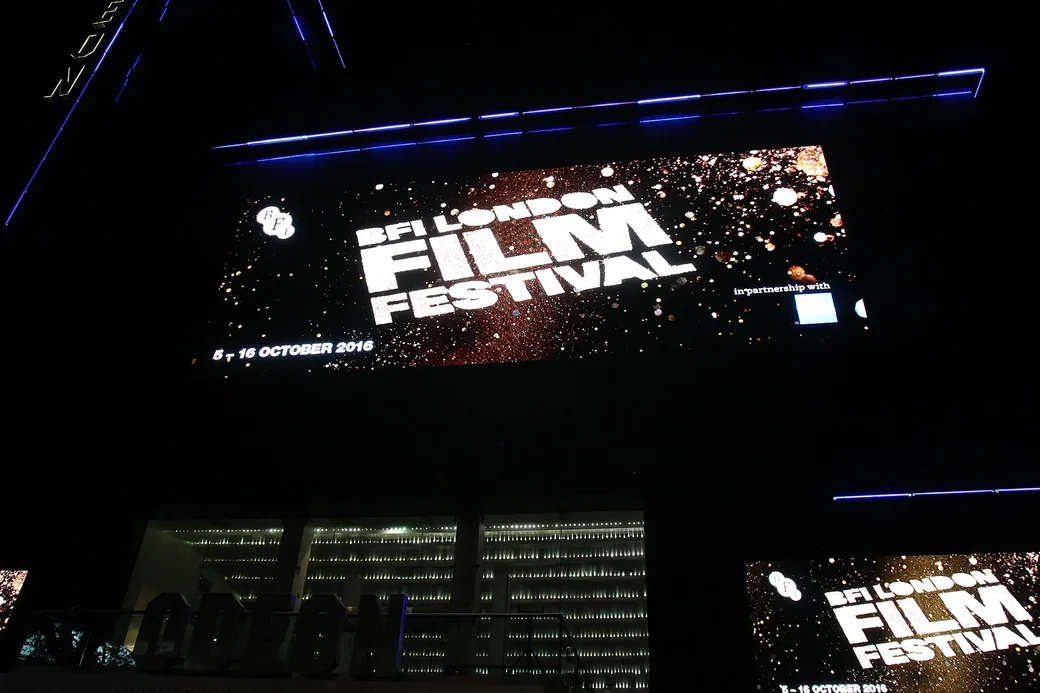
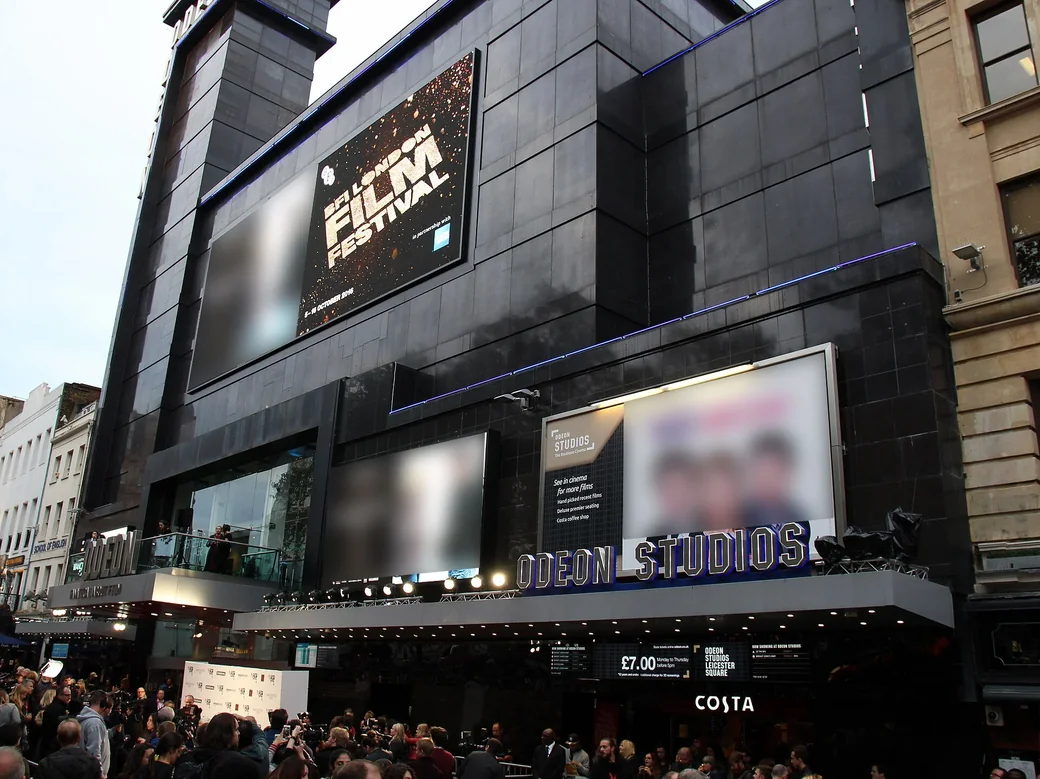
How the London Film Festival Began: From a Dinner Table to the South Bank

According to the story the BFI itself tells, the idea took shape in 1953 at a dinner party in the home of Sunday Times film critic Dilys Powell, where the guests, among them BFI director James Quinn, lamented that London had no film festival of its own. Quinn went on to launch one in 1957 at the brand-new National Film Theatre under Waterloo Bridge, today's BFI Southbank, a cinema that Princess Margaret had opened only a day earlier. The first edition was sponsored by The Sunday Times and conceived as a festival of festivals: about fifteen films that had already impressed audiences elsewhere. It opened with Akira Kurosawa's Throne of Blood and also included Ingmar Bergman's The Seventh Seal, Federico Fellini's Nights of Cabiria, Elia Kazan's A Face in the Crowd and Satyajit Ray's Aparajito. Nine of that first selection later reached ordinary cinemas.

A Timeline of the London Film Festival: Milestones From 1957 to Today

The festival has grown with the city. In 1958 the Sutherland Trophy was introduced, and its first winner was Yasujirō Ozu's Tokyo Story. In 1960 Richard Roud became festival director and the first locally produced feature, Karel Reisz's Saturday Night and Sunday Morning, was shown; a section for debuts and lesser-known work, London Choices, followed in 1965. Feature films directed by women entered the programme in 1967 with Shirley Clarke, Agnès Varda and Věra Chytilová. In 1981 the festival travelled beyond London for the first time, and from 1984 director Derek Malcolm widened its audience with larger venues and the annual Surprise Film. Opening and closing galas became fixtures from 1986. A formal competition and themed strands arrived in 2012, screenings later spread across the whole country, and in 2020 the festival adapted with a largely online edition. Today immersive art and video games sit alongside the films.

Fun Facts and Legends About the London Film Festival

A few details make the story memorable. The Surprise Film tradition, begun in the 1980s, means that one screening stays secret until the lights go down; for the festival's 50th anniversary the organisers went further and staged fifty surprise screenings across London. During its first sixty years the programme included 27 films by Rainer Werner Fassbinder, 19 by Satyajit Ray and 18 by Jean-Luc Godard. The Sutherland Trophy is named after the BFI's patron, the 5th Duke of Sutherland, and its winners have included Ray, Bernardo Bertolucci, Fassbinder, Godard and Michelangelo Antonioni. According to a much-repeated tale, François Truffaut turned up for the screening of The 400 Blows without a ticket; it is told with affection rather than proof. And the Royal Festival Hall, where today's galas (red-carpet premiere evenings) take place, was the first major public building completed after the Second World War.

When Is the BFI London Film Festival? Calendar, Booking Phases and Planning

The festival takes place every October and lasts twelve days, normally from a Wednesday to the Sunday of the following week, so it covers two weekends. The exact dates shift a little from year to year, which is why the official website is always the first stop. The build-up follows a steady rhythm. First the competition titles are announced, then the full programme is revealed a few weeks before the festival, and ticket sales open in phases: BFI Patrons (the top supporter tier) first, BFI Members (the membership scheme) next and the general public after that. Extra tickets are released later, and new ones keep appearing on the website during the festival itself. If you want the widest choice of galas and talks, join in during the membership phase or decide early; if you are flexible, the last-minute routes described in the ticket tip work surprisingly often. The festival awards are announced on the final day.

BFI London Film Festival Venues: South Bank and West End Guide

The festival has two main clusters. On the South Bank, BFI Southbank (Belvedere Road, SE1 8XT) is the hub, tucked beneath Waterloo Bridge with a bar, café, shop and library. Next door in the Southbank Centre, the Royal Festival Hall (SE1 8XX), a Grade I listed concert hall with around 2,700 seats, opened in 1951 as part of a national festival celebrating postwar recovery and now hosts the red-carpet galas. A few minutes away on the Waterloo roundabout stands BFI IMAX (1 Charlie Chaplin Walk, SE1 8XR), whose 26 by 20 metre screen is the largest in the country. In the West End, screenings take place at Curzon Soho (99 Shaftesbury Avenue), Prince Charles Cinema (7 Leicester Place), Vue West End (3 Cranbourn Street) and the ICA (The Mall). Immersive installations use changing venues, and the press and industry screenings at Picturehouse Central are not open to the public. Waterloo is the key station for the South Bank.

LFF Programme Explained: Galas, Strands, Special Presentations and the Surprise Film

The programme looks vast but follows a clear logic. Galas (red-carpet premieres) take place at the Royal Festival Hall and include the Opening and Closing Night Galas plus headline evenings such as the Mayor of London's Gala and the BFI Patrons' Gala. Special Presentations spotlight new work in areas such as documentary, archive restoration, experimental moving image, series, immersive storytelling and the BFI Flare presentation, a showcase of LGBTQIA+ cinema. Most films, however, sit in thematic strands (themed groupings of films): Love, Debate, Laugh, Dare, Thrill, Cult, Journey, Create, Experimenta, Family and Shorts. If you are unsure what to book, simply pick the strand that matches your mood. Add the Screen Talks (long interviews with leading filmmakers and actors), the Q&As (question-and-answer sessions) that follow many screenings and the unannounced Surprise Film, and you have the complete picture.

LFF Awards Explained: Best Film, Sutherland Award, Grierson Award and Audience Awards

Since 2012 the festival has run a formal competition. The Official Competition selects the Best Film, honouring inspiring, inventive and distinctive filmmaking. The First Feature Competition gives the Sutherland Award to the most original and imaginative directorial debut; it descends from the Sutherland Trophy first presented in 1958, and its list of winners reads like a history of world cinema. The Documentary Competition gives the Grierson Award, named after documentary pioneer John Grierson and presented with the Grierson Trust for non-fiction films of integrity, originality and cultural significance. A Short Film Competition recognises short-form work with a unique cinematic voice. Finally the public has its say: the Audience Awards for best feature, best short and best homegrown discovery are voted on by people who attend. Juries are announced in advance, and the winners are revealed on the last day of the festival.

How to Watch the London Film Festival Red Carpet Without a Ticket

Gala premieres at the Royal Festival Hall are the glamorous face of the festival, and you can enjoy the atmosphere even without a film ticket. Dedicated crowd-viewing areas are reached with wristbands handed out in person on the morning of each premiere at the Belvedere Road entrance of the Southbank Centre. Numbers are limited and given out on a first-come, first-served basis, and you must be back at the entrance by the time stated on the day or risk losing your place. A wristband only gets you into the viewing area, not into the screening itself, and the festival cannot promise that any guest will sign autographs or pose for photos, because the film team's attendance can change. Visitors with access needs can apply for the accessible viewing area through a ballot. Everyone is asked to treat staff and fellow fans with respect, and security can remove anyone who does not.

How to Book London Film Festival Tickets: Phases, Standby Queue and Last-Minute Tips

Tickets are sold online (log in first so that prices and on-sale times are visible), by phone and in person at the BFI Southbank box office. Booking opens in phases for BFI Patrons and Members before general sale, and a BFI 25 and Under account for ages 16 to 25 should be set up before you book. Concessions exist for several groups, such as seniors, students and some benefit recipients, and proof of eligibility is required. There are no exchanges or refunds, and a cap applies to resale prices (the BFI can cancel bookings that break it), so buy only from the official channel. If a screening looks sold out, do not give up: new tickets are released online on the morning of the day, extra batches appear at set times, and a standby queue (a last-minute waiting line) forms at BFI Southbank about thirty minutes before the start, with tickets released roughly fifteen minutes before. At other venues, queue about fifteen minutes before. Repeat screenings of gala titles, usually in the daytime, are another good way in. Rules can change, so check the official booking page. In the early booking phase a limit per customer applies to the number of tickets for each film, concessions generally do not cover Royal Festival Hall screenings or Screen Talks (long interviews with leading filmmakers), and some benefit recipients can book reduced on-the-day tickets after signing up in person at the box office with two documents.

LFF for Free, Screen Talks and BFI Player: Enjoy the Festival Beyond the Screenings

You do not need a cinema ticket to feel part of the festival. LFF for Free (the festival's events series open to all) is a programme of dozens of events at BFI Southbank: illustrated talks, panel discussions, live podcast recordings, film-publishing meetups at the BFI Reuben Library, short film showcases, gaming, family workshops and DJ nights in the BFI Bar for adults. Booking is recommended, entry is first come, first served, and a reservation does not guarantee a place because the events are deliberately over-booked. Screen Talks are longer interviews with leading directors and actors, and many can be watched afterwards on the BFI's YouTube channel. Back home, BFI Player (the BFI's online streaming platform) offers festival favourites and short films online. Film professionals have their own parallel Industry Forum (a forum for film professionals), with talks, panels and showcases for accredited delegates. Families have a dedicated Family strand (a group of films for young audiences), and school groups from primary to upper-secondary age can book special screenings and talks.

Accessibility at the BFI London Film Festival: Access Tickets, Relaxed Screenings and Step-Free Venues

The festival publishes a dedicated access programme. Look for screenings with audio description, descriptive subtitles, BSL interpretation and live captioning, as well as Relaxed screenings with a more flexible atmosphere. Access tickets, including wheelchair spaces, aisle seats and seats with a clear view for lip-reading or for a BSL interpreter, are booked through a dedicated access line or in person, and they are kept aside even when general tickets sell out. A companion ticket can be requested for guests who need support, with proof such as a CEA Card (a cinema companion card) or an Access Card. Almost every venue has step-free access, but check each venue page. The Sunflower lanyard (the cord worn to signal a hidden disability) is recognised, and Front of House staff (the venue's visitor-facing team) can help if you need a quiet moment. There is an accessible red-carpet viewing area allocated by ballot, the digital brochure works with screen readers, and every film page carries content advice, age ratings and flashing-image warnings.

London Film Festival Etiquette: Dress Code, Q&As and Common Visitor Mistakes

The tone is relaxed: there is no dress code, even at the red-carpet Galas, so wear whatever is comfortable or dress up if you like. What matters is timing. Unlike a regular cinema, festival screenings start at the advertised time, and arriving early lets you catch the introductions by the filmmakers. Switch your phone off, never film the screen and keep spoilers to yourself, since many titles are seen publicly for the first time. Stay for the Q&A (the question-and-answer session with the team) whenever you can. Common mistakes include planning back-to-back films on the South Bank and in the West End without allowing travel time, forgetting to check each film's venue, not logging in before browsing and expecting autographs at the red carpet. Useful festival words: Gala (red-carpet premiere), Strand (themed group of films), Standby (last-minute queue), Q&A and Screen Talk (long interview).

Insider Tips for the London Film Festival: Planning Your Days, Transport and Quiet Corners

Plan two or three films a day rather than five, and group screenings by area so that you are not criss-crossing the river. Waterloo station serves BFI Southbank, the Royal Festival Hall and BFI IMAX; for the West End, the Leicester Square and Piccadilly Circus areas are your anchors. Contactless cards and phones work on public transport, and a power bank helps on long days. October weather in London is changeable, so carry a light waterproof. Between films, the BFI Southbank foyer has a café and bar, and the BFI Reuben Library is a calm place to review your schedule. Right outside, under Waterloo Bridge, the South Bank Book Market sells second-hand books, maps and prints; it keeps daily hours but may close in bad weather or around red-carpet events. For photos, the riverside walk and the arches of Waterloo Bridge, the cinema's own roof, make the best backdrop. Keep valuables close in crowded spots such as Leicester Square, ask Front of House staff if you lose something, and in an emergency call 999 or 112.

LFF Expanded, LFF on Tour and Similar Festivals: Beyond the South Bank

The festival reaches well beyond the cinema screen. LFF Expanded presents immersive art, virtual and extended reality, AI-driven installations and video games, often in a VR lounge at BFI Southbank and a games lounge at BFI IMAX, with extra venues that change from year to year. Outside London, LFF on Tour sends a selection of festival titles, and sometimes a talk, to partner cinemas in cities such as Manchester, Edinburgh, Glasgow, Cardiff, Belfast, Birmingham, Bristol and Newcastle while the London screenings run; the list of partners changes a little each year. The festival also belongs to the autumn circuit of big film festivals, so many titles you read about from Venice or Toronto reappear here. For a similar experience earlier in the year, BFI Flare, the BFI's LGBTQIA+ film festival, takes place in London. Combine your visit with a stroll along the river and the neighbouring National Theatre.

Famous Films and Filmmakers in London Film Festival History: From Kurosawa to Lady Bird

Over the decades the festival has hosted much-discussed work. In 1959 it screened The 400 Blows; in 1962 audiences saw Roman Polanski's first feature, Knife in the Water, and Jean-Luc Godard's Vivre sa vie, and the first midnight matinee was held. Lindsay Anderson's If.... had its world premiere as the closing film in 1968, and Mike Leigh's first feature, Bleak Moments, premiered in 1971. Gremlins opened the 1984 edition, followed a year later by Kurosawa's Ran. In 1990 Jackie Chan's Armour of God II: Operation Condor had its world premiere here, and in 2009 Wes Anderson's first animated feature, Fantastic Mr. Fox, opened the festival. The Surprise Film (a secret screening whose title is revealed only when it starts) has unveiled titles such as Birdman in 2014 and Lady Bird in 2017. Screen Talks (long interviews with leading filmmakers and actors) have welcomed speakers including Chloé Zhao, Tessa Thompson and Yorgos Lanthimos. Because each year's guests are announced only a few weeks ahead, check the official website for the current line-up.

Where to Stay and How to Get Around During the London Film Festival: Waterloo, South Bank and West End

Base yourself near the South Bank and most screenings are within walking distance. Waterloo is the key hub for BFI Southbank, the Royal Festival Hall and BFI IMAX: it has national rail services and four lines of the Tube (London's underground railway): Bakerloo, Jubilee, Northern and Waterloo & City. Hotels around Waterloo, the South Bank and Southwark keep you close to the galas; in recent editions the festival's official hotel partner has been Sea Containers London, roughly 700 metres along the river from BFI Southbank. If your plans centre on the West End cinemas, the Leicester Square, Piccadilly Circus and Soho areas put Curzon Soho, Prince Charles Cinema, Vue West End and Picturehouse Central within a short walk. The two clusters lie on opposite sides of the Thames, so allow around 25 to 30 minutes on foot between them, or take the Tube. The South Bank is a popular area, so book accommodation early, and check TfL (Transport for London, the city's transport authority) for service changes before late-evening journeys home.

Practical Information

When

Every October, over about twelve days, normally from a Wednesday to the Sunday of the following week. The line-up is revealed a few weeks beforehand and the exact dates change slightly each year, so check the official website before you plan.

Where

The festival is based on the South Bank: BFI Southbank (Belvedere Road, SE1 8XT), the Royal Festival Hall (Southbank Centre, Belvedere Road, SE1 8XX) and BFI IMAX (1 Charlie Chaplin Walk, SE1 8XR), all close to Waterloo station. More screenings take place in the West End at Curzon Soho, Prince Charles Cinema, Vue West End and the ICA.

Cost

Tickets are sold screening by screening. Weekday matinees in the London cinemas are the cheapest standard slot, evenings and weekends cost more, and a free BFI 25 and Under account (ages 16–25) brings the price down to the lowest tier. Gala premieres sit above the standard rate, the Opening and Closing Night Galas highest of all, with Special Presentations, Screen Talks and the Surprise Film in between. Family and Relaxed screenings are at the lower end. LFF for Free events cost nothing but still need to be booked. Current amounts are shown in the price fields of this page and change every year.

Tips

Log in before browsing so that prices and on-sale times are visible, and book as soon as your phase opens. If a film is sold out, check the website each morning for newly released tickets or join the standby queue at BFI Southbank about 30 minutes before the start. Arrive early, because screenings begin at the advertised time.

Specific to this festival

It is a "festival of festivals", so almost every feature and series is a first for local audiences. There is no dress code, even at the red-carpet Galas. Crowd-viewing wristbands for each premiere are handed out on the morning of the event, and partner cinemas in other cities show a selection of titles at the same time.

Accommodation and hotel options during BFI London Film Festival

Accommodation and hotel options around the event venue, with their prices, are shown by Stay22 as a map and a list. Cookies are used. Your consent is remembered on every page; you can turn it off at any time in the cookie settings.

Keep Exploring

Travel essentials for London

Flights, transfers, car rental, eSIM and insurance — compare your options

Flights

Find the best route

Transfers

Airport & city ground transport

Car Rental

Drive at your own pace

eSIM

Stay connected on arrival

Insurance

Cover your trip