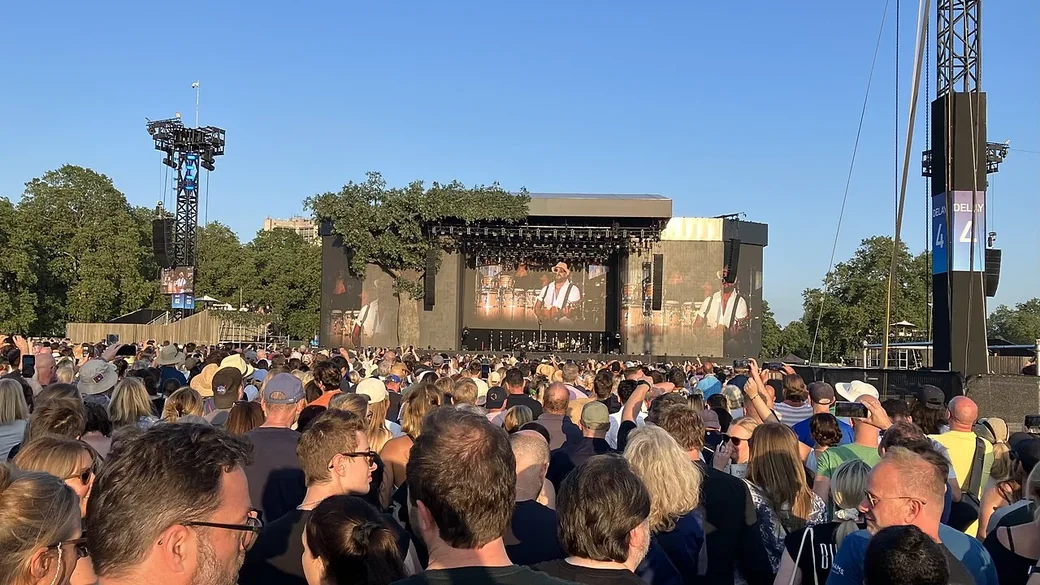
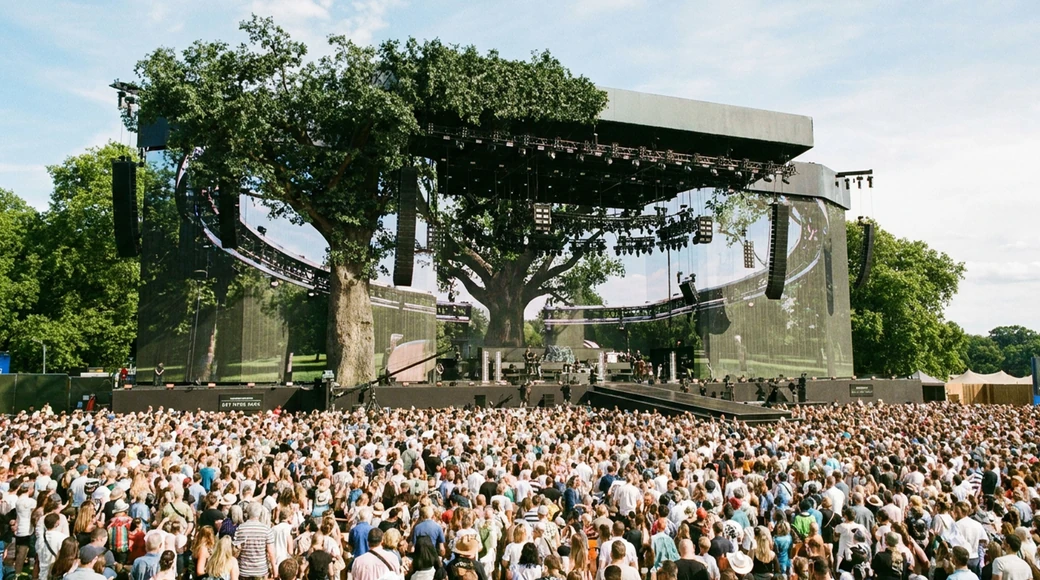
BST Hyde Park in London, a huge crowd at a main stage beneath a summer evening sky as the open-air concert season fills the park with music

BST Hyde Park

LondonJun 25, 2027 – Jul 11, 2027↻ Annual
Duration:17 daysType:
Music, Stage & Performance Events
Admission:From 99.95 GBPLocationAnnual event — exact dates may vary each year

London's only major music festival inside a Royal Park: single-headliner concerts on Hyde Park's Great Oak Stage, wrapped around free midweek Open House days of cinema, workshops, sport and street food.

About This Festival

What BST Hyde Park Is: One Headliner a Night in a Royal Park

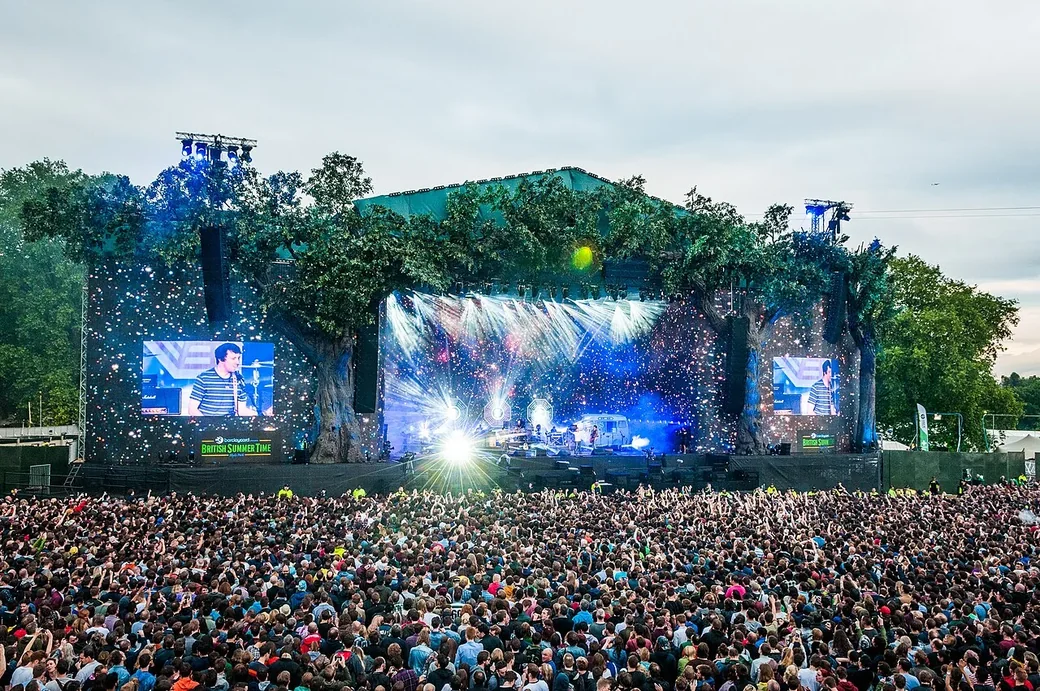
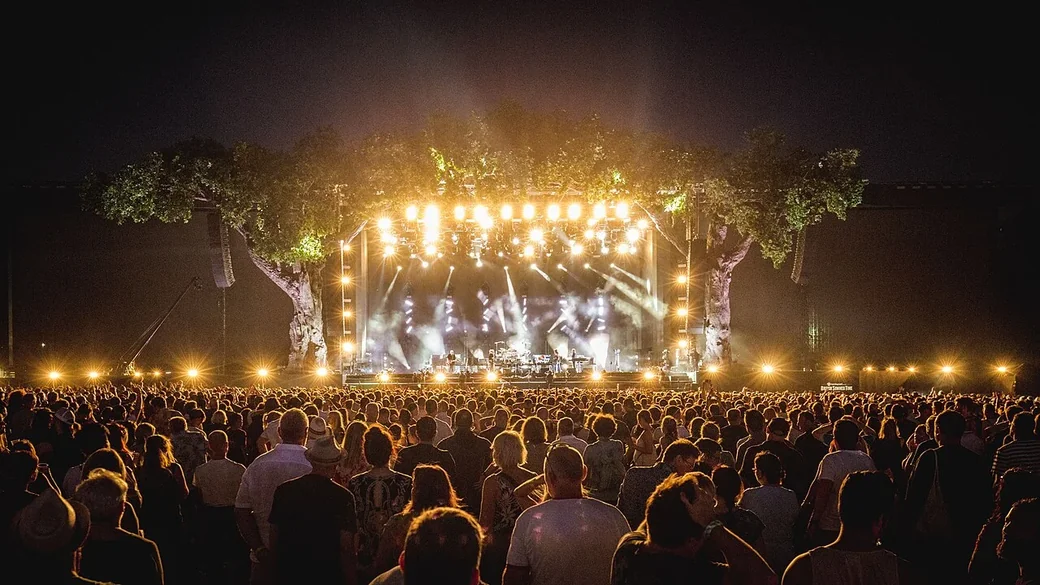
BST (British Summer Time) is a concert series put on by AEG Presents in partnership with The Royal Parks, the charity that looks after London's royal parks. It has taken over the Parade Ground on the east side of Hyde Park since 2013, usually across three weekends in early summer. Every concert day is a separate show with its own line-up, one headliner (the night's main act) closing the Great Oak Stage, and its own ticket; there is no camping and no weekend pass, and the crowd stands throughout. Only the festival site is fenced off while the rest of the park stays open. The stage is framed on one side by a real oak tree, with a huge LED screen wrapped around its contours. Follow the official website, the app and the hashtag #BSTHydePark for news, and think of it as a premium open-air gig rather than a campsite festival: licensed bars, street-food traders and VIP gardens come with the territory.
From Pink Floyd's Free Concert to a Modern Festival: Hyde Park's Music History

Hyde Park was Henry VIII's hunting ground before Charles I opened it to the public in 1637, and it has staged music ever since, from military bands to the Great Exhibition of 1851. Its rock chapter began in June 1968, when Pink Floyd played a free concert in the Cockpit, a natural hollow by the Serpentine, after the promoters at Blackhill Enterprises persuaded officials to say yes. Blind Faith made their debut there in 1969 before about 120,000 people, and weeks later the Rolling Stones followed with a free show remembered as a tribute to a former bandmate: Mick Jagger read Shelley and white butterflies were released. Crowd estimates run from a quarter of a million to half a million. Live 8, the worldwide concert against poverty, drew another vast crowd in 2005, and when AEG launched BST in 2013 the Stones came back, with Jagger wearing a butterfly-print jacket as a nod to 1969. According to one story, the radio presenter John Peel listened to Pink Floyd from a rowing boat on the Serpentine.

Free Open House Days: The Weekday Programme Most Visitors Miss

Between the concert weekends the same site reopens on weekdays as Open House (the festival's free community programme), and walking in costs nothing. Expect an open-air cinema, children's theatre, live music, dance, yoga and trapeze workshops, horticultural displays, sport, cabaret and bingo, plus independent food and drink producers serving lunch and dinner; big screens sometimes show major sport such as tennis. A few strands inside the programme are ticketed separately, and areas such as the cinema may set their own age limits. Under-16s need an adult aged 18 or over, picnics are welcome on the open lawns, well-behaved dogs are allowed outside ticketed zones, and glass and cans stay banned. It is also a fundraiser for the charity that runs the Royal Parks and counts among the fastest-growing events it hosts. In one recent edition around 170,000 people came through on the free days.

Three Stages Explained: Great Oak, Rainbow and Birdcage

The Great Oak Stage is the main stage, where the headliner closes the night. The Rainbow Stage is the busy second stage, and the Birdcage is a small platform tucked into a corner of the site for emerging acts. Sets on the smaller stages usually run at the same time and finish before the main stage takes over, so decide in advance which clashes you can live with. Regulars rate the Birdcage highest for atmosphere: an intimate crowd, short queues and a fair chance of catching an artist a few years before they headline anywhere. Some years add a themed extra stage and a funfair, where rides are pay-as-you-go and used at your own risk.

Gate Times, Last Entry and the No Re-Admission Rule

Gates open in the early afternoon, and holders of Primary Entry (an early-entry ticket), Gold Circle (a premium standing zone close to the stage) and VIP tickets get in roughly an hour earlier through their own lanes. There is a firm last entry in the evening and the box office shuts before it, so build in time for queues at the search point. Shows finish by 22:30 from Monday to Saturday and by 22:00 on Sunday, and the headliner's set is always the last thing on the Great Oak Stage. The rule that catches most first-timers: once you step off the site, you cannot come back in.

Ticket Types: General Admission, Gold Circle and VIP Gardens

General Admission covers the main standing area and the main gate. A Child and Guardian ticket pairs one adult with one child aged two to nine, and under-twos need no ticket at all. Primary Entry buys an earlier gate time; Gold Circle moves you into a separate area nearer the stage. Above that sit VIP tiers with their own entrance, bars, premium food traders, seating, cloakroom and toilets, plus a partly covered standing terrace and a roof garden option. Accessible tickets offer a ground-level viewing area or a raised platform, each with a free companion pass.

Buy From Official Agents Only: How BST Shuts Out Touts

Tickets are sold through a short list of authorised agents, and the festival asks fans not to use secondary sites at all: a resold ticket is cancelled and refused at the gate. Everything arrives as a mobile ticket inside the official app, with a QR code that refreshes roughly every minute and cannot be screenshotted, so download the app and sign in to your ticketing account before you travel. If you can no longer attend, the official resale channel is the only legitimate route. Later ticket releases simply cost more without adding any extra access. Tickets normally go on sale after each headliner is announced, first in a presale and then to everyone, so sign up to the official newsletter to hear first.

Bags, ID Checks and House Rules: What Gets You Through Security

Bring one bag per person, no bigger than A4 (about 297 by 210 by 210 millimetres); there is no cloakroom outside certain premium tickets and no left-luggage store on site. Every show is fully standing, so chairs, stools, shooting sticks, inflatable seats, golf umbrellas and parasols are turned away, along with glass, cans, flags and poles, selfie sticks, laser pens, drones, air horns, megaphones and professional camera kit. Hand-made banners up to A1, made of bendable card without a pole, are fine. Alcohol sales follow Challenge 25 (the rule that anyone who looks under 25 must show ID): a passport, photo driving licence or PASS-hologram card works, so carry your passport. Under-16s must be with an adult aged 18 or over, under-2s are free, and prams are allowed but hard to push near the stage. Only assistance dogs are admitted on concert days. Cigarettes are not sold on site and smoking is banned in indoor bars, crowd-surfing and moshing are prohibited, and by entering you consent to being filmed. Buy merchandise only from official stands, not from street sellers outside.

Food, Bars and the Empty Bottle Trick Regulars Swear By

Nothing to eat or drink may be carried in, apart from unopened water up to half a litre and baby food in non-glass containers. Bring an empty refillable bottle instead and use the free water points marked on the site map. Inside you will find street food running from smash burgers (a burger with a thin, pressed-flat patty) and sourdough pizza to Korean fried chicken, with a vegetarian option required at every trader and plenty of vegan choices. Bars range from real ale (traditional cask-conditioned beer) to cocktails. The site is cashless with no machines, and queues are shortest once the headliner is on stage.

Getting to the Parade Ground: Tube, Bus, Bike and Late-Night Trains

The site is on the east side of Hyde Park, postcode W2 2UH. The closest Underground stations are Hyde Park Corner, Knightsbridge, Bond Street (Elizabeth line) and Green Park, with Paddington and Victoria handling mainline trains; step-free access exists only at Green Park, Bond Street, Victoria and Paddington. Marble Arch, Hyde Park Corner and Knightsbridge are served by dozens of bus routes. Cyclists can lock up at a temporary rack near Albert Gate (bring your own lock and collect the bike that night), and dockless e-bikes have designated bays in the park on event days. There is no on-site parking and no official drop-off point; Park Lane may close briefly after big shows, and park roads can be shut on event days. Planned engineering works sometimes close Piccadilly line stations at weekends, so check before travelling. On Friday and Saturday nights the Night Tube (the all-night weekend Underground service) runs on the Piccadilly line through Hyde Park Corner and Knightsbridge, backed by night buses.

Where to Stand: Crowd Density, Shade and Family Corners

Density climbs sharply as you approach the Great Oak Stage, and because big screens flank it, a mid-field position costs you very little. The ground nearer the north entrance is consistently the calmest part of the arena and the easiest place to bring children. Shade is limited; the wooded stretch in the south of the site is the main option for general ticket holders. A marked no-blanket zone keeps crowd flow moving, blankets cannot be left unattended to hold a spot, and buggies are much easier to manage well back from the front.

Accessibility: Sign Language, Viewing Platforms and Support

Every act on the Great Oak Stage is interpreted into British Sign Language, with interpreters placed stage right as you face it. Accessible ticket holders choose between a raised viewing platform and a less crowded ground-level area, and each comes with a free personal assistant pass that can be swapped between members of a group. There is a dedicated accessible entrance, an access customer service hub, accessible toilets across the site and a Changing Places (a fully accessible bathroom with a hoist and an adult-size changing bench) unit near the main viewing platform. Bringing medication or medical equipment requires an exemption form completed online in advance. The festival holds the gold level of the Attitude is Everything charter, an access standard for live music.

Welfare, Lost Property and Walking Home with Confidence

Welfare (the on-site care point) and first aid sit at the north of the arena and double as the meeting point, lost property desk, baby-changing area and quiet space; found items are handed in there, and an online form covers anything you report after leaving. Staffed information hubs around the site post current stage times. A sponsor stand offers free phone charging, with a limited number of power banks at welfare. As in any central London crowd, keep your phone and wallet out of back pockets, and a free volunteer phone line will stay on the line with anyone walking home alone.

What to Pack for an Unpredictable London Summer Evening

The show runs rain or shine and golf umbrellas are banned, so a packable waterproof is the single most useful thing you can carry. Add sun cream and a hat for the other half of the British summer, shoes you can stand in for eight hours, a refillable bottle, a small power bank and a contactless card or phone wallet, since nothing on site takes cash. Keep it all inside one A4 bag. Evenings cool quickly once the sun drops behind the trees, so a light extra layer earns its space. There is no dress code, so let comfort and the weather decide.

How the Festival Supports the Royal Parks and Keeps Its Footprint Down

The park is cared for by The Royal Parks, a charity that raises most of its own money, and income from the series and the free Open House days goes back into looking after eight parks. AEG Presents holds ISO 14001 and ISO 20121 certification (international standards for environmental management and for sustainable events). On site, nothing goes to landfill, serveware is compostable, front-of-house single-use plastic is gone, every menu board carries an eco label and every food trader must offer a vegetarian dish; leftover uncooked food goes to a food charity. Generators run on renewable HVO biodiesel (a fuel made from waste oils) and green hydrogen, supported by batteries and the park's mains connection. Specialist consultants monitor sound levels, and a community team based at the Marble Arch entrance handles neighbours' questions during build and show days. You can help by arriving on foot or by public transport, bringing a refillable bottle, using the recycling bins, putting cigarette ends in the bins and taking vapes home or to the special vape bins.

Who Has Played the Great Oak Stage: Headliners Year by Year

The series opened in 2013 with the Rolling Stones back in Hyde Park, alongside Bon Jovi and Lionel Richie. 2014 brought Arcade Fire, Black Sabbath, Neil Young and The Libertines; 2015 The Strokes, Blur, Kylie Minogue, The Who and Taylor Swift; 2016 Massive Attack, Florence + The Machine, Carole King, Mumford & Sons, Take That and Stevie Wonder. 2017 added Phil Collins, Green Day, Justin Bieber, Kings of Leon and The Killers, and that year every concert reached its full 65,000 crowd for the first time. 2018 featured Roger Waters, The Cure, Eric Clapton, Bruno Mars and Paul Simon; 2019 Céline Dion, Barbra Streisand and Robbie Williams. The 2020 series was cancelled because of the pandemic, and the festival returned in 2022 with Adele, the Rolling Stones, Elton John, Pearl Jam and Duran Duran. 2023 brought Bruce Springsteen, Billy Joel, Guns N' Roses, P!nk and Blackpink, the first K-pop group to headline BST; 2024 SZA, Kings of Leon, Shania Twain, Kylie Minogue and Stray Kids; 2025 Olivia Rodrigo, Noah Kahan, Sabrina Carpenter, Neil Young and Stevie Wonder, headlining BST for the third time; 2026 Garth Brooks, back after almost thirty years away, ATEEZ, Maroon 5, Mumford & Sons, Duran Duran, Pitbull and Lewis Capaldi.

Around the Park: Speakers' Corner, the Serpentine, Italian Gardens and the Way Home

Hyde Park is open from early morning until midnight, so you can fold the concert into a full day. Walk north to Speakers' Corner near Marble Arch, the traditional open-air spot for free-speech debate, lively on Sundays. Head west to the Serpentine, the lake with pedal and electric boats and a handful of galleries nearby, and to the Italian Gardens (formal fountains and a café) on the edge of Kensington Gardens. The historic bandstand (an open-air music pavilion) also hosts free music and Open House events. For photos, the oak tree beside the stage against the evening sky is the festival's signature frame, and the lake and fountains make calmer backdrops by day. Official merchandise is sold at on-site stands and online. Shows end by 22:30 (22:00 on Sundays); on Friday and Saturday nights the Night Tube and night buses help you home, and leaving quietly keeps good relations with the neighbours. Share your pictures with #BSTHydePark.

Practical Information

When

Across three weekends in late June and early July, with the free Open House programme filling the weekdays in between. Gates open in the early afternoon, the headliner closes the Great Oak Stage, and shows finish by 22:30 (22:00 on Sundays). Last entry is in the evening and there is no re-admission once you leave.

Where

The Parade Ground on the eastern side of Hyde Park, postcode W2 2UH. Nearest Underground stations are Hyde Park Corner, Knightsbridge, Bond Street and Green Park; step-free access is via Green Park, Bond Street, Victoria and Paddington. There is no on-site parking and no official drop-off point.

Cost

Concert days are ticketed across several tiers, from general standing to garden and terrace hospitality. The midweek Open House days are free to enter, although a few strands inside them are ticketed separately.

Tips

Bring an empty refillable bottle for the free water points, a packable waterproof and a single bag no larger than A4. Chairs and golf umbrellas are refused at the gate. The site is cashless with no cash machines. Food and bar queues are shortest once the headliner is on stage, and the ground near the north entrance is the calmest part of the arena.

Unique to this festival

It is the only large music festival staged inside a central London Royal Park, it is fully standing with a single headliner each night rather than clashing stages, every main-stage act is interpreted into British Sign Language, and almost half the site days are free community days — with the income going back into the upkeep of eight Royal Parks.

Accommodation and hotel options during BST Hyde Park

Accommodation and hotel options around the event venue, with their prices, are shown by Stay22 as a map and a list. Cookies are used. Your consent is remembered on every page; you can turn it off at any time in the cookie settings.

Keep Exploring

Travel essentials for London

Flights, transfers, car rental, eSIM and insurance — compare your options

Flights

Find the best route

Transfers

Airport & city ground transport

Car Rental

Drive at your own pace

eSIM

Stay connected on arrival

Insurance

Cover your trip