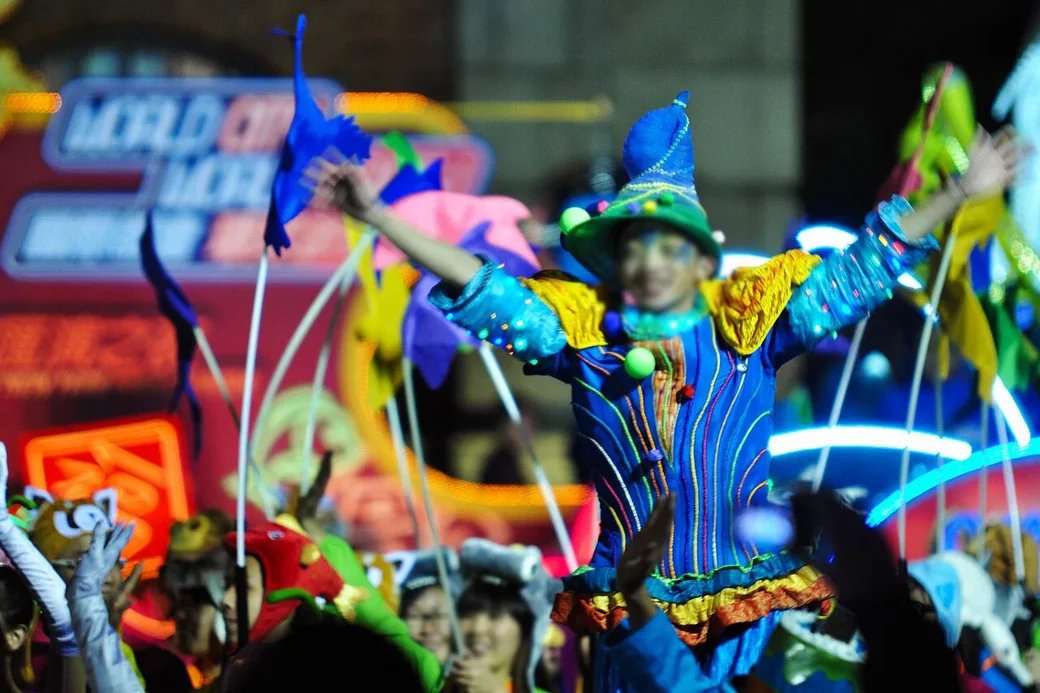
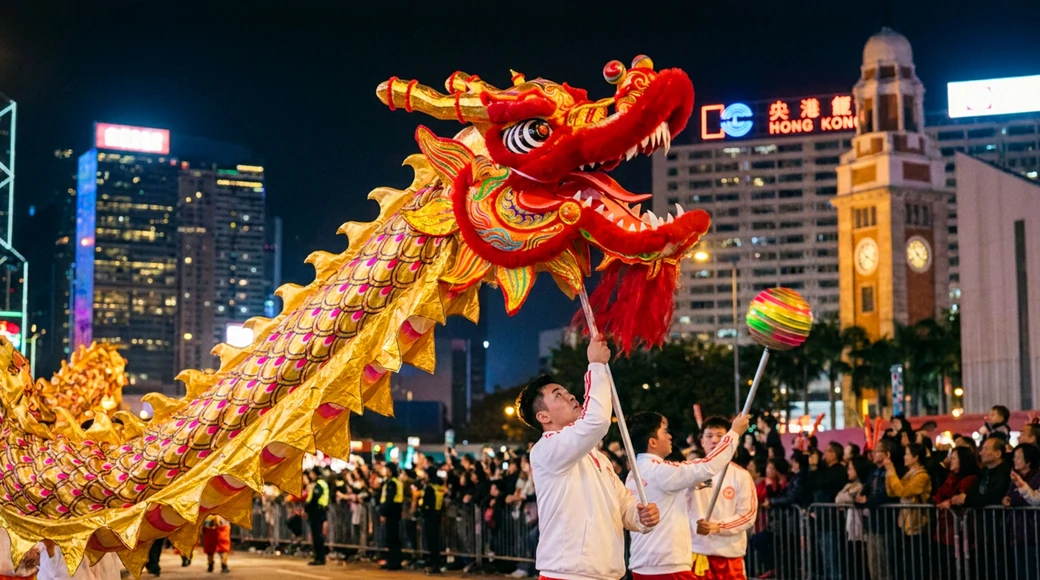
The international Chinese New Year night parade in Hong Kong, with illuminated floats, dragon and lion dancers and performers from around the world moving through the streets of Tsim Sha Tsui

Cathay International Chinese New Year Night Parade

Hong KongFeb 6, 2027Public holiday↻ Annual
Duration:1 daysType:
Cultural & Traditional Festivals
Admission:From 450 HKDLocationAnnual event — exact dates may vary each year

Hong Kong's biggest Lunar New Year show: an evening parade of illuminated floats and performing groups from around the world, rolling through Tsim Sha Tsui on the first night of the new year after a lively pre-parade street party.

About This Festival

Cathay International Chinese New Year Night Parade in Hong Kong: A Complete Guide

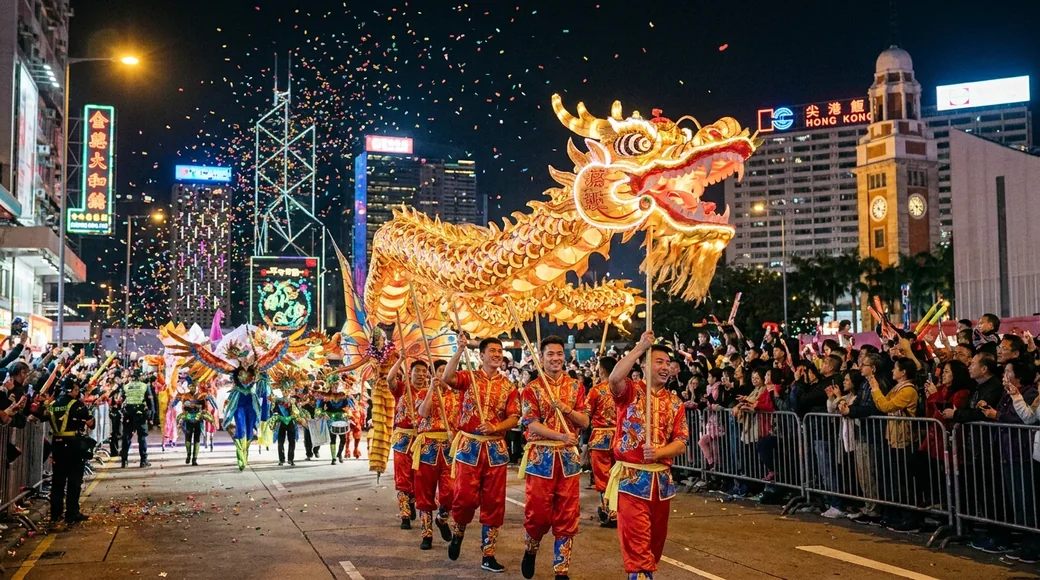
The Cathay International Chinese New Year Night Parade is Hong Kong's headline show for the first evening of the Lunar New Year. Organised by the Hong Kong Tourism Board, it sweeps through Tsim Sha Tsui on the Kowloon waterfront with illuminated floats, lion and dragon dances, marching bands, dancers and street performers from Hong Kong, mainland China and every corner of the world. It also opens the city's festive season, which carries on with flower markets, harbour fireworks and horse racing over the following days. Each edition follows the zodiac animal of the year: the 2026 parade welcomed the Year of the Horse under the banner “Best Fortune World Party”. The mood is warm, colourful and suits visitors of every age. In traditional Chinese culture the horse stands for strength, success and positive momentum, so horse motifs ran through the 2026 edition.
History of the Hong Kong Chinese New Year Night Parade Since 1996

The Hong Kong Tourism Board staged the first Lunar New Year float parade in 1996, drawing on famous parades abroad and adding a distinctly Hong Kong flavour. Cathay has been the title sponsor for more than two decades. Since 2004 the parade has been held in the evening, which allowed the floats to be lit up and made the show far more dazzling; that first night edition drew an estimated 280,000 spectators and was sent worldwide by satellite. In 2010 the route reached Nathan Road for the first time, and in 2017 around 3,000 performers took part. After a pause from 2020 to 2023, the parade returned in 2024 with nine floats and 29 performing teams. The parade's Chinese name is “Cathay New Year International Show Night”, and it grew out of the earlier Hong Kong New Year Float Parade. The 2010 edition even took the four seasons as its theme.

Parade Route in Tsim Sha Tsui: From the Cultural Centre to Nathan Road

The route is compact and easy to follow on foot. It begins at the Piazza of the Hong Kong Cultural Centre, right on the Victoria Harbour waterfront, then turns up Canton Road, continues along Haiphong Road and swings onto Nathan Road, Tsim Sha Tsui's famous main avenue. The floats finish outside the Sheraton Hong Kong Hotel & Towers, while the last performances of the evening take place on Salisbury Road. In recent editions the streets along the route have been dressed with colourful lights and lanterns, so the whole walk between viewing points feels like part of the celebration.

Night Parade Timetable: What Happens Hour by Hour

The evening follows a steady rhythm. In the 2026 edition the pre-parade street party began early in the evening along the route, with lion and dragon dances, magic and acrobatic rope skipping. Seat holders took their places before the parade started. The parade then left the Cultural Centre Piazza, the first float and group moved on to Canton Road and then Nathan Road, and the procession ended outside the Sheraton, while the final performances closed the night on Salisbury Road. Timings can be adjusted from year to year, so check the organiser's programme before you go.

Best Places to Watch the Chinese New Year Parade Along Canton, Haiphong and Nathan Road

Public viewing areas line Canton Road, Haiphong Road and Nathan Road, and no ticket is needed to enjoy the parade from the pavement. The secret is to arrive early: the streets fill with families, friends and visitors from around the world, and the best spots are taken well before the floats appear. Fortunately, the waiting time is part of the fun, because roving local troupes perform lion dances, magic and acrobatics all along the route from early evening. Bring a light jacket, a charged phone and a relaxed attitude. Before the parade, local groups such as diabolo (Chinese yo-yo) performers, marching bands and dance troupes entertain the crowd.

Seated Stands at the Cultural Centre Piazza: Zones, Booking and Seating Tips

For a guaranteed seat, the organiser sets up spectator stands on the Hong Kong Cultural Centre Piazza, where the parade begins. There are three zones: Zone A faces the main stage, Zone B also faces the main stage and includes some seats with a partly angled view, and Zone C sits near the viewing deck. Ticket holders should be seated well before the parade starts, and toilets are close to the stands. In 2026 tickets went on sale at the Hong Kong Tourism Board Kowloon Visitor Centre at the Star Ferry Pier in Tsim Sha Tsui about ten days before the parade, and the stands were sold out before the day itself, so it is wise to check the official page early for the current sales channels.

How to Get to the Night Parade: MTR, Star Ferry and Walking Routes

The easiest way to reach the parade is public transport. The MTR (Hong Kong's metro system) stops at Tsim Sha Tsui and Tsim Sha Tsui East, both within a short walk of the route. From Hong Kong Island, the Star Ferry sails from Central and Wan Chai across Victoria Harbour and lands close to the Cultural Centre, a scenic way to arrive as the city lights come on. Roads around the route are managed for the event from midday until the early hours, and taxi and minibus stands nearby are moved, so plan to walk the last stretch. After the show, the MTR is the smoothest way home, and a short stroll along the waterfront while the crowd disperses is pleasant.

Parade Floats: Cathay, Hong Kong Jockey Club, Disneyland and More

The floats are the stars of the evening. In the 2026 edition twelve floats rolled out. Cathay marked its 80th anniversary with classic aircraft flying through a time tunnel; the Hong Kong Jockey Club, a participant for 27 years, sent a float led by three shining horses for the Year of the Horse; Hong Kong Disneyland Resort celebrated its 20th anniversary; Ocean Park brought its giant pandas in festive outfits; McDonald's Hong Kong made its debut with a train inspired by its 1980s restaurants; and Lam Tsuen Wishing Square sent a moving version of its famous wishing tree. A ten-metre art toys (collectible designer toys) float with Labubu and Molly added a playful touch. The Hong Kong Jockey Club was also the exclusive route sponsor in 2026. In recent years the floats have featured blossoms, fai chun (red good-luck calligraphy), lucky windmills and firecracker motifs.

International and Local Performing Groups at the Hong Kong Night Parade

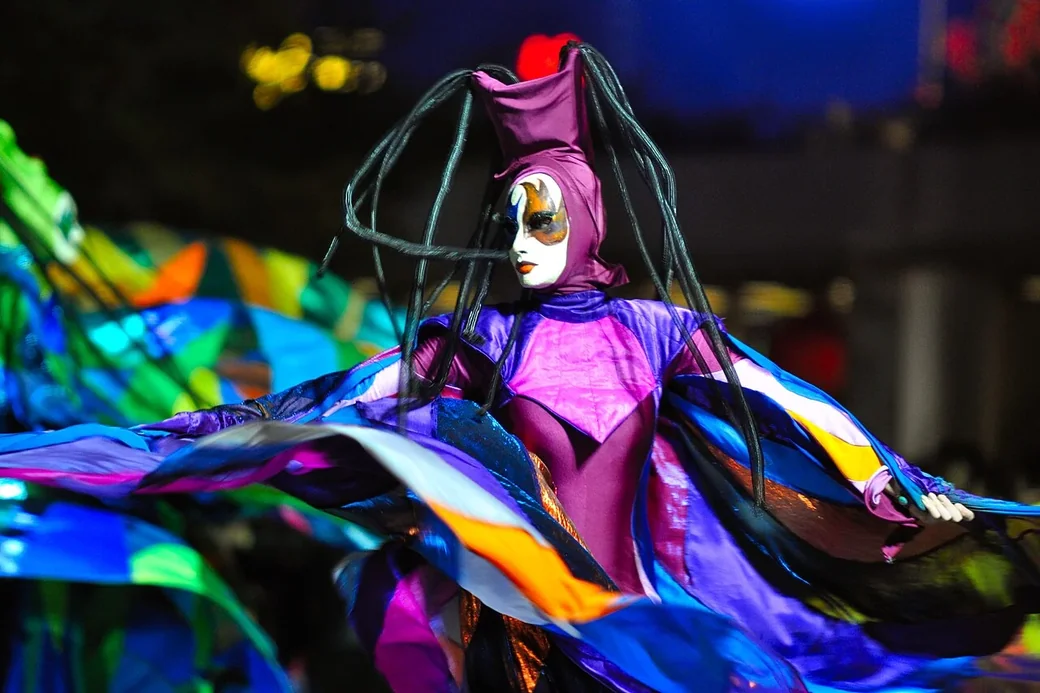
Alongside the floats, the parade is a showcase of world culture. In 2026 sixteen teams from mainland China and abroad took part, and thirteen of them were making their Hong Kong debut. The line-up included the MassKara dancers of Bacolod City (from the Philippines' mask festival) in ornate masks, Italy's Bandierai degli Uffizi (flag-wavers of the Uffizi), the humorous Emoji Parade from Turkey, Egypt's Tannoura Dance Group (tannoura: a Sufi-inspired whirling skirt dance), the Bluecoats marching band from the United States, Australia's Manly Seabirds cheerleaders and acrobatic skaters. Many Hong Kong groups joined them, including a wheelchair dance association performing for the first time. In 2024 the stage also welcomed Japan's dance group Avantgardey, the giant puppets of Spain's Light Dancers and American professional cheerleaders.

Lion Dance, Dragon Dance and the Legend of Nian at Chinese New Year

Lion and dragon dances are among the most loved sights of the pre-parade street party. According to a well-known legend, a monster called Nian (“year”) came down from the mountains or up from the sea every New Year's Eve to terrorise villagers, until they discovered that it feared loud noise, fire and the colour red. That is said to be why the new year is welcomed with drums, firecrackers, red decorations and lanterns, and some versions say the lion dance grew out of the effort to drive the creature away. Accounts differ from region to region, but the story explains why red and gold glow so brightly in Hong Kong during the festival.

Lam Tsuen Wishing Trees and Where to See the Floats After the Parade

The parade does not end the story: the floats go on display around the city afterwards. Since 2011 they have been parked at Lam Tsuen in Tai Po, home of the Wishing Trees, and in 2026 they also appeared at Ocean Park, Sha Tin Racecourse, Victoria Park and Kai Tak Sports Park. According to a popular local belief, visitors to Lam Tsuen write their wishes on joss paper (paper offerings) and toss them into the branches; if the paper catches on a branch, the wish is said to come true, and the higher it lands, the better the omen. It is a lovely, calmer way to enjoy the festive spirit and take photos. Performing teams also visit shopping malls and attractions across the city, and in 2026 the international groups gave shows at Kai Tak Sports Park on the second and third days of the new year.

What to Eat at Lunar New Year in Hong Kong: Lucky Dishes and Sweet Treats

Food carries wishes at Lunar New Year. Fish is served because the Cantonese word for fish (yu) sounds like “surplus”, a hope for abundance. Poon choi (a large communal pot layered with ingredients) is a Hong Kong speciality that celebrates togetherness. Nin gou (sticky rice cake) means “higher each year” and is usually sweet in Hong Kong. Tong yuen (glutinous rice balls in sweet soup) stand for reunion, yau gok (fried dumplings shaped like old coins) for wealth, and crisp sesame “smiling mouth” cookies for happiness. Tangerines and oranges, whose golden colour recalls ingots, are the lucky fruit of the season.

Chinese New Year in Hong Kong Beyond the Parade: Flower Markets, Fireworks and Races

The parade is the first highlight of a festival that continues for days. In the week before the new year, flower markets at Victoria Park and the Prince Edward Flower Market fill with blossoms, decorations and snacks. On the second day, fireworks light up Victoria Harbour, and on the third day Sha Tin Racecourse hosts a special race day with lion dances and live music. Many families visit Wong Tai Sin Temple to light incense, and at Che Kung Temple visitors spin the fortune wheel three times clockwise. Hong Kong Disneyland and Ocean Park also dress up for the season, so a long weekend easily fills up. Lunar New Year parades are held elsewhere too: London's Chinatown parade is described as the largest celebration outside Asia.

Cantonese Chinese New Year Greetings: Phrases to Use in Hong Kong

A few Cantonese greetings will earn warm smiles. The classic is gung1 hei2 faat3 coi4, roughly “wishing you prosperity”. san1 nin4 faai3 lok6 means happy new year. san1 tai2 gin6 hong1 wishes good health, maan6 si6 jyu4 ji3 wishes that everything goes as you hope, and sam1 soeng2 si6 sing4 wishes that your dreams come true. Tradition also has married people and elders give lai see (small red envelopes with money) to children and unmarried younger relatives. Say your greeting with a smile, and you will be answered in kind.

Fun Facts and How to Watch the Hong Kong Night Parade Live from Home

Beyond the colourful floats, the parade has charming stories. In 2009 the organiser reserved seats on the Cultural Centre Piazza for sixty seniors who live alone. In 2026 Cathay celebrated its 80th anniversary, Hong Kong Disneyland its 20th and McDonald's Hong Kong its 50th, all in the same parade. If you cannot be in Hong Kong, you can still enjoy it: the organiser provides a satellite feed to broadcasters worldwide, and local television channel TVB Jade has carried the parade live. Many floats later return to public display, so even if you miss the evening itself, you can still admire the craftsmanship up close. In 2024, about 150,000 spectators were expected along the route.

Practical Information

When

The parade takes place on the evening of the first day of the Lunar New Year, so the calendar date changes every year (between late January and mid-February). Check the date field and the organiser's website for the current year. On the evening of the first day of the Lunar New Year a street party warms up the route before the parade sets off, and the floats then roll along it until the last float reaches the finish.

Where

Tsim Sha Tsui, Kowloon. The route starts at the Hong Kong Cultural Centre Piazza (10 Salisbury Road), follows Canton Road, Haiphong Road and Nathan Road, and ends outside the Sheraton Hong Kong Hotel & Towers (20 Nathan Road).

Cost

Viewing along Canton Road, Haiphong Road and Nathan Road is free. Optional seated stands at the Cultural Centre Piazza are sold by the organiser; the Hong Kong Tourism Board announces the current tickets and prices.

Tips

Arrive early to settle into a good spot, and enjoy the street performances while you wait. Travel by MTR (Hong Kong's metro system) to Tsim Sha Tsui or Tsim Sha Tsui East, or cross the harbour on the Star Ferry from Central or Wan Chai. Seat holders should be in their places well before the parade starts. The parade is also shown live on television.

Special to this festival

It is Hong Kong's flagship night parade of floats on the first evening of the Lunar New Year, with a different zodiac theme each year, a pre-parade street party, performers from all over the world and floats that go on public display around the city afterwards.

Accommodation and hotel options during Cathay International Chinese New Year Night Parade

Accommodation and hotel options around the event venue, with their prices, are shown by Stay22 as a map and a list. Cookies are used. Your consent is remembered on every page; you can turn it off at any time in the cookie settings.

Keep Exploring

Travel essentials for Hong Kong

Flights, transfers, car rental, eSIM and insurance — compare your options

Flights

Find the best route

Transfers

Airport & city ground transport

Car Rental

Drive at your own pace

eSIM

Stay connected on arrival

Insurance

Cover your trip