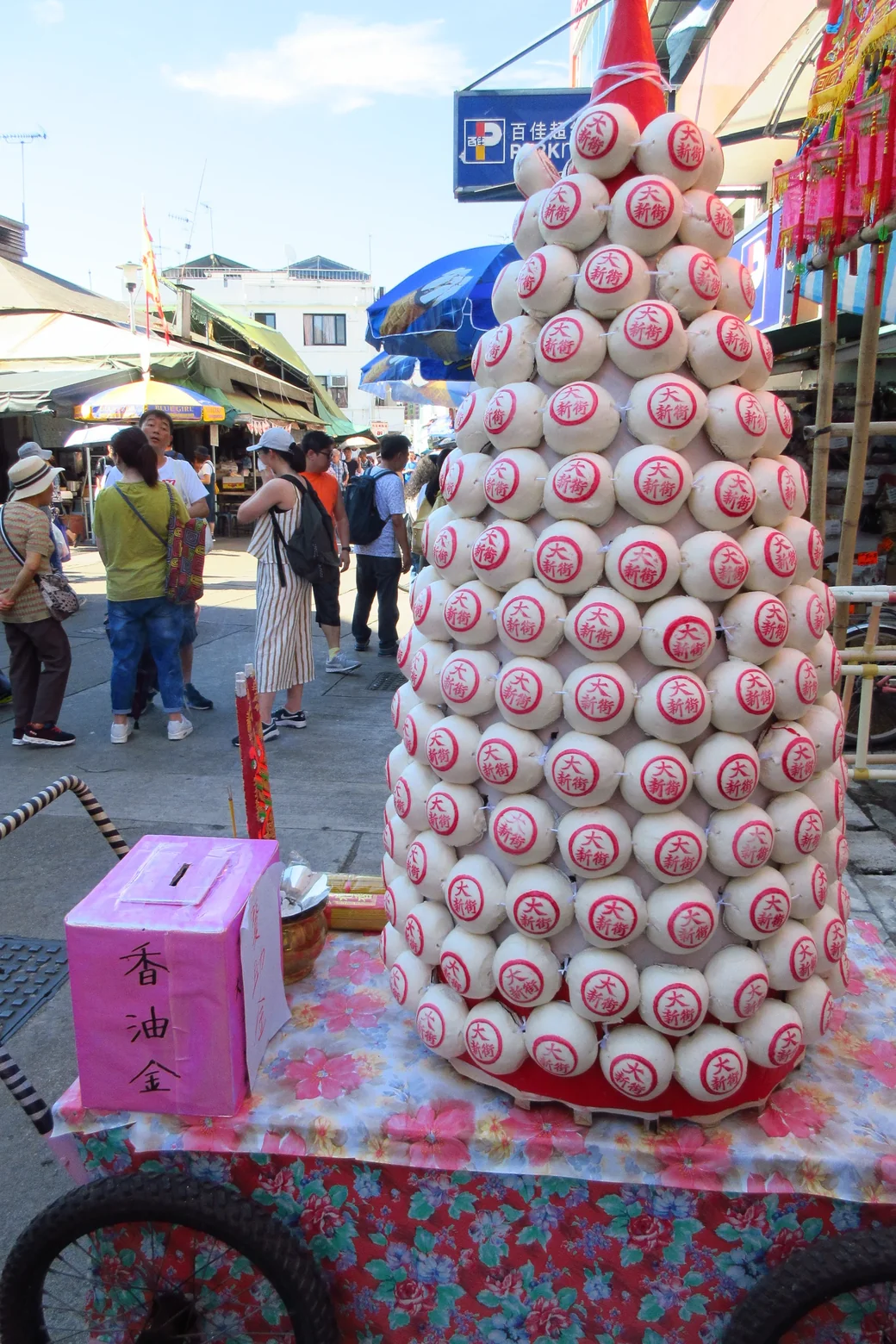
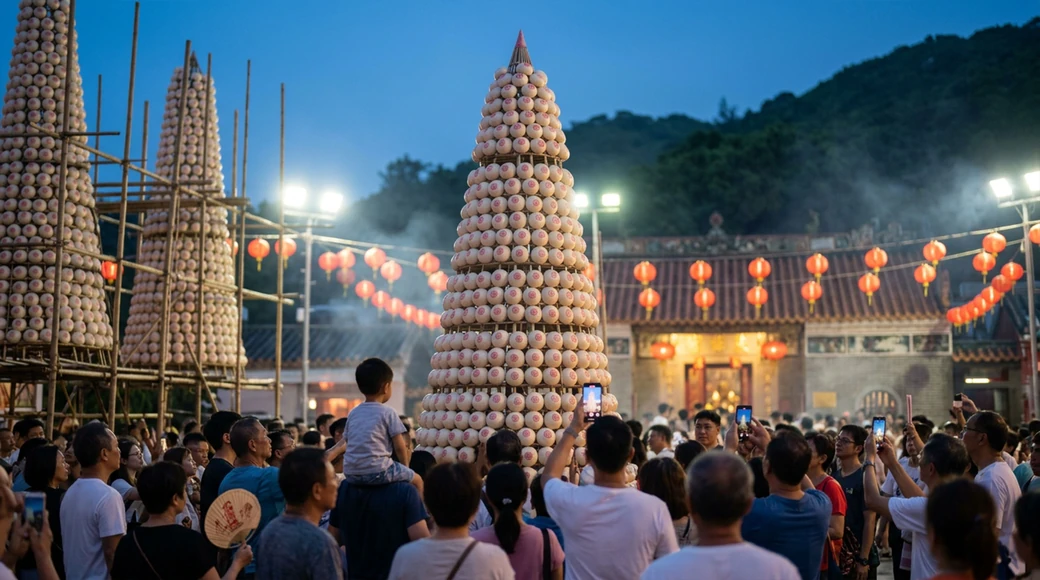
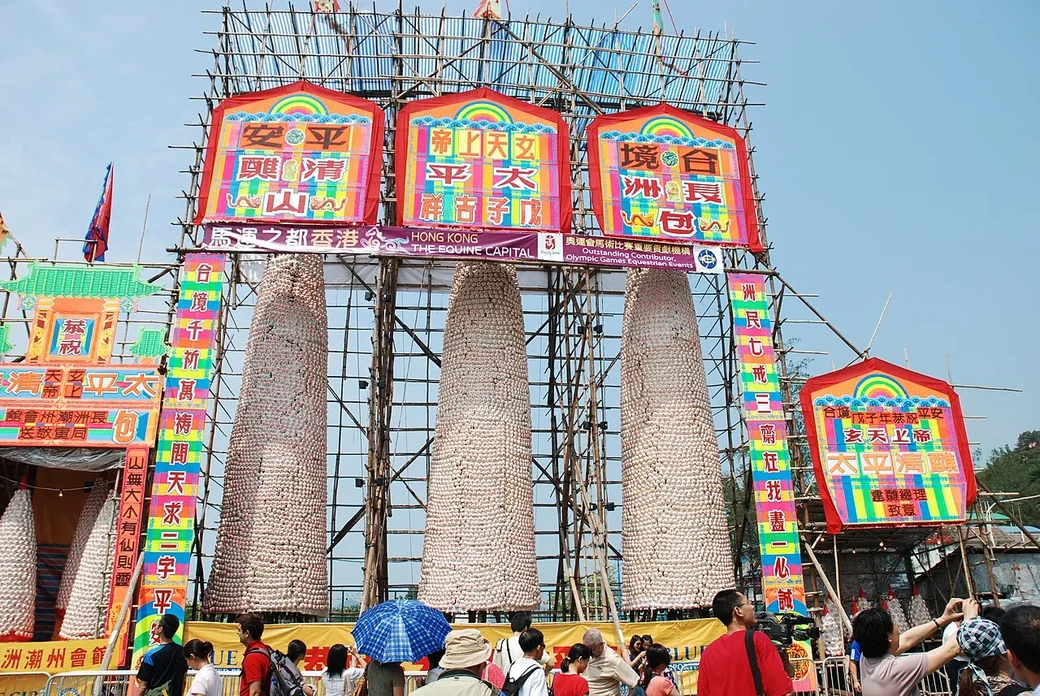
Cheung Chau Bun Festival in Hong Kong, with bamboo towers covered in white buns rising beside Pak Tai Temple and colourful parades winding through the island's lanes

Cheung Chau Bun Festival

Hong KongMay 10, 2027 – May 14, 2027Partial public holiday↻ Annual
Duration:5 daysType:
Cultural & Traditional Festivals
Admission:FreeLocationAnnual event — exact dates may vary each year

A Taoist thanksgiving festival on Hong Kong's almost car-free island of Cheung Chau, famous for its Piu Sik (floating colours) parade of children who seem to float, towers of lucky buns and a midnight race to climb them. A living tradition on China's national intangible heritage list.

About This Festival

Cheung Chau Bun Festival, Hong Kong: What It Is and Why It Is Unique

The Cheung Chau Bun Festival, known locally as Cheung Chau Tai Ping Ching Chiu (a Taoist ceremony of thanks and purification for lasting peace), is one of Hong Kong's most distinctive traditions. It unfolds on Cheung Chau, a small dumbbell-shaped island about ten kilometres southwest of Hong Kong Island, where cars are almost unknown. Three things define it: Taoist rites honouring the sea god Pak Tai (Supreme Emperor of the North), the Piu Sik (floating colours) parade in which costumed children seem to glide above the streets, and the midnight bun scrambling race up a tall tower of lucky buns. The festival joined China's national list of intangible cultural heritage in 2011, and it remains a living community celebration rather than a staged show.
When Is the Cheung Chau Bun Festival? The Lunar Calendar Explained

The festival follows the Chinese lunar calendar, so its Gregorian dates change every year. The main day is the eighth day of the fourth lunar month, which is also Buddha's Birthday and a public holiday in Hong Kong; it usually falls between late April and late May. The celebrations run for five days, from the fifth to the ninth day of that month, with the parade and the bun scramble on the eighth day and the night that follows. Weeks earlier, the Bun Carnival warms up the island with climbing training sessions, a selection contest and the Climbing Carnival. Because the lunar date shifts, check the official pages of the Leisure and Cultural Services Department before you book ferries or rooms, and keep a day or two of flexibility if you can.

History of the Cheung Chau Bun Festival: From Fishing Island to Heritage Icon

Cheung Chau's story begins in the Qianlong era (1736–1795), when settlers from Guangdong, Huizhou and Chaozhou built a fishing and market community on the island's narrow sandbar. Migrants from the Huizhou region completed Pak Tai Temple in 1783, and over time Pak Tai (Taoist sea guardian) became the shared protector of every group on the island. In the late nineteenth century, Hailufeng residents of Tai Ping Shan Street on Hong Kong Island held a jiao (Taoist offering ceremony) to give thanks for the end of a plague, and the yearly event later settled on Cheung Chau. The parade reportedly grew into a highlight from the 1920s, Hong Kong's governors attended from the 1960s, the bun race returned in 2005 with modern safety gear, and in 2011 the festival won national heritage status.

Legends of the Bun Festival: Plague, Pak Tai's Statue and Lucky Buns

The island's tales are best told with a pinch of salt. According to one island legend, a plague struck Cheung Chau in the eighteenth century, and the temple tradition dates it to 1777. Villagers are said to have brought a statue of Pak Tai (Taoist sea guardian) from Huizhou and carried it through the lanes, after which the illness vanished. A rival version holds that a fisherman found the statue instead, and another folk account links the rituals to protection from pirates. The temple's iron sword is said, according to local lore, to date from the Song dynasty, thrown into the sea by a general to calm a storm and later pulled out by a fisherman. Old folk belief also claimed that hot ping on (peace and safety) buns kept illness away and that crumbled buns scattered on the water calmed the waves. According to a folk saying, the higher the bun, the more fortune it brings, which is why climbers race for the top. In Taoist myth, Pak Tai defeated a demon king who had summoned a tortoise and a serpent to his aid, and statues show the two creatures beneath the god's feet.

Pak Tai Temple on Cheung Chau: The Spiritual Heart of the Festival

Pak Tai Temple, also called Yuk Hui Temple (Temple of the Jade Vacuity), stands at the northern end of Pak She Street and is Cheung Chau's oldest and most important temple, a Grade I historic building. Built in 1783, it is a short waterfront stroll from the ferry pier and usually welcomes visitors from morning until late afternoon. Look for the stone guardian lions at the entrance, the pair of granite dragon pillars carved in 1903, and the green-tiled roof with ceramic figures. Inside, Pak Tai (Taoist sea guardian) is joined by Tin Hau (goddess of the sea), Guanyin (goddess of mercy) and other deities. A golden crown on the main statue was donated in memory of Princess Margaret's visit in 1966. According to a local tale, an unmarried girl who removes the ball from a lion's mouth will one day marry a prince.

Taoist Rituals, Cantonese Opera and Vegetarian Days at the Bun Festival

Behind the festive crowds lies a carefully kept Taoist programme. About three days before the main day, statues of Hung Shing (a sea deity), Tin Hau (goddess of the sea) and Kwan Tai (the martial god) are carried to the festival grounds beside the temple. Taoist priests chant through the days, and Cantonese opera performances give thanks to the gods. Two sessions of zai yau (offerings to wandering spirits) are held under the towering paper figure of Tai Si Wong (the guardian king of spirits), which is burned at the close to send the spirits on their way and bring the community back to peace. In keeping with Buddhist custom, many island households and restaurants serve only vegetarian food for about three days, up to the morning of the main day. Towers of lucky buns beside the temple serve as offerings to the gods and spirits, and the buns are shared with islanders once the rites end.

Piu Sik Parade: Hong Kong's Floating Children, Route and Best Viewing Tips

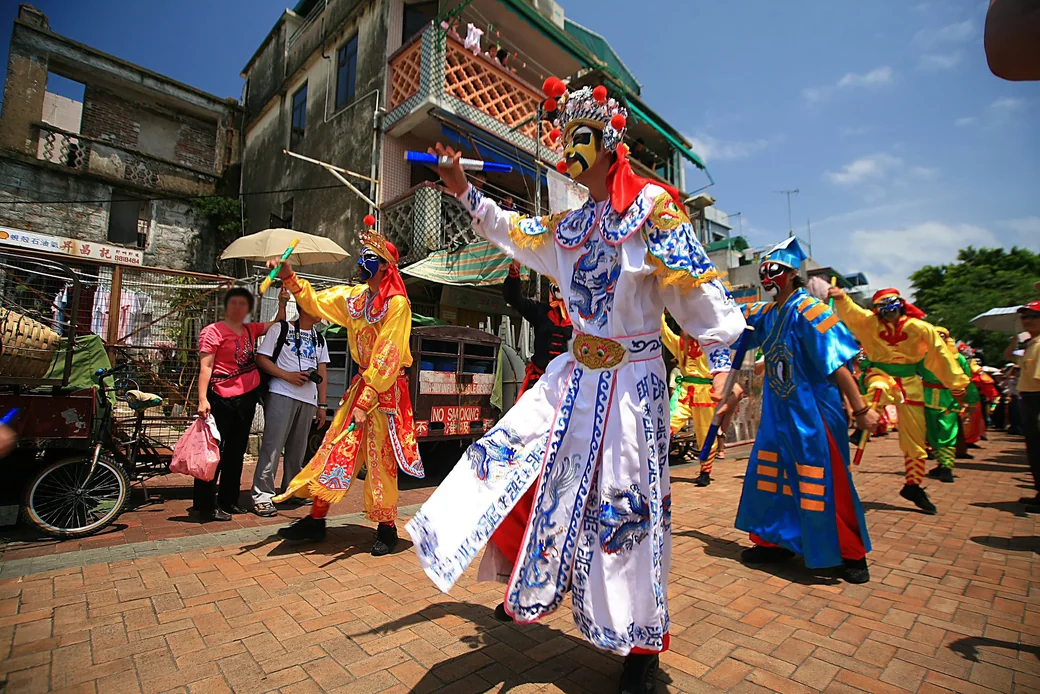
The Piu Sik (floating colours) parade usually begins in the early afternoon and lasts a couple of hours. Children in splendid costumes, portraying gods, historical heroes, fairy-tale characters and popular sports stars, are secured on hidden steel supports so that they seem to float above the crowd, and being chosen is a great honour for a family. The procession, accompanied by lion dances, drummers and visiting troupes, loops from Pak She Street through San Hing Street and the back lanes before returning. Visiting groups tend to perform along the seafront Praya Road (waterfront road), while neighbourhood groups continue through the lanes. The best spots fill by around midday, so arrive early and pick a corner where the procession turns. Children are chosen to suit the height and weight the steel supports require, and they need to stay cheerful through hours in the sun.

Bun Scrambling Competition: Tower, Rules, Scoring and Champions

The climax of the festival is the Bun Scrambling Competition (the race up the bun mountain), a three-minute dash up a 14-metre tower covered with about 9,000 plastic ping on (peace and safety) buns. Buns near the base score one point, those in the middle three and those at the top nine, so strategy matters as much as strength. Twelve finalists, nine men and three women, qualify through earlier selection rounds, and trophies go to the leading men and the women's winner, plus a special Full Pockets of Lucky Buns award for whoever gathers the most. An invitation relay lets local teams meet athletes from neighbouring cities. The race returned in 2005 with proper climbing equipment, and the first Bun King, island resident Kwok Ka-ming, has since won the title more than ten times.

How to Watch the Midnight Bun Scramble in Cheung Chau

The final is held at the soccer pitch of Pak Tai Temple Playground, with an opening ceremony shortly before midnight. In recent editions, about 1,650 viewing places in four zones were available, with one pass per person handed out on a first-come basis from late in the evening near Pak She First Lane beside the fire station and along Ping Chong Road. Entry to the zones opens about half an hour later, so queue early. A ceremonial gong and the crowd's ten-second countdown send the climbers off, and firecrackers and fireworks follow the race. Since the final takes place outdoors, follow the official notices and the instructions of police and organisers on the day, and expect the programme to wrap up shortly after midnight.

Getting to Cheung Chau for the Bun Festival: Ferries and Timing

Ferries to Cheung Chau leave from Central Pier 5. Fast ferries take about 35 minutes and ordinary ferries about 50 to 55 minutes, with departures roughly every half hour on a normal day and extra sailings added during the festival. Because the island has almost no cars, everything is reached on foot, and the temple is a short walk along the waterfront from Cheung Chau Ferry Pier. If you want a good parade spot, plan to be on the island by around midday and take an early morning sailing to enjoy the shortest queues. After the final, extra late-night ferries and night buses are normally arranged, and notices are posted at Central Pier 5 and on Cheung Chau. Think about your return trip before the evening begins.

What to Eat at the Bun Festival: Ping On Buns and Local Island Bites

Ping On (peace and safety) buns are the festival's edible symbol: soft, round, steamed rice-flour buns stamped with red characters and filled with lotus seed paste, sweet red bean or sesame. Island bakeries, among them the family-run Kwok Kam Kee (opened in 1972), make them in huge numbers, and you will also find versions shaped like popular cartoon characters. During the vegetarian days, restaurants switch from meat and fish to tofu dishes, and even the local McDonald's serves a mushroom burger. Beyond the festival, try Cheung Chau's giant curried fish balls on skewers and its mango mochi (soft glutinous rice dessert wrapped around fresh mango). The buns on the competition tower are plastic, while the ones sold in shops are meant to be eaten.

Visitors trying the bun tower at the Climbing Carnival on Cheung Chau, Hong Kong

Climbing Carnival and Wishing Bun Tower: Try Bun Tower Climbing Yourself

Weeks before the main days, the Bun Carnival invites everyone to join in. At the Climbing Carnival, held at the soccer pitch of Pak Tai Temple Playground, visitors can try the real 14-metre competition tower wearing safety gear, while members of the Hong Kong climbing and mountaineering union explain technique and safety. There are also stall games, handicraft workshops, performances and a Wishing Bun Tower where you can leave a wish. Training sessions and selection contests for the competition take place on separate dates. The carnival is organised by the Hong Kong Cheung Chau Bun Festival Committee and the Leisure and Cultural Services Department together with local associations, and the official website lists the current programme and participation rules.

Bun Festival Visitor Tips: Weather, Crowds and Respectful Etiquette

Late spring in Hong Kong can be hot and humid, and parade days have reached around 34°C, so bring a hat, sunscreen, water and a small fan. Wear comfortable shoes, because the lanes are narrow and the pavements busy, and carry a power bank for photos and maps. At the temple, keep your voice low, leave room for worshippers and ask before photographing people at prayer. Admire the paper figures and offerings without touching them. Police and volunteers guide the crowds, so follow their signs and your day will flow smoothly. On the vegetarian days, local restaurants are happy to point you to meat-free dishes. Notices are posted at Central Pier 5, and information counters stand at Cheung Chau Ferry Pier and at the entrance of the playground.

Plan a Bun Festival Trip: Where to Stay, What to See and Nearby Festivals

Rooms on Cheung Chau fill quickly around the festival, so book early or stay in Central or elsewhere on Hong Kong Island and use the extra ferries. Combine the celebrations with the island's other pleasures: Tung Wan Beach, seafront seafood restaurants, small temples and cycling along the lanes. Hong Kong has related celebrations around the same season. The birthday of Pak Tai (Taoist sea guardian) is marked at the same temple on the third day of the third lunar month, the Tin Hau Festival (birthday of the sea goddess) follows on the twenty-third day, and temples across the city hold Buddha-bathing ceremonies on Buddha's Birthday itself. For a quieter alternative that day, visit one of those temples and join the gentle bathing of the Buddha statue.

Bun Festival Fun Facts: Little-Known Details and Local Stories

Hong Kong sorts its traditional celebrations into three kinds: zit (seasonal festivals), daan (birthdays of deities) and jiao (offering ceremonies). The Bun Festival belongs to the last group, which can last about a week and takes months of preparation. After a date clash with Buddha's Birthday in 2001, islanders consulted Pak Tai (Taoist sea guardian) through divination and fixed the festival to the eighth day of the fourth lunar month. Parade children once replaced the deity statues carried through the streets, and today they also appear as Olympic athletes and film characters. The festival even has a cameo in the animated film My Life as McDull, in which the little pig hero trains for the bun race, a nod that helped revive affection for the tradition.

Practical Information

When

The main day falls on the eighth day of the fourth lunar month, which is also Buddha's Birthday, usually between late April and late May. The celebrations last five days, from the fifth to the ninth day of that month. The Piu Sik (floating colours) parade begins in the early afternoon, and the bun scrambling final takes place at midnight, preceded by an opening ceremony.

Where

Pak Tai Temple and the adjoining Pak Tai Temple Playground, Pak She Street and Pak She Praya Road, Cheung Chau. Take a ferry from Central Pier 5 to Cheung Chau Ferry Pier; the temple is a short walk along the waterfront.

Cost

Free. The parade, the bun towers and the carnival can be enjoyed at no charge, and viewing passes for the final are handed out free of charge on the evening itself, one per person.

Tips

Reach the island in the morning, wear sun protection, carry water and keep a little time free for the ferry queues. Eat vegetarian on the main day if you can, and treat the temple area with the quiet respect of a place of worship.

Specific to this festival

Few festivals in the world mix a Taoist offering ritual, children who appear to float above the street and a three-minute race up a tower of buns. It all happens on one small island where every neighbourhood association, family bakery and fishing household takes part.

Accommodation and hotel options during Cheung Chau Bun Festival

Accommodation and hotel options around the event venue, with their prices, are shown by Stay22 as a map and a list. Cookies are used. Your consent is remembered on every page; you can turn it off at any time in the cookie settings.

Keep Exploring

Travel essentials for Hong Kong

Flights, transfers, car rental, eSIM and insurance — compare your options

Flights

Find the best route

Transfers

Airport & city ground transport

Car Rental

Drive at your own pace

eSIM

Stay connected on arrival

Insurance

Cover your trip