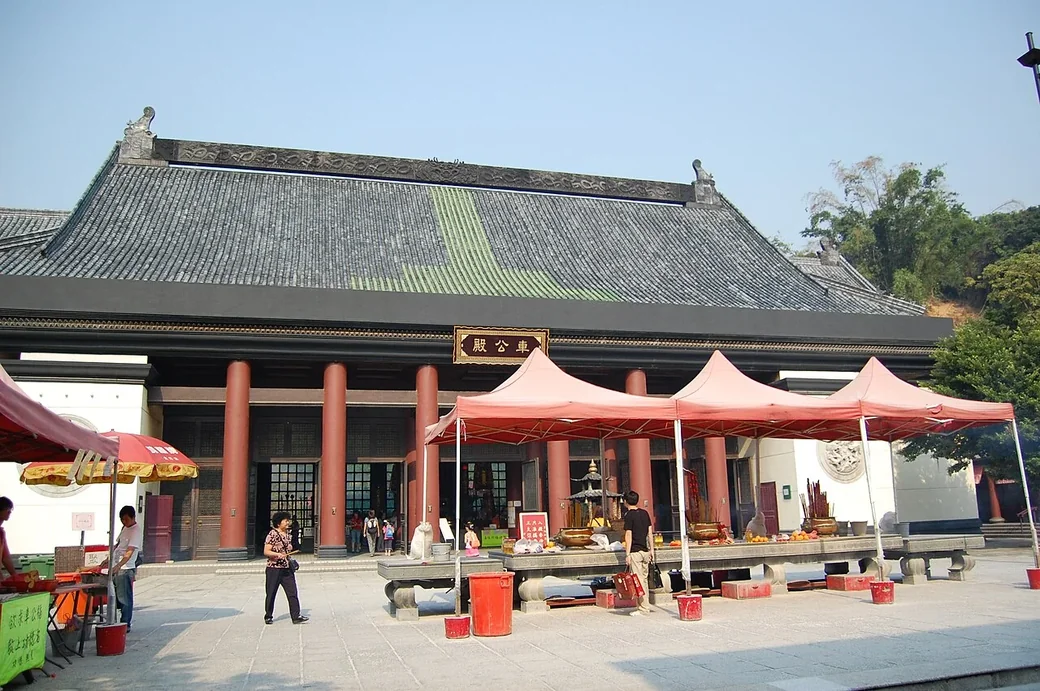
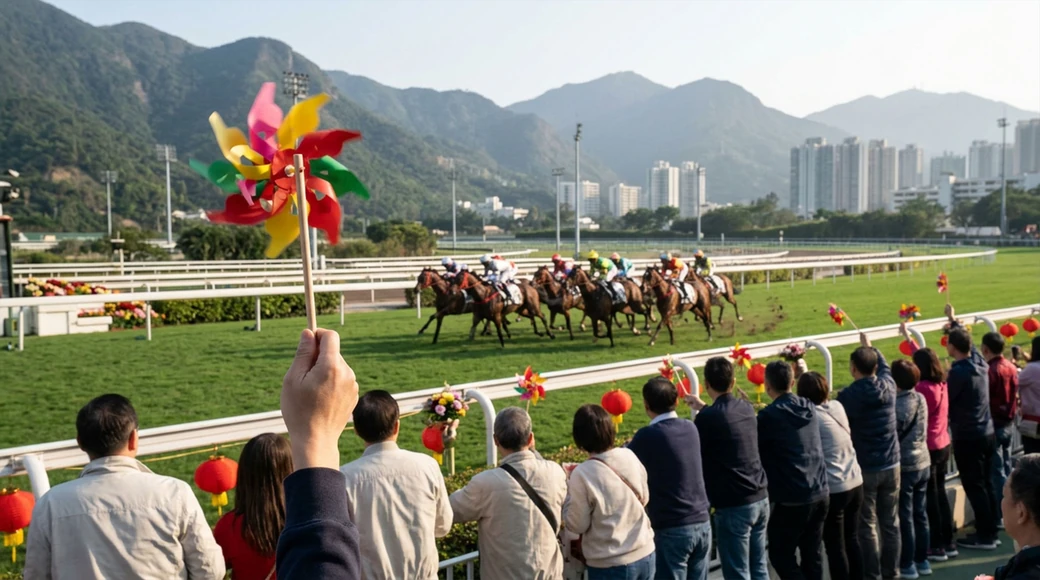
At Chinese New Year, Sha Tin hosts a festive race day at its racecourse, while visitors at nearby Che Kung Temple spin lucky windmills and make wishes for good fortune in the new year

Chinese New Year Race Day and Che Kung Temple Festival

Hong KongFeb 7, 2027 – Feb 8, 2027Partial public holiday↻ Annual
Duration:2 daysType:
Cultural & Traditional Festivals
Admission:From 10 HKDLocationAnnual event — exact dates may vary each year

On the third day of Lunar New Year, Hong Kong heads to Sha Tin: spin a lucky windmill at Che Kung Temple, then catch lion dances and live racing at the Chinese New Year Race Day at Sha Tin Racecourse.

About This Festival

Lunar New Year Day 3 in Hong Kong: Che Kung Temple and Sha Tin Race Day Guide

In Hong Kong, the third day of Lunar New Year is known as Chek Hau, the "Red Mouth" day. Tradition holds that tempers can flare easily, so families put off visiting relatives and spend the day at a temple or the races instead. Sha Tin is where it all comes together. In the morning you can make a wish and spin a windmill at Che Kung Temple; in the afternoon you can join the Chinese New Year Race Day at Sha Tin Racecourse for lion dances, stage shows and live racing. In recent years the temple has welcomed more than fifty thousand visitors in a single day, and the orderly queues and cheerful mood are part of the charm. It is entirely possible to combine both events in one day.
The Legend of Che Kung: A Song Dynasty General and Sha Tin's Plague Story

According to tradition, Che Kung was a Southern Song commander (1127–1279) remembered for putting down rebellions and driving away disease. Some devotees say he helped escort the young Emperor Bing southwards and was stationed for a time in Sai Kung. Three stories are told about how the Sha Tin temple began. In the first, a plague struck the New Territories in the late Ming era; villagers read that Che Kung stopped epidemics wherever he went, so they brought his statue and built a temple, and the illness is said to have ended on the day it was finished. In the second, Sha Tin villagers borrowed a statue of Che Kung's grandson from the old temple in Ho Chung, and the sickness eased after a procession. In the third, a feng shui (traditional geomancy, the art of arranging places for harmony) master advised building a temple where three streams meet, to guard Tin Sam village.

History of Che Kung Temple: The 1994 Main Hall and the Preserved Old Temple

No one knows exactly when the temple was first built; the earliest recorded renovation dates to 1890. The grand main hall that visitors see today was added in 1994, in front of the old temple, to cope with the festival crowds, and it is about eight times larger. The old building has been preserved in place, opens only occasionally, and holds Grade II status (a historic-building protection grade) in Hong Kong's historic building ranking. Tin Sam village once ran the temple, followed by an alliance of nine villages (Kau Yeuk); since 1936 it has been managed by the Chinese Temples Committee. To trace the roots of the tradition, visit the old Che Kung Temple in Ho Chung, Sai Kung (Grade I). I Shing Temple in Yuen Long, built in 1718, honours Che Kung alongside Hung Shing (a sea and weather deity). The Che Kung Festival is also listed in Hong Kong's Intangible Cultural Heritage Inventory.

How to Worship at Che Kung Temple: Incense, Windmill and Bronze Drum Step by Step

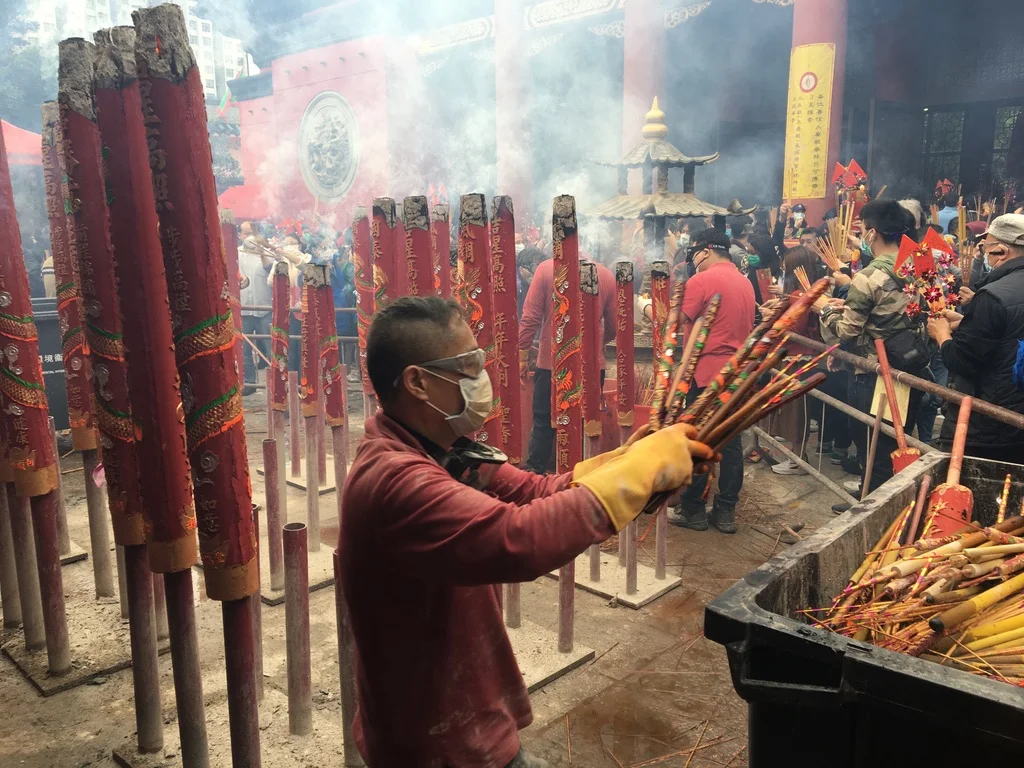
At the stalls by the entrance, visitors buy incense, candles, paper clothing for Che Kung and a windmill. The main deity is greeted first, and many also visit the side halls: Yuen Sun Hall (for peace through the year) and Fuk Luk Gung (for blessings and fortune). Next, write your name in the wish book and listen as temple attendants read the prayer at the offering table. Circle the windmill handle three times over the incense burner, then enter the main hall with three thin incense sticks and silently tell Che Kung your name, address and wish. Spin the windmill at the platform outside; attendants and signs show the direction. On the way out, strike the bronze drum beside the hall three times, which, according to belief, lets Che Kung know you have arrived. Many return at year's end to give thanks. Accounts differ on which way to turn it; some say it depends on how the previous year went, so the safest course is to follow the attendants' directions.

Fortune Sticks at Che Kung Temple and Hong Kong's New Year Prediction

Drawing a fortune stick (kau4 cim1) is a favourite part of a temple visit. You rent a stick container for a small deposit and turn it three times over the incense burner. Kneel before the statue, make your wish and gently shake the container until one stick falls out. The number on the stick matches a fortune slip, and temple attendants can help you interpret it. On the second day of Lunar New Year, the chairman of the Heung Yee Kuk (the statutory advisory body of the New Territories' village communities) and representatives of the Sha Tin Rural Committee (the local village committee) draw a stick on behalf of Hong Kong. The verse, written in classical Chinese poetry, is interpreted and widely discussed in local media every year; drawing a stick for the city has been recorded since at least the 1980s. In some years the temple also hands out God of Wealth and Tai Sui (the guardian deity of the year) cards.

The Che Kung Windmill Tradition: Spinning Your Luck Around

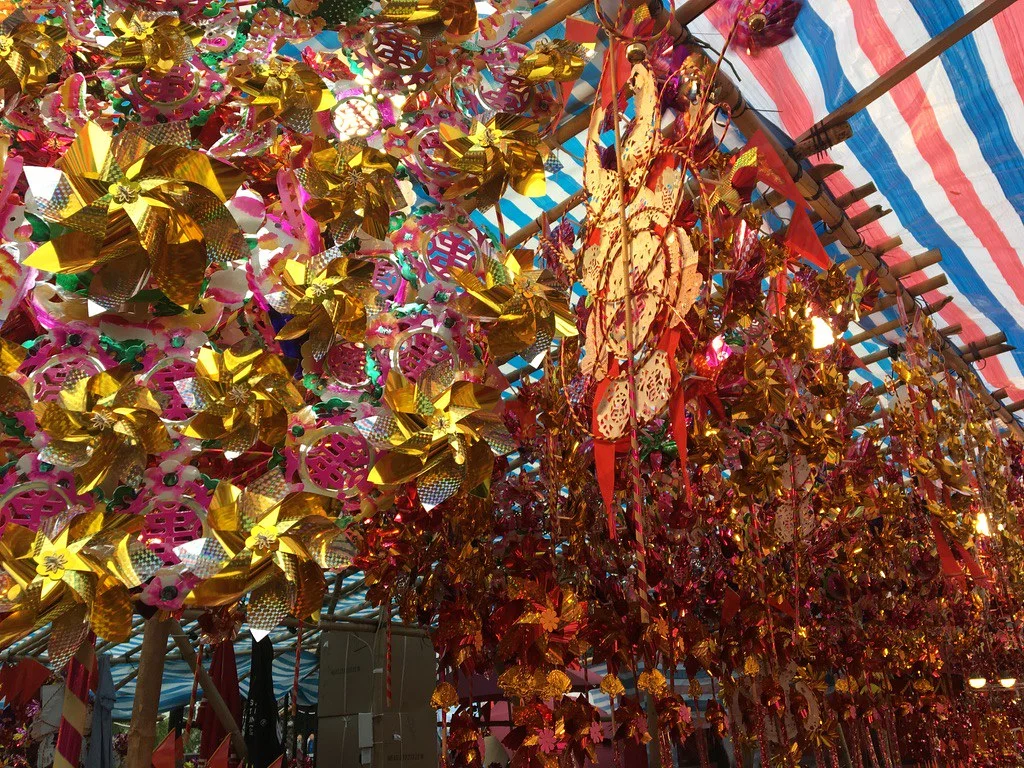
The windmill is the symbol of Che Kung Temple. Beside the main hall stands a copper wheel shaped like turbine blades, and by tradition turning it means to turn heaven and earth, setting the coming year's luck in motion. Visitors buy colourful paper windmills from the stalls outside. Some devotees make a point of bringing home a windmill bigger than last year's, and place it according to feng shui (traditional geomancy) principles. At the outdoor altar, temple attendants have traditionally raised worshippers' windmills and called out wishes for health and peace. The racecourse has embraced the same symbol: on Race Day visitors have received windmill souvenir pens, and in recent years a giant windmill display has been a favourite photo spot. For stall owners, these are the liveliest days of the year.

Chinese New Year Race Day Programme: Lion Dances, Shows and Sha Tin Racing

The Chinese New Year Race Day is a festive race meeting staged by the Hong Kong Jockey Club (HKJC) at Sha Tin Racecourse. Gates open before midday. In the Parade Ring (the circle where horses are shown to the crowd), a variety show with singing is followed by lion dances and the eye-dotting ceremony that brings the lions to life, which senior officials have often attended. A performer dressed as the God of Fortune poses for photos, and in recent years the decorations have included a giant windmill, a peach blossom grove and horse sculptures. Ten or eleven races are run through the day, and the main race has been named after the zodiac animal of the year. Past guest performers have included singer Hins Cheung and MINNIE of (G)I-DLE. The racecourse admits visitors aged 18 and over.

History of Horse Racing in Hong Kong: From Happy Valley to Sha Tin Racecourse

Horse racing came to Hong Kong in 1846 at Happy Valley, and in the early years there was just one meeting a year, held at Lunar New Year. Ordinary spectators watched from a large rock beside the course, known as the "Big Drum Rock". The Hong Kong Jockey Club was founded in 1884, and Chinese members were admitted from 1926. Racing resumed in 1947 after the wartime break, turned professional in 1971, and night racing began at Happy Valley in 1973. Sha Tin Racecourse opened on 7 October 1978 on reclaimed land; it holds 85,000 spectators, with two grandstands and stables for about 1,260 horses. Hong Kong also took part in hosting the equestrian events of the 2008 Beijing Olympics. Penfold Park, in the centre of the course, is named after Robert Bernard Penfold, the Club's first professional general manager.

Sha Tin Racecourse Visitor Guide: Tourist Entry, Rules and How to Get There

The public enclosure is entered by paying with an Octopus card (Hong Kong's contactless transit and payment card), and tourists aged 18 or over who hold a valid travel document can show their passport at the Tourist Channel (the visitors' entry lane). Restaurants and hospitality areas can be booked through the HKJC website. Seats in the Parade Ring are first come, first served and overnight queuing is not arranged; before the gates open, use the queuing zone near Entrance 1. If seats fill up, you can watch the opening show on the big screen in the outdoor forecourt. For safety, bring a light bag rather than tripods, folding stools or ladders. The easiest way to arrive is on the MTR (Hong Kong's metro) East Rail line to Racecourse station, which opens on race days only, so check that your train is signed for Racecourse. Alternatively, walk from Fo Tan station, Exit C.

How to Get to Che Kung Temple: MTR, Crowd Management and Opening Hours

The temple sits between Tai Wai and Che Kung Temple MTR stations (address: 7 Che Kung Miu Road). Tai Wai station, Exit B, is slightly closer; from Che Kung Temple station (Tuen Ma line, Exit B) you cross through the pedestrian tunnel and walk about five minutes along Che Kung Miu Road. During the festival, police set up a one-way pedestrian flow around Tai Wai station, Che Kung Miu Road and Chui Tin Street, and recommend public transport. Stalls of the Che Kung Festival Fair line the way. The temple extends its hours in the festival season and stays open through some nights, so early mornings or night-time visits are a good choice for a calmer experience; the Chinese Temples Committee announces current hours. The main entrance has steps, so wheelchair users may wish to ask for advice beforehand.

Che Kung Temple Etiquette: What to Bring and How to Behave

Enter the main hall with just three thin incense sticks. Paper clothing and gold paper go into the special collection cart that replaces a burner, for safety and the environment. Tradition suggests leaving jade jewellery at home when worshipping. Queue patiently, follow the one-way flow and the attendants' signals, and feel free to ask staff about the windmill direction and the order of the ritual. When taking photos, keep the worshippers' path clear and your voice low. Dress in comfortable layers for the cool winter air, and choose good walking shoes for the queues. At the racecourse the dress code is generally relaxed, with sporty and smart outfits seen side by side. Carrying an Octopus card and a little small change makes stall purchases and transport easier.

One Day, Two Traditions: Che Kung Temple and Sha Tin Racecourse Route, Photo Spots and Surroundings

Temple in the morning and racecourse in the afternoon is a plan many locals know well. The two stops are linked by MTR: from Tai Wai, the East Rail line runs to Racecourse station on race days. The colourful windmills in the temple courtyard and the festival decorations at the racecourse make the best photo spots. About 0.9 km on foot from the temple are the Hong Kong Heritage Museum and the riverside promenade along the Shing Mun River, both pleasant for a break. On the first evening of the holiday the International Chinese New Year Night Parade lights up Tsim Sha Tsui, and on New Year's Eve Wong Tai Sin Temple holds its first-incense tradition; Lunar New Year flower fairs around the city complete the picture. Programmes change each year, so check official announcements.

What to Eat Around Sha Tin: Racecourse Restaurants and Tai Wai Food Stops

New Year treats are served at the racecourse throughout the day. Pak Sing Restaurant (5/F Grandstand II) is a Chinese restaurant in the public enclosure and pairs Cantonese cooking with track views. Champion Circle on the 3rd floor of Grandstand 1 offers Chinese, Western and Asian dishes with panoramic views over the Parade Ring and the winning post. Jump cafe (2/F Grandstand II) serves Western-Asian meals with digital games, and the Genso digital hub has several places to eat and drink. If you want a table on Race Day, book ahead through the HKJC website. The Tai Wai neighbourhood around the temple is known for its food scene too, so cafes and local restaurants are a good way to wind down after your visit.

Cantonese New Year Greetings and Che Kung Glossary: 5 Essential Phrases

New Year wishes in Hong Kong are spoken in Cantonese. san1 nin4 faai3 lok6: happy New Year. gung1 hei2 faat3 coi4: wishing you prosperity. san1 tai2 gin6 hong1: good health to you. maan6 si6 jyu4 ji3: may everything go as you wish. maa5 dou3 sing4 gung1: success arriving at a gallop, a perfect line for Race Day. Mini glossary: ce1 gung1 daan3, Che Kung's birthday; fung1 ce1, windmill; kau4 cim1, drawing a fortune stick; ho6 seoi3 maa5, the New Year horses that race at Lunar New Year; cek3 hau2, the "Red Mouth" day. Offering these greetings to a stallholder or a fellow visitor is sure to bring a warm smile.

Fun Facts, Folk Beliefs and Legends About Che Kung and the Race Day

According to a folk tale, mice hold a wedding on the night of the third day, so some families switch off the lights early and leave a little rice, salt or sweets for them. A popular saying goes that you rise early on the first two days and sleep your fill on the third. Che Kung's birthday on the second day of the first lunar month is the best-known date. The temple is also a meeting point for families who come only once a year, and windmill sellers say visitors are especially generous on these days. Racing and Lunar New Year have been linked in Hong Kong for more than 180 years, and Deng Xiaoping's 1987 remark "horses will keep running, dances will keep going" is a symbol of racing's place in city life. Senior officials visit both the temple and the racecourse during the festival.

Practical Information

When

The festival follows the Lunar New Year calendar, so the dates shift every year. Che Kung's birthday falls on the second day of Lunar New Year, while the busiest temple visits and the Race Day at the racecourse usually take place on the third day. The temple is open during daytime hours, with extended hours and some all-night openings in the festival season. Racecourse gates open in the late morning and the first race runs around midday. The Chinese Temples Committee and the Hong Kong Jockey Club (HKJC) announce the current programme each year.

Where

Che Kung Temple stands at 7 Che Kung Miu Road in Tai Wai, midway between Tai Wai and Che Kung Temple stations of the MTR (Hong Kong's metro). Sha Tin Racecourse is in the same district, next to Racecourse station on the East Rail line, which runs on race days only. The two venues are easy to link by MTR.

Cost

There is no ticket for Che Kung Temple and donations are voluntary; incense, candles and windmills are bought separately at the stalls outside. Public enclosure entry at Sha Tin Racecourse is paid with an Octopus card (Hong Kong's rechargeable contactless transit and payment card) at the gate. Visitors aged 18 or over with a valid travel document can enter free through the Tourist Channel (a dedicated entry lane for visitors) by showing their passport. Restaurant tables and reserved areas carry extra charges.

Tips

Travel by MTR, because a one-way pedestrian flow is set up around the temple during the festival and public transport is recommended. Early mornings and the late-night opening hours feel calmer. Wear comfortable shoes and layers, and carry an Octopus card. The racecourse welcomes visitors aged 18 and over; for safety, pack a light bag instead of tripods, folding stools or ladders. At the temple, temple attendants will happily explain the order of the ritual and which way to turn the windmill.

Specific to this festival

Few places let you spend Hong Kong's traditional "Red Mouth" day in two such different ways: in the morning at a temple, in the afternoon at the races. The windmill tradition crosses over to the racecourse, where visitors receive windmill souvenir pens and a giant windmill display becomes a photo spot. Other highlights are the New Year fortune stick drawn on behalf of Hong Kong, the lion dance and "eye-dotting" ceremony, a photo with the God of Fortune, and a main race named after the zodiac animal of the year.

Accommodation and hotel options during Chinese New Year Race Day and Che Kung Temple Festival

Accommodation and hotel options around the event venue, with their prices, are shown by Stay22 as a map and a list. Cookies are used. Your consent is remembered on every page; you can turn it off at any time in the cookie settings.

Keep Exploring

Travel essentials for Hong Kong

Flights, transfers, car rental, eSIM and insurance — compare your options

Flights

Find the best route

Transfers

Airport & city ground transport

Car Rental

Drive at your own pace

eSIM

Stay connected on arrival

Insurance

Cover your trip