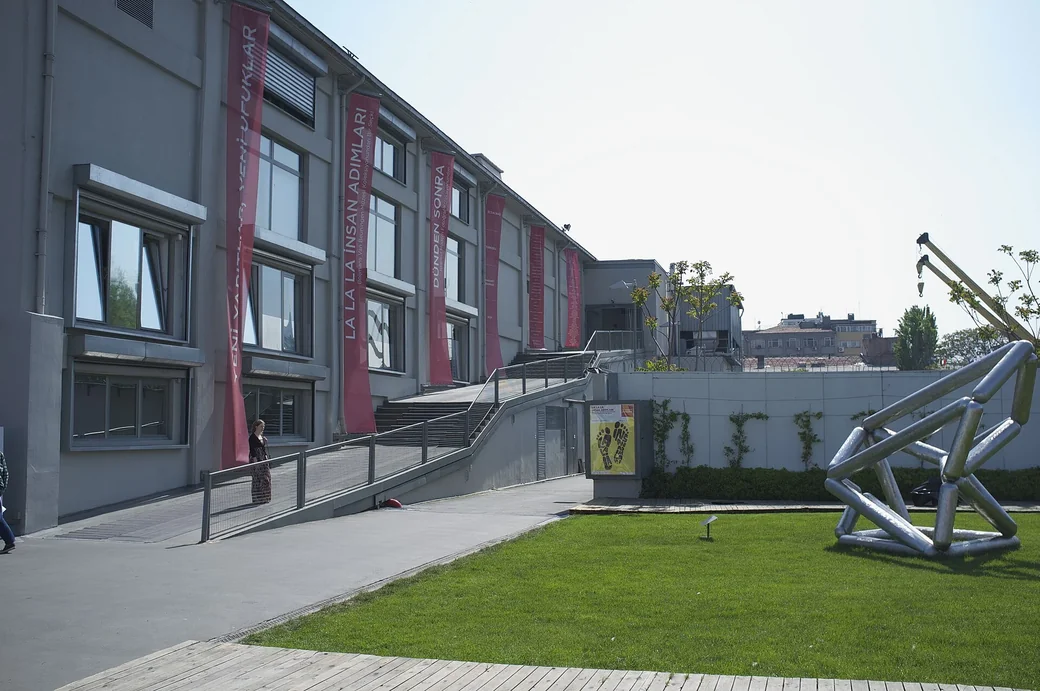
Contemporary Istanbul art fair, with visitors admiring paintings, sculptures and installations at international gallery booths in a bright exhibition hall

Contemporary Istanbul

IstanbulSep 21, 2027 – Sep 26, 2027↻ Annual
Duration:6 daysType:
Film, Literature & Visual Arts Festivals
Admission:From 2660 TRYLocationAnnual event — exact dates may vary each year

Istanbul's international contemporary art fair, held every autumn at the restored Tersane Istanbul shipyard on the Golden Horn, with galleries from more than a dozen countries, a waterfront sculpture park and the CIF Dialogues talks programme.

About This Festival

What Is Contemporary Istanbul? Istanbul's International Contemporary Art Fair Explained

Contemporary Istanbul, widely known as CI, is the city's flagship international contemporary art fair and one of the best-established events in Istanbul's autumn culture calendar. Every year galleries, artists, collectors, curators and museum professionals gather on the shores of the Golden Horn to show, sell and discuss modern and contemporary art. The fair is organised by the Contemporary Istanbul Foundation, an art, culture and education foundation, and it was founded by the collector and hotelier Ali Güreli. Akbank has been its main partner since the very first edition in 2006. Beyond the gallery stands, CI builds a wider programme of talks, special projects and public art, so a visit feels as much like a large exhibition as a marketplace for collectors. Today the venue is Tersane Istanbul, a restored shipyard that gives the whole event a distinctive maritime backdrop. The founder is affectionately known in the art world as the art-loving Ali Pasha. Before the fair he took part in founding the Marmara hotel group and was among the founding partners of the Lütfi Kırdar Congress and Exhibition Palace. The foundation's full name is the Contemporary Istanbul Art, Culture and Education Foundation, and its stated motivation is to present Istanbul's cultural potential to the world through contemporary art.
History of Contemporary Istanbul: From Art Istanbul to the Golden Horn Shipyard

The story begins with Ali Güreli's earlier fair, Art Istanbul, held at the Lütfi Kırdar Congress Centre between 2001 and 2005. Contemporary Istanbul followed with its first edition in 2006 and stayed at Lütfi Kırdar for roughly fifteen years. Its founder has described the first decade as a period spent building the conditions of an art market and teaching the public how to collect. By its tenth edition the fair had grown to more than one hundred galleries and welcomed tens of thousands of visitors. The pandemic years brought an online edition, and with its sixteenth edition in 2021 the fair moved to the newly restored Tersane Istanbul, where it was the very first event to be hosted. In 2025 Contemporary Istanbul celebrated its twentieth edition, and since 2019 the foundation behind it has been led by Ali and Rabia Güreli. A few milestones show the scale over time. The tenth edition counted 102 galleries and about 86,000 visitors, and the fourteenth drew roughly 74,000 including preview days. The first edition at Tersane brought over 40,000 visitors in four days, with concerts of the Akbank Jazz Festival held on site. The seventeenth edition presented 66 galleries and initiatives from 22 countries and 1,476 works by 558 artists, the eighteenth had 75 galleries from 22 countries with 21 first-time participants, and the nineteenth about fifty galleries from 14 countries. The twentieth edition showed 52 galleries from 16 countries, 931 works by 579 artists and welcomed 54,320 visitors. The twenty-first brought 70 galleries, 736 artists, 1,372 works and 38,500 visitors, with the number of foreign visitors up by half compared with the previous edition. The founder recalls visiting Art Basel while dreaming of starting the fair, and Akbank's chair has noted two decades of sponsorship.

Tersane Istanbul: The Historic Shipyard That Hosts Contemporary Istanbul on the Golden Horn

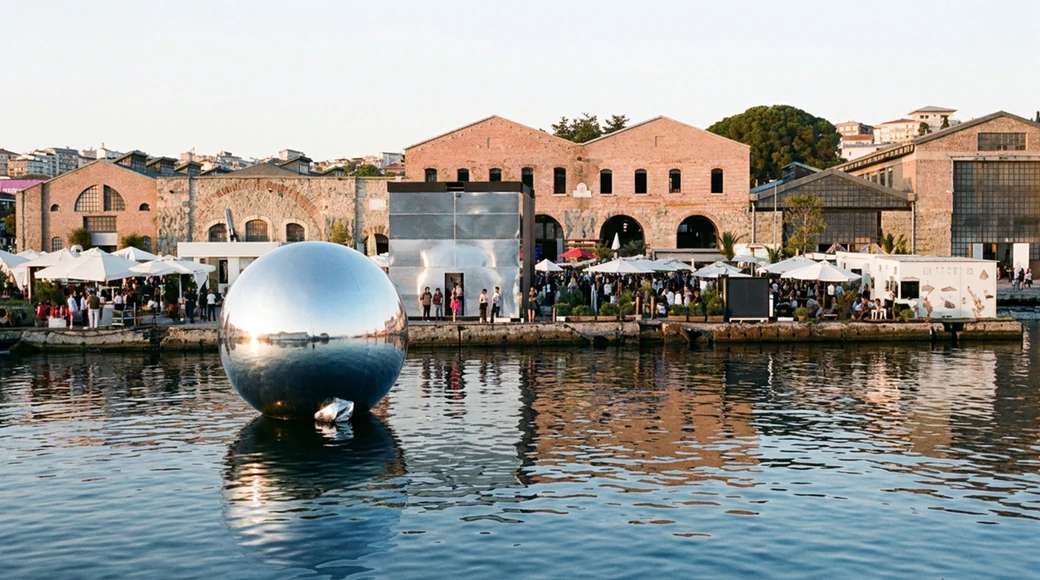
Contemporary Istanbul takes place at Tersane Istanbul, a restored historic shipyard on the Golden Horn in the Kasımpaşa area of Beyoğlu. The former shipyard has been reborn as a cultural and leisure district with hotels, a shopping mall, restaurants, cafés and a long waterfront promenade, and the fair was the first event ever staged there. Inside, the exhibition spreads across large halls, arranged in recent editions as Hall A, Hall B and Hall C, while the shoreline and open courtyards host monumental works and installations. The setting means that industrial architecture and open water become part of the viewing experience rather than a neutral backdrop. The address is Taşkızak Tersanesi Caddesi No: 2, and in one recent edition the talks programme was held in the Rixos Tersane Istanbul hotel, a short walk inside the same complex. The complex is generally open from morning until late evening every day, so a fair visit can easily run into dinner. The outdoor area known in one edition as The Yard hosted installations, and in another edition the terrace of Rixos Hall A displayed artworks. The venue also acts as the fair's cultural destination partner. In the most recent layout the exhibition occupied the larger upper halls, reached by steps, which created a compact route that moves from gallery stands to talks and special projects without leaving the building.

Contemporary Istanbul Sections Explained: Main Gallery Hall, New Grounds, Newcomers and Solo Shows

The heart of the fair is the main gallery section, where dealers from Istanbul and abroad present painting, sculpture, photography, video, installation and mixed media. Around it sit dedicated platforms. New Grounds is open to galleries founded within the last five years, which makes it the best place to spot emerging names. Newcomers gathers galleries joining Contemporary Istanbul for the first time, and in recent editions around twenty galleries have debuted each year. Solo Shows gives an entire stand to a single artist, while museums, foundations and artist-run initiatives add an institutional layer. Recent editions have counted roughly fifty to seventy-five galleries and initiatives from fourteen to twenty-two countries, showing between about nine hundred and fifteen hundred works by several hundred artists, so there is always something to discover. In the most recent edition 22 galleries took part for the first time, most of them from abroad, among them Galerie Tanit, Pearl Lam Projects, Whitestone Gallery, Michel Rein, Jessica Silverman and Von Lintel. New Grounds hosted nine galleries founded within the previous five years, including Friedrichs Pontone, Ka, Karpuchina Gallery, Method Gallery, Rast Gallery and Shiva Zahed. Five solo presentations gave a whole stand to one artist each, and in total the fair counted 70 galleries from 16 countries, 736 artists and 1,372 works.

Focus Sections at Contemporary Istanbul: A New Regional Spotlight in Every Edition

Each edition of the fair adds a curated Focus section that puts one art scene under the spotlight. One recent edition looked at New York, with gallery presentations and panels featuring leaders of major museums. The following edition turned to Asia, bringing galleries from Hong Kong, Shanghai, Tokyo, Seoul, Singapore and New Delhi, along with works by artists such as Tatsuo Miyajima. A photography platform, CI Photo Focus, was also launched once under the direction of Simone Klein, formerly head of photography at Sotheby's, presenting twenty artists and an exhibition drawn from the Borusan Contemporary photography collection. Because the focus changes, regular visitors keep finding something new, and first-timers receive a clear thematic route through a very large fair. It also explains why every edition feels different from the last. The New York-focused edition ran a two-day programme and created new collaborations with institutions from Toronto and Montreal. The Asia-focused edition gathered Pearl Lam Projects, Whitestone Gallery, Takato Kano Gallery, Method Gallery and Silk Art House, with artists including Tatsuo Miyajima, Jin Meyerson and Cody Choi, plus paper works and paintings by Shozo Shimamoto, a pioneer of the Gutai movement (the post-war Japanese avant-garde art group), presented by Artvisor. Nineteen institutions from eleven Asian countries joined the guest programme. The photography platform of an earlier edition was shaped by a selection committee of Coşar Kulaksız, Kumru Eren, Leyla Ünsal, Sarp Kerem Yavuz and Tony Ventura.

Sculpture Park on the Golden Horn: Monumental Outdoor Art at Contemporary Istanbul

One of the fair's most photographed features is the Contemporary Istanbul x Tersane Istanbul Sculpture Park, a trail of monumental works placed along the shoreline and in the open areas of the shipyard. A recent line-up counted a dozen pieces, including Jaume Plensa's roughly seven-metre-high Juana facing the water, steel arcs by Bernar Venet, a sculpture by Arne Quinze and a rock-formation tower by Arik Levy. An earlier edition took works by Ugo Rondinone and other artists onto the waterfront terraces, and a sculpture by the actor Johnny Depp also drew wide press attention. Walking the trail is the easiest way to enjoy the fair with the skyline of the Golden Horn as a backdrop, and it combines well with a coffee on the promenade between visits to the gallery halls. Other works in the most recent trail included Bahadır Baruter's pair of Fatties sculptures, Ecem Yerman's Hathor and Threshold Guardian, Mert Ege Köse's Fractal Moments, Thomas Schönauer's Galaxa 2 and Sheikh Rashid Al Khalifa's Inhabited Crate, curated by Marc-Olivier Wahler. The Bunnyman by Johnny Depp was shown through the SIGG Art Foundation. In an earlier edition nineteen works by artists including Onur Mansız, Semih Zeki and Ugo Rondinone were placed in public areas along the Golden Horn and on the terrace of Rixos Hall A, and for the twentieth edition the venue hosted four large-scale installations that tied the shipyard's historic fabric to contemporary art.

Special Projects and Installations at Contemporary Istanbul: Light Art, Art Cars and Collaborations

Alongside the galleries, every edition commissions special projects, usually together with cultural or brand partners. Recent examples include exhibitions presented with Akbank Sanat, a presentation of BMW Art Cars created by celebrated artists, a light installation inspired by the Golden Horn's maritime past, a luminous commission on a hotel clock tower elsewhere in the city and a pavilion designed by an architecture studio. Interactive works invite visitors to take part, a collection devoted to women artists has been presented, and one partner even launched a limited-edition watch developed with a master watchmaker. These projects spill beyond the stands into corridors, courtyards and the open air, so it pays to follow the fair map rather than only the gallery list. The most recent edition offers a good picture of the range. Akbank Sanat presented the exhibition Garip Şeyler Oluyor, curated by Hasan Bülent Kahraman, with works by Nazif Topçuoğlu, Gülin Hayat Topdemir and Esra Özdoğan. BMW brought A.A.Murakami's installation Symbiosis, made of light, mist and bubbles, to Istanbul after its showing in Basel. Chisato Matsumoto combined the traditional shibori technique (Japanese resist-dyeing of folded, bound fabric) with light and movement in Sail of Light, the MIA Art Collection joined for the first time with a presentation about women artists and inequality in the art world, and a special presentation honoured the late artist Mustafa Horasan. Murat Palta's interactive work with Asperox turned visitors into part of the piece, Ardan Özmenoğlu showed a new work developed from his Laundromat project, and an airline's loyalty programme presented It Starts With You, red mirrored cubes that form its ampersand symbol only from one viewpoint. House of Brothers presented two works with Seçkin Pirim, Trendyol Art showed Balkan Karışman's The View, which changes with the viewer's movement, the Peninsula Istanbul presented Lin Fanglu's textile installation She's Bestowed Love, and L'OR Espresso showed Fırat Engin's work made of coffee capsules. Samsung presented The Frame with an Art TV selection from a global digital art archive, Maison Yirmisekiz's What's Next? gave visibility to eight independent artists under 35, and the official watch partner Salon Kantièm launched an Istanbul Edition of just 50 watches developed with the watchmaker Konstantin Chaykin. The twentieth edition added a 1975 BMW Art Car by Alexander Calder shown with Julie Mehretu's art car for the collection's fiftieth anniversary, Grimanesa Amorós's light works Passage and Maritime on a clock tower at the Peninsula Istanbul, a pavilion by Wangan Studio and a LEGO exhibition titled This Is the Work of Girls.

CIF Dialogues: The Talks Programme of Contemporary Istanbul and Its Speakers

CIF Dialogues is the talks series run by the Contemporary Istanbul Foundation, usually over the first two days of the fair. Each year has a theme, from Istanbul and the shifting landscape of art to a reflection on the long and winding road of global art. Panels cover collecting, patronage, the future of cultural institutions, the meeting point of architecture, technology and art, and the changing position of Istanbul on the art map. Past speakers have included Jennifer Blei Stockman of the Guggenheim, Anne Pasternak of the Brooklyn Museum, Jean Cooney of Times Square Arts, the artist Summer Wheat, the architect Kulapat Yantrasast and Akiko Miki of the Naoshima New Museum of Art. Sessions take place inside the Tersane complex, so you can move from the stands to a panel in minutes, and a digital platform, CIF Bridges, continues the conversation during the year. In the most recent edition the series ran under the title The Long and Winding Road. Architect Kulapat Yantrasast opened it, and speakers included Marc-Olivier Wahler of the Geneva Museum of Art and History, Tim Schneider and Thomas Girst, with leaders from institutions such as the Asian Art Museum, the Naoshima New Museum of Art, the V&A and the Jaipur Centre for Art. The 2025 programme asked whether Istanbul can offer a model of resilience and reinvention and whether digital art will define the next two decades; it included the collector Pierre Sigg and a panel on residencies in Istanbul's living heritage with Tersane's arts and culture director. Earlier editions explored photography, art in public spaces and artist residencies. The foundation's artistic director, the artist and journalist Sarp Kerem Yavuz, often moderates, and the first CIF Bridges event, Art in Asia Today, paired him with Nick Buckley Wood, Sotheby's head of private sales for Asia.

Artists and Names Shown at Contemporary Istanbul: From Banksy to Jaume Plensa

Over the years the fair has shown work by internationally known artists alongside Istanbul's own scene. A gallery presented Banksy in a past edition, Borusan Contemporary showed Ivan Navarro's neon sculpture, Ugo Rondinone's work appeared in the public art programme, and the shoreline has welcomed monumental pieces by Jaume Plensa, Bernar Venet and Arne Quinze. The Asia-focused edition included Tatsuo Miyajima, famous for his LED counters, and celebrity attention came with a sculpture by the actor Johnny Depp. Since line-ups change every year, the official gallery list and the mobile app are the best places to see who is exhibiting. For repeat visitors the real pleasure is spotting lesser-known artists whom galleries introduce to Istanbul for the first time, because many careers begin with exactly that kind of encounter. Gallery stands in the most recent edition showed works by Yayoi Kusama, Alfredo Jaar, Helena Almeida and Ali Kazma, while the Asia focus presented Tatsuo Miyajima, Jin Meyerson and Cody Choi alongside Shozo Shimamoto, a pioneer of the Gutai movement (the post-war Japanese avant-garde art group). Earlier editions introduced visitors to artists such as Ichwan Noor, Ola Kolehmainen and Chul-Hyun Ahn through their galleries, and the Banksy and Ivan Navarro presentations of the tenth edition are still remembered by regular visitors. Photography, neon, video, painting and monumental sculpture all find a place, so the list of names is as varied as the visitors.

How a Contemporary Istanbul Week Unfolds: Opening Reception, VIP Preview and Public Days

The fair follows a rhythm familiar from international art fairs. It opens with an invitation-only reception, followed by a VIP preview day for collectors, curators and institutional guests, when the talks programme also begins. The general public is admitted for the remaining days, typically four to five days ending on a Sunday. Behind the scenes a VIP programme brings guests from dozens of countries to private collections, museums, galleries and artist studios, and recent editions have hosted well over a thousand VIP visitors. If you want a calmer atmosphere with time to talk to gallerists, aim for the first public days, since weekends tend to be busier. Check the official programme each year, because daily hours and the exact sequence of preview days can change from one edition to the next. In the most recent edition the invitation-only opening reception was called At First Sight. The VIP preview welcomed guests from 37 countries and representatives of 148 institutions, among them 50 art institutions, 39 galleries, 19 museums and 12 art advisory firms, and the Asia focus brought 19 institutions from 11 countries. Expert-led guided tours are also scheduled from the VIP preview day, which makes it a good moment for first-timers who want context while the halls are still quiet.

How to Get to Contemporary Istanbul at Tersane: Free Boats and Metro Shuttles

Tersane Istanbul sits right on the Golden Horn, so the fair is just as reachable by sea as by land. In recent editions the organisers have run free boat services for ticket and invitation holders from piers on both sides of the city, such as Kadıköy, Beşiktaş and Kabataş. Boat capacity is limited, so boarding passes should be reserved in advance through the official ticketing platform. Free shuttle buses have also connected the Şişhane Metro station and the Halıcıoğlu Metrobüs stop with the venue throughout the fair, and visitors staying around Taksim can combine a short walk with the shuttle. Because routes and piers have changed from year to year, confirm the current transport plan on the official website a few days before your visit. In the twentieth-anniversary edition boats left from the Karaköy, Kabataş, Beşiktaş and Kadıköy piers, and an earlier edition used city ferries to the Hasköy pier, reachable from Kadıköy, Üsküdar and Beşiktaş. The boat passes are reserved on the same ticketing platform as the fair tickets. Visitors who prefer to stay close to the venue can also book one of the hotels inside the Tersane complex itself, which turns the fair into a short walk from the room.

Contemporary Istanbul Tickets, Mobile App and Entry Rules: What to Know Before You Go

Tickets are sold through the official ticketing partner Biletix, with different categories depending on the day, and digital tickets are stored in the free Contemporary Istanbul app alongside the daily schedule, the exhibitor directory and the fair map. Rules published for recent editions asked visitors not to bring outside food or drinks, noted that a ticket becomes invalid once it is scanned on exit and warned of possible waiting times when the venue reaches capacity. Children under six did not need a ticket, pets were welcome and visitors agreed to the non-commercial use of event photographs. Guided tours with an expert guide and headsets are offered separately and require a fair ticket. Because conditions are updated for every edition, always re-read the current terms on the official site before you buy. The fair is organised under the supervision of the national union of chambers and commodity exchanges in line with the fairs law, Law No. 5174. The organisers take photographs and videos during the event for press and promotion. In recent rules student tickets could be bought only at the door with a student card, and guided tours asked participants to arrive at the starting point fifteen minutes early and ran with a minimum of ten people. Separate tickets were sold for the VIP preview and for each guided-tour slot, so check which one you need before you book.

First Time at an Art Fair? How to Plan Your Visit to Contemporary Istanbul

Contemporary Istanbul suits seasoned collectors and curious first-timers alike. Remember that gallery stands are commercial presentations, so works are for sale and gallerists are happy to explain an artist's background if you ask. Begin with the map in the mobile app, pick the sections that interest you, and add one talk and the sculpture trail to avoid gallery fatigue. Expert-led guided tours are designed precisely for newcomers who want context. Allow at least half a day, wear comfortable shoes because the halls are large and the site includes stairs and waterfront paths, and bring a light layer for the breezy Golden Horn shore in early autumn. Photography rules can vary from stand to stand, so ask before you photograph a work, and keep your phone charged for the digital ticket and the map. Tersane's own shops and restaurants stay open into the evening, which helps to split a visit into two parts. A simple route is to start in the halls with the section that interests you most, join a guided tour or a talk, and finish on the sculpture trail at the waterfront. The mobile app keeps the schedule, the exhibitor directory, the fair map and your digital ticket in one place. Guided tours in the latest edition were led by experts and combined museum-like projects, art installations and a selection of international galleries, which makes them a good first step if the size of the fair feels overwhelming.

Around Contemporary Istanbul: Waterfront Dining, Light Art and Istanbul's Autumn Art Season

The fair is easy to combine with the rest of Tersane Istanbul, where waterfront cafés, restaurants and panoramic views of the Golden Horn fill the gaps between gallery visits. The Contemporary Istanbul Foundation has also launched the Golden Horn Light Festival, a series of luminous installations along the shoreline, and one edition lit up a hotel clock tower elsewhere in the city. September and October are among Istanbul's busiest art months, when museums, galleries and, in biennial years, the Istanbul Biennial open major shows, so a trip can be built around several exhibitions at once. Plan an evening by the water after the halls close, and use the fair as the starting point for a wider art itinerary across both sides of the city. Next door, the historic Haliç Shipyard houses İstanbul Sanat, a cultural centre with exhibitions, a library and a performance area. Tersane itself offers two luxury hotels, a shopping mall and a wide choice of restaurants and cafés. Other events share the season, such as Artweeks, the 212 Photography festival and exhibitions at Borusan Contemporary. The twentieth edition coincided with the Istanbul Biennial, and the Golden Horn Light Festival, organised by the foundation, lit the shoreline for about ten days around the fair. Akbank Jazz Festival concerts have also been held at Tersane during a fair, so it is worth checking the venue's programme before you travel.

Contemporary Istanbul Foundation: Education, Soft Power and Year-Round Art Programmes

Behind the fair stands the Contemporary Istanbul Foundation, an art, culture and education foundation led by Ali and Rabia Güreli since 2019. Its founder describes Contemporary Istanbul as a soft-power brand that carries Istanbul's cultural potential to an international audience. The foundation organises CIF Dialogues, the CIF Bridges digital talks platform, public art projects and the Golden Horn Light Festival, and it supports access for younger audiences through student visiting hours. The fair also connects Istanbul's galleries and artists with institutions from dozens of countries, helping local practices travel beyond the city. Following the foundation's channels is therefore a good way to catch art activity throughout the year, not only during fair week, and to see how a single event has grown into a lasting cultural platform. CIF Bridges, the foundation's digital platform, opened with an event on art in Asia. The 2025 dialogues included a panel on residencies, tied to the artist residency programme at Aliée Istanbul within the Tersane complex, where the artist Summer Wheat worked. Akbank's chair has said that the bank has been the main sponsor for twenty years, and the foundation presents the fair as a way of strengthening the global image of Istanbul as a cultural hub. Visitors can therefore see the fair as one visible part of a much longer cultural effort.

Practical Information

When

Held once a year in early autumn, usually over a long weekend that opens with an invitation-only reception and a collectors' preview before the public days. Exact dates are announced each year on the official website.

Where

Tersane Istanbul on the Golden Horn in Beyoğlu (Taşkızak Tersanesi Caddesi No: 2). The fair fills the large indoor halls and the open-air waterfront.

Cost

Ticketed, with categories that depend on the day of the visit; the amounts are shown in the price fields. Children under six did not need a ticket in recent editions, and designated student visiting hours have been offered. Boat transfers have been free for ticket holders.

Tips

Buy tickets only from the official ticketing partner, reserve a free boat seat early, download the official app for the fair map, wear comfortable shoes and bring a light layer. Outside food and drink were not allowed in recent editions, and pets were welcome.

Specific to this festival

a sculpture park on the shore, a different regional Focus section every edition, the CIF Dialogues talks programme, platforms for young galleries such as New Grounds and Newcomers, and a venue that is a restored historic shipyard.

Accommodation and hotel options during Contemporary Istanbul

Accommodation and hotel options around the event venue, with their prices, are shown by Stay22 as a map and a list. Cookies are used. Your consent is remembered on every page; you can turn it off at any time in the cookie settings.

Keep Exploring

Travel essentials for Istanbul

Flights, transfers, car rental, eSIM and insurance — compare your options

Flights

Find the best route

Transfers

Airport & city ground transport

Car Rental

Drive at your own pace

eSIM

Stay connected on arrival

Insurance

Cover your trip