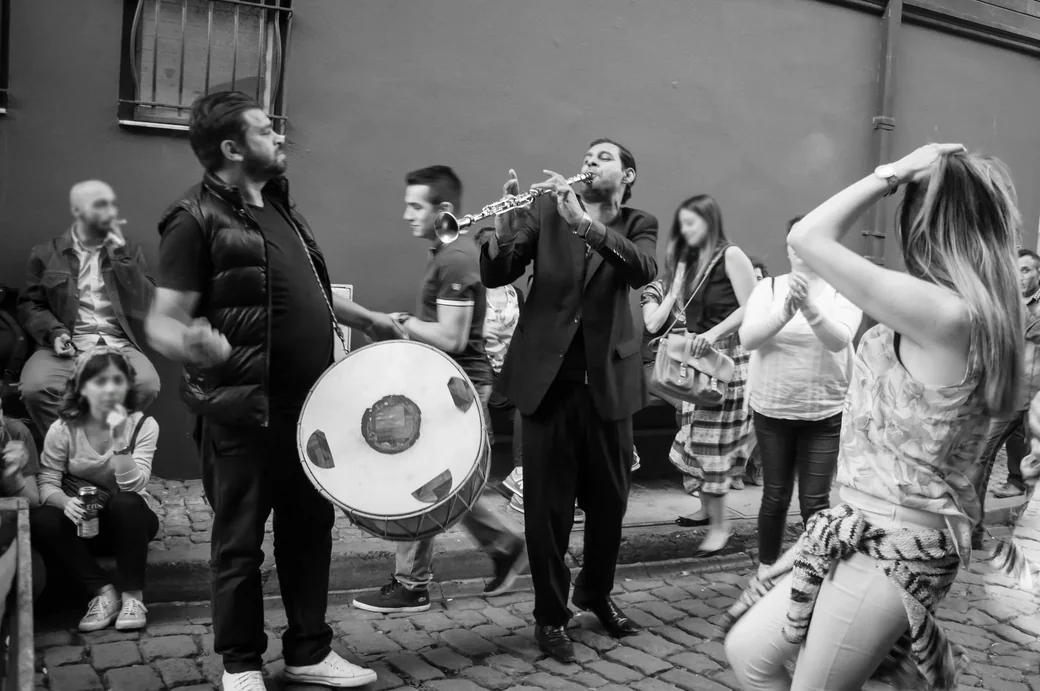
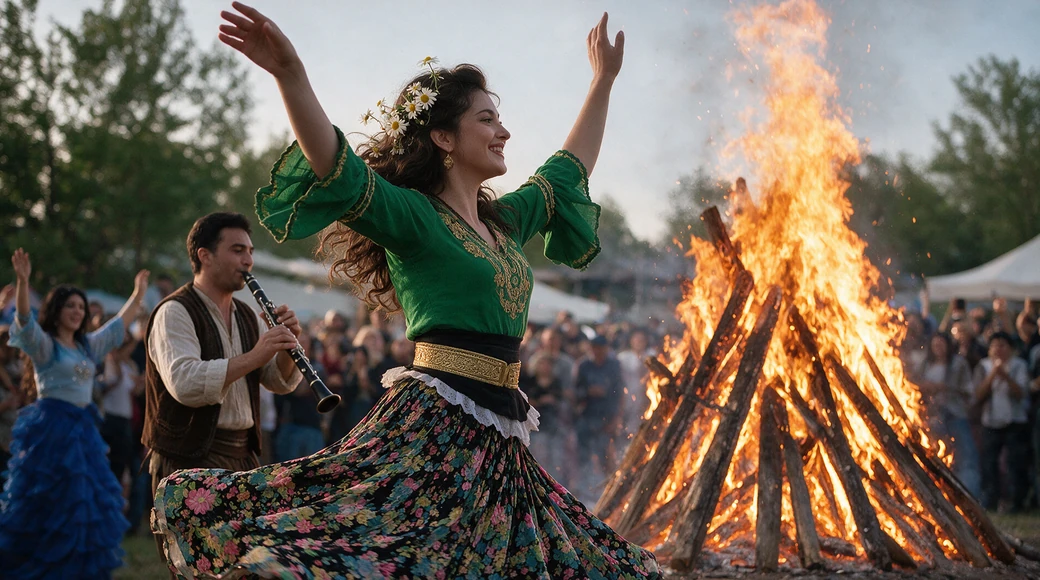
Hidirellez in Istanbul, the spring festival where crowds gather in a park with picnics, music and dancing, tying wishes to rose branches as dusk falls

Hıdırellez Spring Festival

IstanbulMay 5, 2027 – May 6, 2027↻ Annual
Duration:2 daysType:
Cultural & Traditional Festivals
Admission:FreeLocationAnnual event — exact dates may vary each year

Every night of 5 May, roses, bonfires and Roma brass bands greet the start of the warm season. Make a wish, jump the flames and join the dancing at Edirne's Kakava fire, in Istanbul's Ahırkapı and in parks and riverbanks across the land.

About This Festival

What Is Hıdırellez? The Night Hızır and İlyas Meet Under the Rosebush

Hıdırellez is the folk celebration of spring and the start of the warm half of the year. The name fuses two figures: Hızır (Khidr), who is believed to help people in trouble on land, and İlyas (Elijah), who helps those in trouble at sea. Tradition holds that both drank the water of life, so they never die, and that they meet once a year on the night of 5 May into 6 May beneath a rosebush. Where they step, the ground turns green and everything they touch is blessed with abundance. The day itself is called Ruz-ı Hızır, the Day of Hızır. The festival goes by many names: Hıdırellez, Hızır-İlyas, Ederlezi, Kakava, Haftamal, Eğrilce and Bahar Bayramı, the Spring Feast. Celebrations lean strongly on Hızır, and rituals devoted to İlyas are rare. Hızır turns every place he passes green, while İlyas stirs the winds at sea, which is why the day is described as both green and breezy.
The History and Origins of Hıdırellez: A Spring Rite With Many Roots

No single culture can claim Hıdırellez. Researchers describe a blend of ancient spring rites from Anatolia, Mesopotamia and the ancient Aegean world, seasonal ceremonies brought from Central Asia, and the Islamic cult of Hızır and İlyas. Trees, water, fire, trips out to the countryside and sacrifice are all older strands woven into it. The same date is also the feast of Saint George, known locally as Aya Yorgi, for churches that follow the older calendar. Among the Roma of Thrace the celebration is called Kakava. In 2017 UNESCO inscribed it on its Representative List of the Intangible Cultural Heritage of Humanity as Spring celebration, Hıdrellez. Some oral accounts read the name Kakava as a festival of laughter and revelry. UNESCO notes that the rituals aim to secure the wellbeing, fertility and prosperity of families and communities and to protect livestock and crops, and that the heritage belongs to families, children, young people, adults, dancers and singers alike.

When Is Hıdırellez? Eve, Night and Dawn of 5–6 May Explained

Hıdırellez follows a fixed date, so it falls on 5–6 May every year and only the weekday changes. In the old Rumi calendar the same day was 23 April. The festival begins on the evening of 5 May, when people prepare their wishes and light fires. The sacred meeting of Hızır and İlyas is believed to happen during the night, and at dawn on 6 May wishes are collected and handed to running water. The rest of the day belongs to picnics, games and feasts. Folk tradition splits the year in two: the Hızır Days, the summer half, run from 6 May to 8 November, and the Kasım Days, the winter half, follow until the next spring. Because the date is fixed, big cities often move their programmes to the nearest weekend.

Make a Wish at the Rosebush: Hıdırellez Wish Rituals and Folk Beliefs

Make a Wish at the Rosebush: Hıdırellez Wish Rituals and Folk Beliefs

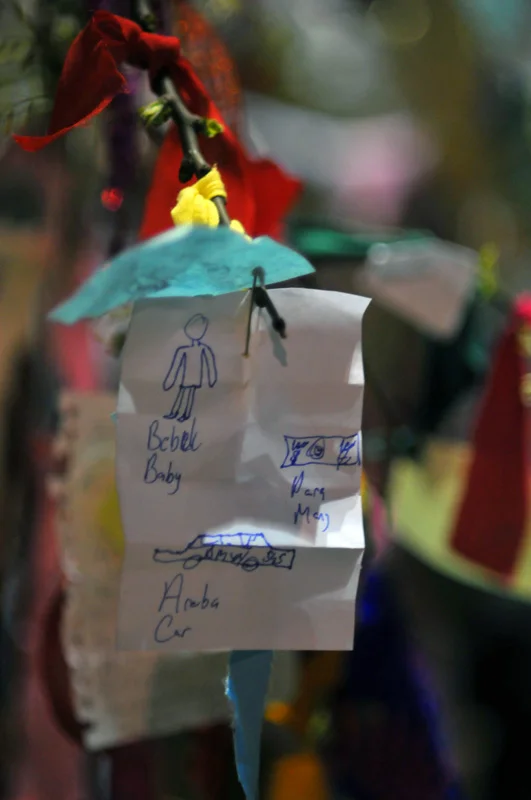
The best-known ritual is the wish. Since Hızır and İlyas are said to sit beneath a rosebush, people leave their wishes there on the evening before 6 May. Many draw the thing they long for, such as a house, a car, a child or a partner, on paper and tie it to a branch or press the sketch into the soil. Coins and small money pouches are hung on the rosebush or buried at its foot. In the morning the money is taken back and kept in the wallet, unspent, to attract abundance all year. In Çanakkale and elsewhere, beans are buried at the root, and a sprout by morning means the wish will come true. Some girls leave a ring or earring in a locked jar overnight to open their luck, a custom called baht açma. Some households also leave a jar of clean water at the foot of the rosebush overnight as a wish jar. Local variations abound: in Ağrı and Iğdır girls practise a fortune-telling custom called mantıvar, in Bolu people hoping for a baby make little cloth dolls, and in Burdur people build tiny houses of stones beside streams, all symbols of renewal and abundance.

Jumping Over the Hıdırellez Fire: Meaning of the Spring Bonfire Ritual

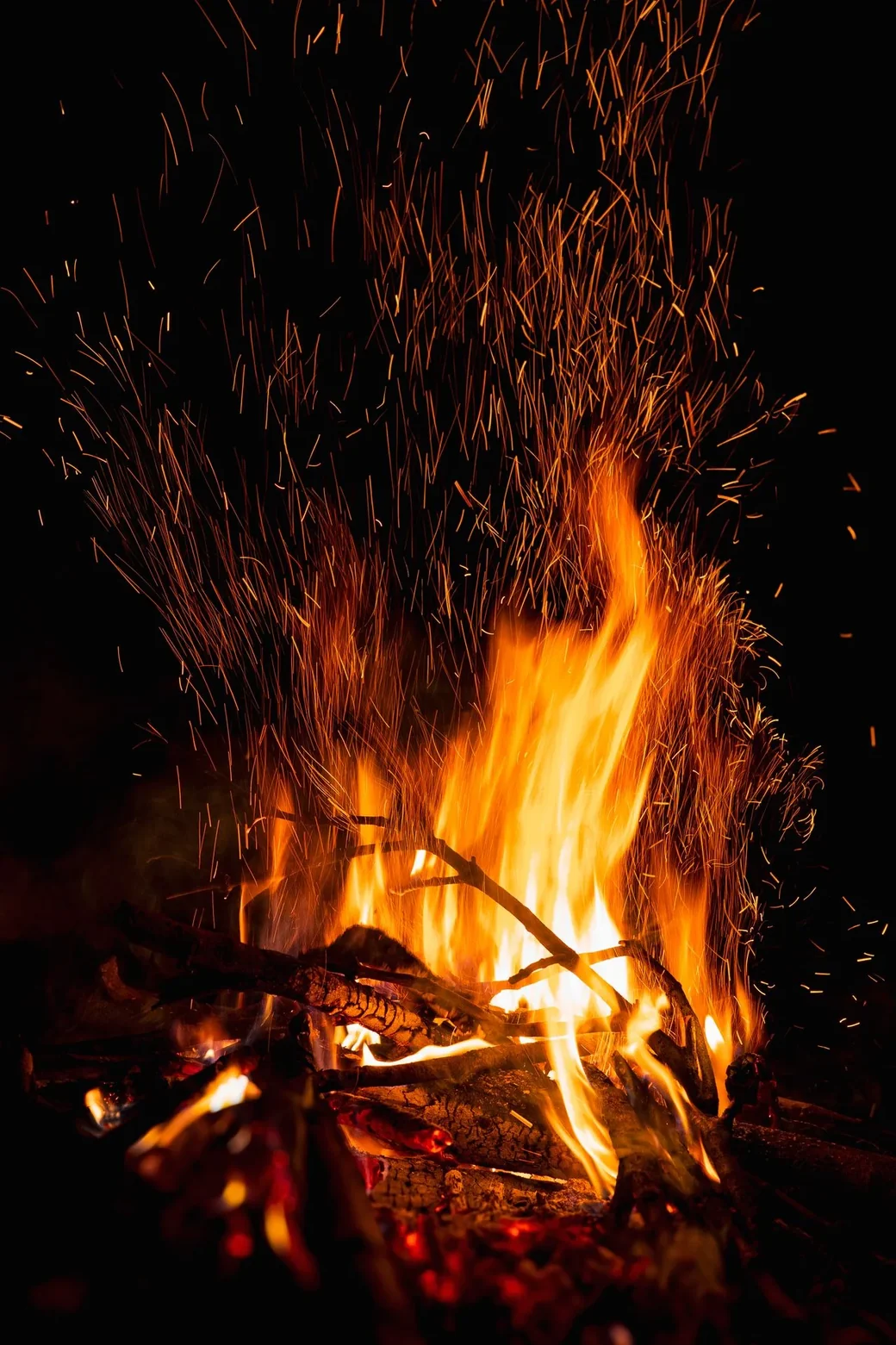
Fire is the loudest part of the celebration. As darkness falls, bonfires are lit in squares, parks, gardens and on seafronts, and people leap over the flames while silently making a wish. The jump is understood as purification, a way of leaving illness, bad luck and the heaviness of winter behind. In some places wheels are set alight, and in Ankara a traditional hammer-and-anvil ritual accompanies the fire. In Edirne the great Kakava fire is lit by city officials together with a Roma leader, and crowds then dance around it for hours. Keep a safe distance from the flames, avoid loose or synthetic clothing, and keep children close to an adult. Wait until the flames settle a little before you jump.

Dawn, Dew and Water: Greenery Rituals and Household Customs of Hıdırellez

Hıdırellez belongs outdoors. Celebrations traditionally take place among greenery, beside water or near a shrine, places often called Hıdırlık. Before sunrise people go to rivers, lakes and the sea to give their wishes to the water. In Balıkesir and Çanakkale families gather at the water's edge, and in Antalya crowds release wishes into the sea at Konyaaltı and where the Düden river meets the sea. Washing the face in morning dew is believed to bring health, and some Yörük villages (settlements of traditionally semi-nomadic herders) near Kütahya take their yearly yoghurt culture from dew. At home people clean the house, then leave cupboards, flour sacks, doors, windows and wallets open so that Hızır's touch can fill them. Rolling on the grass and playing on swings are old joys of the day.

Kakava in Edirne: Sarayiçi Fire, Roma Music and the Tunca River at Dawn

Edirne hosts the largest Hıdırellez celebration, known there as Kakava, the Roma version of the festival. The centrepiece is the Kakava fire on the Sarayiçi meadow beside the Tunca River. It is lit by the governor and city officials together with the Çeribaşı, the Roma community's leader, and with wishes for peace, love and abundance. Visitors jump over the flames and dance until late. Pilaf has traditionally been served here. At dawn comes the Bahara Giriş, the Entry into Spring, by the river. People wash their faces in the Tunca, release wishes into the water and hang branches on their doors for abundance, while Roma youths wade in if the weather allows. Music also fills Selimiye Square, Tahmis Square, Saraçlar Street and the Meriç Bridge area. Ahead of the festival, Roma musicians in festive dress parade through the centre with drums and clarinets to invite everyone, and on the day a procession led by the municipal band walks from the Kanuni Bridge to the fire. In Kakava belief the water itself must be charmed to bring the spring and the year's abundance. The dawn ritual takes place around sunrise. The Edirne celebrations spread over several days in early May, building up to the night of 5–6 May. Concerts and folk-dance shows fill the hours after the fire.

Hıdırellez in Istanbul: Ahırkapı Street Party and Park Celebrations

In Istanbul the Hıdırellez night is most closely tied to Ahırkapı, a historic Roma neighbourhood in Fatih beside Sultanahmet. Street celebrations began there around 2000, started by the founder of the Armada Hotel, Kasım Zoto, together with a dedicated festival association. As the crowds outgrew the lanes the event moved to Ahırkapı Park, and in 2011 the association announced that it had completed its mission and would no longer organise it, so the city's main programme moved elsewhere. Informal gatherings still fill the streets around Keresteci Hakkı and Şadırvan on the night, with giant wish trees hung with red pouches, brass bands on the corners and strangers dancing together, and the Ahırkapı Great Roma Orchestra remains the sound people associate with it. The organised celebration is now staged by the metropolitan municipality in a large city park, with the venue announced each year, while district municipalities add their own park concerts and rose saplings. Formats and organisers change from year to year, so check the announced programme in the days before. From the Sultanahmet tram stop Ahırkapı is a five-minute walk.

Hıdırellez Beyond Istanbul and Edirne: İzmir, Antalya, Ankara and Kırklareli

The festival is celebrated all over the land, usually by water or in a public park. İzmir marks it with fires along the seafront and in parks, wish balloons and wish trees tied with coloured thread, plus municipal events at Gündoğdu Square and Kültürpark. In Antalya, people gather at dawn on Konyaaltı beach and at Düden Park to give wishes to the sea. Ankara hosts gatherings in Gençlik Park, where a fire is lit and the hammer-and-anvil ritual is performed. Kırklareli keeps Kakava within its Karagöz Culture and Arts Festival in late May, with a procession and a fire in Millet Bahçesi. In Hatay, Christian communities traditionally light candles on Saint George's day. In Balıkesir's Edremit district people head for the creek banks. Universities and schools also hold their own campus celebrations with traditional games and a wish tree.

What to Eat at Hıdırellez: Spring Lamb, Pilaf, Keşkek and Edirne Specialities

What to Eat at Hıdırellez: Spring Lamb, Pilaf, Keşkek and Edirne Specialities

The Hıdırellez table is a spring table. Tradition calls for fresh spring herbs and the meat or liver of the season's first lamb, which is believed to bring healing, and slaughtering a lamb for the Hızır share and giving it to the poor is an old custom wherever the Hızır cult is strong. Families picnic with keşkek, a slow-cooked wheat and meat dish, spit-roasted lamb, rice pudding and a variety of pastries. At the Kakava fire in Edirne pilaf is traditionally shared. While you are in Edirne, try the city's protected local specialities: thinly sliced fried liver known as tava ciğeri, almond paste, deva-i misk, a spiced halva, and white cheese. Vegetarians will find plenty of pastries, salads and rice dishes in the picnic spirit of the day. Other Edirne treats worth a try are the almond cookie called kavala kurabiyesi and ciğer sarma, a liver dish brought from the Balkans. The city's almond paste, deva-i misk and fruit-shaped scented soap make popular keepsakes.

Colours, Sounds and Dance: Roma 9/8 Rhythms, Drums and Flower Crowns

Hıdırellez sounds like drum and zurna, a loud double-reed pipe, with the clarinet weaving over a rolling 9/8 rhythm that Roma musicians play for dancing. Dancers add flower crowns, bright traditional clothes and the hip-swaying steps known as Roma havası, and visitors are happily pulled into the circle. The palette is spring green, the red of wish pouches and ribbons, and the orange of flames. The name Ederlezi also belongs to a famous Balkan Roma song, which Goran Bregović made known worldwide through film music. Istanbul's Ahırkapı Great Roma Orchestra is a well-known name of the street celebrations. Over everything drifts the smell of woodsmoke and spring blossoms.

Hıdırellez Etiquette: Joining In, Photographing Respectfully and Caring for Nature

Hıdırellez is open to everyone, and Roma participants themselves invite guests to join the joy. Step into a dance circle when invited, and clap along. When you photograph musicians, dancers or people making their wishes, ask permission before a close-up portrait. Treat the fire with care and keep your distance from it. Hang wishes on branches with natural material such as cotton strips or paper, and never break branches or tear rose stems. Leave the riverbank and the meadow as clean as you found them. Respect the people who mark the day in their own way, whether Christian communities lighting candles at a church on Saint George's day or families praying quietly at a shrine. When visiting a shrine, cover your shoulders and lower your voice.

Useful Hıdırellez Phrases: Greetings, Wishes and Proverbs Worth Knowing

A few local expressions open doors. “Hıdırellez'iniz kutlu olsun” (hih-duh-REL-lez-ee-NEEZ koot-LOO ol-soon) means Happy Hıdırellez. “Hızır yoldaşın olsun” (huh-ZUHR yol-dash-UHN ol-soon) wishes that Hızır be your companion, and in Alevi-Bektaşi homes you will hear “Hızır yoldaşın ola”. “Dilek tut” (dee-LEK toot) means make a wish. Two sayings use Hızır as shorthand for perfect timing: “Hızır gibi yetişmek” means to arrive just in time, like Hızır, and the proverb “Kul sıkışmayınca Hızır yetişmez” says Hızır only appears when a person is truly stuck. In Edirne, the Roma greeting “Merabayın” (meh-rah-BAH-yuhn) is used to welcome festival guests.

Planning Your Hıdırellez Visit: Crowds, Weather, Transport and Safety

Plan around two peaks: the evening fire and the pre-dawn river ritual. In Edirne, hotels in the city and nearby towns fill months in advance, so reserve early or join a day trip, and note that some visitors sleep in tents on the grounds. Early May can bring showers, so carry a raincoat and wear sturdy shoes for muddy riverbanks. In Istanbul take the tram to Sultanahmet instead of driving, as the streets around Ahırkapı are narrow and crowded. Keep your phone and wallet in a closed inner pocket in the dense crowd, and agree on a meeting point with your group. Flat park programmes are easier for strollers and wheelchairs than narrow streets or riverbank paths. Charge your phone, because you will take many photos. Festivities carry on in light rain, as several past editions showed, but an extra layer is still wise. When a big fire is first lit it can flare up suddenly, so stand well back at that moment. Bring a bottle of water and a light snack for long evenings outdoors.

Hıdırellez Insider Tips and Fun Facts From Locals

Locals call Hıdırellez a folk-calendar New Year, a fresh start rather than a simple spring feast. It is also considered a lucky day for engagements, since Hızır and İlyas are believed to be together. In villages the picnics continue on weekends through May, so the season stretches almost a month. Hızır is also honoured in a separate three-day fast in February by Alevi-Bektaşi communities, which is unrelated to the May festival. For photographs, the best moments are the mist over the river at dawn, the flames at dusk and the flower crowns on dancers. If the crowds feel heavy, choose a smaller city park or a quiet stretch of riverbank, where families gather to share food and drop wishes into the water. The same spring feast has sisters across the Balkans: Saint George's Day appears as Gergyovden, Đurđevdan, Dita e Shëngjergjit and Erdelezi, and in the Arab world a related Khidr–Elias feast has its own UNESCO listing. Nevruz greets spring on 21 March, while Hıdırellez greets the warm half of the year in May. Economically, Kakava counts among the events that most enliven Edirne's year, filling its hotels, restaurants and shops.

Practical Information

When

Every year on the night of 5 May into 6 May. Wishes are made at dusk, fires burn after dark and the dawn rituals take place around sunrise. Larger city programmes sometimes stretch over a long weekend, while Kırklareli's Kakava is held with the Karagöz festival in late May.

Where

There is no single venue. Edirne's Sarayiçi meadow on the Tunca River hosts the best-known Kakava fire, Istanbul's Ahırkapı and Sultanahmet streets remain the historic home of the city celebration, while the metropolitan municipality now stages its main programme in a large city park announced each year, and parks, seafronts and riverbanks in İzmir, Antalya, Ankara and many towns hold their own gatherings.

Cost

Free. The street celebrations, bonfires and park programmes are open-air and have no entry fee.

Tips

Arrive in the early evening for the fire and music, and be at the water's edge before sunrise for the dawn ritual. Early May can bring showers, so pack a raincoat and sturdy shoes. In Istanbul walk to Ahırkapı from the Sultanahmet tram stop, and in Edirne book a hotel months ahead or come on a day trip.

Unique to this festival

The belief that Hızır and İlyas meet beneath a rosebush on this single night; the wish ritual with rosebushes and flowing water; the custom of jumping over the fire; Roma 9/8 dance rhythms; a fixed date with no tickets or gates; and UNESCO recognition on the Representative List of the Intangible Cultural Heritage of Humanity.

Accommodation and hotel options during Hıdırellez Spring Festival

Accommodation and hotel options around the event venue, with their prices, are shown by Stay22 as a map and a list. Cookies are used. Your consent is remembered on every page; you can turn it off at any time in the cookie settings.

Keep Exploring

Travel essentials for Istanbul

Flights, transfers, car rental, eSIM and insurance — compare your options

Flights

Find the best route

Transfers

Airport & city ground transport

Car Rental

Drive at your own pace

eSIM

Stay connected on arrival

Insurance

Cover your trip