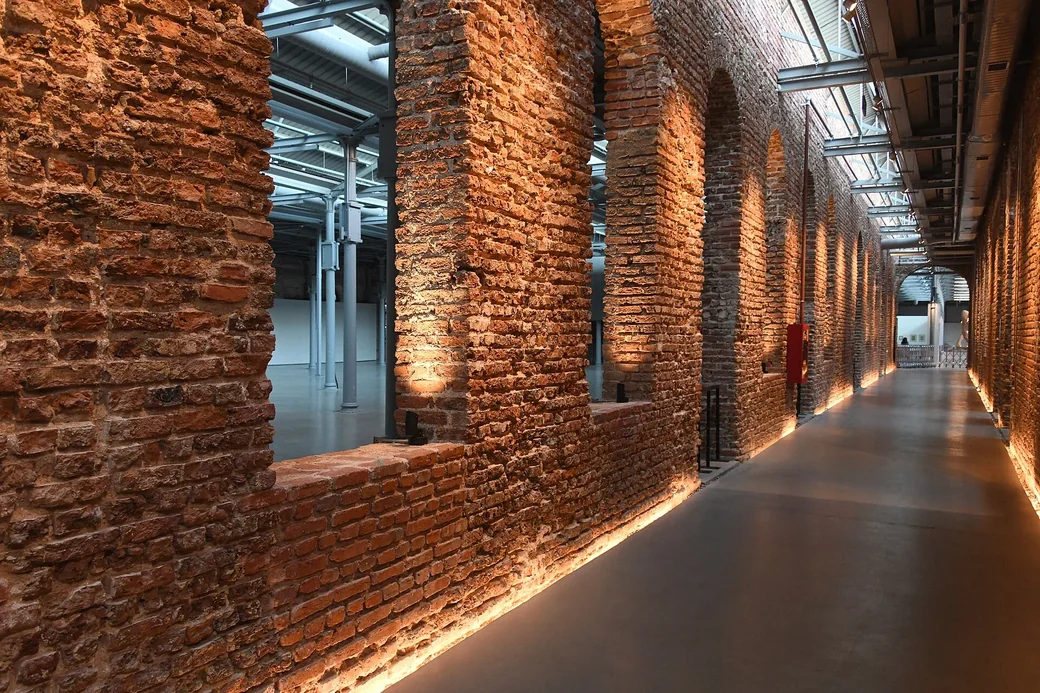
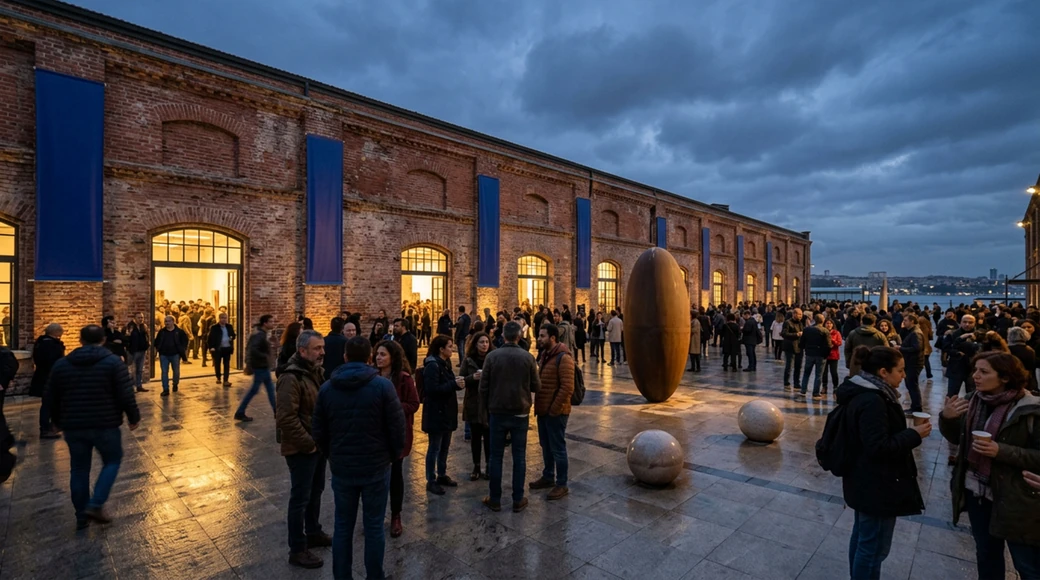
Istanbul Biennial, with visitors exploring large-scale contemporary art installations in historic buildings and converted spaces across the city

Istanbul Biennial

IstanbulSep 18, 2027 – Nov 14, 2027
Duration:58 daysType:
Film, Literature & Visual Arts Festivals
Admission:FreeLocation

A contemporary art exhibition organised by İKSV every two years since 1987. Curator-led, with no national pavilions, it fills historic buildings across Istanbul with new art, and admission is free.

About This Festival

Istanbul Biennial Guide: Contemporary Art in the Heart of the City

The Istanbul Biennial is a contemporary art exhibition that the Istanbul Foundation for Culture and Arts (İKSV) has organised since 1987. It takes place every two years and brings artists from many countries and cultures together with audiences across the city. According to İKSV, it is the largest international art exhibition in the region. Unlike older biennials, it does not rely on national pavilions. Instead, a curator, appointed after consultation with an international advisory board, writes a conceptual framework and then invites the artists and projects that respond to it. That is why every edition feels different: the title, the mood and even the map change each time. Alongside the exhibition itself you will find a public programme, learning activities and publications. Koç Holding has been the main sponsor since 2007, and the official website, bienal.iksv.org, is the best place to follow every announcement.
History of the Istanbul Biennial: How It All Began in 1987

The story begins in 1987, when İKSV, already known for its Istanbul festivals, organised the first Istanbul Biennial under the title Contemporary Art in Traditional Spaces. The curator and critic Beral Madra coordinated the first two editions, in 1987 and 1989. Instead of neutral gallery rooms, these early shows used historic buildings: the Hagia Eirene Museum, the Basilica Cistern (Yerebatan Sarnıcı) and a part of the Süleymaniye complex. Artists such as Sol LeWitt, Sarkis, Daniel Buren, Richard Long, Jannis Kounellis and Anne and Patrick Poirier made work for these places, in a city that had no dedicated space for contemporary art yet. The 1992 edition, directed by Vasıf Kortun, was called Production of Cultural Difference, and from then on the biennial adopted the single-curator model it still follows. Over the decades Istanbul has become a regular stop on the international contemporary art calendar.

Istanbul Biennial Editions: Themes and Curators Since 1987

Every Istanbul Biennial has its own title and curator, so reading the list is a small history of contemporary art. In 1995 came Orient-ation, curated by René Block, and in 1997 On Life, Beauty, Translations and Other Difficulties by Rosa Martinez. Paolo Colombo curated The Passion and the Wave in 1999, Yuko Hasegawa Egofugal in 2001 and Dan Cameron Poetic Justice in 2003. In 2005 Charles Esche and Vasıf Kortun presented İstanbul, and in 2007 Hou Hanru asked how optimism could be both possible and necessary in an age of global war. The collective WHW posed the question What Keeps Mankind Alive? in 2009, followed by an untitled edition in 2011 by Adriano Pedrosa and Jens Hoffmann. Later titles include Mom, am I barbarian? (2013), SALTWATER (2015), a good neighbour (2017), The Seventh Continent (2019) and The Three-Legged Cat (2025).

Istanbul Biennial Venues: Hamams, Warehouses and Historic Han Buildings

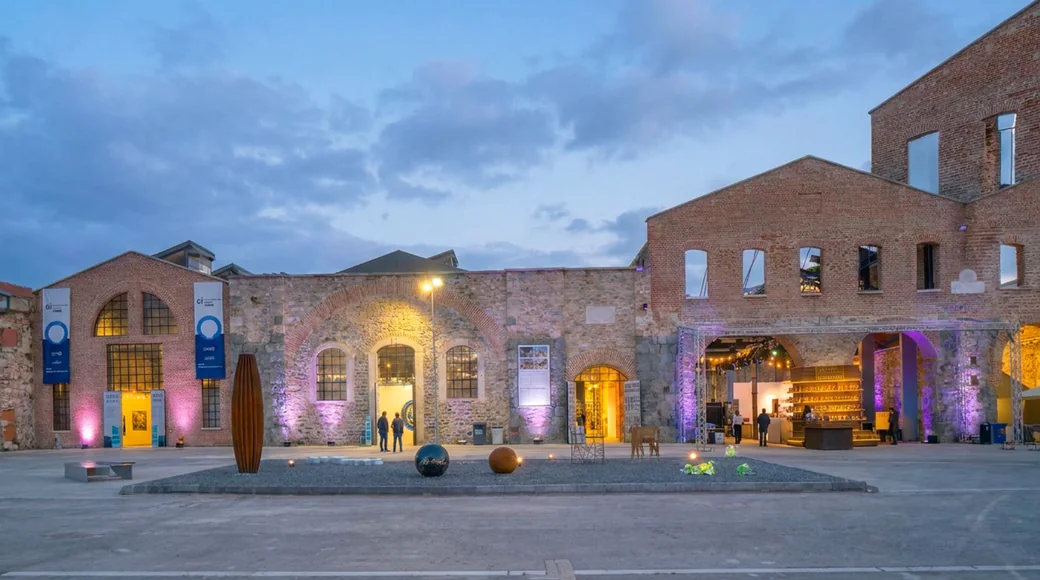
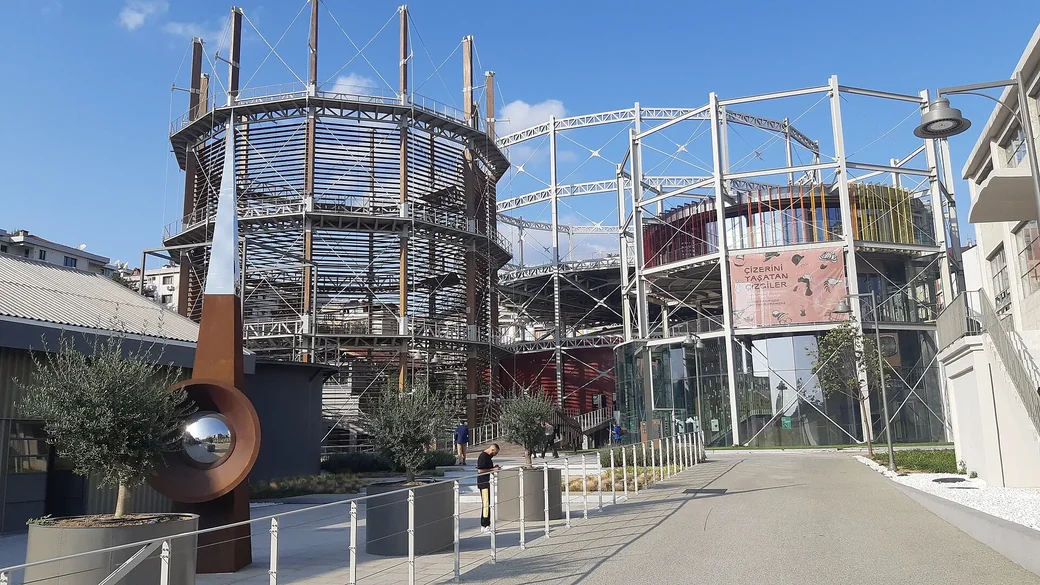
The Istanbul Biennial treats the city itself as an exhibition space. In 2009 and 2011 the main venues were the Antrepo warehouses in Tophane, right beside Istanbul Modern. In 2022 twelve exhibition venues were concentrated in Beyoğlu, Kadıköy and Fatih, and the biennial reached even further, into hamams (traditional steam bathhouse) such as the Çinili Hamam and the Küçük Mustafa Paşa Hamamı, the former gasworks now known as Müze Gazhane, a calligrapher's atelier, a medicinal plants garden in Zeytinburnu and even a metro tunnel under Taksim Square. The 2025 edition concentrated on eight venues in Karaköy and Beyoğlu: the Galata Greek School on Kemeraltı Caddesi, Zihni Han (a han is a historic commercial inn) on Tophane İskele Caddesi, Galeri 77, the former cone factory on Murakıp Sokak, Meclis-i Mebusan 35, the garden of the former French Orphanage on Boğazkesen Caddesi and Elhamra Han on İstiklal Caddesi. Stairwells, cellars and rooftops often become part of the show, and because venues change with every edition, check the official map before you set out.

How to Visit the Istanbul Biennial: Routes, Opening Hours and Practical Tips

Plan your visit around geography rather than a checklist. In recent editions the venues stood within walking distance of one another in Karaköy, Tophane and Beyoğlu, so a single afternoon could cover several of them, while the 2022 edition asked for longer hops between the European and Asian sides of the city. Venues were generally open every day except Monday, with last entry a little before closing, and the garden of the former French Orphanage stayed open into the evening. Hours can differ from venue to venue and from edition to edition, so confirm them on bienal.iksv.org. Some historic buildings have steep, worn stairs, which makes comfortable shoes a good idea. Popular venues can have queues at busy times, and weekday mornings are calmer. When big city events close the roads around Meclis-i Mebusan Caddesi and Kemeraltı Caddesi, the organisers advise using rail or ferry and arriving on foot.

Istanbul Biennial Guided Tours and Group Visits

Contemporary art does not always explain itself, and a guide can make the difference between puzzling over a room and enjoying it. İKSV organises regular guided tours that cover a single venue, several venues or the whole biennial, and private tours can be arranged too. The guides complete a special training programme supported by Koç Holding. To book, write to guidedtours@iksv.org. If you plan to come with your own group or hire your own narrator, tell İKSV in advance, giving the date, the time and the number of participants, so that venue capacity can be confirmed. In the most recent edition individual visitors and registered tours had priority at the door, groups of more than ten people sometimes had to wait, and groups larger than twenty could not be admitted because of space limits. Rules can change, so read the visit page of the current edition before you travel.

Istanbul Biennial Public Programme, Learning Activities and Publications

The biennial is much more than a set of exhibition rooms. Each edition comes with a public programme of performances, screenings, talks and workshops, and a learning programme for students and curious visitors. From 2018 to 2024 the Istanbul Biennial Production and Research Programme offered consultancies, workshops and seminars to artists and researchers. It used İKSV Alt Kat, a learning and interaction space in the Nejat Eczacıbaşı Building in Şişhane. In 2019 and 2020 established artists mentored fifteen young artists under the age of 29 and gave open talks there. During the 2022 edition children aged seven to nine joined activities in the Küçük Mustafa Paşa Hamamı. Previous biennial publications can be read online in the e-catalogue section of the website, and İKSV also publishes children's books linked to the biennial, such as the Opti and Pesi series. All of this makes the biennial worth following well beyond a single visit.

Istanbul Biennial Permanent Artworks: A Public Art Trail Across the City

Not every work in the biennial disappears when the show closes. In 2017, the year of the biennial's thirtieth anniversary, İKSV decided that each edition would leave one permanent artwork in a public space in Istanbul, realised together with Koç Holding. The first was Ugo Rondinone's neon sculpture Where Do We Go From Here?, which had stood in Taksim Square during the 1999 biennial and now sits at the Mustafa Kemal Cultural Centre near the Fatih Sultan Mehmet Bridge. In 2019 Monster Chetwynd's Gorgon's Playground, a sculptural playground inspired by fairy tales, arrived in Maçka Sanat Parkı. Ayşe Erkmen's stainless-steel Golden Horn in Golden Horn followed in 2022 in Akşemsettin Park, between Balat Hospital and the ferry dock. Khalil Rabah's Red Navigapparate, trees planted in barrels, now stands in the garden of Artİstanbul Feshane in Eyüpsultan. Together they make a self-guided art trail.

The Three-Legged Cat: Looking Back at the 18th Istanbul Biennial

The 18th Istanbul Biennial, titled The Three-Legged Cat and curated by Christine Tohmé, took its image from the city's cats: wild and domestic at once, wounded perhaps, but graceful. The first leg ran from 20 September to 23 November 2025 and presented 47 artists from more than thirty countries in eight venues in Karaköy and Beyoğlu, around the themes of self-preservation and futurity. The idea of three legs reflected a plan to spread the biennial from 2025 to 2027, but after Tohmé stepped down for personal reasons the later legs did not go ahead and the edition closed with this first one. More than 600,000 visitors came in ten weeks, the highest attendance in the biennial's history. The public programme included Selma Selman's Motherboards at Istanbul Modern, Alex Baczyński-Jenkins's durational dance piece at Arter's Karbon space and Ahmad Ghossein's monologue about life amid economic collapse. The film programme featured works by Maxime Hourani, Samar Al Summary, Lawrence Abu Hamdan and Suneil Sanzgiri. Tohmé's earlier projects include Home Works in Beirut and Sharjah Biennial 13.

17th Istanbul Biennial: Art in Hamams, Bookshops and Wetlands

The 17th Istanbul Biennial, curated by Ute Meta Bauer, Amar Kanwar and David Teh, was one of the most city-wide editions ever. Its twelve venues were concentrated in Beyoğlu, Kadıköy and Fatih, and many of them had never hosted a biennial before, while the programme also reached a calligrapher's and bookbinder's atelier, a hamam (traditional steam bathhouse) by Mimar Sinan, the former gasworks of Müze Gazhane, a medicinal plants garden, a metro tunnel under Taksim Square and more than eighty second-hand bookshops, cafés and hospitals across the city. More than five hundred participants worked with local communities, and the public programme, coordinated by the artist Zeyno Pekünlü, ranged from nature walks and poetry readings to bird watching and printing workshops. Açık Radyo broadcast a weekly Radyo Bienal programme, an English podcast series followed, and a project about Istanbul's water buffaloes and the wetlands around the city grew into a Buffalo Festival. The film selection began at the Istanbul Film Festival and later travelled to Eskişehir, Çanakkale, Mardin and Ankara. In nine weeks nearly 500,000 people visited.

Istanbul Biennial Attendance, Sponsorship and Impact on the City

The biennial's audience has grown steadily. In 2013 more than 337,000 people visited five venues in five weeks. In 2022 nearly 500,000 visitors came in nine weeks, and the 2025 edition passed 100,000 visitors in its first fifteen days and finished with more than 600,000 across eight venues. Bige Örer, who led the biennial for many years before Kevser Güler became director in 2024, once explained that guided tours drew many visitors, including people who had come before without fully understanding what they saw. Koç Holding has been the biennial's main sponsor since 2007, a long-term partnership that gives the organisers rare stability. Individual supporters can also help through İKSV, and the Lale Kart (Tulip Card, İKSV's membership programme) membership programme offers benefits at İKSV events. Supporter tickets for the preview days have been available in recent editions, with early access to the venues and the opening-week events.

Combine the Istanbul Biennial with Istanbul's Best Art Spaces and Festivals

The biennial sits at the centre of a lively cultural calendar. İKSV also organises the Istanbul Film Festival, the Istanbul Music Festival, the Istanbul Jazz Festival, the Istanbul Theatre Festival, the autumn film week Filmekimi and the Istanbul Design Biennial, and it runs the Türkiye Pavilion at the Venice Biennale. If you are visiting the Karaköy venues, note that Istanbul Modern stands on the same Tophane waterfront as Zihni Han (a han is a historic commercial inn) and the former cone factory, only a short walk away. Arter in Dolapdere and the Pera Museum on Meşrutiyet Caddesi make good companions in Beyoğlu, and İKSV's headquarters in the Nejat Eczacıbaşı Building in Şişhane hosts events throughout the year. Elsewhere in Türkiye, the Çanakkale Biennial and Sinopale also show contemporary art. Combining the biennial with these places turns a single visit into a proper art weekend in Istanbul.

Istanbul Biennial Fun Facts and Insider Tips

A few details make the biennial more fun to follow. Beral Madra curated the first two editions but was officially called a coordinator, because the word curator was not yet widely used. The 2015 edition, SALTWATER, brought together more than fifty visual artists with oceanographers and neuroscientists, and the official history lists its organiser as a drafter rather than a curator. Ugo Rondinone's neon work stood in Taksim in 1999 and found a permanent home in 2017. The 2022 film programme began in April at the Istanbul Film Festival and toured several Turkish cities during the biennial. Every edition leaves a permanent work in the city, so even if you miss the exhibition you can still meet the biennial on a walk. Finally, follow the official @istanbulbienali accounts: the performances and talks outside the exhibition rooms are often the most memorable part.

How Istanbul Biennial Curators Are Chosen: The Advisory Board and the Curator-Led Model

Since 1992 every Istanbul Biennial has been shaped by a curator or a curatorial team who designs a new conceptual framework for that edition. İKSV makes the appointment after consultation with an international advisory board of academics, curators, museum directors and artists. Under the current regulations, which are published on the biennial's website, the advisory board recommends three candidates and İKSV appoints one of them. Curators have come from many backgrounds, from art critics and museum directors to artist collectives, which is why the list of past editions reads like a map of contemporary art. Once appointed, the curator usually reveals the title, the concept and the venues in stages before the opening. For visitors, the best way into any edition is to read the curatorial statement first and then let the venues tell the story.

Istanbul Biennial Organiser İKSV: Contact Details, Official Channels and Archive

The biennial is organised by İKSV, the Istanbul Foundation for Culture and Arts, which was founded in 1973 and has its headquarters in the Nejat Eczacıbaşı Building at Sadi Konuralp Caddesi 5 in Şişhane, Beyoğlu. The biennial team can be reached at ist.biennial@iksv.org, while guided tours and group visits are handled through guidedtours@iksv.org. The official website, bienal.iksv.org, lists venues, visit information, press accreditation and an archive of every past edition, and it offers the e-catalogues online. You can also follow @istanbulbienali on Facebook, X and Instagram, as well as İKSV's YouTube and TikTok channels. Each curator is appointed after consultation with an international advisory board of academics, curators, museum directors and artists, and the regulations governing the board and the appointment are published on the site. Because venues, hours and programmes change with every edition, treat the official website as the final word before you travel.

Practical Information

When

The biennial is held every two years, usually from mid-September into November, and runs for roughly eight to nine weeks. Press and professional preview days come just before the public opening. Exact dates change with each edition, so check bienal.iksv.org.

Where

Istanbul. The venues are different every time and are spread across the city. The most recent edition centred on Karaköy and Beyoğlu, with the Galata Greek School, Zihni Han (a han is a historic commercial inn), Galeri 77, the former cone factory, Meclis-i Mebusan 35, Elhamra Han and the garden of the former French Orphanage. The organiser, İKSV, is based in Şişhane.

Cost

Free. Admission to the exhibition venues has been free in recent editions, thanks to the main sponsor, so no ticket is needed. Supporter tickets for the preview days have been offered separately; details are on the official website.

Tips

Group nearby venues into one walking route. Venues were generally open daily except Monday, with last entry shortly before closing. Wear comfortable shoes for old staircases, and choose weekday mornings to avoid queues. For guided tours write to guidedtours@iksv.org.

Specific to this festival

There are no national pavilions. A curator appointed with an international advisory board builds a new concept for every edition, the city itself is the gallery, and each edition leaves a permanent artwork in a public space of Istanbul.

Accommodation and hotel options during Istanbul Biennial

Accommodation and hotel options around the event venue, with their prices, are shown by Stay22 as a map and a list. Cookies are used. Your consent is remembered on every page; you can turn it off at any time in the cookie settings.

Keep Exploring

Travel essentials for Istanbul

Flights, transfers, car rental, eSIM and insurance — compare your options

Flights

Find the best route

Transfers

Airport & city ground transport

Car Rental

Drive at your own pace

eSIM

Stay connected on arrival

Insurance

Cover your trip