Bastille Day in Paris, fireworks lighting the night sky above the Eiffel Tower on the national holiday

Bastille Day

ParisJul 14, 2027Public holiday↻ Annual
Duration:1 daysType:
National, Official & Memorial Days
Admission:FreeLocationAnnual event — exact dates may vary each year

France's national holiday, marked every July 14 with a grand military parade along the Champs-Élysées and dazzling fireworks at the Eiffel Tower. It recalls the 1789 storming of the Bastille and the unifying 1790 Fête de la Fédération — a free, joyous day across Paris.

About This Festival

What Is Bastille Day?

Bastille Day is France's national holiday, celebrated every July 14 across the country and especially in Paris. It carries a double historical meaning, recalling both the 1789 storming of the Bastille and the unifying Fête de la Fédération of 1790. As a full public holiday, schools, offices, and most businesses close so the whole nation can take part in the festivities.
The Double Anniversary Behind Bastille Day

The holiday's name conceals a deliberate double meaning. It recalls the storming of the Bastille fortress-prison on July 14, 1789, a moment that symbolically marked the end of absolute monarchy in France. It also honors the Fête de la Fédération, a peaceful celebration of national unity held exactly one year later, on July 14, 1790. When the Republic passed a law in 1880 establishing July 14 as the annual national holiday, it deliberately left open which anniversary was being honored, letting the unifying spirit of 1790 soften the weight of 1789. The storming itself is remembered as a far more modest event than the symbolism suggests: the fortress held only seven prisoners at the time — four forgers, two men detained for mental illness, and a nobleman locked up at his own family's request — none of them the political martyrs the crowd expected to free. Famous former inmates had included the philosopher Voltaire and the Marquis de Sade, who had been transferred out just ten days before the attack.

When and Where to Experience Bastille Day

Bastille Day falls on the same fixed date every year, July 14, making it easy to plan around. The action unfolds across several iconic locations in Paris: the morning military parade fills the Champs-Élysées, the evening fireworks light up the sky above the Eiffel Tower, and fire stations throughout the city open their doors for the beloved firefighters' balls. Together, these venues make the day a citywide celebration rather than a single event.

The Military Parade: Route and Program

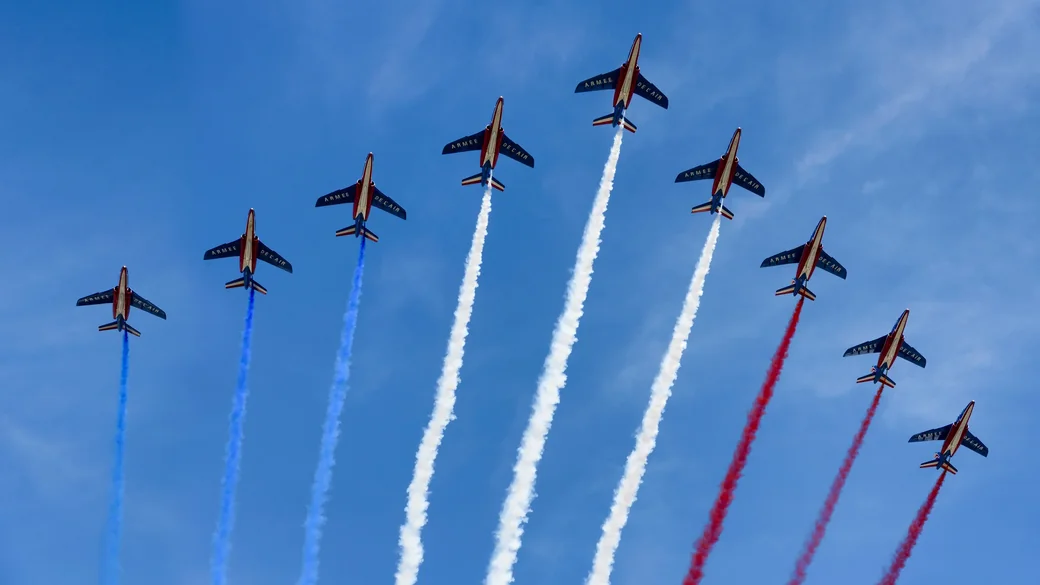
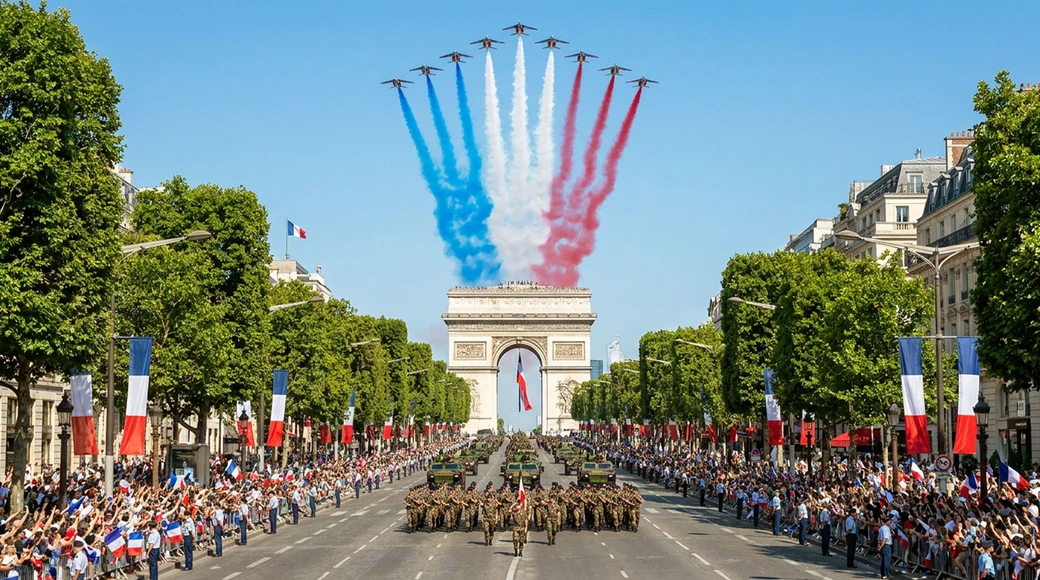
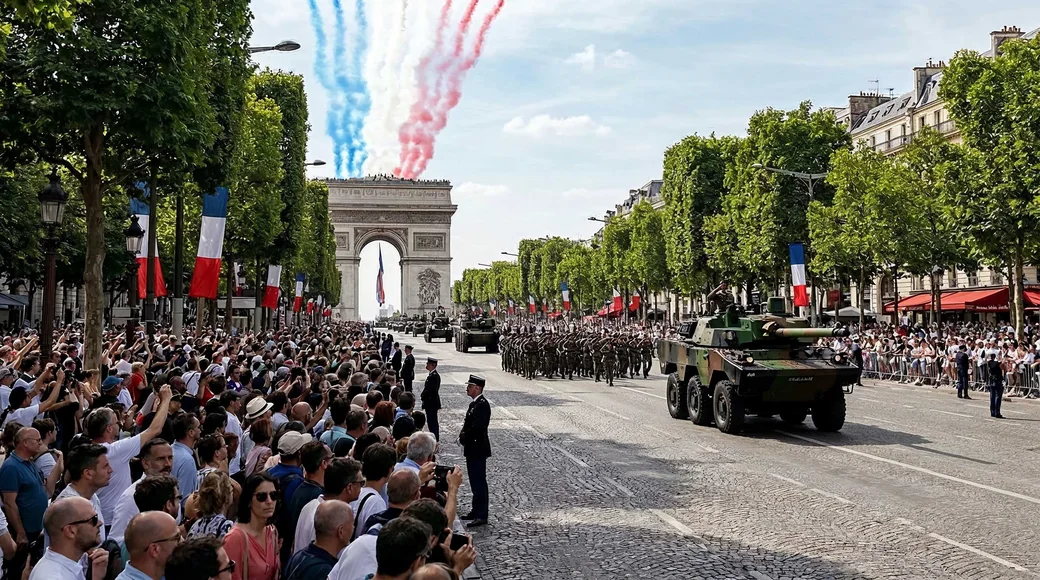
The parade begins mid-morning and travels the length of the Champs-Élysées, from the Arc de Triomphe down to Place de la Concorde. It opens in the sky with a dramatic flypast led by the Patrouille de France aerobatic team, trailing blue, white and red smoke, before marching bands, cadets from the country's military academies and foot troops take to the avenue. Motorized units follow, with the Paris Fire Brigade among them, a fitting nod to the everyday service they provide the city, and the mounted cavalry of the Republican Guard traditionally brings the procession to a close.

Fireworks at the Eiffel Tower

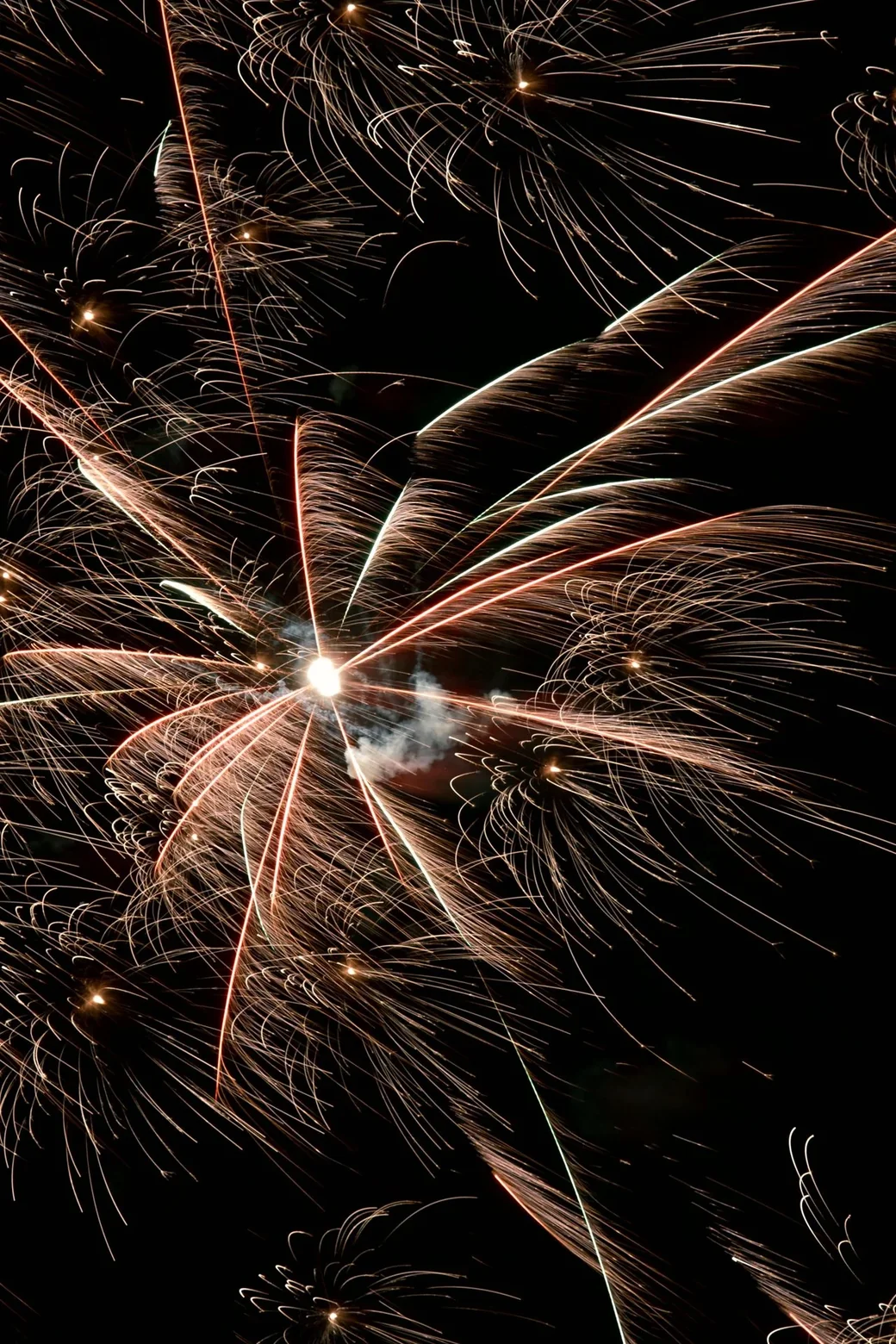
As evening falls, all eyes turn to the Eiffel Tower for one of the most spectacular fireworks displays in the world, with the pyrotechnics fired not just from the Tower itself but also from the nearby Iéna Bridge and the Trocadéro Gardens. The show transforms the Paris skyline into a dazzling canvas of light and color, drawing enormous crowds from across the city and beyond. Hundreds of thousands watch in person from the Champ de Mars, the Trocadéro and vantage points across Paris, while millions more follow the live broadcast on French television. The Tower itself is closed to visitors on July 14 while crews finish preparing the display, reopening to the public the next day.

The Firefighters' Balls: Bal des Pompiers

One of the most cherished traditions of the holiday began almost by accident in 1937, when firefighters returning to their Montmartre station after the parade found themselves followed by an enthusiastic crowd of locals. Credited to Sergeant Cournet, the firefighters opened their doors and improvised a dance on the spot. Other stations soon copied the idea, and the Bal des Pompiers spread across Paris and France. Banned during the Second World War, the tradition resumed afterward and remains hugely popular today, with fire stations throwing open their doors on the eve of the holiday for an evening of music, dancing, and refreshments.

Practical Visitor Guide

Both the military parade and the evening fireworks are free to attend, with no tickets required to watch from public viewing areas. Because crowds gather early for the best spots, arriving well ahead of time is the single most useful piece of planning advice for either event. Keep in mind that, as a public holiday, many shops, banks, and other services follow holiday hours, so it's worth checking ahead if you're relying on them that day.

Etiquette and Atmosphere

The parade has a formal, ceremonial character, reflecting its role as a solemn tribute to the Republic and its military, so a respectful, attentive demeanor along the route is appropriate. The mood shifts noticeably by evening: the fireworks and the firefighters' balls take on a festive, relaxed, family-friendly spirit, with people of all ages mingling, dancing, and picnicking together. Both atmospheres are part of what makes the day special, and visitors are welcome to enjoy each in its own spirit.

Where to Stay and Getting Around

Where to Stay and Getting Around

Central Paris hotels put visitors within easy reach of both the parade route along the Champs-Élysées and the fireworks around the Eiffel Tower, making a central base convenient for enjoying both events without a long journey between them. Keep in mind that during the morning, some streets and métro stations near the parade route may have restricted access as part of the event's security arrangements, so it's wise to plan your route with that in mind.

What to Bring and How to Plan

For a curbside view of the parade on the Champs-Élysées, plan to arrive early, since the best spots fill up well before the action starts. Comfortable shoes are essential, as visitors typically spend long stretches standing while waiting and watching. Finally, factor likely road and métro station closures near the parade route into your transport plans, and consider building in extra walking time to reach your viewing spot.

Insider Tips and Good to Know

Locals often skip the densest crowds directly beneath the Eiffel Tower and instead watch the fireworks from the open lawns of the Champ de Mars, from along the banks of the Seine, or aboard a river dinner cruise, all of which offer excellent views with a bit more breathing room. For those who prefer to stay off their feet, the parade is broadcast live on French television, a popular option for watching the ceremony in comfort. Taken together, the parade, the fireworks, and the firefighters' balls make this France's grandest and most-watched annual national celebration.

The Parade Has Not Always Been on the Champs-Élysées

The image of troops descending the Champs-Élysées feels timeless, but the avenue only became the permanent setting in 1980. Before that the parade moved around Paris, and for years it was held at the Longchamp racecourse in the west of the city, a very different kind of spectacle on open ground rather than between buildings. The sequence today is fixed: aircraft pass overhead first, then troops on foot, then motorised units, then the mounted cavalry of the Republican Guard with its roughly two hundred horses, and finally helicopters. The other break in continuity came in 2020, when the parade was cancelled altogether and replaced by a restricted ceremony on the Place de la Concorde — the first time France had gone without a 14 July parade since the end of the Second World War.

Watching the Parade: Security Checks and Advance Registration

This is the detail visitors most often overlook, because guidebooks still describe simply turning up early. Reaching the public viewing zones along the Champs-Élysées means passing through filtering points where identity documents and bags are checked, and in some years the authorities have also asked spectators to register online beforehand and carry a personal QR code. Since the rules can differ from one edition to the next, check the official presidency and Paris police prefecture pages well before you travel. Places in the viewing zones are limited, bulky or prohibited items are refused and there is no left-luggage facility, so travel light. Arriving early still helps, because the checks take time and the best spots along the avenue fill up well before the first aircraft pass overhead. The seated stands at Concorde remain invitation-only.

The Free Concert Before the Fireworks — and Why the Date Can Move

Many visitors arrive for the fireworks and discover there is a free symphonic concert on the lawns of the Champ de Mars beforehand, performed by a national orchestra and chorus with the Eiffel Tower behind the stage, running roughly an hour and a half and open to anyone without a ticket. Treating it as the start of the evening rather than turning up late solves the seating problem too, since arriving for the music means you already have a place on the grass when the crowd peaks. One warning that catches people out: the concert and fireworks are not permanently fixed to 14 July. They have been moved to the 13th in some years, for instance when the city set the national day aside for commemoration, so confirm the date on the city's own listings rather than assuming.

Accessibility Across a Day of Security Perimeters

Both halves of the day are demanding in different ways. The parade means standing behind barriers from early morning after passing a security check on flat but very crowded pavements, with no seating in the public zones and limited shade in July heat. The evening fireworks are harder still: the Champ de Mars and Trocadéro fill hours ahead, the ground is partly gravel and grass rather than paving, and leaving afterwards means moving with an enormous crowd in the dark. Security perimeters are the complicating factor, since bag searches and filtering points mean you cannot simply step out and return. Anyone with mobility or stamina limits generally does better watching the fireworks from a quieter riverside or bridge further along the Seine, where the view is still good, the ground is level and leaving does not require crossing a controlled zone.

Which Metro Stations Close, and Why Driving Is Hopeless

On the morning of the parade, entrances at the stations serving the avenue are routinely shut: Tuileries, Concorde, Champs-Élysées–Clemenceau, Franklin D. Roosevelt, George V and Étoile, along with the RER station at Charles de Gaulle–Étoile. Some close entirely, others become exit-only, and which is which can change during the day as crowds build. The metro itself keeps running normally and remains the sensible way to travel; the trick is to get off one or two stops outside the perimeter and walk in. Driving into the area is genuinely futile, since the protected zone around the Champs-Élysées in the morning and around the Eiffel Tower in the evening is closed to traffic, and parked cars inside it cannot be retrieved until restrictions lift. Late at night, expect crowds far exceeding normal capacity at stations nearest the fireworks.

Where to Stay: The View From Your Window Actually Matters

This is one of the rare nights when paying for a particular view can be worth it, because a room facing the Eiffel Tower turns the fireworks into something you watch from a balcony instead of from inside a crowd of hundreds of thousands. Those rooms are booked many months ahead and priced accordingly. Short of that, the practical choice is a base with fast, simple metro access to both halves of the day rather than proximity to either: the 7th and 15th arrondissements suit the evening, the 8th and 17th the morning parade, and the wider central districts suit everything at once. Accommodation types run the full range across all of these, from hostels and modest family hotels to chains and apartments. Mid-July is peak season, so book early regardless, and expect street noise late into the night almost everywhere.

Practical Information

When

Every year on July 14, a fixed date on the French calendar.

Where

The military parade runs along the Champs-Élysées, while the evening fireworks light up the sky around the Eiffel Tower.

Cost

Free to attend — both the parade and the fireworks are open to the public at no charge.

Tips

Arrive early to claim a good viewing spot along the parade route or near the Eiffel Tower, and expect some street and métro closures near the Champs-Élysées during the morning.

About this day

Bastille Day is unique in honoring two anniversaries at once — the 1789 storming of the Bastille and the unifying 1790 Fête de la Fédération — making it both a solemn tribute to the Republic and one of the year's most joyful, widely celebrated national festivities.

Accommodation and hotel options during Bastille Day

Accommodation and hotel options around the event venue, with their prices, are shown by Stay22 as a map and a list. Cookies are used. Your consent is remembered on every page; you can turn it off at any time in the cookie settings.

Keep Exploring

Travel essentials for Paris

Flights, transfers, car rental, eSIM and insurance — compare your options

Flights

Find the best route

Transfers

Airport & city ground transport

Car Rental

Drive at your own pace

eSIM

Stay connected on arrival

Insurance

Cover your trip