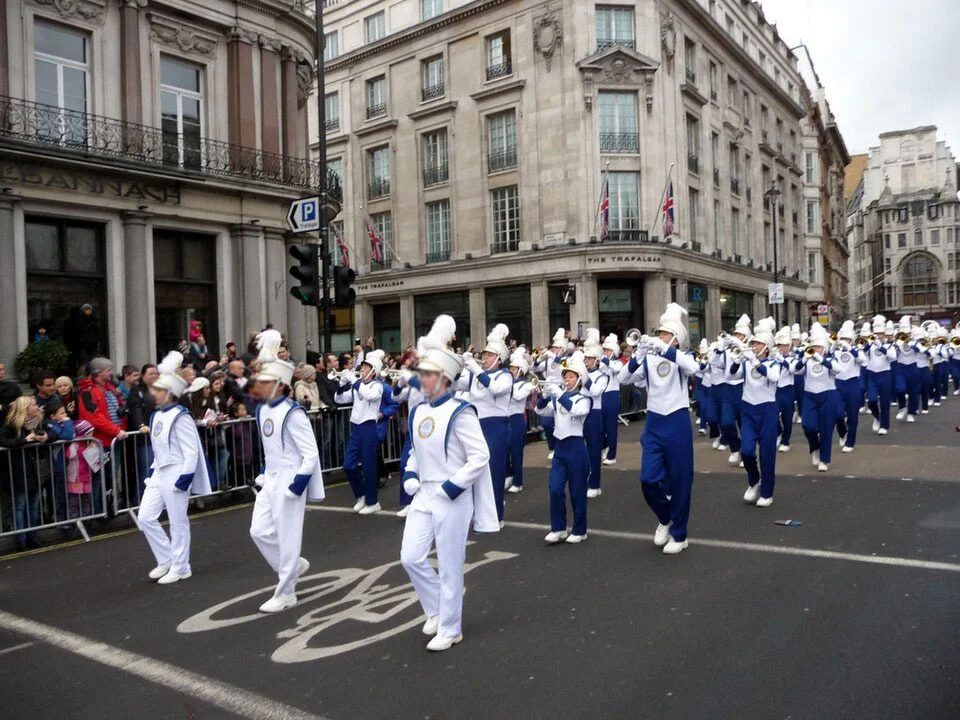
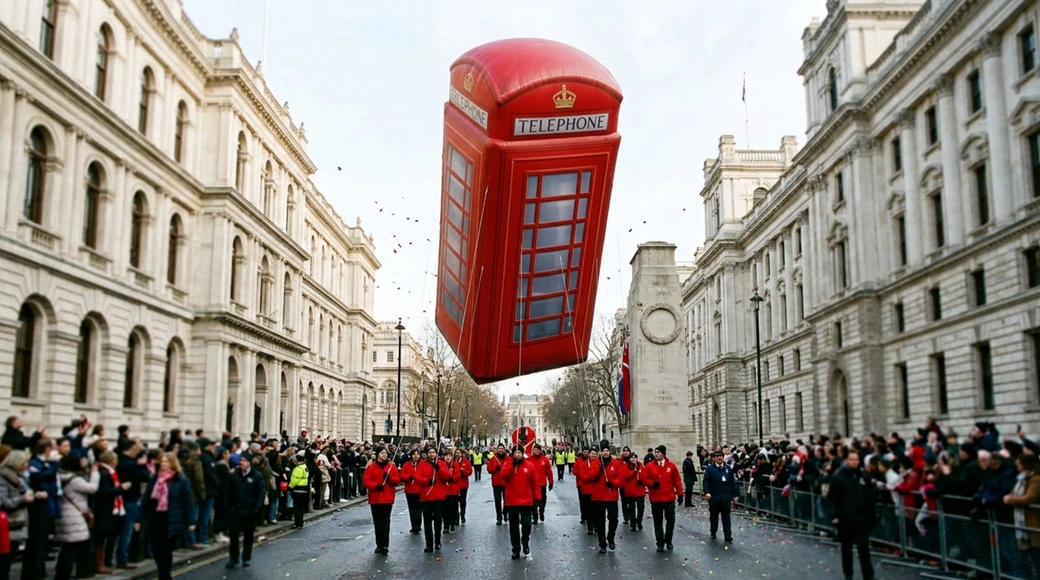
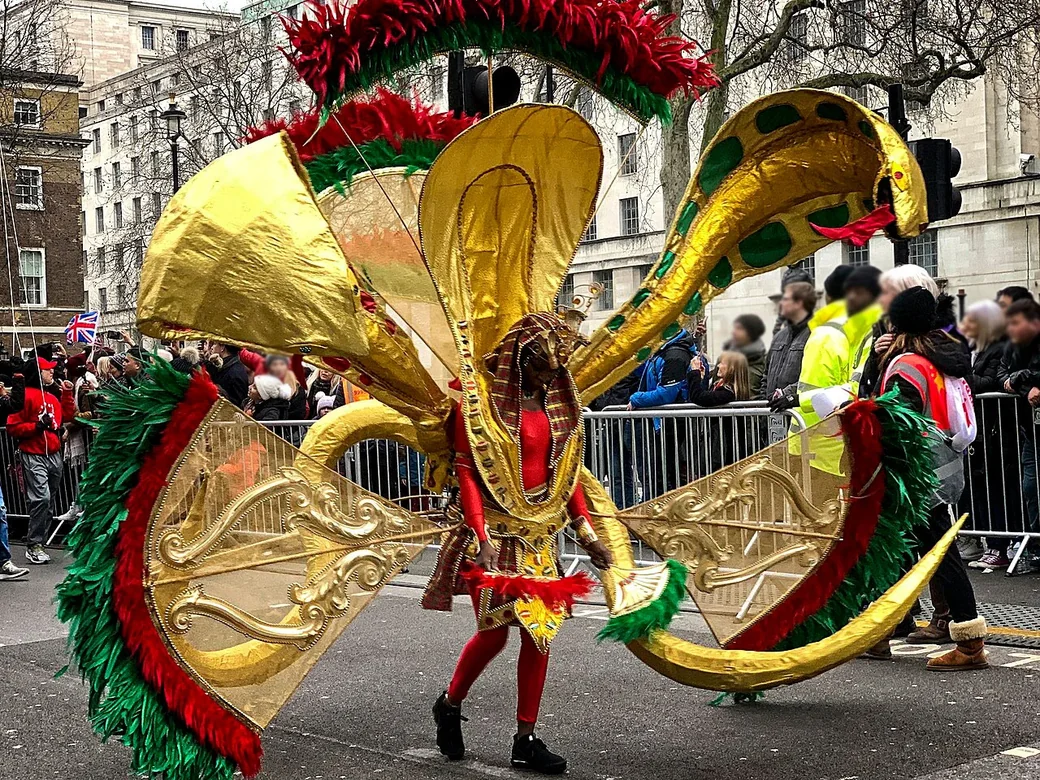
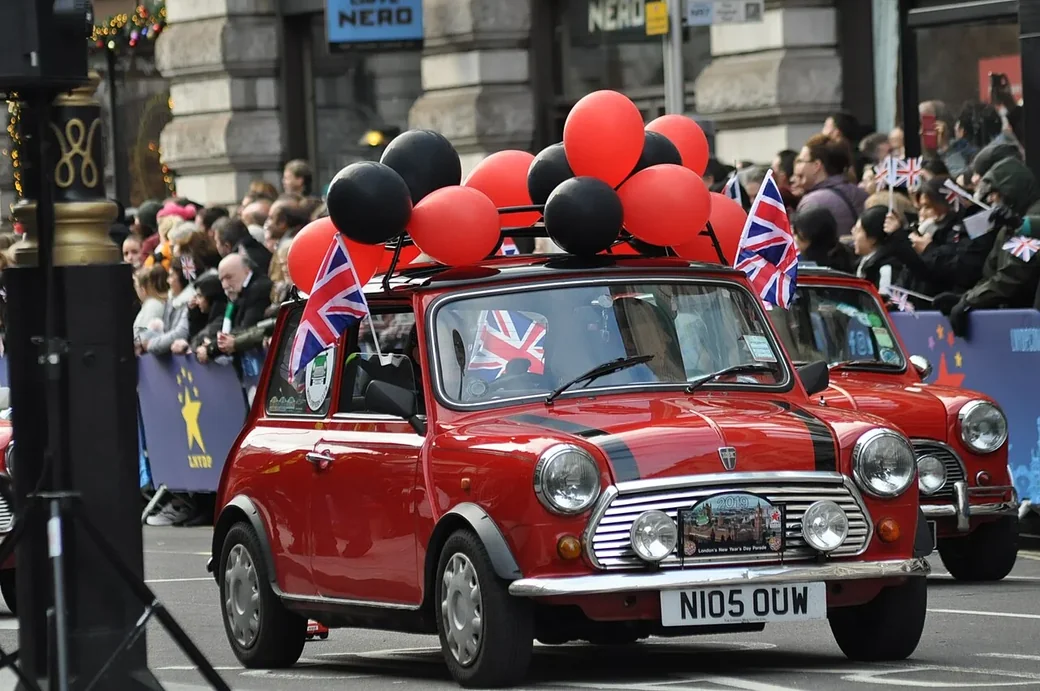
London New Year's Day Parade, with marching bands, cheerleaders and performers in colorful costumes parading through the city center before cheering crowds

London Parade (London's New Year's Day Parade)

LondonJan 1, 2027Public holiday↻ Annual
Duration:1 daysType:
Cultural & Traditional Festivals
Admission:FreeLocationAnnual event — exact dates may vary each year

Free New Year's Day street parade through Westminster, from Piccadilly past Trafalgar Square and Whitehall to Parliament Square, with 10,000+ performers, US marching bands, giant balloons, borough floats and Pearly Kings and Queens.

About This Festival

What Is the London Parade? Westminster's Free New Year's Day Street Spectacular

The London Parade, long known as London's New Year's Day Parade or simply LNYDP (an abbreviation of that name), is a free street procession that fills the heart of Westminster every New Year's Day. More than ten thousand performers from the United Kingdom and around the world march, dance, drum and ride along a route of about 2.2 miles (3.5 km). More than half a million people line the pavements, and a television audience abroad watches, notably on PBS (the American public broadcaster). Because it starts in the early afternoon, it is a gentle way to begin the year after a late night. Destination Events organises it without public funding, and it raises money for London charities. When the parade reached its fortieth anniversary the name was simplified, and the new colours were inspired by the Tube (London Underground) lines.
History of London's New Year's Day Parade: From a Family Day Out to a Global Show

The story began in 1987, when Bob and Geri Bone wanted a family outing on New Year's Day and found almost everything in London closed. They spoke to the then Lord Mayor of Westminster (the ceremonial mayor of the Westminster district), Roger Bramble, won his support and staged the first Lord Mayor of Westminster's Big Parade with around 2,000 performers. The name changed to London's New Year's Day Parade in 1994, became the Millennium Parade for the year 2000 only, and was simplified to London Parade for the fortieth-anniversary edition. At the end of the 2000s the route was reversed so that American television viewers could see Big Ben and Trafalgar Square at their best. During the pandemic years the parade moved online, returned live in a smaller form and then grew back to full size. The Mayor of London has praised it as a showcase of the capital's creativity, diversity and vibrancy.

London Parade Route: Piccadilly, Trafalgar Square and Whitehall to Parliament Square

The parade assembles north of Green Park and steps off on Piccadilly near Green Park station and The Ritz hotel. It passes Piccadilly Circus with its giant screens and the statue popularly called Eros (the Greek god of love), swings down Regent Street St James's, turns left into Pall Mall and reaches Trafalgar Square with Nelson's Column and the National Gallery. From there it follows Whitehall past Horse Guards Parade and Downing Street and ends at Parliament Square beside Westminster Abbey and Big Ben. Streets nearby, such as Haymarket, Waterloo Place, St James's Square and Jermyn Street, fall inside the event zone and have parking suspended, so they share in the busy festive mood. The whole route is walkable, so you can watch from several different angles.

Parade Day Schedule: Start Time, Road Closures and When to Arrive

The parade itself usually starts at 1 pm and runs until about 4:30 pm, ending with the finale at Whitehall and Parliament Square. Ticket holders for seated areas can normally enter from noon. Roads along the route close in the small hours of the morning, the infrastructure is built through the morning, and everything reopens in the evening after cleaning, so expect no vehicle traffic in this part of Westminster for most of the day. Good free spots start to fill from mid-morning, especially around Trafalgar Square and near Westminster. Participants gather in the streets north of Green Park, including Berkeley Street and Berkeley Square. Start times have shifted slightly between editions, so check the official website shortly before you travel.

What You'll See: Marching Bands, Giant Balloons, Dancers and Floats

Expect a mix that few other parades can match: American high-school and university marching bands, over eight hundred cheerleaders (pom-pom dance squads), giant helium balloons, stunt riders, vintage vehicles and British brass bands. Local flavour comes from floats built by London boroughs, dragon dancers and dancing pandas from the Chinatown community, dhol (a double-headed South Asian drum) players, samba bands, street dancers and life-size dinosaurs. The Pearly Kings and Queens (Londoners in button-covered suits who collect for charity) add a touch of Cockney (traditional working-class London) heritage, and tribute acts for pop legends often pass by on mobile stages. A headline singer usually closes the show. Balloon displays can be scaled back when the wind is strong, so dress for the weather.

London Borough Competition: How the Parade Raises Money for Charity

Each of London's 32 boroughs (the city's administrative districts) is encouraged to take part, and every borough entry automatically joins the London Borough Competition. Floats, costumes, dance and music are judged, and a prize pot goes to the mayoral charities of the winning boroughs. The winning boroughs change from year to year, and a float themed on pantomime (a British festive stage comedy with songs and costumes) has won before. Over its history the parade has raised millions of pounds for London charities, and it does so without public funding. Each entry is designed to showcase its borough's talents, uniqueness and diversity, so when you cheer a float you are also supporting local causes.

Pearly Kings and Queens: London's Button-Covered Parade Royalty

Look for glittering suits covered in mother-of-pearl buttons. The Pearly Kings and Queens (charity "royalty" of the Cockney community, the traditional working-class Londoners) began with Henry Croft, a street sweeper who grew up in a Victorian workhouse orphanage (a charity home attached to the poorhouse) and collected money for it in a button-covered suit. Hospitals and charities soon asked for his help, and London's costermongers (street fruit and vegetable sellers) joined in, forming the first Pearly families. The button designs carry meanings: hearts for charity, wheels for the meaning of life and doves for peace. A suit can take about two years and thousands of buttons to make. According to one popular account, Croft drew on the costermongers' habit of electing "Coster Kings" (leaders chosen by street traders), while others say music-hall (Victorian variety theatre) costumes inspired him.

Best Places to Watch the London Parade for Free

Only a limited number of seats are ticketed, so most spectators stand on the pavement behind barriers. Green Park and Piccadilly give you the start of the parade, lighter crowds and nearby toilets and first aid. Regent Street St James's is lively and family-friendly, with screens and first aid. Trafalgar Square and Pall Mall are the most popular, with big screens and landmark backdrops, so arrive early there. Whitehall offers the dramatic final stretch with accessible viewing areas, and Parliament Square gives the postcard finish beside Westminster Abbey and Big Ben, close to Westminster station. Every point sees the whole parade, so choose the atmosphere you like. Cross the route only at signed points, where stewards (event marshals) let people through during gaps.

Grandstand, VIP and Fun Zone Seats: Which Viewing Option Suits You?

If you prefer to sit, three ticketed options exist, all sold through the official website and its ticketing partner. Grandstand (covered tiered seating) places are reserved, with live commentary, a parade guide and a commemorative flag. VIP seats add premium viewing at the finale area, private restrooms, food and drink from Artisan London's vendors and a goodie bag. The Fun Zone (a relaxed festival-style viewing area) at Waterloo Place, next to the press zone, has first-come folding chairs, space for your own chair or picnic blanket, gazebos, toilets and food nearby. A partly covered accessible viewing area with an accessible toilet is also available; accessible ticket holders and their essential companion should be seated by 12:30. Places are limited, so book early and avoid unofficial resellers.

Getting to the London Parade by Tube, Bus and on Foot

Central London is closed to normal traffic on parade day, so use the Tube (the London Underground) or walk. Green Park (Jubilee, Piccadilly and Victoria lines) is at the start, Piccadilly Circus and Charing Cross serve the middle, and Westminster station is beside the finish. On New Year's Day the network usually runs a reduced holiday timetable, buses are diverted, and some stations near the route can be busy or restricted, so check Transport for London before you leave and allow extra time. Do not plan to drive or park: parking is suspended across a wide area and vehicles left there are towed away. If your nearest station is crowded, walk from the next stop; it is a pleasant way to see the area.

What to Wear and Pack for a Winter Day on the Parade Route

You may stand outdoors for three hours or more in a British winter, so dress in layers: a thermal base, a jumper, a waterproof coat, a hat, gloves and comfortable waterproof shoes. A flask of something hot, snacks, a portable phone charger and a camera with a zoom make the day easier. Toilets are limited and the crowds are large, so travel light; bag storage services operate near major stations if you are carrying luggage. The parade goes ahead in rain or shine, and organisers adapt when conditions require it, for instance by keeping giant balloons on the ground in strong wind. If you have a Fun Zone ticket, bring a picnic blanket or your own chair.

Safety, Families and Accessibility at the London Parade

The audience is mostly families, and organisers describe a friendly, fun atmosphere. Stewards and traffic marshals staff the closures, crossing points are clearly signed, and first aid points are placed along the route, including near Green Park and Regent Street St James's. Agree on a meeting point with children, keep valuables in inner pockets and stay aware of your surroundings, as you would in any busy part of central London. Wheelchair users and others with reduced mobility can use the designated accessible viewing areas, with several on Whitehall. In an emergency call 999. Solo travellers and groups of friends generally find the parade relaxed and welcoming, like most large daytime events in the capital.

Concerts, Choirs and Celebrity Headliners Around the London Parade

The parade is one part of a wider New Year music programme. The London Parade Concert Series fills evenings at venues such as Smith Square Hall (St John's Smith Square) in Westminster with school bands, choirs, orchestras, brass bands (all-brass-and-percussion ensembles) and jazz groups, and the London International Choral Festival has used Cadogan Hall in Chelsea. Chart singers and bands have headlined the parade itself over the years, alongside tribute acts for famous pop names, and the line-up is confirmed shortly before each edition. The event is shown live on American public television and elsewhere. The same organiser also runs the Rome Parade and the London International Choral Festival.

Eating, Warming Up and Making a Day of It After the Parade

Many cafes, pubs (traditional British bars serving food and drink) and restaurants along the route open specially for the day and fill up quickly, so arrive early or book if you can. The ticketed areas have food and drink on offer, and merchandise is sold at selected points. When the parade ends around 4:30 pm, take a calm stroll in St James's Park or warm up in a pub. Many London museums, attractions, shops and theatres stay open on New Year's Day, some on bank holiday (public holiday) hours, and Christmas lights, ice rinks and the January sales (post-Christmas discounts) make easy follow-ups. Check opening hours before you go, because they vary from place to place.

Insider Facts, Local Tales and Similar Events in London

A few things make this parade special. The route was reversed to give American television the best views of the landmarks, and the parade is sometimes described as better known on US screens than among Londoners themselves. The Piccadilly and Regent Street end tends to be less crowded, while Trafalgar Square and Parliament Square fill up quickly. The founders' story, a family frustrated by a closed capital, is still retold as the parade's origin tale. If you enjoy processions, London also hosts a large Chinese New Year parade around Trafalgar Square and Chinatown in late winter, a Pearly Kings and Queens harvest festival at Guildhall in autumn and the Lord Mayor's Show (the City of London's ceremonial parade). The London Chinatown Chinese Association, which organises the city's Chinese New Year celebrations, also takes part in this parade.

Where to Stay and What to Do the Night Before the London Parade

Rooms close to the route fill early, so book well ahead if you want to be within walking distance of Piccadilly, St James's or Westminster. Staying a few Tube stops away, for example in Kensington, is usually calmer and still connects to Green Park or Westminster. On the night before, London's New Year's Eve fireworks over the Thames bring central road closures and big crowds, and parking restrictions on the parade zone begin on New Year's Eve (at a few spots even a day earlier), so do not expect to move a car. Plan an easy morning: the best free spots fill from mid-morning. If you check out that day, ask your hotel to hold your bags, and remember that train and Tube services are reduced on New Year's Day.

Practical Prep: Handy English Phrases, Paying by Card and Following the Parade Live

Five phrases help on the day: "Happy New Year!" (the greeting everyone will use); "Excuse me, which way to Green Park station?" (asking for directions); "Where is the grandstand entrance?" (finding your seats); "Could you take a photo of us, please?" (asking a stranger for a photo); "Is this the end of the queue?" (asking about a line). Contactless cards and phones are widely accepted in central London, so you need very little cash. Bring a power bank for photos and maps. To follow the parade live, use the official website and social accounts (search "londonparade"); it is also broadcast on PBS in the United States. Groups that dream of marching can apply to perform or volunteer through the official website.

Practical Information

When

Every year on New Year's Day. The parade runs from about 1 pm to around 4:30 pm. Ticket holders for seated areas can usually enter from noon, and the best free spots start to fill from mid-morning.

Where

Central Westminster, London. The route starts on Piccadilly by Green Park and passes Piccadilly Circus, Regent Street St James's, Pall Mall, Trafalgar Square and Whitehall before ending at Parliament Square (about 2.2 miles / 3.5 km). Participants assemble north of Green Park around Berkeley Square.

Cost

Free to watch from the pavement. Reserved seating (grandstand, VIP, Fun Zone and an accessible viewing area) is optional and sold separately through the official website and its ticketing partner.

Tips

Travel by Tube (London's Underground railway) or on foot, because roads are closed and parking is suspended. Wear warm, waterproof layers, bring a hot drink and a power bank, and agree on a meeting point if you come with children. Check Transport for London for the New Year's Day timetable.

Specific to this festival

The parade is built around American marching bands, floats from London's boroughs (districts), Chinatown dragon dancers and Pearly Kings and Queens (Londoners in mother-of-pearl button suits who collect for charity), and it is broadcast live to a worldwide audience. In one walk you pass Piccadilly Circus, Trafalgar Square, Downing Street, Big Ben and Westminster Abbey.

Accommodation and hotel options during London Parade (London's New Year's Day Parade)

Accommodation and hotel options around the event venue, with their prices, are shown by Stay22 as a map and a list. Cookies are used. Your consent is remembered on every page; you can turn it off at any time in the cookie settings.

Keep Exploring

Travel essentials for London

Flights, transfers, car rental, eSIM and insurance — compare your options

Flights

Find the best route

Transfers

Airport & city ground transport

Car Rental

Drive at your own pace

eSIM

Stay connected on arrival

Insurance

Cover your trip