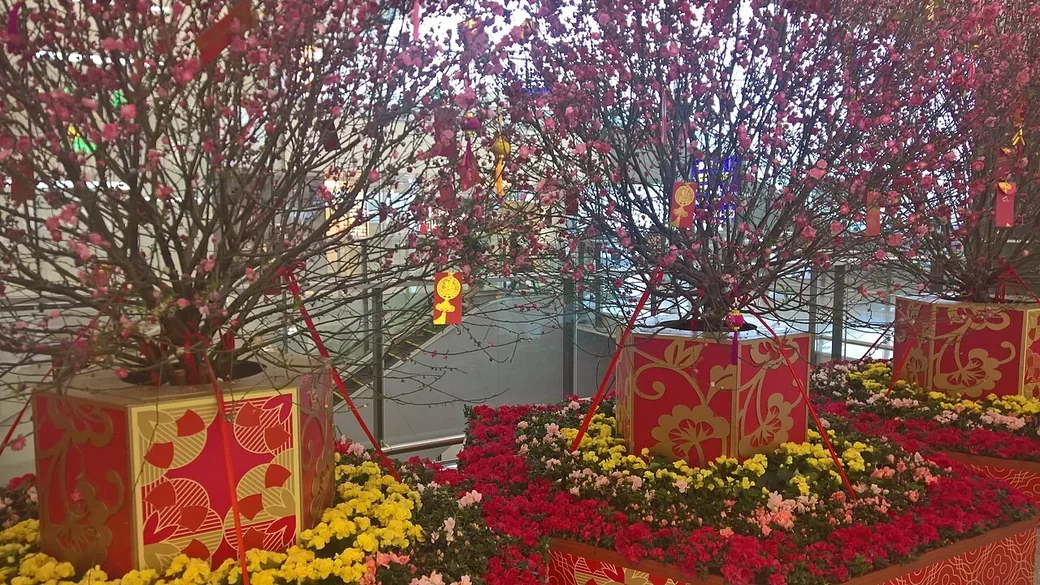
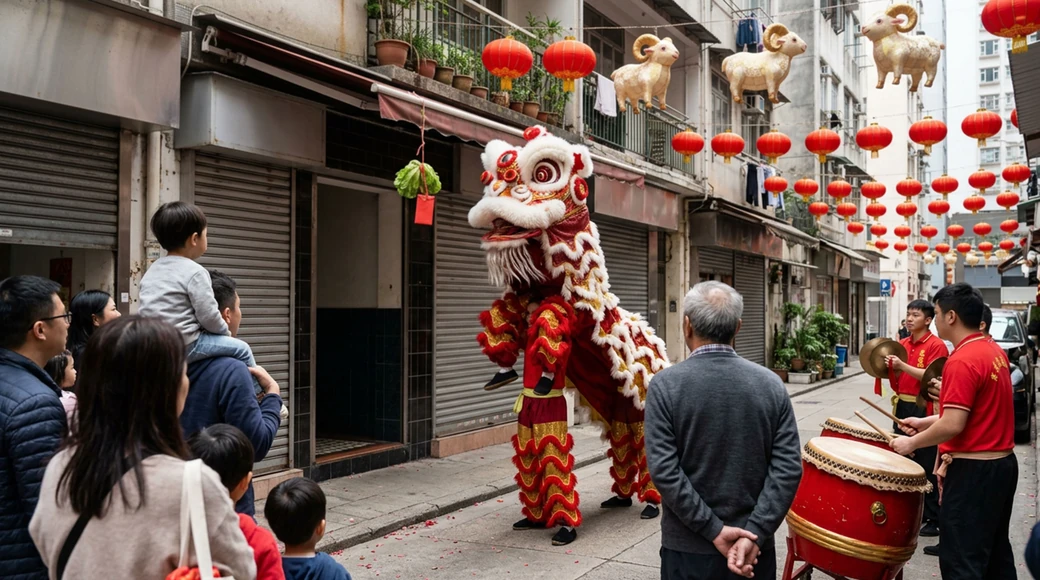
Lunar New Year in Hong Kong for the Year of the Sheep, with sheep sculptures and red lanterns decorating the city in a festive, colourful atmosphere

Lunar New Year (Year of the Sheep) – Day 1

Hong KongFeb 6, 2027Public holiday↻ Annual
Duration:1 daysType:
Cultural & Traditional Festivals
Admission:FreeLocationAnnual event — exact dates may vary each year

Hong Kong welcomes the first day of the Lunar New Year with first-incense prayers at Wong Tai Sin Temple, red lai see packets (lucky-money envelopes), flower fairs and an evening night parade of glowing floats in Tsim Sha Tsui. Most of the fun is free.

About This Festival

Lunar New Year Day 1 in Hong Kong: What the First Day Means

Lunar New Year's Day, called nin cho yat (the first day of the year) in Cantonese, is the brightest morning in Hong Kong's calendar. It opens a new cycle of the traditional lunisolar calendar and is celebrated with prayers for good fortune, family visits and a joyful party across the whole city. In 2024 UNESCO inscribed the Spring Festival customs on its Representative List of the Intangible Cultural Heritage of Humanity, a recognition of how deeply these traditions are loved. The animal sign of this year is written yang, a Chinese character that covers sheep, goat and ram alike. Hong Kong's official calendar speaks of the Year of the Goat, while many visitors know it as the Year of the Sheep. Both names describe the same gentle sign, traditionally associated with harmony and kindness, and this year it is paired with the element fire (the Ding-wei year, one of the sixty years of the traditional cycle).
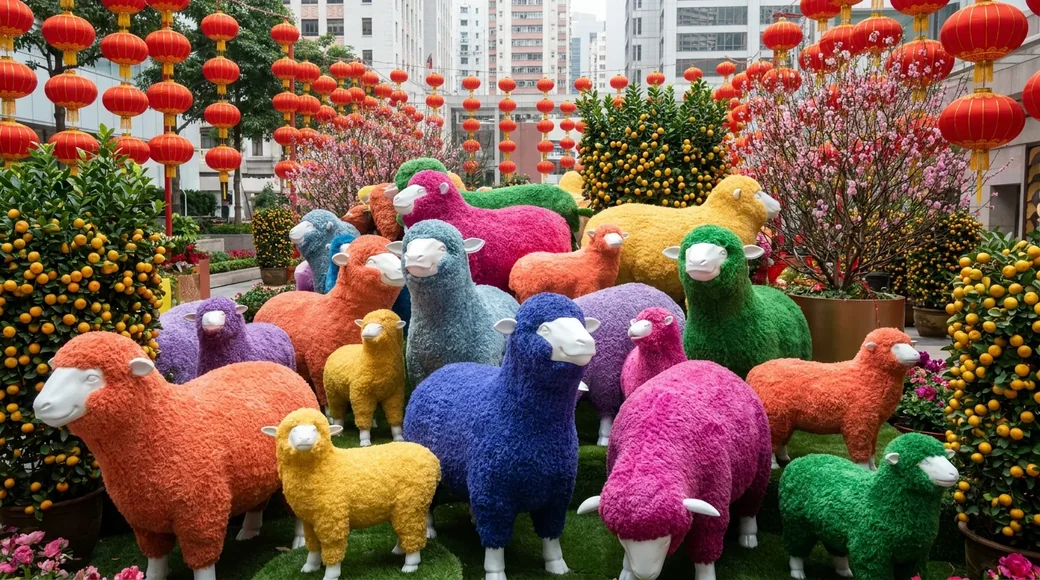
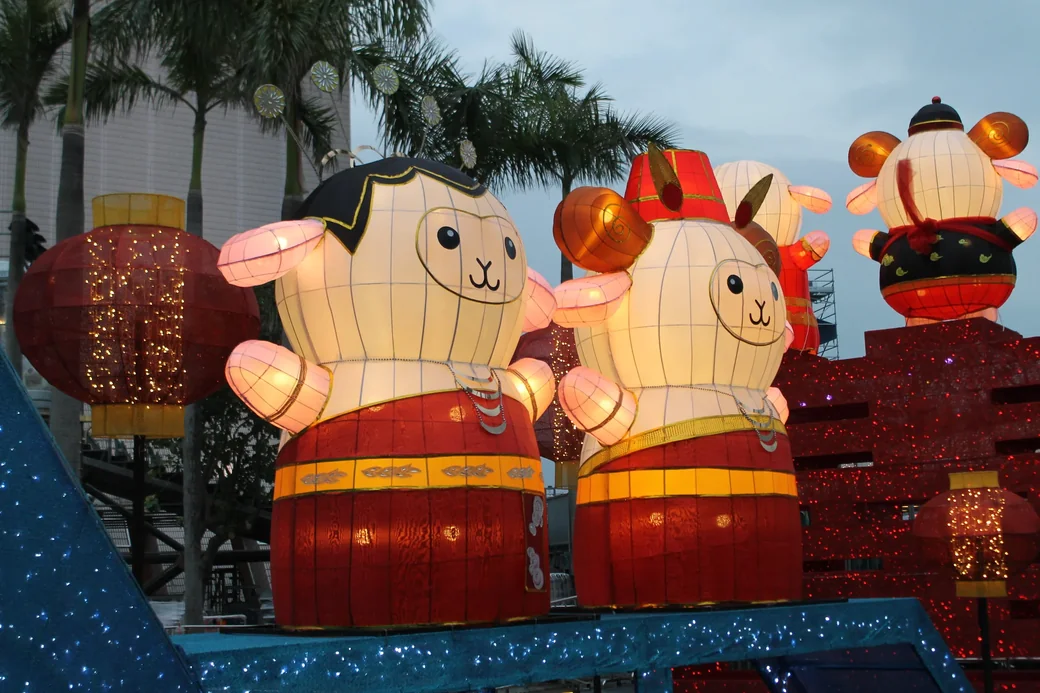
When Is Lunar New Year Day 1? Holiday Break and Eve Plans

Lunar New Year follows the Chinese lunisolar calendar, so Day 1 is the first day of the first lunar month and lands somewhere between late January and mid-February. The exact calendar date is shown in the date fields of this page, and the Hong Kong Government gazettes the official list of general holidays well in advance. Day 1 is always a general holiday, and Hong Kong usually enjoys a multi-day break: when the second day of the festival falls on a Sunday, another festival day is added as a substitute holiday, which makes a comfortable long weekend. The evening before, Lunar New Year's Eve, is the night of the family reunion dinner. It is also when the flower fairs are at their liveliest and when Wong Tai Sin Temple opens its gates for midnight prayers. Arriving in Hong Kong a day early lets you enjoy the whole build-up.

The Legend of Nian: Why Hong Kong Celebrates with Red, Drums and Lion Dances

According to a much-loved legend, a fierce creature called Nian (the word for year) used to come down from the mountains when the year turned. The villagers found out that it was afraid of two things: loud noise and the colour red. Ever since, so the story goes, people have welcomed the new year with red lanterns, red couplets pasted beside doors (fai chun, auspicious spring couplets), drums, gongs and lion dances. This is a legend rather than a historical record, but it is a wonderful key to what you see on Day 1. The red of the lanterns and decorations stands for a bright and happy future, the rhythm of drums and cymbals brings energy to the street, and the lion dance, performed at shops, temples and parades, is believed to sweep away misfortune and invite good luck.

First Incense at Wong Tai Sin Temple: Hong Kong's Famous Midnight Prayer

Many Hongkongers begin the year at Sik Sik Yuen Wong Tai Sin Temple, a colourful temple complex in Kowloon at the foot of Lion Rock (reach it from Exit B2 of Wong Tai Sin metro (MTR) station). In recent years the temple has reopened on the evening of Lunar New Year's Eve, with the first incense offered around midnight, and it stays open overnight and through Day 1. Tradition treats the turn of the day around midnight as the beginning of the new year, which is why an offering at that moment is seen as a sincere gesture; the temple reminds worshippers that incense offered at any time during the festival is a first incense. Visitors follow a one-way route and queue in the squares in front of the temple. Paper offerings, yuanbao candles (ingot-shaped candles), raw oil and large incense sticks are not brought inside. The temple's story is short but vivid: the portrait of Wong Tai Sin was brought from Guangdong in 1915, the temple was founded in 1921, its managing body applied in 1934 to open it to the public during the first lunar month, and it became fully open in 1956, and in 2014 the Wong Tai Sin belief and customs were recognised as Hong Kong intangible cultural heritage. The temple welcomes a very large number of visitors over the festival period, spread across fifteen days. A well-known veteran actress, Lana Wong, has become part of the scene by arriving each year in an outfit inspired by the animal of the year. If you cannot join in person, the temple offers a livestream and an online blessing system, so you can take part from afar.

The Wong Tai Sin Legend: The Shepherd Boy Who Became an Immortal

According to tradition, Wong Tai Sin (the Great Immortal Wong) was born around the year 328 as Wong Cho-ping, a shepherd boy who grew up caring for sheep. At fifteen he was taught by an immortal, and after about forty years of practice in a cave he is said to have reached immortality. When his brother finally found him, the story continues, Wong Cho-ping called out to the white rocks on the hillside and they rose up as a flock of sheep. This is a legend, of course, but it makes a visit in the Year of the Sheep feel especially fitting. A local story also says that Wong Tai Sin watched over the temple and its neighbours through the difficult wartime years of the 1940s. The deity is believed to bring healing and to answer wishes, and the offerings of worshippers support the charitable work of Sik Sik Yuen, including free Chinese medicine clinics and schools. Many visitors draw a fortune stick (kau cim, a numbered bamboo stick read by a fortune teller) or simply stroll through the halls and gardens.

Cathay International Chinese New Year Night Parade in Tsim Sha Tsui

Since 1996 the Hong Kong Tourism Board has opened the festive season with a night parade on the evening of Day 1, and Cathay, Hong Kong's home airline, has been its title sponsor for more than two decades. Illuminated floats, lion and dragon dancers and performing groups from Hong Kong, the Chinese mainland and overseas move through the streets of Tsim Sha Tsui in a sea of lights, music and cheering. In the 2026 edition twelve themed floats took part, including a Cathay aircraft, a nostalgic train, local favourites such as Labubu and Molly and a glowing replica of the Lam Tsuen wishing tree. The parade runs through the evening, with the first float passing Canton Road before reaching Nathan Road. Earlier editions welcomed troupes such as a Spanish giant-puppet light show, a Japanese pop dance group and American cheerleaders. Tens of thousands of people line the route every year, so a good spot is worth planning for. Check the Hong Kong Tourism Board for the current times and programme.

Where to Watch the Night Parade and How to Reach Tsim Sha Tsui by MTR

The parade starts at the piazza of the Hong Kong Cultural Centre (10 Salisbury Road), follows Canton Road, Haiphong Road and Nathan Road, and finishes near the Sheraton Hong Kong Hotel & Towers (20 Nathan Road). Watching from the pavement along the route is free, and the open sections of Canton Road, Haiphong Road and Nathan Road give you plenty of choice. For a guaranteed view there are reserved seats in spectator stands, which are released through the Hong Kong Tourism Board's official channels and can sell out on the very day they are released, so follow the announcements. Roads around the route close before and after the parade, so the metro (MTR) is the easiest way to travel: get off at Tsim Sha Tsui or East Tsim Sha Tsui station. Plan to arrive an hour or more ahead, wear comfortable shoes and agree on a meeting point with your group. If you prefer a calmer evening, the parade is also broadcast on television and streamed online. From the second day of the festival the floats are displayed at different places around the city, so you can still take a close-up photo. In some editions a street party with music and dance performances warms up the crowd along the route before the parade starts, and in 2026 several floats were also displayed at Kai Tak Sports Park.

Lunar New Year Fair and Flower Markets: Victoria Park and Beyond

In the days before the festival, fourteen parks and playgrounds across Hong Kong turn into Lunar New Year flower markets, where families buy blossoms to welcome the new spring. The biggest and most famous is the fair at Victoria Park in Causeway Bay (1 Hing Fat Street; metro (MTR) Causeway Bay, Exit E), which has had around four hundred stalls in recent editions. Orchids are a favourite choice for good fortune, and you will also find mandarin plants, narcissus, peach blossom, lucky decorations, toys, snacks and hot food stalls. The fairs are liveliest on Lunar New Year's Eve, when the city's transport services run extra or overnight trips, and the main fair stays open until the early hours of Day 1. Go on the eve or on the last evening of the fair for the best atmosphere, and bring a little time to enjoy the scents, the colours and the friendly bargaining. The closing hours are announced each year by the authorities.

Lai See Etiquette: Red Packets and Cantonese New Year Greetings

Lai see (red envelopes containing lucky money) are the most cheerful custom of the festival. Married people, elders and employers give them to children, unmarried relatives and colleagues, usually with crisp new banknotes that people collect from the banks in the weeks before. A pair of envelopes is the traditional gift from a married person. It is polite to receive a lai see with both hands and a smile, and a popular belief says it is best to open it on the seventh or the fifteenth day of the festival. Here are five Cantonese phrases to use: Kung Hei Fat Choy (wishing you prosperity), San Nin Faai Lok (happy new year), Sun Tai Gin Hong (good health), Maan Si Yu Ji (may everything go as you wish) and, as a playful rhyme among friends, lai see dau loi (red packet, please). Locals love hearing visitors try them.

First-Day Customs: Lucky Colours, Meat-Free Meals and Fresh Starts

Day 1 is about setting a good tone for the year. Families wear new clothes, often in red or other warm, bright colours, and many prefer a meat-free meal because tradition favours gentleness on the first day. Households tidy up before the festival, and the first day is kept for rest and visits: according to a popular custom, sweeping on that day could sweep away luck, and washing or cutting hair is left for later. Lending money on the first day is also traditionally avoided. You do not need to follow these customs as a visitor, but knowing them explains the relaxed rhythm of the city. Some shops and small eateries keep festive hours during the first days, so it is a good idea to plan meals and shopping the day before. Wearing something red or festive is warmly appreciated and also looks wonderful in photos.

Lunar New Year Food in Hong Kong: Nin Gou, Turnip Cake and Poon Choi

Food is the heart of the festival, and many dishes carry a wish in their name. Nin gou (sweet glutinous rice cake; its name sounds like higher every year) is the classic gift, often made with brown sugar and red dates. Lo bak go (savoury turnip cake with Chinese sausage and dried shrimp) is a dim sum (small bites served with tea) favourite that appears on every festive table. Poon choi (a large communal bowl layered with many ingredients) comes from the villages of the New Territories and stands for togetherness. Look also for yau gok (crescent-shaped fried dumplings believed to bring wealth), fat choi (black moss, whose name sounds like prosperity and gives the greeting its second half), tong yuen (sweet rice balls in soup, a symbol of reunion) and tangerines or mandarins for luck. At home, a chuen hap (a tray of sweets for guests) is always on the table. Because many people eat meat-free on the first day, vegetarian and vegan travellers will find the festival very easy to enjoy.

Lam Tsuen Wishing Square: Throw Your Wish into the Tree in Tai Po

One of Hong Kong's best-loved New Year rituals takes place in the village of Lam Tsuen in Tai Po. Visitors write a wish on a red placard, tie it to a mandarin and toss it up into the branches of the wishing tree; if it stays on the tree, tradition says the wish will come true. Today a replica tree and light plastic mandarins are used, which protects the old trees and keeps the custom alive for everyone, and the happy atmosphere of food stalls, games, music and displays of parade floats makes the trip worthwhile. According to a local tale, the custom began with fishermen who wrote their wishes on paper and threw them into trees at New Year, and television dramas of the 1990s made it famous across Hong Kong. The wishing season starts on Day 1 and runs for about two weeks. Buses and minibuses leave from Tai Po Market metro (MTR) station, and a taxi from Tai Wo station is another option.

Colours, Sounds and Scents: A Sensory Guide and the Best Photo Spots

Day 1 in Hong Kong is a feast for the senses. You will see the red and gold of lanterns and couplets, the pink and white of orchids and the glow of illuminated floats. You will hear the drums, gongs and cymbals of lion dances and the cheerful greetings of Kung Hei Fat Choy (wishing you prosperity). You will smell incense drifting through the halls of Wong Tai Sin and the sweetness of fresh flowers at the fairs. The best photo spots are Tsim Sha Tsui along the parade route and the harbour promenade, with the skyline as a backdrop; the colourful halls of Wong Tai Sin Temple with Lion Rock behind them; the rows of blossoms at Victoria Park; and the wishing tree in Lam Tsuen. As in any place of worship, a quiet word before photographing worshippers is always appreciated. Warm festive colours suit the mood, and light layers keep you comfortable throughout the day.

A Perfect Day 1 Itinerary and Practical Tips for Visitors

Start the morning with a visit to Wong Tai Sin Temple, when the temple courtyards are bright and the lines move steadily. Enjoy a long dim sum (small dishes served with tea) lunch or a festive meal, spend the afternoon among the lanterns and displays of your chosen district, then head to Tsim Sha Tsui in the early evening to find your spot for the Night Parade. After the parade the metro (MTR) takes you back quickly. Some practical points: February in Hong Kong averages about 15 to 19 degrees Celsius, so light layers work well. An Octopus card (Hong Kong's rechargeable travel card) makes MTR, tram and bus rides simple. Keep your phone charged for photos and for your group's meeting point, and choose a point outside the station exits. At the temple and fairs, follow the one-way routes and staff directions, which keep the crowds flowing smoothly. If you visit Hong Kong for the festival, book your travel and stay early, because it is one of the most popular times of the year.

After Day 1: Harbour Fireworks, Che Kung Temple, Race Day and the Lantern Festival

The celebrations continue for two weeks. On the second day the harbour fireworks light up Victoria Harbour in the evening; the free viewing areas include Tsim Sha Tsui Promenade, the West Kowloon Cultural District and the Central harbourfront, and it is best to arrive early. On the same day many Hongkongers visit Che Kung Temple in Sha Tin (7 Che Kung Miu Road), where worshippers draw fortune sticks and turn the metal windmill wheel clockwise for good luck. Traditionally, a member of the government also attends, and Hong Kong's fortune for the year ahead is read in the form of ancient poetry. The third day brings the Lunar New Year race meeting at Sha Tin Racecourse. From the second to the fifteenth day the parade floats appear at different places around the city, and Wong Tai Sin Temple stays open with extended hours. The festival ends with the Lantern Festival (yuen siu jit) on the fifteenth day, when lanterns and sweet tong yuen (glutinous rice balls in soup) close the season beautifully. On the fifth day, as in the 2026 edition, the Lunar New Year Cup football match takes place.

Practical Information

When

Lunar New Year's Day is the first day of the first lunar month, so it moves between late January and mid-February from year to year (the exact date is shown in the date fields of this page). It is a general holiday in Hong Kong. The celebrations build up from the eve, which brings flower fairs, reunion dinners and midnight prayers, and they continue until the Lantern Festival on the fifteenth day.

Where

The festival spreads across the whole city. The key places are the Night Parade in Tsim Sha Tsui (it starts at the Hong Kong Cultural Centre, 10 Salisbury Road, and follows Canton Road, Haiphong Road and Nathan Road), Wong Tai Sin Temple (2 Chuk Yuen Village, Wong Tai Sin; Exit B2 of Wong Tai Sin metro (MTR) station), the Lunar New Year Fair at Victoria Park (1 Hing Fat Street, Causeway Bay) and the Lam Tsuen Wishing Square in Tai Po.

Cost

Free. Watching the parade from the pavement, strolling through the flower fairs and visiting the temples all cost nothing. Reserved seats in the parade's spectator stands have been offered as paid tickets in earlier editions; the Hong Kong Tourism Board announces the current tickets and prices.

Tips

Take the MTR (get off at Tsim Sha Tsui or East Tsim Sha Tsui for the parade, at Wong Tai Sin station for the temple, at Causeway Bay for the fair). Arrive an hour or more early for a good spot on the parade route. February in Hong Kong is mild (about 15-19 °C), so light layers are comfortable. Follow the one-way routes and the staff's guidance at the temple, keep your belongings close and choose a meeting point outside the station exits.

Unique to this festival

Hong Kong blends ancient ritual and modern spectacle on one day: the midnight first-incense offering at Wong Tai Sin Temple, the exchange of lai see (red envelopes with lucky money) and a world-class night parade that has opened the celebrations since 1996 (with a pause between 2020 and 2023). UNESCO inscribed the Spring Festival traditions on its Representative List of the Intangible Cultural Heritage of Humanity in 2024, and the legend of Wong Tai Sin, a shepherd who became an immortal, gives the Year of the Sheep a very special local flavour.

Accommodation and hotel options during Lunar New Year (Year of the Sheep) – Day 1

Accommodation and hotel options around the event venue, with their prices, are shown by Stay22 as a map and a list. Cookies are used. Your consent is remembered on every page; you can turn it off at any time in the cookie settings.

Keep Exploring

Travel essentials for Hong Kong

Flights, transfers, car rental, eSIM and insurance — compare your options

Flights

Find the best route

Transfers

Airport & city ground transport

Car Rental

Drive at your own pace

eSIM

Stay connected on arrival

Insurance

Cover your trip