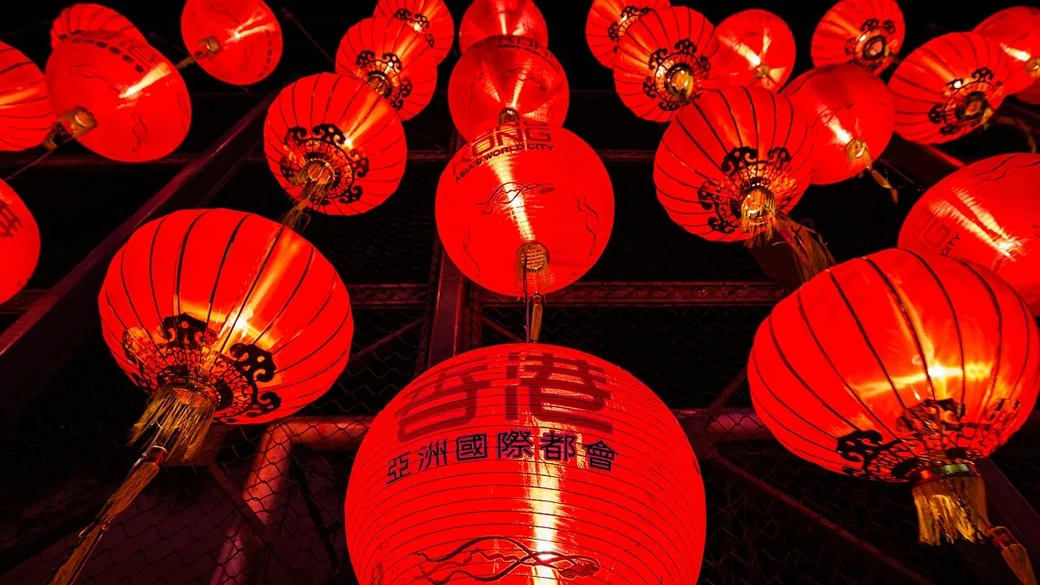
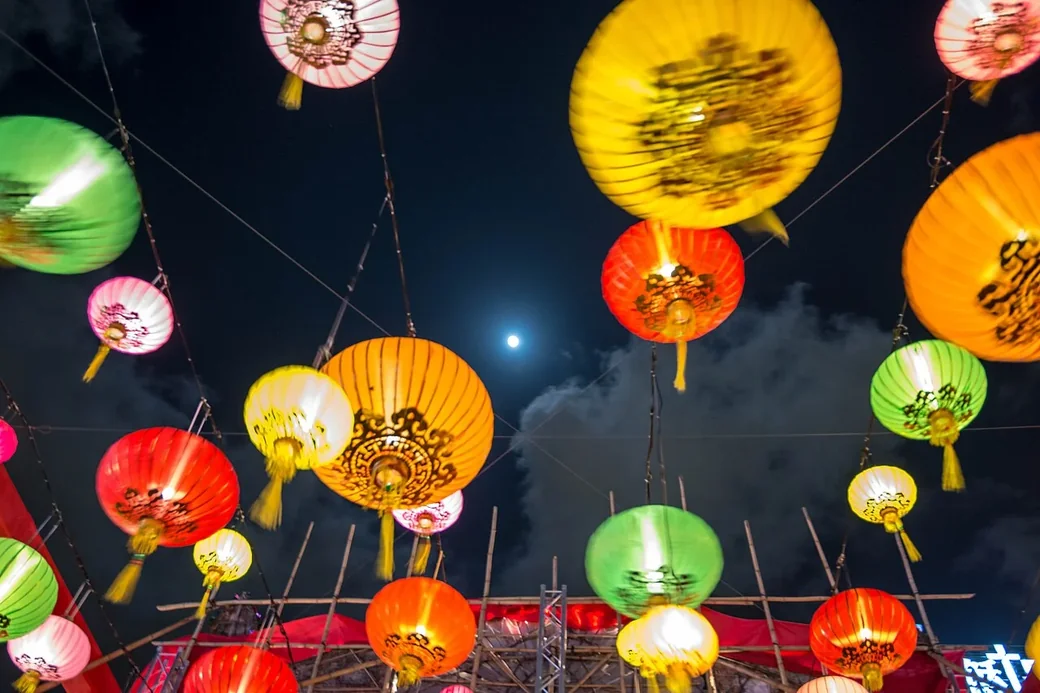
Mid-Autumn Festival in Hong Kong, with colourful lanterns glowing under the full moon as families gather to share mooncakes (round filled pastries) in a warm festive atmosphere

Mid-Autumn Festival (Moon Festival) in Hong Kong

Hong KongSep 15, 2027 – Sep 16, 2027Partial public holiday↻ Annual
Duration:2 daysType:
Cultural & Traditional Festivals
Admission:FreeLocationAnnual event — exact dates may vary each year

Hong Kong celebrates the Mid-Autumn Festival with glowing lanterns, harbourfront moon-gazing, mooncakes and the legendary Tai Hang Fire Dragon Dance, a 67-metre dragon bristling with incense sticks, carried through the streets over three evenings.

About This Festival

Mid-Autumn Festival in Hong Kong: Moon, Lanterns and Family Reunions

The Mid-Autumn Festival (中秋節, zung1 cau1 zit3, "Mid-Autumn Festival") falls on the fifteenth day of the eighth lunar month, when the moon is at its roundest and brightest. In Hong Kong it is above all a festival of reunion: families share a big dinner, pass around mooncakes and fruit, and then step outside to admire the full moon, a custom locals call "chasing the moon" (追月, zeoi1 jyut6). The city joins in with lantern displays, harbourfront picnics and the famous Tai Hang fire dragon. Because the day after the festival is a public holiday, the evening feels relaxed and children are allowed to stay up late. It is one of the warmest, most glowing nights of the Hong Kong year. The festival is also called the Moon Festival, the Mooncake Festival and the Reunion Festival (團圓節, tyun4 jyun4 zit3, "reunion festival").
Chang'e, the Jade Rabbit and the Mooncake Legend: Stories Behind the Festival

The festival grew out of ancient moon worship and autumn harvest thanksgiving, and it flourished in the Tang and Song dynasties. According to a beloved legend, the moon goddess Chang'e (嫦娥, "the moon goddess"), wife of the archer Hou Yi (后羿), drank an elixir of immortality and floated up to the moon, where a Jade Rabbit pounds herbs beside her. Another tale tells of Wu Gang (吳剛), who tends a laurel tree on the moon. According to a popular folk story, messages were once hidden inside mooncakes to coordinate an uprising in the Yuan era (the 13th–14th-century dynasty); this is hearsay rather than documented history. Hong Kong children grow up with these stories, which is why rabbit-shaped lanterns are everywhere.

Tai Hang Fire Dragon Dance: Hong Kong's Blazing Mid-Autumn Spectacle

The Tai Hang Fire Dragon Dance (大坑舞火龍, "Tai Hang fire dragon dance") is Hong Kong's most spectacular Mid-Autumn tradition. A dragon about 67 metres long, made of 32 segments and studded with roughly 12,000 glowing incense sticks, is carried through the narrow streets of Tai Hang by more than 300 performers to the thunder of drums and gongs. The Tai Hang Residents' Welfare Association builds a new dragon every year by hand from pearl straw, rattan and hemp rope, a task that takes a month or more. The dance runs for three evenings and was inscribed on China's national list of intangible cultural heritage in 2011. Children carry a small LED dragon alongside, passing the tradition to the next generation. The dragon's head alone weighs about 50 kilograms, and the body is wrapped in pearl straw (珍珠草, a fine-leaved herb that also holds the incense sticks in place). In 2019 the dance was named one of China's model examples of heritage safeguarding, and in 2026 it was counted as the 147th edition. Spectators remember the orange glow of embers in the smoke, the scent of incense and the rhythm of drums and gongs.

The 1880 Legend of Tai Hang: How the Fire Dragon Tradition Began

Tai Hang (大坑, "big gully", named after the large stream that once ran from the hills to the sea) was a Hakka (客家, a Chinese community with its own dialect and customs) village of farmers and fishermen on the Causeway Bay shore. According to a local legend, in 1880 a typhoon was followed by an outbreak of illness; in some tellings a giant python had also troubled the village. An elder dreamed that a dragon made of straw and covered in incense, paraded with firecrackers on the nights around Mid-Autumn, would bring relief. The villagers followed the dream, and the story says their troubles passed. Ever since, the community has held the dance every year to pray for peace and good health. The dragon is consecrated at Lin Fa Temple (蓮花宮, "Lotus Palace"), built around 1863 and dedicated to Kwun Yam (觀音, Guanyin, the goddess of mercy). According to a tradition told in the neighbourhood, Kwun Yam once appeared on the great rock where the temple now stands. The consecration is conducted in the Hakka dialect.

How the Fire Dragon Dance Unfolds: Rituals, Route and Blessing Incense

The ritual begins on the first evening, the eve of the festival. In the afternoon the dragon team visits Lin Fa Temple to pray, the dragon is consecrated and its eyes are dotted, which symbolically brings it to life. At the opening ceremony on Ormsby Street (安庶庇街) the incense sticks are lit and set into the dragon's body. Led by two glowing "dragon pearls" (balls studded with incense, traditionally pomelos) that it appears to chase, the dragon winds clockwise through the lanes, passing Warren Street (華倫街), Brown Street (布朗街), Wun Sha Street (浣紗街), Sun Chun Street (新村街), King Street (京街), Jones Street (施弼街) and School Street (書館街). On Wun Sha Street the dancers perform spectacular figures such as "the fire dragon crosses the bridge" (火龍過橋) and "the fire dragon coils around two poles" (火龍纏雙柱). Burnt incense sticks are handed to spectators, who believe they bring good luck. The final night ends with the "dragon soaring to the sky" farewell. In the past the dragon was released into the sea at the Causeway Bay typhoon shelter; today it is retired by fire to protect the harbour. Even its eyes have evolved: first taro, then flashlights, now LED lights.

Where to Watch the Tai Hang Fire Dragon Dance and How to Get There

The best viewing areas are Wun Sha Street (浣紗街), where most of the performance takes place, and Tung Lo Wan Road (銅鑼灣道). Anyone who wants to see the opening ceremony and the dragon pearls up close can wait on Ormsby Street (安庶庇街). From the MTR (Hong Kong's metro) station Tin Hau (天后), Exit A1, cross King's Road (英皇道), turn into Tung Lo Wan Road and walk about ten minutes. The dance takes place in the evening, after dusk. Spectators begin gathering hours earlier, so plan to arrive well ahead of time. The police manage the crowds with barriers, the roads around Tai Hang are closed, and the MTR usually adds extra late-evening services. The dance is cancelled under an Amber Rainstorm Warning (the lowest of the three heavy-rain warning levels) or Tropical Cyclone Warning Signal No. 8 (a gale or storm signal) or above. In many recent years the dragon has also danced on to Victoria Park late on the festival night. For accommodation, Causeway Bay, Tin Hau and Wan Chai put Tai Hang and Victoria Park within walking distance.

Tai Hang Fire Dragon Heritage Centre: Discover the Story by Day

Visit the Tai Hang Fire Dragon Heritage Centre (大坑火龍文化館) at 12 School Street (書館街12號) to understand the tradition before the dragon takes to the streets. The building began in 1909 as Hung Shing Yi Hok (孔聖義學, a charitable school for children), was rebuilt in 1949, is graded as a Grade III historic building (the third of Hong Kong's three heritage grades) and opened as a heritage centre in 2022. The ground-floor exhibition tells the story of the fire dragon and of Hakka culture (the culture of the community that founded Tai Hang) in Tai Hang, and a Hakka-inspired restaurant upstairs serves dishes of the community. Opening days and hours change, so check them first. Smartphone users can also scan the AR (augmented-reality) markers around the district with the "City in Time" app for illustrated history. In the neighbourhood you can also walk the Fire Dragon Trail (火龍徑), a pedestrian path along the former Tai Hang stream channel, completed in 2012 and named after the dance. The Tai Hang Residents' Welfare Association (大坑坊眾福利會), founded in 1946, is the community organisation behind both the dance and the heritage centre.

Victoria Park Lantern Carnival and the International Lantern Spectacular

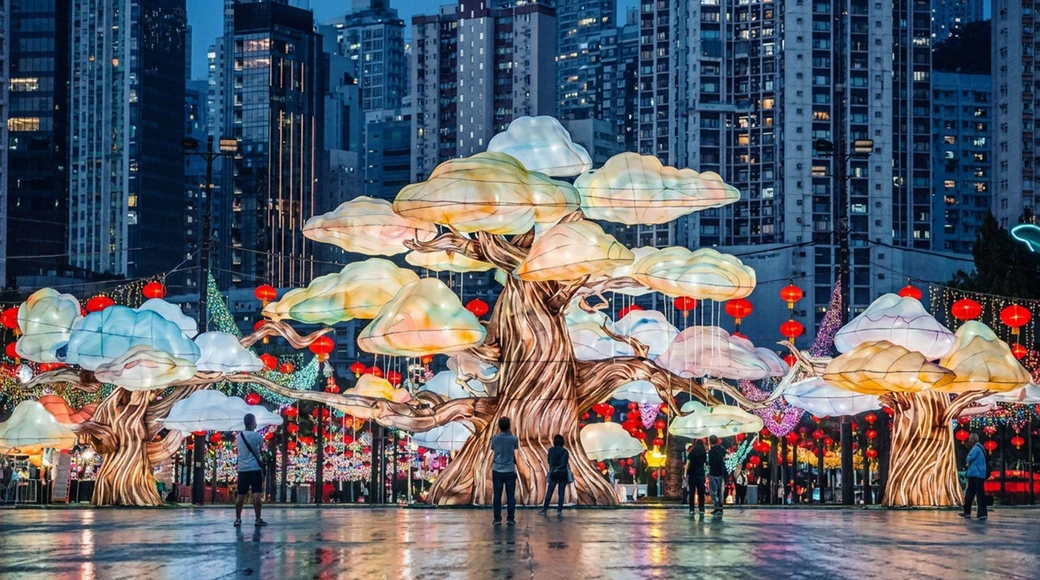
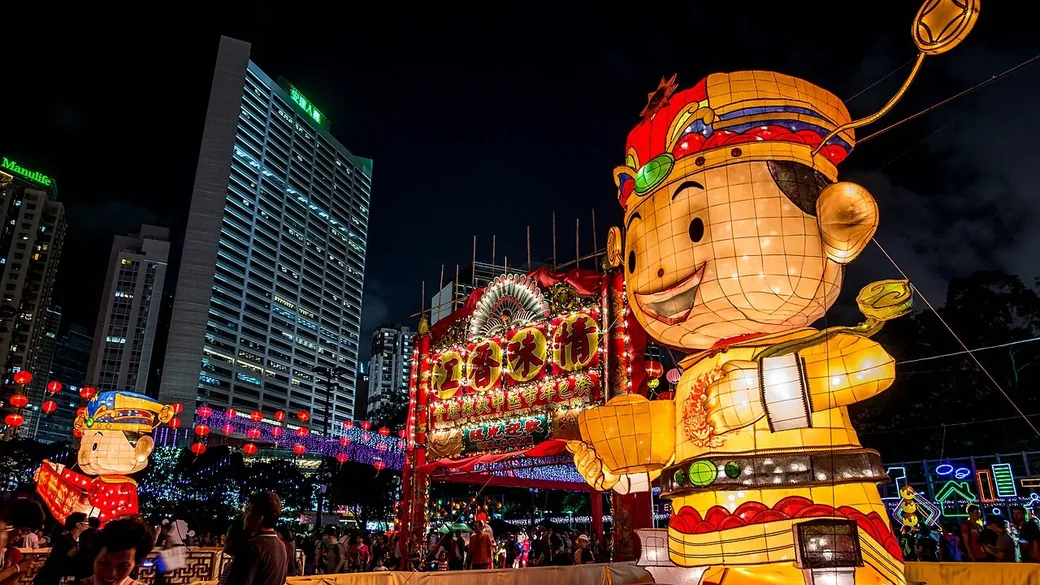
Every Mid-Autumn the Leisure and Cultural Services Department (康樂及文化事務署) fills Victoria Park (維多利亞公園) in Causeway Bay with giant themed lanterns, performances and traditional lantern-making demonstrations; the park is a short walk from MTR (Hong Kong's metro) Causeway Bay Exit E. In 2026 the Hong Kong Tourism Board added its first International Lantern Spectacular (國際中秋綵燈匯) on the theme of reunion. It brought more than 3,000 lanterns from 20 countries and regions to the World Lantern Boulevard (世界綵燈大街), including Korean Jinju silk lanterns, Brazilian patchwork lanterns and Polish paper-cut lanterns. Nanjing artisans made four giant Qinhuai lanterns (秦淮綵燈, Nanjing's traditional lantern craft, about 1,700 years old and listed as national intangible heritage), among them an eight-metre banyan tree called "Tree Shadows, Flowing Light" (樹影流光) at the park entrance and a seven-metre moon called "Moonlit Lotus Pond" (荷塘月色). In the Hill Knoll Pavilion (山丘涼亭), the Hong Kong Lantern Galleria (香港綵燈庭) displayed over 400 classic handmade Hong Kong lanterns shaped like rabbits, star fruit and goldfish. The lanterns look best around dusk.

Best Places to Watch the Mid-Autumn Moon in Hong Kong

Moon-gazing is the heart of the festival, and Hong Kong's harbour makes it special. At the Hong Kong Cultural Centre Piazza (香港文化中心露天廣場) in Tsim Sha Tsui, a Mid-Autumn lighting installation and the Victoria Harbour skyline frame the moon. Hong Kong Island offers Tamar Park (添馬公園) and Sun Yat Sen Memorial Park (中山紀念公園), both with wide lawns for a picnic, while Peak Garden (山頂花園) gives a calmer hilltop view. In Kowloon, West Kowloon Art Park (西九文化區藝術公園) and Kai Tak Cruise Terminal Park (啟德郵輪碼頭公園) have open skies and sea breezes. Shek O Beach (石澳海灘) faces east, so early arrivals can watch the moon rise over the water. Cyberport Waterfront Park (數碼港海濱公園) offers wide lawns facing the sea. Mooncake-and-barbecue picnics are popular too: barbecue pits stand beside Shek O Beach and in many country parks, and campsites on Cheung Chau (長洲), in Sai Kung (西貢) and in Yuen Long (元朗) let you watch the moon far from city lights.

Lantern Streets, Hand-Painted Lanterns and Riddles Across Hong Kong

Lanterns are the visual soul of Mid-Autumn. Fuk Wing Street (福榮街) in Sham Shui Po and the "Lantern Street" around Tai Kiu Market (大橋街市) in Yuen Long brim with handmade paper lanterns in traditional shapes such as rabbits, goldfish and star fruit. At the Blue House (藍屋) in Wan Chai, residents and artists light hundreds of hand-painted lanterns, Lee Tung Avenue (利東街) hangs hundreds of glowing lanterns, and the fishing village of Tai O (大澳) lines its lanes with painted paper lanterns. Many venues add lantern riddles (燈謎, dang1 mai4, "lantern riddles"), a playful tradition of guessing puzzles written on lanterns. Programmes differ from year to year, so check the latest listings. The Blue House lantern festival began in 2022, inspired by the hand-painted lanterns of Tai O. Tai Yuen Street (太原街) in Wan Chai is known for playful, child-friendly lantern designs, and the Jockey Club Creative Arts Centre (賽馬會創意藝術中心) in Shek Kip Mei shows lanterns painted by students and resident artists. Lantern-making workshops are popular with families.

Hong Kong Mooncakes: From Lotus Seed Paste to Snow-Skin and Custard

The classic mooncake (月餅, jyut6 beng2, "mooncake") has a golden baked crust around smooth lotus seed paste and one or two salted egg yolks that echo the full moon. Hong Kong bakers have reinvented it again and again. Chilled snow-skin mooncakes (冰皮月餅, "snow-skin mooncakes") with a soft glutinous rice skin appeared in 1989, followed by creamy custard fillings, mini sizes and modern flavours such as milk tea, matcha, pistachio and durian. Long-established bakeries such as Wing Wah (榮華餅家), Kee Wah (奇華餅家) and Maxim's (美心) are household names. In the mid-twentieth century neighbourhood bakeries even ran "mooncake clubs" so families could set aside a little each month. Mooncakes are cut into wedges and shared, a gesture of togetherness. In recent years charity stalls in Victoria Park have offered regional mooncakes from across China, such as Suzhou-style, Yunnan ham, and Teochew-style taro or black bean paste mooncakes. Snow-skin and custard mooncake workshops, lasting about ninety minutes, let you shape your own.

What to Eat at Mid-Autumn: Pomelo, Star Fruit, Hairy Crab and Hakka Dishes

Besides mooncakes, a Hong Kong Mid-Autumn table features fruit with auspicious meanings. Pomelo (柚, jau2, "pomelo") sounds like the Cantonese (Hong Kong's main Chinese language) word for blessing, so it is a popular gift; pomegranates stand for abundance, and star fruit (楊桃, joeng4 tou4, "star fruit") makes pretty star-shaped slices. Persimmons, which look like little red lanterns, and taro are also traditional in many Cantonese homes. Autumn is the season for hairy crab (大閘蟹, daai6 zaap6 haai5, "hairy crab"), a seasonal restaurant favourite. In Tai Hang you can taste dishes inspired by the Hakka community (the community that founded Tai Hang) at the Heritage Centre restaurant, and the neighbourhood's cafés make a relaxed stop before the dragon arrives.

Pok Fu Lam and Aberdeen Fire Dragons: More Mid-Autumn Dragon Dances

Tai Hang is not the only place where a fire dragon dances. In Pok Fu Lam Village (薄扶林村) on the south-western side of Hong Kong Island, residents and volunteers perform their own fire dragon dance on the festival night, a tradition listed on Hong Kong's Representative List of Intangible Cultural Heritage. It begins on Pok Fu Lam Road with a coiling move called "the dragon leaves its cave", visits the village households with blessings, moves on towards Wah Fu Estate (華富邨) and traditionally ends at Waterfall Bay Park (瀑布灣公園) with the "dragon returning to the sea" ritual. This dragon is much smaller and the setting more intimate. Aberdeen (香港仔) also stages a fire dragon parade with luminous and LED dragons in some years. The Pok Fu Lam dragon is carried mostly by young residents along the village's narrow paths. Aberdeen's straw dragon is joined in its parade by luminous dragons, lanterns and performance troupes.

Mid-Autumn Etiquette and Safety: Enjoy the Fire Dragon and the Crowds

The festival is welcoming and family-friendly, and a few habits keep it that way. Follow the instructions of police officers and event staff, stay behind the barriers and keep a comfortable distance from the dragon, whose incense sticks are genuinely burning and may drop sparks. Accept blessing incense when performers hand it out rather than reaching for the dragon. Wear light cotton clothes and closed shoes, carry water, and consider a light mask for the incense smoke. Keep phones and wallets secure in crowds and agree on a meeting point with your group. September and October are warm and humid and can bring storms, so watch the Hong Kong Observatory. In an emergency, dial 999.

Insider Tips and Handy Cantonese Phrases for Mid-Autumn in Hong Kong

Locals often combine one big event with a relaxed evening: a picnic or barbecue in a park, a lantern party at a community centre, then a late stroll under the moon. A good plan is to visit Tai Hang's Heritage Centre in the afternoon, have dinner nearby and join the crowd for the dragon. Visit lantern streets before the festival day, when shops are at their fullest. Handy phrases: 中秋快樂 (zung1 cau1 faai3 lok6, "Happy Mid-Autumn"), 食月餅 (sik6 jyut6 beng2, "eat mooncakes"), 賞月 (soeng2 jyut6, "admire the moon"), 舞火龍 (mou5 fo2 lung4, "dance the fire dragon") and 花好月圓 (faa1 hou2 jyut6 jyun4, "lovely blossoms and a full moon", a wish for happiness). On social media, look for the hashtags #MidAutumnFestival, #TaiHangFireDragon and #大坑舞火龍. The romanised Cantonese in this guide uses Jyutping (the standard Cantonese romanisation system), where the numbers mark the tones of Cantonese (Hong Kong's main Chinese language).

Practical Information

When

The festival falls on the 15th day of the eighth lunar month, which lands between early September and early October, and the day after the festival is a public holiday in Hong Kong. The Tai Hang Fire Dragon Dance (大坑舞火龍, "Tai Hang fire dragon dance") runs on three evenings, from the 14th to the 16th day of that lunar month; in recent years it has run from the evening until about half past ten. Lantern displays glow every evening for one to two weeks or more around the festival. The dates for the coming edition are given in the date fields, and the Hong Kong Tourism Board publishes the detailed programme every year.

Where

The heart of the festival is Tai Hang (大坑, "big gully", named after a large stream) in Causeway Bay on Hong Kong Island, mainly around Wun Sha Street (浣紗街) and Tung Lo Wan Road (銅鑼灣道), with the opening ceremony on Ormsby Street (安庶庇街). The big lantern carnival is held in Victoria Park (維多利亞公園), and a lighting installation brightens the harbourfront at the Hong Kong Cultural Centre Piazza (香港文化中心露天廣場) in Tsim Sha Tsui. The nearest MTR (Mass Transit Railway, Hong Kong's metro) stations are Tin Hau (天后) Exit A1 for Tai Hang and Causeway Bay (銅鑼灣) Exit E for Victoria Park.

Cost

Free. Watching the fire dragon dance and strolling through the main public lantern displays are free of charge.

Tips

Arrive early, because the best spots along Wun Sha Street fill up hours before the dragon appears. Use the MTR, which usually adds extra and later services around the festival, and expect road closures near Tai Hang. The dance is cancelled in severe weather: when an Amber Rainstorm Warning (the lowest of the Hong Kong Observatory's three heavy-rain warning levels) or a higher warning is in force, or when Tropical Cyclone Warning Signal No. 8 (a gale or storm signal) or above is raised. Check the Hong Kong Observatory (香港天文台) before you set out. Staying in Causeway Bay, Tin Hau or Wan Chai keeps both Tai Hang and Victoria Park within walking distance. Bring water, wear light clothes and comfortable shoes, and keep a respectful distance from the burning incense.

Specific to this festival

A brand-new dragon, about 67 metres long, in 32 sections and with some 12,000 incense sticks, is handcrafted every year by the Tai Hang community from pearl straw (珍珠草, a fine-leaved herb), rattan and hemp rope, and it is led by two glowing "dragon pearls". The dance is on China's national list of intangible cultural heritage and on Hong Kong's own representative list. The burnt incense sticks are handed to spectators as a blessing, the following day is a holiday so families stay out late "chasing the moon" (追月, zeoi1 jyut6, "chasing the moon"), and Hong Kong's own mooncake styles, from snow-skin to custard, are as much a part of the festival as the fire.

Accommodation and hotel options during Mid-Autumn Festival (Moon Festival) in Hong Kong

Accommodation and hotel options around the event venue, with their prices, are shown by Stay22 as a map and a list. Cookies are used. Your consent is remembered on every page; you can turn it off at any time in the cookie settings.

Keep Exploring

Travel essentials for Hong Kong

Flights, transfers, car rental, eSIM and insurance — compare your options

Flights

Find the best route

Transfers

Airport & city ground transport

Car Rental

Drive at your own pace

eSIM

Stay connected on arrival

Insurance

Cover your trip