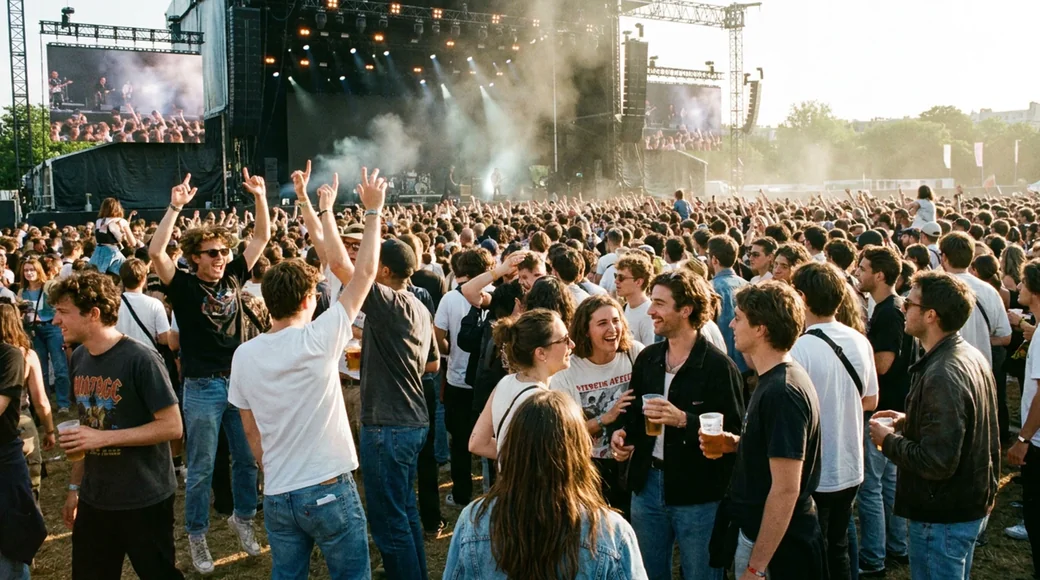
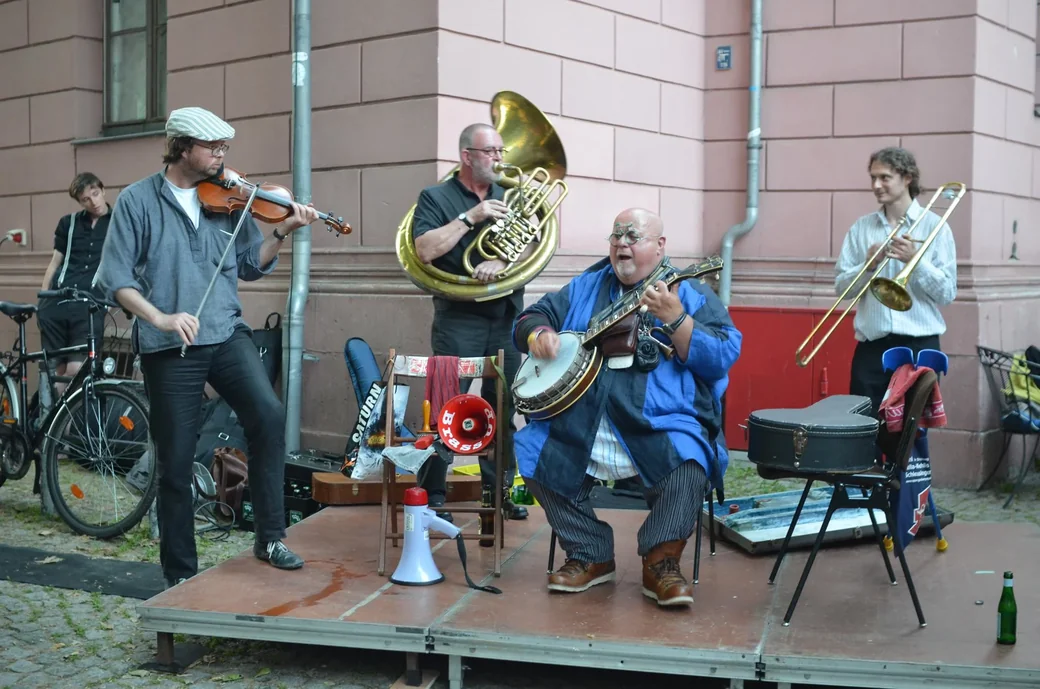
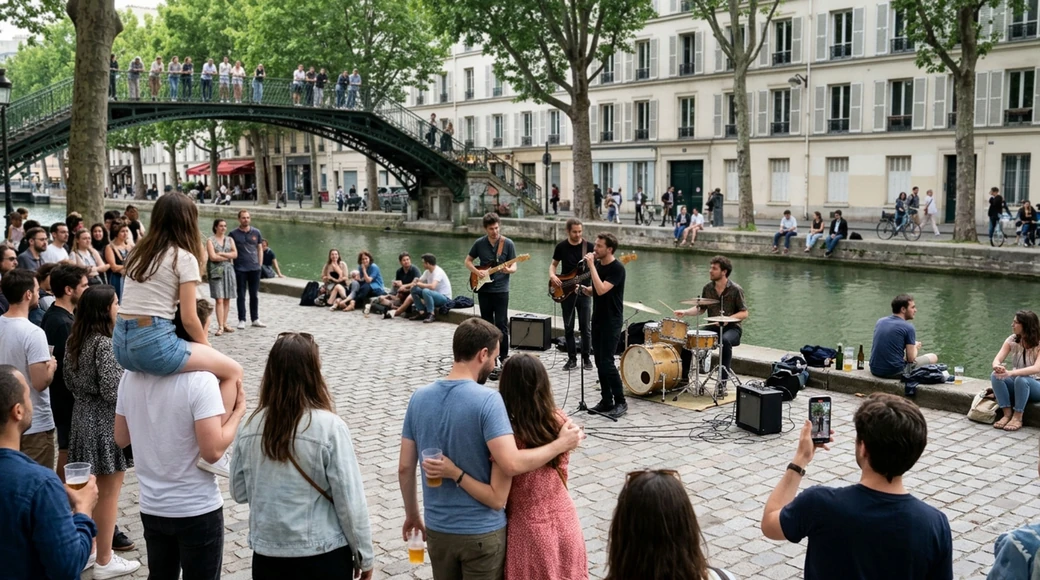
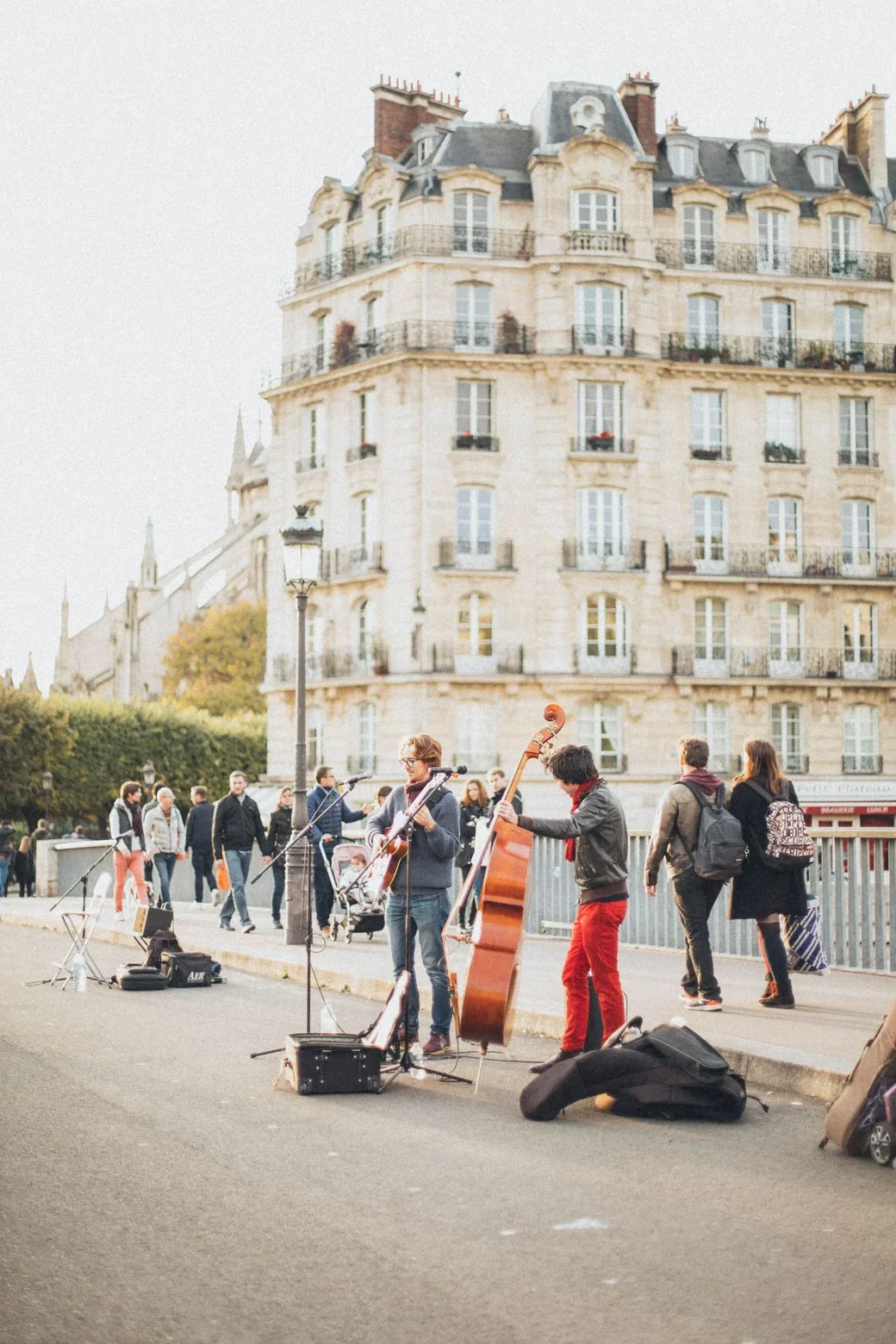
Fete de la Musique in Paris, musicians playing on a street corner as crowds gather on the longest evening of the year

Fête de la Musique (World Music Day)

ParisJun 21, 2027↻ Annual
Duration:1 daysType:
Music, Stage & Performance Events
Admission:FreeLocationAnnual event — exact dates may vary each year

Every June 21, Paris turns into one giant free concert as musicians of every style and skill level fill the streets, squares, bars and parks from afternoon until late into the night.

About This Festival

What Is the Fête de la Musique?

The Fête de la Musique, or World Music Day, is one of the most joyfully democratic events on the French calendar. On the longest day of the year, the whole of Paris becomes a stage: professional bands, amateur garage groups, solo buskers, choirs and DJs all take to the streets, squares, courtyards and cafés terraces at once, and every single performance is free to watch. There is no ticket, no gate and no headliner — the point is simply that music should be everywhere and belong to everyone, played by anyone willing to pick up an instrument. For visitors, it means you can step out of your hotel almost anywhere in the city and immediately find live music within a few minutes' walk.
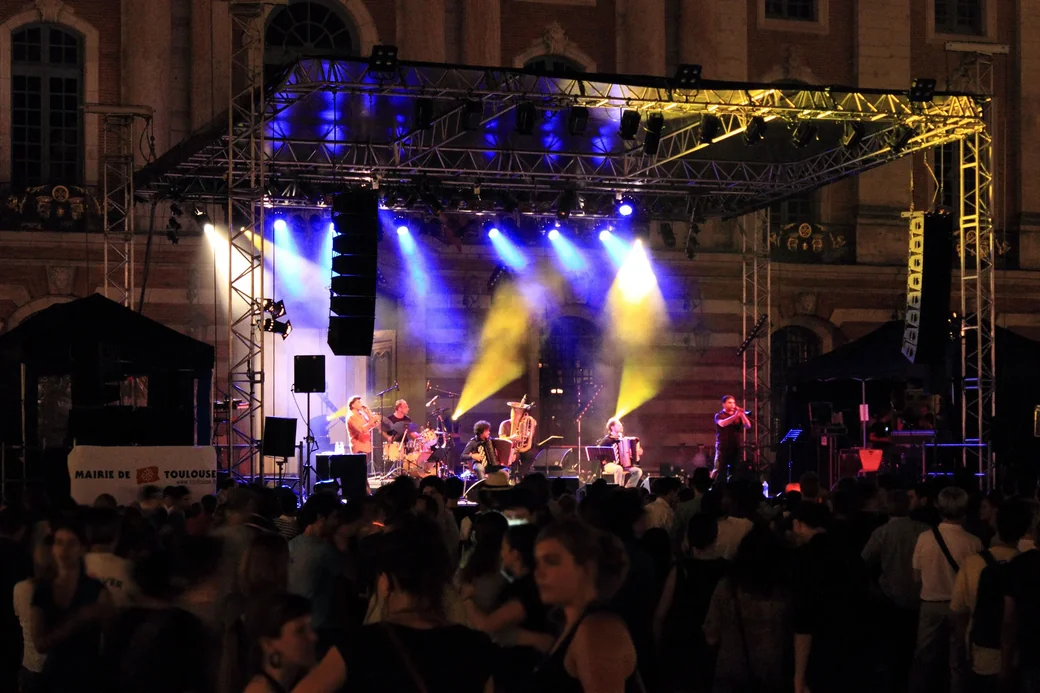
A Festival Born From a Simple, Radical Idea

The Fête de la Musique began in Paris in 1982, championed by Culture Minister Jack Lang together with Maurice Fleuret, the ministry's director of music, whose guiding phrase was that music should be »everywhere, and concerts nowhere«. A national survey had just revealed that millions of French people played an instrument purely for pleasure, and Fleuret imagined giving all of them a stage on the same night: the summer solstice, when long daylight hours naturally invite people outdoors. The idea caught on almost instantly in France and then abroad, spreading through Europe later in the 1980s and eventually reaching well over a hundred countries worldwide, each observing it in its own local style while keeping the same open, participatory spirit as the original Paris celebration. The name itself carries a playful double meaning: 'Fête de la Musique' (Festival of Music) sounds almost identical to 'Faites de la musique' (Make some music) — a pun that was part of the event's very first slogan and still captures its spirit today.

How the Night Unfolds Across the City

There is no single program to follow, no main stage and no schedule to memorize. Some performances are organized in advance by city halls, cultural venues, bars, restaurants and shopkeepers, who set up amplifiers on the pavement or open their courtyards to musicians; many others are entirely spontaneous, springing up wherever a few players decide a street corner or a square looks like a good spot. As afternoon turns to evening, the music multiplies block by block until whole neighborhoods are humming with overlapping sounds — a brass band around one corner, a string quartet in a courtyard, a rock trio outside a café a few steps further on. The best way to take it in is simply to keep moving and let your ears lead the way.

Neighborhoods With the Best Atmosphere

Neighborhoods With the Best Atmosphere

While music turns up almost everywhere, a handful of neighborhoods are famous for delivering an especially memorable night. The streets around Bastille, Oberkampf and Ménilmontant fill with a young, high-energy crowd and everything from rock to electronic sounds spilling out of bars. The Latin Quarter draws a lively student atmosphere with acoustic sets and sing-alongs around its historic squares. Montmartre offers a more bohemian, village-like feel, with music drifting up its steep stairways as the sun sets over the city. Canal Saint-Martin is popular with a younger, indie crowd who gather along the water's edge, while Saint-Germain-des-Prés leans into the jazz heritage the neighborhood is famous for. Wandering between two or three of these areas over the course of the evening makes for a wonderfully varied night.

Every Genre, Every Skill Level, Anyone Can Play

Part of the charm of the Fête de la Musique is its complete lack of hierarchy: a world-class jazz ensemble might be playing one street over from a group of teenagers performing their very first gig together. Classical string quartets, hip-hop crews, electronic DJs, folk and world-music ensembles, choirs, brass bands and singer-songwriters with nothing but an acoustic guitar all share the same night on equal footing. Anyone who wants to perform simply steps outside and starts playing — there is no audition, no booking agent and no stage fee required. For listeners, that means genuinely wandering from a classical recital to a punk set to a salsa circle within the space of a single block, which is exactly the point of an event built on the idea that music belongs to everyone.

The Atmosphere: Energy, Noise, and How Late It Runs

The mood is festive, loud and unmistakably communal — this is one of the few nights when packed, noisy streets are the entire point rather than something to avoid. Strangers dance together in front of a stranger's speaker system, café terraces stay full long after their usual closing time, and the boundary between performer and audience blurs constantly, since anyone nearby might grab an instrument and join in. Street performances generally run from the afternoon into the small hours, while shows inside bars, clubs and cultural venues with proper licenses often continue well past midnight. It has a completely different rhythm from an ordinary night out in Paris: less about a single destination and more about following the crowd and the sound from one lively corner to the next.

How to Experience It Like a Local

There is really only one strategy: leave the map behind and follow your ears. Rather than aiming for one specific concert, plan a loose route through two or three neighborhoods and let whatever music you encounter decide how long you stay in each spot. Eat dinner earlier than usual, since many kitchens get overwhelmed once the crowds arrive, and wear comfortable shoes, because the best nights involve a lot of walking between one impromptu stage and the next. Public transport keeps running but can get crowded and slower than usual near the busiest neighborhoods, so budget extra time to get around, and think in advance about how you will get home, since taxis and rideshares are in high demand once the music winds down.

Etiquette on the One Night Noise Is Welcome

The Fête de la Musique flips the usual rules of a quiet Paris evening: loud, amplified music in the street is not just tolerated but actively celebrated, and neighbors who might otherwise complain are often out on their own balconies enjoying the show. That said, the spirit of the night is participatory rather than chaotic, so basic courtesy still goes a long way — applaud the amateur teenagers as warmly as the professionals, ask before squeezing into a tight courtyard performance, and be mindful of the space you take up in an already packed street. Tipping street musicians, even a small amount, is a friendly gesture and genuinely appreciated, since almost nobody performing that night is being paid to be there.

Staying Safe and Comfortable in the Crowds

Like any citywide night event, the Fête de la Musique brings very large, dense crowds to popular streets and squares, so ordinary big-city precautions apply. Keep bags zipped and valuables close in the busiest pinch points, agree on a meeting spot with your group in case you get separated in the crush, and keep your phone charged in case you need to find each other or arrange a ride home later. Stick to well-lit, populated streets when moving between neighborhoods, and pace yourself with food and water over the course of a long evening of walking and standing. Because the night can end quite late, it is worth deciding in advance how you will get back to your accommodation rather than trying to work it out once the crowds are already heading home.

A Local Festival That Became a Global Celebration

What started as a single night in Paris in 1982 is now marked in well over a hundred countries around the world as World Music Day, making it one of France's most successful cultural exports. Cities from New York to Berlin, Rome to Melbourne, now stage their own versions on that same evening each year, each shaped by local music scenes but sharing the same founding spirit of free, open, hierarchy-free performance. For a visitor, that global reach adds a nice layer of meaning to the Paris original: you are experiencing the celebration in the city where the whole idea began, on the very night that towns and cities on almost every continent are doing the same thing in their own way.

The Name Is a Pun That Barely Survives Translation

In French, the festival's name hides a joke that disappears in every other language. Fête de la musique means festival of music, but spoken aloud it sounds identical to faites de la musique, meaning make music — an instruction rather than an announcement. That double meaning was the entire point. The idea came out of a 1982 government survey which found that around five million people in France played an instrument, roughly one young person in two, while organised musical events reached only a small minority of them. The response was not to put on another concert series but to hand the streets over to the amateurs and tell them to play. Knowing this changes how the evening reads: the wobbly teenage band on a street corner is not an unfortunate side effect of the festival, it is the festival working exactly as designed, and the professional acts are the guests rather than the hosts.

Accessibility on a Night With No Venue and No Barriers

There is no organiser to ask about access, because there is no single organiser: the night is thousands of independent performances, most of them set up by whoever decided to play. That makes it unusually unpredictable for anyone with mobility or sensory needs. Streets that are flat and easy in daylight become obstacle courses once crowds gather, and the pavement itself is often where musicians set up, narrowing the space further. Sound levels are the other issue, since unamplified and heavily amplified acts sit side by side with no separation between them, and volume can climb sharply within a few steps. What works better for most visitors with access needs is choosing the organised side of the evening rather than the street side: concerts programmed inside town halls, churches, courtyards, museums and cultural venues, which are announced in advance and take place in buildings with known access, seating and predictable sound.

Where to Stay: Sleep Is the Real Consideration

Unlike most Paris events, the question here is not how to get close to the action but how far from it you want to sleep. Music runs in the streets until the early hours, and the liveliest districts are residential ones, so a room above a bar in Oberkampf or Bastille puts you in the middle of a wonderful night and a fairly sleepless one. The city's usual central options all apply, but many people choose deliberately by ear: a quieter arrondissement a few streets back from the main nightlife spines, still walkable to the action but sheltered from the sound systems. Since the festival falls on one fixed date each June rather than a weekend, it often lands midweek, which keeps hotel demand closer to normal than a Saturday event would. Anyone who sleeps lightly should pack earplugs regardless of where they stay, and request a room on a courtyard rather than the street when booking.

Practical Information

When

Every year on June 21, the summer solstice — the date never changes, whatever day of the week it falls on.

Where

All across Paris — streets, squares, bars, courtyards and parks citywide. The Bastille, Oberkampf and Ménilmontant areas, the Latin Quarter and Montmartre are especially lively, but music pops up in almost every neighborhood.

Cost

Free. Every performance, official or spontaneous, is open to everyone at no charge.

Tips

There is no set itinerary — simply follow the sound of the music from street to street. Popular neighborhoods get very crowded and loud after dark, so wear comfortable shoes and expect to walk.

About this festival

Launched in Paris in 1982 by Culture Minister Jack Lang together with Maurice Fleuret, who wanted »music everywhere and concerts nowhere«, it has since grown into World Music Day, celebrated in well over 100 countries.

Accommodation and hotel options during Fête de la Musique (World Music Day)

Accommodation and hotel options across Paris, with their prices, are shown by Stay22 as a map and a list. Cookies are used. Your consent is remembered on every page; you can turn it off at any time in the cookie settings.

Keep Exploring

Travel essentials for Paris

Flights, transfers, car rental, eSIM and insurance — compare your options

Flights

Find the best route

Transfers

Airport & city ground transport

Car Rental

Drive at your own pace

eSIM

Stay connected on arrival

Insurance

Cover your trip