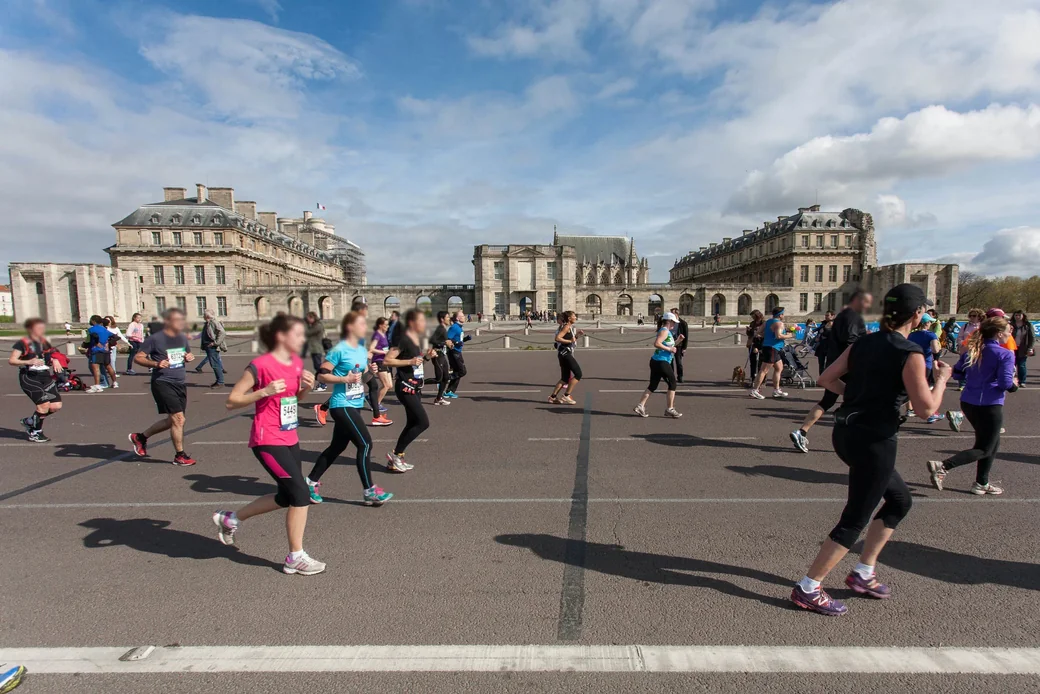
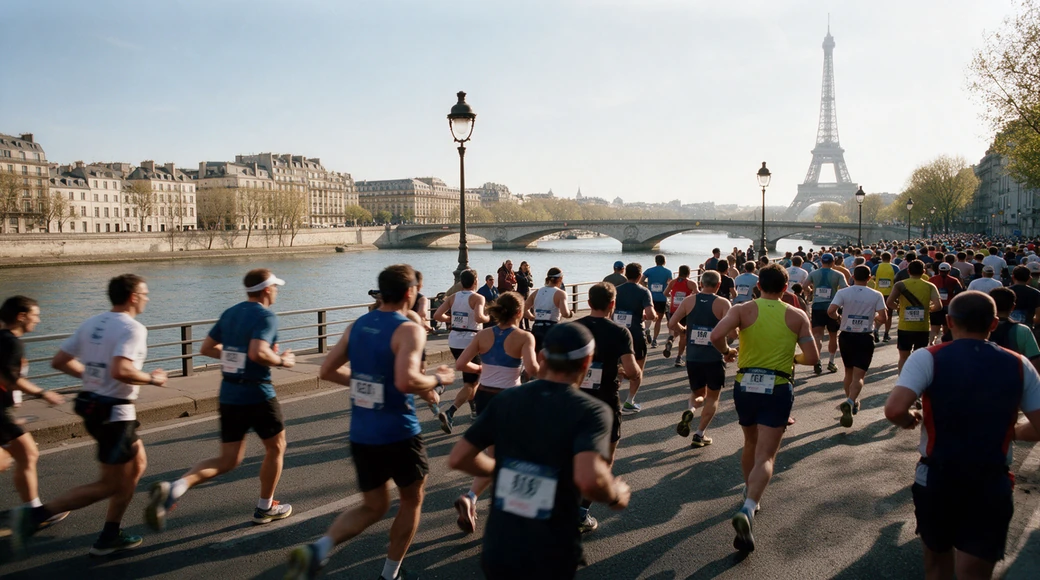
Paris Marathon, a dense field of runners filling a broad avenue in the city on race morning

Paris Marathon

ParisApr 4, 2027↻ Annual
Duration:1 daysType:
Sports & Outdoor Events
Admission:FreeLocationAnnual event — exact dates may vary each year

One of the world's largest marathons, this iconic road race sends tens of thousands of runners through the streets of Paris every spring, past the city's famous landmarks — and it's completely free to watch from the sidewalks.

About This Festival

One of the World's Biggest Marathons

The Paris Marathon ranks among the largest and most prestigious road races on the planet, drawing well over 50,000 runners from across the globe each time it's held. Runners set off together and cover the full 42.195-kilometre marathon distance through the heart of the French capital. For spectators, it offers a rare chance to see a major world sporting event unfold for free, right in the middle of the city, with elite athletes and first-time finishers sharing the same historic route in a single memorable morning. Along the route, the race also draws a crowd of around 250,000 spectators cheering the field on.
A Race Rooted in Paris History

The modern Paris Marathon traces its roots to 1976, when organizers revived the marathon tradition in the French capital using the now-standard 42.195-kilometre distance, decades after an earlier long-distance Paris road race had briefly flourished around the turn of the twentieth century. Over the decades the event has grown from a modest local race into a bucket-list destination race for runners worldwide, while staying true to its origins as a celebration of Paris itself.

A Course Through the Heart of Paris

Paris Marathon courses are designed to show off the capital: broad avenues, river quays, famous monuments and leafy parks are linked together over the full 42.195 kilometres. The organisers publish the official course map before each edition, so check it ahead of race day to see which neighbourhoods and landmarks the runners pass and to choose your viewing spots. Because the course is one continuous ribbon through the city, you can usually find a place to cheer almost anywhere along it.

The Electric Atmosphere of Race Day

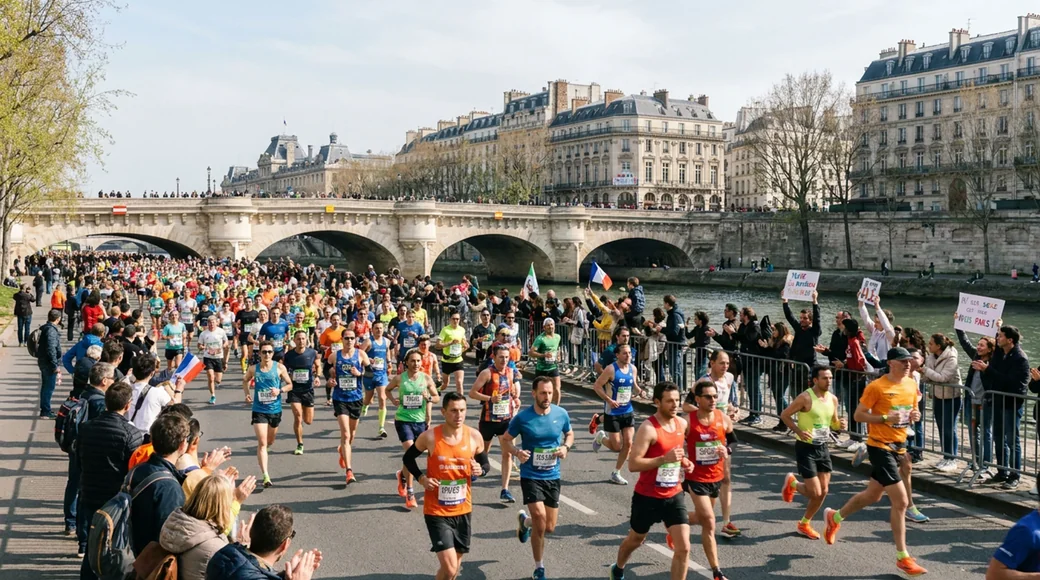
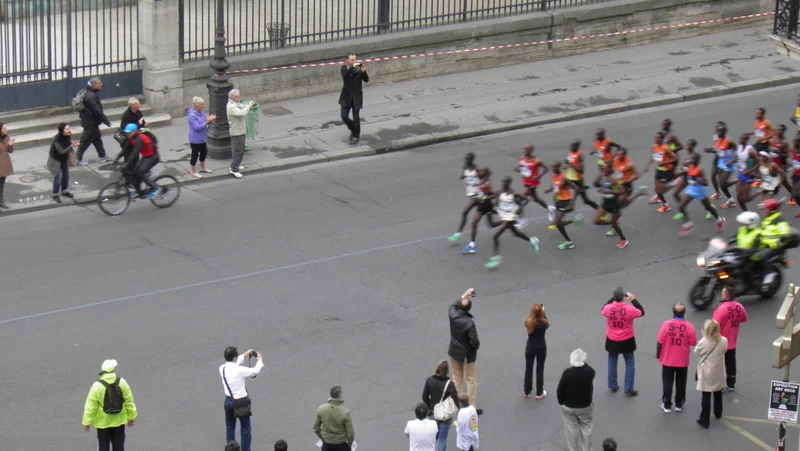
Long before the leading runners appear, crowds gather several rows deep along the barriers, and the mood only builds as the morning goes on. Bands, drum lines and DJs are stationed at intervals along the course, cafés spill their regulars onto the sidewalk to watch, and strangers cheer on strangers with equal enthusiasm. The energy is especially intense near the finish line, where friends and family wait with handmade signs, and wherever the sheer scale of the field passing by — from elite pacesetters to costumed charity runners — makes for an unforgettable spectacle.

Getting Around Paris on Marathon Day

Because the course runs through so much of central Paris, a wide band of streets along the route closes to traffic from early morning into the afternoon, and several bus lines are diverted. The metro keeps running and is by far the easiest way to get around, though stations near the start and finish areas can get crowded around the busiest hours. Check a transit app before heading out, allow extra walking time, and expect that crossing the route on foot may only be possible at marshalled crossing points.

How to Track a Runner You Know

If you're cheering on a friend or family member, the official race app and website typically offer live runner tracking, showing estimated split times at several points along the course so you can plan where and when to catch them. Spectators who study the course map often manage to see their runner two or three times, by moving quickly between viewing points on foot or by metro rather than staying in one spot all morning.

Want to Run It Yourself?

Entry into the marathon is handled entirely through the official organizer, and places are in high demand, so intending runners should plan well ahead rather than expecting to sign up at the last minute. Registration typically opens many months before race day, and the field fills quickly given the event's global reputation. Runners coming from abroad often combine registration with hotel bookings early, since accommodation near the course fills up fast in the run-up to race weekend. Checking the official website regularly for registration windows and requirements is the safest way to secure a spot.

Spectator Etiquette Along the Course

Cheering here is a genuine Parisian tradition, and newcomers are welcome to join in loudly. Stay behind the barriers at all times, since runners need a clear, unobstructed path, and never step onto the route to take a photo or hand someone water. Calling out a runner's first name — often printed on race bibs — draws an appreciated smile from total strangers, and simple encouragement travels well in French even if you don't speak the language. Keep pets on a short leash well back from the barriers, and be mindful that many residents along the route are simply going about their Sunday, so keep noise considerate away from the course itself.

Quiet Corners Versus the Liveliest Crowds

The areas around the start and finish lines draw the thickest crowds and the loudest cheering, so arrive early if that's the atmosphere you want. For a calmer experience with just as much of the race in view, locals often choose quieter stretches in the middle of the course, where you can still see thousands of runners pass without fighting for a spot at the barrier. Many Parisians also treat the morning as an excuse for a leisurely brunch on a café terrace near the course, catching glimpses of the race between courses rather than committing to one fixed viewing spot all morning.

The First Paris Marathon Ran Out of the City Altogether

The race is much older than most runners assume, and its first version looked nothing like today's loop through the monuments. In 1896 a crowd gathered to watch 191 participants set off on a course of forty kilometres that led out of Paris to Conflans-Sainte-Honorine, passing through Versailles on the way. The distance was not the modern 42.195 kilometres but a deliberate forty, chosen because that was reckoned to be the distance separating Marathon from Athens. There was no mass finisher culture yet either, so the organisers invented an incentive: a commemorative medal for anyone completing the course in under four hours. The event that runs today is a twentieth-century revival rather than a continuous tradition, which is why its modern edition numbers are far lower than 1896 would suggest.

Accessibility for Spectators Along the Course

Watching is easier here than at most Paris events, because the course is over forty kilometres long and the crowd is spread thinly along nearly all of it. Unlike a parade with one narrow corridor, you can almost always find a spot at the barrier without arriving hours early, and the pavements along most of the central stretches are flat and wide. The exceptions are the start and finish areas, which are densely packed and fenced, and any sections where the course drops below street level and spectator access is limited. For anyone who tires easily, the quieter middle sections of the course tend to offer more space to move and a calmer atmosphere, at the cost of being a long way from the finish celebrations.

Crossing the City on Race Morning

The particular problem here is not closure but division: a continuous forty-kilometre barrier cuts the city into two halves for several hours, and crossing it on foot is only possible at marshalled points that can be some distance apart. People regularly discover that their hotel and their destination are a ten-minute walk apart but separated by the course, turning it into an hour's detour. The metro is the answer, since it runs normally and passes underneath the route freely — the one form of transport the race cannot interrupt. Buses are extensively diverted and many stops are suspended, and driving anywhere near the centre is pointless. If you need to be somewhere at a fixed time that morning, check which side of the course it is on before working out how long the journey takes.

Where to Stay: What Runners Need Versus What Visitors Need

These are two different problems. Runners want to reach the start area early on a Sunday morning without a complicated journey, which points to a hotel close to the start or on a direct metro line, and they tend to book the nearest hotels a year ahead, so the area sells out unusually early for April. Spectators have much more freedom, since the course passes through a large part of central Paris and a room almost anywhere central puts you near some part of it. Prices are gentler than summer: April is shoulder season, and outside the streets immediately around the start and finish, the race barely moves the market. The full range is available across the centre, from hostels and small family hotels to chains and apartment rentals, and booking a few weeks ahead is usually enough.

Practical Information

When

Held annually on a Sunday in early spring, usually in the first half of April.

Where

The race runs through the streets of central Paris; the official course map is published by the organisers before each edition.

Cost

Free to watch as a spectator anywhere along the public route. Runners register separately, well in advance, through the official race organizer.

Tips

Arrive early to claim a good spot, especially near the start and finish areas, where the crowds cheer loudest. Expect rolling road closures and altered metro access around the route from early morning into the afternoon, so plan your journey with extra time.

About this race

One of the world's largest and most scenic marathons, it has been run since 1976 and draws tens of thousands of runners past some of Paris's most famous landmarks in a single morning.

Accommodation and hotel options during Paris Marathon

Accommodation and hotel options around the event venue, with their prices, are shown by Stay22 as a map and a list. Cookies are used. Your consent is remembered on every page; you can turn it off at any time in the cookie settings.

Keep Exploring

Travel essentials for Paris

Flights, transfers, car rental, eSIM and insurance — compare your options

Flights

Find the best route

Transfers

Airport & city ground transport

Car Rental

Drive at your own pace

eSIM

Stay connected on arrival

Insurance

Cover your trip