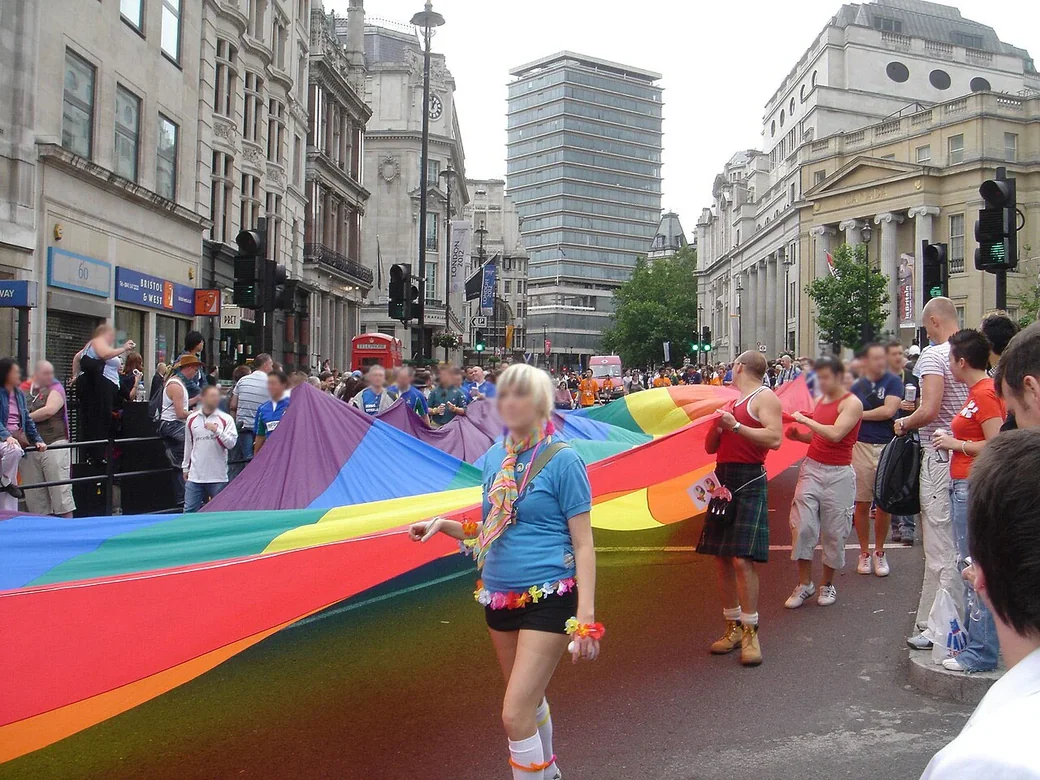
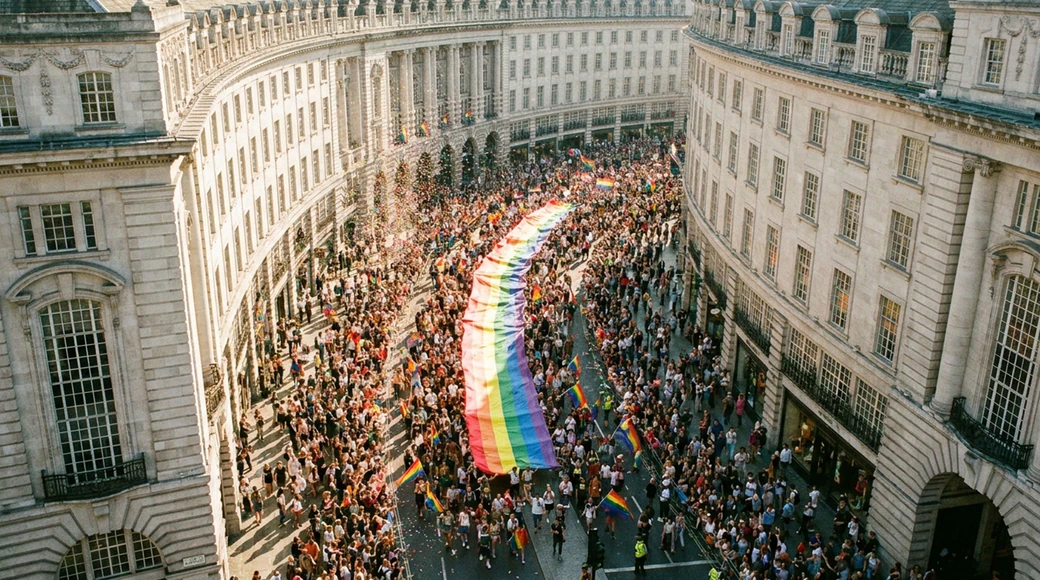
Pride in London, with a colourful parade moving through central London as marchers wave rainbow flags and crowds line the street to celebrate

Pride in London

LondonJul 3, 2027↻ Annual
Duration:1 daysType:
Community, Lifestyle & Social Responsibility Events
Admission:FreeLocationAnnual event — exact dates may vary each year

Pride in London is the capital's flagship free LGBTQ+ parade: tens of thousands of marchers walk from Hyde Park Corner to Whitehall, with six free stages in Trafalgar Square and Soho. A day of protest, music and community in the heart of the West End.

About This Festival

Pride in London: The UK's Biggest Free LGBTQ+ Parade in Central London

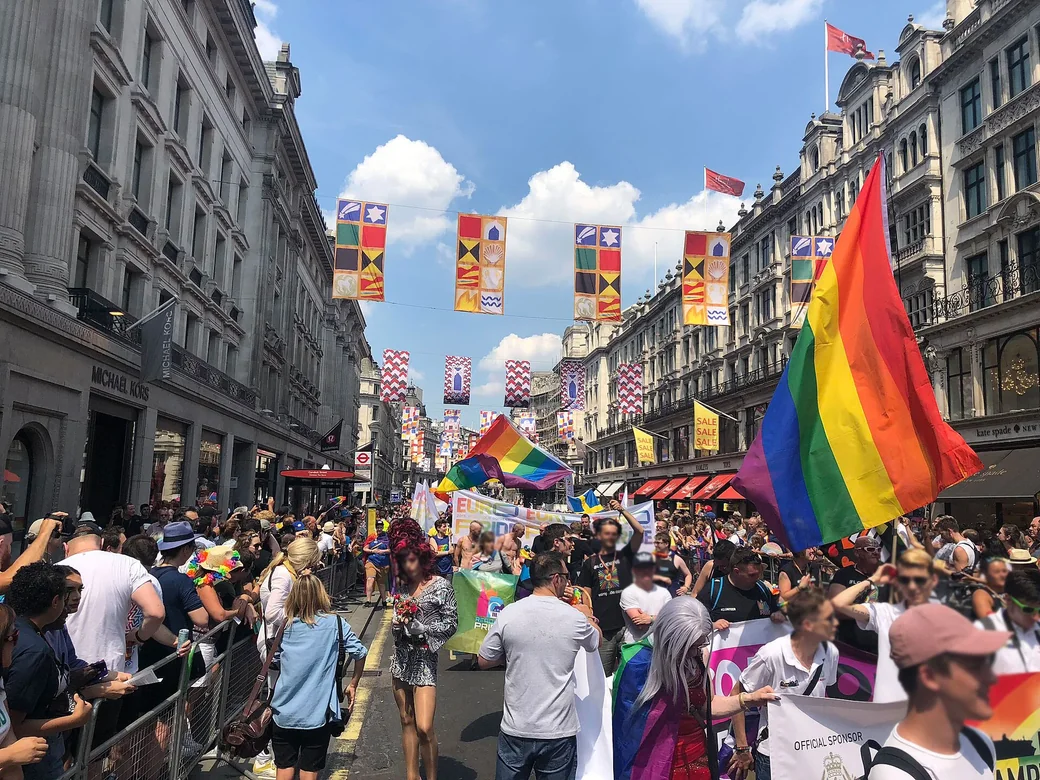
Pride in London is the capital's flagship LGBTQ+ (lesbian, gay, bisexual, trans, queer and other identities) celebration and one of the largest Pride events in Europe. Every year the parade fills the streets of the West End with tens of thousands of marchers from more than 500 community groups, charities, workplaces and public bodies, while well over a million people line the pavements to cheer them on. Watching the parade and visiting the stages costs nothing, and you do not need a ticket to stand on the street. The Mayor of London traditionally leads the march. What makes the day special is the mix: it is a joyful street party, but also a protest march with banners, speeches and campaigns for equality. The organisers describe the day through three values, visibility, unity and equality, and you will see all three on the signs, floats and stages. Come for the colour and the music, and stay for the stories behind the placards. Even if you only have an hour or two, it is easy to step into the atmosphere.
History of Pride in London: From the First 1972 March to Today

The roots go back to the early 1970s. In 1970 around 150 men walked through Highbury Fields in north London at the UK's first public gay pride event. The first official Pride march followed on 1 July 1972, organised by the Gay Liberation Front (a radical lesbian and gay activist group founded in London in 1970) on the Saturday closest to the anniversary of the Stonewall uprising (the 1969 protests after a police raid on a gay bar in New York) in New York. Estimates of how many took part range from about two hundred to around a thousand, but everyone agrees on the spirit: a carnival-style parade of costumes and homemade banners, followed by a picnic in Hyde Park. According to the recollections of people who were there, marchers also protested by kissing in the park, a bold gesture at the time. Moments of solidarity have shaped the march ever since. In 1981 it moved to Huddersfield to stand with the local community, and in 1985 miners' groups joined in thanks for the support they had received, a story retold in the film Pride. London hosted EuroPride (Europe's annual Pride festival, hosted by a different city each year) in 1992 and 2006 and WorldPride (the worldwide Pride festival awarded to one host city) in 2012. Another turning point came in 1988, when protests against Section 28 (a law that barred local councils from “promoting homosexuality”; it was repealed in 2003) swelled the number of marchers.

Pride in London Parade Route, Start Time and How Long It Lasts

The parade steps off at noon from Hyde Park Corner. It heads east along Piccadilly to Piccadilly Circus, turns south down Haymarket, passes Trafalgar Square and finishes on Whitehall, close to the Old Admiralty Buildings. The organisers say a single group needs roughly two to three hours to cover the route, and the whole procession takes four to five hours to pass, so the last floats (decorated parade vehicles) usually finish around six in the evening. The route has changed over the years, with earlier editions starting from Baker Street or from Portland Place and running through Regent Street, so always check the official map shortly before you go. At the very front you will find the Mayor of London and a dedicated access section for Deaf and disabled marchers. Behind them come community groups, charity floats, open-top buses and workplace networks in one very long, very colourful line.

Best Places to Watch the Pride in London Parade

Piccadilly Circus and Pall Mall are the classic viewing spots, with giant advertising screens as a backdrop, but they fill up fast: the organisers advise arriving at least 45 to 60 minutes before the start if you want a place at the barriers. Near Trafalgar Square the crowd is dense, but you get Nelson's Column as a backdrop, and at the Whitehall end the Elizabeth Tower (Big Ben) rises above the trees. For a guaranteed seat there are two ticketed grandstands (raised seating stands), one on Piccadilly near St James's Church and one on Cockspur Street overlooking Trafalgar Square. They open before the parade starts, tickets are sold separately and in advance on the official website, and glass is not allowed inside. Accessible viewing platforms stand beside the Piccadilly grandstand, as the accessibility tip explains. If you want atmosphere rather than a view, choose Soho, where the crowd spills onto Old Compton Street. To cross the route, use the crossing points marked on the official map and follow the stewards (the event marshals).

Pride in London Stages and Squares: Where to Go and What to See

Six free stages run alongside the parade, each with its own character. Trafalgar Square hosts the main stage with headline performances and speeches. Golden Square is home to the World Stage, which celebrates Black, Asian, mixed-heritage, Indigenous and other LGBTQ+ artists of colour. Leicester Square has the LGBTQIA+ Women's Stage. Dean Street in Soho is the cabaret stage (a stage for songs and comedy), full of drag (a stage art in which performers wear glamorous, exaggerated costume and make-up) and live performance. Soho Square hosts the Trans and Non-Binary Community Stage (non-binary means not identifying strictly as a man or a woman), and Victoria Embankment Gardens by the river is the Family Area and Youth Zone. Going by Google's coordinates, all six areas lie within roughly 15 minutes' walk of one another: Trafalgar Square and Leicester Square are only about 300 metres apart, and the Soho venues are within about 600 metres of each other. Every area has welfare and medical points, accessible toilets and free water refills, and several squares also sell souvenirs. Pick two neighbouring stages rather than trying to see them all.

Who Performs at Pride in London? Headliners, Drag Stars and Talks

The Trafalgar Square main stage is the musical heart of the day. Soul, pop and dance acts take the headline slots, drag stars and cabaret performers fill the afternoon, and well-known hosts keep the show moving between acts. Between the sets, charities and campaign groups give short talks on topics from health to human rights, which is a reminder that Pride is also a protest. The Dean Street cabaret stage is the place for drag, comedy and musical theatre, Golden Square showcases global-majority artists and DJs, and the Soho Square stage is led by trans and non-binary performers. Line-ups are announced in the weeks before the event and change every year, so check the official website for the current programme. Many artists appear on more than one stage, so you can often catch a favourite twice.

How to Get to Pride in London: Stations, Road Closures and Getting Home

Leave the car at home: there is no event parking and large parts of Westminster and the West End are closed to traffic, sometimes from the night before until the early hours of the next day. For the parade start, the organisers recommend Hyde Park Corner and Marble Arch. For the core of Piccadilly, use Green Park or Piccadilly Circus. For Trafalgar Square, Charing Cross and Embankment are the nearest stations, and for Soho and the squares, try Tottenham Court Road, Oxford Circus, Leicester Square or Covent Garden. Stations close to the route can switch to one-way or exit-only systems during the day. Many central stations are only ten minutes apart on foot, so walking is often faster than the Tube (London's underground railway). Santander Cycles docks near the route fill up or close, so check the app first. The busiest time to go home is the early evening, so linger in Soho for dinner, or walk ten to fifteen minutes to Holborn or Chancery Lane for shorter queues.

Pride in London Accessibility Guide: Access Safe Space, Shuttle Bus and BSL

Pride in London invests heavily in access. Anyone who is Deaf, disabled or has specific access needs can register in advance for an access wristband, which opens up dedicated viewing platforms and facilities. The registration window closes shortly before the event, so do it early. Near the front of the parade sits the Parade Access Safe Space, a quieter section with BSL (British Sign Language) interpreters, trained access volunteers in bright orange shirts and a rule that keeps whistles and megaphones out; assistance dogs are welcome. In recent editions a wheelchair-accessible shuttle bus has linked pick-up points at King's Cross and Charing Cross with the Safe Space and doubled as a rest space along the route. There is an accessible viewing platform on Piccadilly beside the grandstand, and Trafalgar Square offers speech-to-text, a hearing loop, seating, a dog rest area, a respite tent, a wheelchair charging point and a Changing Places toilet (a large accessible toilet with a hoist and an adult-size changing bench). Bring your RADAR key (the key that unlocks accessible toilets across the UK) for accessible toilets. Large-print and easy-read guides are published online.

Quiet Pride and the Family Area: Pride in London for Kids and Sensory Needs

If the main crowds feel overwhelming, there are calmer ways to take part. Quiet Pride is an accessibility-led space for neurodivergent people (people whose brains work differently, for example autistic people or people with ADHD), disabled people, people with mental health conditions and anyone who prefers a low-noise setting. It offers a quiet viewing area where you follow the parade through wireless headphones, a sensory room with fidget tools (small objects to fiddle with that help calm the nerves), a reading and wellbeing corner, arts and crafts and a silent disco (dancing to music through wireless headphones). It has been held in Holborn and asks visitors to register beforehand. Families can head to the Family Area and Youth Zone at Victoria Embankment Gardens, which has its own stage and sits right beside the river, away from the densest crowds. Children are welcome at the parade itself, and the free water refill points and first aid posts make a long day with little ones easier. Agree on a meeting point in case you get separated, since phone signal can be patchy.

Soho After the Parade: Old Compton Street, Pubs and the Street Party

When the last floats have passed, the celebration moves to Soho. Old Compton Street, the historic heart of London's LGBTQ+ scene, usually becomes one long street party, while the Dean Street cabaret stage and Soho Square keep the programme going. Two landmark pubs on the street are the Admiral Duncan at number 54 and Comptons at numbers 51 to 53, both known for friendly crowds. For a calmer drink, step into the side streets. Late-night dancing is traditionally centred around Old Compton Street itself and across the river in Vauxhall. Queues build quickly in the evening, so eat early, agree on a meeting point and consider a venue a few blocks away from the busiest corner. A good local habit is to choose one spot and let the day come to you instead of chasing every stage.

Pride in London Safety and Etiquette: Crowds, Photos and Five Useful Phrases

Central London is crowded on Pride day, so keep bags zipped and in front of you and phones out of back pockets. The densest areas are around Piccadilly Circus and Trafalgar Square; if you feel overwhelmed, step into a side street rather than pushing against the flow. Medical and welfare points are marked on the pink wayfinding boards along the route. Drinking in the street is not banned in general, but in controlled-drinking areas police and council officers can ask you to stop and hand over alcohol, so comply politely. Please ask before taking close-up photos of individuals, since not everyone in the crowd is out, and leave costumes that mock a culture or identity at home. Read the banners, listen to the speakers and respect the access areas. Five phrases will fit any conversation: Happy Pride, Love is love, Be yourself, Pride looks good on everyone, and Everyone is welcome.

What to Pack for Pride in London: Weather, Shoes and Water

You will be on your feet for hours, so wear comfortable shoes that are already broken in. Early summer in London usually means temperatures between about 18 and 28 degrees with sudden showers, so bring sun cream, a hat and a light rain jacket, all at once. Carry a refillable bottle, since the welfare stations have free water refill points, and pack a few light snacks because café queues are long around midday. Mobile signal gets patchy when the crowds are at their peak, so download the official map as a PDF or take a screenshot, charge your phone fully and bring a power bank. Keep a little cash for stalls, leave large bags and glass bottles at the hotel, and choose a bright outfit you can move in. A small pack with ID, a card, tissues and any personal medication is plenty.

Where to Stay and Eat Near the Pride in London Parade

Pride falls in the busy early-summer season, so book accommodation well in advance. Soho, Covent Garden and the streets around Piccadilly put you right in the action but stay noisy until late. For a quieter base within walking distance, look at Bloomsbury, Holborn, Marylebone or the hotels along Park Lane near the parade start. South Bank, Southwark and Victoria offer good transport links and are easy to reach on foot or by Tube. For food, Soho, Chinatown and Covent Garden are all within a few minutes of the stages, but café queues are long around midday, so eat before the parade starts or in the late afternoon. Many Soho restaurants fill quickly in the evening, so reserve if you can. After the stages close, a late dinner in Soho is also a smart way to avoid the busiest Tube hours.

Other Pride Events in London: Trans+ Pride, UK Black Pride and Local Prides

Pride in London is not the only Pride in the capital. London Trans+ Pride, founded in 2019 as a grassroots march, is one of the largest trans-led demonstrations in the world and takes place later in the summer. UK Black Pride, held since 2005 and now at Queen Elizabeth Olympic Park, is Europe's biggest celebration for LGBTQ+ people of African, Asian, Middle Eastern, Latin American and Caribbean heritage and draws around 25,000 people. Many London boroughs and neighbourhoods also host smaller Prides throughout the summer. Together these events show the breadth of the city's communities, and each has its own tone: the main parade is large and festive, Trans+ Pride is first and foremost a protest march, and Black Pride is a relaxed day in the park with music, food and talks. If you have the time, visiting more than one gives you a fuller picture of LGBTQ+ London.

Behind Pride in London: Volunteers, the Unity Fund and Fun Facts

Pride in London is run by a not-for-profit community interest company with the help of a large volunteer network: more than two hundred core volunteers work all year round, and over a thousand more steward the event on the day. The Unity Fund gives grants to grassroots LGBTQIA+ groups across London, so the day's energy reaches communities beyond the parade. Look out for the small details: pink wayfinding boards with maps, the orange-shirted access team, free water refill points and souvenir stalls on the squares. A few fun facts: the route has changed several times, the first march took place only a few years after homosexuality was partly decriminalised in England and Wales, and the slogan of that first march, Innovate, don't assimilate, is still quoted by activists today. The day is both a celebration and a reminder of why the march began, and that mix is what keeps Londoners coming back.

Pride in London in Film, Books and Archives, and Four Common Myths

To go deeper, start with the film Pride (2014), a true story that opens at a London Pride march in 1984 where activists collect money for striking miners; it won the Queer Palm (the Cannes Film Festival prize for LGBTQ+ themed films). For written history, Tony Walton's book Out of the Shadows covers the first marches, the London Museum has an online story called How London Pride began, and the Royal Parks website tells the story of the first Pride at Hyde Park in 1972. Historic England's Queer Soho Walking Tour includes a stop on Old Compton Street, where a separate Soho Pride was held between 2003 and 2008. Four myths are worth clearing up. It was not the world's first Pride march: Pride marches began in the United States in 1970, and London's 1972 march was the first in Britain billed as Gay Pride. It is not a ticketed festival, because the parade and all the stages are free. It is not only a party, because protest and speeches are part of the programme. And it is not only for LGBTQ+ people, because allies and supporters are welcome along the route.

Pride in London Symbols, Slogans and Soundtrack: Flags, Hashtags and Songs

The word Pride (the international name for LGBTQ+ marches and festivals) was chosen in the early 1970s to answer the shame that society expected gay people to feel, and its best-known symbol is the rainbow flag. In recent years the Progress Pride flag (the rainbow flag with an added chevron for trans people and people of colour) and the trans flag have been common sights on the route, together with face paint, glitter and costumes. Dress is entirely your choice, since there is no dress code. The soundtrack is pop and dance music from open-top buses and stages, mixed with cheers and whistles from the pavements. Each year has its own campaign theme and hashtag; past examples include #FreedomTo, #PrideHeroes (which honoured figures such as Alan Turing and the King's Cross Steelers, a gay sports club), #LoveHappensHere, #PrideMatters and #AllOurPride, and in some years an official Pride song has been chosen, such as Saara Aalto's Dance Like Nobody's Watching. Locals simply call the event London Pride. The organisers share updates on Instagram, Facebook and LinkedIn under the name prideinlondon. Look for the pink wayfinding boards, the orange-shirted access volunteers and the souvenir stalls on the squares.

Practical Information

When

A Saturday in early summer (the exact date changes every year, see the date field above). The parade sets off at noon and the last groups finish around 6 pm; the stages run alongside it.

Where

The parade runs from Hyde Park Corner along Piccadilly and Haymarket, past Trafalgar Square, to Whitehall. Six free stages are spread across Trafalgar Square, Leicester Square, Golden Square, Dean Street, Soho Square and Victoria Embankment Gardens.

Cost

Free. Watching the parade and visiting every stage needs no ticket; only the optional grandstand seats are sold separately through the official website.

Tips

Arrive 45 to 60 minutes before the start for a spot at the barriers, wear comfortable shoes, carry a refillable water bottle, download the map offline and agree on a meeting point with your group. Leave the car at home and use the Tube or walk.

Specific to this festival

Pride in London is both a protest march and a street party, led by the Mayor of London, with more than 500 community groups, an access-focused section at the front, Quiet Pride for sensory-friendly viewing and a family zone beside the Thames. After the parade, Old Compton Street in Soho turns into an unofficial street party.

Accommodation and hotel options during Pride in London

Accommodation and hotel options around the event venue, with their prices, are shown by Stay22 as a map and a list. Cookies are used. Your consent is remembered on every page; you can turn it off at any time in the cookie settings.

Keep Exploring

Travel essentials for London

Flights, transfers, car rental, eSIM and insurance — compare your options

Flights

Find the best route

Transfers

Airport & city ground transport

Car Rental

Drive at your own pace

eSIM

Stay connected on arrival

Insurance

Cover your trip