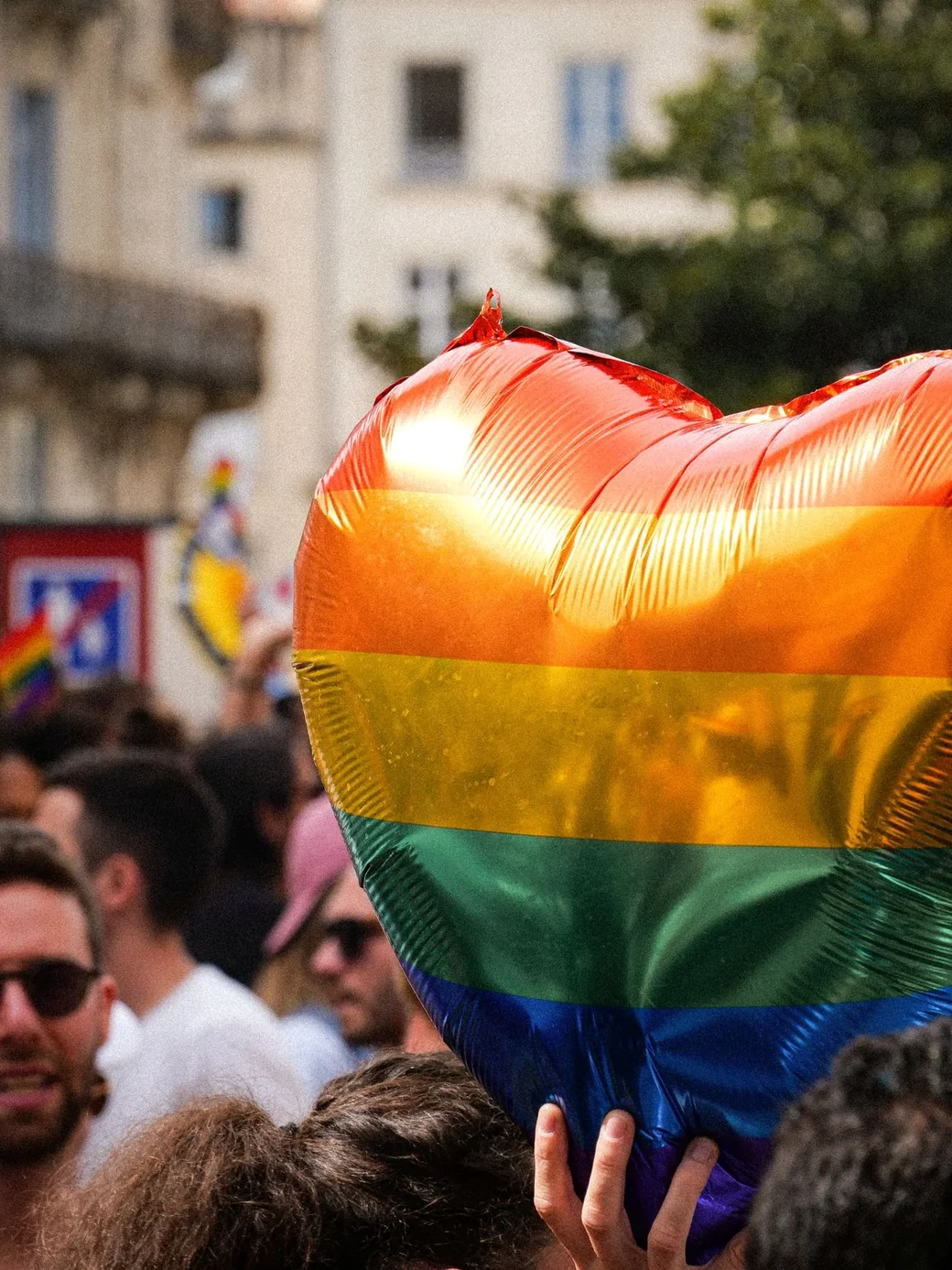
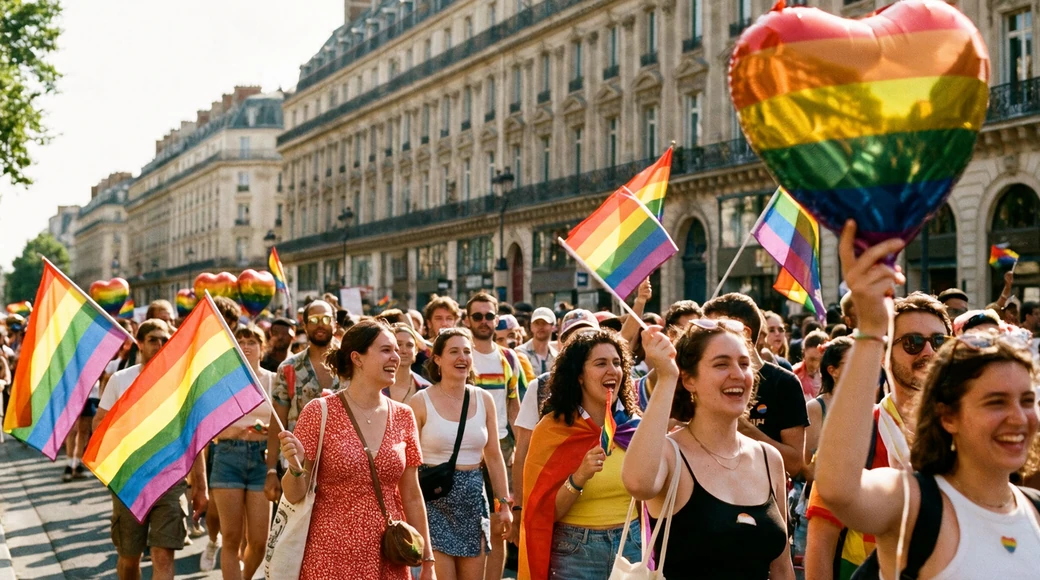
Pride March in Paris, participants with rainbow flags and decorated floats moving along a boulevard in summer

Paris Pride

ParisOct 3, 2026↻ Annual
Duration:1 daysType:
Community, Lifestyle & Social Responsibility Events
Admission:FreeLocationAnnual event — exact dates may vary each year

Paris's biggest LGBTQ+ celebration: a free, joyful street march through the city centre with music trucks, colourful floats and drag performers, usually held on a Saturday in early summer, followed by a lively concert and festival atmosphere.

About This Festival

What Is the Marche des Fiertés?

The Marche des Fiertés — known internationally as Paris Pride — is France's largest LGBTQ+ rights demonstration and street celebration. It is organized by Inter-LGBT, an umbrella coalition of dozens of French LGBTQ+ associations that has coordinated the event for decades. Unlike a ticketed festival, it is a public march open to anyone who wants to walk, watch or celebrate: no registration, membership or invitation is required to join the crowd along the route. The march combines two identities at once — a political demonstration carrying messages about equality, visibility and civil rights, and a joyful, music-filled street party. That dual character is central to its appeal, and it draws hundreds of thousands of participants and spectators each year, making it one of the largest LGBTQ+ gatherings in Europe.
From a Small 1977 March to a Movement

The roots of the Paris march trace back to 25 June 1977, when a few hundred activists walked from Place de la République to Place des Fêtes to demand visibility at a time when discrimination was still widespread. A landmark march in 1981 drew around ten thousand people and coincided with a new political era that saw discriminatory laws repealed. Through the 1980s and 1990s, the march grew rapidly and became closely tied to HIV/AIDS activism and healthcare advocacy, with attendance climbing into the tens and then hundreds of thousands. In 2001 the event was formally renamed Marche des Fiertés to underline its political dimension, and it later celebrated milestones such as the legalization of same-sex marriage in France. Today's march stands on the shoulders of that long, largely volunteer-driven history, and it remains one of the country's clearest annual expressions of LGBTQ+ visibility and solidarity. France's first march followed Britain's pioneering 1972 demonstration by five years and preceded Germany's first Christopher Street Day by about two years, placing Paris within Europe's first wave of gay rights marches.

How the March Moves Through the City

How the March Moves Through the City

Rather than following a fixed course, the Marche des Fiertés takes a different route through central Paris from one edition to the next, depending on agreements with city authorities, so any specific route should be treated as provisional until the organizers confirm it. The march typically sets off in the afternoon with speeches before the procession itself, moves at a relaxed, celebratory pace over a few hours, and ends with a large stage where speeches, music and performances continue well into the evening. Because the route and timings are announced only shortly beforehand, it's worth checking the current details close to your travel dates rather than relying on a previous year's map.

Floats, Music Trucks and Community Groups

The heart of the march is its procession of themed floats, sound systems and slow-moving music trucks, each one sponsored by an association, business, embassy or community group and often decorated in rainbow colors with dancers or performers on top. Walking alongside the floats are contingents from LGBTQ+ associations, health and advocacy groups, workplace networks, and international allies, many carrying banners with messages on subjects such as trans rights, family recognition and anti-discrimination. This mix of celebration and campaigning is what gives the march its distinct character: part parade, part rolling rally.

The Atmosphere: Color, Music and Energy

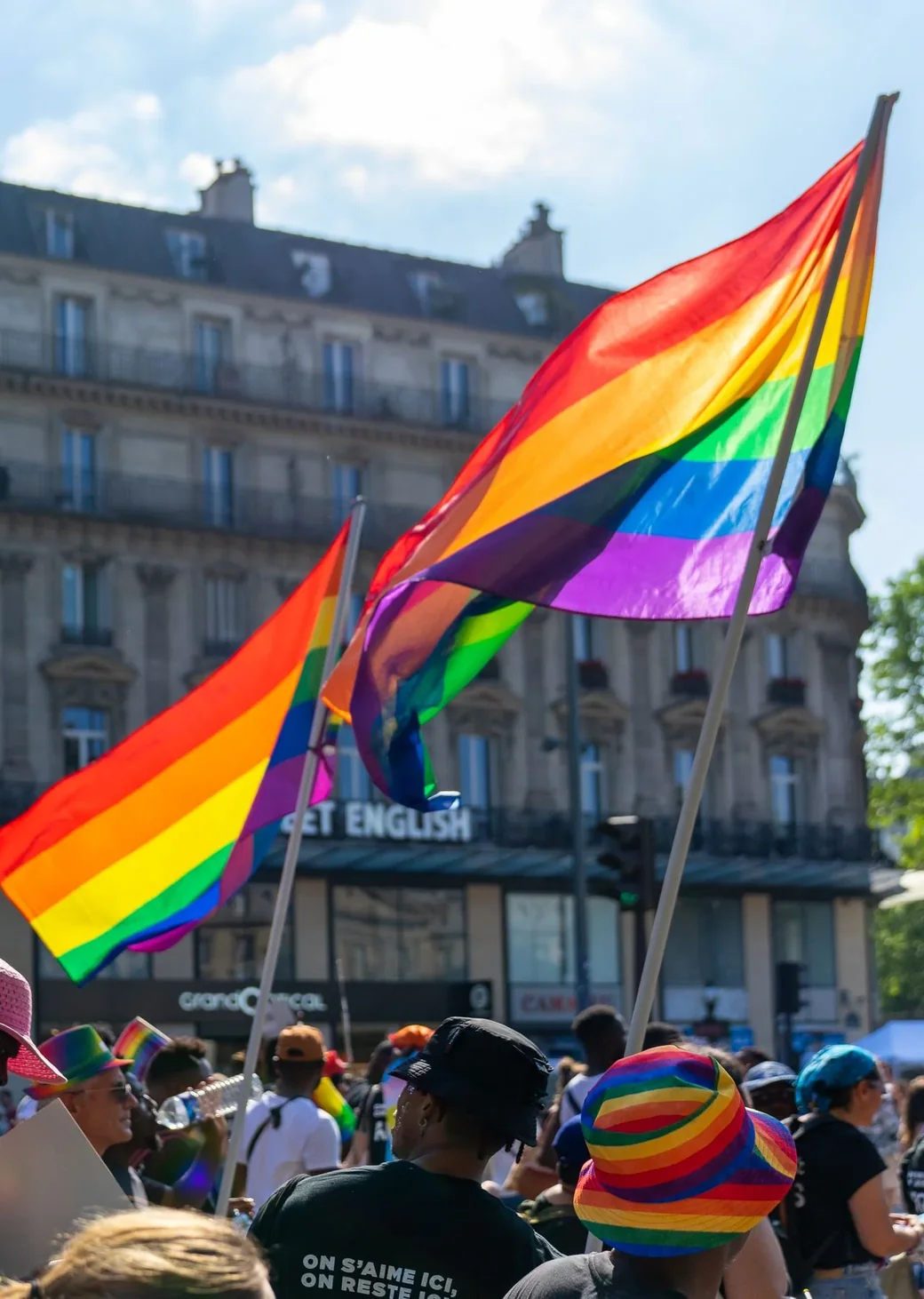
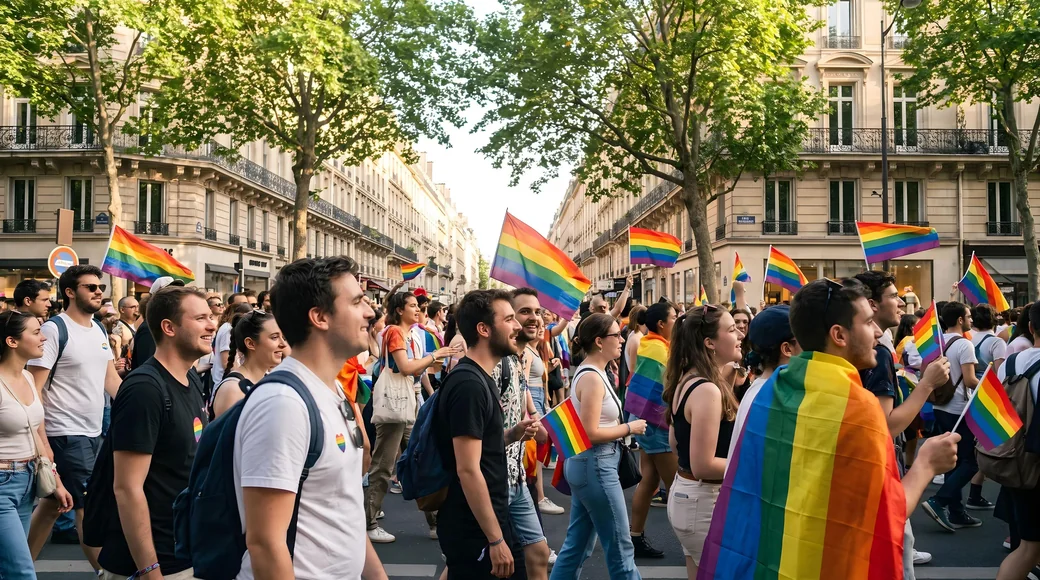
Expect an explosion of color: rainbow flags, glitter, elaborate costumes and face paint fill the streets from the moment the march begins. Music ranges from pounding house and pop anthems blasted from the trucks to live performances and drag shows on the closing stage, and the crowd's energy stays high for hours, with plenty of dancing along the route rather than just walking. The mood is overwhelmingly festive and welcoming, drawing a broad mix of LGBTQ+ Parisians, visitors from across France and abroad, families, allies and curious tourists who simply want to soak up the spectacle. Cafés and bars along the route often spill onto the pavement, and it's common to see spontaneous dancing at intersections while the procession pauses or slows.

Getting There and Planning Your Day

Because the route changes annually, the single most useful thing you can do is check the Inter-LGBT website or local listings shortly before your trip to confirm the exact streets, start time and the location of the closing stage. The march takes place in central Paris, so the Métro is by far the easiest way to get close to the route — expect some nearby stations and roads to have modified access or be closed for a few hours while the procession passes. Public transport around the route can get crowded, so build in extra time, and consider approaching from a station a few blocks away rather than one directly on the route itself. If you want a specific viewing spot, arrive well before the announced start time, since good positions near the front of the route or close to the closing stage fill up quickly.

Being a Respectful Visitor

Visitors are genuinely welcome to watch, cheer and even join the march itself — this is a public celebration, not a closed community event. A little courtesy goes a long way: if you want to photograph participants up close, especially those in elaborate costumes or drag, a quick smile or a nod asking permission is appreciated, since many people are happy to pose but prefer not to be filmed without notice. Cheering, clapping and dancing along are all part of the fun, while overly intrusive photography or treating participants purely as photo props is best avoided. If you decide to join the procession rather than just watch, follow the lead of stewards and marshals, who help keep the march moving safely and are easy to spot in high-visibility vests.

Staying Comfortable in the Crowd

As with any large outdoor gathering, a bit of preparation makes the day more enjoyable. The march usually falls in warm weather, so wear comfortable walking shoes, dress for sun exposure, and carry water, since crowded areas near the route can make it slow to reach shops or fountains. Agree on a meeting point with anyone you're travelling with in case you get separated in the crowd — mobile networks can be slow in very dense areas — and keep valuables secure in a zipped bag or front pocket, as with any busy city event. Public toilets along the route can have long queues, so it's sensible to use facilities at a café or Métro station before joining the densest parts of the crowd.

After the March: Village Atmosphere and Parties

After the March: Village Atmosphere and Parties

For many Parisians, the closing stage is just the beginning of the day's celebrations. Once the procession reaches its final square, the atmosphere shifts into a free open-air concert with a lineup of artists, drag performers and speeches from association representatives, often running for several hours into the evening. Beyond the official stage, the city's LGBTQ+ nightlife district around the Marais neighborhood — especially along Rue des Archives, home to long-running bars like Cox and Open Café — typically extends its own festivities well into the night, with bars, terraces and impromptu parties spilling into the streets. Locals often treat the whole day as a marathon rather than a sprint — arriving for the march itself, catching part of the concert, then moving on to bars and clubs later — so pacing yourself with food and rest breaks is a good idea if you want to enjoy the full day.

Why This March Matters Beyond a Single Day

Though it looks and feels like a party, the Marche des Fiertés carries real weight in France's social and political life. It functions as an annual barometer of LGBTQ+ visibility, a platform where associations raise current issues — from trans rights to family law to anti-discrimination policy — directly in the heart of the capital, and a moment when allies and elected officials publicly show their support. Its scale, drawing crowds that rival some of the city's biggest annual events, reflects how mainstream the march has become since its modest beginnings, while its continued activist framing shows that organizers see the fight for full equality as ongoing rather than finished. For travelers, witnessing it offers a genuine window into a significant thread of contemporary French civic and cultural life, not just a colorful spectacle. With annual crowds estimated at 500,000 to 700,000, it ranks among Europe's largest Pride events, comparable in scale to Madrid, Berlin and Amsterdam.

Accessibility: Flat Streets, But a Very Dense Crowd

The route follows wide, flat boulevards through central Paris, so the ground itself poses few problems for wheelchairs, walkers or pushchairs, and pavements along the way have dropped kerbs at most junctions. The real obstacle is density: hundreds of thousands of people line a route only a few metres wide in places, and once a section fills up, moving across or out of the crowd becomes slow and sometimes impossible for anyone who cannot weave through standing bodies. The practical strategy most regular attendees with mobility needs use is to arrive early, take a position near the start of the route rather than the end, and stay close to a side street that offers an exit. Volume is another factor worth planning for: sound systems on the trucks are loud and sustained for hours, which can be overwhelming for people sensitive to noise, so ear defenders and a planned quiet break are sensible. Metro stations along the route are often closed or exit-only on the day.

Where to Stay: The One Weekend Central Paris Really Does Fill Up

This is one of the few Paris events that genuinely tightens the city's accommodation market for a specific weekend, because visitors come from across France and abroad and almost all of them want to be within walking distance of the same central districts. The Marais, which has been the heart of Parisian queer life for decades, is the most sought-after area and also one of the most expensive, with a mix of small design hotels, converted townhouses and apartment rentals rather than large chains. The surrounding central quarters — Bastille, République, Le Temple and the streets toward Châtelet — offer more rooms and more variety, including hostels and mid-range chains, while remaining a short walk from the route and the evening gatherings that follow. Booking two to three months ahead is genuinely worth doing here. Staying slightly outside the centre is perfectly workable for the march itself, but less so afterwards, since the night runs late and transport thins out.

Practical Information

When

Held annually, usually on a Saturday in early summer (the exact date is announced by the organisers each year and can shift).

Where

A festive procession through the streets of central Paris; the route is announced by the organisers each year.

Cost

Free to attend — it is a public march open to everyone, with no ticket needed.

Tips

Arrive early to claim a good spot along the route, wear comfortable shoes and sun protection, bring water, and check the organiser's website close to the date for the confirmed route, start time and stage lineup.

About this event

One of Europe's largest Pride marches, it blends a decades-old civil-rights tradition with a joyful street-party atmosphere of music trucks, colourful floats and community associations, closing with a free open-air concert.

Accommodation and hotel options during Paris Pride

Accommodation and hotel options around the event venue, with their prices, are shown by Stay22 as a map and a list. Cookies are used. Your consent is remembered on every page; you can turn it off at any time in the cookie settings.

Keep Exploring

Travel essentials for Paris

Flights, transfers, car rental, eSIM and insurance — compare your options

Flights

Find the best route

Transfers

Airport & city ground transport

Car Rental

Drive at your own pace

eSIM

Stay connected on arrival

Insurance

Cover your trip