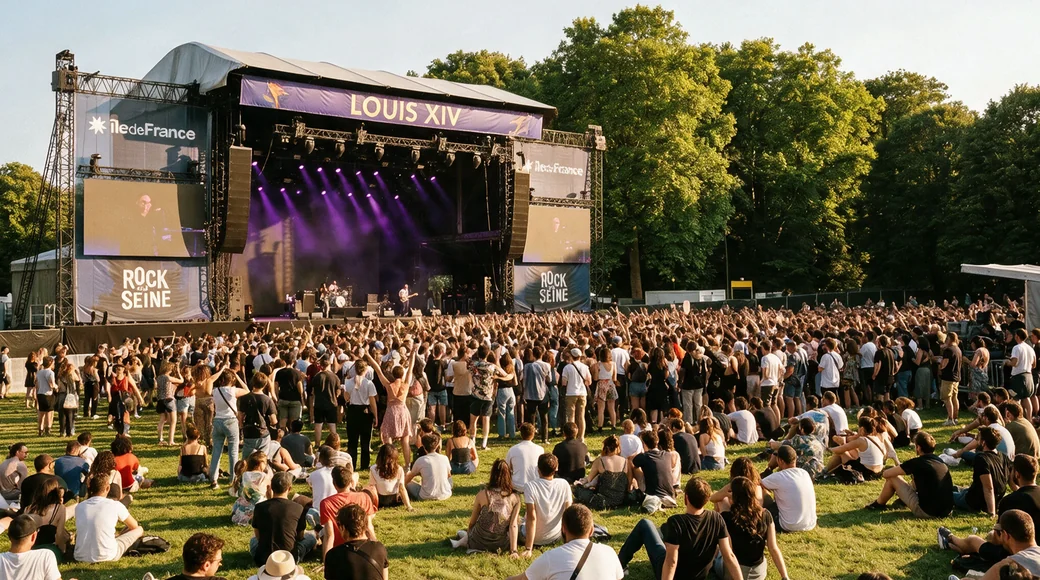
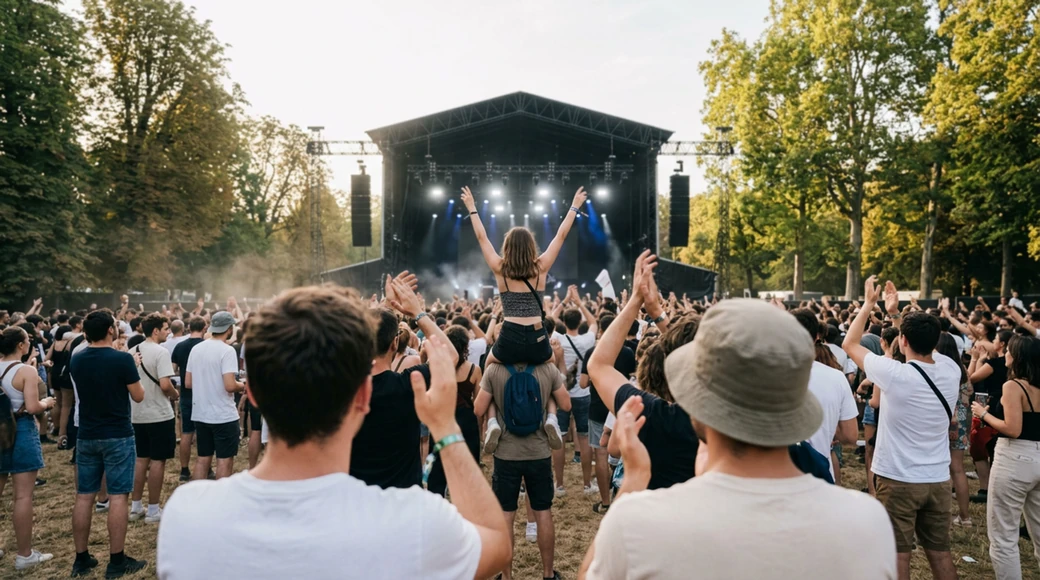
Rock en Seine near Paris, a crowd in front of the main stage at the open-air rock festival on a summer evening

Rock en Seine (Paris Rock Festival)

ParisAug 25, 2027 – Aug 29, 2027↻ Annual
Duration:5 daysType:
Music, Stage & Performance Events
Admission:From 79 EURLocationAnnual event — exact dates may vary each year

One of France's leading rock, pop and electronic music festivals, held every August in the historic parkland of the Domaine national de Saint-Cloud just west of Paris. Multiple stages bring together major international headliners and rising French artists over several summer days.

About This Festival

What Is Rock en Seine? A Quick Guide

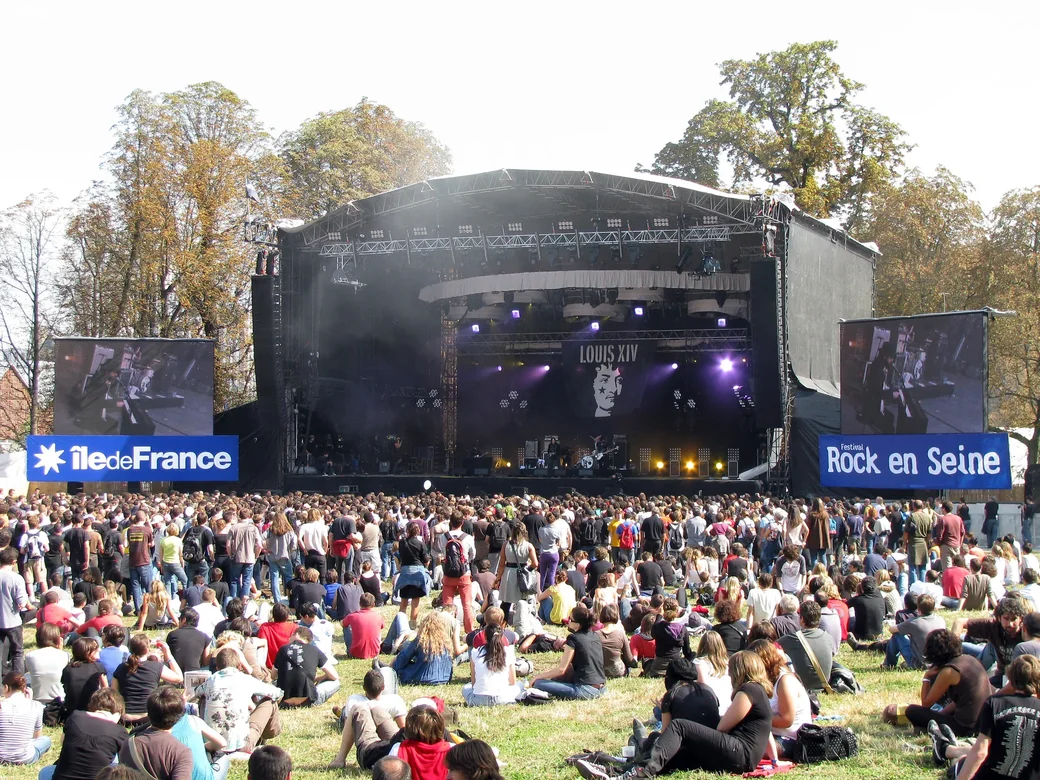
Rock en Seine is one of the Paris region's biggest music festivals, gathering tens of thousands of fans each summer for several days of rock, pop, alternative and electronic music. Multiple stages run in parallel across a historic park just west of the city, hosting a mix of globally known headliners and buzzing newcomers. Alongside the music, the festival grounds host food trucks, bars, art installations and shaded lounge areas, giving it the feel of a full outdoor cultural event rather than just a concert series. It consistently ranks among the handful of rock-focused festivals that define France's summer festival calendar, drawing visitors from across Europe as well as day-trippers from Paris itself.
From a Small Gathering to a National Institution

Founded in 2003 by a trio of French concert promoters, Rock en Seine opened with just two stages and a handful of bands, and quickly built a reputation for programming that paired marquee international names with adventurous, lesser-known acts. Within a few years the event grew from a single day into a multi-day format, adding stages and steadily expanding its audience into the tens of thousands. In 2016, ownership passed to the media and live-entertainment investor Matthieu Pigasse, who took over the festival through his personal holding company, bringing a larger budget and an even more ambitious lineup. Since 2003, Rock en Seine has grown into one of the anchor events of the French festival season, spoken of in the same breath as the country's other major rock gatherings.

Inside the Domaine National de Saint-Cloud

The festival takes place in the Domaine national de Saint-Cloud, a sweeping historic estate laid out in the seventeenth century by landscape architect André Le Nôtre, best known for the gardens of Versailles. Its terraces, tree-lined avenues and fountains provide a striking green backdrop that sets Rock en Seine apart from festivals held in car parks or industrial fairgrounds. The lower part of the park is transformed each year into a temporary festival city, with several stages spread across open lawns and wooded areas, connected by wide paths that make it easy to move between performances. Being so close to central Paris, yet inside a protected national heritage site, gives the festival a rare combination of urban convenience and genuine green space.

A Festival Built Around Rock and Alternative Sounds

While the lineup has broadened over the years to include pop, hip-hop and electronic acts, Rock en Seine has kept its reputation as one of France's most rock-oriented major festivals, spoken of alongside events such as the Eurockéennes de Belfort and Hellfest. Programming tends to favour guitar-driven and alternative artists at the top of the bill, complemented by indie, synth-pop and dance acts on the smaller stages. The very first edition featured artists such as Massive Attack, PJ Harvey and Beck, setting an early tone of genre-hopping quality that the festival has kept ever since. That range gives visitors a wide musical experience across a single weekend, without straying too far from the festival's guitar-centred core identity.

What the Festival Grounds Feel Like

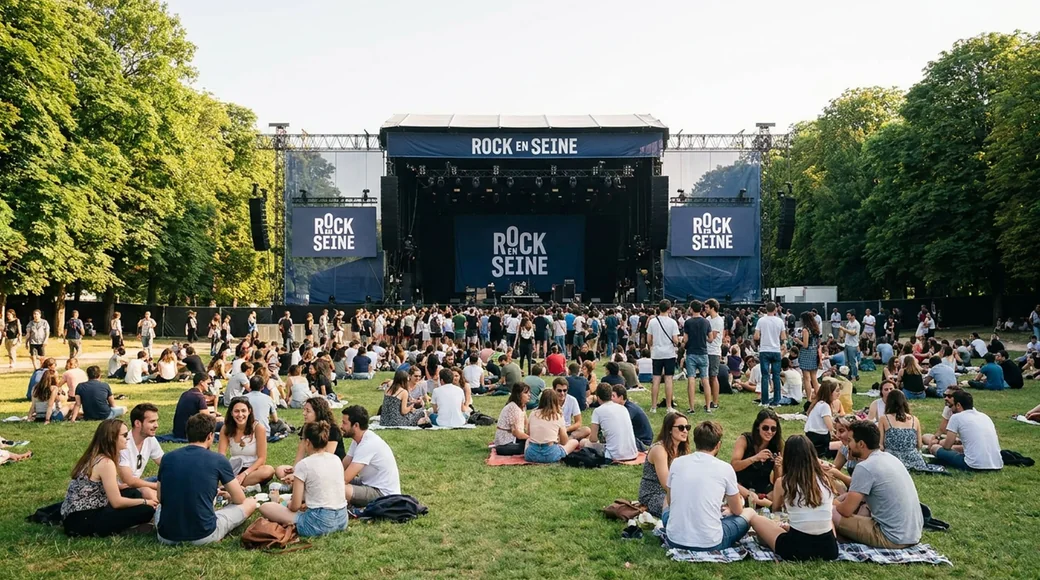
Expect a lively but generally relaxed crowd that skews toward music-loving twenty- and thirty-somethings, alongside plenty of families and older fans drawn in by specific headliners. Between stages you will find a wide choice of food trucks and bar areas serving everything from classic festival fare to more elaborate options, plus shaded seating zones where people rest between sets. Because the park is so large, the atmosphere shifts from packed and energetic right in front of the main stage to noticeably calmer, picnic-style spots just a short walk away. Many attendees treat it as a full day out, arriving early to enjoy the grounds and staying through the evening's headline performances. A dedicated Mini Rock en Seine programme introduces younger children to live music with its own family-friendly activities, and the festival now draws well over 100,000 attendees across its run.

Getting Tickets and Getting There

Tickets are sold in several formats, from single-day passes to multi-day passes covering the whole festival, with pricing tiers released and adjusted by the organizers ahead of each edition — it is worth checking the official website and booking early for the best availability. There is no on-site parking, and the festival actively encourages public transport, with metro, tram and bus connections running to stops within a short walk of the entrance. Because concerts typically end while public transport is still running, most visitors travel in from central Paris or nearby suburbs and head home the same night, making it easy to treat as a day trip even if you are staying well outside the immediate area.

Festival Etiquette Worth Knowing

As at most large outdoor festivals, giving people around you some breathing room near the stages, especially in the denser crowd close to the barriers, goes a long way toward a good experience for everyone. Respect the site's status as a historic park by using the bins provided and avoiding damage to trees, lawns and monuments scattered throughout the grounds. Staff and volunteers are easy to spot in branded clothing and make a good first point of contact for directions, lost property or any concerns. Because the crowd includes families and younger fans alongside hardcore music enthusiasts, a friendly, considerate attitude fits the overall spirit of the event better than an overly rowdy one.

Staying Comfortable Through a Long Festival Day

Late-summer weather in the Paris region can swing between hot sun and sudden showers, so sunscreen, a hat and a light rain layer are all worth packing regardless of the forecast. Bring a reusable water bottle, since refill points are typically available on-site, and pace your day with regular breaks in the shade to avoid overheating in the crowd near the stages. Comfortable, closed-toe shoes make a real difference given the amount of walking between stages across such a large park. If you plan to stand near the front for a popular headliner, arrive well ahead of the set and stay aware of your surroundings as the crowd fills in around you.

Timing Your Day for the Best Experience

Arriving in the early afternoon lets you explore the grounds, catch smaller acts on the side stages, and stake out a comfortable spot before the crowds build for the evening's headliners. If open space and a clear view of the stage matter more to you than standing right at the barrier, the sides and rear of the main stage field, or gently sloped vantage points, tend to offer a good compromise between sound quality and breathing room. Overlaps between big-name sets on different stages are common, so it helps to check the daily running order in advance and plan your movements between stages rather than trying to see everything on a whim.

How Regulars Make the Most of Rock en Seine

Experienced festival-goers often build their day around discovering acts on the smaller stages earlier on, saving the main stage for the evening's headline performances. Many bring a light picnic blanket to claim a spot on the grass in one of the park's quieter wooded corners, using it as a home base to rest between sets rather than staying in the densest part of the crowd all day. Checking the running order the night before, and noting which sets are likely to draw the biggest crowds, helps regulars plan bathroom and food breaks around quieter moments in the schedule rather than the busiest ones.

A Lineup History Full of Big Names

Since its first edition, Rock en Seine has built a track record of hosting some of the biggest names in rock, alternative and electronic music. The very first lineup featured Massive Attack, PJ Harvey and Beck, setting the tone for a festival unafraid to mix genres at the top of the bill. Over the years, headline slots have gone to acts including Radiohead, Arctic Monkeys, The Cure, Depeche Mode, Nick Cave, Tame Impala and Lana Del Rey, among many others. That consistency in booking major international artists, edition after edition, is a big part of why the festival is regarded as a heavyweight on the European summer circuit.

Accessibility at Rock en Seine

The festival grounds are a mix of flat lawns and gently sloping paths through a former royal park, which is generally manageable for wheelchairs and mobility scooters, though grass can turn soft and uneven after rain. A dedicated access area with reserved viewing platforms is set up in front of the main stages, reachable via a separate, less crowded entrance, and accessible toilets are placed near these zones rather than scattered across the whole site. One companion ticket per disabled attendee is normally issued free of charge, but must be requested in advance through the festival's accessibility contact rather than bought on the day. Because the venue sits outside central Paris in Saint-Cloud, the accessible drop-off point by car or adapted taxi is worth confirming ahead of time, since the nearest step-free public transport option, tram line T2, involves a longer walk into the park than the metro stations do.

A Former Royal Estate: Getting to Saint-Cloud Without a Car

Few festivalgoers realise they are dancing on the grounds of a royal estate that once belonged to Catherine de Médicis, Marie-Antoinette and Napoleon III: the château itself burned down in 1870 during the Franco-Prussian War, but the formal gardens designed by André Le Nôtre, the same landscape architect behind Versailles, survive intact around the stages. The site sits just outside Paris proper, in the suburb of Saint-Cloud, so there's no single obvious metro line the way there is for most Paris festivals. The most direct options are metro line 9 to Pont de Sèvres or line 10 to Boulogne–Pont de Saint-Cloud, both followed by a signposted walk into the park; tram T2 stops right at Parc de Saint-Cloud; and the L and U suburban trains call at Saint-Cloud station. Because concerts usually finish before the last trains stop running, most people treat it as a same-night round trip from central Paris rather than an overnight stay.

Where to Stay for Rock en Seine: Why Almost Nobody Sleeps in Saint-Cloud

Saint-Cloud itself is a quiet, leafy suburb built around its park and a handful of streets — there is essentially no festival-scale hotel infrastructure on site, just a small number of family-run hotels and guesthouses aimed at business travellers passing through during the week, not weekend crowds of 40,000. As a result, accommodation here is neither easy nor hard so much as simply beside the point: almost everyone books a room in Paris proper instead and treats the festival as a day trip, which actually works in the visitor's favour, since it opens up the entire range of the capital's hotels, hostels and short-term rentals rather than competing for a handful of suburban rooms. Staying somewhere along metro line 9 or 10, or near a Tram T2 stop closer to central Paris, shortens the return journey after a long night of concerts without needing to book anything in Saint-Cloud at all.

Practical Information

When

Held annually over several days in late August, running from midweek into the weekend.

Where

Domaine national de Saint-Cloud, a historic riverside park estate just west of Paris.

Cost

A ticketed festival with single-day and multi-day passes set by the organizers; prices and tiers change through the year, so check the official website before booking.

Tips

Arrange your journey home in advance since there is no on-site parking, and pack layers for changeable outdoor weather.

About this festival

Rock en Seine has grown since 2003 into one of France's leading rock and alternative festivals, known for pairing top international headliners with a strong current of French and emerging talent across its stages.

Accommodation and hotel options during Rock en Seine (Paris Rock Festival)

Accommodation and hotel options around the event venue, with their prices, are shown by Stay22 as a map and a list. Cookies are used. Your consent is remembered on every page; you can turn it off at any time in the cookie settings.

Keep Exploring

Travel essentials for Paris

Flights, transfers, car rental, eSIM and insurance — compare your options

Flights

Find the best route

Transfers

Airport & city ground transport

Car Rental

Drive at your own pace

eSIM

Stay connected on arrival

Insurance

Cover your trip