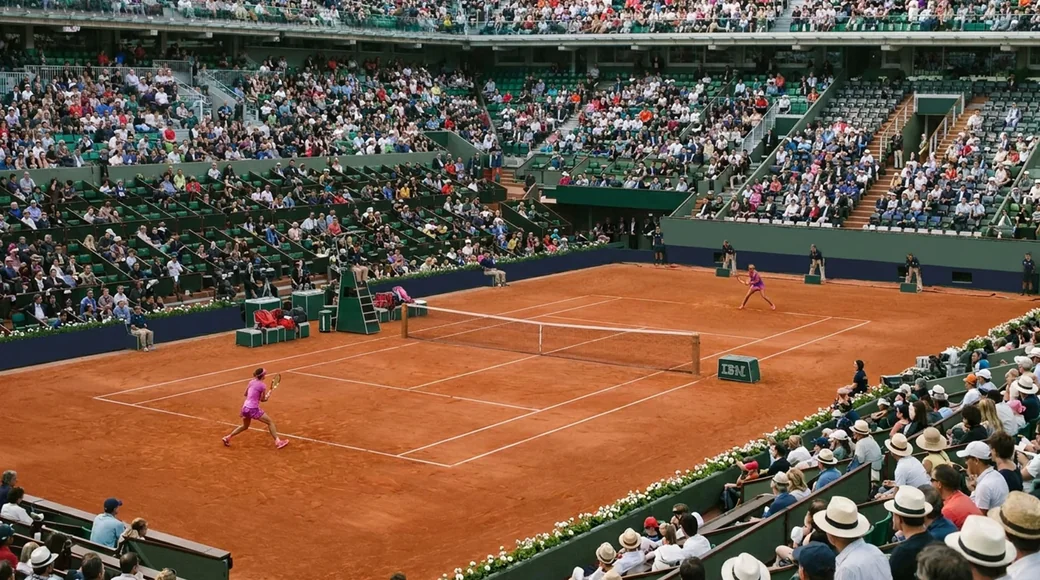
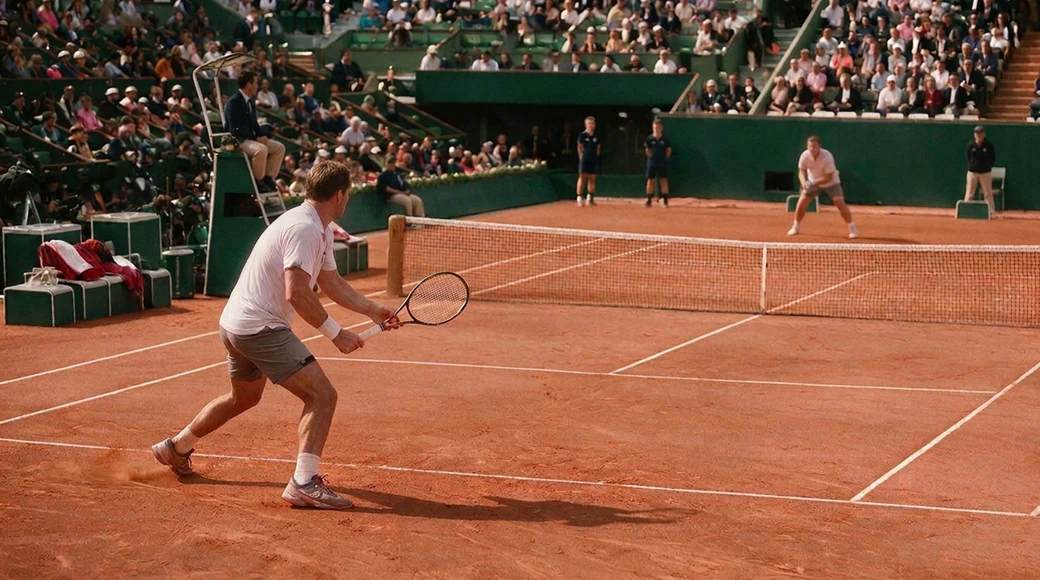
Roland-Garros in Paris, players on the red clay of the main court with packed stands rising around it

Roland-Garros (French Open)

ParisMay 23, 2027 – Jun 6, 2027↻ Annual
Duration:15 daysType:
Sports & Outdoor Events
Admission:From 25 EURLocationAnnual event — exact dates may vary each year

One of tennis's four Grand Slams, played on Paris's famous red clay at Stade Roland-Garros over about two weeks each late spring.

About This Festival

What Is Roland-Garros? A Quick Guide to the French Open

Roland-Garros, commonly known internationally as the French Open, is one of tennis's four Grand Slam tournaments, alongside the Australian Open, Wimbledon and the US Open. It is the only Grand Slam played on red clay, a surface that slows the ball and produces longer, more physically demanding rallies than the game's other major stages. Held in Paris every year, it draws the world's best players and hundreds of thousands of spectators across its main show courts and dozens of outer courts spread across the grounds.
From a Members-Only Championship to a Global Grand Slam

The tournament traces back to 1891, when it began as the Championnat de France, open only to players belonging to French clubs. It moved to its current home in 1928, when the newly built stadium was named after Roland Garros, a pioneering French aviator and First World War pilot celebrated for the first solo flight across the Mediterranean; the stadium was built that year to host France's Davis Cup defence. In 1968, the French Championships became the first Grand Slam to enter the Open Era, allowing professionals to compete alongside amateurs for the first time and setting the stage for the modern tournament.

The Grounds: Court Philippe-Chatrier, Suzanne-Lenglen and Simonne-Mathieu

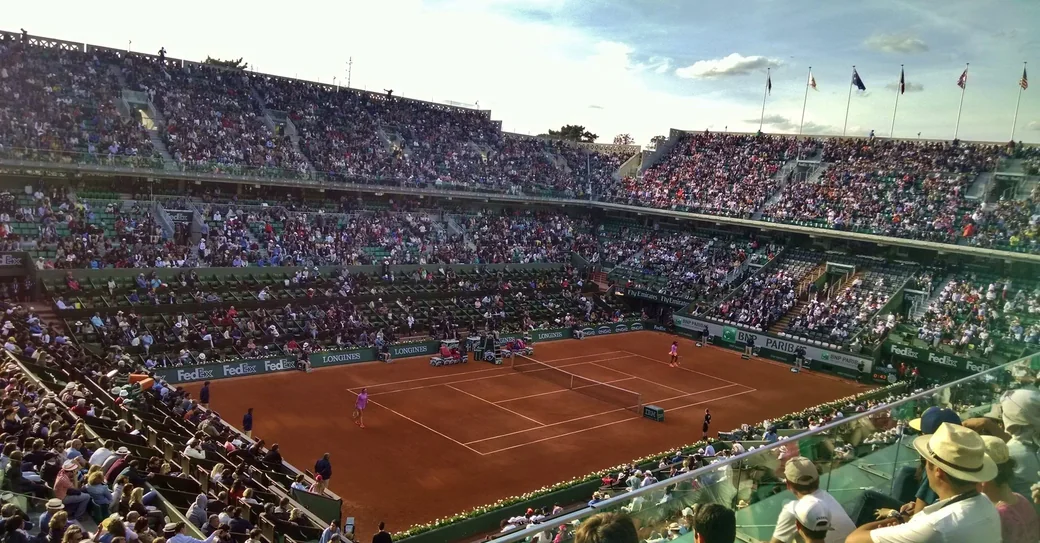
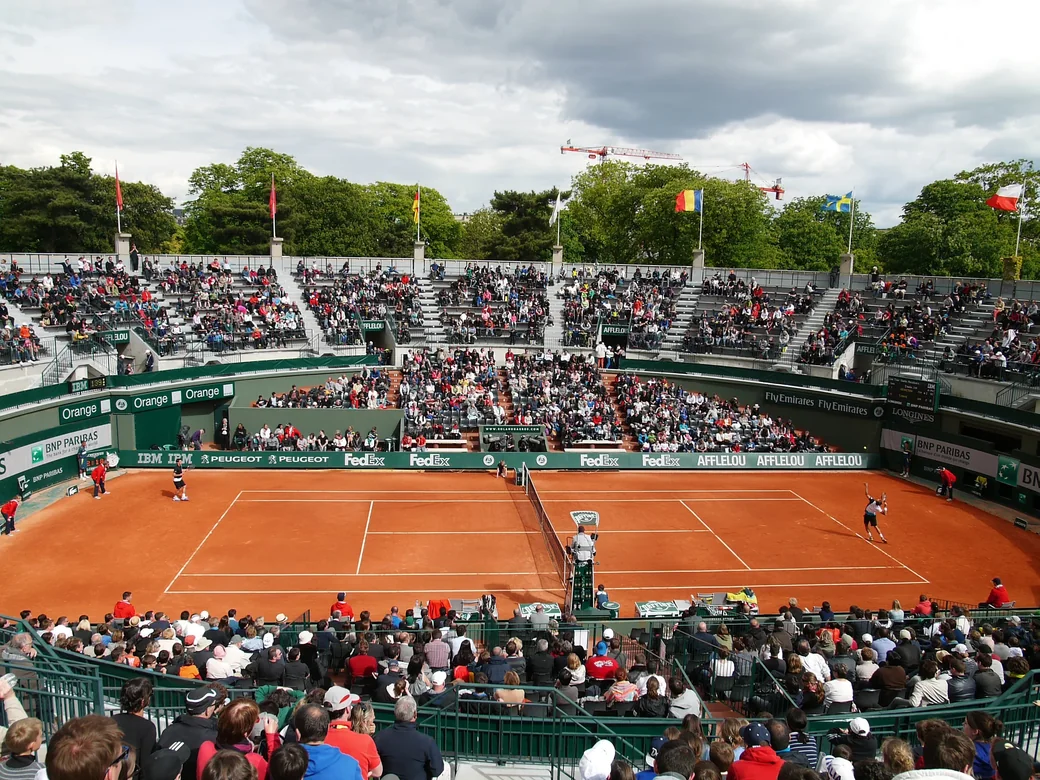
Three show courts anchor the grounds. Court Philippe-Chatrier, the main stadium with a capacity of around 15,000, gained a retractable roof and floodlights in time for the 2020 tournament, allowing play to continue regardless of weather. Court Suzanne-Lenglen, named after the trailblazing French champion of the 1920s, seats around 10,000 and often hosts standout matches of its own. The newer Court Simonne-Mathieu, tucked into a garden setting with greenhouses, holds about 5,000 and is a favourite for its intimate atmosphere. Beyond these, dozens of smaller outer courts let fans watch top players at close range.

Why Clay Makes Roland-Garros Tennis Different

The crushed red brick that gives Roland-Garros its distinctive color also changes how the game is played. Clay slows the ball's speed and produces a higher, more predictable bounce than grass or hard courts, which favours players with strong footwork, patience and the stamina for long baseline rallies rather than pure serving power. Points here tend to be built rather than won outright, and matches often run longer than at the other Grand Slams, which is part of what makes clay-court tennis, and this tournament in particular, so distinctive to watch.

Atmosphere: French Sporting Culture, Food and Wine on the Grounds

A day at Roland-Garros is as much about atmosphere as tennis. Spectators move freely between matches on the outer courts, picnic on the grounds between sessions, and browse food stands offering French classics alongside a respectable selection of wine and champagne, in keeping with the country's broader sporting and social customs. The grounds themselves, landscaped with gardens around Court Simonne-Mathieu, add a relaxed, almost park-like feel between the more intense action on the main show courts. Crêpe stands are something of a Roland-Garros tradition in their own right, while the on-site Tenniseum museum, included with any ticket, traces the history of French tennis and is a good way to fill time between matches.

Getting There and Getting In: A Practical Visitor Guide

The grounds sit in the 16th arrondissement near the Bois de Boulogne, reachable by metro line 10 (Porte d'Auteuil station) or lines 9 and 10 (Michel-Ange–Molitor station) followed by a short walk, or by RER C to Pont du Garigliano followed by a short bus ride or walk. Tickets for show courts are typically released well in advance through an official ballot or sale, while general grounds passes covering the outer courts are often easier to obtain and let you follow several matches in one visit. Arriving soon after gates open makes it easier to see practice sessions and reach popular outer courts before the crowds build.

Spectator Etiquette on the Courts

Tennis crowds follow a quieter rhythm than most spectator sports: applause is welcome after points and games, but spectators are expected to stay silent and stay seated during actual play on the show courts, moving between points rather than mid-rally. Photography without flash is generally fine from your seat, and enthusiastic support for players of any nationality is part of the culture. On the outer courts, where crowds stand closer to the action, the same courtesy of quiet during play still applies, just in a more relaxed, informal setting.

Staying Comfortable Over a Long Day on the Grounds

A full day at the tournament often means many hours outdoors moving between courts, so ordinary warm-weather precautions matter: bring sun protection and a hat, drink water regularly, and wear comfortable shoes given the amount of walking around the grounds. Late May and early June afternoons in Paris can turn warm, and outer-court seating and standing areas offer less shade than the main stadiums, so pacing yourself and taking breaks in shaded areas between matches is a simple way to enjoy the day fully.

Getting the Best Value: Grounds Passes and Rising Stars

A general grounds pass, which grants access to the outer courts but not the numbered show courts, is often the most affordable way to experience the tournament and can still deliver excellent tennis, since early-round matches featuring promising younger players and former champions are frequently scheduled there. Following the order of play each morning and moving between courts as matches finish is a good way to catch several matches, including rising talents who may headline the tournament in years to come.

One of Four: How Roland-Garros Compares to the Other Grand Slams

Each Grand Slam has its own identity tied to its surface and setting: the Australian Open and US Open are played on hard courts, Wimbledon on grass with its traditions of all-white clothing, and Roland-Garros alone on red clay in the heart of Paris. This variety is part of what makes a complete tennis season so demanding, since players must adapt their game to conditions that reward different strengths, and it is why a champion here is often regarded as having proven something distinct from success on other surfaces.

The Man Behind the Name Never Played Tennis

One of the odder facts about the tournament is that its name honours an aviator, not a tennis champion. Roland Garros was a pioneering French pilot who in 1913 became the first person to fly across the Mediterranean, taking off from Saint-Raphaël and landing in Tunisia after nearly eight hours in the air. During the First World War he helped devise a machine gun that could fire forward through a spinning propeller, was shot down and spent almost three years as a prisoner, escaped, returned to combat and was killed in 1918, one day before his thirtieth birthday. He was a keen sportsman — football, rugby and cycling — but tennis was not his game. The stadium took his name in 1928 at the insistence of Émile Lesieur, president of the Stade Français and Garros's old classmate, who refused to let the new courts open without honouring his friend. A six-metre steel statue of him, nicknamed The Cloud Kisser, now stands on the grounds.

A Court Built Inside a Botanical Garden

Most visitors head straight for the two big show courts and never discover the third, which is arguably the most unusual tennis venue in the world. Court Simonne-Mathieu sits inside the Serres d'Auteuil botanical gardens, sunk partly below ground level so it does not tower over the historic glasshouses around it, and four greenhouses of tropical plants form its outer walls. Spectators in the upper rows look out over banana leaves and palms rather than concrete, and the walk to your seat passes through the garden itself. Because it seats around 5,000 rather than 15,000, players feel unusually close, and many regulars rate it the best value on the grounds: matches here are often first-round encounters between well-known names who would fill a bigger court later in the tournament. It is named after Simonne Mathieu, a two-time French champion who commanded the women's branch of the Free French Forces during the Second World War.

There Is No Actual Clay in the Clay Courts

The famous red surface contains no clay whatsoever. Each court is a stack of five layers roughly eighty centimetres deep: large stones at the bottom, then gravel, then a layer of volcanic rock residue, then compacted white limestone, and on top a coating of crushed red brick only three to five millimetres thick. That brick dust is essentially decorative and functional at once, giving the court its colour, its visual contrast against the near-white limestone, and just enough loose material for players to slide. The layer that actually determines how the ball behaves is the limestone beneath it, which must be kept permanently damp or the surface hardens, cracks and turns dangerously slippery. Groundstaff begin work early each morning, scrape the surface flat, and scatter flakes of calcium chloride — essentially salt — to hold moisture in. In hot weather the courts are watered between sets, and every evening they are soaked so that water rises back up overnight.

Visiting the Stadium Outside Tournament Season

Tickets for the tournament itself are hard to get and expensive, but the stadium is open to visitors for most of the year, which very few travellers realise. Guided behind-the-scenes tours take you onto the show courts, through the players' areas and into parts of the site the public never sees during the fortnight, and they run in several languages. The complex also houses a multimedia museum devoted to the history of tennis, and a large restaurant and bar area set among the gardens. Because the grounds are quiet outside the tournament, this is the version of the visit where you can actually stand on the red clay and look up at empty stands, which many people find more memorable than a distant seat during a match. The site hosts other events during the year too, including a major international padel tournament in September, when the clay of the main court is temporarily covered over.

Accessibility at Roland-Garros: What Wheelchair Users Should Know

Once inside, the whole Roland-Garros site is fully wheelchair accessible, with step-free paths, adapted restrooms and reserved viewing spaces on every court, including Philippe-Chatrier, Suzanne-Lenglen and the garden-set, semi-underground Simonne-Mathieu court. The surprising part is getting there: the two closest metro stations, Porte d'Auteuil and Michel-Ange-Molitor, have stairs only and no lift, which catches out many visitors in a city that markets itself as thoroughly modern. The genuinely accessible route runs instead via RER C and tram T3a to Pont du Garigliano station. The tournament also runs a free, dedicated shuttle for disabled spectators and wheelchair users between several pick-up points around the grounds and the stadium gates, which must be booked online in advance. Every entrance gate admits wheelchairs, and staff can escort you to the nearest lift once you're through security.

Where to Stay Near Roland-Garros: Accommodation Character

The stadium sits in the 16th arrondissement, on the edge of the Bois de Boulogne — one of Paris's quietest, most residential districts, and noticeably short on hotels compared to the centre. What is there tends to be smart and comfortable rather than budget: a scattering of boutique and mid-range hotels serving nearby business districts and embassies, plus a growing number of short-term apartment rentals in handsome Haussmannian buildings. Very little in the way of hostels or budget chains exists this far west. Because the tournament draws a global crowd for two straight weeks, rooms in the arrondissement fill up and prices climb months ahead, so most visitors instead base themselves more centrally — around Montparnasse, the Trocadéro area, or along the RER C line — and treat the daily trip out to the stadium as a normal 20 to 30 minute commute. Booking early matters more here than almost anywhere else on the Paris festival calendar.

Practical Information

When

Held annually over about two weeks, from late May into early June.

Where

Stade Roland-Garros, on the southern edge of the Bois de Boulogne in the 16th arrondissement.

Cost

Ticketed; prices vary widely by court and by day of the tournament, so check the official website for current options.

Tips

Grounds passes for the outer courts can be excellent value, and the tournament's official resale platform is the safest way to buy or sell tickets.

About this tournament

Its red clay surface makes it unlike the other three Grand Slams, rewarding patience and physical endurance over raw power.

Accommodation and hotel options during Roland-Garros (French Open)

Accommodation and hotel options around the event venue, with their prices, are shown by Stay22 as a map and a list. Cookies are used. Your consent is remembered on every page; you can turn it off at any time in the cookie settings.

Keep Exploring

Travel essentials for Paris

Flights, transfers, car rental, eSIM and insurance — compare your options

Flights

Find the best route

Transfers

Airport & city ground transport

Car Rental

Drive at your own pace

eSIM

Stay connected on arrival

Insurance

Cover your trip