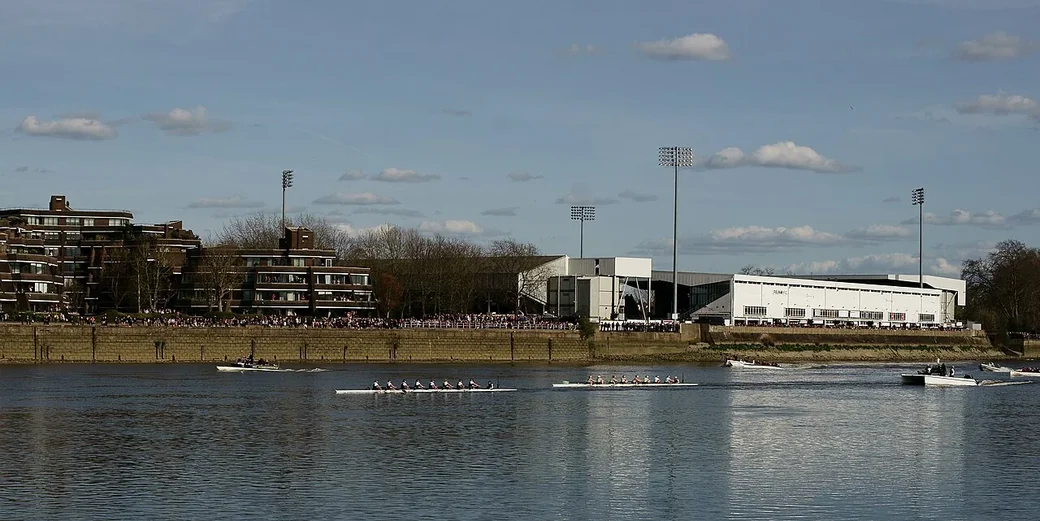
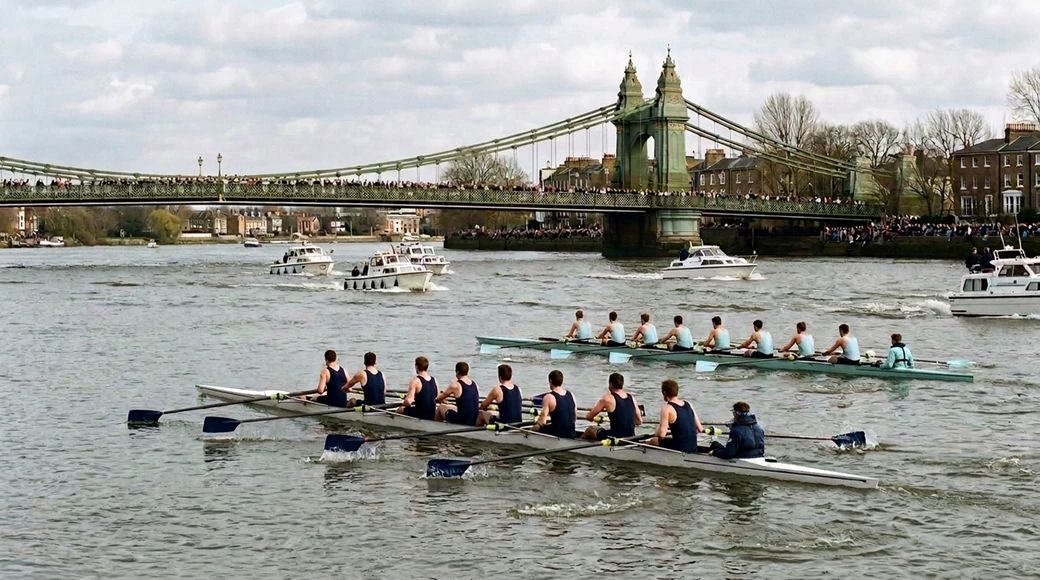
The Boat Race in London, with the Oxford and Cambridge crews rowing side by side along the River Thames while spectators line the riverbank to cheer them on

The Boat Race – Oxford vs Cambridge

LondonApr 11, 2027↻ Annual
Duration:1 daysType:
Sports & Outdoor Events
Admission:FreeLocationAnnual event — exact dates may vary each year

The Boat Race is the annual rowing duel between Oxford and Cambridge crews on the River Thames in London. Over a 6.8 km course from Putney to Mortlake, dark blue meets light blue, with riverside fan zones, pub terraces and a festive crowd lining both banks.

About This Festival

The Boat Race in London: Oxford vs Cambridge Rowing on the Thames

The Boat Race is the annual side-by-side rowing contest between crews from Oxford University and Cambridge University, held on the tidal River Thames in west London. It began in 1829, when two school friends, Charles Merivale at Cambridge and Charles Wordsworth (nephew of the poet William Wordsworth) at Oxford, arranged a challenge at Henley-on-Thames. Oxford raced in dark blue, the colour of Wordsworth's college, Christ Church, while Cambridge rows in light blue, and those two shades still colour the whole day. Each boat carries eight rowers plus a cox (the small crew member who steers and calls the rhythm). Men's and women's crews race on the same afternoon over the same stretch of river, with the reserve crews racing in between. Hundreds of thousands line the banks and millions more watch on television, making it London's great rowing day.
History of the Oxford–Cambridge Boat Race: From Henley in 1829 to the Tideway

After that first race at Henley-on-Thames in 1829, the rivalry moved to London: a Westminster-to-Putney course on the Tideway (the tidal Thames) from 1836, and the current Putney-to-Mortlake Championship Course from 1845. The race has run every year since 1856, pausing only for the two World Wars and in 2020. Boats changed enormously: the winner of 1829 looked like a heavy pilot gig (a traditional rowing boat), the last race in a wooden boat was in 1976, and today's eights are featherlight composite designs. The event reached cinema screens in 1895, BBC radio in 1927 and television in 1938. One custom has never changed: the losing club's president formally challenges the winners to a rematch, a ceremony known as the Presidents' Challenge.

Women's Boat Race History: From the Isis in 1927 to the Thames Championship Course

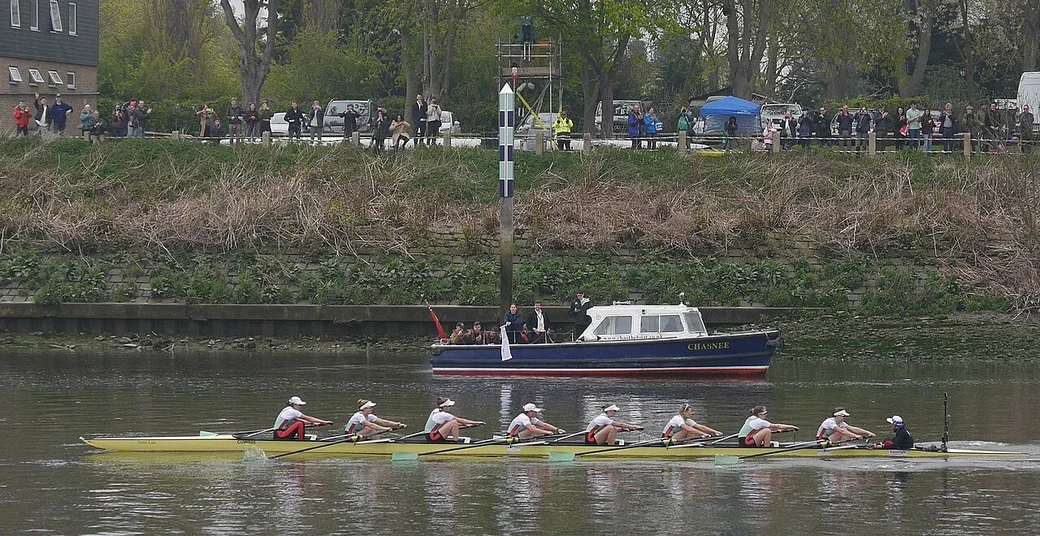
The first women's race took place on 15 March 1927 on the Isis, the stretch of the Thames at Oxford, and the crews were judged on style and speed rather than racing head to head. The contest became an annual fixture in 1964. For decades it alternated between Oxford's Isis and Cambridge's River Cam, and from 1977 it moved to a 2,000-metre course at Henley and later other rowing venues. Since 2015 the women's crews have raced on the same day and the same Putney-to-Mortlake course as the men, in front of the same crowds and cameras, and the combined event has simply been called "The Boat Race" since 2018. Women’s reserve crews have raced alongside since 1966, and have carried the names Osiris (Oxford) and Blondie (Cambridge) since 1975. Counted from that first race in 1927, the centenary of the Women's Boat Race falls in 2027. It is one of rowing's most inspiring stories of growth.

When Is the Boat Race? How the Date, Tide and Race Times Are Decided

The Boat Race has no fixed calendar date. It is held on a weekend afternoon between late March and mid-April, and the organisers choose the day and exact start time around the tide, because the crews race upstream on the incoming (flood) tide to row with the fastest current. That is why timings shift from year to year, so always confirm the timetable on the official website. The season has its own rhythm: the Trial Eights in December (two matched crews from each club race the full course as a dress rehearsal), practice races against top crews in the new year, the announcement of the crews in March and Tideway Week, the final days of training on the tidal Thames. Lightweight, veterans' and youth races are usually staged on the same course around the main day.

The Boat Race Course: Putney to Mortlake Landmarks, Bends and Tactics

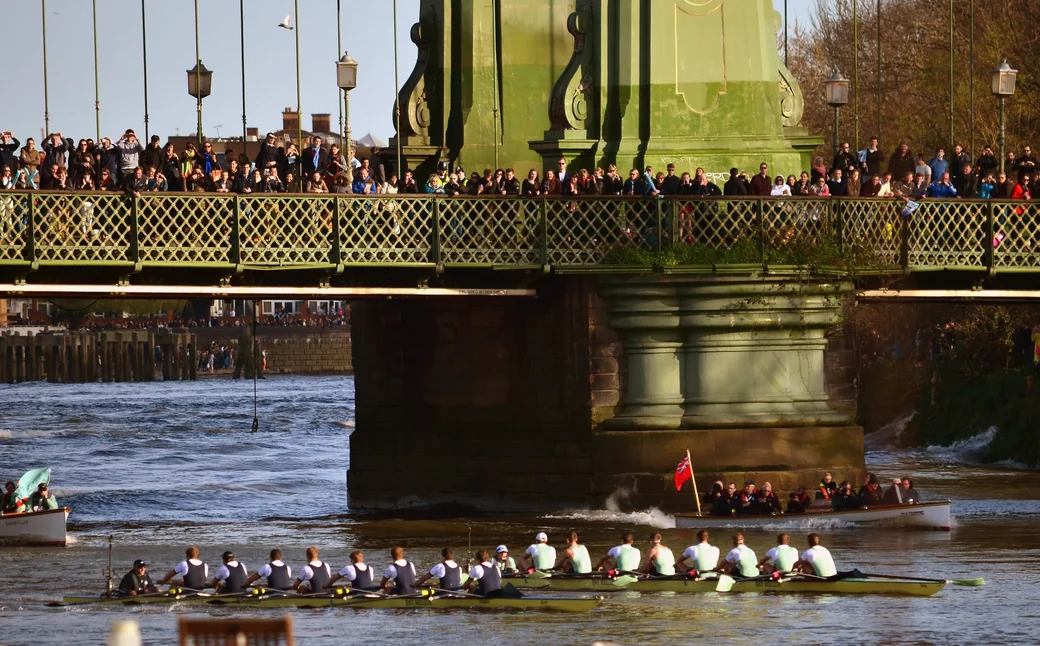
The Championship Course runs 4 miles and 374 yards (about 6.8 km), more than three times an Olympic rowing race, along an S-shaped stretch of the Thames from Putney to Mortlake. Each crew starts from a "station" (its side of the river): the north (Middlesex) side favours the first and last bends, the south (Surrey) side the long middle bend after Hammersmith. A university stone just upstream of Putney Bridge marks the start. Along the way come Fulham's Craven Cottage stadium, the Mile Post (the first timing marker on the course), The Crabtree pub, Hammersmith Bridge, Chiswick Eyot (a small uninhabited river island, pronounced "eight," roughly halfway), Barnes Bridge and finally a second stone just short of Chiswick Bridge. The organisers note that around 80 percent of crews leading at Hammersmith Bridge go on to win.

Boat Race Day Traditions: Coin Toss, Stations, Umpire and the Cox's Dip

The day has rituals worth arriving early for. On Putney Embankment the two club presidents toss a coin, reportedly an 1829 gold sovereign, to choose which station to row from, a decision shaped by weather, tide and the bends. Crews carry their boats out of the Putney boathouses, warm up and then line up at the start. There are no lanes: the umpire follows in a launch while each cox (the crew member who steers) hunts for the fastest water in the deepest part of the river, so blades sometimes touch. A crew that gains a clear boat's length can swing across in front of its rival. At the finish the boats land beside the two clubs' shared shore beyond Chiswick Bridge, the trophy is presented at Mortlake and, by tradition, the winners throw their cox into the Thames.

Best Places to Watch the Boat Race in London: Putney, Hammersmith, Barnes and Chiswick

The course is 6.8 km long, so no single spot shows everything; choose by what you want to see. Putney Bridge and Putney Embankment offer the build-up, the coin toss and the start. At Bishop's Park in Fulham a big screen sits beside the river. Hammersmith, around Furnivall Gardens and the Upper and Lower Mall riverside, sees crews at the start of the long Surrey bend, where the race is often shaped. The crews pass Chiswick Pier roughly ten minutes after the start, Barnes Bridge and The Terrace show the final tense minutes (about three minutes remain after the bridge), and Chiswick Bridge and Thames Bank in Mortlake lie near the finish, although the finish area itself is closed to the public. In recent years some rowing clubs on Putney Embankment have also offered places on their balconies.

Boat Race Fan Zones in Fulham and Hammersmith: Big Screens, Street Food and Family Fun

In recent years the organisers have set up two official fan zones (viewing and entertainment areas with big screens, food and drink). The Fulham zone, beside Fulham FC's riverside stand and Bishop's Park, is close to the start and aimed at families; the Hammersmith zone, in Furnivall Gardens beside the river and the bridge, brings a festival mood to the race's midpoint. Both open in the late morning and close in the late afternoon, with giant screens showing the live broadcast, bars, street food, music and easy access to the water's edge to watch the crews flash by. Picnics and folding chairs are welcome, random bag checks may take place, and the zones are wheelchair accessible with accessible toilets. Zones and opening hours can change, so check the official website for the year you visit.

Best Riverside Pubs for the Boat Race: Putney, Hammersmith, Barnes and Mortlake

Pub terraces are a Boat Race tradition. Near the start, The Boathouse and The Duke's Head in Putney overlook the river. The Crabtree, on Rainville Road, sits on the Fulham-Hammersmith stretch, and a short walk along the Thames brings you to The Blue Anchor on Lower Mall and The Dove at 19 Upper Mall beside Hammersmith Bridge. On the south bank, The White Hart on The Terrace and the Bull's Head on Lonsdale Road are close to Barnes Bridge, and The Ship on Thames Bank in Mortlake stands next to the finish stone. Many riverside terraces cannot be reserved and fill early, so arrive well before the start, or enjoy the atmosphere indoors and follow the race on the pub screens.

How to Get to the Boat Race: Tube, Train, Road Closures and Where to Stay

Public transport is the only practical way to reach the river, because Putney Embankment and the surrounding roads have been closed to traffic on race day and parking is scarce. For the start use Putney Bridge or East Putney (District line) or Putney rail station; for Hammersmith, Hammersmith Underground (District, Piccadilly, Circle and Hammersmith & City lines). Barnes is off the Underground map, but Barnes, Barnes Bridge and Mortlake rail stations (Zone 3, a London fare zone) put you beside the river, and Chiswick station serves the north bank. In recent years Hammersmith Bridge and Barnes Bridge have been closed to pedestrians for part of the day, so choose your bank before the race starts, and expect crowded stations afterwards. For accommodation, Putney, Hammersmith, Barnes and Chiswick are the closest neighbourhoods; spring weekends are busy, so book early.

What to Wear and Bring to the Boat Race: Layers, Waterproofs and Riverbank Essentials

Early spring by the river can be breezy and changeable, so dress in layers and add a waterproof jacket, hat and gloves; sunglasses and sun cream may be just as useful on a clear day. Wear comfortable waterproof shoes: towpaths (riverside walking paths) and the banks around Mortlake can be muddy, and at high tide low sections of path may go under water. Bring a folding stool or picnic blanket, a refillable bottle and snacks, but leave glass at home. A power bank keeps your phone alive for photos and for following the live commentary, and small binoculars help if you stand on the far bank. Wearing dark or light blue is a fun way to pick a side, even if you have no link to either university.

Boat Race Safety and Crowd Tips: Stay Safe, Comfortable and Together

Boat Race crowds are friendly and family-oriented, but busy spots such as Putney Bridge, Hammersmith and the Barnes riverside get tight. Keep phones and wallets in zipped inner pockets, agree a meeting point with your group and download offline maps, because mobile networks slow down in large crowds. Stay back from the water's edge: the tide changes quickly, and the flotilla of boats following the race creates wash that can reach low paths. Supervise children closely near the river and on stairs. Stewards and police are present along the course, and the emergency number is 999 or 112. The fan zones are wheelchair accessible, and solo travellers, women and LGBTQ+ visitors will generally find a relaxed atmosphere that calls only for ordinary big-city precautions.

What to Eat and Drink on Boat Race Day: Pub Classics, Street Food and Picnics

Boat Race day is a feast of London pub classics: fish and chips (battered fried fish with fried potatoes), pies (savoury pastries), sausages and mash, and roast dinners where pubs serve them on Sundays. The official fan zones add street-food stalls and bars, and picnics are welcome if you prefer to bring your own. Barnes village has delis, a grocer and a bookshop for a riverside picnic, Putney High Street and King Street in Hammersmith are lined with cafés and restaurants, and London's diversity means vegetarian, vegan and halal options are easy to find in all of these neighbourhoods. Finish with a cup of tea at a riverside café. In Chiswick, the brewery site visible behind the Eyot is a reminder of the area's long brewing tradition.

Boat Race Insider Tips: Trial Eights, Tideway Week and Quieter Viewing Spots

Early risers can watch the crews carry their boats out of the Putney boathouses and see the coin toss before the crowds arrive. Rowing fans should also catch the December Trial Eights, when each club races two matched crews over the full course, and Tideway Week, when the squads train in public on the tidal Thames. For more room, try the Barnes riverside, Chiswick Mall or the Mortlake Thames Bank rather than the bridges. The best photo angles come from the Hammersmith bend, the arches of Barnes Bridge and Putney Bridge at the start. Listen to live commentary to know where the crews are, and follow the hashtag #TheBoatRace; the official programme and merchandise make good keepsakes. For more rowing, look up the Head of the River Race (a large race over the same course, rowed in the opposite direction), the Great River Race (a boat race of about 35 km on the Thames between Millwall and Richmond) and the Harvard–Yale Regatta (the annual rowing race between those two universities).

Boat Race Fun Facts, Famous Rowers and Legends: Eyot, Blondie, Cockney Slang and More

Chiswick Eyot is pronounced "eight," just like the crew size. The reserve crews carry names with stories: Isis (Oxford's name for its stretch of the Thames) and Goldie (after the Cambridge rower and club president John Goldie) for the men, Osiris and Blondie, named in tribute to the band, for the women. In Cockney (the traditional dialect of London's East End) rhyming slang, "boat race" means "face," and the comic novels of P. G. Wodehouse treat "Boat Race night" as the peak of high spirits. Famous former rowers include Olympic champion Matthew Pinsent, actor Hugh Laurie, presenter Dan Snow and mountaineer Andrew Irvine. The only dead heat (a tie at the finish line) came in 1877; according to a popular tale, the judge declared it "a dead heat to Oxford by six feet," though rowing historians say that line was embroidered later. Another rumour claims that King Charles II met his favourite at The Dove, a pub whose tiny front bar is said to have been listed by Guinness as the smallest bar room; historians doubt the royal story. In the 1870s crowds of up to 12,000 on Hammersmith Bridge made the first suspension bridge sway, one reason it was replaced in the 1880s.

Boat Race Records and Trivia: Fastest Time, Closest Finish, Student Rowers, Books and Films

The men's course record was set in 1998: 16 minutes 19 seconds, an average speed of nearly 25 km/h. On the present Championship Course the widest margin is 20 lengths (a length is one boat's length), set in 1900; an older race over a different course, in 1839, was won by 35. The narrowest outright win came in 2003, by about a foot. One club once won 13 races in a row, between 1924 and 1936, and whole decades have swung one way: Oxford won nine of ten races in the 1860s, 1890s and 1980s, and Cambridge nine of ten in the 1920s. The rowers are genuine students: Oxford offers no sports scholarships, and Cambridge awards sports bursaries only to students already admitted on academic merit. Sponsors have supported the men's race since 1976, but their logos do not appear on the boats, only on the kit. To read more, try Mark de Rond's book The Last Amateurs (a portrait of amateur rowing), which follows a Cambridge crew from training to race day, and look out for the race in the 1969 film The Magic Christian.

Boat Race with Kids, Accessibility and Bad Weather: Practical Plan and Nearby Sights

Boat Race day suits families: the Fulham fan zone is designed with children in mind, and both official fan zones are wheelchair accessible with accessible toilets. Putney Embankment is closed to traffic on race day, which makes strolling with pushchairs (strollers) easier, although stations, bridges and towpath steps can be crowded. Races are rowed in all kinds of weather, including strong wind and rough water, and weather and tide even influence which station (side of the river) the crews choose, so plan for the conditions. When it pours, head to a pub with screens or to the covered areas beneath the stand at the Fulham zone, and pack a poncho for children. Before or after the race, combine it with nearby sights: Fulham Palace, the historic home of the Bishops of London beside Bishop's Park, the shops along King Street in Hammersmith, or the village pond and London Wetland Centre in Barnes.

Practical Information

When

Once a year on a weekend afternoon between late March and mid-April. The exact date and race times are set every year around the tide and announced on the official website; riverside activity starts in the late morning.

Where

The Championship Course on the River Thames in west London, a 6.8 km stretch from Putney to Mortlake. Popular viewpoints are Putney Bridge and Embankment, Bishop's Park in Fulham, Furnivall Gardens in Hammersmith, Chiswick Pier, Barnes Bridge and the Mortlake riverside.

Cost

Free. Watching from the river banks, parks and official fan zones requires no ticket. Rowing-club balconies and hospitality packages are optional paid extras.

Tips

Arrive in the morning for a good spot, travel by Tube (the London Underground) or train, dress in layers with waterproof shoes, carry drinks in non-glass containers and pick one viewpoint, since no single place shows the whole race.

Specific to this event

Dark blue Oxford against light blue Cambridge, a race timed by the tide, a public coin toss with an 1829 gold coin, women's and men's races on the same afternoon, and a finish that is usually over in less than twenty minutes.

Accommodation and hotel options during The Boat Race – Oxford vs Cambridge

Accommodation and hotel options around the event venue, with their prices, are shown by Stay22 as a map and a list. Cookies are used. Your consent is remembered on every page; you can turn it off at any time in the cookie settings.

Keep Exploring

Travel essentials for London

Flights, transfers, car rental, eSIM and insurance — compare your options

Flights

Find the best route

Transfers

Airport & city ground transport

Car Rental

Drive at your own pace

eSIM

Stay connected on arrival

Insurance

Cover your trip