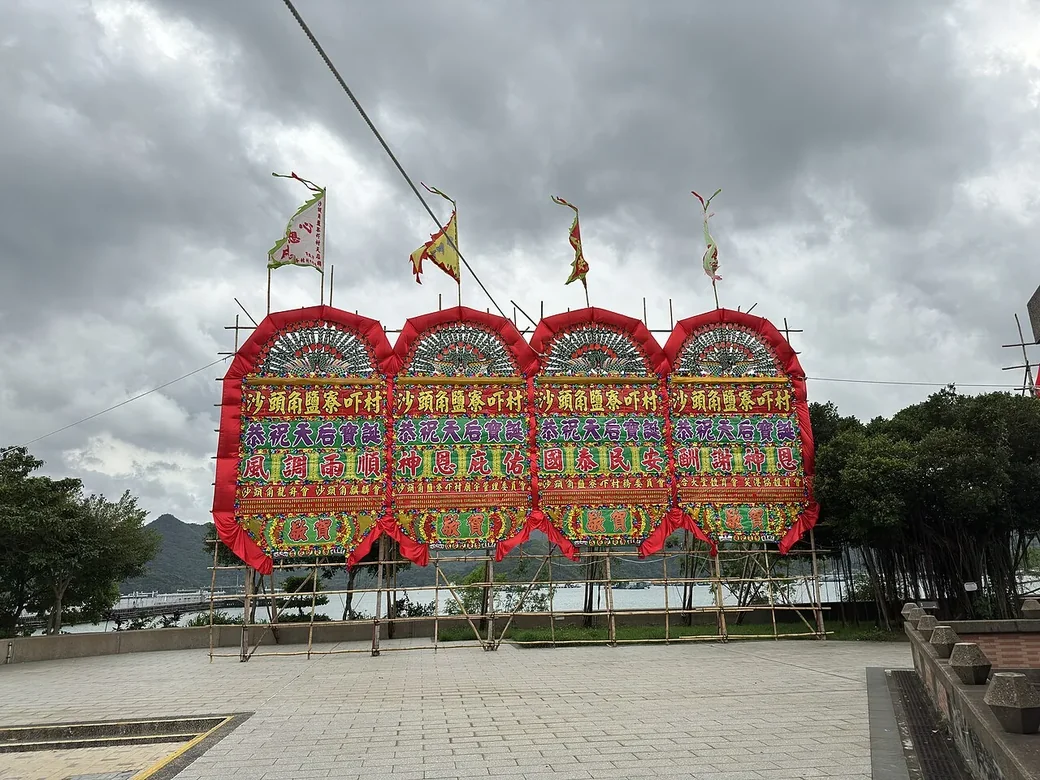
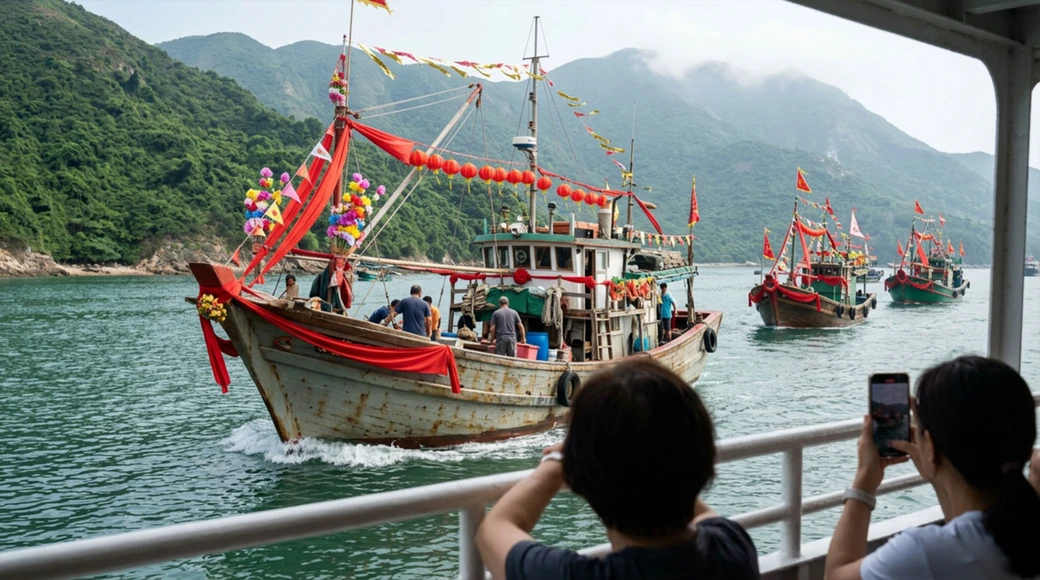
Tin Hau Festival in Hong Kong, honouring the goddess of the sea, with fishing boats dressed in colourful flags and processions and lion dances at coastal temples in a devout, festive mood

Tin Hau Festival (天后誕, Birthday of the Sea Goddess)

Hong KongApr 29, 2027↻ Annual
Duration:1 daysType:
Cultural & Traditional Festivals
Admission:FreeLocationAnnual event — exact dates may vary each year

Hong Kong's spring celebration of Tin Hau, protector of sailors: temple fairs, fa pau paper towers, dragon and lion dances, Cantonese opera and sea processions, from the Yuen Long parade to the ancient Joss House Bay temple.

About This Festival

Tin Hau Festival in Hong Kong: Birthday of the Sea Goddess Explained

Every spring, Hong Kong celebrates the birthday of Tin Hau, the sea goddess who protects sailors and fishing families. The date follows the lunar calendar, falling on the 23rd day of the third lunar month, and the festival is really a string of neighbourhood temple fairs spread across the city: parades in the New Territories, boat processions off Sai Kung, opera stages on outlying islands and quiet incense offerings in urban shrines. Her worship goes by many names, including Tin Hau, Mazu, Ah Ma and Empress of Heaven. The Tin Hau Festival was added to the national list of intangible cultural heritage in 2021, and Hong Kong's first heritage inventory recorded 26 local celebrations, each with its own customs. Mazu belief and customs also joined UNESCO's Representative List in 2009. Public celebrations are open to everyone, which makes this one of the most welcoming cultural experiences of the year. In Cantonese the festival is called Tin Hau Daan (天后誕, “Tin Hau's birthday”), and it returns every year. Locals visit the temples to pray for safety, fine weather and rich catches, and even young people who rarely see a fishing boat join in.
Who Is Tin Hau? The Legend of Mazu, Protector of Sailors

According to tradition, the goddess began life as Lin Mo (Lam in Cantonese), a girl born in Putian, Fujian, in the early Song era, around 960. Because she stayed silent for her first month, her family named her Mo, meaning silent. Legend says she studied Taoist teachings at 13 and received a magic talisman from a well at 16, which let her sense storms and guide ships to safety. One story tells how she rescued her father and brother at sea. At 28 she is said to have ascended to heaven, and later courts honoured her with titles such as Empress of Heaven. On altars she is flanked by two guardian generals, Thousand-Mile Eye and With-the-Wind Ear, who see and hear across the waves. According to a popular story, even the famous admiral Zheng He credited her with protecting his fleets.

Tin Hau Temples in Hong Kong: More Than 80 Waterfront Shrines and Their Stories

Hong Kong was a fishing and trading coast long before it became a skyline, so shrines to the sea goddess are everywhere. Heritage records count more than 80 Tin Hau temples across Hong Kong Island, Kowloon, the New Territories and the outlying islands, and researchers estimate roughly 350 once small village shrines are included. Many once stood at the water's edge; land reclamation has since left several far inland, which explains why a temple for sailors may now sit between apartment blocks. According to a popular local story, the city's own name comes from the Hung Heung Lo (Red Incense Burner) Tin Hau Temple in Causeway Bay, and the nearby MTR (metro) station carries her name. You can visit the Yau Ma Tei temple beside the Temple Street night market, the Stanley temple built by local fishermen in 1767, or the great temple at Joss House Bay at any time of year. The Yau Ma Tei temple complex is a declared monument, and at recent editions its courtyard hosted face-changing (a stage art of lightning-fast mask switches), martial arts displays, calligraphy and sugar painting.

When Is the Tin Hau Festival? How the Lunar Date Works in Hong Kong

The Tin Hau Festival has no fixed date in the everyday calendar. Her official birthday is the 23rd day of the third lunar month, which usually lands between mid-April and mid-May, so the day shifts every year. Individual communities often pick their own celebration days around it. Local paper-craft masters explain that the city has so many temples and worshippers that a single date would be far too crowded, while others see the variety as a reflection of land-dwelling and sea-dwelling communities. Some districts celebrate a few days early, others weeks later, and one island village once held its festival as late as June. Plan around the lunar date, then check each organiser's programme. Tin Hau is a community occasion rather than a public holiday, so city life carries on and the best events start in the morning. Notices about extra ferries and road closures appear shortly before the big days.

Yuen Long Tin Hau Parade: Hong Kong's Biggest Fa Pau Procession

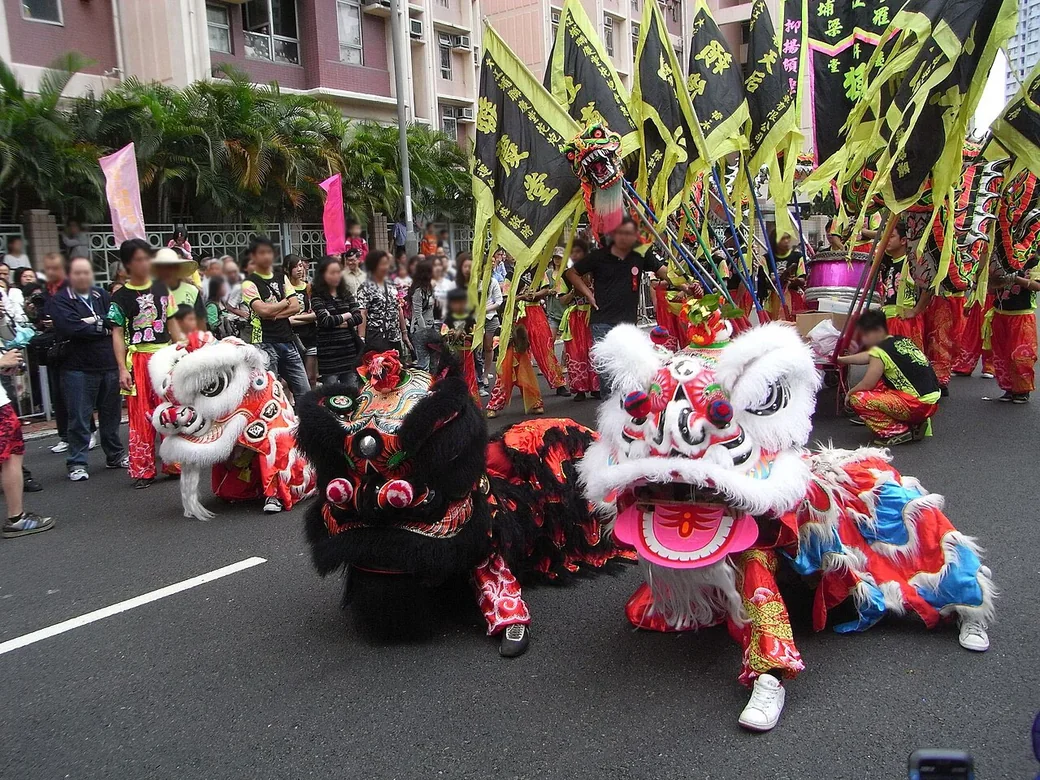
The largest Tin Hau parade in Hong Kong sets out in Yuen Long, organised by the villages of Shap Pat Heung, the Eighteen Villages. Its roots lie in the early 1960s, when more than fifty fa pau (flower cannon) associations walked from different directions to Tai Shu Ha Tin Hau Temple to return their paper flower towers; the routes were later joined into one organised procession that has run every year since 1963. Expect about three hours of dragon, lion and qilin (mythical unicorn) dances, marching bands, decorated floats and some thirty village groups, led at a recent edition by a golden dragon nearly forty metres long that spectators touch for good fortune, health and family blessings. The parade ends with performances and an afternoon fa pau raffle at the temple. The route shifts slightly from year to year, so follow the barriers. Recently the district has stretched the celebration into a multi-day showcase with food stalls, a giant fa pau exhibition and evening shows. Yuen Long MTR station is the easiest gateway. At a recent edition the celebration opened the evening before with a ceremony featuring a 3.47-metre Tai Ping drum (“peace drum”, a symbol of unity and strength) and a glow-in-the-dark Yingge (a vigorous folk dance with short sticks) performance.

Joss House Bay Tin Hau Temple: Hong Kong's Oldest "Big Temple" (Tai Miu)

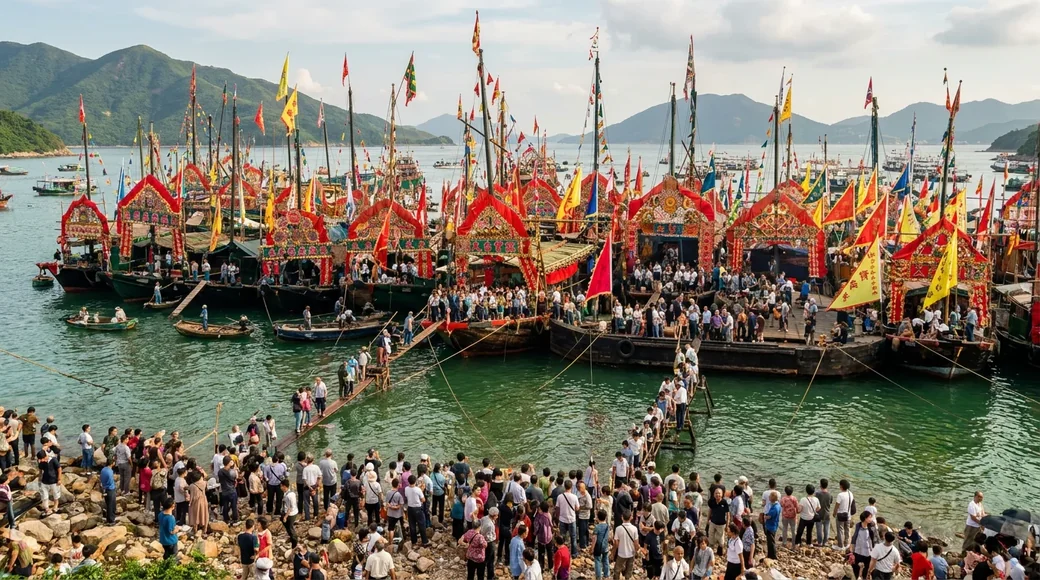
On the shore of Joss House Bay in Sai Kung stands the oldest and largest Tin Hau temple in Hong Kong, known to locals as Tai Miu, the Big Temple. Tradition says it was founded in 1266 by a man named Lam Tao-yi. A rock inscription nearby, carved in 1274, is the oldest dated inscription known in the city. The temple became a declared monument in 2023. The setting is part of the story: the narrow channel here is called Fat Tong Mun, the Buddhist Hall Gate, because fishing boats entering from both sides are said to look like a door slowly opening. On the goddess's birthday, an estimated forty to fifty thousand worshippers visit, many arriving by sea in hundreds of decorated boats. The police even hold launching ceremonies for new patrol craft at the temple, a custom that shows how deeply the goddess is tied to seafaring in Hong Kong. According to a rumour told among seafarers, two salt-trading brothers from Fujian were thrown from their boat by a strong wind, called on Tin Hau, drifted safely to this beach and built the first shrine in gratitude. Today five buildings stand in a row, with granite columns, murals in the incense pavilion and three statues of the goddess, one of which joins the festival procession. The rituals here include inviting the deities, scattering flowers and offering food to the wandering spirits of the water.

How to Get to Joss House Bay for the Tin Hau Festival: Ferry, Hike and Minibus

Reaching the Big Temple is part of the adventure. On the festival day and the day before, a special licensed ferry sails between North Point on Hong Kong Island and the pier in front of the temple, with fast and ordinary sailings taking roughly thirty to forty minutes. Round-trip tickets are sold at North Point and single tickets at Joss House Bay, and passengers who show their return ticket from the bay get a special onward ferry link from North Point to Hung Hom or Kowloon City that day. Hikers can walk in along the High Junk Peak trail, while the rest of the year green minibus 16 runs from Po Lam MTR station to the Tai Miu Wan stop, followed by a ten-minute walk down a flight of steps past the rock inscription. Roads near Tai Au Mun Road are restricted on festival days, so plan for public transport and check the Transport Department's yearly notice.

High Island Tin Hau Festival: Sai Kung's Sea Parade and Jiao Ceremony

Tucked into the waters of Sai Kung, High Island (Leung Shuen Wan) hosts one of Hong Kong's most atmospheric Tin Hau celebrations. Fishing families have honoured the goddess here for generations, and the village keeps a complete fishing-community jiao, a thanksgiving and purification ritual known as Taai ping ching jiu, with more than a century of history. Jiao alternates between a grand edition in even-numbered years and a smaller one in odd-numbered years. During the sea parade the goddess's sedan chair is placed on a boat and led around the island by a fleet of more than fifty fishing and decorated vessels. At the latest grand edition, public ferries ran from Sai Kung's New Public Pier so visitors could join in. For several days the whole island follows a strict vegetarian rule, so meat and dairy products are not carried or eaten there. Evening Cantonese opera and guided geopark walks complete the programme. High Island's festival has been on Hong Kong's heritage inventory since 2014. In a grand year the rituals include presenting written memorials, opening the altar, offering meals to wandering spirits and the sea parade. At the latest grand edition about a thousand visitors could join the parade on a first-come basis, the evening opera was performed by the Sun Kwan Ying troupe, ferries returned to Sai Kung after the show, and commemorative souvenirs supported the village's heritage.

Fa Pau Explained: The Paper Flower Towers of the Tin Hau Festival

Fa pau (花炮), meaning flower cannon, are the signature offering of the festival. These bamboo-and-paper towers stand roughly two and a half metres tall and act like small portable shrines, with a statuette or picture of Tin Hau at the centre. Paper workshops craft them, and associations add lucky touches such as red-dyed eggs and ginger for fertility, pomelo leaves for purification, gold plaques and clusters of tiny deity figures. Each year, every fa pau association returns a new tower to the temple on the goddess's birthday, and the committee redistributes them by raffle or race so the cycle can begin again. Before the 1970s worshippers scrambled for bamboo sticks that represented the towers, and Po Toi Island still keeps this lively tradition. Giant fa pau exhibitions of more than nine metres have become a photo highlight in Yuen Long, so look up as well as ahead. Many fa pau associations were founded by fishermen or people connected with the sea, and each association takes its name from the fa pau it crafts every year.

Cantonese Opera in Bamboo Theatres: The Tin Hau Festival Stage for the Gods

Opera performed for the gods, called san gung hei (神功戲), is one of the festival's four pillars, alongside the welcoming of the deity, fa pau and parades. Temporary theatres of bamboo and cloth rise in front of temples, and Cantonese opera runs there for three or four days, entertaining deities and neighbours together; offering a show is believed to bring merit to the community. About fifteen places still stage Tin Hau opera, including Sai Wan on Cheung Chau, High Island, Cha Kwo Ling, Po Toi, Tsing Yi, Peng Chau and Shek O. The bamboo theatre on remote Po Toi, built on a steep slope, is celebrated for the skill of its builders. In Tsing Yi the bamboo theatre festival combines opera, flower plaque crafts and hawker food. Many performances welcome the public, though some seats may be ticketed, so check before you travel.

Lion, Dragon and Qilin Dances at the Tin Hau Festival: Sights and Sounds

The festival is a feast for the senses. Gongs, drums and firecrackers set the rhythm for lion, dragon, qilin (unicorn) and pixiu (mythical guardian beast) dances, while bands, floats and Piu Sik, the floating-colours parade floats, add pageantry. Red and gold dominate the scene, and boats arrive hung with bright pennants. In Cha Kwo Ling you can watch Hakka and Hoklo qilin dances in front of the temple, accompanied by a Big Head Buddha dancer who leads the lion in; younger troupes there work hard to pass the art on. The air carries the scent of burning incense, and temple courtyards fill with coils and bundles of sticks. Stand where the dancers turn corners for the best photographs, and keep a little distance during the climactic drum rolls so everyone can enjoy the show.

Where to Celebrate Tin Hau in Hong Kong: Cha Kwo Ling, Tai Po, Peng Chau and More

Beyond the two big stars, many neighbourhoods hold their own celebrations. Cha Kwo Ling, in Kwun Tong, stages a lively morning-to-afternoon parade with unicorn dances, and locals describe it as one of the city's oldest villages. In Tai Po the returning of fa pau has grown into a parade, while Tsing Yi, Peng Chau, Cheung Chau, Shek O and Po Toi build bamboo theatres for opera. On Lamma, villagers have been photographed holding umbrellas to escort the goddess's statue into her temple. Sai Kung Town's temple complex and Stanley also host festivities, and on Lamma Island the celebration at Yung Shue Wan adds a dragon boat competition and Cantonese opera. Cha Kwo Ling's thanksgiving opera alone runs for four days and five nights. Urban visitors can slip into Yau Ma Tei's temple near the night market to see incense coils and quiet devotion. Because dates differ by community, a weekend in spring often lets you catch more than one celebration.

Tin Hau Festival Visitor Tips: What to Wear, Bring and Photograph

Spring in Hong Kong is warm, humid and sometimes showery, so wear light layers, comfortable shoes and a hat, and tuck a compact rain jacket in your bag. Carry water, sun cream and a portable charger. Many stalls and ferries accept cash or an Octopus card (Hong Kong's rechargeable travel card), so have both. Arrive early at Yuen Long to find a spot along the barriers, and head home after the afternoon raffle when the crowds thin. For Joss House Bay, check the ferry timetable the day before and plan for steps and uneven paths. Good photo spots include the temple pier, rooftops of the parade route, and decorated boats from the shore. Public events are open to all, and most are family-friendly; step lightly around prams, elders and ceremonies, and you will blend in easily.

Tin Hau Festival Etiquette: Respectful Behaviour at Temples and Parades

This is a living religious festival, so a few courtesies go a long way. Follow staff instructions, never stand on or block the red carpet laid for the goddess's sedan chair, and keep clear of the main boat and the leading vessels, which are reserved for local residents and ritual staff. In places such as High Island, meat and dairy are avoided for several days, so respect that rule if you visit. You may offer incense in temples if you wish, but follow what worshippers do and keep your voice low. Ask before taking close-up portraits, avoid flash during rites, and never touch ritual objects or fa pau. Board ferries and fishing boats calmly and wait your turn. A few Cantonese words add warmth: Tin Hau daan (天后誕, the goddess's birthday), fa pau (花炮, flower tower), mou si (舞獅, lion dance), mou lung (舞龍, dragon dance) and san gung hei (神功戲, opera staged for the gods).

Tin Hau Festival Fun Facts, Legends and Local Beliefs

Here are a few extras to enjoy. UNESCO notes that more than five thousand Mazu temples exist worldwide, and devotees ask her for safe journeys, peace and even blessings for a family. According to a legend from the goddess's home island, the Dragon King and other sea creatures gather around her birthday to offer congratulations, so fishermen traditionally stay ashore. Touching the golden dragon in Yuen Long is said to bring prosperity and many children. In 2012 the tourist board organised a sea parade of forty fishing boats and a traditional junk from Victoria Harbour to Joss House Bay. In the 1960s parade organisers joined their separate routes into one, creating today's Yuen Long event. Look out for the guardian generals beside her altar: one sees a thousand miles, the other hears every whisper of the wind. UNESCO also records evening processions with “Mazu lanterns” and offerings of flowers, candles, incense and firecrackers in her honour.

Practical Information

When

The 23rd day of the third lunar month, which usually falls between mid-April and mid-May. Many temples also hold ceremonies, opera performances or ferry services on the day before and the days that follow.

Where

Citywide. The two biggest gatherings are the Yuen Long (Shap Pat Heung) parade, which ends at Tai Shu Ha Tin Hau Temple, and the Tin Hau Temple at Joss House Bay (Tai Miu Wan) in Sai Kung. Further celebrations take place in Cha Kwo Ling, Tai Po, Sai Kung, High Island, Tsing Yi and on islands such as Peng Chau, Cheung Chau, Lamma and Po Toi.

Cost

Free. Watching the parades and visiting the temples costs nothing. The special ferry to Joss House Bay is ticketed, with the fare set each year, and some Cantonese opera performances are ticketed too. Passengers who show their return ferry ticket from Joss House Bay can ride free from North Point to Hung Hom or Kowloon City that day, and the public ferries to High Island have been free of charge at recent grand editions.

Tips

Arrive early, travel by MTR (the metro) or ferry rather than by car, bring water, sun protection and a light rain jacket, carry some cash plus an Octopus card (Hong Kong's rechargeable travel card), and keep your phone charged for photos and directions.

Specific to this festival

Tin Hau is not held in one venue but at dozens of temples at once, so choose by interest: a land parade in Yuen Long, a sea pilgrimage to Joss House Bay, a vegetarian-island sea procession at High Island, or unicorn dances in Cha Kwo Ling. Fa pau (paper flower tower) raffles, Cantonese opera in bamboo theatres and the yearly "returning" of paper offerings set it apart from other spring festivals.

Accommodation and hotel options during Tin Hau Festival (天后誕, Birthday of the Sea Goddess)

Accommodation and hotel options around the event venue, with their prices, are shown by Stay22 as a map and a list. Cookies are used. Your consent is remembered on every page; you can turn it off at any time in the cookie settings.

Keep Exploring

Travel essentials for Hong Kong

Flights, transfers, car rental, eSIM and insurance — compare your options

Flights

Find the best route

Transfers

Airport & city ground transport

Car Rental

Drive at your own pace

eSIM

Stay connected on arrival

Insurance

Cover your trip