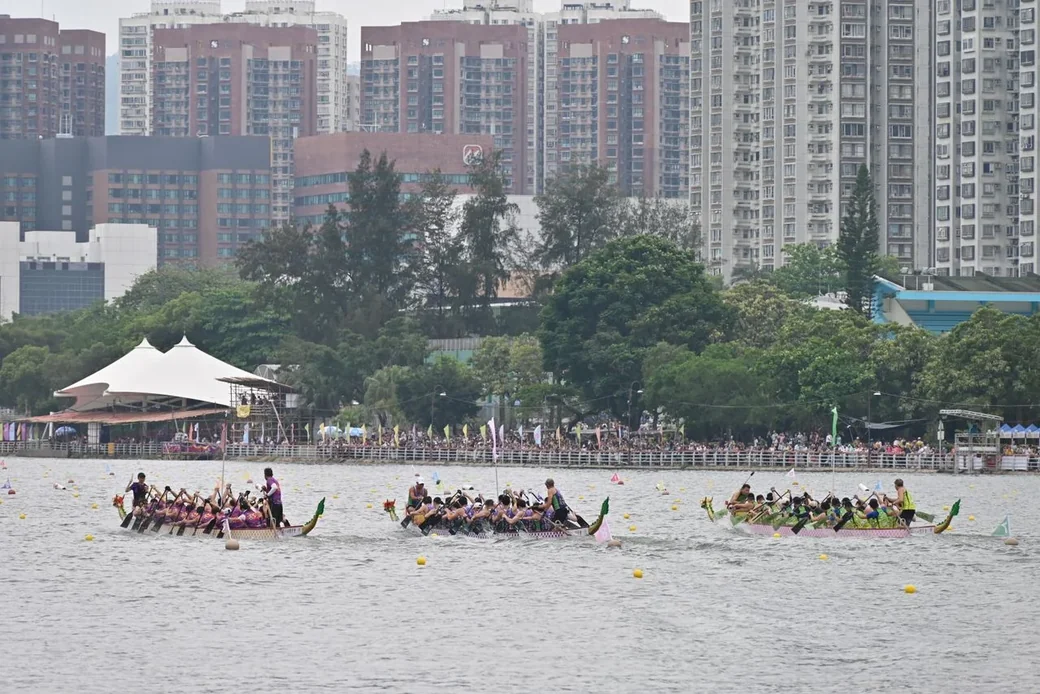
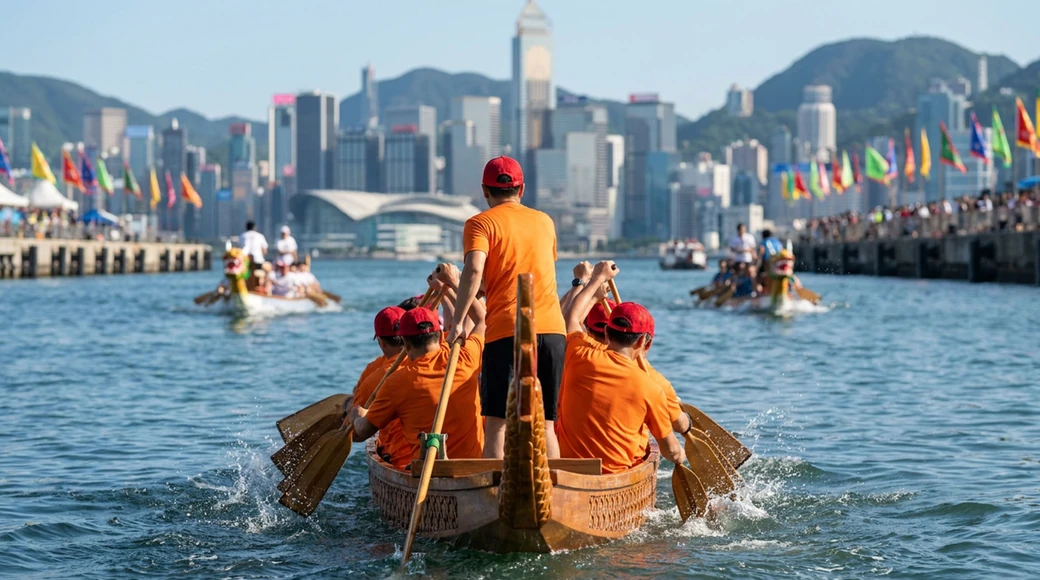
Hong Kong Dragon Boat Carnival, with crews paddling decorated dragon boats to the beat of drums while spectators cheer along the waterfront in a lively festive atmosphere

Tuen Ng Festival (Dragon Boat Festival)

Hong KongJun 9, 2027Public holiday↻ Annual
Duration:1 daysType:
Cultural & Traditional Festivals
Admission:FreeLocationAnnual event — exact dates may vary each year

Hong Kong’s Tuen Ng Festival fills Victoria Harbour and neighbourhood waterfronts with dragon boat races, adds a century-old deity procession in Tai O, fragrant zongzi dumplings and a lively harbourside festival zone.

About This Festival

Tuen Ng Festival in Hong Kong: Meaning, the Qu Yuan Legend and Why Dragon Boats Race

Tuen Ng (“double fifth”) is celebrated on the fifth day of the fifth lunar month and is one of Hong Kong’s best-loved traditional holidays. Its most famous story centres on Qu Yuan, a poet of the ancient state of Chu. According to legend, villagers raced out in boats, beating drums and tossing rice into the river so the fish would leave the poet in peace, and that is how dragon boat racing and zongzi (sticky rice dumplings wrapped in bamboo leaves) are said to have begun. Some scholars see even older roots in summer rituals honouring dragons. The festival was added to UNESCO’s list of intangible cultural heritage in 2009. In Hong Kong it blends fishing-village ritual, team sport and seasonal food into one big waterfront celebration.
History of the Hong Kong International Dragon Boat Races: From Fishing Tradition to World Sport

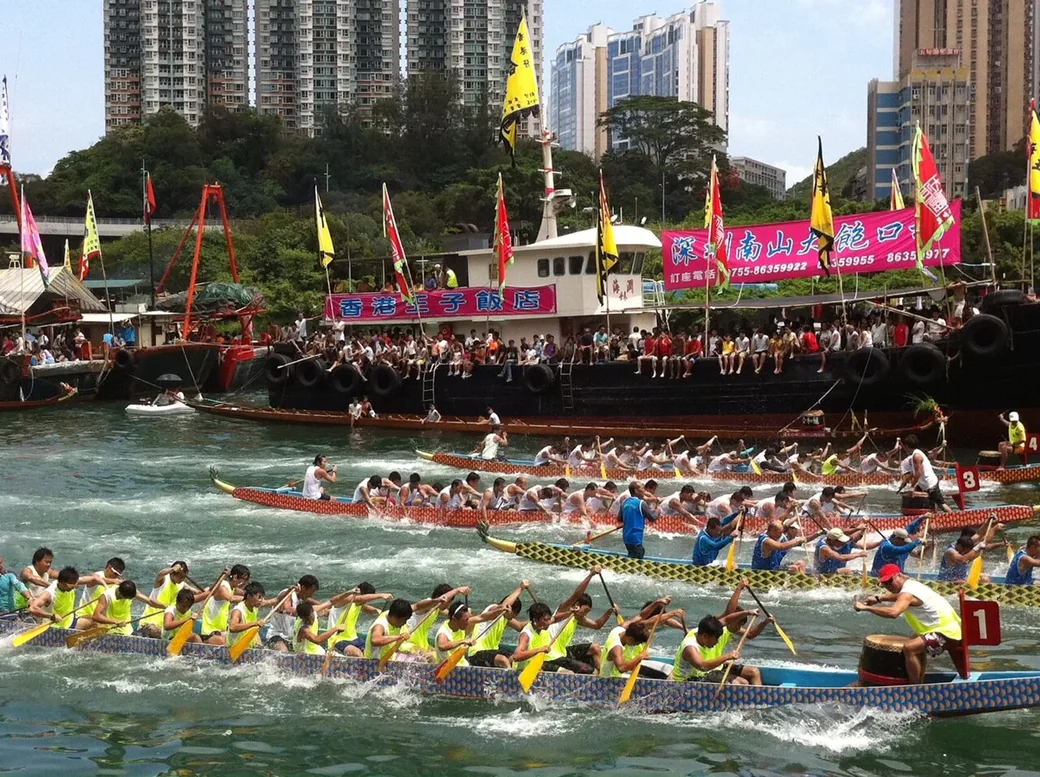
Hong Kong is widely regarded as the birthplace of modern international dragon boat racing. The first Hong Kong International Dragon Boat Invitational Races took place in 1976 at Shau Kei Wan, with nine local teams and a single guest crew from overseas. The idea grew out of a conversation between the head of the local tourism association and the chairman of a fishermen’s association, who wanted to share the festival’s boat traditions with the wider world. Interest spread quickly. In 1991 the International Dragon Boat Federation was founded in Hong Kong, bringing standard fibreglass boats and shared race rules, and the federation has since been formally incorporated in the city. In 2026 the races celebrated their 50th anniversary edition with an extended harbourside festival, a milestone that shows how far a fishermen’s custom has travelled.

Hong Kong International Dragon Boat Races at Victoria Harbour: Race Categories, Viewing Zone and Festival Zone

The headline event takes place over a weekend off Tsim Sha Tsui East Promenade, where crews race along Victoria Harbour against the skyline of Hong Kong Island. Categories include Open, Mixed and Women’s championships, Silver Cup divisions, a Cancer Survivors’ Championship and a Greater Bay Area (the cluster of cities around the Pearl River Delta) championship. The anniversary edition welcomed more than 220 teams and over 4,500 paddlers from 16 countries and regions. The shaded viewing zone stretches from the Kowloon Shangri-La along the promenade to the Bruce Lee statue on the Avenue of Stars. Races typically run from morning until late afternoon, while the Dragon Boat Food Lane and Beer Garden open in the early afternoon and stay lively into the evening. Salisbury Garden next door offers stage shows, hands-on cultural workshops and live race broadcasts. The Hong Kong Tourism Board organises the races together with the Hong Kong China Dragon Boat Association, and for the 50th anniversary the festival zone stayed open for thirteen days.

Where to Watch Dragon Boat Races in Hong Kong: Stanley, Aberdeen, Sha Tin, Tai Po and Sai Kung

Beyond the harbour, almost every waterfront district stages its own races on the holiday itself. Stanley Main Beach, often called the cradle of dragon boating, once held its races in the bay facing the Tin Hau Temple before moving to the beach, and its biggest editions bring around 4,000 athletes to race over a 270-metre course. Aberdeen Promenade (its race, lined with fishing boats, is among the city’s longest-established), the Shing Mun River in Sha Tin, Tai Po Waterfront Park and Sai Kung Waterfront Promenade each host their own events, often with carnival stalls and local clubs cheering their crews. Tuen Mun and Cheung Chau have also staged races in some years. Every venue reflects its neighbourhood, so a morning at one district race and an afternoon at another shows several faces of Hong Kong in a single day.

Tai O Dragon Boat Water Parade: Hong Kong’s Deity Procession on the Water

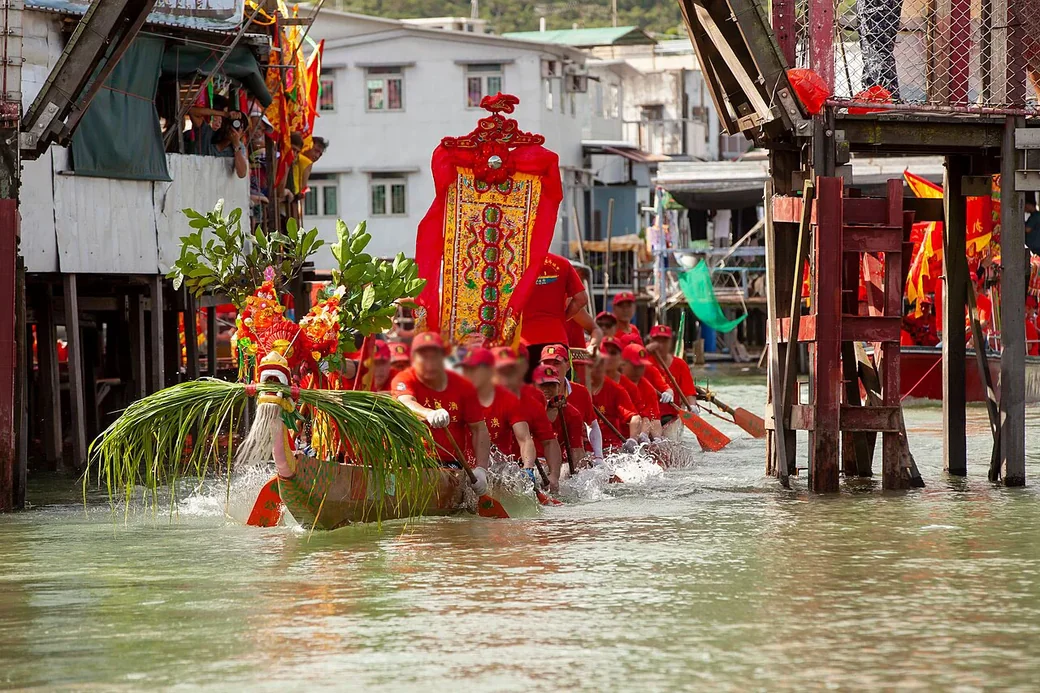
In the stilt-house fishing village of Tai O on Lantau Island, the holiday brings the Dragon Boat Water Parade, a religious procession listed as national intangible cultural heritage in 2011. Three fishermen’s associations (Pa Teng Hong, Sin Yu Hong and Hap Sim Tong) take part. On the morning before the festival, dragon boats visit four temples to collect statues of Yeung Hau (also known as Hau Wong, a loyal general worshipped as a protector), Tin Hau (goddess of the sea), Kwan Tai (god of war) and Hung Shing (sea god). On festival morning, a rite called “picking the greens” places fresh grass in the dragon’s mouth, and the statues then glide through the village waterways on small sampans (flat-bottomed wooden boats) towed by dragon boats before returning to their temples. According to local legend, the parade began over a century ago to chase away a plague. Villagers line the waterfront to welcome the deities, and the procession is also a prayer for calm seas and good health.

Dragon Boat Traditions Explained: Eye-Dotting, Drumbeat, Paddlers and Steersperson

A dragon boat is far more than a racing shell. Traditionally carved from teak and today usually made of fibreglass, it carries a dragon’s head at the bow and a tail at the stern. Before the season, an eye-dotting ceremony paints the pupils of the dragon, a ritual said to awaken the boat’s spirit and protect its crew. A standard crew has about twenty paddlers seated in pairs, a drummer facing them whose beat sets the rhythm of every stroke, and a steersperson at the stern who guides the boat with a long oar. Some teams say the paddles are the dragon’s claws and the drum is its heart. Listen for the deep drum rolls as crews surge towards the finish line. A standard dragon boat is more than ten metres long, and the dragon is the only mythical creature among the twelve animals of the Chinese zodiac, which is why it is believed to ward off bad luck.

Tuen Ng Food Guide: Cantonese, Chiuchow, Hakka and Alkaline Zongzi

Zongzi (sticky rice dumplings wrapped in bamboo leaves) are the taste of Tuen Ng (the Cantonese name of the Dragon Boat Festival). The most common version in Hong Kong is the Cantonese style, filled with pork belly, mushrooms, dried scallop, mung bean and salted egg yolk. Chiuchow versions (from the Chaozhou area of eastern Guangdong) add red beans, chestnuts and dried shrimp, Hakka ones (a distinct regional style) are often eaten cold, and the golden jianshui (alkaline-water dumplings) are sweet, dipped in sugar or honey or filled with red bean or lotus-seed paste. Unwrap the bamboo leaf and enjoy them warm with soy sauce or sugar. Many families also cook a sweet congee (rice porridge) with five kinds of beans, a playful nod to the festival’s number five. Popular restaurants take orders weeks ahead, and well-known brands can sell out quickly.

Dragon Boat Festival Customs: Mugwort, Scented Sachets, Five-Colour Threads and Noon Egg Balancing

Many Hong Kong households mark the day with fragrant, plant-based customs rooted in summer-health traditions. Bundles of mugwort (artemisia, an aromatic herb) and calamus (sweet flag, with sword-shaped leaves) are hung on doors and windows to keep insects away and welcome good health. Children wear scented sachets threaded with five-colour silk string, and folk charms show the “five poisonous creatures” (snake, centipede, scorpion, lizard and toad), which the herbs are believed to drive off. Some homes display a picture of Zhong Kui, the legendary demon-queller. At noon, families like to try standing an egg on its tip, a playful tradition said to bring good luck. Look for sachets and herb bundles in markets in the days before the festival. Because the fifth lunar month falls when insects are most active, it was traditionally seen as a time to take extra care of health, which is why so many customs revolve around herbs.

How to Get to Hong Kong’s Dragon Boat Races by MTR, Bus and Ferry

For the harbourside races, ride the MTR (Mass Transit Railway, Hong Kong’s metro) to East Tsim Sha Tsui Station and follow Exit J towards the Avenue of Stars, or use Tsim Sha Tsui Station Exit L6 for the waterfront by the Hong Kong Cultural Centre. For Stanley, buses 6, 6A and 6X run from Central and bus 973 from Tsim Sha Tsui East. For Sha Tin, leave Sha Tin MTR Station by Exit A and walk through New Town Plaza to Sha Tin Park beside the Shing Mun River. Sai Kung is reached by bus 92 from Diamond Hill MTR Station. For Tai O, take the MTR to Tung Chung Station Exit B and then bus 11; a ferry also links Tai O with Tung Chung and Tuen Mun. Routes can change, so check current services and leave extra time on festival days.

Hong Kong Dragon Boat Festival Visitor Guide: Weather, Crowds, Shade and Family Tips

Hong Kong’s early summer is warm, humid and sometimes showery, so a hat, sunscreen, a refillable water bottle and a light rain jacket make a day by the water far more comfortable. Shaded seating along the promenade helps, and arriving in the morning gives you a better spot and cooler air for the first races. Crowd-management measures are used along the waterfront, so follow the staff’s guidance and allow time to move between areas. Check the Hong Kong Observatory forecast and the Hong Kong Tourism Board’s announcements before you set out, and call the visitor hotline (2508 1234) for event enquiries. Workshops and stage shows make the festival zone family-friendly, and a portable charger keeps your camera and map app ready all day.

Dragon Boat Festival Etiquette and Five Useful Cantonese Phrases

Festival days are cheerful, and a few courtesies keep them smooth. At Tai O’s procession, which is a religious ritual for the local community, stand behind the viewing lines, keep your voice low near the temples and ask before taking close-up photos of worshippers. At race venues, cheering is welcome; just follow the officials’ signs near the water. When enjoying zongzi (sticky rice dumplings), remove the bamboo leaf before eating. A few Cantonese phrases add to the fun: Tuen Ng jit faai lok (“Happy Tuen Ng”), gaa yau (“go, go!” or “keep it up”), lung zau (“dragon boat”), zung (“zongzi dumpling”) and ping on (“safe and peaceful”). Locals love hearing visitors try them.

Things to Do Around the Hong Kong Dragon Boat Festival: Symphony of Lights, Lamma and Tai O

The festival zone is only one part of a wider celebration. In recent years Hong Kong has held an Intangible Cultural Heritage Month in June, with tours and workshops that explore traditional crafts. In Tsim Sha Tsui, the Avenue of Stars and the nightly Symphony of Lights (a light-and-music show over the harbour) make an easy evening after the races. The festival zone around Salisbury Garden has hosted workshops in zongzi (sticky rice dumpling) making, fishnet weaving and sugar blowing (a traditional candy-shaping craft), as well as a virtual-reality paddling simulator. On Lamma Island, the Fisherfolk’s Village at Sok Kwu Wan keeps two authentic wooden dragon boats and tells the story of local fishing life. In Tai O, villagers celebrate the birthday of Hau Wong on the sixth day of the sixth lunar month with performances of Cantonese opera (traditional sung theatre) at Yeung Hau Temple.

Dragon Boat Festivals Worldwide: How Hong Kong Launched an International Sport

Dragon boat racing has travelled far from its fishing-village roots. Hong Kong once presented traditional wooden boats to rowing clubs overseas, helping the sport spread, and today roughly 85 countries and regions host their own events. Cities from Vancouver’s False Creek to New York’s Flushing and Denver’s Sloan’s Lake stage popular festivals, and the International Dragon Boat Federation now has its home in Hong Kong. Festivals abroad often open with the same eye-dotting ceremony you can see here, and many overseas crews dream of paddling at the harbour where the modern sport began. A visit during Tuen Ng (the Dragon Boat Festival) lets you see the tradition at its source, among the people who nurtured it. Dragon boat racing even became an official medal sport at the 2010 Asian Games in Guangzhou.

Insider Tips for Tuen Ng in Hong Kong: Local Favourites for Races, Rituals and Photos

Locals often prefer the neighbourhood races, where clubs, schools and companies cheer on their own crews and the atmosphere feels like a street party on water. Many large organisations enter teams as a team-building tradition, and in the weeks before the festival crews train at dawn and on Sundays off Shau Kei Wan and Stanley. In Tai O, enthusiasts gather by the dragon boat mooring pontoon, because boats appear along the waterways at different moments, so patience pays off. A good plan is a morning at a district race, lunch with zongzi (sticky rice dumplings), and an afternoon at Tsim Sha Tsui for the international crews, finishing with the harbour lights. Photographers enjoy the skyline backdrop and the splashing paddles at the harbour.

Fun Facts and Folk Tales of the Hong Kong Dragon Boat Festival

Qu Yuan is regarded as a pioneering poet in the Chinese literary tradition, which is why the festival is sometimes nicknamed Poets’ Day. According to folk belief, noon on Tuen Ng (the Dragon Boat Festival) is the best moment to stand an egg on its end. Historical records mention alkaline zongzi (sticky rice dumplings) with sweet lotus-seed paste being served at the imperial court of the Qing (the last imperial dynasty), and a popular rumour adds that Empress Dowager Cixi was especially fond of them. Another local story says the Tai O parade once helped a village overcome a plague. The golden anniversary of the Hong Kong races added a Fisherman Invitational Cup for traditional wooden boats and an Ultimate Dragon Boat Champion title for the winners of nine race categories, proof that old customs keep inventing new traditions. The traditional wooden boats used for that cup are heavier than modern ones and demand great stamina from their crews.

Practical Information

When

Tuen Ng falls on the fifth day of the fifth lunar month, usually between late May and late June, and is a public holiday in Hong Kong. District races and the Tai O procession take place on the holiday itself, while the international races at Victoria Harbour are usually held on the weekend around it.

Where

Tsim Sha Tsui East Promenade (international races and festival zone between the Avenue of Stars and Salisbury Garden), Stanley Main Beach, Aberdeen Promenade, the Shing Mun River in Sha Tin, Tai Po Waterfront Park, Sai Kung Waterfront Promenade and the stilt-house village of Tai O on Lantau Island.

Cost

Free. Watching the races, the shaded viewing areas and the Tai O procession is free of charge; food, drinks and some extras are bought on the spot.

Tips

Arrive in the morning for a good spot and cooler air, bring a hat, water and a light rain jacket, and check the Hong Kong Observatory forecast and the Hong Kong Tourism Board’s announcements before heading out. Plan extra travel time and use the MTR (metro) whenever you can.

Unique to this festival

Hong Kong is the birthplace of modern international dragon boat racing, so you can watch world-class crews at the harbour and traditional fishing-community rituals such as Tai O’s deity procession on the same day. Cantonese, Chiuchow, Hakka and alkaline zongzi make it a food festival as well.

Accommodation and hotel options during Tuen Ng Festival (Dragon Boat Festival)

Accommodation and hotel options around the event venue, with their prices, are shown by Stay22 as a map and a list. Cookies are used. Your consent is remembered on every page; you can turn it off at any time in the cookie settings.

Keep Exploring

Travel essentials for Hong Kong

Flights, transfers, car rental, eSIM and insurance — compare your options

Flights

Find the best route

Transfers

Airport & city ground transport

Car Rental

Drive at your own pace

eSIM

Stay connected on arrival

Insurance

Cover your trip