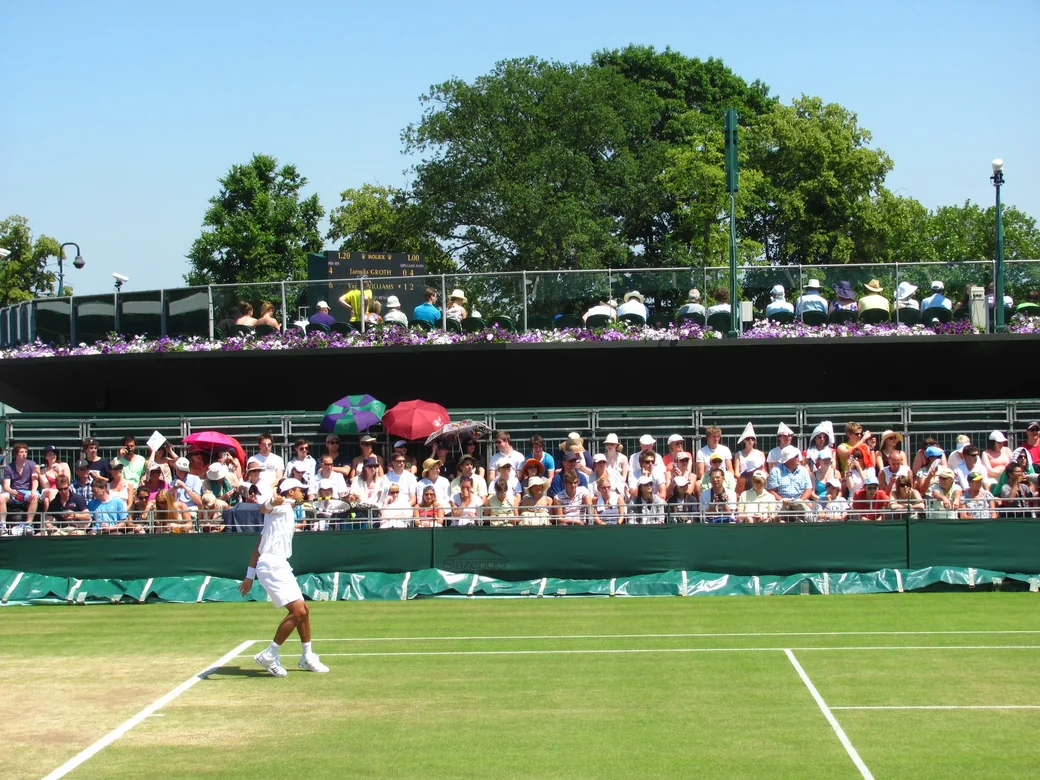
The Wimbledon Championships in London, with players competing on the famous grass courts of the All England Club while spectators watch from the stands

Wimbledon Championships

LondonJun 28, 2027 – Jul 11, 2027↻ Annual
Duration:14 daysType:
Sports & Outdoor Events
Admission:From 22 GBPLocationAnnual event — exact dates may vary each year

The world's oldest tennis tournament and the only Grand Slam played on natural grass, held every summer at the All England Club in London: the all-white tradition, strawberries and cream, the legendary Queue and the Royal Box on Centre Court.

About This Festival

Wimbledon Championships History: From a Croquet Lawn to the Oldest Tennis Tournament

The Championships grew out of a croquet club. The All England Croquet Club was founded in 1868, added lawn tennis in 1875 and staged the first Lawn Tennis Championship in the summer of 1877. Only the Gentlemen's Singles was played: 22 men entered, rain stretched the event, and Spencer Gore beat William Marshall in the final in front of about 200 spectators. The Ladies' Singles arrived in 1884, and ladies' doubles and mixed doubles followed in 1913. The tournament moved from Worple Road to its present home on Church Road in 1922, yet kept the name Centre Court from the original ground. Professionals joined in 1968, the BBC began broadcasting in 1937, and in 1967 Wimbledon hosted Britain's first colour television coverage. Since 2022 there is play on the middle Sunday, and since 2025 electronic line calling has replaced line judges. Counted from that first tournament in 1877, the 150th anniversary of The Championships falls in 2027.
Wimbledon Schedule and Play Times: Start Times, Roof and the 11pm Curfew

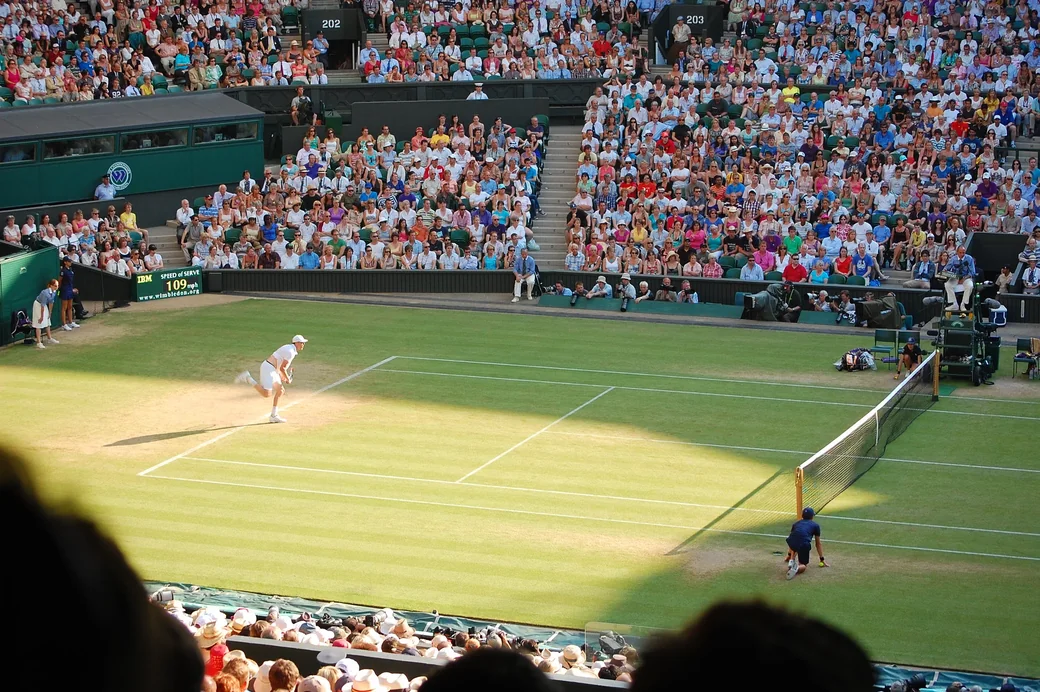
Wimbledon runs for 14 days, starting on a Monday in late June or early July, and ends with the Ladies' final on Saturday and the Gentlemen's final on Sunday. Since 2022 there is play on the middle Sunday too. The grounds open at 10:00; matches begin at 11:00 on the outside courts, 13:00 on No.1 Court and 13:30 on Centre Court, with an earlier Centre Court start on finals weekend. Only the first match on each court has a fixed time. The Referee publishes the next day's order of play the evening before, on the Wimbledon app, the website and the board in the Gate 3 piazza. All play must end by 23:00, a local planning condition that protects residents. Centre Court and No.1 Court have retractable roofs and lights, so rain rarely stops them; outside courts are covered quickly but can be delayed. Qualifying takes place the week before at Roehampton.

Wimbledon Grounds Guide: Centre Court, No.1 Court, The Hill and Outside Courts

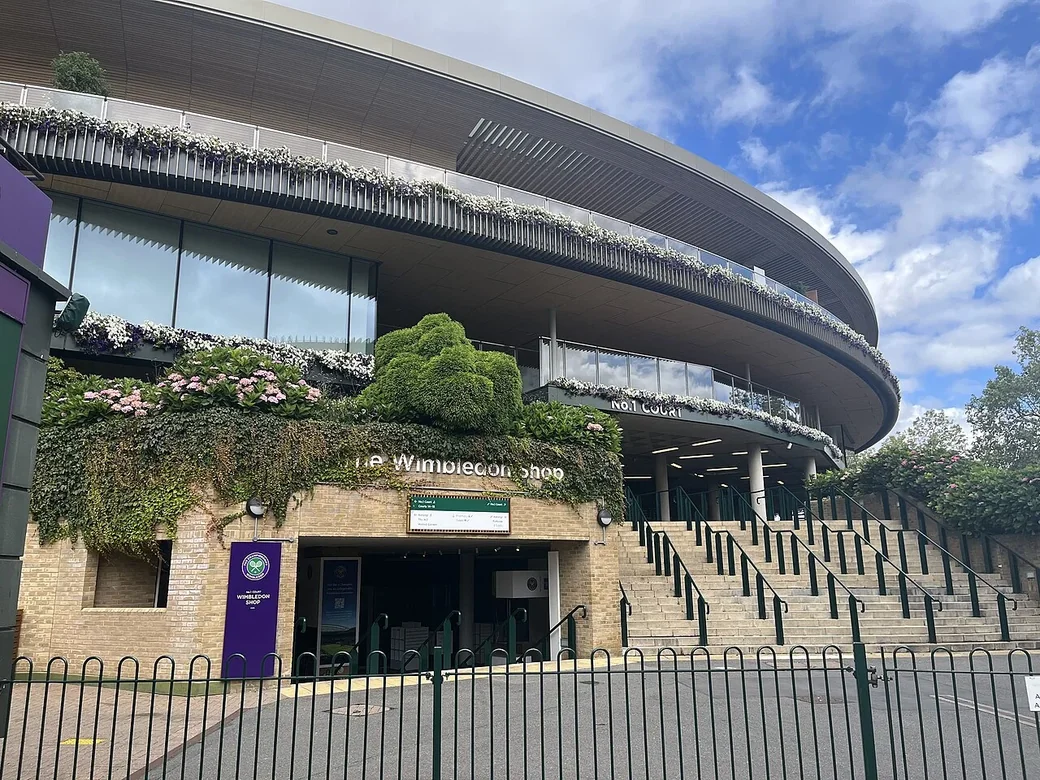
The All England Club grounds mix stadium excitement with garden-party calm. Centre Court seats nearly 15,000 people, has a retractable roof and the Royal Box at its southern end; No.1 Court holds more than 12,000 and also has a roof. No.2 Court and No.3 Court give a more intimate view, while Court 12, Court 18 and the numbered outside courts have unreserved seating, where you can watch from a few metres away. The grass bank beside No.1 Court, officially Aorangi Terrace, shows Centre Court and No.1 Court matches on a giant screen; fans call it Henman Hill or Murray Mound. More big screens stand in the Southern Village. The gates are numbered: arriving from Southfields, use Gates 1 and 3; from Wimbledon station or the Village, Gates 5, 7, 11a or 12. The order of play board stands in the Gate 3 piazza.

How to Get Wimbledon Tickets: Public Ballot, LTA Draw and Official Routes

Wimbledon tickets are sold at face value through a few official routes. The Public Ballot, run since 1924, is free: create a myWimbledon account, tick the consent for ticket emails, then apply once per household during the window announced in late summer. Winners are drawn at random and are given a set day and court. Tickets cannot be passed on, and the named buyer must attend with photo ID. Overseas applicants are welcome, and a separate Wheelchair Ballot runs alongside. Unsuccessful applicants may later get access to an online returns shop. The Lawn Tennis Association runs its own draw for members, where winners choose their day and court. Hospitality is sold by the official partner Keith Prowse, and debenture seats (long-term seats bought up front for a fixed run of years), valid for five years, are the only tickets that can legally be resold. Tickets arrive in the official Wimbledon app; anything bought elsewhere may be invalid.

The Wimbledon Queue Explained: Queue Cards, Wristbands and Camping Rules

The Queue is a Wimbledon institution: a field of tents and picnic blankets in Wimbledon Park, a short walk from Southfields station, where anyone can buy same-day tickets at face value. It opens in the afternoon before the first day and starts afresh every morning. Stewards give each person a numbered, dated Queue Card; it is personal, cannot be passed on, and you may step away for no more than about thirty minutes. Each day around 500 tickets each go on sale for Centre Court, No.1 Court and No.2 Court, plus several thousand Grounds Passes. Centre Court and No.2 Court are offered only in the first ten days, No.1 Court every day. Wristbands are handed out from 7:30, the grounds open at 10:00, and entry follows card order. Camping rules: two-person tents only, one person always present, no stoves, no smoking, no loud music, and tents packed away each morning. Check the official Queue status before you travel.

Wimbledon Grounds Pass and Ticket Resale: The Late-Afternoon Strategy

A Grounds Pass is the doorway for people without a Show Court ticket, and the club sells it only through The Queue, on the day. It gets you onto the outside courts and a spot on The Hill, but not a numbered seat on the big courts. The cleverest trick is arriving later: once the grounds reach capacity, entry moves to one-out, one-in, and from the late afternoon the wait is usually short. Ticket Resale then offers Show Court seats handed back by spectators who leave early. From about 15:00 you join a virtual queue in the Wimbledon app, registering at the Parkside kiosk or in the Queue Village, and a text message tells you when to accept and collect. Resale runs into the evening, and all proceeds go to the Wimbledon Foundation. Play can continue until 23:00, so an evening under the roof is a real option.

How to Get to Wimbledon: Southfields, Shuttle Bus, Night Bus and Taxis

Southfields on the District line is the closest station and the one the club recommends: it is a signposted walk of about fifteen minutes along Wimbledon Park Road, with stewards guiding the crowds. Wimbledon station, which also has National Rail and trams, is roughly twenty minutes on foot, and a dedicated Championships shuttle bus links it with the grounds, returning from Gate 11a on Somerset Road. Wimbledon Park station is about twenty-five minutes away. The 493 bus is diverted during the tournament, and the N87 night bus serves early arrivals. Ride-hailing cars use designated points on Marryat Road and Wimbledon Park Road because Church Road is closed to traffic, and taxi ranks wait at Southfields and Wimbledon stations. There is no public parking at the grounds and nearby streets are restricted, so public transport is by far the easiest choice.

Wimbledon Dress Code and Etiquette: All-White Rule, Royal Box and Court Manners

Players must wear almost entirely white, a rule formalised in 1963 and softened only slightly since: dark undershorts for women, for example, were allowed from 2023. Spectators have no official dress code, though many choose smart casual on Centre Court and No.1 Court. Avoid very large hats and big political or commercial messages, and leave large flags at home. The traditional colours of Wimbledon are dark green and purple. Courtesy matters: stay silent during rallies, applaud the players but not a net cord or double fault, move around only at changeovers, and open champagne corks outside the stands. The Royal Box on Centre Court has 74 seats and has hosted royalty and guests since 1922. Players once bowed or curtsied to it, but the custom was relaxed in 2003 and now applies only when the King or the Prince of Wales is present.

What to Bring to Wimbledon: Bag Size, Picnic Rules, Cameras and Essentials

Pack light: one bag per person, maximum 40 × 30 × 30 cm, about the size of an airline cabin bag. Food and soft drinks are welcome, and so are refillable water bottles. Each adult may bring one 750 ml bottle of wine or Champagne, or two 500 ml cans of beer or ready-mixed drinks, but no spirits, and no glass or uncorked bottles into the stands. Hard-sided cool boxes, picnic hampers, camping chairs, flasks over 500 ml, large backpacks, tripods, selfie sticks and camera lenses over 300 mm are not allowed, and flash is banned in the stands. Your ticket lives in the Wimbledon app and needs a data connection at the gate, so charge your phone, carry a power bank and bring photo ID. Free Wi-Fi, charging points and water refill stations are spread around the grounds. Sun cream, a hat and a light waterproof cover every kind of London weather.

Wimbledon with Children and Accessibility: Age Rules, Wheelchair Access, Family Room

Children under five are not allowed on the Show Courts, which are Centre Court, No.1, No.2, No.3, Court 12 and Court 18, but they can enjoy the grounds, the other courts and the big screens on The Hill and in the Southern Village, and they need no ticket. Anyone aged five or over needs their own ticket and seat, and under-16s must stay with an adult throughout. Buggies are welcome, and a quiet Family Room waits in Wimbledon Park opposite Gate 3. For visitors with access needs there is a Wheelchair Ballot, reserved viewing areas on Centre Court and Courts 1, 2 and 3, limited unreserved spaces on the other courts, accessible toilets, and complimentary companion tickets for eligible guests. Certified assistance dogs may enter the grounds and the Show Courts. The Queue has an Accessibility Waiting Area with a buggy service, and Blue Badge (UK disabled parking permit) parking must be booked in advance.

Strawberries and Cream, Pimm's and More: What to Eat and Drink at Wimbledon

Strawberries and cream are the taste of Wimbledon, a tradition linked with the tournament since its early years. Grade 1 English strawberries, grown in Kent and picked the day before, arrive early each morning to be inspected and hulled. A portion holds at least ten berries, around 190,000 portions are sold in a typical tournament, and there is a vegan cream option. According to a popular legend, the pairing goes back to the Tudor court, when Cardinal Wolsey's cook is said to have served the dessert to Henry VIII at Hampton Court. Pimm's (a gin-based fruit cup, a British summer liqueur) with lemonade and fruit is the classic drink, while Champagne, tea and coffee, fish and chips, sandwiches, ice cream and pizza also feed the crowds; hundreds of thousands of cups of tea and coffee are served during the fortnight. You may bring your own picnic, and many people eat it on The Hill. Vegan and gluten-free choices are available.

Wimbledon Traditions and Fun Facts: Rufus the Hawk, 8mm Grass and the Pineapple Trophy

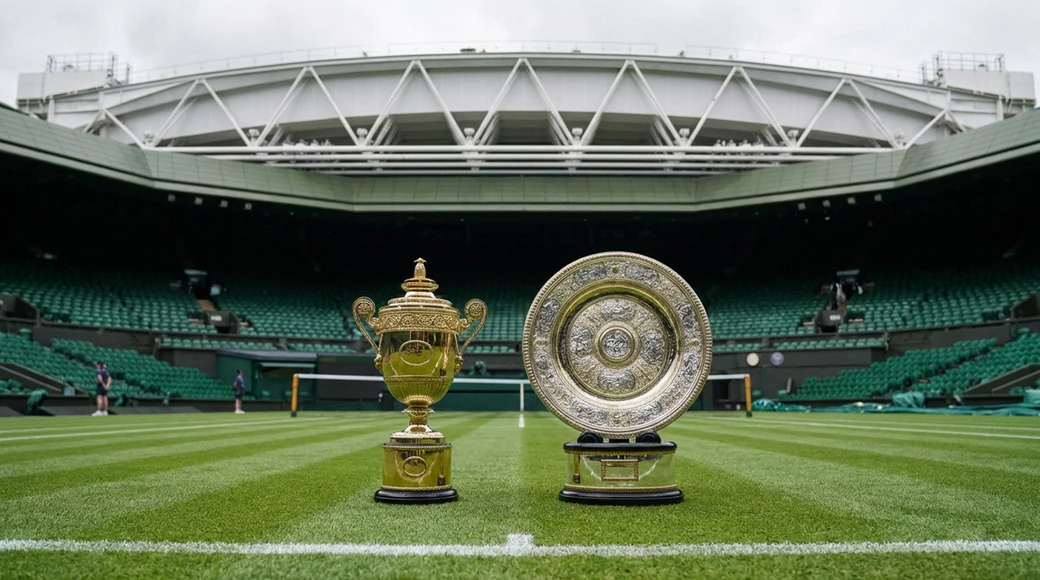
Wimbledon's quirks are part of its charm. A Harris hawk called Rufus, officially the bird scarer, flies over the courts in the early morning to keep pigeons away. The courts are sown with 100% perennial ryegrass and cut to exactly 8 mm, and Centre Court and No.1 Court are used mainly for the two weeks of the Championships. Slazenger has supplied the balls since 1902, the longest sponsorship in sport, and the balls turned yellow in 1986 for television. Advertising boards are almost absent. About 250 ball boys and girls, around fifteen years old, are chosen from local schools and trained for months. The Gentlemen's champion lifts a silver-gilt cup topped with a small gold pineapple; its origin is unknown, but according to a legend it recalls naval captains who set a pineapple on their gatepost when they came home. The Ladies' champion receives a replica of the Venus Rosewater Dish.

Wimbledon Legends and Records: Champions, Firsts and Unforgettable Matches

The honour roll reads like a history of tennis. Spencer Gore was the first champion in 1877; Fred Perry (1936) and Andy Murray (2013) are the home heroes among the men, and Virginia Wade (1977) among the women. Roger Federer's eight Gentlemen's singles titles are the tournament record, and Martina Navratilova won nine Ladies' singles titles, six of them in a row. Björn Borg and Federer each won five in a row. Boris Becker became the youngest men's champion at 17 in 1985, while Lottie Dod won the ladies' title at 15 in 1887. Goran Ivanišević remains the only wild card (a player let into the draw by invitation rather than by ranking) to lift the Gentlemen's trophy, in 2001. The longest match ever was John Isner against Nicolas Mahut, which lasted 11 hours and 5 minutes in 2010, and the longest final was Novak Djokovic against Federer in 2019, at 4 hours and 57 minutes.

Beyond the Tennis: Wimbledon Museum, Village, Common and Where to Stay

Wimbledon is worth a visit all year. The Wimbledon Lawn Tennis Museum, inside the club at 3 Church Road, calls itself the largest tennis museum in the world. It opened in 1977 and shows objects going back to 1555, the championship trophies, a 3D Centre Court experience and The Whites of Wimbledon fashion collection. A 90-minute guided tour with Blue Badge guides (Britain’s nationally qualified tourist guides) takes you onto Centre Court and No.1 Court. Book ahead, and note that during the Championships the museum is open to ticket holders only. It is open daily, with slightly shorter hours in winter. Up the hill, Wimbledon Village has pubs, boutiques, cafés and a Sunday market, and Wimbledon Common, about 1,200 acres with Putney Heath, is made for walks; the spire of St Mary's Church, familiar from television, rises nearby. Rooms near the club are limited, so many visitors stay in central London and ride the District line.

Wimbledon's Impact on London: Economy, Charity, Community and Broadcast Reach

Wimbledon welcomes more than half a million spectators a year and is watched around the world. The BBC has shown it since 1937, and UK rules require the finals to be broadcast free-to-air. Media rights make up the largest share of its income, and the club says most of the surplus goes back into British tennis through the Lawn Tennis Association. University research has put the tournament's economic impact on London in the hundreds of millions of pounds. Prize money was first paid in 1968, and since 2007 women and men receive equal prize money. Ticket Resale gives its proceeds to the Wimbledon Foundation, and the strawberries are British-grown. Service personnel have worked as stewards on the courts since 1946, joined today by honorary stewards. The result is a global event that stays rooted in a quiet south-west London suburb.

Practical Information

When

Two weeks starting on a Monday in late June or early July, with play every day. The grounds open at 10:00; matches begin at 11:00 on the outside courts, 13:00 on No.1 Court and 13:30 on Centre Court. All play must finish by 23:00.

Where

All England Lawn Tennis and Croquet Club, Church Road, Wimbledon, London SW19. The nearest station is Southfields (District line), about 15 minutes on foot. The Queue forms in Wimbledon Park.

Cost

Paid event, sold at official face value. Grounds Passes are sold only through The Queue on the day and cost less in the second week; Show Court tickets are allocated mainly through the Wimbledon Public Ballot, The Queue and official advance sales, and their price depends on the court, the row and the day. Hospitality packages and debentures cost considerably more. Current prices are published on the official website.

Tips

One bag per person, maximum 40 × 30 × 30 cm. Tickets are held in the Wimbledon app, so bring photo ID. Arrive early, pack sun cream and a light waterproof, and use only official ticket routes.

Specific to this festival

the all-white dress code for players, the 23:00 curfew, strawberries and cream, the legendary Queue with overnight camping, almost no advertising boards, grass courts cut to 8 mm and a Harris hawk named Rufus who guards the courts.

Accommodation and hotel options during Wimbledon Championships

Accommodation and hotel options around the event venue, with their prices, are shown by Stay22 as a map and a list. Cookies are used. Your consent is remembered on every page; you can turn it off at any time in the cookie settings.

Keep Exploring

Travel essentials for London

Flights, transfers, car rental, eSIM and insurance — compare your options

Flights

Find the best route

Transfers

Airport & city ground transport

Car Rental

Drive at your own pace

eSIM

Stay connected on arrival

Insurance

Cover your trip