The Anatolian Fortress (Anadolu Hisarı) is a compact medieval Ottoman castle on the Asian shore of the Bosphorus, in Istanbul's Beykoz district, beside the mouth of the Göksu Stream. Its stone keep and walls face the Rumelian Fortress (Rumeli Hisarı) across the water, and the castle is among the earliest Ottoman buildings in the city. Today it is open to visitors as a small museum, set in a quiet waterside neighbourhood that makes it a rewarding stop on any trip along the Bosphorus.
Anatolian Fortress (Anadolu Hisarı): Location, accommodation options and contact
Anadolu Hisarı Mahallesi, Toplarönü Sokak, 34810 Beykoz, Istanbul
The place's location on the map and nearby accommodation and hotel options are shown by Stay22. Cookies are used. Your consent is remembered on every page; you can turn it off at any time in the cookie settings.
Anadolu Hisarı History: Sultan Bayezid's First Fortress on the Bosphorus
Anadolu Hisarı is the castle Bayezid I, known as Yıldırım, raised while preparing to besiege Constantinople. Its purpose was to block help reaching the Byzantines from the Black Sea and to establish Ottoman control at the strait's narrowest point. Sources disagree on the date: one chronicler gives 1390–91, another 1394–95, and since it was built after the surrender of Şile, a window of 1395 to 1397 has also been proposed. The most widely accepted date is 1394–1395. Once it was finished, Bayezid sent an envoy to the Byzantine emperor Manuel II demanding the city, and as guards and their families settled inside, the first neighbourhood grew around the walls. The claim that an older Byzantine fort stood here has no basis. The Byzantine emperor avoided surrender by agreeing to pay an annual tribute, to let a Muslim quarter be founded in the city and to accept a judge for it.
Mehmed's Outer Wall and Rumeli Hisarı: The Pair That Sealed the Bosphorus
In 1452, as he prepared the conquest of Constantinople, Mehmed the Conqueror had Rumeli Hisarı built on the opposite shore and strengthened Anadolu Hisarı as well. He added a large outer wall with three towers around the castle, and sources record that cannon were placed there. The building thus moved from a medieval, defensive design to the more aggressive layout of the age of sieges. With the two castles facing each other across a channel roughly six to seven hundred metres wide, any ship could be held under fire and aid from the Black Sea cut off. The firing positions of the outer wall closely resemble those of Rumeli Hisarı, so seeing both on the same day makes the strategy easy to grasp.
Anadolu Hisarı Architecture: The Head Tower, Inner Keep and Bastions
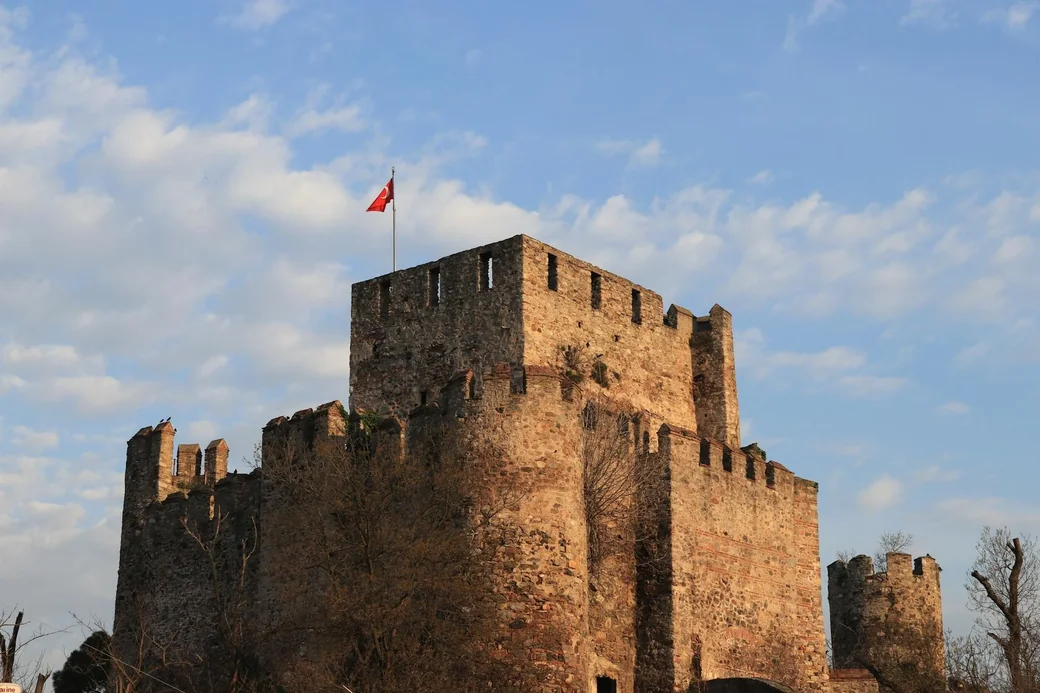
The castle sits on a low rise of limestone and schist between the Göksu Stream and the sea. In its original form under Bayezid it was a defensive castle in the medieval manner, a tall square Head Tower surrounded by a ring wall. The tower was linked to the outside by a drawbridge from the first floor, and a stair inside the thickness of the wall led down to the basement; beam holes in the walls show that three wooden floors once stood above it. The corners of the wall carried small towers, and behind the battlements ran a wall-walk reached from the courtyard by stone stairs. The parts from Bayezid's time use rubble stone with bands of brick, and here and there the bricks form geometric patterns. In two of the half-round bastions of the outer wall Mehmed added, spiral staircases resemble minaret stairs, and the arches of the cannon openings are of cut stone. Spread over roughly seven decares (about 7,000 square metres), the complex impresses more through function than show.
From Ruin to Museum: The Anadolu Hisarı Restoration and Its Wall-Walks
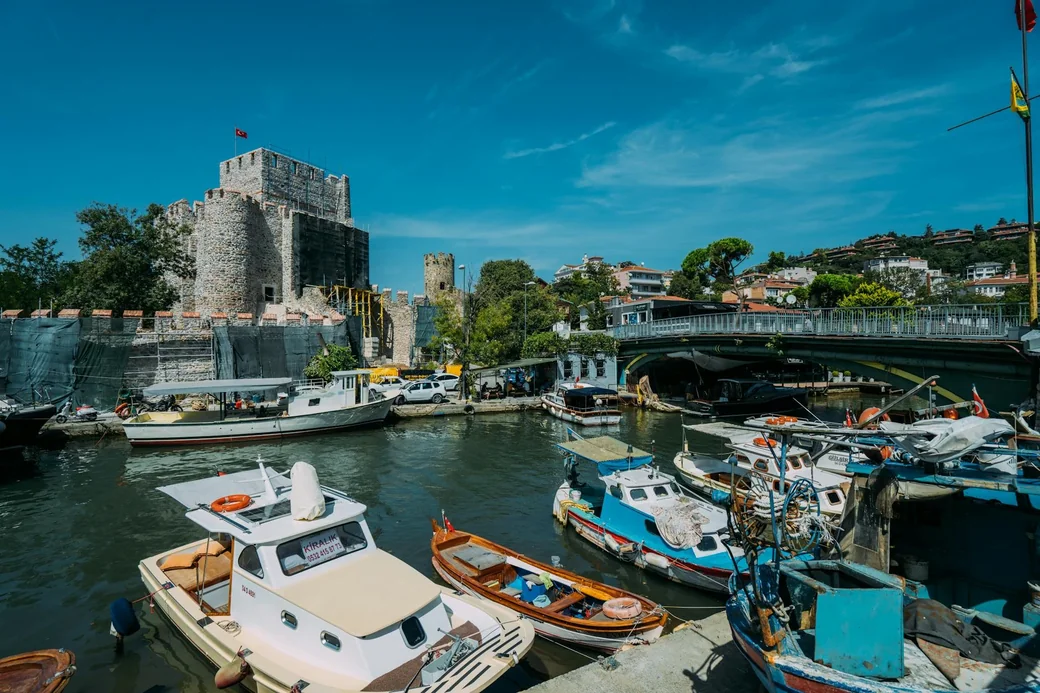
Worn down over the centuries by fires, earthquakes and neglect, the fortress entered a far-reaching restoration led by IBB Miras in 2021. Under a project approved by a scientific committee, the castle was strengthened against the expected Istanbul earthquake, starting with the badly damaged Head Tower. Cement-based material left by earlier repairs and plants that had worked into the masonry were carefully removed, and damaged parts were reinforced with traditional materials and techniques. The most striking result was reopening the wall-walks of the Head Tower to the public for the first time in a long while. The building opened as the Anadolu Hisarı Museum on 29 April 2023, and the landscaping gave the castle a pedestrian square that links it with the Göksu Stream. The first major repair came after the 1509 earthquake, in 1510; the 1878 fire destroyed about a dozen houses of the settlement around the castle along with the homes built on its outer wall, and the 1894 earthquake damaged the structure again. From the nineteenth century onward these blows, followed by neglect, gradually left the castle in ruins.
Anadolu Hisarı Views: Bosphorus Panorama and Photo Spots
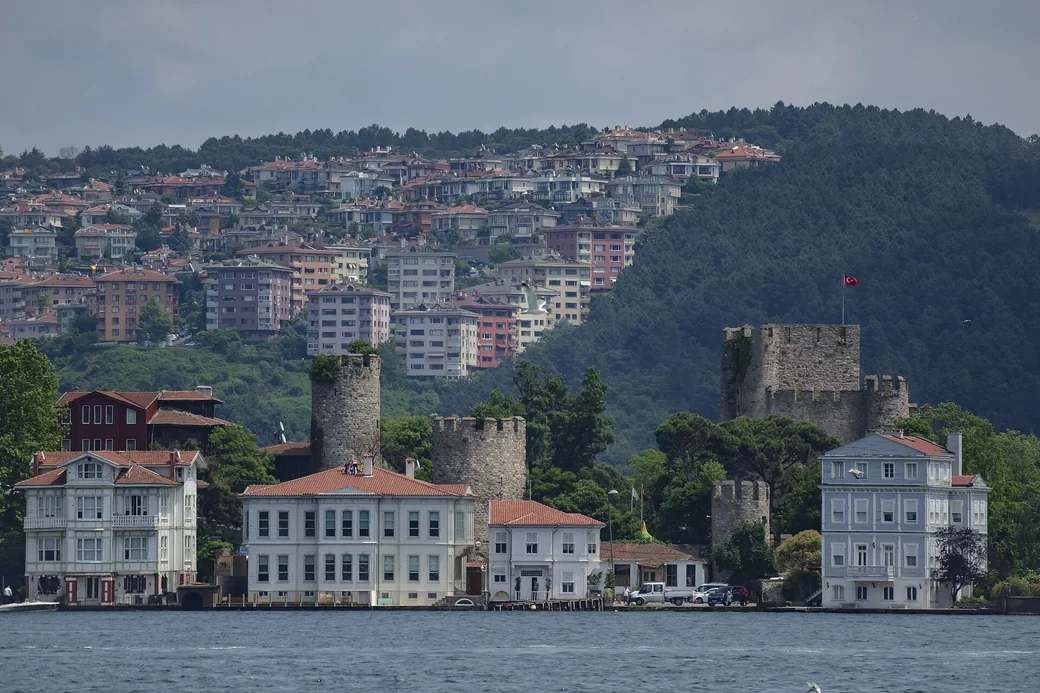
The real reward is up top. From the upper floors of the Head Tower and the wall-walks you see the narrowest stretch of the Bosphorus, Rumeli Hisarı opposite, the Fatih Sultan Mehmet Bridge and Küçüksu Pavilion in an almost 360-degree panorama. To catch Rumeli Hisarı and the bridge in a single frame, use the west-facing bastions; if you wait for a passing ship, the narrowness of the strait becomes obvious. Down below, you can photograph the stone towers against the waterside mansions as you walk along the Göksu Stream. From a ferry on the Bosphorus the fortress looks its best, together with the mansions of Beykoz.
Lesser-Known Facts About Anadolu Hisarı: A Shifting Shore, a Road and Many Names
Today the castle looks slightly inland, yet when it was built it stood right at the water's edge; river silt and later landfill pushed the shoreline away. It has gone by many names: Güzelce Hisar in the early years, Yenice Kale under Mehmed, Akça Hisar in some sources and, in the Latin used by travellers, Nova Castrum. Scholars disagree about the original name: some argue that Gözlüce Hisar, the watching fortress, is more plausible than Güzelce for a castle built to observe the strait. Wooden houses were built on top of the outer wall over the centuries, and the last of them burned down in a fire in 1971. To open the Bosphorus coastal road in the late 1920s, part of the walls was demolished and the road was routed through the courtyard, which is why the land-side bastions now sit across the road. After the conquest the castle served for a while in guarding the strait; from the sixteenth century it became a prison for statesmen and, as a place of confinement, for Janissaries (the sultan's elite infantry corps), and in the seventeenth and eighteenth centuries it was once again a defence point against raids from the Black Sea. In the mid-seventeenth century Evliya Çelebi found it small but sturdy, gave its size as a thousand paces, and wrote of a gate facing west, 200 timar-holding soldiers (timar being a land grant given in return for military service) and cannon aimed at Akıntıburnu, opposite Rumeli Hisarı. Lead-covered wooden cones capped the tower and bastions until around the 1830s: engravings from the early nineteenth century still show them, while those made around 1830–1840 do not. And a photograph from 1855 shows houses built on the outer wall whose ground-floor windows opened into the gaps of the battlements.
Anadolu Hisarı Legends and Folk Tales: The Ox-Hide Story, the Güzelce Name and the Göksu Sacred Spring
The best-known tale linked to Anadolu Hisarı really belongs to its twin across the water, Rumeli Hisarı. According to the legend, Mehmed the Conqueror asked the Byzantine emperor for a small plot on the Bosphorus to build a hunting lodge, and the emperor agreed on condition that it be no larger than an ox hide could cover. Mehmed is said to have had the hide cut into thin strips and used them to mark out a far larger area, where the fortress rose. Reported by Evliya Çelebi among others, the story echoes the ox-hide legend of the founding of Carthage and has no documentary basis, yet it belongs to the folk memory that links the two castles. Some guidebooks say the name Güzelce Hisar was given to tell it apart from Rumeli Hisarı, but the name already appears in early chronicles of the castle, so that explanation looks like a later popular reading. Another local tradition concerns the sacred spring known as Meryem Ana Ayazması, the Virgin Mary spring, beside the Göksu Stream: said to have been found in 1870 by a gardener, it drew visitors of several faiths, and extra ferries were laid on for its festival day. Old accounts also claim that the district hosted a temple dedicated to Zeus or Jupiter and a small Byzantine village called Neapolis (Napli); yet research on the castle site has found no remains older than the fortress itself.
Anadolu Hisarı Museum Opening Hours, Visit Length and Entry Details
The museum is open Tuesday to Sunday and closed on Mondays, and the ticket office closes shortly before the museum itself. The building is small, so seeing the tower, wall-walks and courtyard takes about an hour, and adding the Göksu Stream and the waterfront turns it into a half-day outing of two to three hours. Payment is by credit or debit card only and cash is not accepted. Visitors report that the QR code on the ticket is scanned at the entrance turnstile.
When to Visit Anadolu Hisarı: Best Season and Time of Day
Spring and autumn are the most comfortable seasons: the air is mild, the stone stairs are dry and the light over the Bosphorus is clear. In summer the castle is exposed, so the midday sun can be tiring; go early and bring a hat and water. In winter the wind on the wall-walks sharpens and the stone steps get slippery on rainy days. Weekday mornings are usually calm, and some visitors report having the castle almost to themselves. Soft afternoon light is ideal for photographing the Bosphorus, but remember that the ticket office closes before the museum does.
Anadolu Hisarı Accessibility Guide: Stairs, Families and Older Visitors
The castle has to be explored within the limits of medieval military architecture. Visitors report that the stone stairs inside the tower are steep and high, so people with walking difficulties, older visitors and small children may struggle. Protection along the wall-walks is limited, and staff warn visitors not to climb into restricted areas. Reaching the upper levels in a wheelchair is therefore not possible; although an official education portal marks the site as barrier-free, it is wise to phone the IBB Libraries and Museums office before you go to learn which parts are accessible. If you come with children, hold their hands and do not plan on using a stroller.
Language, Information and Guide Service at Anadolu Hisarı
At the entrance there is a short introductory film about the castle's history and a set of information panels, a good chance to place the fortress in context before you start. The official museum page does not mention an audio guide or regular guided tours, so it helps to come prepared. Visitors from abroad can ask the staff at the entrance which languages the panels offer. Reading the castle's story beforehand and thinking of it together with Rumeli Hisarı enriches the visit, and the headings on this page can serve as a pocket guide while you explore the tower. For deeper commentary, look for guided walks that cover the history of the Bosphorus.
How to Get to Anadolu Hisarı: Ferry, Marmaray, Bus and Driving Options
The nicest option is by sea: the Şehir Hatları Anadolu Kavağı–Üsküdar line and the Çengelköy–İstinye Bosphorus ring line both stop at Anadolu Hisarı Pier. The ring line runs on weekdays and Saturdays and the Anadolu Kavağı line has a few sailings a day, so check current times before leaving. From the European side, you can board the ring line at the Bebek and Arnavutköy piers. By land, take Marmaray or the M5 to Üsküdar, then an IETT bus from the 15 family toward Beykoz and get off at the Anadolu Hisarı stop. If you drive, follow the Bosphorus coastal road; it runs right beside the fortress between Kandilli and Kanlıca, so the castle is easy to find, though traffic is heavy at busy hours. A large İSPARK car park very close to the castle is reported to be available, and arriving early on weekends is safest. Taxi and ride-hailing passengers can be dropped at the pier square. The Anadolu Kavağı line takes about 40 minutes from Üsküdar; on ring sailings from Çengelköy toward İstinye, the trip takes roughly 15 minutes from Bebek Pier and 25 minutes from Arnavutköy Pier.
Do's and Don'ts at Anadolu Hisarı
On the wall-walks and stairs, stay on the marked route; staff warn people who enter restricted areas, and climbing the stone walls both damages the historic fabric and is dangerous. Do not write on the stone surfaces or leave litter. Do not walk the steep steps while looking at your phone; stop on a step to take your photo. In windy weather hats and light items can blow away, so keep an eye on your belongings up high. Stray animals may roam nearby, so do not feed them. On the narrow inner stairs of the Head Tower, wait your turn when passing and do not block the flow of other visitors.
Göksu Stream, Küçüksu Pavilion and Rumeli Hisarı: What to See Around Anadolu Hisarı
The Göksu Stream, which flows into the Bosphorus right beside the castle, was known in Ottoman times as the Göksu Meadow, a place for outings; the green banks, tea gardens and fish restaurants along it turn a castle visit into a long stroll. A short walk brings you to Küçüksu Pavilion, built in the nineteenth century, while heading toward Kandilli lets you walk past waterside mansions and see the calm face of the Bosphorus. Rumeli Hisarı on the opposite shore tells the other half of the same strategy; to see both castles in a day you can use the Fatih Sultan Mehmet Bridge or cross toward Bebek and walk. The neighbourhood itself grew from the settlement around the castle.
Anadolu Hisarı Prayer Ground, Muhaşşi Sinan Mosque and a Neighborhood Walk
Close to the castle stands a simple open-air prayer ground, restored together with the fortress by IBB Miras; according to sources it dates to no earlier than the seventeenth century and has no decoration or inscription. Muhaşşi Sinan Mosque, on the hill overlooking the Göksu Stream, dates from 1574 and is one of the oldest buildings in the district. The mosque Mehmed had built in the pier square was rebuilt in the nineteenth century after fires and demolished during the arrangement works of the late 1920s. According to a single source, this mosque served as a secret headquarters during the independence struggle of the early twentieth century, and volunteer fighters were sent from it into Anatolia; we could not confirm this from another source. A short neighbourhood walk from the pier square through the prayer ground, the mosques, the Göksu Stream and the mansions completes the story of the community that formed around the fortress. Take your shoes off when entering mosques and respect prayer times.
Anatolian Fortress (Anadolu Hisarı): Visitor Tips
Climb the tower first and enjoy the panorama, then stroll along the Göksu Stream below. The ticket office closes shortly before the museum does, so arrive by the early afternoon. Wear flat, non-slip shoes and bring water and a hat. For Rumeli Hisarı and the bridge in one frame, use the west-facing bastions; for the fortress itself, shoot from the waterfront path.
Anatolian Fortress (Anadolu Hisarı): Best Time to Visit
Weekday mornings in spring and autumn; soft afternoon light for photos. In midsummer the open walls bring strong sun and wind around midday.
Free entry for children aged 10 and under; proof of age may be requested.
Free
Visitors with disabilities + companion (free)
Free for visitors with a disability and one companion; proof of eligibility is required.
Free
Quick Info
1h
moderate
Anatolian Fortress (Anadolu Hisarı): Getting There
The pleasantest way is by water: the Şehir Hatları Anadolu Kavağı–Üsküdar line and the Çengelköy–İstinye Bosphorus ring line both call at Anadolu Hisarı Pier. The ring line runs on weekdays and Saturdays, while the Anadolu Kavağı line has only a few sailings a day, so check the current timetable before you go. By land, take Marmaray or the M5 metro to Üsküdar, then an IETT bus from the 15 family (15 or 15F) heading toward Beykoz and get off at the Anadolu Hisarı stop; route numbers can change over time. If you drive, follow the Bosphorus coastal road and allow for heavy traffic at busy hours.
Nearby stops & parking
The closest pier is Anadolu Hisarı Pier right beside the castle. IETT bus stops on the Bosphorus road are within walking distance. Drivers will find a large İSPARK car park very close by. Taxi and ride-hailing passengers can be dropped off at the pier square.
There is no special dress code at the castle. Because the stairs are steep and made of stone, flat, non-slip shoes matter most. The walkways are exposed to wind, so bring a windproof jacket or a sun hat depending on the season. If you plan to visit the nearby mosque or prayer ground, wear clothes that cover shoulders and knees, take your shoes off before entering the mosque and keep your voice low.