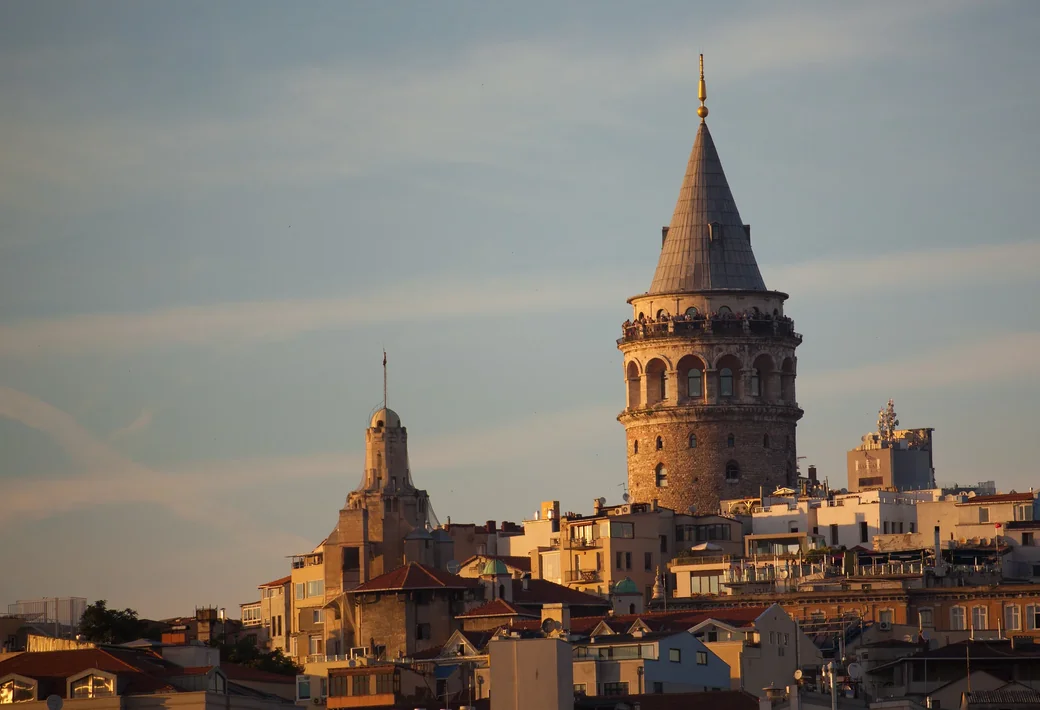
Galata Tower (Galata Kulesi) is a medieval stone tower rising from the crest of the Galata hill in Istanbul’s Beyoglu district, just north of the Golden Horn. For more than six centuries it has been one of the most recognisable shapes on the city’s skyline, easy to spot from both shores and from the boats crossing the water. Today the tower is a museum and one of Istanbul’s best-known viewpoints, set among the narrow streets of one of the city’s most characterful old quarters.
Galata Tower: Location, accommodation options and contact
Bereketzade Mahallesi, Büyükhendek Caddesi No: 2, 34421 Beyoğlu, Istanbul, Türkiye
Google Maps: https://www.google.com/maps/search/?api=1&query=41.025569,28.974129
The place's location on the map and nearby accommodation and hotel options are shown by Stay22. Cookies are used. Your consent is remembered on every page; you can turn it off at any time in the cookie settings.
Galata Tower History: From the Genoese Tower of Christ to Istanbul Icon
The Genoese built today's tower in 1348 as the Christea Turris, the Tower of Christ, a name tied to the cross once set on its cone. It crowned the walls around their colony of Pera, founded in 1267. Earlier lookout towers are said to have stood on the same hill, among them a Byzantine Great Tower that guarded the Golden Horn chain, but the exact origins are still debated. In 1453 the colony passed to the Ottomans without a fight, and in 2013 the tower was placed on the UNESCO World Heritage Tentative List. The tower even appears in the 2011 video game Assassin's Creed: Revelations, whose hero climbs it.
Ottoman Fire Tower: How Galata Tower Raised the Alarm for Old Istanbul
After the conquest the tower served as a dungeon under Süleyman the Magnificent and, for a while, as an observatory under Murad III. From 1717 it became the city's fire lookout: watchers inside beat a great drum, flags by day and lanterns by night showed which district was burning, and a cannon on the İcadiye hill spread the news. Fires damaged the tower itself in 1794 and 1831.
Galata Tower Architecture, Height and Restoration Facts
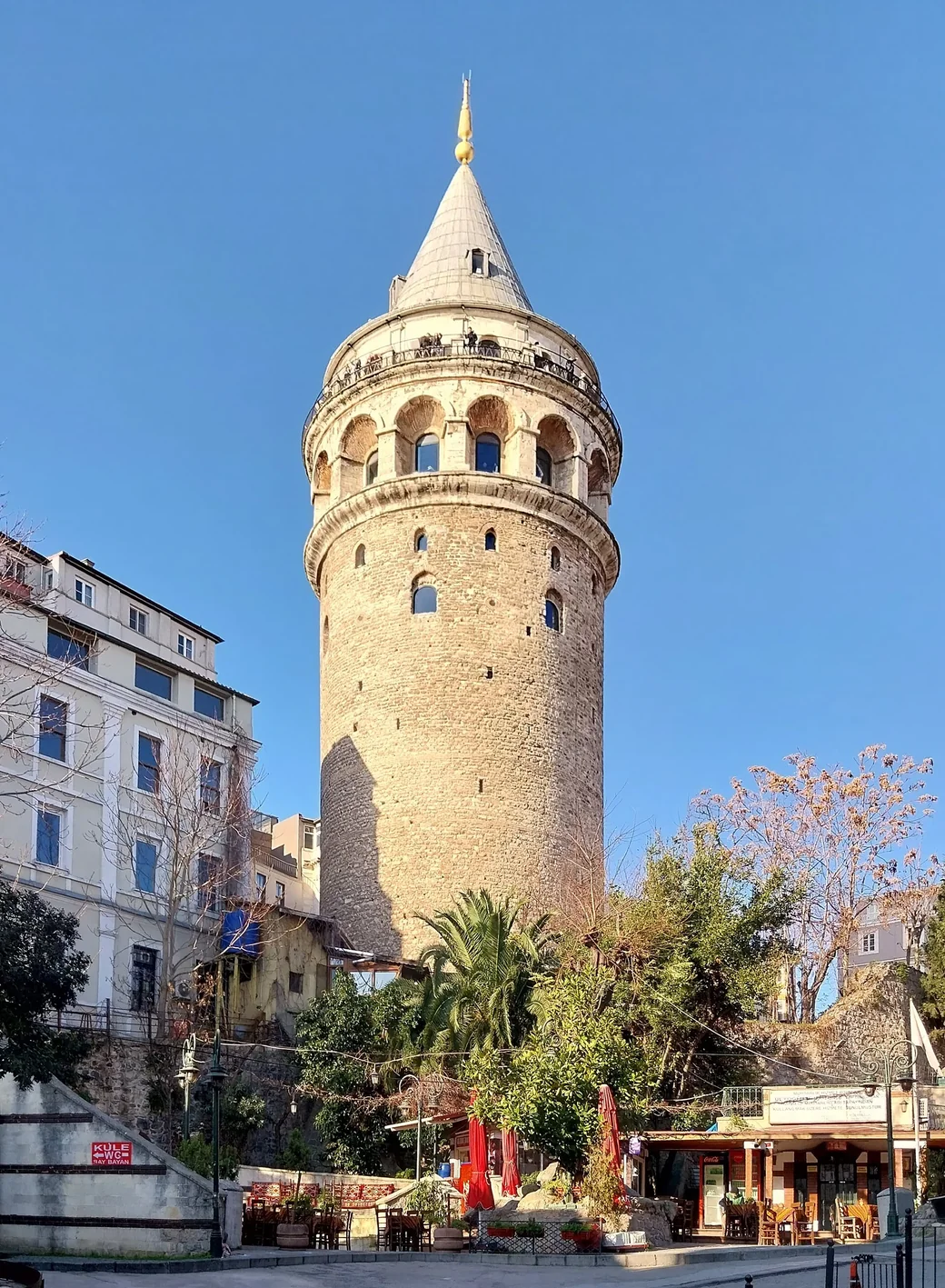
The cylindrical stone shaft is 62.59 metres tall to the tip of the roof, about 16.45 metres wide at the base and roughly 3.75 metres thick in the walls. Tourist guides often quote nearly 67 metres, but 62.59 is the museum's official figure, and guides also speak of nine storeys while the official count is 11 levels including the basement, ground floor and mezzanine. After the 1509 earthquake the tower was rebuilt from the second floor upward by Murad bin Hayreddin, architect of Bayezid II; after the 1831 fire Mahmud II had a new top built with 14 large arches, and the present cone dates from the 1964–67 repairs. A marble doorway in Empire style carries a poem about the 1831–32 repairs, and a plaque of 1953 marks the 500th anniversary of the conquest. The tower reopened as a museum on 6 October 2020. Swallows (ebabil in Turkish) nest on the tower in spring and summer, so conservation work is planned around their nests.
Inside Galata Tower Museum: A Floor-by-Floor Guide
A two-cabin lift runs from the ground floor to the sixth, and its screens simulate a rise above sixteenth-century Istanbul. The galleries follow the city's story from the Neolithic age to the Ottoman era, show the Golden Horn chain and retell Hezarfen's legendary flight in a simulation. A museum shop and a hall for temporary exhibitions complete the lower levels, a scale model of Istanbul with binoculars helps you read the skyline, and the open balcony on the eighth floor crowns the visit. Narrow stairs inside the walls link the upper floors.
Galata Tower Panoramic Terrace: Views, Wind and Viewpoints
The open balcony on the eighth floor, at about 51.65 metres, circles the tower with views of the Golden Horn, the Bosphorus and the domes of the historic peninsula. Because the tower stands on a hill, the outlook is far higher above the water than the number suggests. The walkway is shared with everyone in your time slot, so take your photos, move on and keep bags close. Bring a light layer, since the wind can be strong, and look for the less crowded side while others queue at the corners.
Galata Tower Opening Hours and Night Museum Sessions Explained
The museum is open every day, with a daytime session and an evening Night Museum session. Hours can change for holidays, events or works, so check galatakulesi.gov.tr or muze.gov.tr before you go. The tower is run as the Galata Tower Museum by the Ministry of Culture and Tourism.
How to Avoid the Crowds at Galata Tower
Admission is capped at a set number of visitors per hour, so queues can build up at midday and around sunset. Buy an e-ticket in advance at muze.gov.tr, arrive early on a weekday, when local guides report the calmest window, or choose the evening Night Museum session. Early morning is also the moment to enjoy the cobbled square at the foot of the tower almost to yourself and to have a coffee nearby before the lanes fill.
Best Photo Spots Around Galata Tower
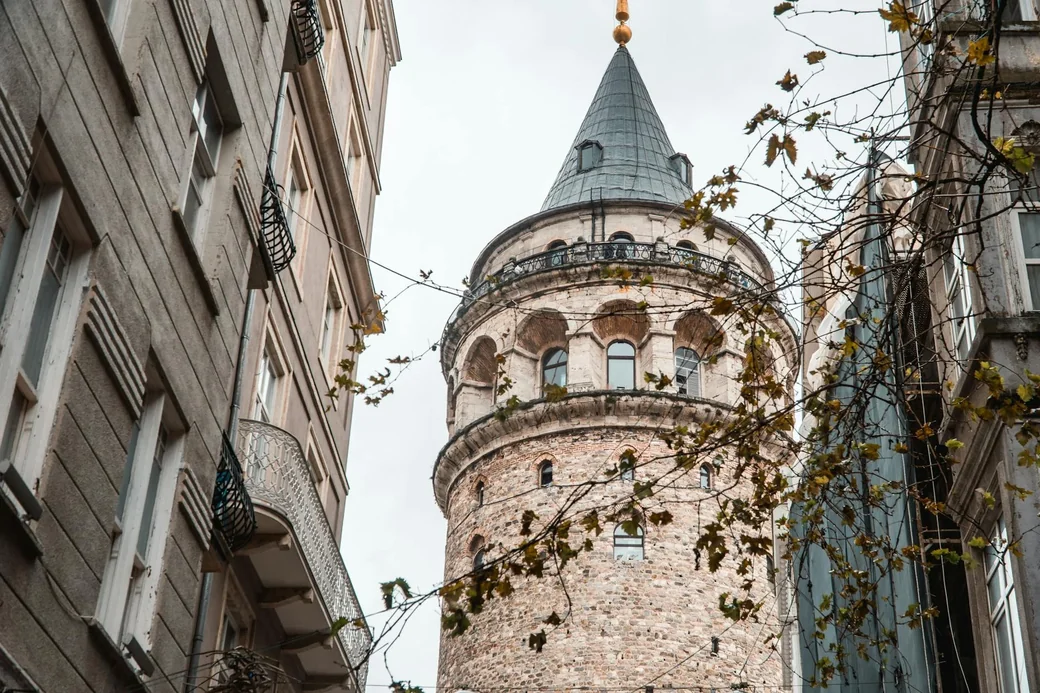
For the classic framed view, stand on Büyük Hendek Street, where the tower rises between old buildings and the afternoon light warms the façades. Galip Dede Street, Serdar-ı Ekrem Street and the narrow Tımarcı and Camekan streets give sudden glimpses of the cone between rooftops, especially in evening light. Further down, the Kamondo Stairs and the umbrella-covered lanes towards Karaköy are popular backdrops. For the fewest people in your frame, go early, before the museum opens.
How to Walk to Galata Tower: Metro, Funicular and Stairs
Choose your route by how much hill you want. The easiest is the M2 metro to Şişhane and a downhill walk of about five minutes along Galip Dede Street. The most scenic is a tram or ferry to Karaköy, then either the Tünel funicular, opened in 1875 and one of the oldest underground lines in the world, followed by a stroll down, or the steep climb through Galata's lanes and the Kamondo Stairs. The historic Tünel funicular is line F2, and the nostalgic T2 tram runs along İstiklal Avenue. Whichever way you arrive, the walk back to Karaköy afterwards is entirely downhill. Galip Dede Street is lined with shops selling musical instruments, so the short downhill walk from the metro doubles as a browse.
Galata Tower Accessibility, Stairs and Visiting With Children
The entrance is raised and reached by marble steps on both sides. A lift serves the floors up to the sixth, but the last two floors are reached by steel stairs, so the panoramic balcony is not step-free and access for wheelchair users is limited. The approach streets are steep and cobbled. Visitors under 18 must come with a parent or guardian; the sixth floor has a video game for young guests and the second floor a flight simulation. An audio guide is available, and the museum can be reached at +90 212 249 03 44 for specific needs.
Do's and Don'ts When Visiting Galata Tower
Do book your slot early, wear sturdy shoes, bring a light jacket and allow about an hour, or 45 to 90 minutes if you like to linger. Do take the stairs slowly, because they are narrow and shared in both directions. Don't block doorways or landings for photos, don't climb on the balcony parapet and don't count on a café inside: the cafeteria was removed in the 2020 restoration, so plan refreshments in the streets below. Buy tickets only through official channels or trusted sellers.
What to See Near Galata Tower: Mevlevi Lodge, İstiklal and Karaköy
A short walk uphill leads to the Galata Mevlevi Lodge, founded in 1491 as the first Mevlevi lodge in Istanbul and described by the Ministry as the most significant Ottoman monument in Beyoğlu. Walking up İstiklal Avenue you pass the Tarık Tunaya Cultural Centre, which is open to visitors. Downhill, Karaköy offers galleries, cafés and the Galata Bridge, and small fragments of the Genoese walls survive near the tower. Together these stops make a relaxed half-day around the hill. The Mevlevi are a Sufi order, famous worldwide as the whirling dervishes.
Hezarfen Ahmed Çelebi: The Legend of the Flight From Galata Tower
According to the traveller Evliya Çelebi, in the reign of Murad IV Hezarfen Ahmed Çelebi strapped on eagle-like wings, jumped from the top of the tower and glided on a south-west wind to Doğancılar Square in Üsküdar, roughly 3.4 kilometres away, while the sultan watched from Sarayburnu. Most retellings give the year 1632, some 1638. The sultan is said to have rewarded him with gold and then, fearing so gifted a man, exiled him to Algiers. Only Evliya records the flight, so many historians regard it as legend. The name Hezarfen is Persian and means a thousand sciences.
Galata Tower Marriage Belief and Lucky Seagull: Local Rumours
According to local belief, couples who climb Galata Tower together will go on to marry, and the spell is said to break if one partner has been up before. Rumour also links the hilltop with a Roman custom of announcing engagements from a tower, and some guides tell of a single white seagull that watches over visitors with a pure heart and brings them luck. These beliefs have made the tower a favourite for proposals and sunset dates, yet none of them is documented, so enjoy them as folklore rather than fact.
Secret Tunnels, Dungeon Stories and Other Galata Tower Rumours
Rumour has it that tunnels run beneath the tower: the seventeenth-century writer Eremya Çelebi is said to have mentioned one reaching as far as Sarıyer, and a narrow passage about 1.5 metres high is reported to have appeared during the 1964–67 works. Press stories from the 1960s speak of skeletons in the old dungeon, said to be prisoners of Süleyman's day who died while trying to escape. Another tale links the astronomer Takiyüddin to the tower. Even the name Galata is debated: milk (galaktos), the Italian calata (a landing stair) or the Galatians. Some writers also speak of a passage said to run all the way down to Karaköy.
Galata Tower: Visitor Tips
Book your e-ticket in advance, because the number of visitors admitted per hour is limited. Come early on a weekday, wear comfortable shoes for the steep cobbled lanes and expect two flights of steel stairs after the lift. Allow about an hour for the visit. Check the day and night session times before you leave, and walk back down through Galata towards Karaköy instead of climbing again.
Galata Tower: Best Time to Visit
Weekday mornings for short queues; evenings for the lit skyline, though sunset is the busiest time. A Night Museum session runs in the evening.
Galata Tower: Admission Fees
Adult and ages 8–18 – international visitors
Standard rate for international visitors aged 8 and over. Museum Pass Istanbul is accepted.
€30
Children up to 7 (free)
Free entry for children aged 7 and under; proof of age may be requested.
Free
Quick Info
1h
easy
Galata Tower: Getting There
The easiest approach is the metro: take the M2 line to Şişhane station and walk about five minutes downhill along Galip Dede Street, past instrument shops and cafés. From the Old City the T1 tram (Kabataş–Bağcılar line) stops at Karaköy; from there ride the historic Tünel funicular up to the end of İstiklal Avenue and stroll down to the tower, or climb on foot through the Galata lanes and the Kamondo Stairs, which is steep. The historic Tünel funicular is line F2, and the nostalgic T2 tram runs along İstiklal Avenue. Ferries from Kadıköy and Üsküdar dock at Karaköy pier. Driving is not recommended, because the streets around the tower are narrow and partly pedestrian.
Nearby stops & parking
Nearest metro: Şişhane (M2). Nearest tram stop: Karaköy (T1), at the foot of the hill, next to the lower Tünel funicular station. Ferries from the Asian side arrive at the Karaköy piers. Parking: the İSPARK (the city’s parking operator) Şişhane multi-storey car park is the most comfortable choice; the car parks around Karaköy and Galataport on the waterfront work too, but you then climb a steep hill on foot. Street parking close to the tower is very limited.
Galata Tower: Dress Code & Etiquette
There is no formal dress code, because the tower is a museum and not a place of worship. Comfortable, non-slip shoes matter more than clothes: the approach streets are steep and cobbled, and the last two floors are reached by steel stairs. The panoramic balcony is open to the air, so bring a light layer against the wind and sun protection in summer. Visitors under 18 must be accompanied by a parent or guardian. Keep your voice moderate in the exhibition rooms and let others pass on the narrow staircases.