The Istanbul Archaeology Museums are a complex of three museums in the Historic Peninsula, the oldest part of Istanbul, set between Gülhane Park and Topkapi Palace. Together they hold one of the richest archaeological collections in the world, spanning thousands of years and the civilisations of Anatolia, the Mediterranean and the Near East, from monumental marble sculpture to small everyday objects. For anyone curious about the ancient world, it is one of the essential museum visits in the city.
Istanbul Archaeology Museums: Location, accommodation options and contact
Alemdar Caddesi, Osman Hamdi Bey Yokuşu Sokağı, Gülhane, Fatih, Istanbul, Türkiye (Google Maps: https://www.google.com/maps/search/?api=1&query=41.011686,28.981331)
The place's location on the map and nearby accommodation and hotel options are shown by Stay22. Cookies are used. Your consent is remembered on every page; you can turn it off at any time in the cookie settings.
History of the Istanbul Archaeology Museums: From the Imperial Museum to a Landmark
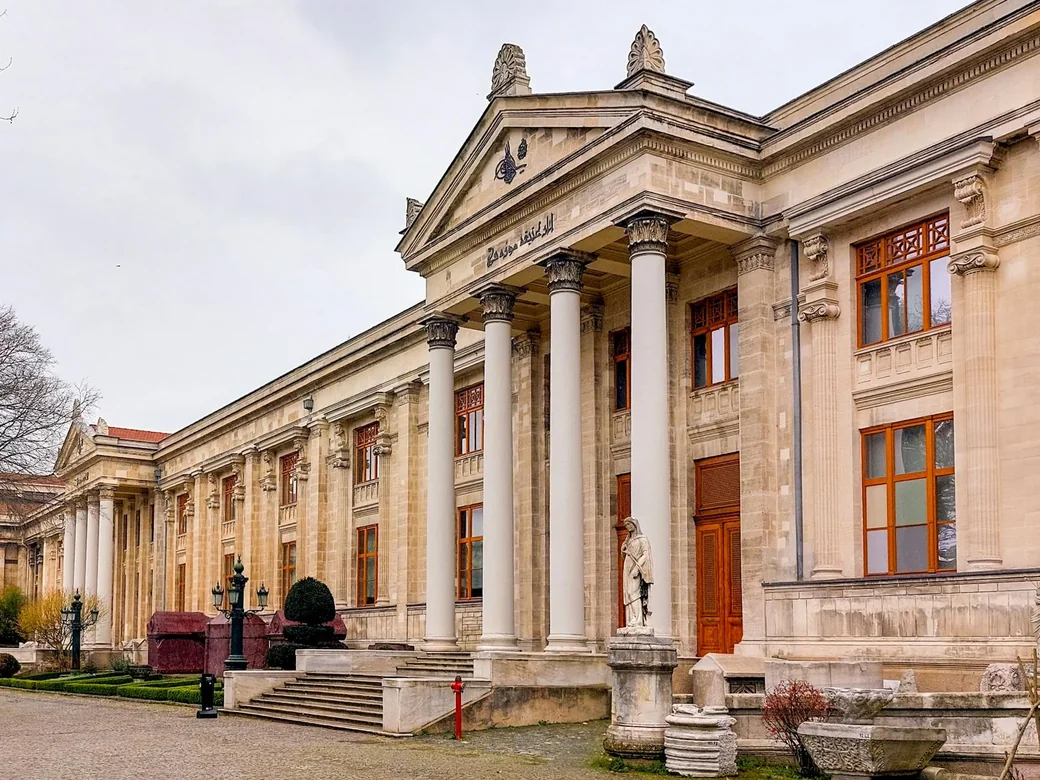
The story begins in 1869, when the Ottoman Empire founded the Imperial Museum (Müze-i Hümayun) and kept its first collection in the church of Hagia Irene. Osman Hamdi Bey, a painter and archaeologist, became director in 1881 and turned it into one of the great museums of its age. His 1887 excavation at the royal necropolis of Sidon produced so many sarcophagi that a purpose-built home was needed. Architect Alexandre Vallaury designed the neoclassical building, which opened on 13 June 1891. Above the entrance, an Ottoman inscription reading Asar-ı Atika Müzesi, the Museum of Antiquities, sits beneath the tughra (the sultan's calligraphic monogram) of Sultan Abdülhamid II. The Imperial Museum is regarded as the first museum institution in Turkey and a cornerstone of the country's museum history.
Three Museums in One Visit: How the Istanbul Archaeology Museums Are Organised
The complex groups three museums around one sloping garden: the Archaeological Museum in the grand 1891 building, the Museum of the Ancient Orient next door and the Tiled Kiosk, the oldest of the three. Together they hold roughly one million objects, although only a fraction is on display at any time. Classical sculpture and sarcophagi fill the main building, Mesopotamian, Hittite and Egyptian treasures belong to the Ancient Orient, and Seljuk and Ottoman ceramics are the speciality of the Tiled Kiosk. Decide before you enter which wing matters most to you, because seeing everything properly takes more than half a day.
Alexander Sarcophagus in Istanbul: Why This Marble Masterpiece Is the Star of the Museum
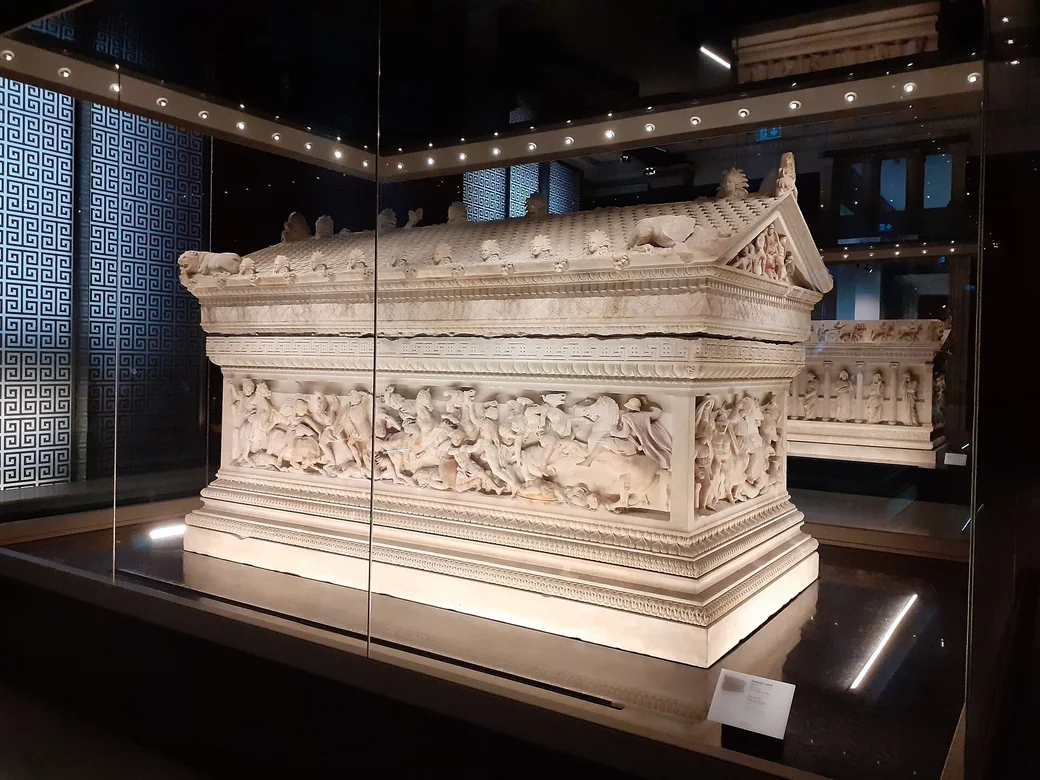
Despite its name, the Alexander Sarcophagus was probably not made for Alexander the Great. Scholars believe it belonged to Abdalonymos, the king of Sidon, and it dates to the late fourth century BC. Its marble sides carry lively battle and hunting scenes with Macedonians and Persians, and the surface was originally painted in colour. One source gives its weight as about twenty-five tonnes. It came to light in 1887 in the Sidon necropolis, and many visitors treat it as the one object they must not miss. Take time to walk all the way around it, because each side tells a different part of the story.
Sidon Royal Sarcophagi: Mourning Women, Tabnit and the Lycian Sarcophagus
Beside the Alexander Sarcophagus stand other treasures from the same necropolis. The Sarcophagus of the Mourning Women, dated to around 350 BC, shows eighteen grieving women between its columns and a funeral procession along the lid; it is thought to have belonged to King Straton. The Lycian Sarcophagus dates to the fifth century BC. The black basalt coffin of Tabnit is the earliest of the group: it was first made for an Egyptian general named Penephtah and later reused by the king of Sidon, so it carries both an Egyptian hieroglyphic text and a Phoenician inscription that warns against disturbing the tomb.
Museum of the Ancient Orient: Kadesh Treaty, Ishtar Gate Lions and the Oldest Love Poem
The Museum of the Ancient Orient, housed in the former fine-arts school building, shelters treasures from Mesopotamia, Anatolia, Egypt and Arabia. Look for the clay tablets of the Kadesh Treaty, found at Hattusa and often called the earliest known written peace treaty, the lion reliefs from the Ishtar Gate of Babylon and the stele of Naram-Sin. A small Sumerian tablet from Nippur, catalogue number 2461, is celebrated as the world's oldest known love poem; it was found in 1889 and, reportedly, a priestess wrote it for King Shu-Sin. The building has reopened after a long restoration with refreshed, modern galleries.
Classical Sculpture and the Giant Sidamara Sarcophagus: Highlights Beyond the Sidon Treasures
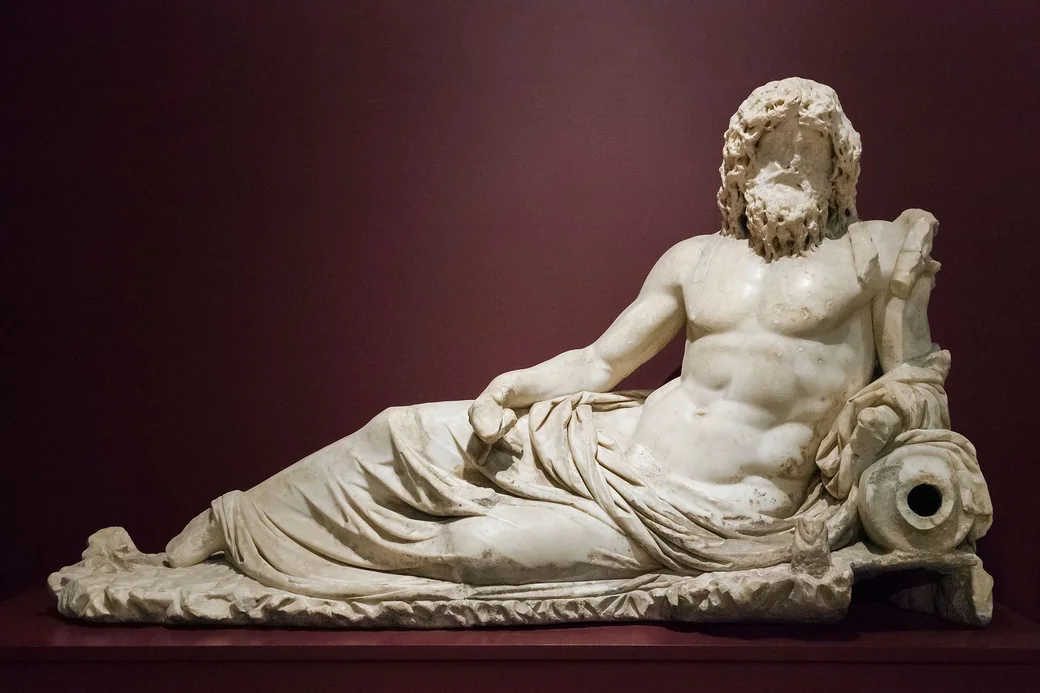
Beyond the Sidon treasures, Hellenistic and Roman sculpture rewards slow looking. The Marsyas statue, found at Tarsus, recalls the myth of the flute that Athena threw away, and the collection also includes a bust of Alexander the Great, the Head of Sappho and a statue of Tykhe. The huge Sidamara Sarcophagus was discovered in 1900 near Konya and brought to Istanbul on Osman Hamdi Bey's initiative; sources give its weight as 27 or 32 tonnes. Outside, around 178 works stand along the slope and in the courtyard, so allow time for the open-air museum too.
Tiled Kiosk (Çinili Köşk): Seljuk and Ottoman Tiles in Mehmed the Conqueror's Pavilion
The Tiled Kiosk, built in 1472 for Sultan Mehmed II, is the oldest building of the complex. It became a museum in 1880, when the first collection outgrew Hagia Irene. Its façade carries about 54,000 tiles that were individually catalogued during recent conservation, and its rooms display Seljuk, Iznik, Kütahya and Çanakkale ceramics. Before you go, confirm on the official website that the kiosk is open to visitors, because its restoration and the renewal of its displays have progressed in stages. Even from the garden, the tiled façade is one of the loveliest sights of the whole complex.
Opening Hours, Tickets and Audio Guide Languages at the Istanbul Archaeology Museums
According to the official website, the museum is open every day, and the ticket office closes shortly before the museum itself. Seasonal changes are possible, so check before you travel. Tickets can be bought online through the official portal. A mobile audio guide from the Ministry of Culture and Tourism is available in Turkish, English, German, French, Italian, Spanish, Arabic, Persian, Japanese and Chinese, with sign-language content as well. Plan ninety minutes for the highlights and up to three hours, or half a day, for the whole complex. Children aged about ten and over usually enjoy it most.
How to Get to the Istanbul Archaeology Museums: Tram, Marmaray, Ferry and Parking
The easiest route is the T1 tram (Kabataş–Bağcılar) to the Gülhane stop, followed by a five-minute walk uphill through Gülhane Park. From Marmaray, get off at Sirkeci and either walk five to ten minutes or change to the tram; metro M2 passengers can reach Vezneciler and continue by tram. Ferries from Kadıköy or Üsküdar land at Eminönü, close to the tram. The main entrance is now on Gülhane Meydanı, and the museums can also be reached from the first court of Topkapı Palace. Parking in the Historic Peninsula is limited, so use public transport or a car park in Sirkeci or Sultanahmet.
Wheelchair Access at the Istanbul Archaeology Museums: Ramps, Elevator and Practical Advice
The main Archaeology Museum building has a ramp beside its stepped entrance and an elevator, so its floors can be reached in a wheelchair; you may need to ask a staff member to open the door at the top of the ramp. Access guides written before the recent restoration reported steps at the entrances of the Museum of the Ancient Orient and the Tiled Kiosk, so ask at the ticket office about the current situation. The approach road is closed to ordinary traffic: tell the security staff you use a wheelchair (tekerlekli sandalye) and they will let you through. An electric shuttle from the Gülhane Park gate has also been reported for older and disabled visitors.
Best Time to Visit and Photography Tips: Avoiding Crowds at the Istanbul Archaeology Museums
Go as soon as the doors open on a weekday, when the galleries are quietest; visitors report that early mornings feel almost empty, while mid-day brings tour groups. Spring and autumn offer pleasant weather for the walk through Gülhane Park, and winter is a good season for a museum day. Personal photography without flash is generally allowed, tripods are reportedly not permitted, and some objects carry special warning signs. Good photo subjects are the carved reliefs of the Alexander Sarcophagus, the lion reliefs of the Ishtar Gate, the neoclassical façade and the sculptures in the garden.
Do's and Don'ts: Museum Etiquette and What to Wear at the Istanbul Archaeology Museums
Do bring comfortable shoes, because the garden approach is a slope and the galleries are large. Do start with the Sidon sarcophagi and keep the Ancient Orient for later, when you are fresh, and do check which buildings are open on the day. Don't touch the sculptures or lean on the sarcophagi, don't use flash and don't climb on the pieces in the garden. A museum is not a place of worship, so there is no strict dress code, but modest, layered clothing is sensible because some halls are cool and the outdoor sections are exposed to sun and rain. Keep your voice low near the sarcophagi.
Fascinating Facts about the Istanbul Archaeology Museums You Probably Did Not Know
The sarcophagi came to Istanbul by sea aboard the steamer Asır and were landed at the railway pier by the Seaside Pavilion (Yalı Köşkü), according to a former deputy director of the museum. Osman Hamdi Bey published the excavation together with the French archaeologist Théodore Reinach in a book on the royal necropolis of Sidon. He is also remembered as the painter of The Tortoise Trainer, which hangs in the Pera Museum. The building that now houses the Museum of the Ancient Orient was built as the Ottoman Empire's first fine-arts school, the ancestor of today's Mimar Sinan Fine Arts University.
Legends and Rumours of the Istanbul Archaeology Museums: Tabnit's Curse and Other Tales
The following stories are rumour and tradition, not established history. According to rumour, the Phoenician curse on the sarcophagus of Tabnit, which threatens anyone who disturbs the tomb with no descendants among the living and no rest among the dead, did no harm to the Ottoman team that moved it, and all its members are said to have died natural deaths. According to legend, when Kaiser Wilhelm II admired the Alexander Sarcophagus during his visit in 1889, Osman Hamdi Bey lay down in front of it and declared that it could only be removed over his body. Some say a sarcophagus in the garden belonged to Emperor Julian, and one account has it that Vallaury drew inspiration from the Mourning Women Sarcophagus.
Places to Visit Near the Istanbul Archaeology Museums: Topkapı Palace, Hagia Irene and Gülhane Park
The museums sit beside the first court of Topkapı Palace, so combine them with the palace and with Hagia Irene, the church where the Imperial Museum began. Gülhane Park, the former outer garden of the palace, lies directly below, and the Museum of the History of Science and Technology in Islam stands inside the park. Hagia Sophia, the Blue Mosque and the Basilica Cistern are within walking distance in Sultanahmet, while Sirkeci and the Eminönü waterfront are an easy walk downhill. A full day in the Historic Peninsula can easily start and end here. The whole area lies within the Historic Areas of Istanbul, which are inscribed on the UNESCO World Heritage List.
Istanbul Archaeology Museums: Visitor Tips
Start with the Sidon sarcophagi, then continue to the Museum of the Ancient Orient while you are still fresh. Use the mobile audio guide, keep flash and tripod in your bag, wear comfortable shoes for the sloping approach and check the official website for the current status of the Tiled Kiosk. Arrive early to stay ahead of the tour groups.
Istanbul Archaeology Museums: Best Time to Visit
Weekday mornings right after opening; spring and autumn for a pleasant walk through Gulhane Park, winter for quiet halls. Tour groups arrive around midday.
Istanbul Archaeology Museums: Admission Fees
Adult and ages 8–18 – international visitors
Standard rate for international visitors aged 8 and over. Museum Pass Istanbul is accepted.
€15
Children up to 7 (free)
Free entry for children aged 7 and under; proof of age may be requested.
Free
Quick Info
3h
easy
Istanbul Archaeology Museums: Getting There
The simplest route is the T1 tram (Kabataş–Bağcılar line) to the Gülhane stop. From there, walk about five minutes uphill through the Gülhane Park gate on Alemdar Caddesi and follow the signs to the visitor entrance on Gülhane Meydanı. If you arrive by Marmaray, get off at Sirkeci and either walk five to ten minutes or change to the tram. Metro M2 passengers can alight at Vezneciler and continue by tram. Ferries from Kadıköy and Üsküdar land at Eminönü, a short walk from the tram line. The museum can also be reached on foot from the first court of Topkapı Palace. Driving is discouraged because parking in the Historic Peninsula is scarce.
Nearby stops & parking
The closest stop is Gülhane on the T1 tram line; Sultanahmet is the next stop in the other direction. Marmaray's Sirkeci station is a five to ten minute walk away, and the Eminönü ferry piers are also close. Car parks listed for the area include Gülhane, Sultanahmet and Sirkeci (İSPARK), but vehicles cannot enter the park itself. Taxis normally stop on Alemdar Caddesi near the Gülhane gate, from where the museum is a short uphill walk.
Istanbul Archaeology Museums: Dress Code & Etiquette
A museum is not a place of worship, so there is no strict dress code. Comfortable walking shoes matter most because the approach is a slope and the galleries are large. Light layers are sensible: some halls are cool, while the garden exhibits are exposed to sun and rain. Keep your voice low in front of the sarcophagi, do not touch the objects or lean on the display cases, and follow the warning signs next to individual pieces.
Guide / Language
tr
en
de
fr
it
es
ar
fa
ja
zh
Istanbul Archaeology Museums: Amenities & Facilities