The Louvre is France's great national museum of art and antiquities, housed in a former royal palace on the Right Bank of the Seine, in the heart of Paris. It is the most visited museum in the world, and its collections span thousands of years and many civilizations, from the ancient world to European art of the modern era. With its vast galleries and some of the most famous works ever created, it is one of the defining sights of Paris.
Louvre Museum: Location, accommodation options and contact
Rue de Rivoli, 75001 Paris, France
The place's location on the map and nearby accommodation and hotel options are shown by Stay22. Cookies are used. Your consent is remembered on every page; you can turn it off at any time in the cookie settings.
The Louvre's story stretches back far longer than most visitors realize. The site began in the late 12th century as a fortress built under King Philip II to strengthen the defenses of Paris, long before it was ever imagined as a place to display art. As the city expanded and the fortress lost its military purpose, successive French kings rebuilt and enlarged it over several centuries, gradually turning a defensive stronghold into an increasingly grand royal palace. Its final transformation came with the French Revolution: in 1793, the palace opened to the public as a museum, converting a symbol of royal power into an institution intended to belong to the nation as a whole. Walking through the building today, it is worth remembering that its walls have witnessed medieval fortifications, Renaissance court life, revolutionary upheaval and more than two centuries as one of the world's great museums, all within the same footprint beside the Seine. Napoleon Bonaparte briefly renamed it the Musée Napoléon between 1803 and 1815, filling its galleries with art seized during his military campaigns across Europe, much of which was returned to its countries of origin after his defeat at Waterloo.
I. M. Pei's Glass Pyramid
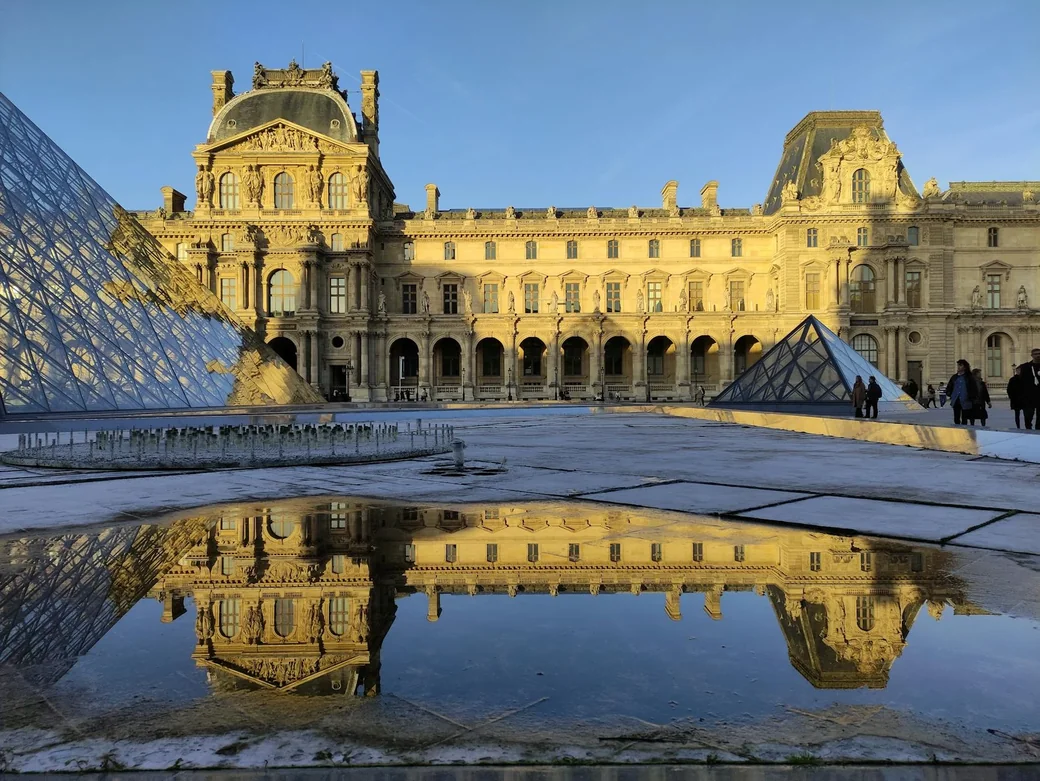
The glass and metal Pyramid rising from the Cour Napoléon is the modern symbol most people picture when they think of the Louvre, yet it dates back only to 1989. It was designed by the architect I. M. Pei as the centerpiece of the “Grand Louvre” renovation, a sweeping project meant to modernize the museum and give its sprawling wings a single, clear public entrance. Before the Pyramid, visitors entered through a maze of separate doors scattered around the palace; afterward, everyone could descend through one luminous, light-filled space beneath the courtyard and fan out from there into the different wings. The pairing of a strikingly contemporary glass structure with the ornate 19th-century stone façades around it was controversial when it was unveiled, but it has since become one of the most recognizable and most photographed architectural contrasts in Paris, and a fitting introduction to a museum that itself spans so many centuries.
The Museum's Most Famous Works
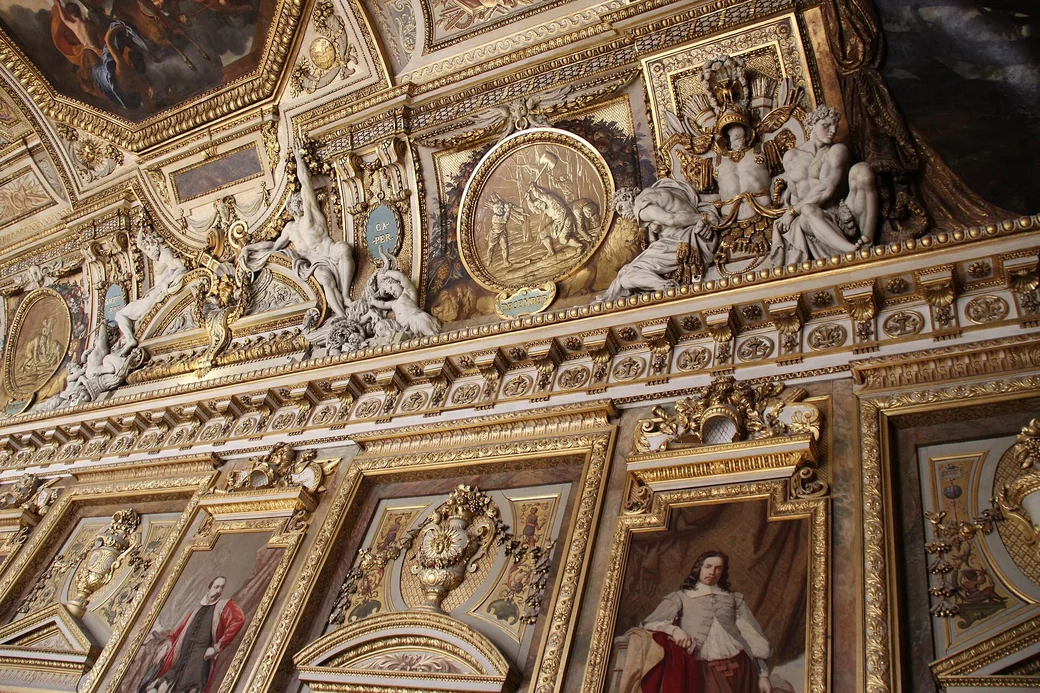
With a collection this vast, most visitors focus on a handful of headline works rather than attempting to see everything. Leonardo da Vinci's Mona Lisa, displayed behind glass in the Denon wing, is by far the most visited single artwork in the museum and typically draws the thickest crowds of any gallery. The Venus de Milo, an armless marble sculpture from ancient Greece, and the Winged Victory of Samothrace, a dramatic winged figure that seems to surge forward at the top of a grand staircase, round out the trio of works most travelers plan around. The Galerie d'Apollon, the gilded reception gallery created for Louis XIV and a model for the Hall of Mirrors at Versailles, reopened in July 2026 as a grand gallery in its own right, its ceilings by Le Brun and Delacroix now the main attraction. Beyond these three, the Louvre's breadth rewards a bit of wandering: galleries devoted to Egyptian antiquities, French and Northern European painting, decorative arts and monumental sculpture are often far quieter than the rooms around the Mona Lisa, and give a fuller sense of why this collection is considered one of the greatest in the world. Those quieter Egyptian and decorative arts galleries mentioned above are mostly found in the Sully and Richelieu wings, the museum's other two sections alongside Denon.
When to Go to Avoid the Crowds
Because the Louvre draws such enormous numbers of visitors, timing a visit well makes a real difference. Arriving right at opening time, especially on a weekday, is one of the most effective ways to see popular works before tour groups arrive in force. Weekends and the middle of the day are generally the busiest periods, particularly during school holidays and the summer months. Whatever time you choose, allowing a generous window rather than squeezing in a rushed visit will make it much easier to enjoy the collection at a comfortable pace.
Where to Capture the Louvre at Its Best
The Cour Napoléon, with the glass Pyramid at its center and the palace's ornate wings framing it on three sides, is the classic photo spot and works well at almost any time of day, though early morning and evening light tend to be the most flattering and the courtyard the least crowded. Standing at the small triangular pools that flank the main Pyramid gives a good angle that includes the reflection of the glass structure in the water. Inside, the sweeping staircase beneath the Winged Victory of Samothrace makes for a dramatic architectural shot, and several of the museum's grand galleries, with their high ceilings and long enfilades of rooms, photograph beautifully even without people in the frame. In the evening, when the Pyramid and surrounding façades are illuminated, the courtyard takes on a very different character and is worth revisiting even if you have already toured the galleries earlier in the day.
Reaching the Louvre by Métro
Public transport is by far the simplest way to reach the Louvre. The métro station Palais-Royal – Musée du Louvre, on lines 1 and 7, sits right beside the museum and connects directly to the underground shopping area next to the Pyramid entrance, making it the most convenient option for most visitors arriving from elsewhere in Paris. The station Louvre – Rivoli, one stop further along line 1, is also within a short, pleasant walk and offers a useful alternative when the closer station feels crowded. From either stop, the main entrance in the Cour Napoléon is only a few minutes on foot. Several bus routes and RER connections serve the surrounding area as well. Because central Paris has limited and expensive parking along with heavy traffic, arriving by car is rarely worth the trouble; visitors are generally better off leaving the car behind and relying on the métro or a short walk from a nearby train station.
How to Tackle Such a Huge Museum
The Louvre is far too large to see in full during a single visit, so having a rough plan before you arrive makes for a much more satisfying experience than wandering without direction. Many visitors do best by picking one or two wings or departments in advance, whether that means the Denon wing for Italian painting and the Mona Lisa, the Egyptian antiquities, or the Galerie d'Apollon's decorative arts and gilded interiors, and treating everything else as a bonus rather than an obligation. Picking up a museum map at the entrance, or reviewing the floor plan online beforehand, helps enormously once you are inside, since the building's layout can be disorienting. Building in rest stops is also worth planning for, since the distances between galleries can add up to several kilometers of walking. Rather than trying to conquer the whole museum in one exhausting day, many repeat visitors prefer to return on a future trip and explore a different section each time. It also helps to know how the collection is organized: its departments cover Egyptian, Near Eastern, Greek, Etruscan and Roman antiquities, Islamic art, sculpture, decorative arts, prints and drawings, and painting from the Middle Ages to the mid-19th century, with tens of thousands of works on display. One often-overlooked highlight, included in the standard ticket, is the "Medieval Louvre" beneath the Sully wing, where excavated foundations of the 12th-century fortress and its keep, the Grosse Tour, let you walk through the very structure this museum's history began in.
Book Your Ticket Online in Advance
Given how many people visit the Louvre every day, booking a timed-entry ticket online ahead of time is strongly recommended rather than relying on buying one at the door. Timed tickets assign you an entry window, which helps the museum manage crowd flow and usually means a shorter wait than joining a same-day queue, particularly during peak season and around midday. It is worth double-checking the current online booking system on the museum's official website, since procedures and available time slots can change. Arriving a little before your scheduled entry time, with any required identification or proof of eligibility ready, will make the security and ticket-check process go more smoothly. An audio guide can also be rented on site, offering a straightforward way to get context on the collection without joining a group tour.
Visiting the Louvre with Reduced Mobility
The Louvre has worked to make its vast galleries accessible to visitors with reduced mobility, offering step-free routes, lifts between floors and wheelchairs available on loan at the entrance. Accessible restrooms are available within the museum, and staff can typically advise on the most manageable routes between the collections you most want to see, since not every gallery is connected by the shortest possible path. Because the museum is enormous and some routes involve longer distances than they first appear, it is worth reviewing accessibility information on the official website before your visit and, if possible, contacting the museum in advance for any specific questions about equipment, routes or timing. Wheelchairs, along with walking sticks and folding stools, can be borrowed from the visitor assistance area beneath the Pyramid in exchange for a piece of identification.
Visiting the Louvre with Children
The Louvre welcomes visitors of all ages, but its sheer size means most families do best with a focused plan rather than an open-ended wander. Rather than attempting the whole museum, many parents pick a short list of works or one or two galleries that are likely to interest their children, such as Egyptian mummies, monumental sculpture, or the more colorful and dramatic paintings, and treat the rest of the visit as flexible bonus time. Strollers can be used in much of the museum, though some areas involve stairs, so checking accessible routes in advance is worthwhile. Keeping visits shorter and building in breaks, rather than trying to cover everything in one long stretch, tends to work better for younger children, and treating the Louvre as one stop among several in a day, rather than the entire day's plan, often makes for a smoother family outing. Pushchairs and baby carriers can also be borrowed from the same assistance area beneath the Pyramid, and baby-changing tables are available in most of the museum's restrooms.
Museum Rules Worth Knowing Before You Go
A few practical rules help the Louvre's galleries stay accessible and well preserved for everyone. Photography without flash is generally permitted throughout most of the museum, but flash photography, tripods and selfie sticks are typically restricted near especially sensitive works, so it is worth checking posted signage in each gallery. As with most major museums, security screening takes place at the entrance, and large bags, suitcases and bulky backpacks are not allowed inside for safety reasons, so travel as light as possible or plan to leave oversized items elsewhere. Food and drink are not permitted in the galleries themselves, though cafés and rest areas are available within the museum complex. Touching artworks and display cases is, unsurprisingly, not allowed, and keeping a respectful distance helps protect fragile objects that have survived for centuries. Following posted directional flows during busy periods also helps keep popular rooms, such as the one holding the Mona Lisa, moving smoothly for everyone. Those café and rest areas include a bakery, a sit-down restaurant and a self-service cafeteria scattered around the museum complex, so a proper break is never far away.
What to Wear and Bring
There is no formal dress code at the Louvre, and visitors arrive in everything from casual travel clothes to smarter city outfits, but comfort should guide your choices far more than style. The museum covers an enormous amount of ground across stone and marble floors, so supportive, comfortable walking shoes make a bigger difference to how much you enjoy the visit than almost anything else you pack. Light layers are useful, since temperatures can vary noticeably between the glass-covered entrance area and the older stone galleries deeper in the palace. Because large bags and suitcases are restricted at the entrance for security reasons, it is worth carrying only a small bag with essentials such as water, a phone or camera, and any tickets or identification you might need, rather than bringing luggage or oversized backpacks along on your visit. Rather than leaving oversized items behind entirely, self-service lockers are available beneath the Pyramid for bags, buggies and umbrellas that exceed the size allowed inside the galleries.
Combining the Louvre with Nearby Sights
The Louvre sits within one of the most rewarding walking areas in Paris, and its location makes it easy to combine with several other sights on the same outing. The Jardin des Tuileries, a formal garden stretching along the Seine, begins right beside the museum and makes a pleasant place to rest after several hours indoors. The Musée de l'Orangerie, known for its large water-lily paintings, sits at the far end of the Tuileries and pairs naturally with a Louvre visit for anyone interested in art beyond the main collection. A short walk north brings you to the Palais-Royal, with its elegant arcaded courtyards and gardens, another quieter spot worth exploring. It is also worth remembering that the Louvre Palace itself is recognized as part of the “Paris, Banks of the Seine” UNESCO World Heritage Site, underscoring its significance not just as a museum but as one of the defining monuments along the river that shapes the city's historic core. Inscribed in 1991, this protected stretch follows the river between the Pont de Sully and the Pont d'Iéna.
Louvre Museum: Visitor Tips
Book a timed-entry ticket online in advance, since the Louvre manages how many visitors enter at once and walk-up queues can be long, especially in the morning. Choose two or three galleries or works before you go, wear comfortable shoes, and expect to spend at least half a day here.
Louvre Museum: Best Time to Visit
Right at opening on a weekday morning, when the crowds around the Mona Lisa and the other headline works are at their thinnest.
Louvre Museum: Admission Fees
Adult – EEA nationals/residents
Rate for nationals or residents of an EEA country; proof of eligibility is required. One ticket covers the permanent collections and temporary exhibitions; booking a timed slot online is recommended.
€22
Adult – non-EEA visitors
Rate for visitors who are neither nationals nor residents of an EEA country. One ticket covers the permanent collections and temporary exhibitions; booking a timed slot online is recommended.
€32
Under 18 (free)
Free for all visitors under 18, whatever their nationality. A valid ID showing date of birth may be requested.
Free
Ages 18–25 from the EEA (free)
Free for nationals or residents of an EEA country aged 18 to 25. ID (and proof of residence where relevant) is required.
Free
First Friday evening of the month (free)
Free for everyone during the evening opening on the first Friday of each month, except in July and August. An online booking is needed.
Free
Visitors with disabilities + companion (free)
Free for visitors with a disability, plus one companion. Proof of disability status is required.
Free
Quick Info
3h
easy
Louvre Museum: Getting There
The easiest way to reach the Louvre is by Paris Métro. The station Palais-Royal – Musée du Louvre, served by lines 1 and 7, sits directly beside the museum and connects underground to the shopping arcades near the Pyramid entrance, making it the most convenient stop for most visitors. The station Louvre – Rivoli, on line 1 one stop further east, is also within easy walking distance and tends to be less crowded at peak times. Both stations put you within a few minutes' walk of the main entrance in the Cour Napoléon. Regional RER trains and several bus lines also stop nearby along Rue de Rivoli and around the Palais-Royal. Driving into central Paris is generally discouraged for visitors: traffic is heavy, on-street parking is scarce and expensive, and the museum's own underground car park serves a small area beneath the Carrousel du Louvre rather than casual sightseeing traffic. Visitors arriving from outside Paris often find it simplest to reach a central train station first and continue by métro.
Nearby stops & parking
Palais-Royal – Musée du Louvre (lines 1 and 7) is the closest métro station, with an entrance leading almost directly into the underground Carrousel du Louvre shopping area beside the Pyramid entrance. Louvre – Rivoli (line 1) is the next-closest option, a short walk east along Rue de Rivoli, and is a good alternative when the closer station is congested. Both stations sit within the same compact stretch of central Paris as the Jardin des Tuileries and the Palais-Royal, so it is easy to combine a Louvre visit with a walk through neighboring sights without needing to change transport mode.
Louvre Museum: Dress Code & Etiquette
There is no formal dress code at the Louvre; visitors move through many kilometers of galleries over stone and marble floors, so comfortable walking shoes matter far more than any particular outfit. Light layers are useful, since the museum's vast halls can vary in temperature between sections. As with most major museums, security screening applies at the entrance, and large bags, backpacks and suitcases are restricted for safety reasons, so it is worth traveling light or checking bulky items in advance. Photography without flash is generally permitted in most galleries, but flash and tripods are typically not allowed near sensitive works.