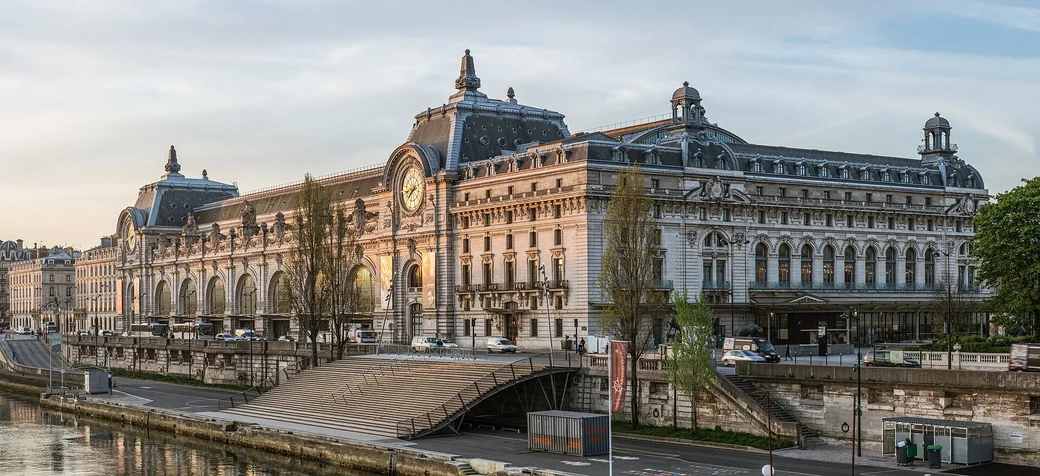
The Musée d'Orsay is one of the great national museums of Paris, devoted to Western art from the mid-19th century to the eve of the First World War. It stands on the Left Bank of the Seine, in the 7th arrondissement (district), inside a grand former railway station from the turn of the 20th century. Known worldwide for its Impressionist and Post-Impressionist paintings, it is an essential stop for anyone curious about how modern art was born.
Musée d'Orsay: Location, accommodation options and contact
1 Rue de la Légion d'Honneur, 75007 Paris, France
The place's location on the map and nearby accommodation and hotel options are shown by Stay22. Cookies are used. Your consent is remembered on every page; you can turn it off at any time in the cookie settings.
Welcome to the Musée d'Orsay: Paris's Home of Impressionism
The Musée d'Orsay fills a very particular place in the Paris museum landscape: it is the natural bridge between the older collections of the Louvre and the modern and contemporary art of the Centre Pompidou, picking up the story where one leaves off and handing it on to the other. That role, together with its world-famous paintings, has made it one of the most visited museums in France, drawing millions of visitors every year. The museum also lies within the stretch of riverbanks that UNESCO inscribed in 1991 as the "Paris, Banks of the Seine" World Heritage Site, and its setting is almost as celebrated as its art. Whether you have a single afternoon or a whole day, it is widely regarded as an unmissable stop on a first visit to Paris.
Inside the Collection: Monet, Van Gogh, Degas and More
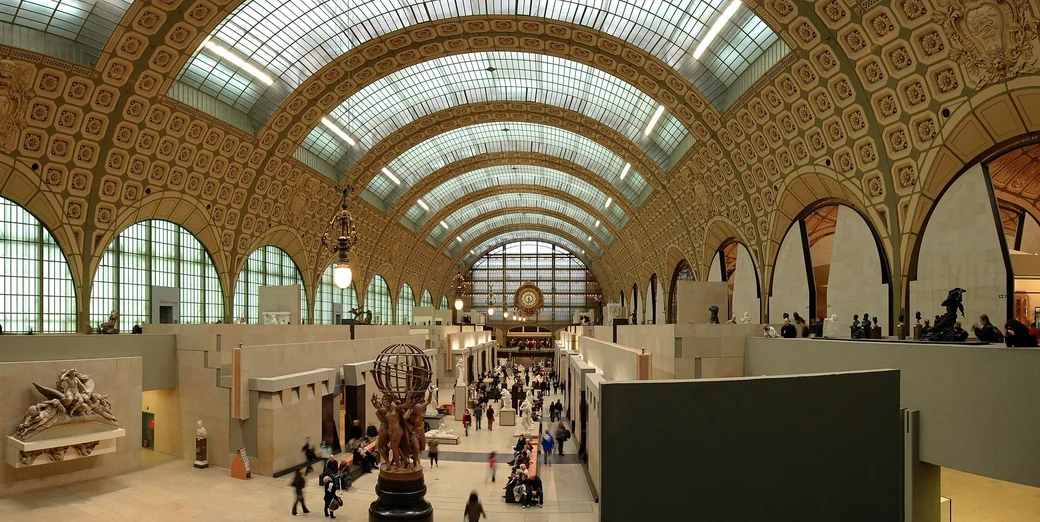
The Musée d'Orsay holds an extraordinary depth of Impressionist and Post-Impressionist painting: works by Claude Monet, Pierre-Auguste Renoir, Camille Pissarro and Edgar Degas share the walls with major groups of paintings by Van Gogh and Cézanne, alongside a large sculpture collection, decorative arts and some of the earliest fine-art photography. Highlights that draw visitors from around the world include Manet's Olympia and Le Déjeuner sur l'herbe, Renoir's Bal du Moulin de la Galette, Whistler's Portrait of the Artist's Mother, and Van Gogh's Self-Portrait and Starry Night Over the Rhône. The collection's scope is precisely defined, running from 1848 to 1914, and alongside thousands of works it also covers architecture: at the far end of the central aisle, large models of the Opéra Garnier and of the surrounding Opéra district are among the most popular stops in the museum. Because the collection is arranged broadly by period and movement across several floors, it rewards an unhurried pace, so plan a route rather than trying to see every gallery in one visit.
From Railway Station to Museum: The History of the Musée d'Orsay Building
Long before it held a single painting, the Musée d'Orsay was the Gare d'Orsay, a grand Beaux-Arts railway station designed by Victor Laloux and built between 1898 and 1900 for the Paris World's Fair. By 1939 its platforms had become too short for modern trains, and after decades of little use the building was protected as a historic monument in the 1970s. The conversion into a museum was entrusted to ACT Architecture, with Italian architect Gae Aulenti designing the interiors, and the Musée d'Orsay opened in December 1986. The building's survival was a close call: before it was protected, the disused station came close to being demolished. The ACT Architecture team that won the conversion competition was made up of Renaud Bardon, Pierre Colboc and Jean-Paul Philippon. Today the station's soaring iron-and-glass vault and its great clocks are as much a part of the visit as the collection itself.
When to Visit the Musée d'Orsay
For the calmest experience, arrive right at opening on a weekday morning, before tour groups build up. Weekends and early-to-mid afternoons in spring and summer tend to be the busiest times, while autumn and winter weekday mornings are usually the calmest of all.
Booking Your Visit to the Musée d'Orsay
Booking a timed entry slot online before you travel is the smoothest way into the Musée d'Orsay, and it is especially worthwhile in spring, summer and during school holidays. A reservation lets you skip the walk-up line, choose the time that suits your day, and plan the rest of your route around it. Paris Museum Pass holders are also advised to reserve a slot, so it is worth sorting out your booking whatever ticket you hold. On the day, arrive a few minutes before your slot to allow for the security check at the entrance, and keep your booking ready on your phone or printed.
How Long to Spend at the Musée d'Orsay
Most first-time visitors find that around two hours is enough to see the major highlights of the Musée d'Orsay at a comfortable pace, without feeling rushed between galleries. If you want to explore the collection in more depth, including the sculpture terraces, decorative arts rooms and temporary exhibitions, it's worth setting aside closer to three hours, or even splitting your visit across a morning and an afternoon break at the museum's café. Art lovers who want to study individual works closely, rather than moving quickly through each room, sometimes prefer to treat it as a half-day outing. Whatever pace you choose, it's worth building in some flexibility, since the upper-floor Impressionist galleries tend to draw visitors in for longer than they expect.
Accessibility at the Musée d'Orsay: Services for Visitors with Disabilities
The Musée d'Orsay is accessible to visitors with reduced mobility, with lifts and ramps serving all exhibition spaces and services. Wheelchairs and folding seats can be borrowed on request at the cloakroom near the entrance, accessible restrooms are provided on site, and visitors with disabilities and a companion can use a priority entrance. Visitors with visual impairments can request tactile tour materials and raised-line drawings, along with some tactile sculpture reproductions and guided touch tours by prior arrangement. For deaf and hard-of-hearing visitors, French Sign Language guided tours are offered periodically, and the auditorium is fitted with an induction loop. Service animals are welcome throughout the museum.
Audio Guides and Language Support at the Musée d'Orsay
A multimedia audio guide is available to rent on site and, in some cases, through an app, offering commentary on key works as you move through the galleries. Printed visitor maps and brochures are officially published in six languages: French, English, Spanish, Japanese, Chinese and Korean, making it easy for most international visitors to find their way around independently. Live guided tours are conducted mainly in French, though tours in other languages are offered on a seasonal basis or can be arranged in advance for groups. If your own language isn't among the six covered by the printed materials, the audio guide and the museum's clearly numbered gallery layout still make a self-guided visit straightforward.
Address, Coordinates and How to Find the Musée d'Orsay
The Musée d'Orsay stands at 1 Rue de la Légion d'Honneur in the 7th arrondissement, with its main visitor entrance on the riverside Esplanade Valéry Giscard d'Estaing, directly facing the Seine and the Tuileries Garden on the opposite bank. Because it occupies a full former railway station, the building also fronts Rue de Bellechasse and Rue de Lille, so it's hard to miss once you're in the area. The easiest way to find it is to search for Musée d'Orsay on Google Maps or any navigation app, which will route you straight to the riverside entrance. Its location, right on the Left Bank between the Louvre and the Musée Rodin, makes it a natural stop to combine with a longer walk along the Seine.
Getting to the Musée d'Orsay by Metro, RER and Bus
Public transport is by far the easiest way to reach the Musée d'Orsay. The RER C line has its own Musée d'Orsay station immediately next to the building, making it especially convenient if you're arriving from the airport or the suburbs. From central Paris, Metro Line 12 stops at Solférino, around a five-minute walk from the entrance. Several bus routes, including lines 63, 68, 69, 73, 83, 84, 87 and 94, run along the riverside quays and Boulevard Saint-Germain, with stops close to the museum. If you're staying nearby, it's also an easy ten-minute walk from the Louvre across the Pont Royal or the Passerelle Léopold-Sédar-Senghor footbridge.
Parking and the Nearest Transit Stops Around the Museum
If you're driving, be aware that street parking around the Musée d'Orsay is very limited and not recommended as a first option. The closest paid underground car park is the Bac-Montalembert garage, near Rue du Bac and Boulevard Saint-Germain, only a short walk from the museum, with other Left Bank garages such as Quai Branly-Tour Eiffel available a little further away. For those arriving by public transport, the RER C Musée d'Orsay station sits right outside the entrance, the Solférino metro stop is about five minutes on foot, and Vélib' bike-share docking stations are available nearby for cyclists. Given the parking constraints, most visitors find public transport considerably more convenient than driving.
Insider Tips: How to Avoid the Crowds and Find the Best Photo Spots
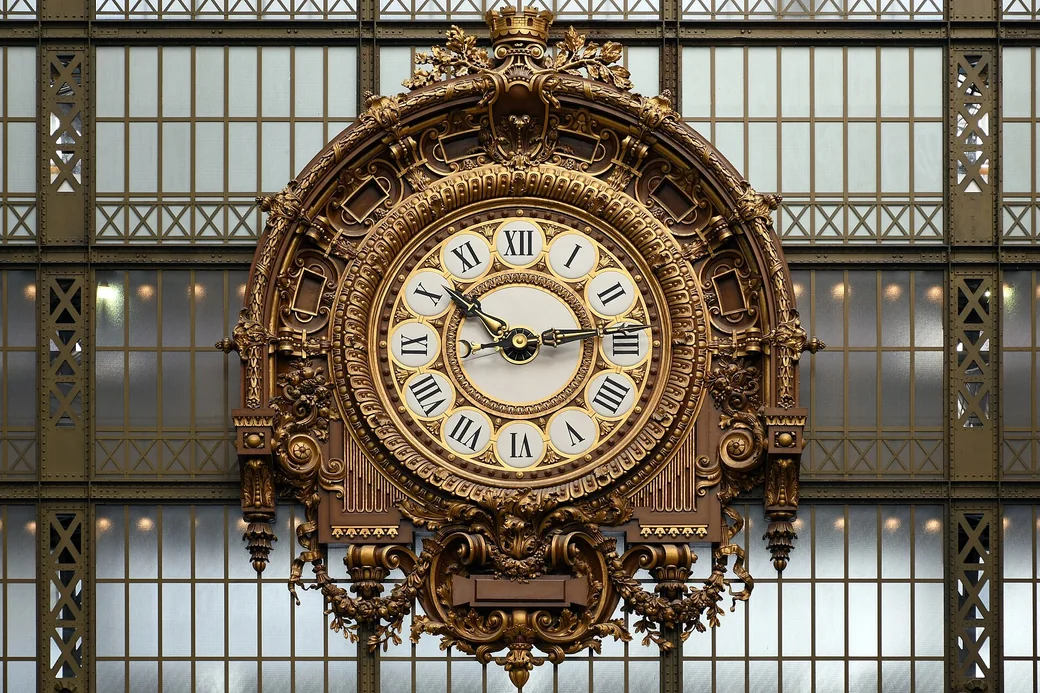
The single best strategy for a calmer visit is timing: arrive right at opening on a weekday, when the crowds are at their thinnest. The upper floor, home to the core Impressionist collection, tends to be the busiest by mid-morning, so consider starting there before working your way back down. For photographs, the giant station clock on the fifth floor, with Montmartre and Sacré-Cœur framed through its glass face, is one of the most popular spots in the building, alongside the sweeping view along the barrel-vaulted central nave from the upper level. Personal, non-flash photography is generally allowed throughout the permanent collection.
Museum Etiquette: Dress Code and Visitor Do's and Don'ts
There's no formal or religious dress code at the Musée d'Orsay — it's a secular art museum, so comfortable clothing and good walking shoes are all that's needed. A few simple rules help keep the galleries enjoyable for everyone: don't touch the artworks or lean on the display cases, skip flash photography, tripods and selfie sticks, and leave oversized bags or suitcases at the cloakroom near the entrance rather than carrying them through the rooms. Food and drink aren't permitted in the exhibition spaces, though the museum's café, restaurant and terrace are there for exactly that. Do take the time to look up as well as around: the architecture, from the glass roof to the giant clock, is as much a part of the experience as the art on the walls.
What to See Nearby: Top Attractions Around the Musée d'Orsay
The museum's Left Bank location puts several of Paris's biggest sights within easy walking distance. The Jardin des Tuileries, directly across the river, is about a ten-minute walk, and the Musée de l'Orangerie, home to Monet's large Water Lilies panels, sits at its edge just a couple of minutes further on. The Louvre itself is roughly ten to fifteen minutes away across the Pont Royal, while the Musée Rodin is about fifteen minutes on foot. History and architecture fans can continue toward Sainte-Chapelle and the Île de la Cité along the river, pass the ornate Pont Alexandre III, or step next door to the Musée National de la Légion d'Honneur, housed in the neighbouring Hôtel de Salm.
Planning a Smooth Visit to the Musée d'Orsay
A little planning goes a long way at the Musée d'Orsay. Book a timed entry slot online before you travel, particularly in high season, so you can head straight in. Families will find the museum manageable with children, and activity trails are periodically available for younger visitors; note that large prams, bulky strollers and metal-framed baby carriers are not accepted inside. Above all, build in enough time to enjoy both the world-class collection and the extraordinary former railway station that houses it, from the great clock to the light pouring through the glass vault.
Musée d'Orsay: Visitor Tips
Arrive as close to opening time as you can, when the galleries feel far calmer. Head first for the upper floor, where the Impressionist rooms are usually busiest by mid-morning, then work your way back down. The oversized station clock on the fifth floor, with the Sacré-Cœur framed through its glass face, is one of the most photographed spots in Paris, so allow a few extra minutes there. Personal photography without flash is generally allowed in the permanent collection, so bring a camera but skip the tripod. If you're short on time, ask at the information desk for a shortlist of must-see rooms rather than trying to cover the whole museum in one visit.
Musée d'Orsay: Best Time to Visit
Right at opening on a weekday morning; autumn and winter weekdays are the calmest.
Musée d'Orsay: Admission Fees
Full price – online (timed entry)
Full-price ticket bought online for a timed entry; it covers the permanent collections and temporary exhibitions.
€16
Full price – at the museum
Full-price ticket bought at the museum ticket desks; entry on the same day is not guaranteed when it is busy.
€14
Reduced rate – at the museum
Reduced rate for eligible visitors; proof of eligibility is required.
€11
Thursday evening – online
Reduced evening rate applied during the Thursday late opening.
€12
Thursday evening – at the museum
Reduced evening rate applied during the Thursday late opening.
€10
Adult accompanying a child – online
Reduced rate for up to two adults accompanying a child under 18 who lives in the European Union.
€13
Adult accompanying a child – at the museum
Reduced rate for up to two adults accompanying a child under 18 who lives in the European Union.
€11
Under 18 (free)
Free for all visitors under 18, whatever their nationality. A valid ID showing date of birth may be requested.
Free
Ages 18–25 from the EEA (free)
Free for nationals or residents of an EEA country aged 18 to 25. ID (and proof of residence where relevant) is required.
Free
Combined ticket: Orsay Museum + Rodin Museum
One ticket for both museums; the two visits can be made on separate days within the validity period stated at purchase.
€25
Quick Info
2h 30m
easy
Musée d'Orsay: Getting There
The easiest way to reach the Musée d'Orsay is the RER C, which has its own Musée d'Orsay station right beside the building, making it a convenient option from the airport or the suburbs. From central Paris, Metro Line 12 stops at Solférino, a short walk away. Several bus routes run along the riverside quays and Boulevard Saint-Germain, stopping within a few minutes of the entrance. Drivers should note that street parking nearby is very limited, so it's best to head straight for one of the underground car parks on the Left Bank rather than circling for a space.
Nearby stops & parking
The RER C stop Musée d'Orsay sits right outside the entrance, and the Solférino metro station on Line 12 is about a five-minute walk away. Bus lines 63, 68, 69, 73, 83, 84, 87 and 94 all have stops within a short distance along the quay and Boulevard Saint-Germain. Vélib' bike-share docks are available nearby for those cycling in. For drivers, the closest paid underground garage is the Bac-Montalembert car park near Rue du Bac, a few minutes on foot from the museum.
Musée d'Orsay: Dress Code & Etiquette
There's no religious or formal dress code here — the Musée d'Orsay is a secular public museum, so comfortable, casual clothing and good walking shoes are all you need. Standard museum etiquette applies throughout the galleries: keep a respectful distance from the artworks and display cases, skip the flash photography, and leave oversized bags and suitcases at the cloakroom near the entrance rather than carrying them through the rooms.