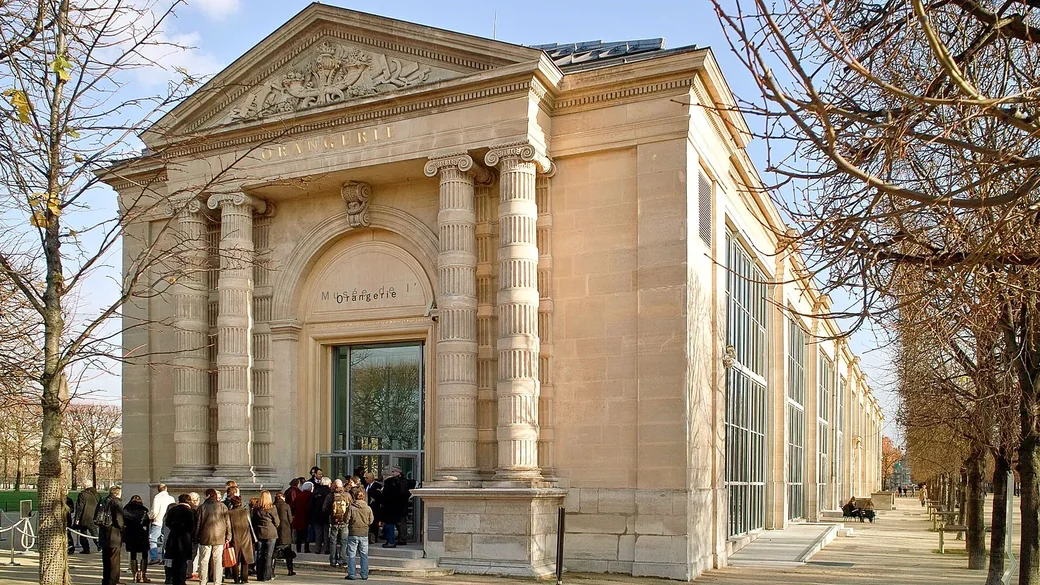
The Musée de l'Orangerie is an art museum in the Tuileries Garden, in Paris's 1st arrondissement (district), standing near Place de la Concorde on the bank of the Seine. It occupies a long, low 19th-century building with a simple stone façade. The museum is famous above all as the home of Claude Monet's Water Lilies (Nymphéas), one of the great landmarks of modern painting, and it also presents an important collection of works by other leading painters of the early 20th century.
Orangerie Museum: Location, accommodation options and contact
Jardin des Tuileries, 75001 Paris, France
The place's location on the map and nearby accommodation and hotel options are shown by Stay22. Cookies are used. Your consent is remembered on every page; you can turn it off at any time in the cookie settings.
From Greenhouse to Art Museum: A Building's Second Life
The Orangerie Museum occupies a building that was never meant to hold paintings at all. It was constructed in 1852 at the western end of the Tuileries Garden, close by Place de la Concorde, as a functional greenhouse where the orange trees belonging to the nearby Tuileries Palace gardens could be sheltered from the cold each winter. Its long, simple halls were built for practical purposes: even light, generous space and protection from frost, not for displaying art to visitors. When the building was later given over to the art world and converted into a museum, those same qualities, calm proportions, abundant natural light and an unfussy architectural frame, turned out to suit paintings remarkably well. Walking through the museum today, it is worth remembering that its quiet, understated architecture was not designed with art in mind at all, which may be part of why it feels so well suited to it, letting the paintings, rather than the building, hold the visitor's attention throughout the visit.
Monet's Water Lilies and the Two Oval Rooms
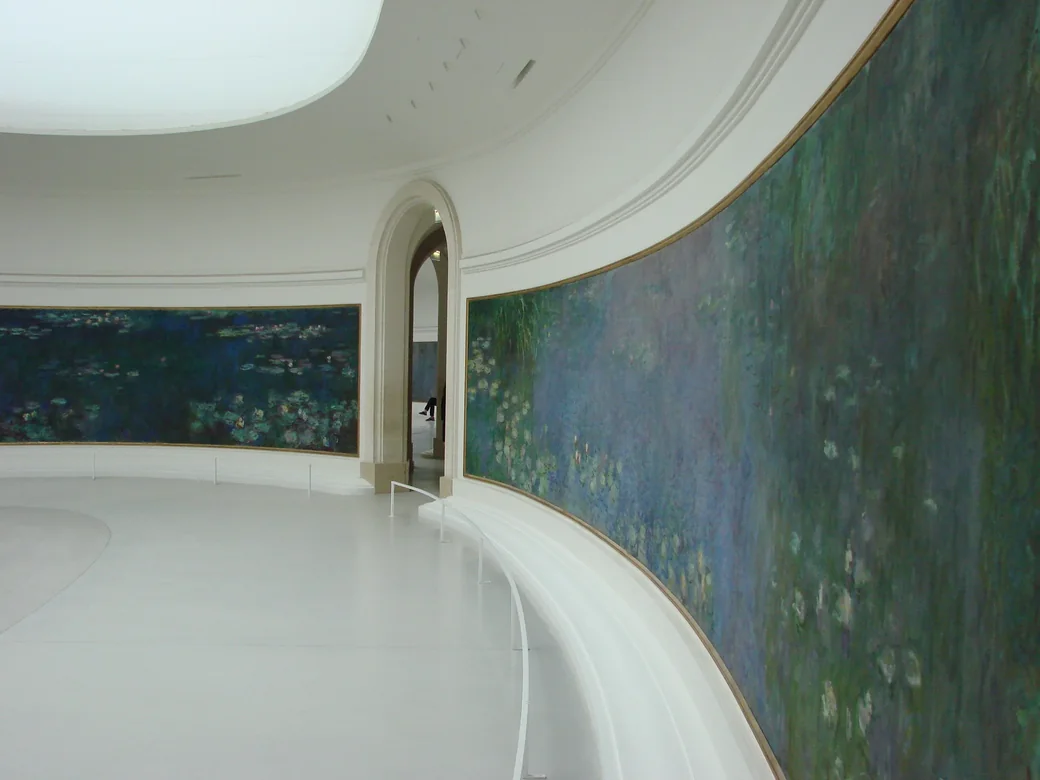
The heart of a visit to the Orangerie is a pair of oval rooms built specifically to house Claude Monet's large-scale water lily paintings, known as the Nymphéas. They were installed here in 1927, shortly after Monet's death, following a plan the artist himself had shaped: curved walls wrapping fully around the visitor, and soft, even natural light falling from above, so that the paintings would not simply hang on a wall but would surround anyone standing among them. Monet wanted viewers to feel enveloped by water, reflection and sky rather than looking at a framed scene from a fixed distance, and the rooms were built to make that possible. Visitors are encouraged to slow down here, to sit for a while on the benches provided and let the panels register gradually as the light shifts through the day. It is a rare case of a museum space built entirely around a single artist's late-life vision, rather than adapted afterward to fit the work. It was an immersive experience decades before the word 'immersive' became common in art writing, and it remains one of the most complete expressions of an artist's own vision for how his work should be seen.
The Walter-Guillaume Collection
Beyond the Water Lilies, the museum's lower level holds the Walter-Guillaume collection, an assembly of early twentieth-century paintings first brought together by the art dealer Paul Guillaume and later expanded under his widow. It offers a compact but genuinely rich survey of the artists who reshaped painting in the decades around the turn of the century, including Renoir, Cézanne, Matisse, Picasso and Modigliani, hung across a manageable sequence of rooms rather than an overwhelming maze of galleries. For visitors whose main draw is Monet, this collection is well worth the extra time, since it places the Water Lilies within a much broader picture of the artistic ferment happening in Paris during the same period, without requiring the stamina a larger encyclopedic museum would demand. The collection's double name honours Paul Guillaume and the architect Jean Walter, whom his widow Domenica later married.
Best Time to Visit and How to Avoid the Crowds
Like most major Paris museums, the Orangerie has quieter and busier moments worth planning around. The calmest visits tend to happen right at opening time on a weekday morning, when the oval rooms are least crowded and the natural light from above is soft and even. Late afternoon can also be pleasant once tour groups have moved on. Weekends, school holidays and special event days draw noticeably larger crowds, so on those days it pays to reserve an early time slot online and to arrive a few minutes ahead of it.
The Best Photo Spots In and Around the Museum
The two oval Water Lilies rooms are, unsurprisingly, the most photographed spaces inside the museum, their curved walls and soft overhead light making them a favourite even for visitors who rarely photograph art elsewhere. Because these rooms are meant for quiet contemplation, it is worth checking current photography rules on arrival and keeping devices unobtrusive rather than treating the space as a backdrop. Outside the museum, the surrounding Tuileries Garden offers some of the loveliest photo opportunities in central Paris: gravel paths lined with clipped trees lead the eye toward the obelisk of Place de la Concorde, and the fountains near the museum's entrance make an attractive foreground with the garden's greenery and the low stone facade of the Orangerie itself behind them, especially in the soft light of early morning or late afternoon.
Getting There Through the Tuileries Garden
Most visitors reach the Orangerie either by métro to Concorde, served by lines 1, 8 and 12, followed by a short walk into the garden, or on foot after visiting the Louvre. The walk from the Louvre is genuinely one of the pleasures of the trip: the Tuileries Garden stretches the entire distance between the two museums, and a stroll of fifteen to twenty minutes along its gravel paths, past fountains, sculpture and rows of trees, makes a far more scenic connection than any métro ride could offer. Because the museum sits right at the Concorde end of the garden, it is easy to combine with a visit to the square itself. Driving is not recommended in this part of the city, since traffic around Place de la Concorde is dense and parking is both limited and costly, making walking or the métro the clearly better choice.
A Compact Museum: How to Plan a Focused Visit
One of the Orangerie's great advantages is its size. Where a visit to the Louvre can easily consume most of a day and still leave visitors feeling they have only scratched the surface, the Orangerie can be seen thoroughly in around ninety minutes, making it an ideal addition to a day that also includes the Tuileries Garden, Place de la Concorde or a stroll along the Seine. A sensible approach is to begin with the two oval Water Lilies rooms, taking time to sit and look rather than rushing through, before heading downstairs to the Walter-Guillaume collection for a broader survey of the period. Because the museum rewards a slower pace rather than a checklist approach, building in enough time to actually sit with the paintings matters more here than covering every corner quickly.
Monet's Gift to France: A Promise Made on Armistice Day
The Water Lilies at the Orangerie began as a gesture of peace. On 12 November 1918, the day after the Armistice ended the First World War, Claude Monet wrote to his friend Georges Clemenceau, then head of the French government, offering two of his large decorative panels to the nation as a monument to the victory. Clemenceau encouraged him to think bigger, and over the following years the gift grew into the great cycle of Nymphéas now displayed in the two oval rooms; the donation was formally signed in 1922.
Monet, by then in his eighties and troubled by failing eyesight, kept reworking the canvases in his studio at Giverny until his death in December 1926, and the rooms opened to the public in May 1927. Knowing this story changes how the panels read: rather than simply lovely views of a garden pond, they were conceived as a place of calm and contemplation, offered to a country emerging from war.
Booking Tickets: Practical Advice Before You Go
Reserving a time slot online in advance, rather than arriving without one, is the most reliable way to enter the Orangerie at a convenient time, particularly during busy periods and at weekends. Booking a specific slot also helps with planning the rest of the day, since you know roughly when you will be going in and can build a walk through the Tuileries Garden or a visit to the Louvre around it. It is always worth checking the museum's official website close to the date of your visit, since arrangements can occasionally change around public holidays or for temporary exhibitions, and the most up-to-date visitor information is kept there rather than on third-party listings.
Accessibility and Mobility at the Orangerie
The Orangerie is a step-free, wheelchair-accessible museum, and its relatively compact, single-building layout makes it considerably easier to navigate for visitors with mobility needs than a sprawling site like the Louvre. Accessible restrooms and audio guides are available, and service animals are welcome throughout the galleries. Because accessibility facilities and arrangements can be updated over time, visitors who rely on specific accommodations are encouraged to check the museum's official website shortly before their visit to confirm current details, rather than assuming nothing has changed since a previous trip. The manageable scale of the museum also makes it a comfortable option for visitors who find longer museum visits physically tiring.
Visiting with Children and Families
The Orangerie is a genuinely family-friendly museum, and its modest size works strongly in its favour when travelling with children: there is no expectation of covering vast distances or standing in front of dozens of works, and a focused visit to the Water Lilies rooms alone can leave a strong impression even on younger visitors, since the immersive, room-sized scale of the paintings tends to appeal to children as much as adults. Compared to a full day at the Louvre, which can be genuinely exhausting for young children, the Orangerie's shorter, more contained visit is easier to manage while still delivering a memorable encounter with world-famous art, making it a sensible choice for families looking to introduce children to a museum without risking meltdowns halfway through.
Museum Etiquette: Photography and Quiet Appreciation
The two oval rooms housing the Water Lilies are designed for calm, sustained looking, and visitors are encouraged to keep that spirit in mind rather than treating the space as a quick photo stop. Checking current photography rules on arrival is worth doing, since policies can be adjusted from time to time, and keeping voices low and phones on silent helps preserve the contemplative atmosphere the rooms were built to create. Elsewhere in the museum, ordinary gallery etiquette applies: keep a respectful distance from the paintings, avoid touching frames or walls, and allow other visitors space to view each work without crowding. A little patience and quiet in these rooms goes a long way toward the kind of experience Monet himself intended for his audience.
The Tuileries Garden Setting
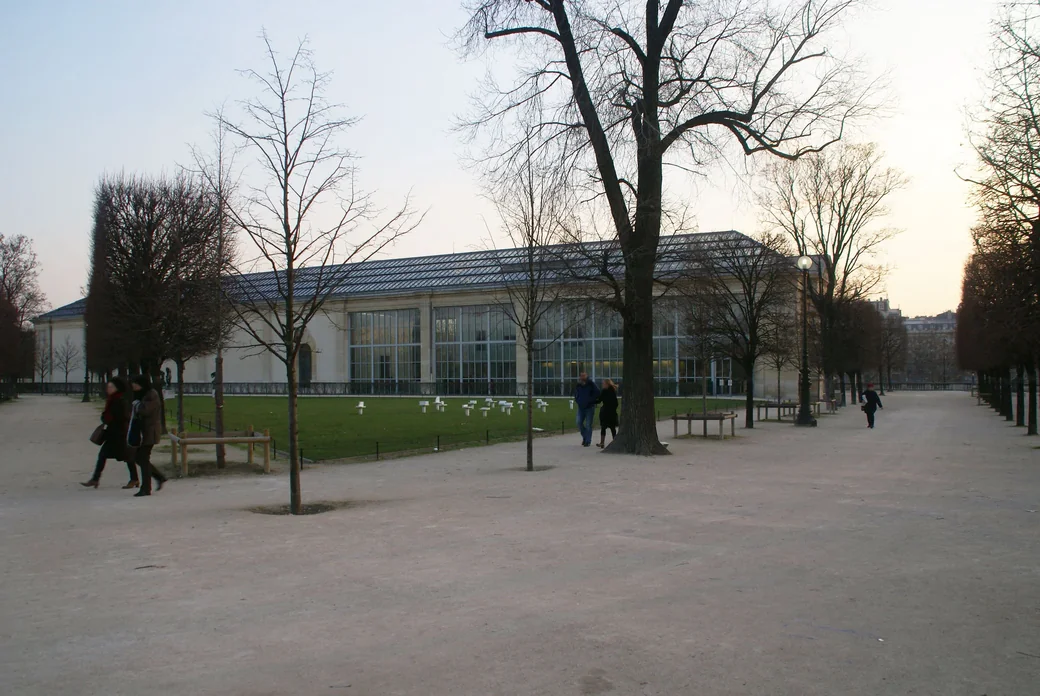
Part of what makes a visit to the Orangerie memorable is its setting inside the Tuileries Garden, the formal, tree-lined green space that runs from the Louvre to Place de la Concorde. Rather than sitting on an ordinary street, the museum is approached through gravel paths, fountains and neatly clipped trees, giving the whole outing a more relaxed, park-like character before visitors even step through the door. After the visit, the garden invites a further stroll, whether toward the obelisk at Place de la Concorde, back toward the Louvre, or simply a pause on one of the garden's many chairs to enjoy the surroundings. Few major Paris museums offer such an immediate, unhurried transition between artwork and open-air green space just outside the front door. Beyond the obelisk, the view opens onto the wider panorama of central Paris, a fitting finale after time spent among Monet's reflections of water and sky.
Nearby Places to Combine With Your Visit
The Orangerie's location makes it easy to combine with several of the city's best-known sights in a single outing. The Louvre lies at the opposite end of the Tuileries Garden, an easy and scenic walk away, while the garden itself, with its fountains, sculpture and long tree-lined paths, is worth exploring at leisure both before and after the museum visit. Crossing the Seine brings visitors to the Musée d'Orsay, another excellent stop for anyone interested in the art of the same broad era covered by the Walter-Guillaume collection. Because the Orangerie takes only around ninety minutes to see properly, it fits comfortably alongside any of these destinations without requiring visitors to choose between them, making it a natural anchor for a full day exploring this part of central Paris.
Practical Wrap-Up and the Seine's UNESCO Setting
The Orangerie Museum rewards visitors who want a focused, unhurried encounter with major art rather than a marathon through endless galleries: about ninety minutes is enough to see it properly, and booking a time slot in advance keeps the visit smooth. Its location inside the Tuileries Garden, beside Place de la Concorde and the stretch of the Seine's banks recognised as a UNESCO World Heritage Site, places the museum within one of the most historically rich corridors in Paris, a short walk from the Louvre and within easy reach of the Musée d'Orsay. That UNESCO corridor explicitly includes Place de la Concorde itself, so the square many visitors cross on their way in is part of the listed landscape. For visitors weighing how to spend limited time in the city, the Orangerie offers an efficient, deeply rewarding way to see world-class art without devoting an entire day to it.
Orangerie Museum: Visitor Tips
Book your time slot online before you go, especially for weekends and holiday periods. Set aside roughly ninety minutes, start with the Water Lilies while the oval rooms are calm, and finish with the Walter-Guillaume collection downstairs before strolling back through the Tuileries.
Orangerie Museum: Best Time to Visit
Visit at opening on a weekday for a quieter experience and soft light in the Water Lilies rooms. Weekends and school holidays are busier, so book an early time slot online.
Orangerie Museum: Admission Fees
Full price – online (timed entry)
Full-price ticket bought online for a timed entry; it covers the Water Lilies rooms and the permanent collection.
€12.50
Full price – at the museum
Full-price ticket bought at the museum ticket desks; entry on the same day is not guaranteed when it is busy.
€11
Reduced rate
Reduced rate for eligible visitors, including adults accompanying a child under 18; proof of eligibility is required.
€10
Under 18 (free)
Free for all visitors under 18, whatever their nationality. A valid ID showing date of birth may be requested.
Free
Ages 18–25 from the EEA (free)
Free for nationals or residents of an EEA country aged 18 to 25. ID (and proof of residence where relevant) is required.
Free
First Sunday of the month (free)
Free for everyone on the first Sunday of every month, all year round; online booking of a time slot is required.
Free
Quick Info
1h 30m
easy
Orangerie Museum: Getting There
The easiest way to reach the Orangerie Museum is by métro to Concorde station, served by lines 1, 8 and 12, which sits just a couple of minutes on foot from the museum entrance at the western end of the Tuileries Garden. From the station, simply follow signs toward the Tuileries and cross into the garden near Place de la Concorde; the low stone building housing the museum is easy to spot against the greenery. Visitors coming from the Louvre can skip the métro entirely and simply walk the length of the Tuileries Garden, a pleasant fifteen to twenty minute stroll past fountains, sculpture and gravel paths that makes a natural link between the two museums. Buses serving Concorde and the nearby quais are another option for those already using the surface network. Driving into this part of central Paris is best avoided altogether: traffic around Place de la Concorde is heavy, parking is scarce and expensive, and the walk from the nearest métro or from the Louvre is genuinely more pleasant than searching for a parking space.
Nearby stops & parking
Concorde station, served by métro lines 1, 8 and 12, is the closest stop, only a short walk from the museum entrance at the Place de la Concorde end of the Tuileries Garden. Several bus lines also stop at or near Concorde, and the RER (Paris's regional express rail) is reachable with a short additional walk toward the river for visitors continuing on to other parts of the city.
Orangerie Museum: Dress Code & Etiquette
There is no dress code at the Orangerie Museum; ordinary, comfortable clothing is entirely appropriate. The more important consideration is footwear, since reaching the museum often means walking across the gravel paths of the Tuileries Garden, so comfortable, sturdy shoes are worth choosing over anything delicate or hard to walk in.