Pera Museum is a private art museum in Beyoglu (Beyoğlu), one of the liveliest cultural districts on Istanbul's European side. Set in a restored historic hotel building from the late Ottoman period, it presents Orientalist paintings, including Osman Hamdi Bey's The Tortoise Trainer, alongside other permanent collections. A changing programme of exhibitions, often devoted to international artists, makes it a favourite stop for art lovers and an easy cultural visit for first-time travellers to the city.
Pera Museum: Location, accommodation options and contact
Meşrutiyet Caddesi No:65, Tepebaşı, 34430 Beyoğlu, Istanbul
The place's location on the map and nearby accommodation and hotel options are shown by Stay22. Cookies are used. Your consent is remembered on every page; you can turn it off at any time in the cookie settings.
Behind Pera Museum: the foundation, its four collections and online access
The museum is run by the Suna and Inan Kirac Foundation (Suna ve İnan Kıraç Vakfı) and opened its doors on 8 June 2005. It was the first step of a wider cultural project that later grew to include the Istanbul Research Institute, just down the street. The museum shows selections from three foundation collections, Orientalist paintings, Anatolian weights and measures, and Kütahya tiles and ceramics. A fourth collection, historic photographs of Istanbul, is kept by the foundation and often surfaces in shows. The museum is a non-profit and does not sell artworks, and many items can be explored online through Google Arts & Culture.
From Hôtel Bristol to museum: the story of the building
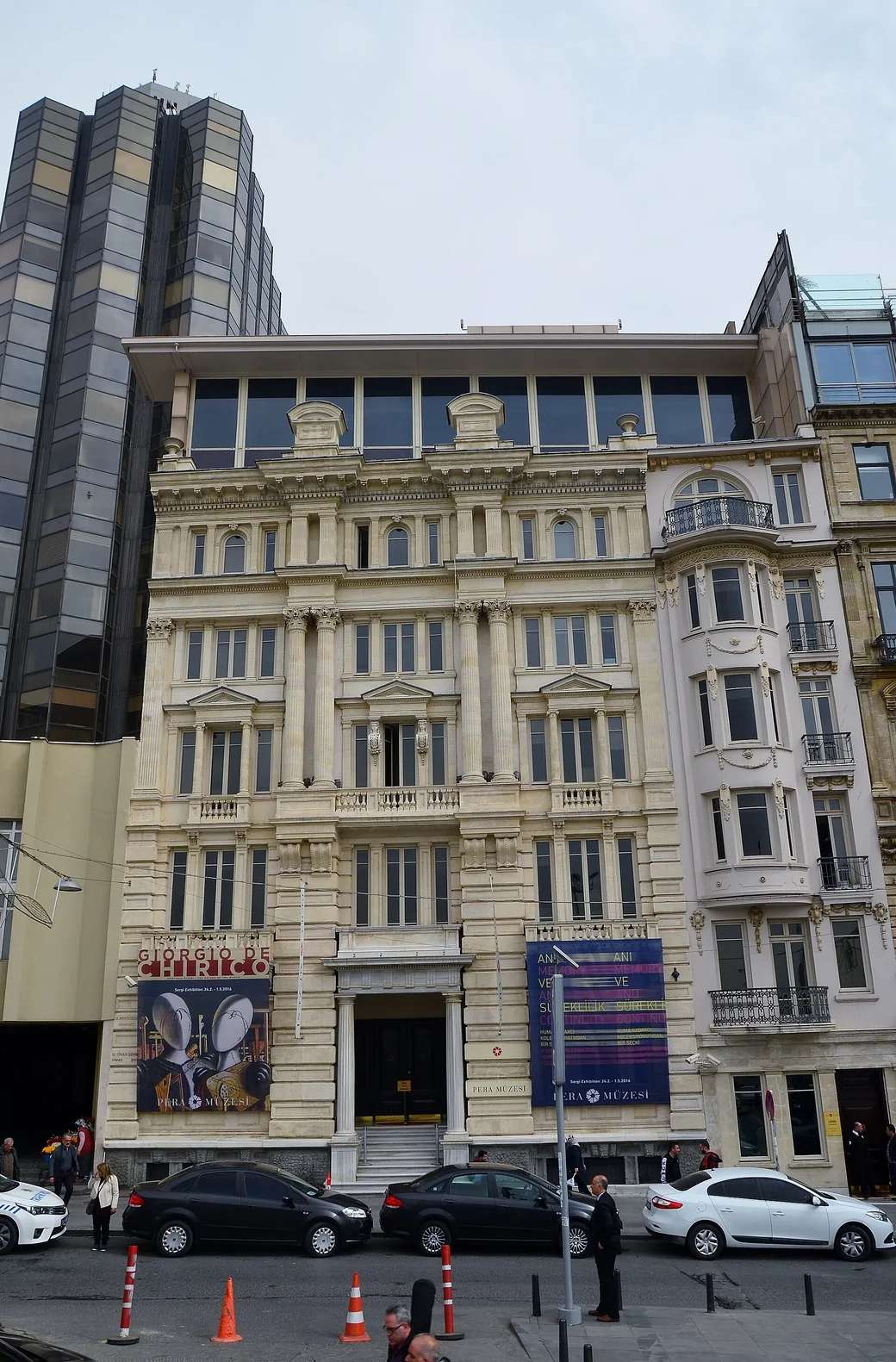
The museum occupies the former Hôtel Bristol, completed in 1893 to a neoclassical design by the architect Achille Manoussos. Built of brick masonry, it had a grand lobby, marble stairs, a lift, comfortable suites and a spacious dining hall, and it counted high-ranking foreign visitors among its guests. In the early 1930s the hotelier Ömer Lütfi Bengü bought the building and kept it running until the early 1980s, when newer hotels drew away its clientele. After his death in 1983 it passed to new owners, and a bank rebuilt the interior behind the original façade and used it as its headquarters until 2002. Between 2003 and 2005 the architect Sinan Genim turned it into a museum, joining it with the neighbouring five-storey building and preserving the historic façade on Meşrutiyet Street. Pera Café still nods to the hotel years with an art deco look.
The Tortoise Trainer: the painting everyone comes to see
Osman Hamdi Bey's The Tortoise Trainer, painted in 1906 in oil on canvas and measuring roughly 221.5 by 120 centimetres, is the museum's best-known work. It was shown at the Paris Salon in the Grand Palais that same year under the title L'homme aux Tortues. A pensive man in eastern-style dress, holding a ney flute, with a small hemispherical drum hanging on his back, watches tortoises nibbling green leaves on the floor of a tiled room. The museum identifies the setting as an upper-floor room of the Green Mosque in Bursa and notes that the painter modelled the figure himself. Above the window an inscription reads, "The cure of hearts is meeting the Beloved." The museum acquired the painting at an auction in 2004, and you can find it in the second-floor galleries. A year later the painter made a second, slightly different version.
Osman Hamdi Bey: painter, archaeologist and museum pioneer
Born in Istanbul on 30 December 1842, Osman Hamdi Bey was sent to Paris at the age of eighteen and returned to become one of the most influential cultural figures of his time. In 1881 he took over the directorship of the Imperial Museum and worked to organise and expand it, and he opened a school of fine arts that began teaching in 1883, modelled on its counterpart in Paris. He died on 24 February 1910 at his waterside house in Kuruçeşme and was buried, as he had wished, at Eskihisar. Beside The Tortoise Trainer, his Two Musician Girls of 1880 is on show here: two women with a tambur lute and a def frame drum, shown fully clothed, reading and playing music. Many visitors note how this differs from the sensual stereotypes common in Orientalist painting.
The Orientalist painting collection: "Intersecting Worlds"
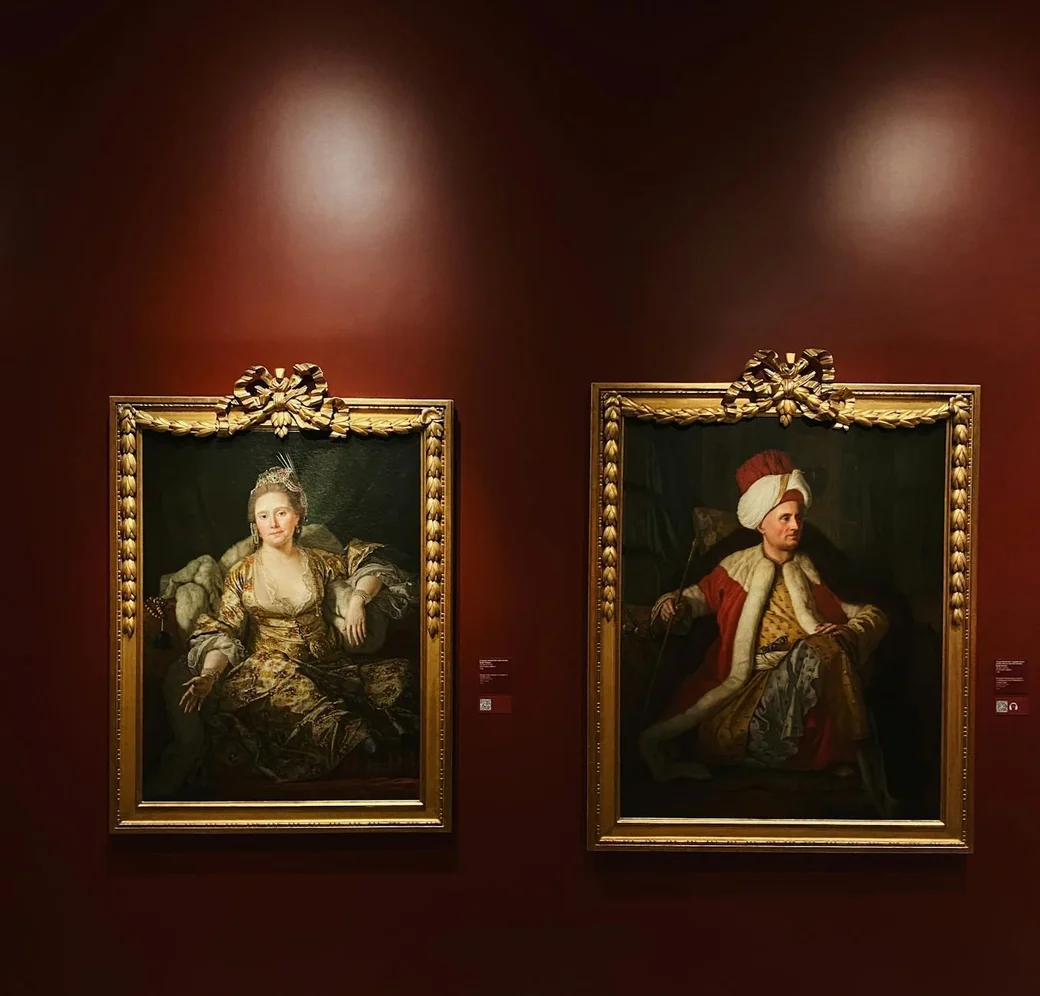
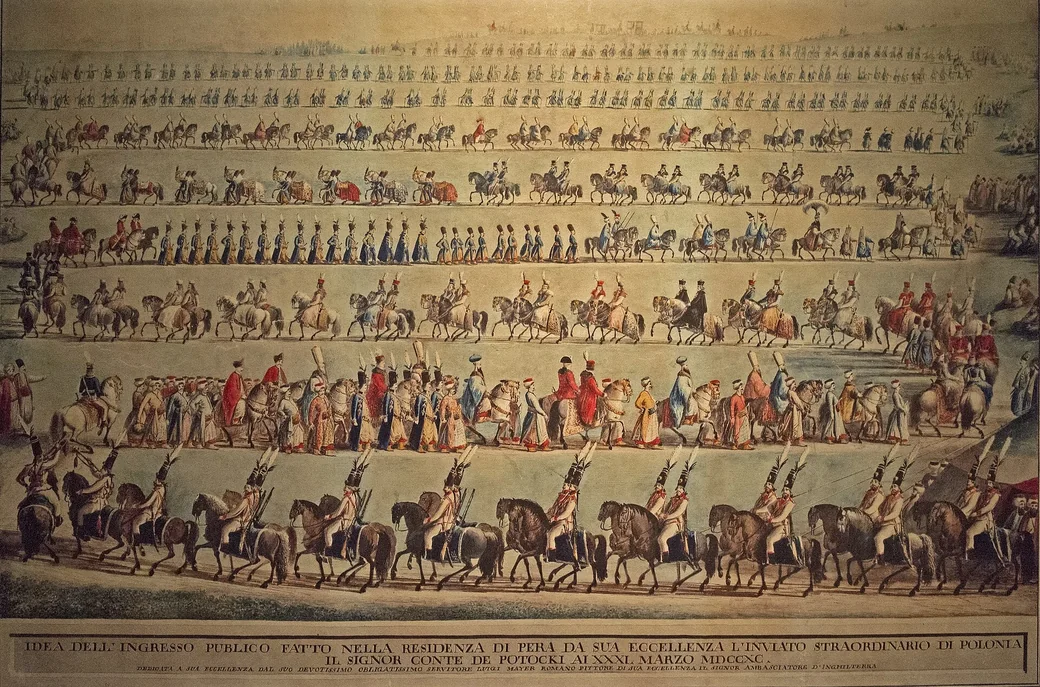
The second floor presents the Suna and İnan Kıraç Foundation's Orientalist Painting Collection, one of the richest collections in its field, through long-running themed displays in the Sevgi and Erdoğan Gönül Gallery. The collection spans the 17th to the early 20th century and brings together European painters who depicted the imperial world and Anatolia with artists of the empire whose work reflects the exchange between them. Among the pieces on the museum's own list are an ambassadors' procession, a panorama of Istanbul, a view of the New Mosque and the harbour, a collector's portrait in eastern dress, a coffee scene and a street scene, alongside Osman Hamdi Bey's own section. Selections change over time, so the hang you see may differ from that of earlier visits.
First floor: weights and measures and Kütahya ceramics
On the first floor the Anatolian Weights and Measures Collection traces how people have measured the world, from prehistoric times to the 20th century, through roughly 10,000 objects. Started by Suna and İnan Kıraç in the 1980s, it covers land surveying, trade, architecture, jewellery, seafaring, pharmacy, astronomy and timekeeping, and the museum describes it as a collection of unusual range. A selection is arranged chronologically in the large hall. A smaller hall presents the Kütahya Tiles and Ceramics Collection, begun in the 1980s at Suna Kıraç's wish and now around a thousand pieces. Kütahya became an important production centre after İznik, and the display helps you follow how its tile and ceramic art developed. Displays are themed selections that rotate from time to time. According to the museum, no other collection brings together so many and such varied weights and measures.
Plan your visit floor by floor and how long to allow
The museum is compact, which makes it easy to see in one go. The auditorium and the Pera Learning workshop are on the lower ground floor (-1). The ground floor holds reception, the Artshop and Pera Café. The first floor is devoted to weights and measures and Kütahya ceramics, while the second floor houses the Osman Hamdi Bey section and the Orientalist collection. Temporary exhibitions fill the third, fourth and fifth floors. Visitors commonly allow about one and a half to three hours, depending on how long they linger in the exhibitions, and some enjoy starting at the top and working downwards. Elevators serve all floors, so you can pace the visit as you like and take a coffee break in between.
Temporary exhibitions and international collaborations
Beyond its own collections, Pera Museum is known for a programme of temporary exhibitions on its upper floors. Over the years it has partnered with institutions such as the Victoria and Albert Museum, the Louvre, the Rijksmuseum, the JP Morgan Chase Collection and the Maeght Foundation, and it has presented work by artists including Picasso, Botero, Frida Kahlo and Diego Rivera, Goya, Rembrandt, Miró, Chagall, Giacometti, Warhol and Henri Cartier-Bresson. Each year it also stages shows that support young artists, and exhibitions are usually accompanied by publications, talks and learning programmes. The museum has hosted and collaborated with the Istanbul Biennial since 2015. Because the lineup changes regularly, check the museum's website before you go to see what is on.
Films, concerts and workshops: more than a museum visit
Pera Film began in October 2008 and screens classics, independent films, animation and documentaries, sometimes alongside an exhibition, in the auditorium on the lower ground floor. Tickets are sold through Biletix or at reception, and screenings cannot be reserved. The museum also hosts a series of traditional music concerts on selected Sundays, dedicated to the memory of a master of the classical repertoire, with short talks between pieces. Pera Learning runs workshops for children aged 4 to 6 and 7 to 12, teenagers aged 13 to 17, adults, school groups and groups from care homes, and all materials are provided. Children normally attend on their own, apart from a few special family days. The Friends of Pera Museum programme gives members previews of new exhibitions and other benefits.
Opening days, closing days and the best time to go
The museum is open from Tuesday to Sunday, with extended hours on Fridays and a later start on Sundays. It is closed on Mondays, on the first day of both religious holidays and on 1 January. Weekday mornings are generally the quietest moment for a relaxed look at the galleries, while Friday evenings and Sundays tend to feel livelier. If you prefer to see the museum in the evening, the extended Friday hours are a pleasant option, and you should check the ticket section for the entry conditions that apply. Because opening hours can change around holidays and special events, confirm them on the official website on the day you plan to visit.
How to get to Pera Museum by metro, bus or car
The easiest way is the M2 metro line between Yenikapı and Hacıosman. Get off at Şişhane, take the Şişhane exit and walk along Meşrutiyet Street; the museum is about ten minutes away on foot. Bus passengers can get off at the Tepebaşı-Beyoğlu stop on Tarlabaşı Boulevard, around five minutes from the entrance. Drivers can use the Beyoğlu Tepebaşı İSPARK car park opposite the museum, although central Beyoğlu is busy and parking spaces are limited. The building is right next to Odakule and only a street away from İstiklal Avenue, so you can also arrive on foot along the avenue and combine the visit with a stroll through the neighbourhood.
Accessibility, café, shop and other facilities
The museum is accessible to wheelchair users and visitors who cannot use stairs: elevators reach every floor and accessible restrooms are available. A cloakroom has a dedicated area for bags and strollers. On the ground floor, Pera Café, designed with an art deco look in reference to the old hotel, serves salads, sandwiches, pasta and pastries, and sometimes offers special menus linked to the exhibitions. The Artshop sells publications, collection-themed products, stationery, jewellery, prints and gifts, and part of its range is also sold online. An audio guide for adults and children focuses on the permanent collection, and guided tours are also organised; check the museum for current arrangements. Visitors report that the wall texts are bilingual, including English.
Photography rules, etiquette and do's and don'ts
Photography without flash is allowed in the museum, so you can take pictures of the façade, the café and most galleries; always look for signs in individual exhibitions. Professional filming and photography require permission, and large equipment or crews are not allowed in the galleries, so contact the museum at least 24 hours ahead for a shoot. Leave backpacks and strollers in the cloakroom, keep a respectful distance from the works and never touch them, and keep your voice low in the galleries. Food and drink are not allowed in the workshop rooms. Silence your phone during film screenings and concerts, arrive early for popular events with limited seating, and follow the instructions of the gallery staff.
Around the museum: Meşrutiyet Street and nearby places
Pera Museum sits on Meşrutiyet Street, a historic avenue that runs parallel to İstiklal Avenue. According to local accounts, this hillside was once known for its burial grounds and the street went by the name of Cemetery Street, a hint of the district's older layers. Fifty metres away, the Istanbul Research Institute has a public library, including the Pera Museum Art Library, and hosts its own exhibitions. Pera Palace Hotel stands on the same street, Odakule is next door, and İstiklal Avenue, once known as the Grand Avenue, is one street away. You can also follow Meşrutiyet Street down towards Tünel. The museum's blog even compares a photograph of Hôtel Bristol from 1909 with its present-day view, a fun detail to look for as you arrive.
Legends, rumours and curious stories around Pera Museum
Some of the best stories here are handed down only by word of mouth, so treat them as rumour. According to one tale, tortoises with candles stuck on their shells once wandered the gardens during open-air parties in the Tulip Era, which is said to have inspired the animals in the painting. Others say the tortoises stand for a sluggish bureaucracy, and that the trainer holds his ney without playing it because even a patient man's patience runs out. It is also said that when a locked mansion was opened before the 2004 auction, dozens of paintings were found inside. According to rumour the hotel took its name from the city of Bristol. Local lore links the name Beyoğlu to a mansion built by an ambassador's son, or to a prince who converted, and the crime writer Agatha Christie is said to have worked at the neighbouring Pera Palace. Tradition also says the name Pera comes from an old phrase meaning the fig grove across the water, and, according to another account, the painter began the picture inside the Green Mosque and finished it in his studio.
Pera Museum: Visitor Tips
Start with the second-floor Osman Hamdi Bey section if The Tortoise Trainer is your priority, then work through the other floors. Check the website for the current temporary exhibitions, leave bags in the cloakroom, take photos without flash and save time for a break at Pera Café. Film screenings and concerts are separate events with their own tickets, so book those through Biletix or at reception.
Pera Museum: Best Time to Visit
Weekday mornings for a quieter visit; Fridays stay open late. Allow about one and a half to three hours.
Pera Museum: Admission Fees
Full admission
Standard adult admission to all the museum's exhibitions.
TRY 450
Discounted – students over 12, teachers, ages 60+
Reduced rate for students over 12, teachers and visitors aged 60 and over; a valid ID or student card is required.
TRY 250
Group (10 or more tickets)
Per-person rate when ten or more tickets are bought in a single purchase.
TRY 300
Students on Wednesdays (free)
Students enter free every Wednesday; a valid student card is required.
Free
Long Friday – free evening admission
Everyone enters free during the late Friday evening opening.
Free
Children up to 12 (free)
Free entry for children aged 12 and under; proof of age may be requested.
Free
Visitors with disabilities + companion (free)
Free for visitors with a disability and one companion; proof of eligibility is required.
Free
Quick Info
2h
easy
Pera Museum: Getting There
The simplest route is the M2 metro line between Yenikapı and Hacıosman. Get off at Şişhane, use the Şişhane exit and walk along Meşrutiyet Street; the museum is about ten minutes away on foot. By bus, get off at the Tepebaşı-Beyoğlu stop on Tarlabaşı Boulevard, around five minutes from the entrance. Drivers can use the Beyoğlu Tepebaşı İSPARK car park opposite the building, though central Beyoğlu is busy and spaces are limited. The museum stands next to Odakule and only a street away from İstiklal Avenue, so walking in along the avenue is also easy.
Nearby stops & parking
Closest stop: Şişhane metro station (M2), about ten minutes on foot. Bus stop: Tepebaşı-Beyoğlu on Tarlabaşı Boulevard, about five minutes away. Parking: Beyoğlu Tepebaşı İSPARK car park, opposite the museum. Taxis can drop you right at the entrance on Meşrutiyet Street.
Pera Museum: Dress Code & Etiquette
There is no formal dress code. Wear comfortable shoes, since you will be on your feet and moving between floors. Please keep your voice low in the galleries, never touch the works, leave large bags and strollers in the cloakroom and silence your phone, especially during film screenings and concerts. Keep food and drinks for the café.