Place de la Concorde is the largest square in Paris, a vast open plaza in the 8th arrondissement on the Right Bank of the Seine, set between the Tuileries Garden and the foot of the Champs-Élysées. An ancient Egyptian obelisk rises at its centre, framed by monumental fountains and statues, and the square has witnessed some of the most dramatic moments in French history. Open at all hours and free to explore, it rewards even a short stop on a walk through central Paris.
Place de la Concorde: Location, accommodation options and contact
Place de la Concorde, 75008 Paris, France
The place's location on the map and nearby accommodation and hotel options are shown by Stay22. Cookies are used. Your consent is remembered on every page; you can turn it off at any time in the cookie settings.
Did You Know? Place de la Concorde Is a Giant Sundial
The Luxor Obelisk at the centre of the square acts as the gnomon of an enormous sundial. In 1999, the City of Paris added hour markings on the pavement, turning the whole plaza into a functioning timepiece — look down as you walk and you might just catch the hour.
The Hidden Messages Identified on the Obelisk in 2025
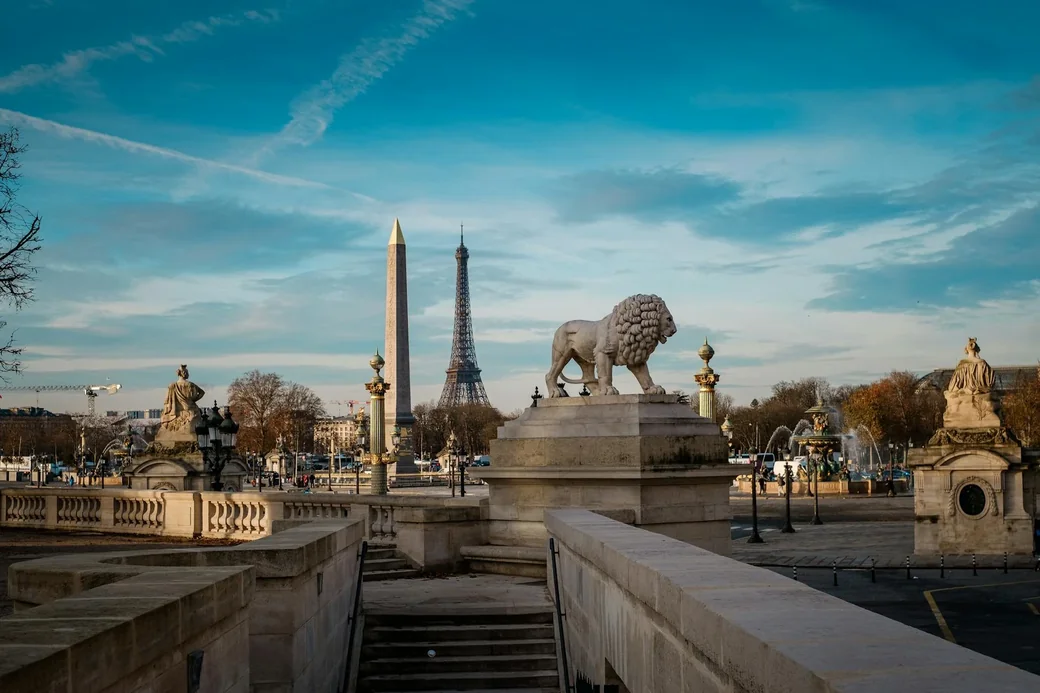
In April 2025, French Egyptologist Jean-Guillaume Olette-Pelletier announced that he had identified seven cryptographic hieroglyphs on the obelisk (wordplay messages that only Egypt's educated elite could decode). According to his study, they were carved under Ramses II to be read from specific angles by those approaching Luxor Temple, as a message affirming the king's divine right to rule. Getting the roughly 230-tonne monolith to Paris was its own odyssey: a gift from Egypt's ruler Muhammad Ali, it travelled on a purpose-built ship, reached Paris in 1833 and was finally raised on 25 October 1836 before some 200,000 spectators. According to a popular story, the operation was saved at a tense moment by a sailor in the crowd shouting to wet the straining ropes. Its golden cap, lost in antiquity, was only replaced in 1998, when France added the gilded bronze pyramidion visible today. Carved some 3,300 years ago, the obelisk originally stood as one of a pair at the entrance to Luxor Temple, where its twin still rises today.
The 1792 Crown Jewel Heist Linked to the Square
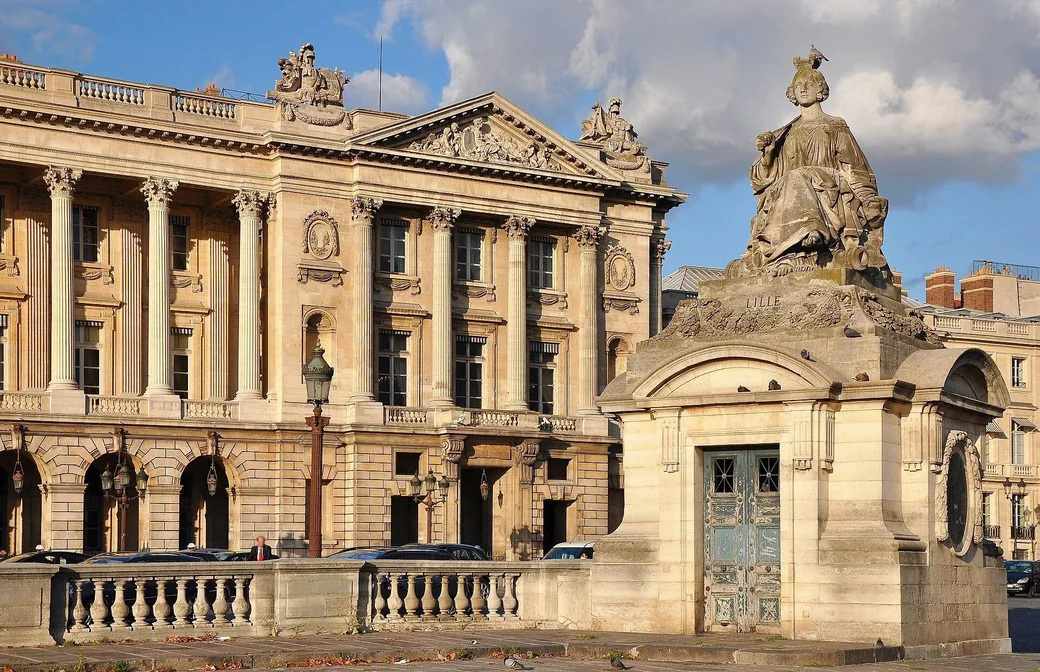
One of French history's most audacious heists is tied to this address: in 1792, thieves broke into the royal storehouse — today's Hôtel de la Marine, on the square's northeast corner — and made off with the Crown Jewels, including the famous Regent diamond. The building has worn other hats since: France's decree abolishing slavery in its colonies was signed there in 1848, and after two centuries as the French Navy's headquarters, it reopened to the public in 2021 as a museum following a major restoration, its 18th-century state rooms once again open to visitors.
The Guillotine Years: Concorde's Revolutionary History
The royal architect Ange-Jacques Gabriel laid the square out in the 18th century on an octagonal plan. Originally built to honour Louis XV — whose bronze equestrian statue by sculptor Edmé Bouchardon once stood at its centre — the square was renamed Place de la Révolution when revolutionaries toppled and melted down that statue in 1792. The guillotine was set up on the square itself — for Louis XVI, near the spot now marked by the statue representing Brest — and 1,119 people were executed here during the Reign of Terror, including Louis XVI, Marie Antoinette, and, in a twist of fate, Robespierre himself, the man who had driven the Terror forward. Even after its 1795 renaming to Place de la Concorde, the name kept shifting with French politics — reverting to Place Louis XV in 1814, becoming Place Louis XVI in 1826, and briefly Place de la Charte in 1830 — before settling permanently on Concorde later that year. The name Concorde (harmony) had been chosen as a gesture of national reconciliation after the bloodshed of the Terror.
From Wartime HQ to a Rediscovered Masterpiece: Concorde's 20th-Century Story
During World War II, the Hôtel de Crillon on the square's north side served as the headquarters of the German high command in occupied Paris. It had witnessed a very different history a century and a half earlier: on 6 February 1778, Benjamin Franklin signed the treaties there recognizing American independence and allying France with the fledgling United States. Decades before the war, the painter Edgar Degas had captured the square in his work Place de la Concorde — a canvas long thought lost after the war, until it was revealed in 1994 to be held at the Hermitage Museum in Saint Petersburg, where it had arrived from a private Berlin collection at the end of the war.
Eight Statues, Two Fountains: The Square's Hidden Symbolism
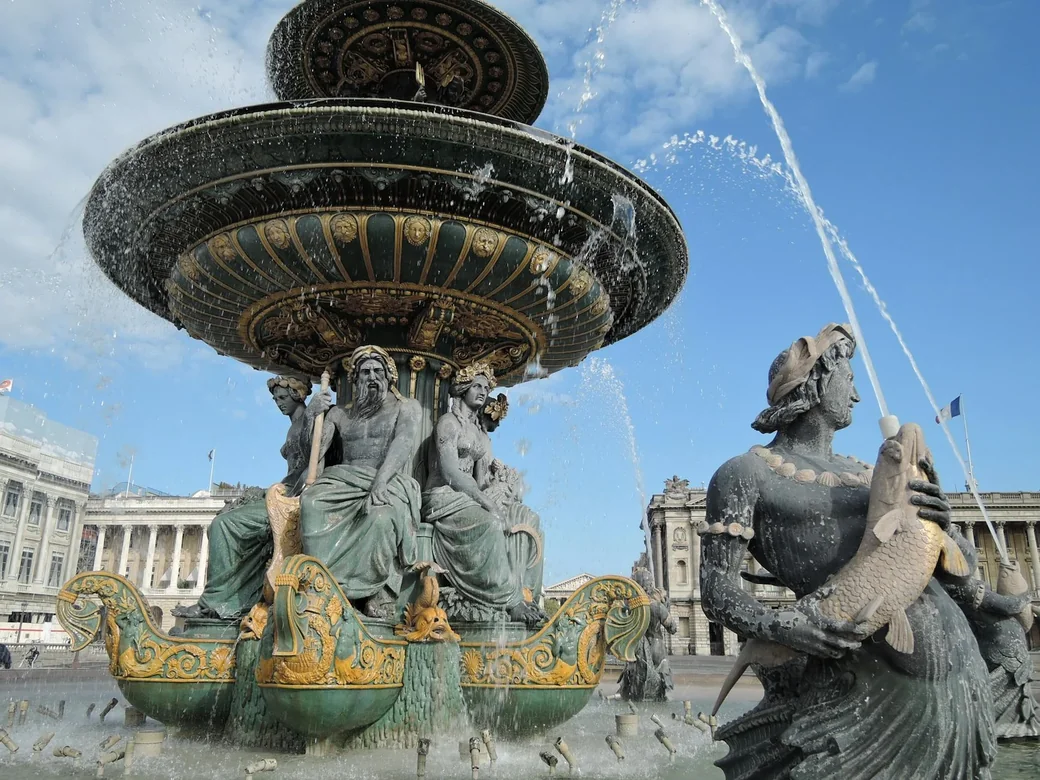
Look closely at the square's edges and you'll find eight seated stone women, added in the 1830s, each personifying a French city: Lille, Rouen, Strasbourg, Marseille, Lyon, Nantes, Brest, and Bordeaux. Between them, on either side of the obelisk, sit two grand cast-iron fountains — the Fontaine des Mers, celebrating maritime France, and the Fontaine des Fleuves, celebrating its great rivers. Both the fountains and the statues were added between 1836 and 1840 by the architect Jacques-Ignace Hittorff, who gave the square the form it still has today.
Standing at the Center of Paris's Grandest Sightline
Stand at the obelisk and turn slowly: to the west, the Champs-Élysées rises toward the Arc de Triomphe; to the east, the Tuileries Garden leads to the Louvre; to the north, Rue Royale frames the Église de la Madeleine; and to the south, across the Seine, the view lines up with the Palais Bourbon, home of the French National Assembly. Few spots in any city offer four monumental views in one turn — a vista so significant that the square, together with this stretch of the Seine, was inscribed on UNESCO's World Heritage List in 1991 as part of 'Paris, Banks of the Seine.' By area it ranks as the second-largest square in France, after the Place des Quinconces in Bordeaux.
The Day the Paralympics Made History Here
On 28 August 2024, the square hosted the Paralympic Games' opening ceremony — the first in the event's history to be held outside a stadium. Roughly 35,000 spectators filled the plaza while another 30,000 watched for free along the Champs-Élysées, as athletes from 168 delegations paraded through the very square where, over two centuries earlier, a revolution had once demanded equality of a different kind.
Best Time and Angle to Photograph the Obelisk
For the classic shot, stand near the obelisk at sunset, when the golden light aligns with the Arc de Triomphe down the Champs-Élysées. Alternatively, approach from the Tuileries side, where the obelisk sits perfectly centred in the long avenue of chestnut trees — one of the most satisfying compositions in Paris.
Crossing Safely: The Square Is a Busy Roundabout
Eight lanes of traffic circle the square continuously, and drivers don't always yield to pedestrians. Always cross at the marked signalled crossings, keep a close eye on children, and resist the urge to step into the road for a better photo — the view is just as good, and much safer, from the pavement.
How to Get to Place de la Concorde
The easiest way is the metro: Concorde station (lines 1, 8, 12) sits directly beneath the square. It's also an easy walk — fifteen to twenty minutes from the Louvre through the Tuileries Garden, or a stroll down the Champs-Élysées from the Arc de Triomphe. Driving isn't recommended given the constant traffic.
Wheelchair Access: What to Know Before You Go
The square's flat, paved surface makes it fully accessible for wheelchair users, with no steps or barriers to navigate. The main challenge is the traffic circling the plaza rather than the terrain itself, so plan your route via the marked pedestrian crossings rather than trying to cut across. Concorde metro station itself has stairs only and no lifts; for step-free public transport, use the buses that stop at the square, as all Paris bus lines are wheelchair accessible.
Visiting with Children: What Families Should Know
The open square itself calls for close supervision because of the surrounding traffic, but the adjoining Tuileries Garden makes up for it with playgrounds, open lawns, and seasonal pony rides. In winter, a festive Christmas market sometimes sets up nearby, adding lights and treats to the visit.
From Olympic Arena to Parade Ground: Concorde's Big Occasions
During the 2024 Paris Olympics, the square was transformed into the Concorde Urban Park and hosted skateboarding, BMX freestyle, breaking and 3x3 basketball. It also stages a far older tradition: the Bastille Day military parade, held since 1880, traditionally marches down the Champs-Élysées from the Arc de Triomphe and finishes here, where the President reviews the troops from a stand on the square.
Where to Eat and Drink Around the Square
Right on the square, the Hôtel de la Marine and the Hôtel de Crillon on the north side both have their own cafés and restaurants, ideal for a stop with a view of the obelisk. For something more casual, walk a few minutes into the Tuileries Garden, where kiosks and seasonal terraces operate, or head to Rue de Rivoli and Rue Saint-Honoré for a wider choice of bistros and bakeries.
Place de la Concorde: Visitor Tips
The square is ringed by heavy traffic, so always cross at the marked pedestrian lights and never step into the road for a photo. For a coffee or a meal, the Hôtel de la Marine and the Hôtel de Crillon on the north side have their own cafés and restaurants, and the kiosks of the Tuileries Garden are a short stroll away. The flat, paved surface makes it fully wheelchair-friendly, and the Concorde metro station sits right underneath.
Place de la Concorde: Best Time to Visit
Sunrise or sunset for the best light on the obelisk; early morning for fewer crowds and safer photos away from traffic.
Place de la Concorde: Admission Fees
Free admission
Free to enter and open to everyone; no ticket is needed.
Free
Quick Info
30m
easy
Place de la Concorde: Getting There
The Concorde metro station (lines 1, 8, and 12) sits directly beneath the square. Buses 42, 45, 72, 73, 84 and 94 stop nearby. On foot, it's a short walk from the Louvre through the Tuileries Garden, or from the Arc de Triomphe down the Champs-Élysées. Driving is not recommended — traffic circles the square continuously and parking is limited to the underground Parking Indigo garage.
Nearby stops & parking
Metro: Concorde (lines 1/8/12), directly under the square. Parking: Parking Indigo Concorde, underground, accessed from the square. Nearest taxi stand: Rue Royale corner.
Place de la Concorde: Dress Code & Etiquette
No dress code applies: this is an open public square. Comfortable shoes are the main recommendation, since most visits continue into the Tuileries Garden or up the Champs-Élysées, and in summer a hat and water make the wide open paving more pleasant.