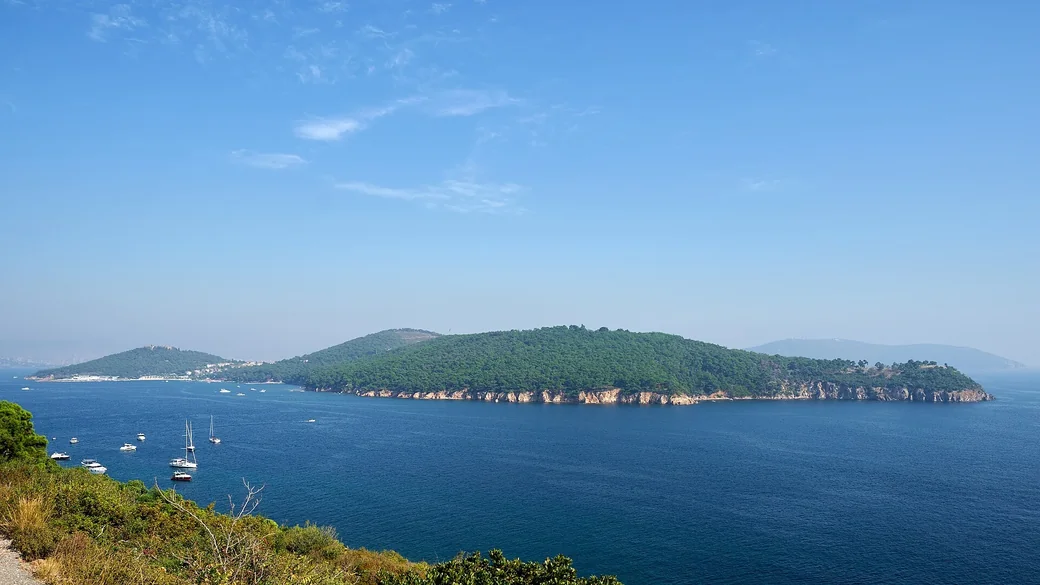
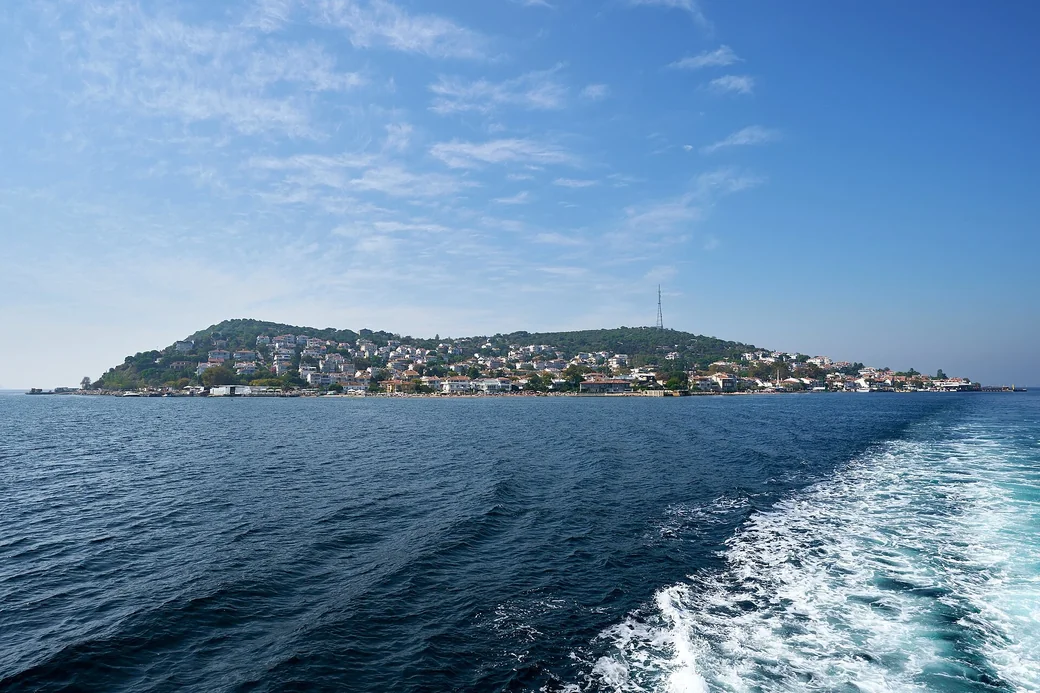
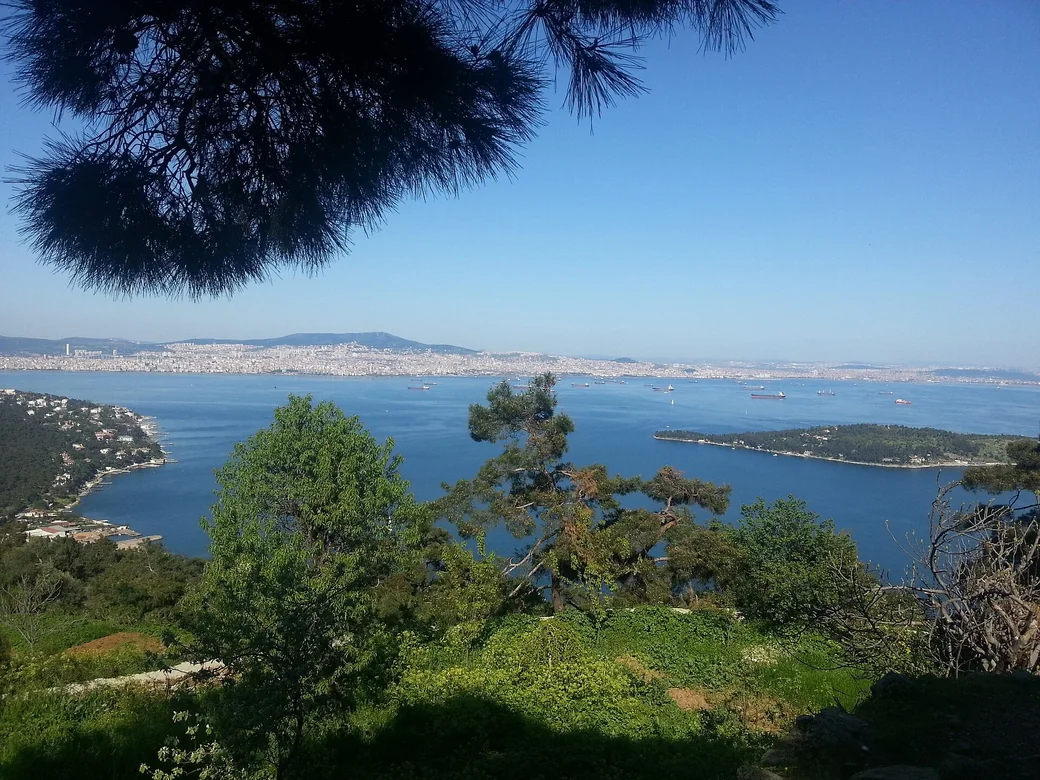
The Princes' Islands, known in Turkish as Adalar (the Islands), are a group of islands in the Sea of Marmara, a ferry ride from central Istanbul. Pine woods, wooden summer houses, monasteries and churches, seaside cafés and small coves give them an unhurried, old-world charm. Life here moves at a gentler pace than in the city, which makes the islands one of the most popular day trips for locals and visitors alike.
Princes' Islands: Location, accommodation options and contact
Büyükada, Adalar, Istanbul, Türkiye (main ferry pier: Büyükada İskelesi). Open in Google Maps: https://www.google.com/maps/search/?api=1&query=B%C3%BCy%C3%BCkada+Adalar+%C4%B0stanbul
The place's location on the map and nearby accommodation and hotel options are shown by Stay22. Cookies are used. Your consent is remembered on every page; you can turn it off at any time in the cookie settings.
Princes' Islands Istanbul: Which Island Should You Visit First?
Four islands receive visitors, and choosing the right one shapes your day. Büyükada is the big one, with the most sights, mansions, beaches and the Aya Yorgi hill, so it suits first-timers and full days. Heybeliada is leafy and calm, ideal for pine-forest walks and the seminary hill. Burgazada feels like a village and rewards slow wanderers and literature lovers. Kınalıada is the nearest and smallest, perfect for a short trip with a swim. Most boats call at all four, so combine two islands, but give each at least two hours. If you want to see more than one island at an easy pace, plan a full day.
How to Reach the Princes' Islands by Ferry: Piers, Timings, Smart Tips
Choose your pier by comfort rather than distance. Bostancı offers the shortest crossing, while Kabataş gives the longest and most scenic ride along the old city skyline. Most boats stop at Kınalıada, Burgazada and Heybeliada before Büyükada, so decide where you want to land. Hops between Heybeliada and Büyükada are frequent, while other links run less often, so note the return times. Pay with an İstanbulkart, sit on the outer deck for the views, and expect seagulls to follow any simit (a sesame-crusted bread ring) you carry. Check the last boat before dinner. Ferries leave from Kabatas (Kabataş), Besiktas (Beşiktaş), Kadikoy (Kadıköy), Bostanci (Bostancı) and Maltepe, and the islands lie roughly 20 kilometres south-east of central Istanbul.
Car-Free Islands: Cycling, Electric Minibuses and Walking Routes
Private motor vehicles are not allowed, which is why the islands feel so calm. The famous phaetons ended in 2020, and electric minibuses now carry people uphill. Bicycles can be rented near each pier. Ask for a helmet, test the brakes and tyres, and ride slowly, because weekend roads fill with walkers, bikes and carts. Hills are steep and paving is uneven, so wheelchairs and strollers struggle off the main streets. Kınalıada can be crossed on foot in about half an hour. Dogs and cats are welcome on the ferries and streets. Comfortable shoes make the hilly lanes much more enjoyable.
Büyükada Highlights: Aya Yorgi Hill, Grand Mansions and the Adalar Museum
Büyükada is divided into the Nizam and Maden quarters, and a loop through both shows the island at its best. Walk the waterfront road past the domes of the Splendid Palace Hotel, a landmark of the early twentieth century, and the Anadolu Club, where a room used by Atatürk is reportedly kept as it was. Visit the Adalar Museum, then the Hamidiye Mosque and the Hesed Le Avraam synagogue. Climb to Yücetepe and Aya Yorgi for views over the whole archipelago, or find the fire tower on Hızır İlyas hill. Pine paths of Dilburnu Nature Park wait nearby. Many of the wooden mansions along these streets were built as summer homes from the mid-nineteenth century onwards by Greek, Armenian, Jewish and Muslim families. Yucetepe (Yücetepe), the hill crowned by Aya Yorgi, rises to 203 metres.
Prinkipo Greek Orphanage and Trotsky's House: Büyükada's Famous Ruins
The Prinkipo Greek Orphanage is widely described as the largest wooden building in Europe. Architect Alexandre Vallaury designed it in 1898 as a hotel, it passed to the Greek Orthodox Patriarchate in 1903, and about six thousand orphans lived in its 206 rooms until it was closed in 1964. It was placed on a European endangered-heritage list in 2018. It is unsafe and closed, so admire it from outside. Leon Trotsky lived on Büyükada from 1929 to 1933, wrote his autobiography and his history of the Russian Revolution here, and fished offshore. His mansion is derelict and viewable only from the street.
Heybeliada Guide: Halki Seminary, Naval School and Çam Limanı Bay
Heybeliada's hills are covered in pine, and its pier is watched over by the Naval High School. Above the town stands the Halki Theological School on a monastery hill; founded in 1844, rebuilt in 1896 and closed in 1971, it remains one of the island's landmarks. Walk to Çam Limanı for a quiet swim and the old sanatorium built in 1924. The İsmet İnönü House Museum preserves the island home of the second president of the Republic, and the hillside house where the novelist Hüseyin Rahmi Gürpınar lived for decades can be admired from the street. The small Bet Yaakov synagogue, opened in 1956, adds to the island's multicultural story.
Burgazada: Sait Faik's Island, Kalpazankaya Rock and Quiet Village Lanes
Burgazada is the calmest of the four, a green island of narrow lanes and a village rhythm. Writer Sait Faik Abasıyanık lived here, and his house is now a museum run by the Darüşşafaka Society (a charitable school foundation); its official site lists visits from Wednesday to Sunday, but confirm times and holiday closures first. Visit Aya Yani church, the Aya Yorgi Kudunas monastery and the ruins of the Christ monastery on the summit. Kalpazankaya, a rock once linked to counterfeiters, offers lovely views back to the mainland.
Kınalıada Guide: Hristos Monastery, Armenian Church and a Quick Island Break
Kınalıada, the Henna Island, takes its name from its reddish soil and is the closest island to Istanbul. Climb Manastır Hill to the Hristos monastery, then visit Surp Krikor Lusavoriç, an Armenian Apostolic church opened in 1857. Three small hills, a modest beach and a pier lined with cafés make it perfect for a short trip. The whole island can be crossed on foot in about half an hour.
Sedef, Yassıada and Sivriada: The Smaller Princes' Islands and Diving
The archipelago has nine islands: four of them are inhabited and welcome visitors, while the other five are small and mostly uninhabited. Sedef Island is mostly privately owned and has only a handful of residents, so landing is generally not possible. Yassıada is now called Democracy and Freedom Island. Trials following the 1960 coup were held here, and today it is an open-air museum reached only by dedicated boats with online tickets. Sivriada, home of the 1910 stray-dog tragedy, is a diving site known for amphora fragments and strong currents. Kaşık and Tavşan are uninhabited rocks. Always confirm diving permission through licensed centres.
Best Beaches on the Princes' Islands: Where to Swim and What to Know
Büyükada has the most choices. Yörükali is sandy and popular with families, Naki Bey runs a family-oriented policy, and Aya Nikola is calm and shallow near an old monastery. Eskibağ, Halik and Prenses coves are quieter. Small boats from the main pier reach many of them. Entrances can be pebbly, so bring water shoes. On Heybeliada, Çam Limanı offers a pine-fringed bay, and on Büyükada Dilburnu Nature Park has picnic spots by the sea. Swimming season is roughly June to September, and crowds peak on weekends.
What to Eat on the Princes' Islands: Fresh Fish, Sweets and Island Flavours
Büyükada's Gülistan Street is lined with fish restaurants, and the long-established Façyo restaurant is a favourite stop. Look for meze with Greek and Armenian roots such as lakerda (salt-cured bonito), topik (an Armenian chickpea-and-onion filled dish) and priest's stew. Ice cream with mastic is an island classic. The old Büyükada Pastry Shop is known for cookies shaped by Greek-Armenian tradition, with names like kurlaki and kalçunya, plus eggplant-and-cheese pastries. Tomato jam appears at breakfast. Weekend tables fill fast, so arrive before the lunch rush or book ahead.
Greek, Armenian, Jewish and Muslim Heritage: A Multicultural Island Story
The islands owe their name to their past as a place of exile. In Byzantine times out-of-favour princes, empresses and patriarchs were sent here, and after 1453 members of the Ottoman dynasty were also banished to the islands. An early Byzantine lexicographer recorded the group as Demonesoi, a Greek name often interpreted as "demon islands". After the first ferry began running in 1846, the islands became a shared summer retreat. Büyükada has Ayios Dimitrios church, an Armenian Catholic church of 1858, the Hesed Le Avraam synagogue of 1904 and the Hamidiye Mosque. Heybeliada has the Bet Yaakov synagogue, opened in 1956. Writers followed: Hüseyin Rahmi Gürpınar made his home on Heybeliada and Sait Faik on Burgazada. Look at plaques, enter respectfully and listen to local history.
Aya Yorgi and the Orphanage: Legends and Rumours of Büyükada
Many tales are told on Büyükada, and none are proven. According to rumour, anyone who climbs to Aya Yorgi without speaking to anyone and prays inside will have a wish granted, and those who walk up on 23 April or 24 September are said to earn a pilgrim's blessing. Another account says that when the island was occupied, monks buried the sacred treasures; a shepherd then dreamt of Saint George, who showed him where the icons lay. About the orphanage, rumour holds that a fire killed several children and that one fell into a garden well, so that crying is still heard at night, and that a piano and registers remain inside. These stories are folklore, not recorded fact.
Island Legends: Madam Marta, Romanos Diogenes, Tunnels and the Cursed Dogs
According to rumour, Madam Marta Cove on Burgazada is named after a woman who lived on the island, whom some tales remember as one of the first ballerinas of her time; the stories about her differ. On Kınalıada, history records that Emperor Romanos IV Diogenes was blinded and exiled after Manzikert in 1071; rumour adds that he founded the monastery and was buried in its garden. A tale says Patriarch Methodios spent seven years in a tomb cell on Burgazada, and another claims a tunnel links Kınalıada to Istanbul. After the 1910 abandonment of stray dogs on Sivriada, some blamed the later earthquake on a "curse"; locals also tell of Barba Toma, a Burgazada man said to have lived 107 years.
Best Time to Visit the Princes' Islands: Crowds, Festivals and Photo Spots
Weekdays in spring and autumn give the calmest streets and softest light. Summer weekends and holiday mornings bring long queues at the piers, so leave early or stay overnight. In winter many places close and only locals remain. Seasonal events add colour: the Mimosa Festival in late winter and the Aya Yorgi pilgrimage walks in spring and autumn. Photograph the Yücetepe view, Büyükada's pier at sunset with Heybeliada's hills behind it, the Dilburnu terrace and the ferry's outer deck. Take your litter with you and leave quiet streets as you found them. Only a small community lives on the islands all year round, while summer brings many visitors; a slow ferry ride home at sunset is a fine way to end the day.
Princes' Islands: Visitor Tips
Start early, plan your return in advance and check the last ferry before you wander far. Streets are hilly and often cobbled, so wear sturdy shoes and carry water. Do not enter fenced or derelict buildings, including the old orphanage. Respect private gardens and mansions, take your litter back to the bin at the pier, and keep a respectful distance from cats and horses. Accessibility: main roads near piers are mostly flat, but slopes and uneven paving make hills difficult for wheelchairs and strollers; electric minibuses help on some routes. Healthcare on the islands is limited, so bring any personal medicine. Organised tours in several languages are sold by agencies, and the best photo points are the Yücetepe viewpoint, the Büyükada waterfront at sunset and the ferry's outer deck.
Princes' Islands: Best Time to Visit
Weekdays in April–June and September–October; swim from June to September. Take an early ferry and stay for sunset. Summer weekends and public holidays are very crowded.
Princes' Islands: Admission Fees
Free admission
Walking the islands' lanes and shores is free; the ferry crossing and any bicycle or carriage rides are paid separately.
Free
Quick Info
8h
easy
Princes' Islands: Getting There
Ferries are the heart of every trip. Şehir Hatları boats reach the four inhabited islands from Kabataş, Eminönü, Beşiktaş, Kadıköy, Bostancı and Maltepe; other operators run seasonal services. From Kabataş the trip to Büyükada takes about 90 minutes, from Bostancı roughly an hour. Timetables change with the season and the day of the week, so check the current schedule before you go. Kabataş is reached by the T1 tram or the funicular from Taksim; Bostancı by Marmaray and the M4 and M8 metro lines; Kadıköy by the M4 metro and by sea. Cars cannot be taken to the islands, so park on the mainland near your departure pier. On the islands you walk, cycle or use the electric minibuses.
Nearby stops & parking
Büyükada's main pier opens onto the central square, where electric minibuses wait; the minibus lines have run between the town centre, Maden, Nizam and the Aya Yorgi side, though routes can change. Bicycle shops cluster around every pier. The Adalar Museum is roughly a 20-minute walk from the main pier, and Aya Yorgi is about 3 kilometres away via Lunapark Square. Heybeliada, Burgazada and Kınalıada each have a small pier with cafés a few steps away. There is no parking on the islands.
Princes' Islands: Dress Code & Etiquette
Comfortable walking shoes matter more than anything: hills and cobbles are everywhere. Churches, monasteries, synagogues and mosques expect modest dress, with shoulders and knees covered. Women should carry a scarf for mosques, and shoes come off at the door. Keep your voice low, ask before photographing interiors, priests or worshippers, and follow any signs. Swimwear belongs on the beach only; cover up before walking back into the village. Some beaches run a family-only policy, so check the rules before you pay. In summer bring a hat and sun cream, and in winter a windproof jacket for the ferry deck.