The Musée Rodin is an art museum devoted to the French sculptor Auguste Rodin, housed in the Hôtel Biron, an elegant 18th-century mansion on Rue de Varenne in the 7th arrondissement (city district) of Paris. It holds one of the richest collections of Rodin's work anywhere in the world, displayed both inside the house and outdoors in a spacious sculpture garden. Combining masterpieces of sculpture with a peaceful green setting, it is one of the most charming museums in Paris.
Musée Rodin: Location, accommodation options and contact
77 Rue de Varenne, 75007 Paris, France
The place's location on the map and nearby accommodation and hotel options are shown by Stay22. Cookies are used. Your consent is remembered on every page; you can turn it off at any time in the cookie settings.
Long before it became a museum, the Hôtel Biron was one of the grandest private residences in Paris, built between 1727 and 1732 for a wealthy financier and later occupied by the Duke of Biron himself. Over the following two centuries the building changed hands repeatedly, eventually becoming home to a religious school. When a 1905 law separating church and state forced that school to close, the mansion and its overgrown gardens sat largely empty, and a handful of artists and writers began renting cheap studio space inside. Auguste Rodin arrived in 1908, taking over several ground-floor rooms to store and display his sculptures. He quickly grew attached to the peaceful, half-wild gardens and the faded elegance of the house, using both as his personal studio and a place to entertain visitors, collectors and friends until his death in 1917.
A Bequest That Created a Museum
Around 1909, at the peak of his fame, Rodin made an extraordinary proposal to the French state: he would donate his sculptures, drawings, letters, and his personal collection of antiquities and paintings, on condition that the government preserve the Hôtel Biron as a museum devoted entirely to his art. Negotiations continued for years, complicated by the First World War, but the French government formally accepted Rodin's bequest in 1916, a year before he died. The Musée Rodin finally opened its doors to the public in 1919, fulfilling the sculptor's wish to see his life's work permanently housed in the very mansion where he had created so much of it, surrounded by the gardens he loved.
The Thinker and The Gates of Hell
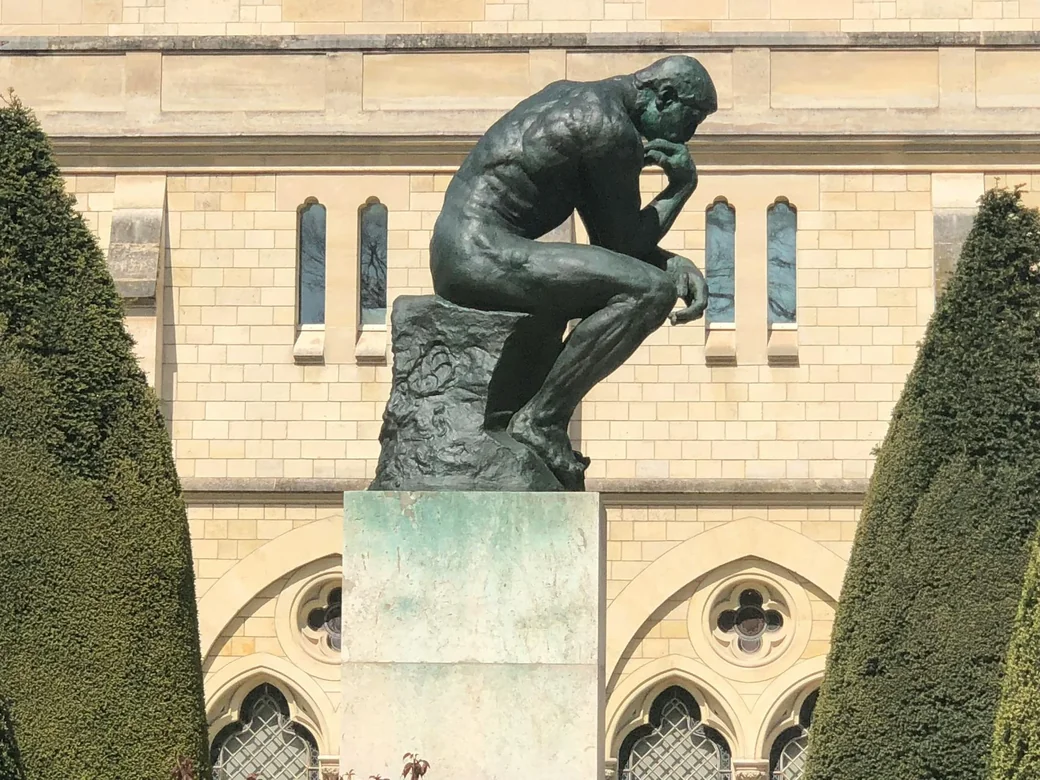
No visit to the Musée Rodin is complete without standing before The Thinker, the brooding bronze figure that has become one of the most recognizable sculptures in the world, cast in several sizes and displayed in the garden as well as inside the mansion. Nearby stands an equally powerful work, The Gates of Hell, a monumental bronze doorway inspired by Dante's Inferno that occupied Rodin for decades and that he never considered truly finished. Dozens of figures twist and struggle across its surface, several of which Rodin later enlarged into independent masterpieces, including The Thinker itself, which originally sat above the doorway looking down on the chaos below. Seeing the two works together, indoors and out, gives a vivid sense of how Rodin's imagination worked across scales, from tiny expressive studies to towering bronze monuments.
The Kiss, Balzac and The Burghers of Calais
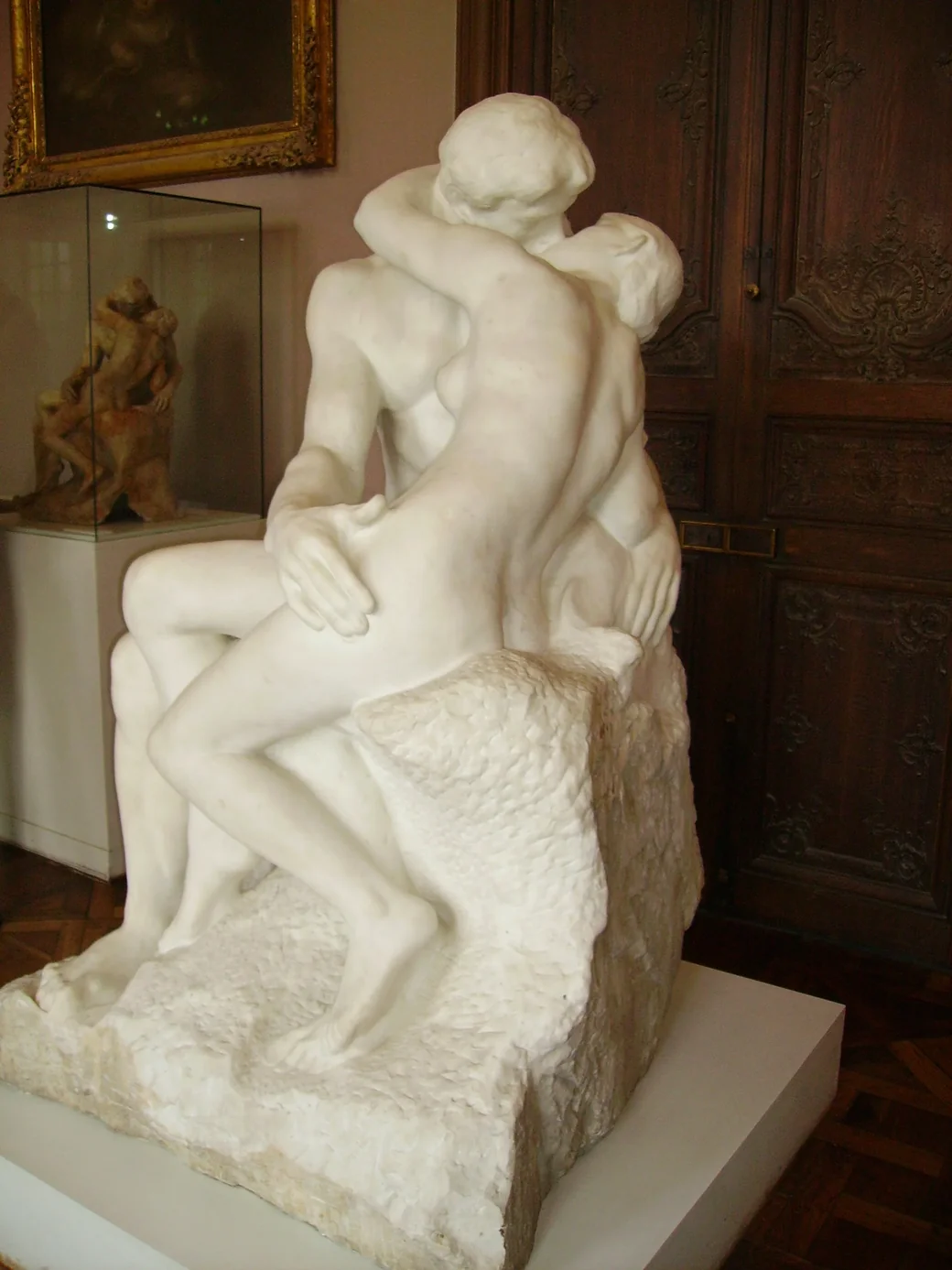
Beyond The Thinker, three further masterpieces reward close attention. The Kiss, carved in luminous white marble, captures two lovers in an embrace so tender that it became one of the most celebrated images of romantic love in Western sculpture. In sharp contrast stands Rodin's monument to the novelist Balzac, a rough, almost abstract bronze figure wrapped in a heavy robe that scandalized critics when first unveiled for being too raw and unfinished, though it is now considered one of Rodin's boldest achievements. Equally moving is The Burghers of Calais, a group of six life-size bronze figures depicting the medieval citizens who offered their own lives to save their besieged city. Rather than heroic poses, Rodin gave each man an individual expression of fear, resignation and quiet courage, a radical choice for public monument sculpture at the time. Inside the mansion, the galleries trace Rodin's journey from his early academic training to the raw, expressive modernism that made him one of the most influential sculptors of all time, with finished marbles such as The Kiss shown alongside clay sketches and plaster studies that reveal how his ideas took shape.
A Sculpture Garden of Nearly Three Hectares
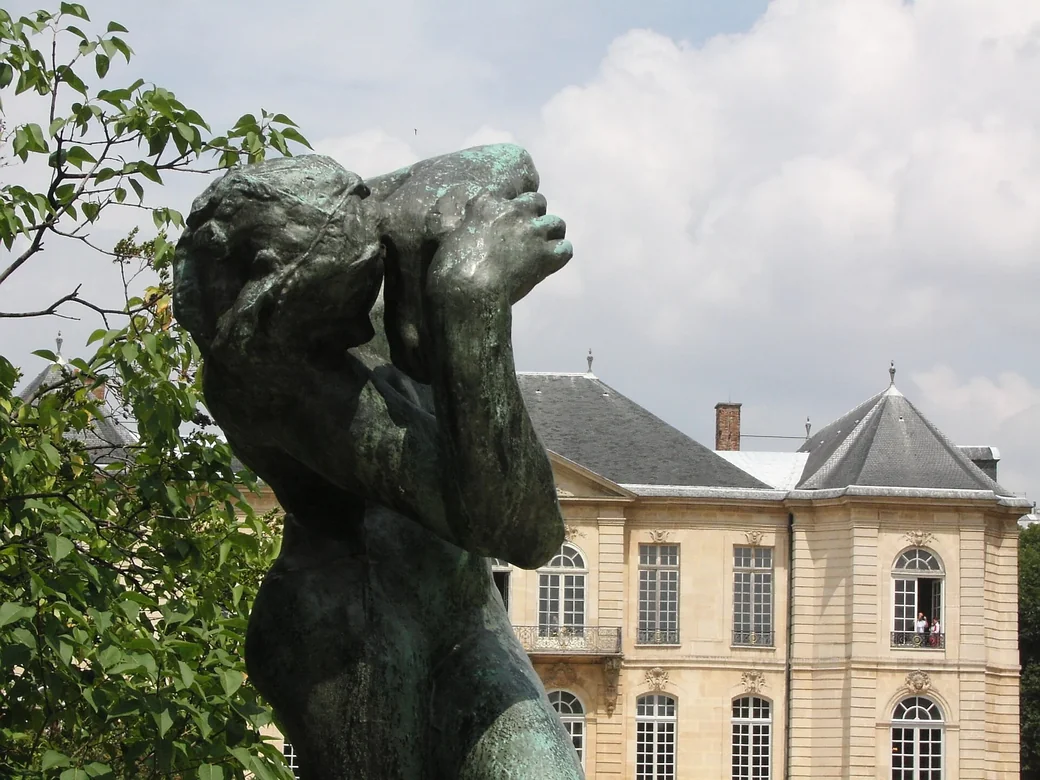
One of the great pleasures of visiting the Musée Rodin is the garden that surrounds the Hôtel Biron, a peaceful expanse of nearly three hectares that Rodin himself loved to wander during his years working there. Gravel paths lead visitors past clipped hedges, mature trees and a formal rose garden, opening onto lawns where bronze casts of The Thinker, The Gates of Hell and The Burghers of Calais stand in the open air exactly as Rodin envisioned his monumental works being seen. Wooden benches are placed throughout, encouraging visitors to slow down and sit awhile among the roses. On a clear day, the garden's calm, leafy setting feels worlds away from the busy streets just outside the gates, and many visitors linger here as long as they do inside the galleries themselves. Reflecting pools set among the hedges and lawns mirror the trees and statues, adding to the garden's tranquil atmosphere.
Best Time to Visit the Musée Rodin
The Musée Rodin is at its calmest right at opening on a weekday morning, when the rooms of the Hôtel Biron feel almost private and the garden paths are still quiet. Late afternoon is another rewarding window: the light softens across the sculpture garden and bronzes such as The Thinker take on warm, glowing tones. Weekdays outside French school holidays generally offer the most relaxed visit, while sunny weekends give the garden a lively, local atmosphere. Late spring and early summer are especially lovely, when the rose garden is in bloom and the benches beneath the trees invite a long pause between the indoor galleries and the outdoor works.
Metro, RER and Bus Options
The Musée Rodin sits right in the heart of the 7th arrondissement (city district), and getting there by public transport is simple. Metro Line 13 stops at Varenne, directly outside the museum's gates, making it by far the most convenient option. Lines 8 and 13, along with RER C (Paris's regional express rail network), converge a short walk away at Invalides, useful if you are coming from other parts of Paris or connecting from an airport train. Several bus routes also stop within a few minutes' walk of the entrance. Because the surrounding streets are lined with grand townhouses, government buildings and leafy squares, many visitors choose to walk to the museum from nearby landmarks such as Les Invalides or the Musée d'Orsay rather than taking transit for the final stretch.
Combine Your Visit With the 7th Arrondissement's Landmarks
The Musée Rodin sits within easy walking distance of some of Paris's grandest sights, making it easy to combine into a half-day itinerary in the 7th arrondissement (city district). Les Invalides, with its golden dome and Napoleon's Tomb, is just a few minutes away on foot, while the Musée d'Orsay and its world-famous Impressionist collection sits along the Seine a short walk to the north. Energetic visitors can continue on to the Eiffel Tower, well within walking distance across the Champ de Mars, or simply wander the quiet, elegant streets of the surrounding neighborhood, home to embassies, ministries and some of the city's most beautiful eighteenth-century architecture. Many travelers pair the Musée Rodin with Les Invalides in a single morning, since both museums reward an unhurried visit rather than a rushed one.
An Accessible Experience for All Visitors
The Musée Rodin has invested significantly in making both the historic mansion and its garden accessible to visitors with disabilities. Ramps and elevators allow step-free movement through the galleries, wheelchairs are available to borrow at the cloakroom, and accessible restrooms with automatic doors are provided on site. Outdoors, pathways through the sculpture garden have been adapted so that wheelchair users can enjoy the bronze works displayed among the trees and rose beds. Visitors who are blind or have low vision can arrange a personalized tactile tour, during which staff provide gloves and guide them in exploring selected sculptures by touch. For visitors who are deaf or hard of hearing, induction loop technology is installed at the ticket desk, cloakroom, gift shop and audio-guide counter, and can be fitted to guided-tour equipment on request. Guide dogs are welcome throughout.
Photography and Making the Most of Your Visit
A single visit takes in both the mansion's galleries and the sculpture garden, so there is no need to choose between them; most visitors spend around two hours exploring both, though art lovers can easily stay longer. Photography without flash is generally welcomed throughout the Musée Rodin's galleries and garden, and the outdoor sculpture park is especially rewarding for photographs in the soft morning or late-afternoon light, when the bronze surfaces of works like The Thinker and The Gates of Hell take on warm, glowing tones. Bring a bottle of water in summer, since much of the visit takes place outdoors with limited shade along some paths. An audio guide is available to help make sense of Rodin's long career and the many versions and studies on display, and is well worth the small extra time it takes to collect at the entrance. Finally, leave time to simply sit in the garden rather than rushing through; the benches among the roses are as much a part of the Rodin experience as the sculptures themselves.
Musée Rodin: Visitor Tips
Buy your ticket online in advance to skip the queue, wear comfortable shoes for the gravel garden paths, and budget at least two hours to see both the mansion's galleries and the outdoor sculptures at a relaxed pace.
Musée Rodin: Best Time to Visit
Visit at weekday opening for quiet galleries, or late afternoon for soft light in the sculpture garden. Outside French school holidays it is calmer; the rose garden blooms in late spring.
Musée Rodin: Admission Fees
Adult
Covers the museum rooms, the sculpture garden and current exhibitions.
€14
Under 18 (free)
Free for all visitors under 18, whatever their nationality. A valid ID showing date of birth may be requested.
Free
Ages 18–25 from the EEA (free)
Free for nationals or residents of an EEA country aged 18 to 25. ID (and proof of residence where relevant) is required.
Free
First Sunday of the month (free)
Free for everyone on the first Sunday of the month, from October to March.
Free
Combined ticket: Rodin Museum + Orsay Museum
One ticket for both museums; the two visits can be made on separate days within the validity period stated at purchase.
€25
Combined ticket: Rodin Museum + Quai Branly Museum
One ticket for both museums; the two visits can be made on separate days within the validity period stated at purchase.
€23
Combined ticket: Rodin Museum + Army Museum
One ticket for both museums; the two visits can be made on separate days within the validity period stated at purchase.
€26
Quick Info
2h
easy
Musée Rodin: Getting There
The museum sits in the heart of the 7th arrondissement, a short walk from the Seine and Les Invalides. Line 13 stops directly at Varenne, right outside the gates, while Lines 8 and 13 plus RER C (Paris's regional express rail network) serve Invalides a few minutes away. Several bus routes also stop nearby, and the area is very walkable from Saint-Germain-des-Prés or the Eiffel Tower.
Nearby stops & parking
Varenne (Line 13) is directly in front of the museum entrance. Invalides (Lines 8, 13 and RER C, Paris's regional express rail network) is roughly a seven-minute walk east, offering fast connections toward central Paris, La Défense and the RER links to Paris's airports.
Musée Rodin: Dress Code & Etiquette
There is no formal dress code; comfortable, casual clothing is fine throughout the mansion's galleries. Because much of the visit takes place outdoors in the sculpture garden, wear weather-appropriate layers and sturdy, comfortable shoes suited to gravel paths, especially after rain.