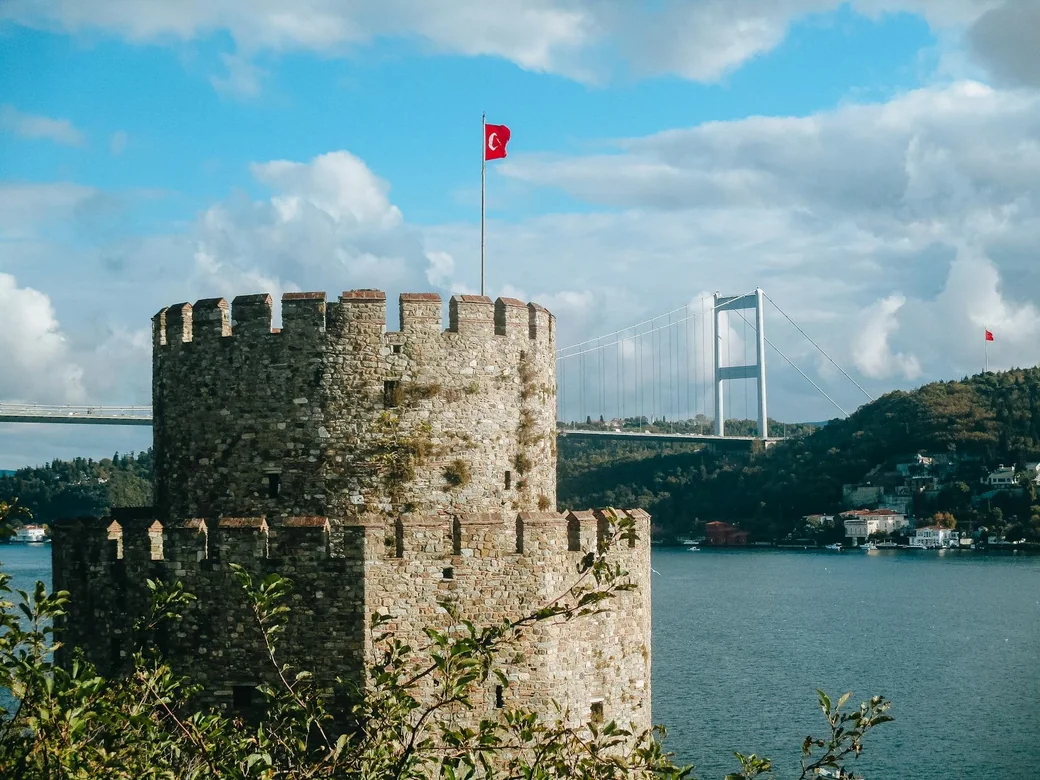
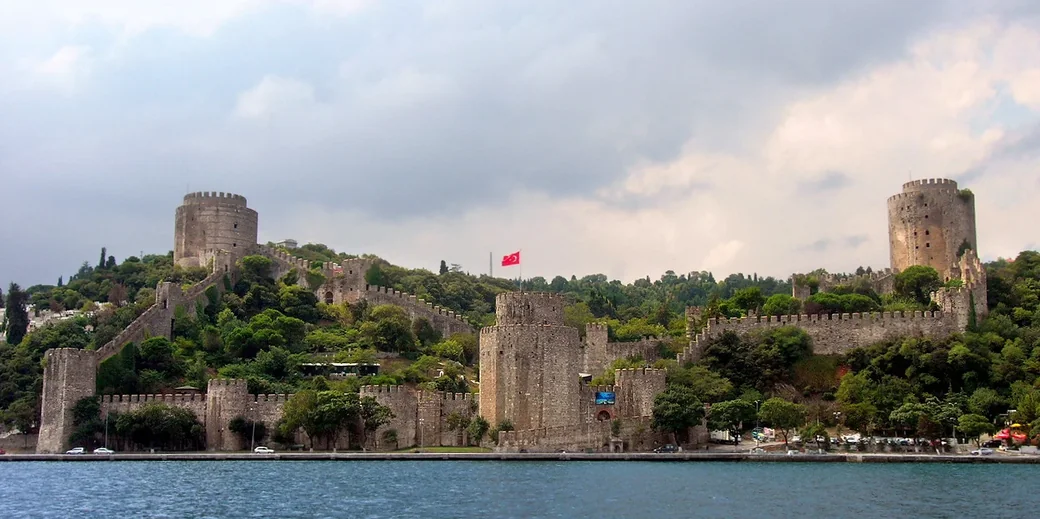
Rumeli Fortress (Rumelihisarı) is a fifteenth-century Ottoman fortress on the European shore of the Bosphorus in Istanbul, built by Sultan Mehmed II shortly before the conquest of Constantinople. Its mighty towers and battlemented walls climb a steep, wooded slope just above the water, creating one of the most memorable sights along the strait. Today it is a museum set among gardens and viewpoints, and together with the lively waterfront below, it makes a rewarding stop for anyone exploring the shores of the Bosphorus.
Rumeli Fortress: Location, accommodation options and contact
Yahya Kemal Caddesi No: 42, Rumelihisarı Mahallesi, 34470 Sarıyer, Istanbul
The place's location on the map and nearby accommodation and hotel options are shown by Stay22. Cookies are used. Your consent is remembered on every page; you can turn it off at any time in the cookie settings.
Strait-Cutter (Boğazkesen): Rumeli Fortress Names, Location and Size
Ottoman sources call the fortress Boğazkesen (Strait-Cutter), Yenice Hisar (New Fortress) and Kulle-i Cedid (New Tower), and today it also gives its name to the surrounding Rumelihisari (Rumelihisarı) neighbourhood in the Sariyer (Sarıyer) district. It stands at one of the narrowest stretches of the strait, directly across from Anadoluhisari (Anadoluhisarı) on the Asian shore. Covering about thirty decares (roughly three hectares), it is one of the most striking examples of military architecture built before the conquest of Constantinople, and it counts among the symbols of Istanbul.
Is Rumeli Fortress Open to Visitors? How to Plan Your Visit
Rumeli Fortress is a state museum, and the areas open to visitors can vary from time to time because conservation work is carried out in stages. Check the official museum page before you travel. Even when only parts of the site are open, the garden, the courtyard and the shoreline below the walls give a good picture of the fortress, and the three great towers look impressive from the coast road. Allow about an hour and a half for the site itself and add time for a waterfront walk.
Rumeli Fortress History: How It Was Built in About Four Months in 1452
Before the siege of Constantinople, Mehmed the Conqueror ordered the fortress built to take control of the Bosphorus. Construction began in spring 1452 and finished in August the same year, so the job took about four months. The design is said to have been drawn up by the architect Müslihiddin Ağa under the sultan's guidance. Each of the three great towers was entrusted to a vizier, while Mehmed himself oversaw the section facing the sea. Museum records mention 300 masters, 700 to 800 labourers and 200 carters, boatmen and porters. Timber came from İzmit and Karadeniz Ereğli, stone from Anatolia and some material from ruined Byzantine buildings.
Rumeli Fortress Towers and Architecture: Three Great Towers, Seventeen Bastions
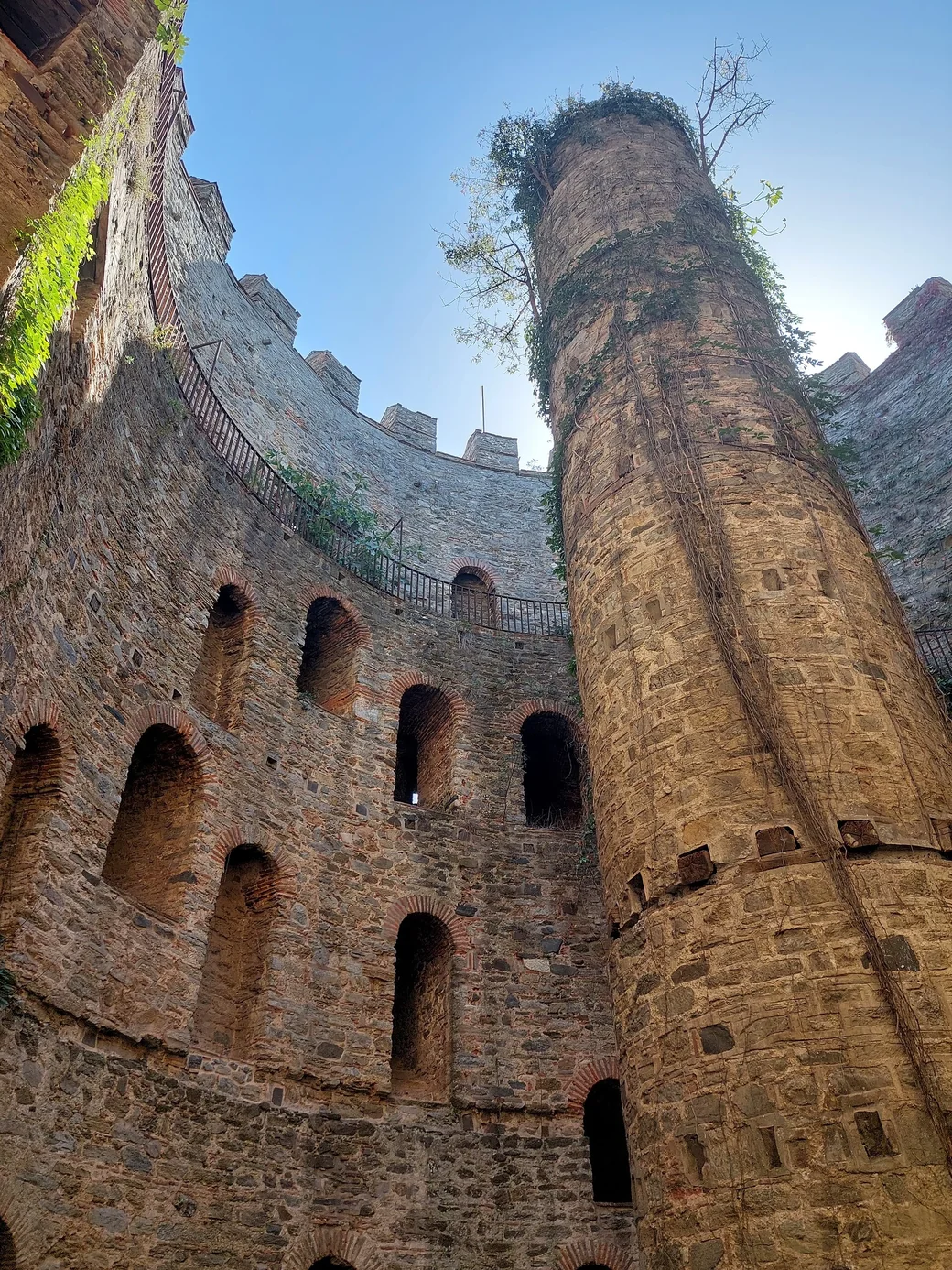
The most striking parts of the fortress are its three great towers: the Sarıca Pasha Tower at 28 metres, the Çandarlı Halil Pasha Tower at 22 metres and the Zağanos Pasha Tower at 21 metres. The Sarıca and Halil Pasha towers have nine floors, the Zağanos Pasha Tower eight. In total seventeen towers and bastions are linked by walls five to seven metres thick, with four main gates and a cemetery gate. The main gates are the Dağ (Mountain), Dizdar, Hisarpeçe and Sel gates, and the wooden floors of the Sarıca Pasha Tower survive to this day. The Sarıca Pasha Tower holds a council room known for its acoustics and traces of writing from the prison era. Because the Zağanos Pasha Tower served as a prison it is also called Karakule, the "Black Tower".
Boğazkesen and the Conquest: Cannon Fire and Captain Antonio Rizzo
The fortress had a simple job: to cut off help travelling from the Black Sea toward Constantinople. With cannons on both shores able to fire at passing ships, crossing the strait without permission was almost impossible. Sources report that passing vessels were asked to pay a toll and risked being sunk if they refused. In late 1452 a ship that tried to slip through was sunk and its captain, Antonio Rizzo, was captured. The incident showed that the strait was now under Ottoman control. A garrison of about 400 Janissaries (the Ottoman elite infantry corps) under Firuz Ağa was stationed in the fortress, which became one of the keys to blocking aid from the north during the siege.
Rumeli Fortress After the Conquest: Prison, Fire and the 1953 Restoration
After the conquest of Constantinople the fortress lost its military importance and from the sixteenth century served as a state prison. It was badly damaged in the earthquake of 1509 but quickly repaired, and after a fire in 1746 it was repaired again. A comprehensive restoration was launched in 1953 for the 500th anniversary of the conquest. It was carried out by three women architects, Cahide Tamer, Selma Emler and Mualla Anhegger Eyüboğlu, and the wooden houses inside the walls were removed. The fortress opened in 1968 as a museum of the Hisarlar Museum Directorate and for many years hosted summer concerts.
The Ox-Hide Legend: A Folk Tale of Rumeli Fortress
According to legend, Mehmed asked the Byzantine emperor for land on which to build a hunting lodge. The emperor agreed on condition that the building take up no more space than an ox hide. Mehmed is said to have had the hide cut into thin strips, tied end to end, and the resulting cord stretched around a very large area. The tale is also said to appear in the writings of Evliya Çelebi. It has not been confirmed by any firm historical document; it lives on as a folk story told through generations about the cunning and determination behind the fortress.
Is the Rumeli Fortress "Muhammad" Plan Real? Legends and Debates
According to another legend, the fortress was designed so that, seen from above, its outline reads "Muhammad" in Arabic letters, and the idea is even said to have come from Mehmed's teacher Akşemseddin. The three great towers supposedly correspond to the letter "mim". Because the script can also be read "Mehmed", some accounts claim the sultan had his own name written. Historians do not agree: it is argued that the plan simply followed the terrain and defensive needs, and that the resemblance may be coincidence. According to the legend, the plan is best seen from Otağtepe on the Beykoz side. One travel source adds that Mehmed lodged in a room in the fortress before the conquest, which is again only a legend.
Rumeli Fortress Museum: Cannons, Cannonballs and a Piece of the Golden Horn Chain
The fortress museum is more an open-air display than a gallery; there is no separate exhibition hall. In the garden you will see cannons and cannonballs from the conquest period, cannons from the reign of Bayezid II and late Ottoman guns. Stone artefacts from the Eastern Roman era and a piece of the chain said to have closed the Golden Horn are also shown here. Stone pines, Judas trees and wild ground cover offer a small sample of Bosphorus flora. Three viewing terraces frame the strait and Anadoluhisarı on the opposite shore.
Interesting Facts About Rumeli Fortress and Its Many Firsts
The name Rumeli comes from the term applied to the Ottoman lands in the Balkans and means "land of the Romans". Boğazkesen plays on words: it means "strait-cutter" but the same word also means throat. Because Anadoluhisarı was built in 1393-1394 by Bayezid I, Rumeli is the second Ottoman fortress at the strait's narrowest point. One source says construction took 139 days, while the museum speaks of four months. The museum text counts its towers among the largest bastions of their age. The three great towers also carry the names of three different viziers.
How to Get to Rumeli Fortress: Bus, Metro and Funicular
The easiest way is by bus: the buses that follow the coast road from Kabataş and Beşiktaş, and the buses from Taksim, stop at "Rumeli Hisarı", right beside the fortress; a navigation app shows the current line numbers. If you prefer the metro, take the M6 from Levent to Boğaziçi Üniversitesi/Hisarüstü, ride the F4 funicular down to Aşiyan and walk along the shore for about eight minutes. In busy hours the coast road slows down, so public transport is recommended.
Things to Do Near Rumeli Fortress: Aşiyan, Bebek and the Perili Köşk
The area around the fortress is perfect for exploring on foot. Walking along the shore toward Bebek you reach Aşiyan Park, home to a monument to the poet Orhan Veli Kanık. The Aşiyan Museum on the slope is the wooden house where Tevfik Fikret lived from 1906 to 1915, designed by the poet himself, and his grave lies in its garden. It is roughly a 10 to 15 minute walk from the fortress, so allow for the uphill climb. To the north, toward the Fatih Sultan Mehmet Bridge, the red-brick Perili Köşk houses the Borusan Contemporary art museum. Fish restaurants and cafés line the shore for a break. Combined with the fortress, this stretch of shoreline easily fills a relaxed half-day outing.
Rumeli Fortress Photo Spots and Bosphorus Viewing Tips
You get the best view of the fortress from the shoreline along Yahya Kemal Caddesi and around the nearby pier, where the three great towers and the walls fit into a single frame. With Anadoluhisarı on the opposite shore you can join both banks in one picture. Seeing the structure from the water on a Bosphorus cruise offers an entirely different perspective. When the fortress is open, its viewing terraces overlook the strait and the Fatih Sultan Mehmet Bridge. Early morning and the hours before sunset bring softer light and fewer people; wide horizontal frames work well here without a tripod.
Rumeli Fortress Visiting Tips: Avoiding Crowds, Dos and Don'ts
To avoid crowds, choose weekday mornings. Wear comfortable shoes with grip for the stony ground and steep slopes. When the fortress is open, climb walls and towers only where access is allowed and never cross barriers. Do not climb on historic stones, cannons or walls, do not write on them, and take your litter with you. Show respect to anyone visiting the mosque inside and keep quiet. Bring water and a hat for the summer heat. Check which sections are open to visitors before you go, since access can change as conservation work proceeds.
Rumeli Fortress Accessibility, Families and Guide Options
The fortress stands on a rugged hill; steps are narrow and steep and the ground is uneven stone. For wheelchair users access is therefore partial: lower areas may be reachable, but climbing the towers and walls is difficult. Anyone with a pushchair or limited mobility will find it easier to enjoy the fortress from the coast road. For families, the courtyard and garden are suitable; keep young children close on the towers' steep stairs. Guided tours and audio guides are mostly offered by independent tour operators, and available languages vary.
Rumeli Fortress: Visitor Tips
Check the museum's official page before you set out to see which areas are open, because conservation work can change what visitors can enter. Wear comfortable shoes with good grip for the steep, uneven stone. Combine the visit with a waterfront walk: the Aşiyan Museum and the Bebek shoreline are within walking distance. For photos, try the coast road with the opposite shore in the frame. Weekday mornings are calmer. In summer bring water and a hat; fish restaurants and cafés along the shore make easy rest stops.
Rumeli Fortress: Best Time to Visit
Spring (Judas tree season) and autumn; early weekday mornings or the hours before sunset. The fortress is closed on Mondays.
Rumeli Fortress: Admission Fees
Adult and ages 8–18 – international visitors
Standard rate for international visitors aged 8 and over. Museum Pass Istanbul is accepted.
€6
Children up to 7 (free)
Free entry for children aged 7 and under; proof of age may be requested.
Free
Quick Info
1h 30m
moderate
Rumeli Fortress: Getting There
The easiest way to reach Rumeli Fortress is by bus. The buses that follow the coast road from Kabataş and Beşiktaş, and the buses from Taksim, stop at the "Rumeli Hisarı" stop, which is very close to the entrance; a navigation app shows the current line numbers.
If you prefer the metro, take the M6 from Levent to its terminus, Boğaziçi Üniversitesi/Hisarüstü. From there ride the F4 funicular down to Aşiyan station and walk along the shore for about eight minutes.
If you drive, use Yahya Kemal Caddesi. Parking along the coast road is limited and traffic slows down on weekends, so public transport or a taxi is the better choice.
Nearby stops & parking
The nearest bus stop is "Rumeli Hisarı", right beside the fortress. The Aşiyan bus stop and the Aşiyan F4 funicular station are about an eight-minute walk away. The Boğaziçi Üniversitesi/Hisarüstü M6 station sits uphill, so walking down without the funicular means a steep descent. For taxis and ride-hailing, the best drop-off point is the area by the entrance on Yahya Kemal Caddesi. Parking spaces along the coast road are limited and fill up quickly.
Rumeli Fortress: Dress Code & Etiquette
The fortress is not a place of worship, but sturdy, non-slip shoes are essential on its stony, uneven and sloping ground. Bring a hat and sun protection in summer and a light jacket in cooler months, since the wind off the Bosphorus can be strong. If you plan to visit the small mosque inside the fortress, choose simple clothing that covers shoulders and knees, respect people at prayer and keep your voice low.