Skip to contentSkip to navigation
Guide&Travel
Favorites (0)
Sign InSign up
Guide&Travel

In-depth city guides — compare destinations, plan your budget, and discover what's nearby. In 12 languages.

support@guideandtravel.com
Bulgaria

Explore

  • Cities
  • Places
  • Events & Key Dates

General Information

  • About Flights
  • About Car Rental
  • About Travel Insurance
  • About SIM Cards
  • About Visas

Tools

  • City Comparison
  • Packing List

Support

  • Help Center
  • Contact Us
  • FAQ

Company

  • About Us
  • Blog
  • Sponsorship

Subscribe to our Newsletter

Get travel tips, exclusive deals, and inspiration delivered to your inbox.

© 2026 GuideAndTravel. All rights reserved.

Privacy PolicyTerms of ServiceCookie PolicyImage Credits
Food & Drink — Bangkok
CitiesBangkokFood & Drink

Food & Drink in Bangkok

Local cuisine, must-try dishes, signature restaurants, and the food culture you should know.

Bangkok eats around the clock, and it eats in layers. A Teochew noodle broth simmering in Chinatown, a palace recipe plated in a Sathorn dining room, a charcoal grill on a side street and a tasting menu thirty floors up all belong to the same city and often to the same evening. Few capitals let you move between those worlds so quickly, or so cheaply.

Three traditions shaped what the city puts on a plate. Chinese migrants from Teochew and Hokkien communities settled around Yaowarat and gave Bangkok its breakfast, its noodles and its late-night habits. The Rattanakosin court refined the same ingredients into something finer and fussier. Portuguese, Mon and Indian-Muslim families added sweets, soaked rice and spice-heavy curries that no other Thai region cooks the same way.

The practical news is that eating well here takes almost no planning. A one-dish noodle shop and a restaurant carrying international acclaim can sit on the same block, and the queue outside a stall tells you more than any rating. The tips below cover what to order, when the city eats, how to handle dietary needs, and the few traps worth knowing about.

Typical food & drink prices in Bangkok

Last updated: November 9, 2026.Prices are reviewed and refreshed at least once a month.

Average meal cost (per person)

Breakfast
THB 150
Lunch
THB 250
Dinner
THB 380

Common items

Breakfast

  • Khao Tom Moo (Pork Rice Soup)THB 60
  • Jok (Thai Rice Porridge)THB 50
  • Kai Jeow Moo Sap (Thai Pork Omelette)THB 50

Lunch

  • Pad Thai Goong (Stir-Fried Noodles with Shrimp)THB 70
  • Khao Man Gai (Hainanese-Style Chicken Rice)THB 60
  • Som Tam Thai (Green Papaya Salad)THB 55

Dinner

  • Tom Yum Goong (Spicy Shrimp Soup)THB 150
  • Massaman Curry (Beef or Chicken)THB 120
  • Pla Pao (Salt-Crusted Grilled Fish)THB 250

Snacks

  • Moo Ping (Grilled Pork Skewers)THB 40
  • Kanom Krok (Coconut Rice Pancakes)THB 40
  • Poh Pia Tod (Fried Spring Rolls)THB 50
  • Sai Krok Isan (Grilled Fermented Pork Sausage)THB 50
  • Roti Sai Mai (Cotton Candy Roti Wrap)THB 40

Desserts

  • Khao Niew Mamuang (Mango Sticky Rice)THB 90
  • I-Tim Ka-Ti (Thai Coconut Ice Cream)THB 40
  • Kluay Buat Chi (Banana in Sweet Coconut Milk)THB 45

Other

  • Kafae Ron (Hot Thai Coffee)(drink)THB 35
  • Cha Yen (Thai Iced Tea)(drink)THB 35
  • Chang Beer (Local Lager, 630ml)(drink)THB 90
  • House Wine (Glass, Restaurant)(drink)THB 300

Approximate prices, updated periodically. Actual costs may vary.

Highlights

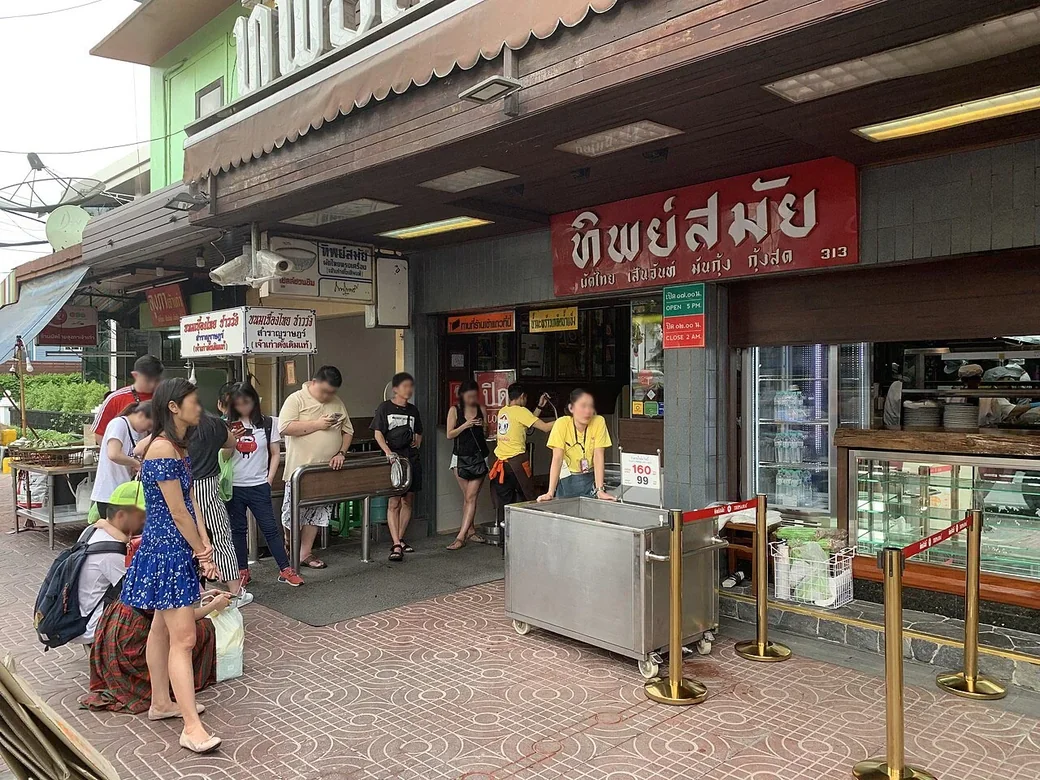
Thipsamai, a street stall turned restaurant on Maha Chai Road in 1966, is famed for its Pad Thai (Thai stir-fried noodles) near Pratu Phi (Ghost Gate).

Pad Thai

Thipsamai

4.4€
Directions

Thipsamai is one of Bangkok's most famous pad thai addresses, a family business that has served the dish on Maha Chai Road since 1966 and is also known locally as Pad Thai Pratu Phi, after the nearby Ghost Gate. Queues form at the original shophouse at busy times, and the Michelin Guide has recognised it with a Bib Gourmand. Its pad thai is known for sun-dried sen chan rice noodles from Chanthaburi and a homemade prawn oil, and the signature version comes wrapped in a thin omelette and topped with river prawns. Fresh orange juice is a favourite on the side. Expect a queue at peak hours; the restaurant is closed on Tuesdays, and Jay Fai is only a few doors away.

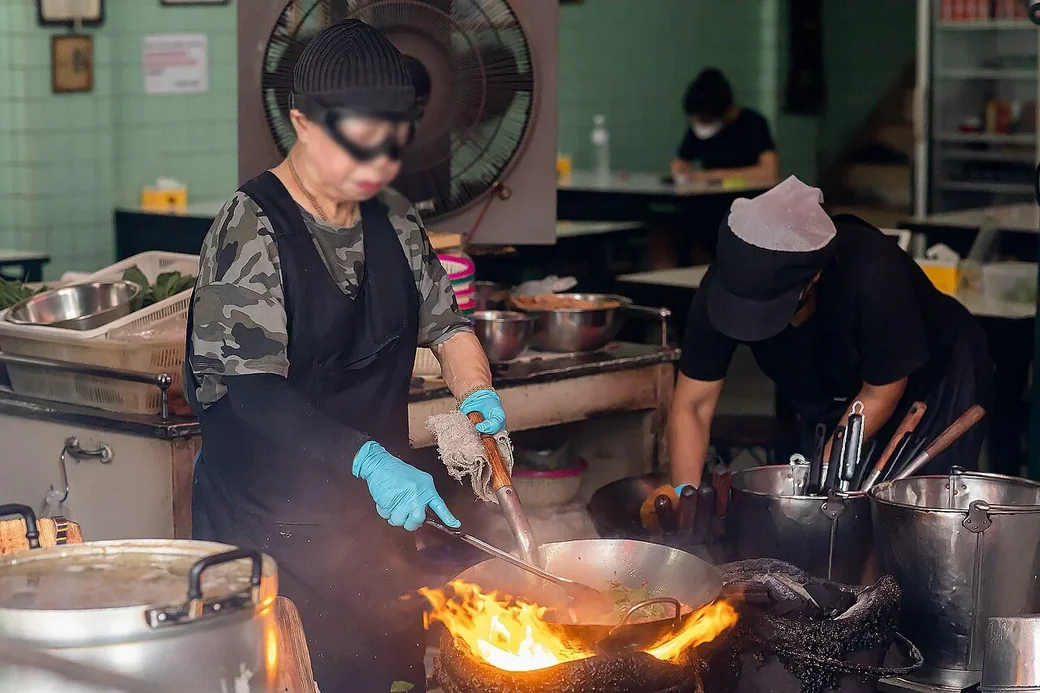
Raan Jay Fai (Jay Fai's shop), on Maha Chai Road, won a Michelin star in 2018 and is known for wok-cooked seafood, crab omelette and its goggled chef.

Street Food

Jay Fai

4.5€€€
Directions

Jay Fai is Bangkok's legendary street-food restaurant, run by chef Supinya Junsuta, known to everyone as Jay Fai. In 2018 it became the first street food stall in Bangkok to win a Michelin star, and it still holds one in the 2026 guide. She cooks every dish herself over roaring charcoal woks, wearing her trademark ski goggles, and received the Icon Award from 50 Best in 2021. The signature dish is the crab omelette, a thick roll generously filled with fresh crab meat, joined by favourites such as stir-fried crab in yellow curry and tom yum with giant prawns. What sets Jay Fai apart is the rare mix of a street-side setting and Michelin-level cooking. It opens Wednesday to Saturday and queues can form, so plan your visit accordingly.

Sorn

Southern Thai

Sorn

4.9€€€€
Directions

Sorn is Bangkok's celebrated southern Thai restaurant, led by self-taught chef-owner Supaksorn Jongsiri. It holds three Michelin stars in the 2026 Michelin Guide Thailand and, according to the guide, is the world's first three-star Thai restaurant. Its cooking blends tradition with modernity, drawing on the food culture of southern Thailand. Tapi River prawns, Phuket lobster and Andaman squid are among the stars of a perfectly paced tasting menu, and what sets Sorn apart is how firmly every course is rooted in southern Thai produce and flavours. Securing a table takes planning, as the booking process is thorough, so reserve well in advance. The restaurant is closed on Saturdays.

Sühring

German

Sühring

4.9€€€€
Directions

Sühring is the modern German restaurant of twin chefs Thomas and Mathias Sühring, opened in 2016 in a carefully restored 1970s villa in a quiet residential part of Bangkok. It earned its first Michelin star in 2018, held two stars for seven consecutive years and was promoted to three stars in the 2026 Michelin Guide Thailand, joining Sorn as one of only two three-star restaurants in the country. The tasting menu draws on family recipes, childhood memories and travels, and is built on traditional German techniques such as fermenting, pickling and curing, with dishes as beautiful as they are delicious. The villa itself sets Sühring apart: it feels like being invited to someone's home, and the seats at the kitchen counter are especially appealing. Tables are hard to secure, so book well in advance.

Baan Tepa

Modern Thai

Baan Tepa

4.8€€€€
Directions

Baan Tepa is the Thai restaurant of chef Chudaree Debhakam, known as Tam, set in her grandparents' family home in Bang Kapi. The house was built more than five decades ago and passed down through three generations, and its name joins the Thai word for home with the family name Debhakam. It holds two Michelin stars and a Michelin Green Star, and Chef Tam was the first Thai woman to earn two stars. A seven-course Thai tasting menu reimagines traditional curries, flavours and techniques, and the experience begins in the garden, where guests taste herbs grown on site. Sustainability shapes everything: food scraps become seasonings, crab shells return as table décor and other kitchen waste is composted. Dinner is served Wednesday to Sunday in set seatings, so reserve ahead; solo diners can book by email.

Potong

Thai-Chinese

Potong

4.8€€€€
Directions

Potong is a progressive Thai-Chinese restaurant in Bangkok's Yaowarat district, created by chef Pichaya Soontornyanakij, known as Pam. It occupies a roughly 120-year-old Sino-Portuguese building that once housed her family's Chinese herbal pharmacy, and it takes its name from her ancestors' herbal shop. Opened in 2021, it holds one Michelin star and won the Michelin Opening of the Year award, and Chef Pam was named The World's Best Female Chef 2025. About 20 courses of storytelling cuisine blend Thai and Chinese flavours with creative uses of Chinese ingredients, and the 14-day-aged duck is a signature. Many components, from soy sauce to miso, are made in-house. What sets Potong apart is the building itself: the evening moves from a ground-floor bar up to a rooftop, with a different mood on each floor. Book well ahead.

Nusara

Modern Thai

Nusara

4.7€€€€
Directions

Nusara is chef Thitid Tassanakajohn's tribute to his grandmother, whose name it bears; the chef is also behind Le Du. It holds one Michelin star in the 2026 Michelin Guide Thailand and stands opposite Wat Pho in Bangkok's old town, in a renovated shophouse with olive-green interiors and gold accents. The evening begins with welcome bites, with the softly lit rooftop the best place to admire the view of Wat Pho, before guests descend to the main dining room. Highlights include Thai Wagyu stir-fried with holy basil and a quartet of regional relishes, and the tasting menu gives family recipes a creative spin. Dinner service only; reservations are recommended.

K. Panich

Thai Desserts

K. Panich

4.6€
Directions

K. Panich is a small family-run shop in Bangkok's old town that has been making mango sticky rice for close to a century. Its recipe was handed down through the family from a woman who cooked in the royal palace during the reigns of King Rama V and King Rama VI, and today a third generation runs the shop. The Michelin Guide awards it a Bib Gourmand. The star is khao niao mamuang, sweetened sticky rice with coconut cream and ripe mango; the family still mixes the coconut cream into the rice by hand with a wooden paddle before a machine finishes the job. You order and pay at the counter and can eat at the seats across the street. Portions can run out later in the day, so go early, and note that the shop is closed on Sundays.

Showing 8 of 21

Bangkok Food Guide: 17 Things to Know

From dawn rice porridge to late-night noodles

Overview▾

Why Bangkok Is Asia's Leading Food City

Bangkok holds more Michelin stars than any other Thai city, with top-tier kitchens such as Sorn for southern Thai cooking and Sühring for contemporary German. It also appears regularly on Asia's 50 Best Restaurants. Two milestones matter historically: Nahm became the first Thai restaurant anywhere to win a star, in London in 2002, and Jay Fai became the first Thai street-food stall to win one, in 2018. Tom yum kung joined UNESCO's intangible heritage list in 2024. Names worth knowing include Gaggan Anand, Thitid Tassanakajohn, Supaksorn Jongsiri and Chudaree Debhakam.

What Makes Bangkok Cooking Different

Bangkok sits in the Central Plains, so its default flavour is balanced rather than extreme: less fiercely hot than southern cooking, less sour and herbal than the north, sweeter and saltier than either. On top of that base the city layers Chinese technique, court refinement and immigrant traditions. Because it is the capital, every regional cuisine of Thailand is also represented here, from Isaan grills to southern curries. The city even has its own protected-origin produce, the Bang Khun Thian lychee, grown in orchards on the Thonburi side and registered as a geographical indication in 2018.

Signature Bangkok Dishes and What They Are

Pad thai is tamarind-seasoned rice noodles with egg, peanuts and fish sauce. Tom yum kung is a hot-and-sour prawn soup built on lemongrass, galangal and kaffir lime leaf. Kuay jub nam sai sends rolled rice noodles, crisp pork belly and offal through a clear broth heavy with white pepper. Khai jiao poo is a crab omelette, crunchy outside and loose inside. Boat noodles come in tiny bowls of dark, blood-thickened broth. Khao man gai pairs poached chicken with rice cooked in its stock, and khao mu daeng layers red barbecue pork over rice.

History and Culture▾

Royal Thai Cuisine and the City's Culinary History

Court cooking took shape in the Ayutthaya palaces and was rebuilt in Bangkok, where dishes were served on trays matched to the diner's rank and prepared with an obsessive eye for trimming and presentation. What is sold today as royal Thai cuisine largely descends from the Wang Suan Sunandha kitchens of Dusit Palace. Pad thai belongs to a different chapter: the government promoted noodle eating in the 1940s after flooding hit the rice harvest, though historians treat parts of that origin story as anecdote. To go deeper, take a cooking class with a market walk, or visit the Chinatown heritage centre at Wat Traimit.

Eating Like a Local▾

Thai Breakfast in Bangkok: Savoury, Hot and Early

Breakfast here is savoury. Jok is rice simmered to a cream with minced pork, ginger and often a soft egg; khao tom is its brothier cousin with the grains still whole. Patongo are fried dough sticks, dunked in jok or a pandan custard, usually sold next to nam tao hoo, fresh soy milk served hot and soupy. Curry-rice shops open around dawn for the widest choice. Grilled pork skewers with sticky rice are the standard breakfast on the move, and hot milk tea comes with condensed milk already at the bottom of the glass.

Bangkok Meal Times and Late-Night Eating

Meal times are loose. Breakfast runs from early morning to mid-morning, lunch is a fast single plate around noon, and dinner from early evening is the social meal. Between all of that, people snack more or less continuously. Morning markets and curry-rice shops fade out by late morning; Chinatown stalls come alive after dusk and peak through mid-evening. One thing worth checking: published closing times are not last orders, and many kitchens stop cooking well before the doors shut. After midnight the options narrow to rice-porridge parlours, a few round-the-clock street clusters and 24-hour supermarket counters, and trains have stopped, so plan a ride.

Types of Bangkok Eatery, Explained

A raan khao gaeng is a curry-rice shop: point at the trays, eat over rice. A tam sang kitchen cooks single plates to order, such as basil pork with a fried egg. Noodle shops usually specialise in one or two meats, and boat-noodle counters serve tiny bowls you stack as you go. Moo kata is domed tabletop barbecue, Thai suki is a sauce-forward hot pot, and mall food courts run on prepaid cards.

Street Food and Markets▾

Yaowarat After Dark: The Chinatown Street Food Map

Take the metro to Wat Mangkon and walk out of exit one; the neon comes on around dusk and the strip peaks through mid-evening. Nai Ek Roll Noodle started as a cart in the 1960s and has long been a Michelin Guide pick for its peppery rolled-noodle broth. Lim Lao Ngow makes fishball noodles by hand, T&K Seafood is the green-shirted corner with the grilled prawns, Jek Pui serves curry over rice with no tables at all, and Pa Tong Go Savoey fries dough in a vast bronze wok. Bring cash, though many stalls now take QR payment, and expect rain to clear the street in minutes.

Where Locals Eat, Plus Markets and Supermarkets

Away from the tourist strips, the reliable clusters are Wang Lang on the Thonburi side, Sukhumvit Soi 38 (a soi is a side street), Huai Khwang, Bang Rak and the revived shophouse streets of Song Wat and Talat Noi. Or Tor Kor, beside the metro at Kamphaeng Phet, is widely called the country's best fresh market; Khlong Toey is the wholesale one, best at dawn. For groceries, Tops covers the middle ground, Villa Market carries imports and special-diet products, Foodland stays open around the clock, and Gourmet Market is the premium option. The city has also been moving pavement vendors into covered hawker centres, so some old stalls have relocated.

Sweets and Drinks▾

Thai Sweets, Bakeries, Ice Cream and Bread

Thailand's golden egg-yolk sweets, foi thong and thong yip among them, arrived with the Portuguese and stayed in the court repertoire. In the Kudi Chin quarter on the Thonburi bank, three remaining families still bake khanom farang from nothing but flour, sugar and duck eggs, with no yeast or baking powder. Street classics include khanom buang, a bottle-cap-sized crisp crepe, and khanom krok, coconut cakes cooked in a dimpled pan. Coconut ice cream is often served in a soft bun rather than a cone, shaved ice arrives drowned in syrup and condensed milk, and a modern sourdough and pastry scene has taken root in Charoenkrung, Ari and Thonglor.

Bangkok Coffee Waves and Thai Tea Culture

Third-wave coffee has settled into Ari, Thonglor and Ekkamai, Charoenkrung, Chinatown and Phaya Thai, and most serious cafes pour highland Thai beans from Chiang Rai, Chiang Mai and Nan alongside imports. Roasters worth seeking out include Nana Coffee Roasters, Roots, Factory Coffee and Ceresia. The older tradition is oliang, a dark iced coffee deepened with roasted grains. Tea came through Chinese traders in Yaowarat, where the country's best-known tea brand began as a Chinese teashop; the orange colour of cha yen comes from the blend, not the leaf. Ordering shorthand: cha yen and cha ron already include milk, cha dam yen does not, cha manao is the lime version.

Food and Drink Pairings, Plus Alcohol Rules

Sweet iced tea is the standard counterweight to chilli heat, which is why it turns up beside the spiciest plates. Lager goes with papaya salad and anything off the grill, and locals routinely drink beer over ice. Sticky rice works as a utensil with Isaan food, and plain Chinese tea cuts the oil at Chinatown seafood counters. Fine-dining kitchens increasingly build non-alcoholic pairings from herbs and flowers, while wine stays expensive because of import duty. Retail alcohol sales run within a fixed daily window and stop entirely on several Buddhist holidays and election days, with hotels and licensed venues exempt, so check locally before planning a drink.

Dietary Needs▾

Vegan, Vegetarian and Gluten-Free in Bangkok

Two words matter. Jay means vegan in the Chinese-Buddhist sense and excludes meat, seafood, dairy, eggs and five pungent vegetables including garlic and onion; mangsawirat means vegetarian. Jay kitchens fly a yellow flag with red Thai script. The hidden traps are fish sauce and shrimp paste, so learn gin jay (I eat jay food), mai sai nam pla (no fish sauce) and mai sai goong haeng (no dried shrimp). Sukhumvit, Ari and Chinatown have the densest clusters, and every autumn a nine-day vegetarian festival turns much of the city plant-based. For gluten, soy and oyster sauces usually contain wheat and woks are shared, so favour rice noodles, papaya salad, glass-noodle salad and coconut soups, and carry a Thai allergy card.

Halal Food in Bangkok: Areas, Logos and Dishes

Thailand runs one of Southeast Asia's most established halal certification systems through the Central Islamic Council, whose green logo appears on restaurant counters, food-court stalls and packaged goods in convenience stores. In practice many well-loved Muslim-run kitchens work on reputation rather than a displayed certificate, and asking is completely normal and welcomed. The strongest clusters are Sukhumvit Soi 3 around Nana, Ramkhamhaeng, Bang Rak near Haroon Mosque, Phahurat and Pratunam, and MBK has a dedicated halal food court upstairs. Dishes to look for include khao mok, the Thai biryani, mataba stuffed roti, oxtail soup and massaman curry. Both airports have certified outlets and prayer rooms.

Practical Tips▾

Table Manners, Tipping, Water and Tourist Traps

The spoon in your right hand does the eating and the fork only pushes food onto it; chopsticks are for noodles, not rice. Use the serving spoon for shared plates, eat sticky rice with your fingers, and say mai phet (not spicy) or phet nit noi (a little spicy) rather than just spicy. Many sit-down places add a service charge plus tax, in which case nothing extra is expected; otherwise round up, and hand the money to staff rather than leaving it on the bill tray. Bottled water is the norm and tube ice is factory-made. Two traps: unpriced grilled seafood on the most touristed stretches, and restaurants recommended by drivers earning commission. Queues of locals and a Thai price board are the reliable signals.

Street Food and Markets▾

Yaowarat Road: Chinatown's Main Artery, Day and Night

Yaowarat is a road of roughly one and a half kilometres, cut in the early 1890s under King Rama V and named after his son, Prince Vajirunhis. It runs from Odeon Circle towards Wang Burapha and has two lives. By day it is a working trade street of gold shops, herbal medicine stores, dried-goods sellers and Chinese restaurants, quiet enough to look at the shopfronts; the evening food stalls set up from late afternoon and peak around dinner time. The best bites often sit on the side lanes rather than the main pavement: Plaeng Nam Road, Mangkon Road, Phadung Dao (known as Soi Texas) and the riverside Song Wat Road. Come by metro to Wat Mangkon rather than by taxi, because traffic near dusk barely moves. Wat Mangkon Kamalawat or Wat Traimit fit well before a meal, and Sampheng Lane is best walked in the morning.

Or Tor Kor Market: Bangkok's Showcase Fresh Market

Or Tor Kor is the market of the state Marketing Organization for Farmers, which has run it since the 1970s in a covered hall beside Kamphaeng Phet metro station, directly across from Chatuchak Weekend Market; leave the station by the exit signed for the Marketing Organization for Farmers (exit 3). CNN has named it among the world's best fresh markets. Produce is graded and quality-checked, and the hall is split into zones for fruit, vegetables, meat, seafood, dried goods, rice and cooked food, with an organic section and produce from the Royal Project. Fruit is the star: many sellers let you taste before buying, and cut fruit is sold ready to eat. A food court in the middle and stalls with curries in pots, som tam (papaya salad) and Thai desserts make it a good lunch stop, though much of the food is takeaway. Go in the morning, when seafood and fruit are at their best and the cooked dishes have not sold out; weekdays are calmest. Hours vary by stall, so check on the spot.

Tours & Experiences in Bangkok

Skip-the-line tickets, small-group walks, and curated experiences.

All Tours in Bangkok

More about Bangkok

  • Entertainment & Activities
  • Nightlife & Entertainment
  • City Guide
  • Customs & Etiquette