Skip to contentSkip to navigation
Guide&Travel
Favorites (0)
Sign InSign up
Guide&Travel

In-depth city guides — compare destinations, plan your budget, and discover what's nearby. In 12 languages.

support@guideandtravel.com
Bulgaria

Explore

  • Cities
  • Places
  • Events & Key Dates

General Information

  • About Flights
  • About Car Rental
  • About Travel Insurance
  • About SIM Cards
  • About Visas

Tools

  • City Comparison
  • Packing List

Support

  • Help Center
  • Contact Us
  • FAQ

Company

  • About Us
  • Blog
  • Sponsorship

Subscribe to our Newsletter

Get travel tips, exclusive deals, and inspiration delivered to your inbox.

© 2026 GuideAndTravel. All rights reserved.

Privacy PolicyTerms of ServiceCookie PolicyImage Credits
Food & Drink — Hong Kong
CitiesHong KongFood & Drink

Food & Drink in Hong Kong

Local cuisine, must-try dishes, signature restaurants, and the food culture you should know.

Hong Kong eats with its whole heart. Cantonese cooking forms the foundation, yet a century and a half of trade, migration and British-era habits have layered the table with delightful surprises: a tea-restaurant breakfast of macaroni soup with ham, a pineapple bun that contains no pineapple, and a sauce named after cognac that contains none. Few cities pack so many distinctive flavours into so few streets, and almost every one of them can be enjoyed at a friendly, everyday price point.

This guide gathers the foods, drinks and customs that make the city’s table unique. It begins with the great daily rituals, namely yum cha (飲茶, drinking tea with dim sum), tea-restaurant breakfasts, milk tea, bakeries and dessert shops. It continues with open-air kitchens, roast meats, claypot rice, seafood villages and local sauces, and closes with fine dining, halal and vegetarian eating, and practical manners. Venue names appear with their original Chinese in parentheses, and local terms are explained where they first appear.

Hong Kong rewards curiosity and a good appetite. Come hungry, share plates, and follow the crowds of locals. Opening hours and menus change, so please check details before you set out, and remember that prices are listed separately from these tips.

Typical food & drink prices in Hong Kong

Last updated: November 21, 2026.Prices are reviewed and refreshed at least once a month.

Average meal cost (per person)

Breakfast
HK$55
Lunch
HK$100
Dinner
HK$220

Common items

Breakfast

  • Cha chaan teng breakfast set — A classic Hong Kong diner combo of ham macaroni soup, eggs and buttered toast with a hot drink.HK$45
  • Pineapple bun with butter (bo lo yau) — A sweet bun with a crackly sugar crust, split and filled with a thick slab of cold butter.HK$16
  • Congee with fried dough sticks (zhou and yau ja gwai) — Silky rice porridge with crisp fried dough sticks for dipping.HK$40

Lunch

  • Wonton noodle soup — Springy egg noodles and shrimp wontons in a clear, savoury broth.HK$50
  • Char siu and roast pork rice — Glazed barbecued pork and crisp-skinned roast pork over steamed rice with greens.HK$62
  • Dim sum baskets (har gow and siu mai) — Steamed shrimp and pork dumplings served in bamboo baskets, priced per basket.HK$38
  • Baked pork chop rice set — A cha chaan teng favourite of pork chop baked in tomato sauce over fried rice, served with soup.HK$70

Dinner

  • Claypot rice (bou jai faan) — Rice cooked in a clay pot with Chinese sausage and chicken until a crisp crust forms at the bottom.HK$80
  • Roast goose (siu ngoh) — Lacquered, crisp-skinned goose served with plum sauce, a signature Cantonese roast.HK$200

Snacks

  • Egg waffle (gai daan jai) — A bubble-shaped waffle, crisp outside and soft inside, eaten hot from the street.HK$25
  • Curry fish balls — Bouncy fish balls on a skewer in a mildly spicy yellow curry sauce, a street food classic.HK$15
  • Egg tart (daan tat) — A flaky pastry shell filled with silky egg custard, best eaten warm.HK$12
  • Macau-style pork chop bun — A juicy bone-in pork chop tucked into a crusty bun, a classic cha chaan teng snack.HK$55

Desserts

  • Mango pomelo sago — Chilled mango soup with pomelo pulp and chewy sago pearls, a Hong Kong creation.HK$42
  • Tofu pudding (dau fu fa) — Silky soybean curd served warm or cold with ginger or sugar syrup.HK$22
  • Double-skin milk pudding — Steamed milk pudding with a delicate skin on top, served hot or cold.HK$40

Other

  • Hong Kong-style milk tea (strong tea, evaporated milk)(drink)HK$22
  • Yuenyeung (coffee and tea blend)(drink)HK$22
  • Flat white coffee(drink)HK$45
  • Hong Kong craft beer (local microbrewery pint)(drink)HK$88
  • Glass of wine(drink)HK$95

Approximate prices, updated periodically. Actual costs may vary.

Highlights

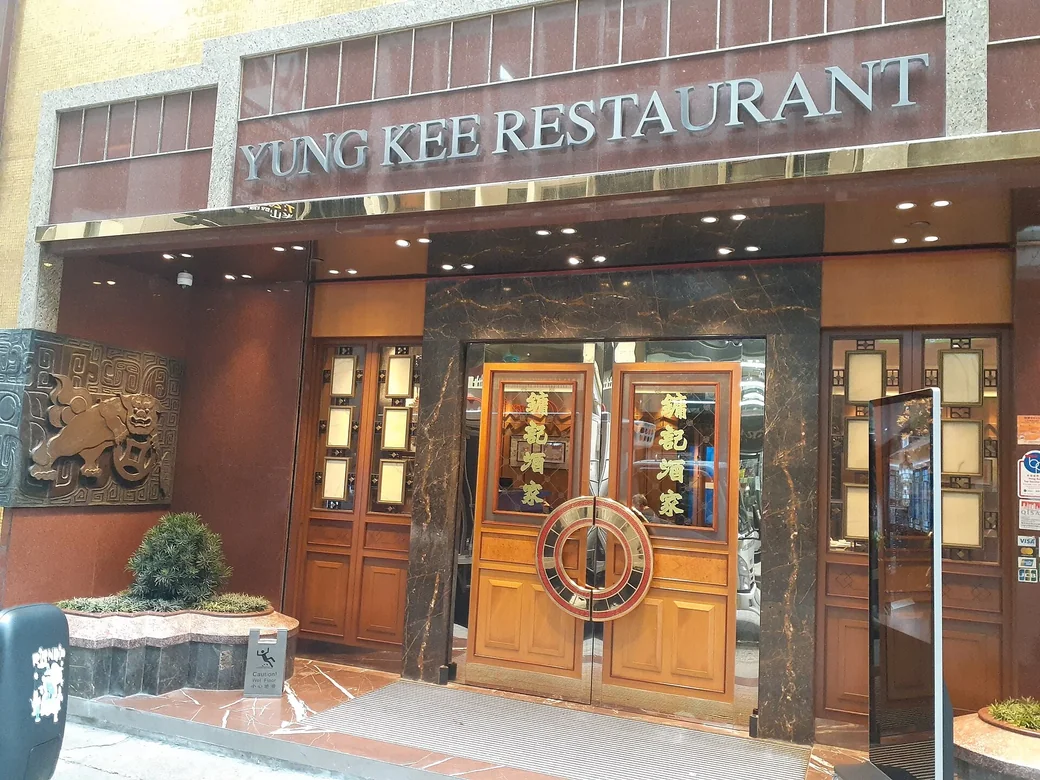
Yung Kee, opened in 1942, is a Hong Kong icon on Wellington Street in Central, famed for its charcoal-roasted goose and Cantonese classics.

Roast Meats

Yung Kee (鏞記)

4.1€€€
Directions

Yung Kee began as a small dai pai dong (open-air street food stall) in the 1930s, became a restaurant on Wing Lok Street in 1942 and later moved to its home on Wellington Street in Central. Spread over several floors, it is best known for its charcoal-roasted goose, whose crisp, caramelised skin and juicy meat made the restaurant famous across Asia. Other Cantonese favourites include smoked pork belly with pine nuts, roasted pigeon and classic dim sum (small steamed dishes served with tea). The dining rooms were refreshed in 2022 for the restaurant's 80th anniversary, and the third generation of the family now carries the tradition forward. Fortune magazine named it among the world's top fifteen restaurants in 1968, and it has stood on Wellington Street since 1964, roasting its geese on site over charcoal. Reservations are advisable for group meals, and the setting suits family gatherings and special occasions.

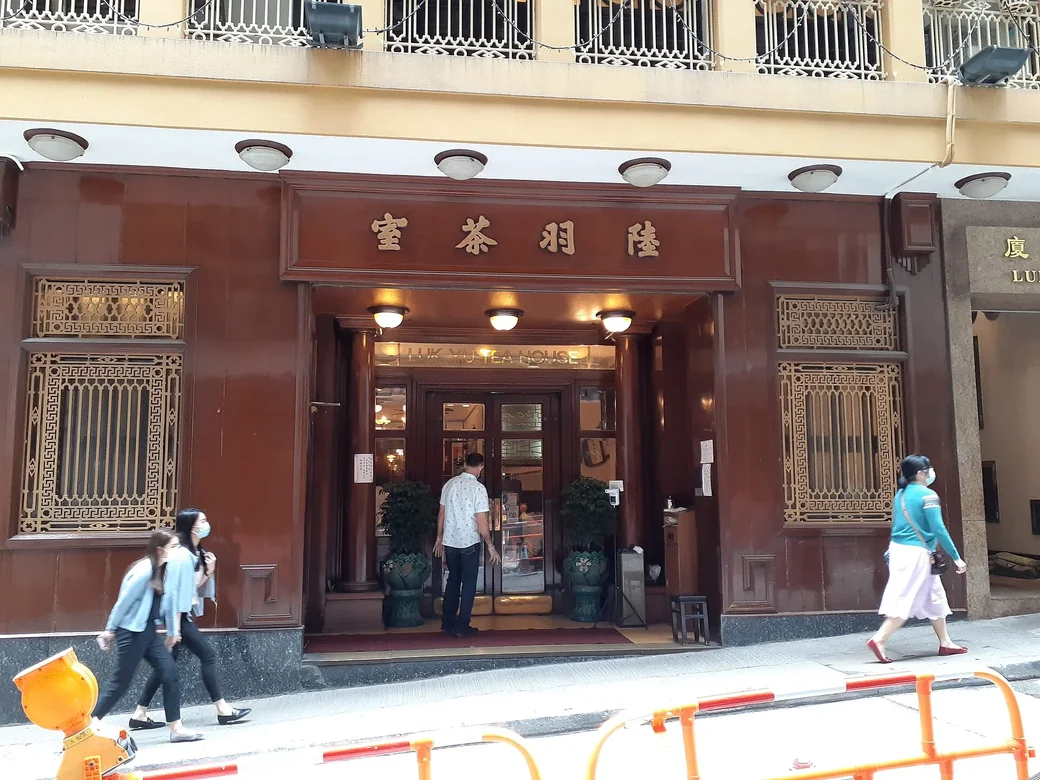
Luk Yu Tea House, founded in 1933 and now on Stanley Street in Central, is known for classic Cantonese dim sum and a vintage interior with ceiling fans.

Dim Sum & Dumplings

Luk Yu Tea House (陸羽茶室)

4.0€€€
Directions

Luk Yu Tea House has been a Hong Kong institution since 1933, when it opened on Wing Kut Street before moving to its present home on Stanley Street in 1967. The name honours Lu Yu, the Tang dynasty tea sage who wrote the first classic treatise on tea, and the dark wood interiors, calligraphy and classic furnishings preserve the atmosphere of Cantonese tea-house culture. Mornings are devoted to dim sum (bite-sized dishes served with tea) and yum cha (the custom of drinking tea with dim sum), while evenings bring stir-fried and braised Cantonese dishes across three floors. Aged ripe pu-erh tea, blended by the house's own tea masters, is a highlight. The tea house's first premises were in a former bank building on Wing Kut Street, founded by a former bank employee and a restaurant manager, and its mahogany and sandalwood furniture, calligraphy and elegant staircase reflect the Lingnan culture fashionable in 1920s–30s Guangzhou. Michelin lists the restaurant, and arriving with time to linger rewards guests with an unhurried, nostalgic meal.

Amber

Contemporary French

Amber

4.7€€€€
Directions

Amber is the modern French fine-dining restaurant of The Landmark Mandarin Oriental in Central, led by Dutch-born chef Richard Ekkebus. It earned its third Michelin star in 2025, after sixteen consecutive years with two, and also holds a Michelin Green Star for sustainability. The kitchen is best known for cooking without dairy: plant-based milks, seaweed and fermentation replace butter, cream and part of the salt, while French technique meets ingredients from regional farmers and fishermen around Hong Kong and Asia. Guests can choose a multi-course tasting menu, with vegetarian alternatives available, in a calm dining room of natural textures. Chef Ekkebus, who has lived in Hong Kong for more than two decades, shares the hotel's seventh floor with Sushi Shikon and Kappo Rin, and Amber kept its Michelin Green Star in the 2026 guide. Reservations are strongly recommended for both lunch and dinner.

The Chairman (大班樓)

Cantonese

The Chairman (大班樓)

4.6€€€€
Directions

The Chairman is a Cantonese restaurant in Central that champions carefully sourced seasonal ingredients and a refined, ingredient-led style of cooking. Founded in 2009 by Danny Yip, it moved in 2022 to the third floor of The Wellington on Wellington Street, where the dining room feels warm and modern. It was named Asia’s Best Restaurant in 2021 and returned to the No. 1 spot on the Asia’s 50 Best Restaurants list in 2026, and it holds one Michelin star. Signature dishes include steamed flowery crab with aged Shaoxing wine (Chinese rice wine) on flat rice noodles, camphor-wood-smoked goose, Sichuan peppercorn stewed oxtail and char siu (Cantonese barbecued pork). The signature crab is steamed with 15-year-old Chinese wine, chicken fat and clam juice, and the menu also features a whole pig's head dish inspired by a collaboration with Korean restaurant Hansik Goo. Reservations are essential and are best made well in advance.

Forum (富臨飯店)

Cantonese

Forum (富臨飯店)

4.5€€€€
Directions

Forum is a legendary Cantonese restaurant in Causeway Bay, founded in the 1970s by Yeung Koon-yat, fondly known as the “Abalone King”. It has held three Michelin stars since 2020 and now occupies the first floor of Sino Plaza. Its signature is the Ah Yat braised abalone, named after the founder’s nickname and cooked slowly in a clay pot until tender and deeply flavoured. The menu also features baked stuffed crab shell, pan-seared grouper fillet, braised oxtail and crispy fried chicken, and the kitchen is led by executive chef Adam Wong, who trained alongside the founder and keeps his recipes alive. Besides abalone, house classics include Forum fried rice and sweet-and-sour pork with tangerine peel, and the wine list showcases boutique wineries. Lunch with dim sum (small steamed and fried dishes served with tea) is a popular way to visit, and booking ahead is advised.

Master Low-Key Food Shop (低調高手大街小食)

Hong Kong Desserts

Master Low-Key Food Shop (低調高手大街小食)

4.4€
Directions

Master Low-Key Food Shop is a Shau Kei Wan street-food stall famous for gai daan zai (Hong Kong egg waffles), the bubble-shaped snack with a crisp, golden shell and a soft, cake-like centre. Batter is cooked fresh to order in the traditional iron mould, so each waffle arrives hot; the classic plain version lets the rich egg aroma shine, while other flavours such as salted egg yolk are also available. Egg waffles first appeared in Hong Kong street food in the years after the Second World War, when eggs were scarce, and have since become a symbol of the city's snacking culture. Egg waffles here come in flavours ranging from sweet to savoury, and a queue often forms outside the door while each batch is baked fresh. A short wait while your waffle is made is part of the charm, and eating it straight from the bag, still warm, is the best way to enjoy its crunch.

Tim Ho Wan (添好運)

Dim Sum & Dumplings

Tim Ho Wan (添好運)

4.4€
Directions

Tim Ho Wan rose to international fame as the dim sum restaurant once nicknamed the world's most affordable Michelin-starred restaurant. The Sham Shui Po branch on Fuk Wing Street sits in one of Hong Kong's most characterful old neighbourhoods, a short walk from the MTR station. The signature order is the baked BBQ pork bun, with a sweet, crumbly crust around juicy char siu (Cantonese barbecued pork) filling. Other favourites include siu mai (open-topped pork dumplings), har gau (shrimp dumplings), cheung fun (silky steamed rice noodle rolls) and chicken feet. Chef Mak Kwai Pui, formerly of Lung King Heen, opened the first 20-seat shop in Mong Kok in 2009 with Chef Leung Fai Keung; the Sham Shui Po branch is roomier, offers more than twenty dim sum, rotates some every two to three months and has two rooms on the first floor for more privacy. Guests take a queue number and are seated as tables free up, and the dining room is spacious by local standards.

Kai Kai Dessert (佳佳甜品)

Hong Kong Desserts

Kai Kai Dessert (佳佳甜品)

4.4€
Directions

Kai Kai Dessert is a Jordan dessert shop serving tong sui (traditional Cantonese sweet soups and puddings). Black sesame paste, nutty and silky, is a favourite, as are glutinous rice dumplings in sweet ginger soup, tofu skin with ginkgo nuts and mung bean soup, all available hot or cold. Many guests enjoy combining flavours, such as black sesame paste with mung bean soup or sesame-filled glutinous rice balls. The shop stays open late, which makes it a popular after-dinner stop. The shop, a family business of about forty years inherited from the owner's father, moved around the corner to Parkes Street in 2016; Michelin notes that the tofu skin soup with ginkgo and Job's tears and the black sesame soup are rich in flavour, and some can be combined for two flavours in one bowl. Its traditional desserts are not overly sweet, making them a light, comforting ending to a Hong Kong meal and a pleasant way to taste local flavours.

Showing 8 of 30

What to Know Before You Go

Hong Kong Food Culture: Cantonese Roots and Local Firsts

Hong Kong’s table grew from three streams: the Cantonese cooking of the Pearl River region, the habits of a British-era port, and the inventiveness of the post-war decades, when newcomers from many parts of China brought their own regional kitchens. Out of this meeting came dishes found nowhere else: XO sauce, mango pomelo sago, Hong Kong-style milk tea and the playful “soy sauce Western” cooking (Cantonese reinterpretations of European dishes) of the tea restaurants. The government’s intangible cultural heritage inventory includes milk-tea making, the egg tart, the pineapple bun and poon choi, and the word dai pai dong (a licensed open-air food stall) entered the Oxford English Dictionary in 2016. Here are two fun facts to carry with you: the pineapple bun contains no pineapple, and the city’s local “borscht” contains no beetroot.

Dim Sum and Yum Cha: How to Enjoy Hong Kong’s Tea Meal

Yum cha (飲茶, “drinking tea”) is the Cantonese ritual of sharing small plates over pots of tea. In Hong Kong the tea is the main event, while dim sum (點心, roughly “touch the heart”) accompanies it, and meals run from early morning into the afternoon. Begin with ha gow (shrimp dumplings), siu mai (open-topped pork and shrimp dumplings) and char siu bao (barbecue pork buns). Tick your choices on the paper order sheet, or pick from trolleys at traditional tea houses. Etiquette is simple: rinse your cup and chopsticks with a little hot tea, tap two fingers on the table to thank whoever pours for you, and lift the teapot lid when you would like a refill. According to the story, the finger tap began when a disguised emperor poured tea for his courtiers. Tim Ho Wan (添好運), opened in 2009 by chefs Mak Kwai Pui and Leung Fai Keung, earned a Michelin star within a year and was nicknamed the world’s most affordable starred restaurant. At the other end of the scale, Tin Lung Heen (天龍軒) serves refined dim sum on the 102nd floor of the Ritz-Carlton.

Cha Chaan Teng Breakfast: Hong Kong’s Tea Restaurants

The cha chaan teng (茶餐廳, “tea restaurant”) is the city’s everyday canteen. It grew out of the bing sutt (冰室, “ice room”) cafés and the post-war appetite for affordable Western-style food, which local cooks adapted with a Cantonese touch. Breakfast sets pair macaroni soup with ham, scrambled eggs on toast or an egg sandwich, and a hot milk tea or coffee. Look for Hong Kong-style French toast with peanut butter and condensed milk, baked pork chop rice under tomato sauce and cheese, and a pineapple bun with a slab of butter. Service is brisk: waiters scribble orders in a private shorthand, tables are shared, and it helps to decide quickly in busy hours. Macaroni soup is a familiar favourite with children, so families feel at home. Historic examples include Mido Café (美都餐室) on Temple Street, open since 1950, and Kam Wah (金華冰廳) in Mong Kok, known for warm pineapple buns. Older residents still call a meal here yum sai cha (飲西茶, “drinking Western tea”).

Hong Kong Milk Tea, Yuenyeung and Third-Wave Coffee

Hong Kong-style milk tea (港式奶茶) blends strong black tea, often with Ceylon leaves, with evaporated milk and is strained through a cloth filter whose tea-stained colour inspired the nickname “silk-stocking milk tea”. The technique appears in the city’s intangible cultural heritage inventory. Lan Fong Yuen (蘭芳園) on Gage Street in Central presents itself as the inventor of both silk-stocking milk tea and yuenyeung (鴛鴦, “mandarin ducks”, a blend of coffee and milk tea). Lighter refreshments include Vitasoy lemon tea and the herbal teas of shops such as Hung Fook Tong (鴻福堂). Tea lovers can visit the Flagstaff House Museum of Tea Ware (茶具文物館) in Hong Kong Park. Coffee has its own story: Pacific Coffee led the espresso wave in the 1990s, and specialty roasters such as The Cupping Room in Sheung Wan, Elephant Grounds and NOC Coffee Co now serve carefully sourced single-origin brews, with local baristas competing in national and world championships. Third-wave coffee is a movement that treats coffee as a craft, with close attention to origin, roasting and careful brewing.

Egg Tarts, Pineapple Buns and Hong Kong Bakery Culture

Chinese-style bakeries are neighbourhood treasures, open early and fragrant with fresh bread. The egg tart (蛋撻) comes with either flaky pastry or a cookie-style crust. Tai Cheong Bakery (泰昌餅家), opened in 1954 on Lyndhurst Terrace in Central, popularised the cookie crust and was a favourite of the last British governor, Chris Patten. Some bakers, such as Hoover Cake Shop, use duck eggs for a silkier custard. The pineapple bun (菠蘿包, bo lo bao) takes its name from its crackled golden top rather than its filling, and is best eaten hot with a thick slice of cold butter; its origins are debated, and some say it echoes Japan’s melon pan. Look also for cocktail buns (soft sweet buns with a coconut filling), pork-floss rolls and sausage buns. Kee Wah Bakery (奇華餅家, founded in 1938) is the classic address for festive pastries and Mid-Autumn mooncakes (round pastries with sweet fillings). According to one account, the egg tart was inspired by English custard tarts that Cantonese chefs adapted in the 1920s.

Tong Sui Desserts: Mango Pomelo Sago and Double-Skin Milk

Dessert shops are a cherished evening ritual in Hong Kong. Tong sui (糖水, “sugar water”) covers sweet soups and puddings served warm or chilled. Try mango pomelo sago (楊枝甘露), a cool blend of mango, pomelo, sago pearls and coconut or evaporated milk, said to have been created at the Cantonese restaurant Lei Garden (利苑) in the 1980s; mango-themed dessert chains such as Hui Lau Shan (許留山) and Honeymoon Dessert (滿記甜品) helped make it famous. Double-skin milk (雙皮奶) is made by letting a skin form on warm milk twice, and Australia Dairy Company (澳洲牛奶公司) in Jordan is a well-known place to taste steamed milk pudding. Others to sample: silky tofu pudding with ginger or sugar syrup, almond tea, black sesame soup, sweet potato soup and grass jelly with its gentle herbal note. For frozen treats, old-school fruit ice pops are a beloved summer memory, and egg waffles often arrive with a scoop of ice cream.

Dai Pai Dong: Hong Kong’s Open-Air Kitchens and Wok Hei

A dai pai dong (大牌檔, “big licence stall”) is a licensed open-air kitchen, named for the large licence plate once displayed. Post-war licences gave many families a livelihood, and for decades the stalls fed the city. Today only a few remain, mostly in Sham Shui Po and Central with a handful in Wan Chai and Tai O, and each is treasured as living heritage. In Central the stalls sit along sloping lanes and are sometimes called terrace-style. Expect noodles, stir-fries, seafood, toast with condensed milk and above all wok hei (鑊氣, “breath of the wok”), the smoky aroma that comes from a roaring flame. Office workers and manual workers sit side by side at folding tables. Yiu Tung Street in Sham Shui Po holds several stalls, while Gutzlaff Street in Central is known for Shui Kee (水記). For a similar local spirit, try the cooked food centres inside municipal market buildings and the evening stalls of Temple Street. Congee (rice porridge) shops and cha chaan teng stay lively late into the night.

Roast Goose, Wonton Noodles and Hong Kong Street Snacks

Siu mei (燒味, Cantonese roast meats) hang gleaming in shop windows: honey-glazed char siu (barbecued pork), crackling roast pork belly and, most prized of all, roast goose. Yat Lok (一樂燒鵝) in Central and Yung Kee (鏞記) on Wellington Street are famous for goose. Wonton noodles (雲吞麵) came from Guangzhou: plump shrimp wontons and springy egg noodles in a light, deeply savoury broth. Mak’s Noodle (麥奀雲吞麵世家) and Mak Man Kee (麥文記), whose broth simmers for hours with dried flounder, pork bones and shrimp shells, are classics. On the street, try curry fish balls (咖喱魚蛋), arguably the most iconic snack, egg waffles (雞蛋仔, bubble-shaped and crisp), cheung fun (腸粉, silky steamed rice-noodle rolls with sweet sauce) and stinky tofu (臭豆腐), whose fermented aroma delights its fans. Mong Kok’s Dunster Street gathers many stalls, and the Michelin Guide’s Bib Gourmand selection (its good-value category) includes humble noodle shops.

Claypot Rice, Poon Choi and Festival Foods

Claypot rice (煲仔飯) is the city’s winter comfort food: rice cooked over charcoal in small clay pots until a golden crust forms at the bottom, topped with Chinese sausage, salted fish, chicken or eel and finished with sweet soy sauce. In the 1950s and 1960s it was a dai pai dong staple, and Temple Street stalls still light their pots after dark. Hotpot is another cold-weather favourite. Poon choi (盆菜, “basin dish”) is a layered feast served in a large basin in the walled villages of the New Territories at weddings, ancestral ceremonies and Lunar New Year; according to legend it began when villagers fed a fleeing Song dynasty emperor, and it appears on the city’s representative list of intangible cultural heritage. Today restaurants and local chains serve it too. Other festival foods include turnip cake (蘿蔔糕) at Lunar New Year, mooncakes at the Mid-Autumn Festival and the lucky buns piled on towers at the Cheung Chau Bun Festival.

Seafood Villages: Lei Yue Mun, Sai Kung, Lamma and Tai O

Hong Kong’s coastline and outlying islands offer seafood at its freshest. At Lei Yue Mun (鯉魚門) in east Kowloon you choose live fish, shellfish and crustaceans from tanks and have a nearby restaurant cook them; mantis shrimp steamed with spring onion is a seasonal highlight. Sai Kung’s waterfront “Seafood Street” works in a similar way, and it is wise to agree the weight-based price before ordering. On Lamma Island the restaurants of Sok Kwu Wan are reached by a pleasant walking trail of about ninety minutes from Yung Shue Wan. Tai O (大澳), a stilt-house fishing village on Lantau, is the home of fermented shrimp paste, dried in the sun on bamboo trays and ground by hand, as well as salted fish, salted duck-egg yolks, jumbo fish balls and grilled squid. Shrimp paste is a classic Cantonese seasoning for stir-fries and marinades, and chef Vicky Cheng draws on Tai O’s salted fish for his creations. Cheung Chau adds fish-ball carts and village bakeries.

XO Sauce, Shrimp Paste and Local Food Brands to Take Home

Hong Kong’s flavours travel well. XO sauce (XO醬, “XO” for extra old) combines dried scallop, dried shrimp, Jinhua ham, chilli and garlic in oil; according to one account it was born at the Peninsula’s Spring Moon (嘉麟樓) in the 1980s, though other Kowloon restaurants also lay claim. The name borrows the prestige of XO cognac, and the sauce itself contains none. Lee Kum Kee (李錦記), founded in Guangdong in 1888 and now based in Hong Kong, is famous for oyster sauce, which by tradition came from a forgotten pot of oyster broth. Other kitchen essentials: white pepper and soy marinades for pork chops, dried mandarin peel in claypot rice, fermented bean curd and shrimp paste. Look for local brands like Vitasoy (維他奶, since 1940), Kee Wah, Maxim’s (美心) and Hung Fook Tong. Supermarkets such as Wellcome and ParknShop, plus City’super for imports, stock them, and wet markets (街市, fresh-produce markets) show daily produce. Egg rolls, instant milk-tea sachets and Tai O shrimp paste make lovely souvenirs.

Michelin Stars, Asia’s Best Restaurants and Leading Chefs

Hong Kong is one of Asia’s great dining capitals. The Michelin Guide Hong Kong & Macau lists a wide spread, from three-star addresses such as Amber, Caprice and T’ang Court to Bib Gourmand picks that include street-style noodle shops. Roganic and Amber carry the Green Star for sustainability, and the first Mentor Chef Award, which honours senior chefs who guide the next generation, honoured the chef of Tin Lung Heen. The Chairman (大班樓), the Cantonese restaurant founded by Danny Yip, was named Asia’s Best Restaurant in 2021 and again in 2026, and Wing (譽), led by Vicky Cheng, is a leading modern Chinese address; Hong Kong hosted the Asia’s 50 Best Restaurants ceremony for the first time in 2026. Mak Kwai Pui of Tim Ho Wan represents the casual side of the craft. Dim sum and Cantonese cooking classes welcome visitors, and the Chinese Cuisine Training Institute trains the next generation of chefs.

Halal Dining in Hong Kong for Muslim Travellers

Muslims have lived in Hong Kong for well over a century, and halal dining is easy to find. Look for the green-and-white certificate of the Incorporated Trustees of the Islamic Community Fund of Hong Kong (ICHK), the main certifying body; a wide range of certified and Muslim-friendly restaurants are listed, covering Cantonese dim sum, Indian, Pakistani, Middle Eastern and hotel dining. Several mosques are easy to reach. The largest, Kowloon Masjid and Islamic Centre (九龍清真寺), on Nathan Road, was founded in the late nineteenth century and welcomes large congregations; nearby streets are known for South Asian and Middle Eastern restaurants. The Islamic Centre in Wan Chai has a certified canteen whose dim sum is prepared without lard. Jamia Masjid on Shelley Street is another historic landmark. The Hong Kong Tourism Board publishes a Muslim guide. Because lard, pork and pork sausage appear widely in Cantonese cooking, choose certified venues and confirm ingredients with staff.

Vegetarian, Vegan and Gluten-Aware Eating in Hong Kong

Hong Kong has a strong Buddhist vegetarian tradition, and plant-based dining is widely available. Chi Lin Vegetarian (志蓮齋) in Nan Lian Garden (南蓮園池) sits beside a waterfall and follows Buddhist principles, avoiding the “five pungent spices” (onion, spring onion, chive, leek and garlic) and MSG. Kung Tak Lam (功德林) is a long-established vegetarian restaurant that has appeared in the Michelin Guide’s Bib Gourmand list. Lock Cha Tea Shop (樂茶軒) in Hong Kong Park serves vegetarian dim sum with fine teas, Miss Lee in Sheung Wan reimagines Chinese classics with plants, and Roganic offers plant-forward fine dining with a Green Star. Many menus mark vegan dishes clearly. Please note that stocks, oyster sauce, XO sauce and shrimp paste contain animal ingredients, so ask when in doubt. For gluten awareness, rice-based dishes such as congee, steamed rice rolls and rice noodles are plentiful, and since soy and oyster sauces often contain wheat, ask for sauces on the side.

Hong Kong Dining Etiquette, Tap Water, Tipping and Smart Choices

Hong Kong dining is quick, friendly and sociable. Wave a hand to call a server, share tables at busy canteens, and decide your order promptly at a cha chaan teng during rush hours. Rest chopsticks across the bowl or on a rest rather than standing them upright in rice, which recalls offerings for ancestors. Tap water is treated to World Health Organization guidelines, although many residents boil it because of building pipework, and bottled water is widely sold. Most restaurants add a service charge of around ten per cent, so extra tipping is optional. Expect good value at dai pai dong and cha chaan teng, with shared dishes and generous portions, while hotels and fine-dining rooms are premium. For a memorable meal, choose busy places full of locals, check the weight-based price when selecting live seafood, and confirm opening hours before you go. Dim sum is a morning-to-afternoon pleasure; cha chaan teng and congee shops serve across the day; dai pai dong and claypot rice come alive in the evening.

Tours & Experiences in Hong Kong

Skip-the-line tickets, small-group walks, and curated experiences.

All Tours in Hong Kong

More about Hong Kong

  • Fashion & Design
  • Entertainment & Activities
  • Nightlife & Entertainment
  • City Guide