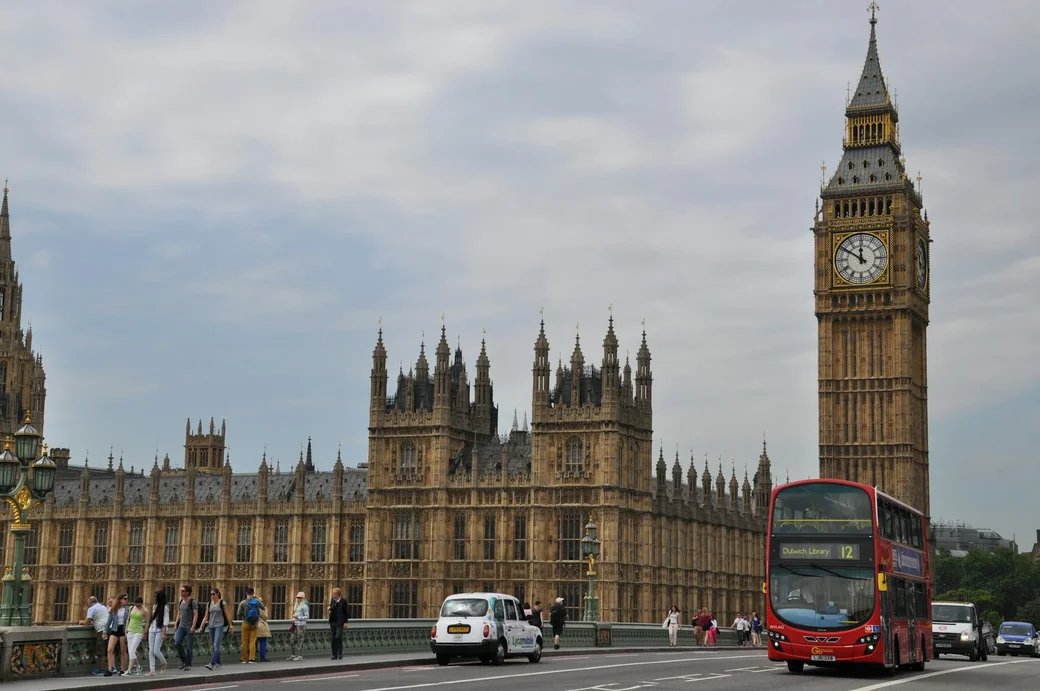
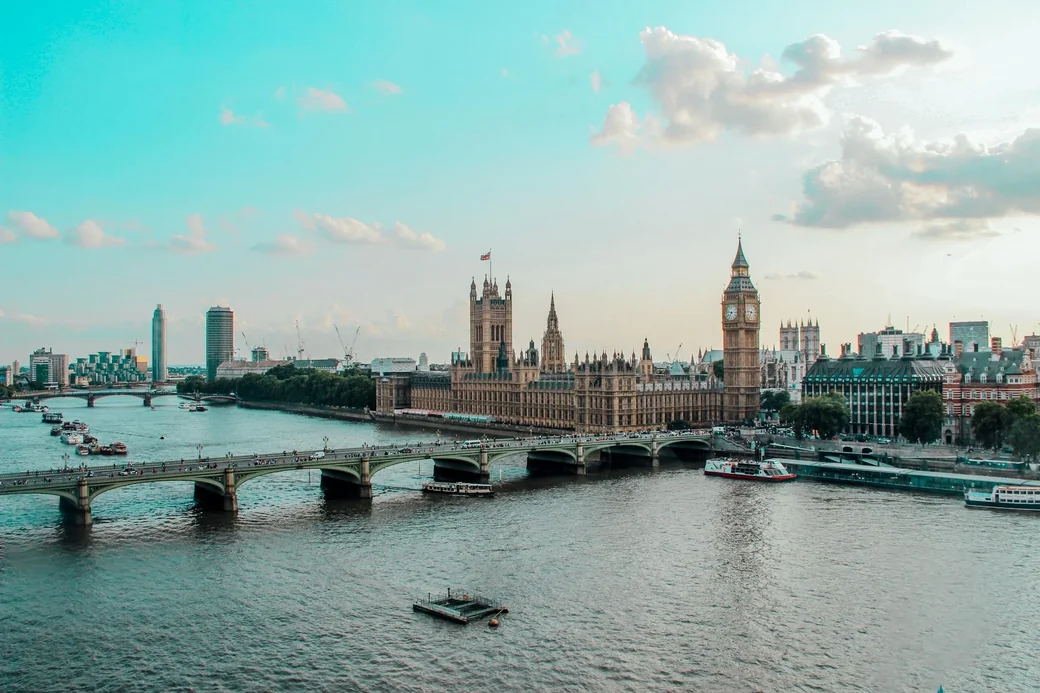
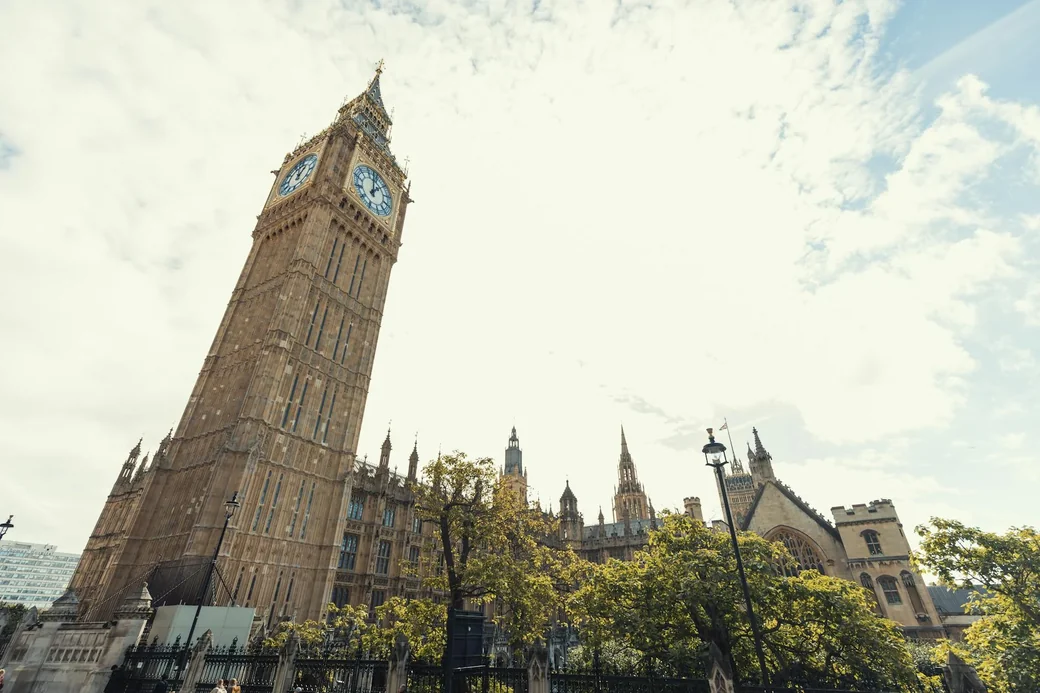
The Palace of Westminster, on the north bank of the River Thames, is the home of the UK Parliament, where the House of Commons and the House of Lords meet. Its Gothic Revival silhouette and the clock tower at its northern end, popularly known as Big Ben, form the image most people picture when they think of London. Whether you come for history, architecture, democracy at work or simply the sound of the chimes, it is one of the essential stops on any visit to the city.
Big Ben & Palace of Westminster: Location, accommodation options and contact
Houses of Parliament, Westminster, London SW1A 0AA, United Kingdom
The place's location on the map and nearby accommodation and hotel options are shown by Stay22. Cookies are used. Your consent is remembered on every page; you can turn it off at any time in the cookie settings.
Big Ben Is the Bell, Not the Tower: The Story Behind the Name
Strictly speaking, Big Ben is the nickname of the Great Bell, which weighs 13.7 tonnes and strikes the note E. The tower was called the Clock Tower until 2012, when it became the Elizabeth Tower in honour of Queen Elizabeth II's Diamond Jubilee. Where the nickname comes from is still debated. According to one account it honours Sir Benjamin Hall, the tall, booming-voiced official who oversaw the installation; according to another, it recalls Benjamin Caunt, a celebrated heavyweight boxer of the day. Nobody has settled the question. In everyday speech, however, the name now covers the bell, the Great Clock and the tower together.
From Medieval Palace to Gothic Revival Icon: A Short History of Westminster
Westminster has been a royal and parliamentary site for nearly a thousand years. On 16 October 1834 a fire destroyed most of the old palace, sparing Westminster Hall, the cloisters of St Stephen's, the Chapel of St Mary Undercroft and the Jewel Tower. Charles Barry won the competition to rebuild it and worked with Augustus Pugin on the Gothic detail. The foundation stone was laid in 1840, the Lords sat in their new chamber in 1847, the Commons in 1852, and the work ended in the 1870s. The palace was bombed in the Second World War, and the Elizabeth Tower received a major conservation between 2017 and 2022. Together with Westminster Abbey and St Margaret's Church, the palace was inscribed as a UNESCO World Heritage Site in 1987, and it is also a Grade I listed building (the highest level of protection for historic buildings in England).
Elizabeth Tower and the Great Clock: Height, Dials and Design
The Elizabeth Tower is 96 metres tall and has eleven floors. Its four dials are about seven metres across, each glazed with 324 pieces of opal glass in a cast-iron frame, and the hour numerals are 60 centimetres long. The copper minute hands measure 4.2 metres, the gunmetal hour hands 2.7 metres. The mechanism weighs around five tonnes and is regulated by adding or removing old pre-decimal pennies on the pendulum; a single penny changes the clock by two-fifths of a second a day. The number four appears as IV rather than IIII. The tower's Gothic design is the work of Augustus Pugin and was among the last designs he produced.
Big Ben's Bells, the Westminster Chimes and the Ayrton Light
Four smaller quarter bells hang beside Big Ben, weighing from 1.1 to 4 tonnes and sounding G sharp, F sharp, E and B. Their melody, the Westminster Quarters, was composed in 1793 for a church in Cambridge before it was adopted here, and a plaque in the clock room carries a short prayer asking for guidance through each hour. The first Great Bell cracked during testing and was recast; the second also cracked, and in 1863 it was turned and given a lighter hammer. High above the belfry, the Ayrton Light shines after dark whenever either House is sitting.
Westminster Hall: The 900-Year-Old Heart of the Palace
Built in 1097 under William II, Westminster Hall is the oldest part of the palace and was once the largest hall in Europe. Its hammerbeam roof, ordered by Richard II in 1393 and built by the royal carpenter Hugh Herland, spans about twenty metres without central supports and is regarded as the largest medieval timber roof of its kind in northern Europe. The hall has hosted royal feasts, state trials, among them that of Charles I in 1649, and in 2022 the lying-in-state of Queen Elizabeth II. Visitors stand beneath the roof at the start of a tour.
Inside the Houses of Parliament: What You See on a Tour
Tours follow the route of ceremonial processions: Westminster Hall, St Stephen's Hall, the octagonal Central Lobby, then the chamber of the House of Lords with its red benches and the House of Commons with its green ones. The Commons chamber is small and offers seats for only 427 of its 650 Members. In the Robing Room, wall paintings by William Dyce illustrate the legend of King Arthur. At the far end of the palace, the Victoria Tower keeps parliamentary records that go back to 1497. The building is vast, with around 1,100 rooms, 100 staircases and some 4.8 kilometres of passages.
Climbing Big Ben: How the Elizabeth Tower Tour Works
The guided Elizabeth Tower tour climbs 334 steps of a narrow stone spiral to the belfry, with planned pauses on the way, and lasts up to 90 minutes. You pass the clock mechanism, step behind a dial and stand beside the Great Bell as it strikes; ear defenders are provided because the noise is intense. There is no lift, visitors must be 11 or older, and those aged 11 to 17 need adult supervision. Tickets are sold only by UK Parliament and sell out far ahead, so reserve as soon as you know your dates. Photography is not allowed inside the tower. Visitors who find the standard climb difficult can ask Parliament about an adapted tour. Arrive at the Cromwell Green entrance at least 30 minutes before your tower slot.
Watching Debates in the Public Galleries of the Commons and Lords
When either House is sitting, visitors from the UK and overseas can queue at the Cromwell Green entrance, pass security and watch proceedings from the public galleries without buying a tour ticket. Business normally runs Monday to Thursday, with some Fridays for the Lords, and there is no chamber business in recess. Commons debates are also held in the Grand Committee Room off Westminster Hall, with step-free access and seats on a first-come basis. Expect a queue on busy days. Prime Minister's Questions tickets are arranged through MPs for UK residents, who can also ask their MP about guided tours.
Tours, Tickets, Security and Do's and Don'ts: A Practical Guide to Visiting Parliament
Guided tours in English last 90 minutes. The self-guided multimedia tour comes in ten language options: English, British Sign Language, Welsh, French, German, Spanish, Italian, Mandarin, Russian and Brazilian Portuguese, plus a children's version in English and audio description. Book through the official website or the ticket office at Portcullis House, and arrive at least twenty minutes early. Security is airport-style and can take up to half an hour. Parliament is a working building, so tours can change at short notice.
Do book early, arrive in good time, carry photo identification and keep to a small bag. Do wear comfortable shoes and ask the Visitor Assistants for help; step-free routes and loan wheelchairs are available. Don't expect to enter the Elizabeth Tower without a tower ticket, don't take photographs where signs forbid it, and don't bring large luggage, as there is no storage for it. Don't sit on the chamber benches, and keep conversation quiet in the galleries. Remember that tours can be cancelled when parliamentary business requires. Guided and audio tours normally run on Saturdays and on weekdays when Parliament is in recess.
Best Photo Spots for Big Ben, What to See Nearby and How to Beat the Crowds
The classic view is from the middle of Westminster Bridge, best at blue hour (the short spell after sunset when the sky turns deep blue) with buses and light trails. Also try the tunnel beneath the bridge on the South Bank, the riverside walk towards the London Eye, the gardens of St Thomas' Hospital and the red telephone box on Great George Street, where a queue often forms. Parliament Square frames the tower with the statue of Winston Churchill, and Lambeth Bridge gives a calmer view at sunset. Come early on a weekday morning for emptier pavements.
Everything is within a few minutes' walk. Westminster Abbey and St Margaret's Church share the UNESCO listing with the palace, the UK Supreme Court faces Parliament Square, and the medieval Jewel Tower stands opposite the Victoria Tower. The Churchill War Rooms, St James's Park and Buckingham Palace are a pleasant walk away, while the London Eye is just across Westminster Bridge. A simple half-day plan: photographs from the bridge, a Parliament tour or gallery visit, then the Abbey and a stroll through St James's Park.
Hidden Stories: The Tower Prison Room and the Suffragette in the Broom Cupboard
Inside the Elizabeth Tower is an oak-panelled Prison Room reached only from the House of Commons. It was last used in 1880, when the newly elected MP Charles Bradlaugh was held there after asking to affirm instead of swearing a religious oath; he was re-elected repeatedly and finally took his seat in 1886. Another well-documented story belongs to census night in 1911, when the suffragette Emily Wilding Davison hid in a broom cupboard in the Chapel of St Mary Undercroft so that she could record the House of Commons as her address. A plaque now marks the cupboard.
When Big Ben Stopped: Snow, Starlings and the Birds of Westminster
Big Ben is famously reliable, yet it has paused for surprising reasons. In 1949 a flock of starlings settling on a minute hand slowed the clock by about four and a half minutes, and heavy snow on the hands delayed the New Year chimes in 1962 by roughly ten minutes. The chimes were first broadcast by the BBC on 31 December 1923, and a radio listener at the foot of the tower hears the bell slightly before the sound reaches them through the air.
Legends and Quirky Traditions of the Palace of Westminster
Legend has it that if Big Ben were to strike thirteen at midnight, a death in the royal family would follow; it is only folklore. Tradition says the red lines on the Commons floor lie two sword-lengths apart so that rival members could not draw on each other, and another popular tale claims it is illegal to die in Parliament, although legal researchers have traced no such law. Genuine customs include the snuff box by the Commons door, sword hooks in the cloakroom, a law of 1313 against armour in Parliament and the ceremonial search of the cellars before the State Opening.
The Palace's Three Towers: Victoria Tower, Central Tower, the Ayrton Light and Wartime Survival
The palace has three main towers. The Elizabeth Tower marks the north end. The Victoria Tower, originally called the King's Tower and nearly 100 metres high, anchors the south-west corner, with the Sovereign's Entrance at its foot, where the monarch's procession begins at the State Opening of Parliament. During that ceremony an MP is traditionally held as a symbolic hostage for the monarch's safety. The Central Tower, between the two Houses, was first conceived as part of the ventilation system. The Ayrton Light, added in 1885, was reportedly meant to let Queen Victoria see from Buckingham Palace whether Parliament was sitting. In the Second World War the palace was hit fourteen times: the Commons chamber was destroyed and firefighters saved Westminster Hall, while the Elizabeth Tower survived and the bell kept sounding. The chamber was rebuilt deliberately small, at Churchill's wish.
Accessibility and Family Visits: Step-Free Routes, Hearing Loops, Children's Tours and Languages
The visitor route is largely step-free. The Cromwell Green entrance has a wide ramp, the public galleries of both Houses and the committee rooms can be reached without steps, a lift bypasses the steps in St Stephen's Hall, and the Jubilee Café has a lift. Wheelchairs can be borrowed on the day, hearing loops are available from the information point in Westminster Hall, and visitors with a valid Access Card (the UK card that records a disabled visitor's access needs) can use fast entry. The audio tour offers audio description and British Sign Language versions. The Elizabeth Tower has no lift, but an adapted tour can be requested. For families, the guided tour is not recommended under five, while the audio tour has a children's version for up to age 11. Guided tours run in English only.
Big Ben & Palace of Westminster: Visitor Tips
Book Parliament tours and the Big Ben tower tour only through the official UK Parliament ticket service, and do so early. Arrive at the Cromwell Green visitor entrance at least twenty minutes before your slot to clear airport-style security. Bring a small bag, comfortable shoes and, for the tower, a good level of fitness. For photographs, try the middle of Westminster Bridge, the South Bank walkway and Parliament Square at blue hour. Tours run on Saturdays throughout the year and on weekdays when Parliament is in recess, so check the official site for tour days.
Big Ben & Palace of Westminster: Best Time to Visit
Weekday mornings or blue hour for photos; Saturdays for interior tours; spring to early autumn for the best light and pleasant walking weather.
Big Ben & Palace of Westminster: Admission Fees
Guided tour – Adult (25+)
A knowledgeable guide leads you through Westminster Hall, Central Lobby and the chambers of the House of Commons and House of Lords, in English. Full fare for adult visitors aged 25 and over.
£40
Guided tour – Young person (16–24 years)
A knowledgeable guide leads you through Westminster Hall, Central Lobby and the chambers of the House of Commons and House of Lords, in English. Reduced fare for young visitors aged 16 to 24.
£30
Guided tour – Child (5–15 years)
A knowledgeable guide leads you through Westminster Hall, Central Lobby and the chambers of the House of Commons and House of Lords, in English. Fare for children aged 5 to 15.
£20
Guided tour – UK Armed Forces
A knowledgeable guide leads you through Westminster Hall, Central Lobby and the chambers of the House of Commons and House of Lords, in English. Reduced fare for UK Armed Forces personnel who show valid proof of service.
£30
Self-guided audio tour – Adult (25+)
Explore the Palace at your own pace with a multimedia handset that brings its history, art and daily work to life at the main stops. Full fare for adult visitors aged 25 and over.
£31
Self-guided audio tour – Young person (16–24 years)
Explore the Palace at your own pace with a multimedia handset that brings its history, art and daily work to life at the main stops. Reduced fare for young visitors aged 16 to 24.
£24
Self-guided audio tour – Child (5–15 years)
Explore the Palace at your own pace with a multimedia handset that brings its history, art and daily work to life at the main stops. Fare for children aged 5 to 15; when accompanying a full-paying adult, a package with a free child ticket is offered.
£12
Self-guided audio tour – UK Armed Forces
Explore the Palace at your own pace with a multimedia handset that brings its history, art and daily work to life at the main stops. Reduced fare for UK Armed Forces personnel who show valid proof of service.
£24
Big Ben tour (Elizabeth Tower) – Adult (18+)
A guided climb up the spiral staircase of the Elizabeth Tower to the belfry where the Great Bell, Big Ben, hangs; suitable from age 11 for those comfortable with many steps and best booked well in advance. Full fare for adult visitors aged 18 and over.
£55
Big Ben tour (Elizabeth Tower) – Child (11–17 years)
A guided climb up the spiral staircase of the Elizabeth Tower to the belfry where the Great Bell, Big Ben, hangs; suitable from age 11 for those comfortable with many steps and best booked well in advance. Fare for children aged 11 to 17, who must be accompanied by an adult aged 18 or over.
£35
Speaker's House tour – Adult (18+)
A guided visit to the State Apartments where the Speaker of the House of Commons lives and works, usually offered on selected dates during parliamentary recesses. Full fare for adult visitors aged 18 and over.
£23
Speaker's House tour – UK Armed Forces
A guided visit to the State Apartments where the Speaker of the House of Commons lives and works, usually offered on selected dates during parliamentary recesses. Reduced fare for UK Armed Forces personnel who show valid proof of service.
£16
Children under 5 (free)
Children under 5 enter free of charge, but a free ticket must still be booked.
Free
Quick Info
2h 30m
moderate
Big Ben & Palace of Westminster: Getting There
By Underground, take the Circle, District or Jubilee line to Westminster station, only a couple of minutes' walk from Parliament Square and the visitor entrance. From Waterloo it is a single stop on the Jubilee line, or an easy walk across Westminster Bridge. From Victoria the Circle and District lines run direct, and from Charing Cross you can stroll down Whitehall in about fifteen minutes. Many buses call at Westminster station and Parliament Square, among them routes 11, 12, 24, 88, 148, 159 and 453. River services stop at Westminster Pier, a few minutes' walk from the tower, and Santander Cycles docking stations stand at Westminster Pier, Storey's Gate and Abingdon Green.
Driving is not recommended: central Westminster lies inside London's charging zones, parking is scarce and restricted, and the pavements around the palace are often crowded. Taxis and ride-hailing cars can set you down near Parliament Square. Visitors enter through the Cromwell Green entrance on St Margaret Street, reached by a wide, gently sloping step-free ramp that leads to the security search point.
Nearby stops & parking
The closest Underground station is Westminster (Circle, District and Jubilee lines), which has step-free access. Bus stops called Westminster Station / Parliament Square and Westminster Station / Westminster Pier serve several routes, and Parliament Square / Westminster Abbey is the stop for others. Westminster Pier, for river services, is about a five-minute walk away. Cycle docking stations are found at Westminster Pier, Storey's Gate, Abingdon Green and Smith Square.
The palace has no visitor car park. Public car parks in central London, such as Q-Park Westminster, are limited and costly, so public transport is strongly recommended. Taxis can set down near Parliament Square. Tickets can also be bought in person at the ticket office in front of Portcullis House on Victoria Embankment.
Big Ben & Palace of Westminster: Dress Code & Etiquette
There is no formal dress code for visitors, and smart-casual clothes are perfectly acceptable, but remember that you are entering a working parliament. Wear comfortable shoes, especially for the Elizabeth Tower, whose 334 steps are climbed on a narrow spiral stair. Keep your voice low in the chambers and galleries, follow the instructions of guides and Visitor Assistants, and switch off phones when asked. Photography is not allowed inside the tower; elsewhere, check the signs. Large bags and restricted items are not permitted, and everyone must pass a security search and wear the visitor pass throughout the visit.
Guide / Language
en
de
es
fr
it
pl
pt
zh
ja
ko
cy
Big Ben & Palace of Westminster: Amenities & Facilities