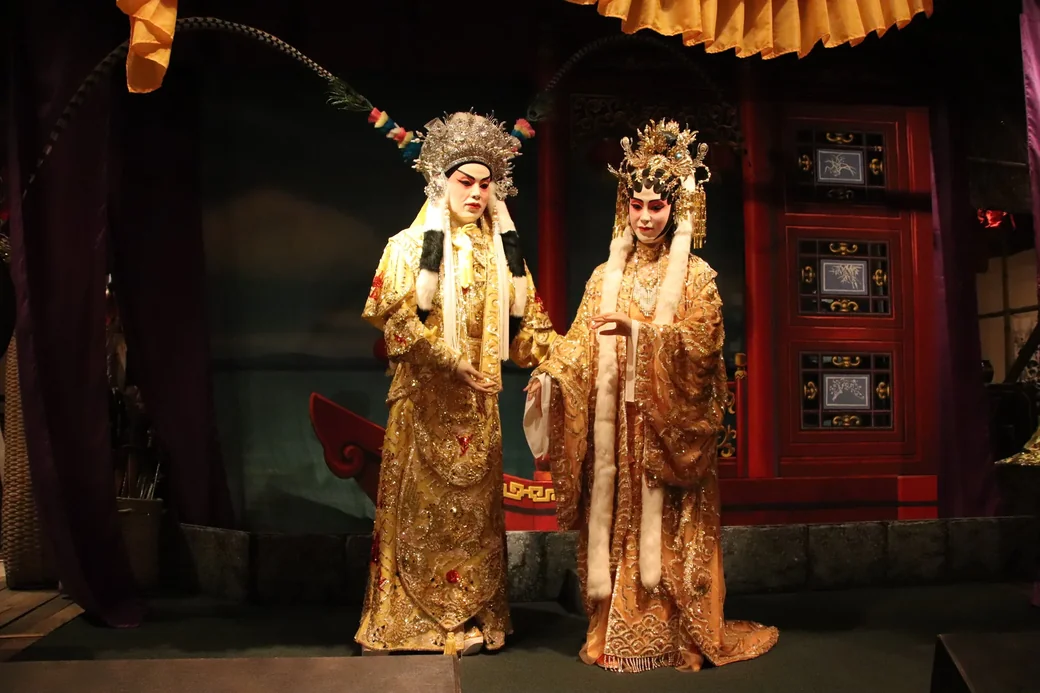
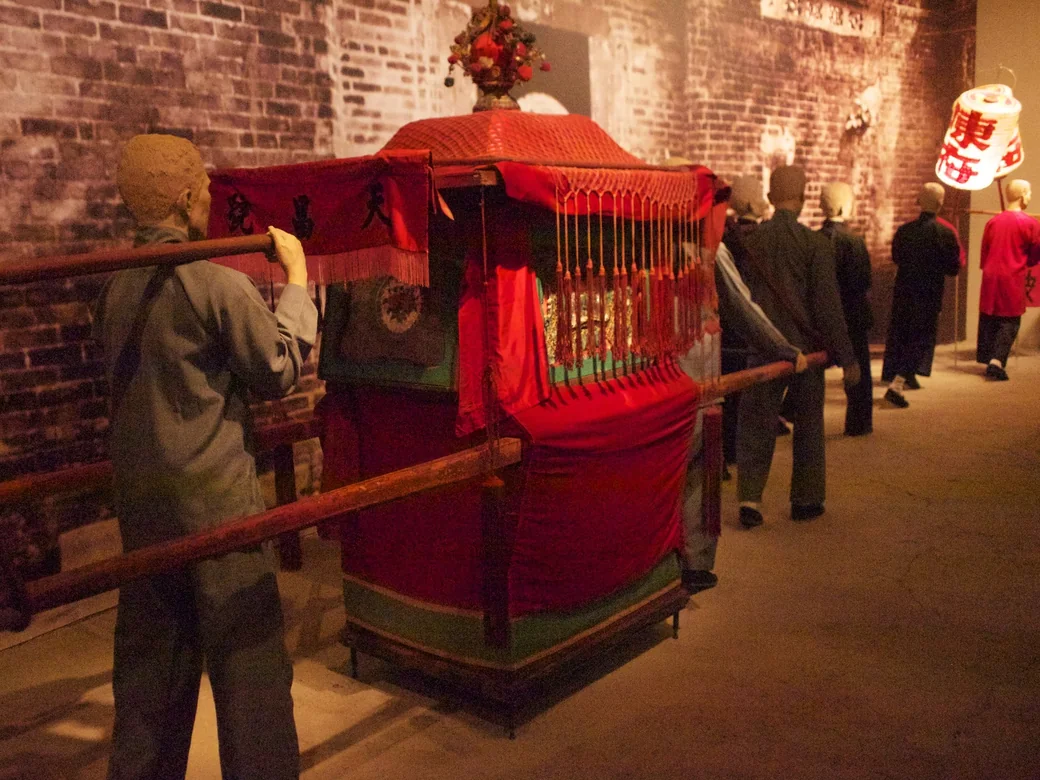
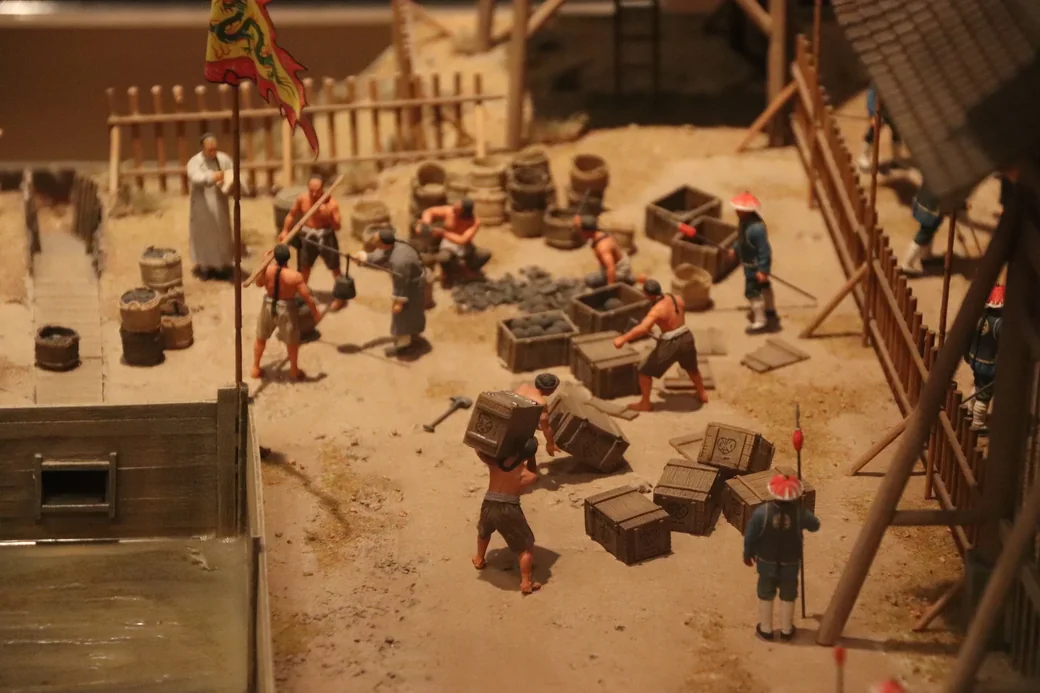
The Hong Kong Museum of History is the city's main museum of local history, standing on Chatham Road South in Tsim Sha Tsui East, on the Kowloon side, a short walk from the Victoria Harbour waterfront and right next to the Hong Kong Science Museum. It traces the story of Hong Kong from its prehistoric beginnings to the modern metropolis through archaeological finds, everyday objects, photographs and life-size reconstructions of old streets and homes. For many visitors it is the ideal first stop for understanding the city.
Hong Kong Museum of History: Location, accommodation options and contact
100 Chatham Road South, Tsim Sha Tsui East, Kowloon, Hong Kong
The place's location on the map and nearby accommodation and hotel options are shown by Stay22. Cookies are used. Your consent is remembered on every page; you can turn it off at any time in the cookie settings.
Closed on Tuesdays, and the Science Museum rests on Thursdays
The weekly closing day is Tuesday, unless a public holiday falls on it. The Science Museum across the road takes Thursday instead, so Monday, Wednesday, Friday or the weekend keeps both doors open. Opening hours differ slightly on weekends and public holidays, the doors close earlier on Christmas Eve and on Chinese New Year's Eve, and the museum stays shut for the first two days of the Chinese New Year.
Set aside two hours for ten galleries on one floor
The permanent route runs across one level, ten galleries grouped under four themes, and the museum itself asks visitors to allow at least two hours. Readers who stop at the panels need three. The air conditioning is brisk, so a light layer earns its place in the bag. The permanent exhibition, the Hong Kong Story, first opened in 2001, closed in 2020 for a long rebuild and returned in 2026. Its four themes are Roots of Culture, East Meets West, Coalition against Japanese Aggression and Hong Kong as a Global Metropolis, and more than 2,800 objects are on show alongside historic photographs, film and interactive screens.
Go in on the first floor, then walk down to the galleries
The public entrance is the main lobby on the first floor, reached from the Upper Piazza, where you will find the information counter, the cloakroom and baby care facilities. The galleries sit below it, which catches out first-time visitors who look for a street-level door. The second floor is a separate matter: it houses a themed gallery on national security education, of just over 1,100 square metres, organised by a government committee rather than by the museum and entered through its own booking website. The first floor also holds the Moonchu Historical Images and Culture Gallery, about 980 square metres of photographs and film that read quite differently from the chronological route. On the second floor, the Resource Centre offers reference books, periodicals and audio-visual material on Chinese and Hong Kong history, archaeology, ethnography, natural history and museology; visits are by appointment made one working day ahead, on 2724 9009 or 2724 9033. A 139-seat lecture hall and two activity rooms of thirty seats each host talks and workshops through the year, and the whole complex covers about 17,500 square metres.
The first case holds a jade blade from Lamma Island
The opening display is a yazhang (a ceremonial stone blade) excavated at Tai Wan on Lamma Island. Around it sit pottery from the Lei Cheng Uk Han tomb, Song and Yuan ceramics from the Sacred Hill site and Ming blue-and-white shards from Penny's Bay. It is evidence that the ritual culture of the Central Plains reached these islands thousands of years ago. These pieces are drawn from a collection of more than a hundred thousand items covering archaeology, local history, folk culture and natural history, including the archaeological collections assembled by Father Maglioni and Father Finn.
Walk into the 1930s street and its double-decker tram
The busiest photo stop in the museum is a full-scale street rebuilt with a double-decker tram, a tong lau (a tenement with shops below and homes above) and the Shing Chai Tong Chinese medicine shop. Shooting from the pavement keeps the whole frontage in frame.
Look for the Kai Tak flip board and the 1970s flat
The later galleries rebuild the city living memory still holds: a cramped 1970s resettlement flat, a neon street with a bing sutt (an old-style iced-drinks café), a cinema front and a newsstand, and the mechanical flip board that once announced departures at Kai Tak Airport. Easy to overlook among them is a banknote issued in 1860 by the Oriental Bank Corporation, the first note-issuing bank in the territory.
Bring earphones: the audio guide runs on your own phone
Commentary in Cantonese, Putonghua and English is reached by scanning QR codes posted inside the galleries with your own device. There is no counter to queue at and no deposit to leave, but there is also no loan headset, so your own earphones make the difference.
Guided tours: pick up a slip at the first-floor counter
Docent-led tours last about an hour and take small groups on a first-come basis. Slips are issued at the Guided Tour Service Counter in the first-floor lobby shortly before each session, and the schedule is posted monthly, so glance at the board as you arrive.
A level route, lifts with braille buttons and accessible toilets
Automatic doors serve the ground and first floors, lifts reach the galleries, and the lift cars have audible signals and braille buttons. Counters are set at wheelchair height, the Resource Centre carries a hearing induction loop, and accessible toilets sit on both lobby levels. The museum also names an access officer and keeps duty staff on call, reachable on 2724 9037 and 2724 9042, so specific arrangements can be settled by phone before the visit rather than at the door.
House rules: no flash, no tripods, no food in the galleries
Staff inspect bags at the door and may ask you to leave bulky items at the cloakroom. Flash, additional lighting, selfie sticks and tripods are not permitted, individual halls may add their own photography rules at the entrance, and eating and drinking are not allowed in the galleries. Two points are stricter than people expect: video and audio recording are prohibited throughout the museum, not only in the exhibition halls, and photography may be barred altogether in certain special exhibitions.
Storm signals close the museum: check before you set out
When a number eight tropical cyclone signal or a black rainstorm warning is in force before opening, the museum stays shut. If the signal is lifted early enough in the day and conditions allow, service resumes the same day; otherwise the doors stay closed for the day.
The wartime gallery asks for a slower pace
One of the four themes covers the years of the Second World War through documents, photographs and personal belongings, some of them on loan from collections abroad. The lighting is low and the material is heavy; families with small children often pass through quickly and come back later.
Three harbour legends worth carrying into the galleries
As the story goes, the city's name means fragrant harbour and recalls the incense wood once shipped from these bays. As the story goes, sailors owed safe returns to Tin Hau, whose temples still face the water. And as the story goes, the pirate Cheung Po Tsai left caches in the sea caves of the outlying islands. The museum deals in evidence; these tales belong to the harbour around it.
A building designed as the twin of the Science Museum
The purpose-built home opened in 1998, designed by Palmer & Turner from a concept by the museum architect E. Verner Johnson, with massing and colour matched to the Science Museum next door. Before that the collection spent fifteen years in two blocks of a 1910 barracks in Kowloon Park, now the Heritage Discovery Centre. The institution itself goes back to 1962, when a combined museum of art and history opened inside City Hall; it was split in two in 1975, and the history museum first rented floors in Star House before moving to Kowloon Park in 1983. The present building cost HK$390 million and opened on 28 September 1998. Since 1975 the museum has staged more than a hundred thematic exhibitions, most of them built on its own curators' research.
Four branch museums and a quarter made for walking
The same institution runs the Lei Cheng Uk Han Tomb Museum in Sham Shui Po, the Law Uk Folk Museum in Chai Wan, the Fireboat Alexander Grantham Exhibition Gallery at Quarry Bay Park and the Dr Sun Yat-sen Museum in Mid-Levels. Closer at hand lie the Science Museum opposite, Urban Council Centenary Garden and the Tsim Sha Tsui East waterfront. For the harbourfront cluster — the Museum of Art, the Space Museum and the Cultural Centre — the museum's own suggestions point to KMB routes 5, 5C, 8, 8A, 13X, 26, 28, 35A, 41A, 87D, 98D, 208, 213X, 215X and 219X, plus green minibus route 8; route 215X alone carries on to the West Kowloon institutions. For a meal or souvenirs, the surrounding streets of Tsim Sha Tsui East are the place to go, which makes lunch nearby a natural part of the visit.
Hong Kong Museum of History: Visitor Tips
Come on a weekday and arrive as the doors open: coach groups tend to gather at the entrance in the first half hour, and the galleries thin out again once they move through. The museum closes on Tuesdays, so if you want to pair it with the Science Museum opposite, remember that the latter takes its closing day on Thursdays — Monday, Wednesday, Friday or the weekend keeps both options open. Enter from the Upper Piazza into the first-floor main lobby, then go down to the galleries. Air conditioning is strong, so a light layer is worth carrying even in August. Eating and drinking are not allowed inside, and you will want at least two hours, so settle lunch before or after. The audio guide works from your own phone by scanning the QR codes in the galleries, which means earphones are more useful than anything else you can bring.
Hong Kong Museum of History: Best Time to Visit
Weekday mornings at opening; closed on Tuesdays. Rainy or very hot days are ideal, as the whole visit is indoors.
Quick Info
2h 30m
easy
Hong Kong Museum of History: Getting There
The museum sits where three MTR stations almost meet, so there is no single correct route. From Tsim Sha Tsui station take exit B2 and walk east along Granville Road and Chatham Road South for roughly ten minutes. From East Tsim Sha Tsui station, exit P2 brings you out on the harbour side of Chatham Road South, again about ten minutes on foot and the flattest of the three walks. From Hung Hom station, exit D1 leads to a footbridge over Cheong Wan Road and down Science Museum Road, which puts you at the back of the building in a similar time. Jordan station is walkable too if you are coming down Nathan Road. Buses run along Chatham Road South and terminate at the Tsim Sha Tsui East Bus Terminus, from where you cross Science Museum Road. Taxis can set down directly outside on Chatham Road South. Driving is the weakest option: the museum has no public car park of its own and the commercial garages of Tsim Sha Tsui East fill quickly, so the MTR is almost always faster.
Nearby stops & parking
The closest bus stops are Hong Kong Science Museum on Chatham Road South, directly in front of the building, and the Tsim Sha Tsui East Bus Terminus a short crossing away on Science Museum Road; green minibuses also stop along Chatham Road South. MTR exits B2 of Tsim Sha Tsui, P2 of East Tsim Sha Tsui and D1 of Hung Hom are all within a ten-minute walk, and East Tsim Sha Tsui has lift access outside the ticket gates. There is no museum car park. Designated accessible parking bays for museum visitors are located on Kimberley Road, Kimberley Street and Granville Circuit; general drivers use the commercial garages of Tsim Sha Tsui East. Taxi drop-off is straightforward on Chatham Road South, and the Star Ferry piers are about twenty minutes away on foot along the waterfront.
Hong Kong Museum of History: Dress Code & Etiquette
This is a secular museum with no dress requirements, but a few habits make the visit easier. The air conditioning runs cold against Hong Kong's humidity, so a light long-sleeved layer is genuinely useful. Floors are hard and the route is long, so comfortable shoes matter more than they look. House rules ask visitors not to bring large items inside — staff inspect bags and may ask you to use the cloakroom — and not to eat or drink in the galleries. Photography is allowed in most areas, but flash, additional lighting, selfie sticks and tripods are not, and individual exhibition halls may set their own rules, which are posted at their entrances. Keep voices low near the recreated interiors, where sound carries, and do not lean on or touch the set pieces.
Guide / Language
en
zh
yue
Hong Kong Museum of History: Amenities & Facilities