London Zoo is the zoo of the Zoological Society of London (ZSL), set on the northern edge of Regent's Park in central London. It is home to animals from every continent, from big cats and great apes to penguins, reptiles and insects, shown in open-air enclosures and immersive walk-through habitats. Run by a conservation charity and rich in history, it is one of the city's classic days out for families and animal lovers alike.
London Zoo: Location, accommodation options and contact
ZSL London Zoo, Outer Circle, Regent's Park, London NW1 4RY, United Kingdom
The place's location on the map and nearby accommodation and hotel options are shown by Stay22. Cookies are used. Your consent is remembered on every page; you can turn it off at any time in the cookie settings.
World's oldest scientific zoo: history and world firsts
ZSL was founded in 1826 by Sir Stamford Raffles and Sir Humphry Davy, and the Regent's Park gardens opened to its Fellows in 1828 before welcoming the public in 1847. London Zoo then produced a string of world firsts: the first reptile house (1849), the first public aquarium (1853), where the word “aquarium” was coined, the first insect house (1881) and a pioneering children's zoo (1938). Animals from the royal menagerie at the Tower of London joined the collection in the early 1830s. In 1931 ZSL opened Whipsnade, the open-country sister zoo where the largest animals now live. From the start the gardens were created for the scientific study of animals, which is why London Zoo is counted as the world's oldest scientific zoo.
London Zoo opening hours, best season and how to beat the crowds
London Zoo opens every morning except on 25 December. Closing time follows the seasons, earlier in winter and later in summer, and last entry is shortly before closing. Weekday mornings outside school holidays are the calmest; weekends, bank holidays and school breaks are the busiest. Arrive at opening; one idea is to start at the far end (Into Africa, through the tunnels) and work back towards the main gate. Spring and summer give the longest days and the most active animals, while winter is quieter with indoor viewing at most habitats. Hours change, so check the official page before you go. Allow between two and a half and four hours for a full visit.
Tickets and entry: how to book London Zoo without surprises
Book a dated ticket online in advance. The date matters, because standard tickets cannot be exchanged or refunded, while flexible tickets are valid within a year. Your ticket lets you enter at any time between the time printed on it and one hour before closing. Bring valid ID or proof of eligibility for concession rates, and supporting documents for an essential carer ticket, which is issued at the gate. London Pass and Go City holders simply show their pass at admissions. Everyone passes a bag check and screening, so allow a few extra minutes.
How to get to London Zoo by Tube, bus and train
The easiest approach is the Northern line to Chalk Farm or Camden Town, followed by a walk of fifteen to twenty minutes. The zoo itself recommends Chalk Farm at busy times, because the route runs along the quiet streets and green slopes of Primrose Hill. From Baker Street, walk across Regent's Park or ride the 274 bus; from Regent's Park station, walk or take the 88. The Overground stops at Camden Road, and both Euston and Marylebone have simple connections. Airport passengers change onto the Northern line: via the Elizabeth line from Heathrow, via Victoria and Euston from Gatwick, or directly from King's Cross St Pancras for Eurostar.
Getting there by car, bike or canal boat, and where to park
Driving is possible: London Zoo is outside the Congestion Charge zone but inside the Ultra Low Emission Zone, so check your vehicle first. The car park (sat-nav NW1 4SX) works on a first-come, first-served basis with no pre-booking, and it closes in the evening. Pay-and-display parking along the Outer Circle has a stay limit on most days. Cyclists find a public bike shed opposite the main entrance and Santander Cycles docking stations nearby, although bicycles themselves cannot enter the zoo. Canal boats between Camden Lock and Little Venice pass through the zoo grounds, so passengers often spot animals from the water. Check the operator for timetables.
Must-see habitats and walk-through exhibits at London Zoo
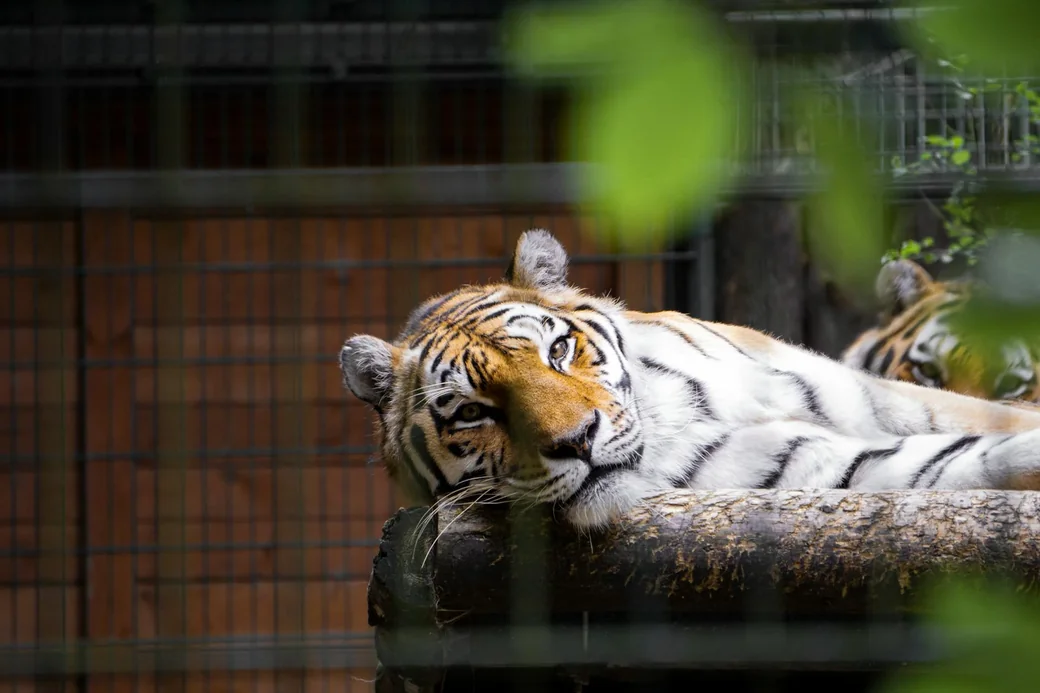
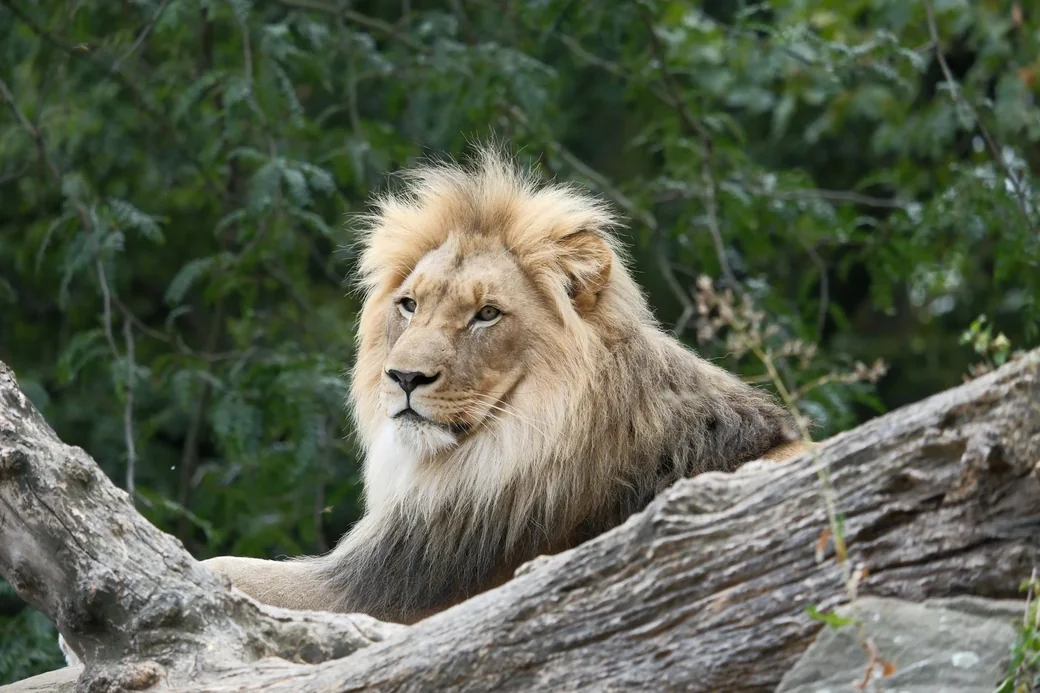
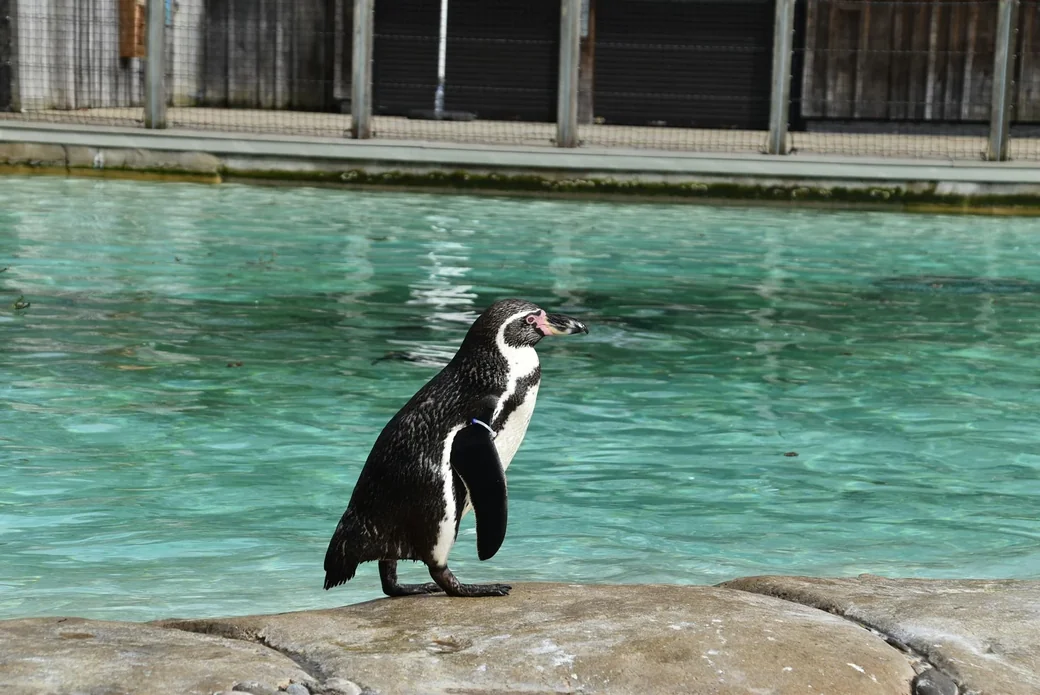
Start with the headline residents: Asiatic lions in the Indian-town setting of Land of the Lions, Sumatran tigers behind floor-to-ceiling glass in Tiger Territory, western lowland gorillas in Gorilla Kingdom and Humboldt penguins at Penguin Beach, whose underwater window is a favourite. Into Africa brings giraffes, zebras, okapi and African wild dogs. Then step inside: Monkey Valley with its colobus monkeys, Rainforest Life with sloths and monkeys, Butterfly Paradise, In with the Lemurs, the spider walk-through at Tiny Giants and Giants of the Galápagos with its giant tortoises. These indoor exhibits suit rain or a midday break. Across the grounds the zoo cares for hundreds of species; Penguin Beach is the largest penguin pool in England, and the Komodo Dragon House is a must for reptile fans.
Daily keeper talks, feeding times and conservation at London Zoo
Keeper talks run through the day and are included with admission. Typical sessions cover the gibbons, tigers, Galápagos tortoises, otters and dwarf mongooses before lunch, and the gorillas, lions, Komodo dragons and penguins in the afternoon, plus a flying-birds demonstration on the display lawn when the weather allows. Schedules change, so check the What's On boards at the entrance or the zoo app, which sends reminders and directions. The zoo calls these talks, not shows: animals are never asked to perform, and the focus is on behaviour, threats in the wild and ZSL's conservation breeding programmes. Every visit also helps fund ZSL's conservation work with wildlife around the world.
Listed architecture and the best photo spots at London Zoo
London Zoo is a showcase of animal-house design. Decimus Burton's Giraffe House (late 1830s), Clock Tower and Raven's Cage show the Georgian beginnings. Berthold Lubetkin's Round House and Penguin Pool from the 1930s are icons of British modernism and are now retired from animal use. The lightweight aluminium Snowdon Aviary of the 1960s, designed by Cedric Price, Frank Newby and Lord Snowdon, now shelters colobus monkeys. For pictures, try the glass at Penguin Beach, the windows of Tiger Territory, the Giraffe House façade, the Penguin Pool's twin ramps and the bird-themed mechanical clock outside Blackburn Pavilion, which springs to life at regular intervals. In all, more than a dozen buildings on the site are listed (officially protected for their architectural and historic value).
Famous residents and screen appearances at London Zoo
Winnie, a black bear brought from Canada in 1914, charmed A. A. Milne and his son and inspired Winnie-the-Pooh. Guy the gorilla, who arrived on Guy Fawkes Night 1947, became a national favourite and has a bronze statue in Barclay Court. In 1965 Goldie the golden eagle escaped and stayed free for nearly twelve days, drawing crowds to Regent's Park. Obaysch, in 1850, was the first hippopotamus England had seen in centuries, and the only photographs of a living quagga were taken here in 1870. On screen, the python scene in Harry Potter, a Komodo dragon in Skyfall and Harry Styles's As It Was video at the Penguin Pool all used the zoo.
Legends and rumours: stories told about London Zoo
These tales are passed on by word of mouth and cannot be fully verified. According to one story, a chimpanzee named Cholmondeley slipped out of the zoo hospital in 1948, crossed a corner of Regent's Park and hailed a bus on Albany Street. The elephant Jumbo is said to have taken his name from the Swahili greeting “jambo”, and when he was sold to an American circus, legend has it that schoolchildren by the thousand wrote to the Queen to stop the sale. It is also said that the giant panda Chi Chi inspired the WWF logo, and that visitors still gather at the empty Penguin Pool expecting a talk.
Food, drink and picnics at London Zoo
The Terrace Restaurant offers sit-down and takeaway meals, with hot food served around lunchtime, plus hot drinks and pastries from the Barista Bar beside it. Smaller outlets include the Peckish Parrot Café in Animal Adventure, Zoo Treats and the Woodland Kiosk (open on selected days), and the Beach Hut by Penguin Beach for hot drinks. Vegetarian, vegan and allergy-friendly choices are available, so ask the staff. Most outlets accept cards only, and only the Terrace takes cash. You may bring your own food and eat at the picnic tables around the grounds. Packaging is compostable, and the kitchens favour seasonal British produce and sustainable fish.
Visiting London Zoo with children: play areas and special experiences
Animal Adventure is the children's zoo, with domestic animals, a playground and a water fountain, while ZooTown is an indoor role-play world for under-eights that must be booked online in advance. Pushchairs can be hired at the gift shop, and a breastfeeding room sits next to the Terrace Restaurant. Children under 16 must be accompanied by an adult, and visitors may not feed the animals. Booked experiences go further: Meet the Giraffes, Meet the Meerkats, Penguin and Tiger Keeper sessions, a Junior Keeper day for ages 11 to 15 and overnight stays in the Lodges beside the lion pride.
Accessibility at London Zoo: wheelchairs, Changing Places and quiet spaces
Most of the zoo is wheelchair accessible, although some paths are uneven and the slopes to the two tunnels are steep. Wheelchairs and mobility scooters can be hired (reserve ahead), and there are accessible toilets plus a Changing Places facility at Animal Adventure. The Penguin Pass helps visitors who find queuing hard, and relaxed-opening, British Sign Language and audio-described tours run regularly. A quiet-spaces map, a social story and an access guide help autistic and neurodivergent visitors prepare. Assistance dogs are welcome under conditions, though not in walk-throughs, talks or near the big cats. A multifaith room is beside Tiger Territory.
Rules, dress code and etiquette: do's and don'ts at London Zoo
There is no dress code, but comfortable shoes and weatherproof layers matter on a 36-acre site. Expect bag checks and screening at the entrance, and leave large luggage at home or in the lockers near the main gate. Bicycles, skateboards, roller skates and adult scooters are not allowed, while supervised children's scooters are. The zoo asks visitors not to smoke or vape. Keep your voice low, stay behind barriers and never feed or tap on enclosures; some animals may be off show for welfare reasons. Commercial filming needs permission. Audio guides come in seven languages, so bring your own earphones.
What to see nearby: Regent's Park, Primrose Hill, Camden and Little Venice
London Zoo sits on the edge of Regent's Park, so a stroll through the park's gardens fits easily before or after your visit. To the north, Primrose Hill rewards a short climb with a famous view of the London skyline. Camden Town's markets and canal-side lock are about fifteen minutes away on foot, and canal boats continue to Little Venice. Near Baker Street you will find the Sherlock Holmes Museum and Madame Tussauds, and Lord's Cricket Ground in St John's Wood is a short ride away. Combine the zoo with one of these stops for a full London day out.
More London Zoo stories: the giraffe parade, wartime years and the chimps' tea party
In May 1836 four young giraffes were walked from Blackwall docks to Regent's Park under police escort, and the crowds that followed inspired what the press called giraffe mania. In the late 1830s Charles Darwin met the zoo's first orangutan, Jenny, and Edward Lear drew the zoo's parrots. During the Second World War the East Tunnel served as a shelter and valuable animals were sent to Whipsnade. In 1962 an Arabian oryx lent to Phoenix Zoo launched the world's first international cooperative breeding programme, and today the zoo takes part in programmes for more than 130 species. When closure was announced in the early 1990s, a wave of public support helped the zoo carry on. The polar bear cub Brumas drew record crowds in 1950, and the daily chimpanzees' tea party, a hit from 1926, ended in 1972 as attitudes to animal welfare changed. Screen fans can spot the zoo in Hitchcock's Sabotage, An American Werewolf in London and Withnail and I. According to legend, the hippo Obaysch arrived in exchange for hounds, and it is said that Fellows of the Society disliked the short word “zoo”, popularised by a music-hall song.
Discounts, membership and lesser-known extras at London Zoo
Several routes can lower the cost of a visit, so check eligibility on the official site: a rail-ticket offer through the Days Out Guide website, Blue Light Card and Defence Discount Service discounts on dated tickets, Max Card holders at the gate, Blue Peter badge holders aged 5 to 15 with a paying adult, reduced-price tickets for people receiving certain benefits, and a Community Access Scheme for charities and groups. ZSL membership allows unlimited visits to London and Whipsnade without pre-booking, and the Gold level adds extras such as priority access to ZooTown. Lesser-known corners include the early twentieth-century Mappin Terraces, now The Outback, and the 1960s Casson Pavilion, designed to evoke elephants gathered at a waterhole. Extras include the Friendly Spider Programme, a session with a hypnotherapist and a zookeeper for people afraid of spiders, the Komodo Dragon Experience behind the scenes, and the ZSL Library near the main gate, open by appointment. On selected summer evenings the zoo hosts adults-only events, so check the events page.
London Zoo: Visitor Tips
A few habits make a London Zoo visit smoother: book your date online, arrive close to opening, plan around the keeper talks, keep the indoor walk-throughs for rain or midday, and leave large bags at home because of the entrance checks. The tips below cover tickets, transport, highlights, architecture, food, access and the local legends.
London Zoo: Best Time to Visit
Weekday mornings outside school holidays; spring to early autumn for the longest days; keeper talks cluster before lunch and mid-afternoon.
London Zoo: Admission Fees
Standard – Adult (16–64 years)
Entry to the historic zoo in Regent's Park with its animal houses, walk-through habitats and daily keeper talks; prices vary with the day, being lower on quiet weekdays and higher at peak times. Standard fare for visitors aged 16 to 64.
£31.80
Standard – Child (3–15 years)
Entry to the historic zoo in Regent's Park with its animal houses, walk-through habitats and daily keeper talks; prices vary with the day, being lower on quiet weekdays and higher at peak times. Fare for children aged 3 to 15, who must be accompanied by an adult aged 18 or over.
£22.20
Standard – Concession
Entry to the historic zoo in Regent's Park with its animal houses, walk-through habitats and daily keeper talks; prices vary with the day, being lower on quiet weekdays and higher at peak times. Reduced fare for seniors aged 65 and over, students with ID and disabled adults.
£30
Children under 3 (free)
Children under 3 enter free of charge.
Free
Quick Info
3h 30m
easy
London Zoo: Getting There
The nearest Underground stations are Camden Town and Chalk Farm on the Northern line, each roughly a fifteen to twenty minute walk away. Chalk Farm is the calmer choice, with a pleasant route past Primrose Hill. Baker Street (Bakerloo, Circle, Metropolitan, Hammersmith & City) is about a twenty-minute walk through Regent's Park, or you can take the 274 bus. From Regent's Park station you can walk through the park or catch the 88 bus. Camden Road on the Overground is another option. If you arrive at Euston, ride the Northern line to Camden Town or Chalk Farm. From Heathrow, take the Elizabeth line to Tottenham Court Road and change to the Northern line; Eurostar passengers reach Camden Town in three stops from King's Cross St Pancras. By car, the zoo is outside the Congestion Charge zone but inside the ULEZ; use NW1 4SX for the car park.
Nearby stops & parking
Bus 274 stops right outside, on Prince Albert Road at the stop named ZSL London Zoo; bus 88 stops on Albany Street, a few minutes' walk away. Santander Cycles docking stations stand opposite the main entrance and in the main car park, and a public bike shed is across the road. The zoo car park (NW1 4SX) cannot be reserved in advance, so spaces are first come, first served. Pay-and-display bays line the Outer Circle in Regent's Park, with a maximum stay on most days. Taxi and ride-hailing drivers can use the zoo address on the Outer Circle.
London Zoo: Dress Code & Etiquette
There is no formal dress code. Wear comfortable walking shoes, because the grounds are large, include slopes, and the two tunnels have steep ramps. Dress in layers and bring a light waterproof, since much of the visit is outdoors. Stay behind barriers, speak quietly near the animals and keep bags light: bag checks apply at the entrance.