The Star Ferry is Hong Kong's historic passenger ferry service, crossing Victoria Harbour between Tsim Sha Tsui on the Kowloon peninsula and the waterfront districts of Hong Kong Island. It is the oldest form of public transport still running in the city and one of its best-loved experiences. The short, inexpensive crossing puts you at water level in the middle of the harbour, with the skyline rising on both shores, and for many visitors it becomes the most memorable few minutes of their stay.
Star Ferry: Location, accommodation options and contact
Star Ferry Pier, Salisbury Road, Tsim Sha Tsui, Kowloon, Hong Kong
The place's location on the map and nearby accommodation and hotel options are shown by Stay22. Cookies are used. Your consent is remembered on every page; you can turn it off at any time in the cookie settings.
From a Baker's Bread Boat to Hong Kong's Best-Known Crossing
The ferry began as a delivery problem. Dorabjee Naorojee Mithaiwala, a Parsi cook and baker who reached Hong Kong in 1852, bought a small steamboat so he could move his bread and his workers between Kowloon and Central. Other people kept asking for a lift, and he realised passengers paid better than loaves. In 1888 he turned the arrangement into the Kowloon Ferry Company. He later sold it, retired to India and died in 1904, having spent fifty-two years away from home. The ferry he started for practical reasons outlived everything else he built.
Why Every Boat Carries the Word Star — and What the Green and White Are Said to Mean
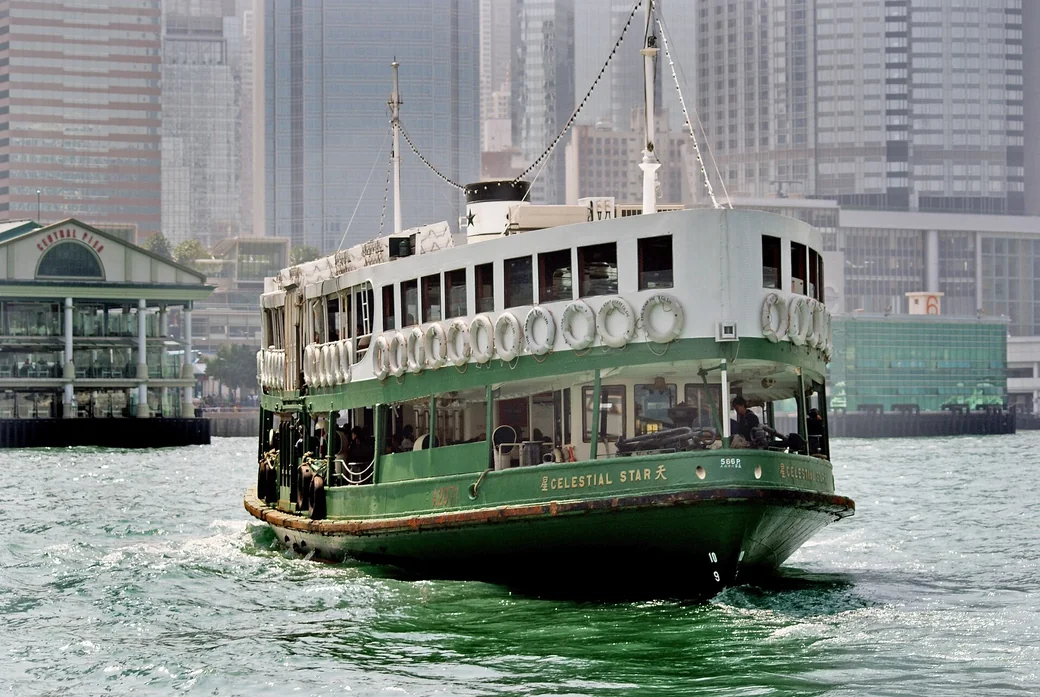
The company's own explanation is plain: the name comes from the fact that every vessel in the fleet carried the word Star — Morning Star, Evening Star, Rising Star, Guiding Star. Beyond that, two stories circulate. It is said that the founder chose those names because he loved Tennyson's poem Crossing the Bar, which opens with the line "Sunset and evening star". It is also said that the white upper hull stands for the sky and the green lower hull for the sea, the ferry joining the two. Neither claim is documented; both are repeated locally as hearsay. Whatever the meaning, the livery itself has stayed the same: the hulls are still bottle green below and ivory above, with four stars on the funnel. The name became official in 1898, when the business passed to Sir Catchick Paul Chater's wharf company.
The Boat That Never Turns Around: Double Ends and Seat Backs That Flip
Star Ferries are double-ended: both ends are bows, and there is a wheelhouse at each. The boat arrives, unloads, loads and leaves in the opposite direction without ever turning in the fairway — a sensible design in a harbour this busy. The seating follows the same logic. Benches have backrests mounted on pivots, and crew or passengers swing a whole row over so everyone faces the way the boat is going. The first double-deck, double-ended vessels joined the fleet in the 1890s and raised capacity from about a hundred passengers to roughly two hundred and fifty. The benches are still made of wood, and like most of the boat they have been kept much as they always were; that unhurried, old-fashioned character is a large part of the ferry's appeal.
Upper Deck or Lower Deck: How to Choose Before You Tap In
The two decks have separate entrances at the Central and Tsim Sha Tsui piers, so decide before you tap in. The upper deck is open along both sides, sits higher above the water and gives the cleaner line of sight for photographs; it is also windier and warmer in summer sun. The lower deck sits close to the waterline, feels more enclosed, carries more engine noise and is where the regulars tend to ride. On the Wan Chai route the question does not arise — only the upper deck takes passengers there, and there is a single fare.
Which Side to Sit On for the Skyline
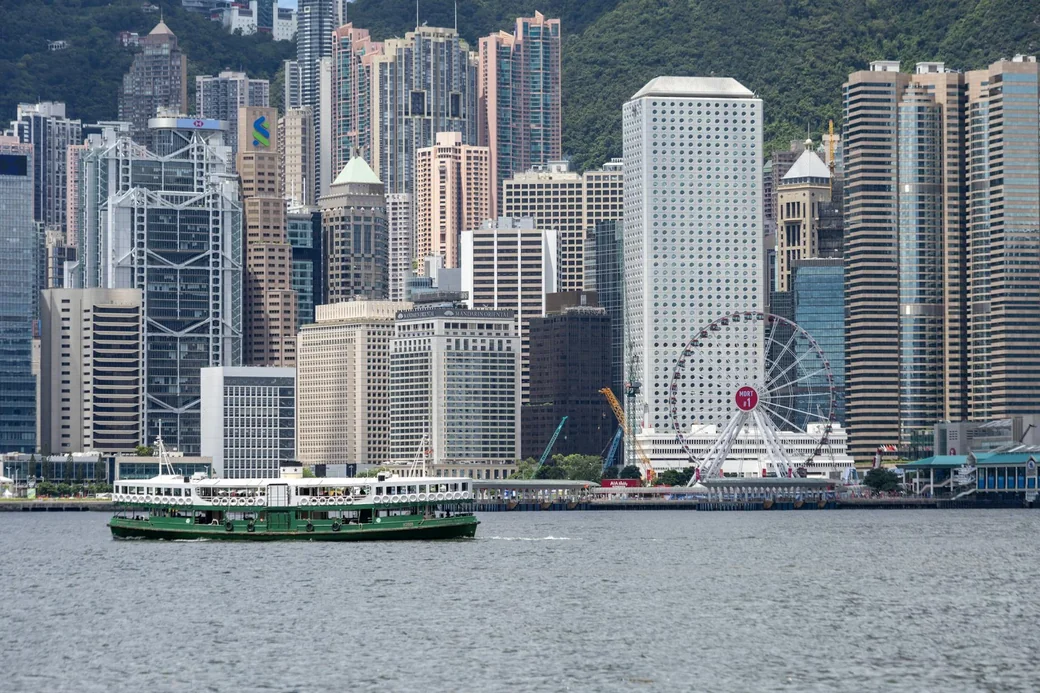
Travelling from Tsim Sha Tsui to Central, the Hong Kong Island skyline rises on your right and Kowloon with the tall ICC tower sits on your left. Going the other way, swap the two. If you want the island towers filling the frame, take the right-hand side outbound and the left-hand side on the way back. Seats near the bow give an uninterrupted view but catch the most wind. The stern is calmer and lets you photograph the pier you have just left, with the Clock Tower in shot on the Kowloon side. Between the two shores, cargo vessels and other working harbour craft cross your path, so the view takes in a busy port as well as a skyline.
Central Route or Wan Chai Route: Two Very Different Crossings
The Central route is the famous one: the shortest hop, the densest skyline, the busiest boats and the longest queues at weekends. It lands you beside ifc mall and the Central waterfront. The Wan Chai route runs on a longer diagonal across the harbour, carries far fewer tourists and gives a wider angle on both shores. It ends next to the Convention Centre, within sight of Golden Bauhinia Square. If you have time for two crossings, take Central one way and Wan Chai the other; the two together show the harbour from end to end. Both are franchised routes, and either crossing takes roughly eight to ten minutes.
From Coal to Diesel-Electric: A Short History of the Engines
The first fleet was five single-deck, coal-fired steamers running every forty minutes or so between Pedder's Wharf in Central and Kowloon Point. Service stopped on Mondays and Fridays so the boats could take on coal. In 1933 the company built the Electric Star, described as the first diesel-electric passenger ferry of its kind. Diesel-electric propulsion returned nearly ninety years later: a converted vessel entered regular service on the Wan Chai route in July 2020, and the company reported that pollutants and black smoke dropped by close to half.
Rope, Hook and Gangway: Watch the Thirty Seconds of Berthing
Stand near the gate on arrival and watch the crew work. A sailor on board swings a mooring rope towards the pier, where a colleague catches it with a long hook and makes it fast. The method has not changed since the nineteenth century, and it still beats anything mechanical for a boat that berths this often. Then the gangway comes down. It moves with the tide, so it is never quite level with the deck. Wait until it is fully lowered, step over the join rather than onto it, and keep a hand free.
Octopus Cards, Tokens and Turnstiles: How Boarding Actually Works
There are no reserved seats and no advance booking. You pass a turnstile and walk on. An Octopus card (Hong Kong's rechargeable stored-value transit card) is the simplest method: tap and go. If you don't have one, buy a token from the machine before the gate, or use a self-service ticket machine, which takes cards and the main mobile wallets. Cash is accepted in local banknotes and coins, and change is given. Dropping coins straight into the turnstile is no longer possible — those gates were removed years ago, which surprises visitors working from older guidebooks.
Rules on Board and at the Pier
The rules are posted and enforced. No eating or drinking on board, and no smoking anywhere on the ferry or the pier. Stay seated until the boat is secured; standing on the upper deck or on the stairs while under way is not allowed. Don't lean or reach outside the hull, don't lie across the benches or put your feet on them, and keep clear of the sides while the crew handles ropes. Luggage is limited to items no larger than roughly 40 by 40 by 17.5 centimetres. Animals are not carried, with the exception of guide dogs.
Best Light and Framing for Photographs
The strongest window is the half hour before sunset and the half hour after it, when the towers light up while there is still colour in the sky. Morning light is softer and the harbour is usually clearer. The first minute after departure is the best single moment: the pier recedes, the wake opens and the skyline separates from its reflection. Shoot through the open sides of the upper deck rather than through glass. A short telephoto compresses the towers into a wall; a wide lens keeps the ferry's green railing in frame and gives the picture a sense of place.
Avoiding the Crowds and Reading the Weather
Weekday mornings and early evenings belong to commuters; weekend afternoons belong to visitors. Between those peaks the boats are half empty and you can pick any seat. Because departures come every few minutes, stepping back from a full boat costs almost nothing. Weather matters more than crowds. Services are suspended when a high typhoon signal is raised or when sea conditions turn rough, and that can happen with little warning in late summer. Fog in spring can hide the far shore entirely. Check conditions before you build an evening around the crossing.
Wheelchairs, Pushchairs and Step-Free Access
All three piers have step-free access, and wheelchair users board the lower deck, where up to four wheelchairs are carried on each sailing. The upper deck is reached by stairs only. On the Wan Chai route, where passengers normally use the upper deck, staff open the lower deck for wheelchair users. Pushchairs are straightforward on the lower deck and the crossing is short enough that most children stay content. The gangway rises and falls with the tide, so ask a crew member for help rather than taking a slope at speed.
What the Three Piers Hold: Cafes, Terraces and Shops
The piers are worth a few minutes in their own right. Tsim Sha Tsui has coffee, local snacks, a 7-Eleven, a tourist information desk and the Harbour Tour ticket counter. Central's Pier 7 carries the most: a rooftop bar and cafe with wide harbour views, a seafood restaurant on the platform level, the Star Ferry souvenir shop and sightseeing-bus desks. Wan Chai is the quietest, with a cafe and an open observation deck on the roof that looks across to both shorelines. All three have restrooms, free Wi-Fi and a staffed service counter.
What Is Within Walking Distance on Each Shore
Step off at Tsim Sha Tsui and the Clock Tower, the Cultural Centre, the Museum of Art, the Space Museum, the Avenue of Stars and the whole waterfront promenade are within a few minutes, with Harbour City and 1881 Heritage just behind. On the Central side, the Maritime Museum sits at the neighbouring pier, ifc mall and the observation wheel are a short walk away, and Statue Square and Tai Kwun lie further inland. From Wan Chai you reach the Convention Centre and Golden Bauhinia Square almost immediately.
From Sampans to Pier 7: Key Moments in the Ferry's Long History
Before steam, passengers crossed Victoria Harbour in flat-bottomed wooden sampans (small wooden boats moved by oar). In 1870 a twin-screw boat brought from England began irregular crossings, and the ferry's founder later bought it. A first attempt at steam ferries in July 1873 was paused at the request of the British consul in Canton, who was concerned about visitors heading for Kowloon's gambling houses. Regular service followed: the Kowloon Ferry Company in 1888 and the Star Ferry Company in 1898.
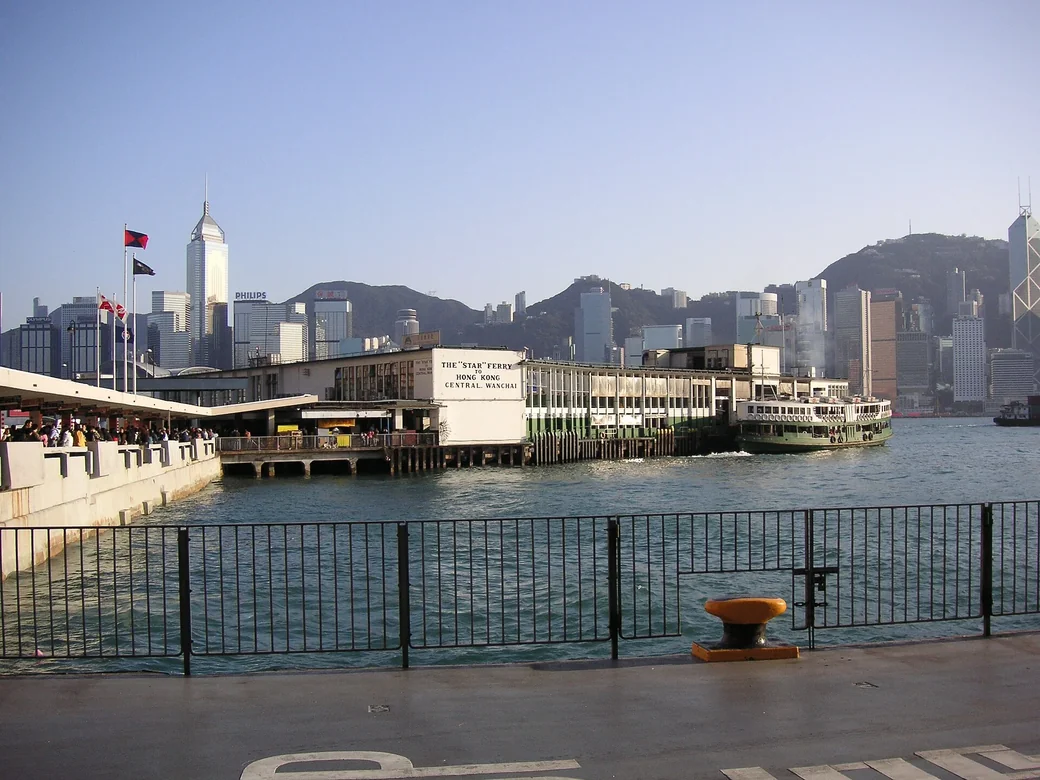
A pier opened at the western end of Salisbury Road in 1906 and was lost to a typhoon that September; a Central pier on Pedder Street followed in 1912. The Electric Star of 1933 was the first diesel-electric passenger ferry of its kind. After December 1941 the company kept sailing to help evacuate Kowloon, then paused for about three years and eight months; once the war ended the boats returned to service.
The present twin-pier terminal, with Tsim Sha Tsui on one side and Edinburgh Place on the other, was completed in 1957. A Hung Hom route ran from 1965 to 2011, the Cross-Harbour Tunnel opened in 1972 and the Harbour Tour began in July 2003. On 11 November 2006 the Edinburgh Place pier closed and the following day service moved to Pier 7, whose new clock tower recalls the old one. Diesel-electric propulsion returned in 2020.
Awards, Film Cameos and Heritage Neighbours: The Ferry's Wider Story
Recognition has followed the ferry for decades. The company reports that National Geographic Traveler named the crossing one of its "50 Places of a Lifetime" in 1999, and in February 2009 the Society of American Travel Writers placed it first in a poll of the world's most exciting ferry rides. In March 2015 the company announced that its piers had been named among "My 10 Most Liked Hong Kong Architecture of the Century".
The ferry also has a screen career. It appears at the start of The World of Suzie Wong (1960), where the hero meets the title character on board, in brief scenes of the 1988 miniseries Noble House, and in the French films Les Anges gardiens (1995) and The Moustache (2005).
Ashore, it has heritage neighbours of a similar vintage. The Peak Tram (the funicular railway up Victoria Peak) opened in 1888, the same year as the ferry company, and Hong Kong Tramways began in 1904; the three are often grouped together as the city's century-old transport. The founder's community is part of the story too: Hong Kong's Parsi (Zoroastrian community of Indian origin) merchants included Hormusjee Naorojee Mody, credited with founding the University of Hong Kong, and Jehangir Ruttonjee, who helped establish the Ruttonjee Sanatorium, while Dorabjee Naorojee Mithaiwala also ran hotels.
Today's boats were mostly built at Hong Kong & Whampoa Dock between the mid-1950s and 1965, and the company's 2025 report gives the fleet an average age above sixty years. The Shining Star of 1964 carries the Harbour Tour, which the company describes as the only licensed harbour tour in Hong Kong, and recalls the ferries of the 1920s.
Star Ferry: Visitor Tips
Ride once by day and once after dark — the same crossing reads as two different cities. The upper deck is open and gives an unobstructed view; the lower deck sits closer to the water and to the engine noise. Seat backs swing over, so set yours to face forward. Going from Tsim Sha Tsui to Central, the right-hand side holds the Hong Kong Island skyline and the left holds Kowloon and the ICC tower. Tap in with an Octopus card (Hong Kong's contactless travel card) to skip the ticket queue. Don't rush a crowded boat; the next one is only a few minutes away. The roof deck at the Wan Chai pier is a free, uncrowded viewpoint that most visitors never find.
Star Ferry: Best Time to Visit
Golden hour and the blue half-hour after sunset; weekday mornings before the commuter rush. October to December gives the clearest harbour air.
Quick Info
45m
easy
Star Ferry: Getting There
On the Kowloon side, take the MTR to Tsim Sha Tsui (Tsuen Wan line) or East Tsim Sha Tsui (Tuen Ma line) — the two stations are linked underground — and leave by Exit L6. Walk along Salisbury Road towards the Clock Tower and the pier appears in three to six minutes. Dozens of KMB (Kowloon Motor Bus) routes terminate at the Star Ferry bus terminus directly in front of the pier.
On Hong Kong Island, use Hong Kong Station Exit A2 or Central Station Exit A, ride the escalators up to the elevated walkway and follow the signs for the Central Ferry Piers through ifc mall. The walk is eight to twelve minutes, almost entirely covered and air-conditioned. Pier 7 is the Star Ferry berth. For the Wan Chai pier, use Exhibition Centre Station on the Tuen Ma line, three to five minutes on foot beside the Convention Centre. Taxis set down directly at all three piers.
Nearby stops & parking
Tsim Sha Tsui: the Star Ferry Bus Terminus sits directly outside the pier on Salisbury Road, with KMB routes fanning out across Kowloon. Tsim Sha Tsui and East Tsim Sha Tsui MTR stations are a short walk inland. Car parks at Harbour City, Ocean Terminal, Star House and the Hong Kong Cultural Centre are the closest options; the piers themselves have no parking.
Central: the Central (Star Ferry) bus terminus and a minibus stand are beside Pier 6 on Man Kwong Street. Hong Kong and Central MTR stations connect by covered footbridge, and the tram runs along Des Voeux Road Central about seven minutes away. Parking is at ifc mall and the Central Harbourfront.
Wan Chai: Exhibition Centre MTR station and its public transport interchange are next door, with parking at the Convention Centre and Sun Hung Kai Centre.
Star Ferry: Dress Code & Etiquette
There is no dress code: this is a working commuter boat, not a religious site. Dress for the water instead. The upper deck is open on both sides and the harbour breeze is stronger than it feels on shore, so bring a light layer even in summer and hold on to wide-brimmed hats and loose scarves. In winter the crossing can feel genuinely cold. Flat shoes help on the moving gangway. As a matter of courtesy, remember that most people on board are commuting: keep your voice down, don't save seats, and leave the aisles and doorways clear.