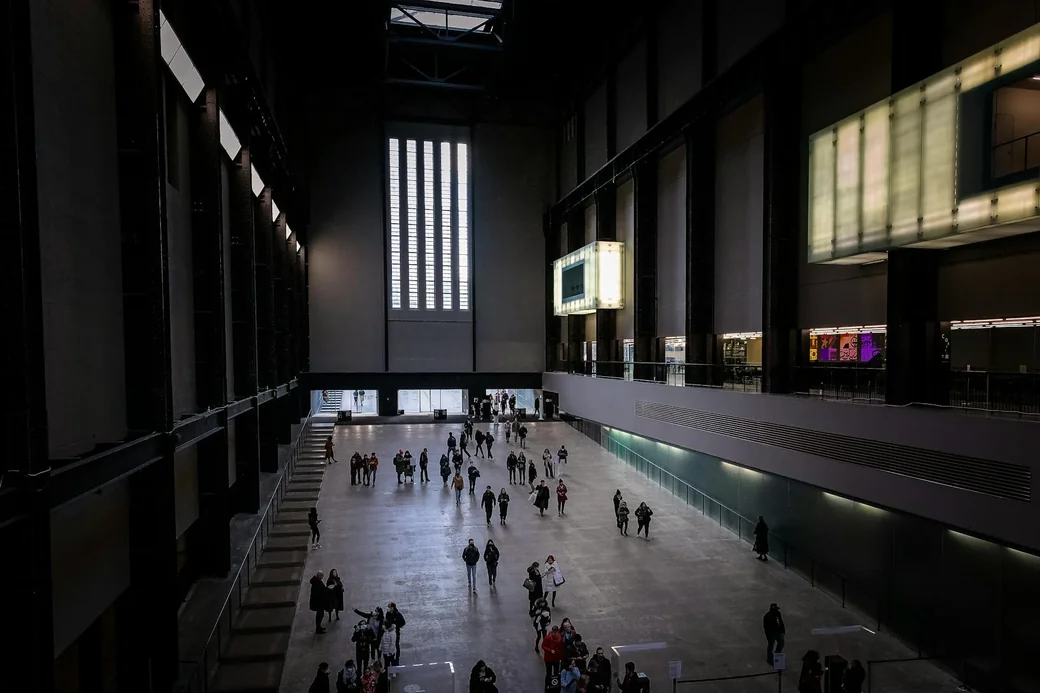
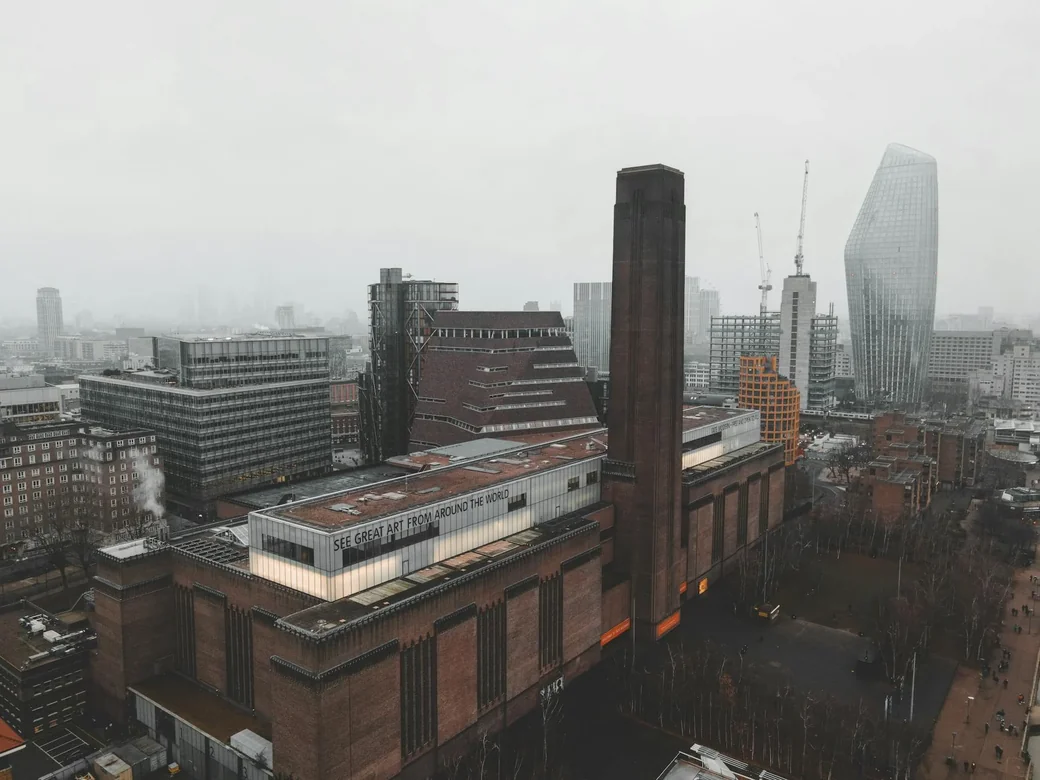
Tate Modern is London's national museum of international modern and contemporary art. It fills a converted brick power station at Bankside, on the south bank of the Thames, looking across the river to St Paul's Cathedral. Its galleries present painting, sculpture, photography, film, installation and performance by artists from every continent, from the early twentieth century to today. With its towering chimney and the immense Turbine Hall at its heart, the building itself has become one of London's best-known modern landmarks.
Tate Modern: Location, accommodation options and contact
Bankside, London SE1 9TG
The place's location on the map and nearby accommodation and hotel options are shown by Stay22. Cookies are used. Your consent is remembered on every page; you can turn it off at any time in the cookie settings.
Tate Modern London: Free Modern Art Museum in a Former Power Station
The collection displays, the Turbine Hall, the underground Tanks and the Level 10 viewing café are free, so you can drop in without a time slot and stay as long as you like. Artworks are arranged by theme rather than strictly by date, which makes it easy to follow a subject that interests you. Only the major temporary exhibitions require a ticket.
History of Tate Modern: From Bankside Power Station to Art Museum
Bankside Power Station was designed by Sir Giles Gilbert Scott and built in two phases between 1947 and 1963; it stopped generating electricity in 1981. In the early 1990s Tate searched for a home for a new museum of modern art and in 1994 announced the empty power station as the site; an international competition with 148 entries was won by Herzog & de Meuron. Work on site began in June 1995 once the old machinery had been removed and was finished in January 2000; the museum was officially opened on 11 May 2000 and admitted the public the next day, with Louise Bourgeois's giant spider as its first greeting, welcoming around five million visitors in its first year. Many people had campaigned for the building to be saved, and the Twentieth Century Society (a heritage charity) credits a 1993 visit it led with helping to plant the idea of an art gallery. Since then it has grown into one of the most visited art museums in the world.
Tate Modern Architecture: Chimney, Brick Façade and Blavatnik Building
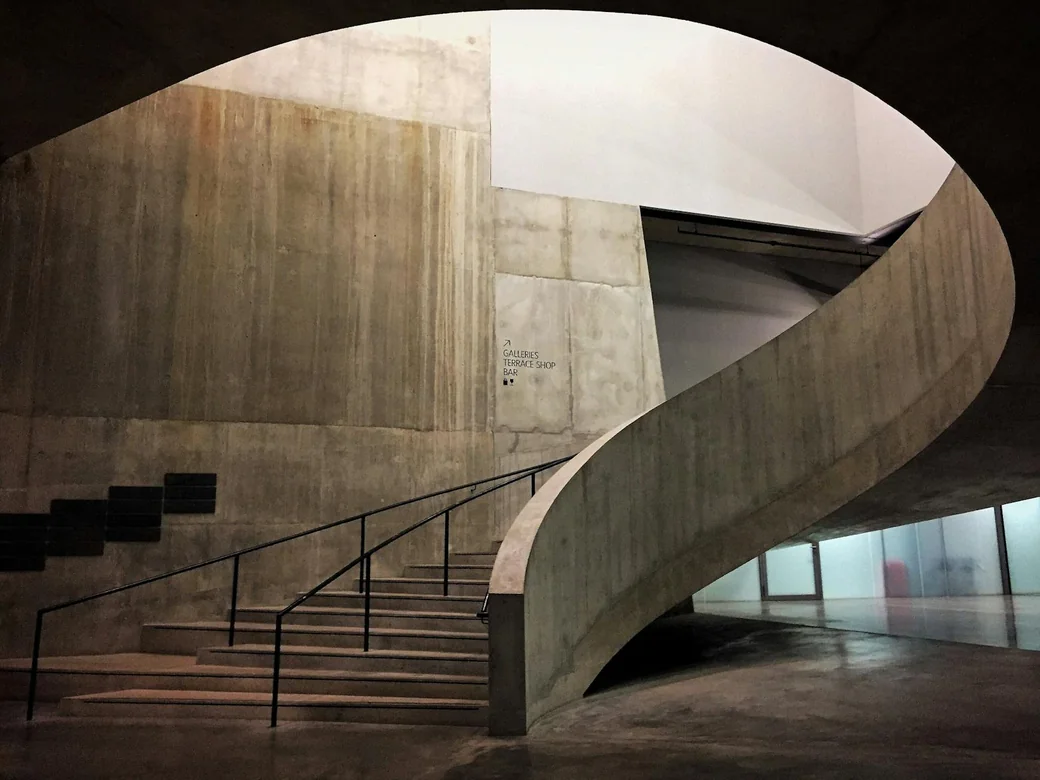
Herzog & de Meuron kept the industrial character: the brick walls, the cathedral-like Turbine Hall, heavy stair rails, raw timber floors and a glowing glass light beam on the roof. The 99-metre chimney, which Tate says was built deliberately lower than the dome of St Paul's, still dominates the skyline. Early plans showed two chimneys, but Scott combined them into one. In 2016 the Blavatnik Building was added, a ten-storey tower with a sloping brick lattice façade built over the old oil tanks. The original Boiler House is now the Natalie Bell Building, renamed in honour of a local community leader as part of a 2018 artwork and kept permanently from 2019. It shows art from 1900 onwards, while the Blavatnik Building focuses on art from 1960. Sir Giles Gilbert Scott, the power station's architect, also designed Battersea Power Station and the classic red telephone box.
Turbine Hall at Tate Modern: Famous Installations, Hidden Details and Milestones
The Turbine Hall is the vast, free entrance space where a new commission is installed every year. Louise Bourgeois's giant spider Maman greeted the first visitors in 2000, Olafur Eliasson hung a glowing sun in 2003, and Carsten Höller added giant slides in 2006. Look at the floor: Doris Salcedo's 167-metre crack from 2007 left a scar that is still visible, and how it was made is said to remain a closely guarded secret. Anish Kapoor's Marsyas used the full 155 metres; according to an ancient myth, the satyr Marsyas was flayed after a music contest.
Some moments have become part of the museum's story. In 2010 Ai Weiwei's Sunflower Seeds filled the Turbine Hall with about 100 million hand-made porcelain seeds weighing around 150 tonnes; visitors were first invited to walk on them, but the area was cordoned off within 48 hours because of ceramic dust. Tacita Dean's FILM (2011) was the first commission devoted to moving image, and SUPERFLEX's swings (2017) were the first to extend beyond the gallery walls. The Tanks opened in 2012 with a 15-week live art programme, Henri Matisse: The Cut-Outs (2014) became the most popular exhibition ever held here with more than half a million visitors, and a weekend of dance performances in 2015 even turned the Turbine Hall into a nightclub.
Tate Modern Collection Highlights: Rothko, Warhol, Matisse and Duchamp
Tate's own highlights list includes Mark Rothko's Red on Maroon, Andy Warhol's Marilyn Diptych, Henri Matisse's cut-out The Snail, Natalia Goncharova's Linen, Marcel Duchamp's Fountain, Nalini Malani's shadow play In Search of Vanished Blood, Cildo Meireles's Babel (a tower of radios), Pipilotti Rist's Lungenflügel, Arahmaiani's Burning Country and Britto Arts Trust's Rasad, a bazaar made of recycled materials. Rooms change, so check the floor plan; themed displays include Artist and Society, In the Studio, Materials and Objects, Media Networks and Performer and Participant. Duchamp's urinal is a 1964 replica, and the 1917 original is said to have vanished soon after it was first submitted. Rothko made his murals for a restaurant but withdrew from the commission and later gave them to Tate; the story goes that he wanted their weight to press on the diners. The Tanks, below the Blavatnik Building, present live art and film. Works by Picasso belong to the collection too, and across the building these modern classics share space with installations, video and performance by artists from around the world.
Tate Modern Free Entry and Ticketed Exhibitions: How Booking Works
Entry to the collection is free and needs no booking. Major temporary exhibitions in the building are ticketed, and booking in advance is recommended, especially at weekends. Tate members enter exhibitions without booking, and there are concessions for young adults, families, disabled visitors and their companions. Prices and conditions are listed in the ticket section and on the official website, so check them before you go, and bring any membership or concession card with you.
Best Time to Visit Tate Modern: Opening Hours, Late Evenings and Crowds
Weekday mornings just after opening are the calmest, and Tuesday to Thursday is usually quieter than the weekend. The museum stays open late on Friday and Saturday evenings, when the atmosphere is livelier and the light over the river is beautiful. Summer and school holidays are the busiest periods. The Corner bar hosts music evenings, so look at the programme if you want a night out. Allow two to four hours for your visit.
Level 10 Viewing Café at Tate Modern: Free Views over London
On the top floor of the Blavatnik Building, Level 10 is a café with free panoramic views of the Thames, St Paul's Cathedral and the Millennium Bridge. It is reached only by lift from levels 0 to 4. The outlook opens on three sides, and because homes stand close by, signs ask visitors not to photograph their windows. Go on a clear day in the late afternoon and enjoy a coffee while you look. Its opening times differ slightly from the galleries. Many visitors count the view from here among the best free views in London.
Free Guided Tours and Smart Routes: Tate Modern in 2, 3 or 4 Hours
Volunteer guides lead free tours of about 45 minutes on most days around midday and early afternoon, starting from a meeting point on Level 2 of the Natalie Bell Building; check on the day. With two hours, see the Turbine Hall, one or two collection floors and Level 10. With half a day, add the Tanks, the Blavatnik Building galleries and a café break. Use the floor plan to follow one theme per floor instead of trying to see everything.
Tate Modern Visit Planning: Guides, Languages, Lockers and Left Luggage
Information in the galleries is mainly in English, so a translation app can help; free tours are led by volunteer guides, and exhibition guides are available in print and online, including large-print versions. Download the floor plan and read the visual story on the Tate website before you come. The ticketing team answers questions by email and by phone in the daytime. Lockers are on Level 0 of the Blavatnik Building and accept card payment only, as cash is not taken; London Bridge stations have a left-luggage service for bigger bags. Touch tours are free but must be booked by phone, and BSL interpretation, captioning and audio description are offered at selected events.
Tate Modern Rules, Photography and Etiquette: Do's and Don'ts
Photography is welcome for personal, non-commercial use unless a sign says otherwise, but flash, camera supports and selfie sticks are not allowed. Do not eat or drink in the galleries, do not touch works unless invited, and leave charcoal, pastels, permanent markers, watercolours and oils at home. Bags are checked on arrival and anything bigger than cabin size is refused. Electric scooters, skateboards and folding bikes, and their batteries, are not allowed in; non-electric ones must go in a locker, and space is limited. Some artworks use loud sound, flashing light, smoke or strobes, so read the warning signs. Tate asks everyone to treat staff and other visitors respectfully.
Tate Modern Accessibility: Step-Free Access, Quiet Rooms and Support
All entrances are step-free and lifts serve every floor; two lifts linking the South Entrance with the ticket desks need a RADAR key (the standard key that opens accessible facilities across the UK), available from staff. Wheelchairs and walkers can be borrowed free of charge, either booked ahead or on arrival subject to availability; mobility scooters need 24 hours' notice and previous experience of driving one. Accessible parking bays can be booked. There is a Changing Places toilet (a large accessible toilet with a hoist and an adult changing bench), folding stools, hearing loops at the ticket desks, ear defenders, large-print exhibition guides, magnifiers and coloured overlays, free touch tours, two quiet rooms and a multi-faith room. A visual story on the Tate website helps with planning, and assistance dogs are welcome. Contact the ticketing team before you come for tailored help.
Tate Modern with Kids: Family Tours, Drawing Desks and Quiet Spaces
Tate Modern suits families with pushchairs and curious children. Free family tours for ages 5 to 11 last about 30 minutes, and school-holiday activities often fill the Turbine Hall. The Tate Draw desks turn digital sketches into wall projections that children love. Use the baby care room and nappy-changing facilities, and take a break in a quiet room if the crowds or sounds become too much. Keep young children close in busy galleries.
Where to Eat and Shop at Tate Modern: Cafés, Corner Bar and Restaurant
Choose between the Level 6 restaurant and bar with river views, the Espresso Bar on Level 3 and the Level 10 café. The Corner on Level 1 is the late-night bar and music venue. Shops such as the Turbine Hall Shop and the Terrace Shop sell artists' books, prints, design objects and gifts. Remember that food and drink must stay out of the galleries.
Millennium Bridge, Tate Boat and Nearby Sights: Shakespeare's Globe, St Paul's, Borough Market, The Shard
The most scenic approach is on foot across the Millennium Bridge from St Paul's. The footbridge was nicknamed the Wobbly Bridge after it swayed when it first opened and was closed for adjustments; today it is steady, and it appears in a Harry Potter film. Bankside Pier has the Tate to Tate boat to Tate Britain at Millbank Pier. If you arrive from Southwark station, follow the orange lamp posts, then walk the riverside path afterwards.
Within an easy walk are Shakespeare's Globe, a few minutes east along the river; St Paul's Cathedral across the Millennium Bridge; Borough Market, roughly a 10 to 15 minute walk east, for lunch; and The Shard's viewing floors a little further on. Combine a morning at Tate Modern with Tate Britain by boat, or stroll the Thames path through the South Bank. Market days differ by weekday, so check before you go.
Tate Modern: Visitor Tips
Enter by the Turbine Hall ramp or through the Blavatnik Building and start with the free displays before deciding on a ticketed exhibition. Bags are checked on arrival, so allow a few extra minutes and travel light. Take the lift to Level 10 for the river view, then walk down through the galleries. For photos, the Turbine Hall bridges and the approach from the Millennium Bridge work well; flash and selfie sticks are not allowed. Download the floor plan beforehand and ask staff about the day's free tours.
Tate Modern: Best Time to Visit
Weekday mornings just after opening, or Friday and Saturday evenings; clear days and late-afternoon light for the Level 10 views over St Paul's.
Tate Modern: Admission Fees
Free admission
The galleries and the Turbine Hall are free to enter without booking and present modern and contemporary art from around the world; major temporary exhibitions are ticketed.
Free
Quick Info
3h
easy
Tate Modern: Getting There
Tate Modern stands on the south bank of the Thames and is easy to reach on foot, by tube, rail, bus and river boat. Blackfriars station (District and Circle lines plus national rail) has a south exit about 300 metres away. Southwark station on the Jubilee line is roughly 600 metres away, and the lamp posts along the route are painted orange to guide you. From St Paul's station on the Central line, walk across the Millennium Bridge. Buses 40, 63 and 100 stop on Blackfriars Bridge Road, the 381 on Southwark Street and the 344 on Southwark Bridge Road. The Tate to Tate boat links Bankside Pier with Tate Britain at Millbank Pier. This boat runs on the Uber Boat by Thames Clippers river bus lines: RB1 on weekdays and RB2 at weekends. There is no car parking at the gallery or in the surrounding streets, so public transport is the best choice.
Nearby stops & parking
The closest stops are Blackfriars (south exit, about 300 m), Southwark (about 600 m) and Bankside Pier beside the gallery. Cycle hire docking stations are at New Globe Walk, Sumner Street and Southwark Street, 320 to 480 metres away, and you can lock your own bike at Holland Street, New Globe Walk or Sumner Street. Taxis drop off and pick up on Holland Street by the main entrance, and coaches use Southwark Street. There are no public car parks on the gallery site. Twelve accessible parking bays are reached from Park Street and must be booked at least 24 hours ahead through the ticketing team by email or phone.
Tate Modern: Dress Code & Etiquette
There is no special dress code. Comfortable shoes are the best choice because the galleries are large and you will walk and stand for hours. Bags are checked at the door, and anything larger than cabin-bag size (55 × 40 × 20 cm) is not allowed in, so use the lockers if you need to. Food and drink are not allowed in the galleries, and materials such as charcoal, pastels, permanent markers, watercolours and oil paint may not be used. Photos for personal use are welcome unless a sign says otherwise, but flash, camera supports and selfie sticks are not permitted. Do not touch works unless a label invites you to, keep your voice low in the quiet rooms, and treat staff and other visitors with respect.
Guide / Language
en
Tate Modern: Amenities & Facilities
Free volunteer-led gallery tours
Lockers for bags (paid)
Interactive drawing desks (Tate Draw)
Quiet rooms and multi-faith room
Corner late-night bar and events space
Gift shops and bookshops
Step-free access, lifts and free wheelchair loan
Accessible toilets, Changing Places and baby care room