Tower Bridge is a Victorian road bridge across the River Thames in central London, standing right beside the Tower of London. With its two Gothic-style stone towers linked high above the river by walkways, it is one of the most recognisable landmarks in the city and a symbol of London around the world. It is a busy everyday crossing for traffic and pedestrians and, at the same time, a visitor attraction: an exhibition inside lets you explore the towers, the walkways and the machinery that once raised the bridge.
Tower Bridge: Location, accommodation options and contact
Tower Bridge Road, London SE1 2UP
The place's location on the map and nearby accommodation and hotel options are shown by Stay22. Cookies are used. Your consent is remembered on every page; you can turn it off at any time in the cookie settings.
Tower Bridge History: Why and How London's Icon Was Built
By the 1870s the crowded districts east of London Bridge needed another crossing, yet a fixed bridge would have blocked ships heading for the Pool of London, the busy stretch of river upstream. A public competition drew more than fifty designs and was abandoned, after which the City architect Horace Jones and the engineer John Wolfe Barry adapted a proposal that was approved in 1884 and authorised by an Act of Parliament in 1885. Building began in April 1886 and took eight years, with five contractors, about 430 workers, divers laying foundations in the riverbed and over thirteen million rivets. Jones died in 1887, so Barry carried the work through to the opening on 30 June 1894, performed by the Prince of Wales on behalf of Queen Victoria.
How Tower Bridge Works: Bascules, Steel Frame and Gothic Style
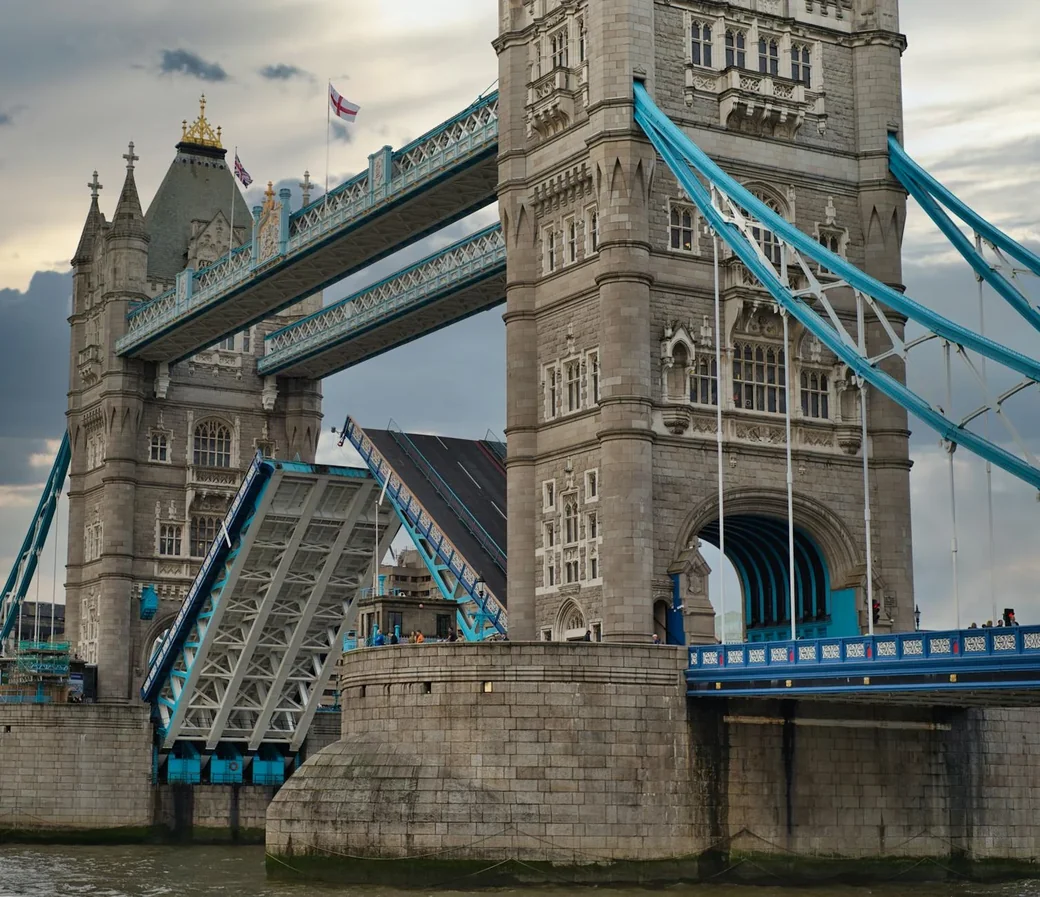
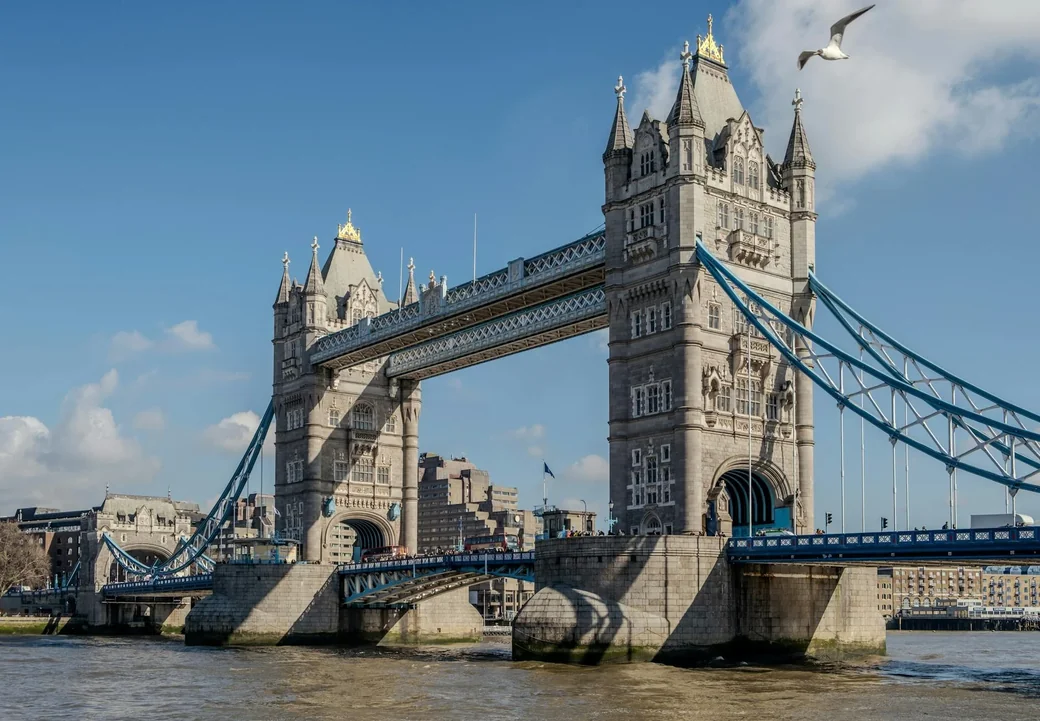
Despite its medieval look, Tower Bridge is a Victorian steel structure dressed in granite and Portland stone so that it harmonises with the neighbouring Tower of London. The central span is a bascule bridge (from the French word for seesaw): two roadway leaves, each weighing more than a thousand tonnes, pivot upwards to about 86 degrees, balanced by counterweights hidden in the piers. It is not a drawbridge pulled by chains. The side spans work as suspension bridges held by the upper walkways. Steam-driven pumps stored energy in hydraulic accumulators until 1976, when oil and electricity took over. At the very top, the two towers are crowned with gilded crests.
Inside Tower Bridge: Route Through the Towers, Walkways and Engine Rooms
Your visit begins at the ticket office on the west side of the North Tower, followed by a bag search. Climb about 200 steps (or take the lift) past exhibits on the builders, then cross the east and west walkways to the South Tower. Descend by stairs or lift to road level, follow the painted Blue Line along the bridge, and reach the Engine Rooms at river level by lift or about 40 steps. The route ends in the gift shop. Most visitors need around ninety minutes, and about two hours if you read every panel, try the audio tour and linger on the glass floors. Walking across the bridge on its pavements is free and open to everyone; only the exhibition in the towers, on the walkways and in the Engine Rooms requires a ticket.
Tower Bridge Glass Floors and the Best Views From the Walkways
The two glass floors, installed in 2014, are 11.5 metres long and 1.8 metres wide and sit roughly 42 metres above the river and 33.5 metres above the road. Each panel has five layers and can carry the weight of two black taxis; the top layer is replaced about every eighteen months. Look down at buses, cyclists and boats, then up at the mirrored ceiling for a selfie. From the windows you can pick out the Tower of London, St Paul's Cathedral, HMS Belfast, City Hall, the Shard, Tate Modern, the BT Tower, Canary Wharf and Butler's Wharf, and small camera windows help photographers avoid glare. On clear days you can also pick out the London Eye, the Gherkin, the Millennium Bridge and even Wembley in the distance.
Engine Rooms, Blue Line and the People Who Kept Tower Bridge Moving
After the Towers, the Blue Line leads to the Engine Rooms (the former power house), where the original steam engines, coal-fired boilers and hydraulic accumulators are preserved. Along the way 80 bronze plaques are set into the pavement, alternating between names and ornamental symbols, many designed by local students. They honour workers such as Hannah Griggs, an early cook, and John Chalk, a rivet boy of fourteen. Inside the South Tower, seven worker statues are hidden in the roof structure for the unsung builders. More than eighty people once kept the machinery running, and cats lived here until the early 1980s.
Tower Bridge Lift Times: How and Where to Watch the Bridge Open
The bridge rises several hundred times a year, and the law that created it gives river traffic priority over road traffic. The timetable on the official website lists the date, time, direction and name of each vessel, so you can plan to be there. Watch from the riverbank, because from the roadway you will not see the leaves rise: good places are in front of the Tower of London, Potters Fields Park on the south bank and Butler's Wharf. By law a bundle of straw hangs from the bridge while work is under way, to warn ships of reduced clearance, and the record is 64 lifts in a single day. Vessels with a height of nine metres or more must request a lift at least 24 hours ahead, and the bridge crew follows each request by radio, so the timetable can change when extra lifts are added.
Best Time to Visit Tower Bridge and How to Avoid the Crowds
Weekday mornings just after opening are usually calmest, and pre-booking secures your time slot, although it does not give fast-track entry. Spring and early autumn bring comfortable weather and clear skies; summer and school holidays are busiest, and rain makes the outdoor queue and Blue Line walk less pleasant. Late-afternoon light is lovely on the walkways, but allow plenty of time before the last entry. On the second Saturday of each month a calmer Relaxed Opening session runs in the morning. The bridge closes on 24, 25 and 26 December and opens later on 1 January.
Best Photo Spots Around Tower Bridge and Nearby Attractions
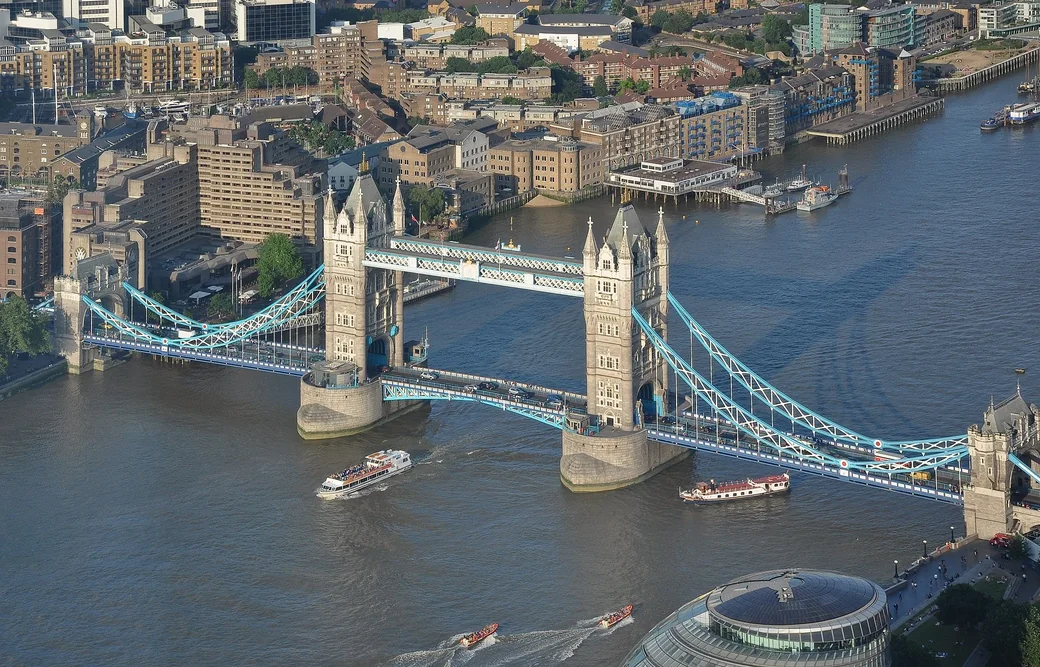
For the classic postcard shot, stand in Potters Fields Park or on the south-bank Thames Path, or walk to Butler's Wharf Pier and Shad Thames (a lane of restored Victorian warehouses) for views from the east. On the north bank, Tower Wharf in front of the Tower of London and St Katharine Docks (a small marina) frame the bridge with old lamp posts and yachts. From London Bridge you can look east along the river, and at low tide the foreshore steps offer a rare low angle. At dusk the bridge is lit. Nearby sights include the Tower of London, HMS Belfast, the Shard, Borough Market and the Monument.
How to Get to Tower Bridge: Tube, Rail, Bus, Boat, Bike and Parking
The simplest route is the Underground to Tower Hill (District and Circle lines), then a short walk to the ticket office on the west side of the North Tower. London Bridge station (Northern and Jubilee lines, plus mainline trains) is roughly one kilometre away on the south bank, a pleasant riverside walk. The Docklands Light Railway (a driverless light metro) stops at Tower Gateway, and buses 15, 42, 78, 100 and 343 pass nearby. River boats stop at Tower Pier and London Bridge City Pier. Driving is discouraged: Tower Bridge Road is a Red Route where stopping is prohibited, and the closest car parks are Tower Hill, The Circle and Minories.
Tower Bridge Accessibility, Quiet Spaces and Relaxed Opening
Lifts serve the high-level walkways in both towers, and an external lift links the bridge to the Engine Rooms and gift shop, though a lift can be out of service, so call the bookings team beforehand if you rely on one. Step-free toilets, wheelchair and rollator loans, stools, induction loops, Braille books, a visual story and sensory kits are available. Visitors who cannot queue can ask the ticket-office staff for priority entry. The two quiet rooms in the South Tower are not step-free. There is no Changing Places toilet (an accessible adult changing facility) on site; the nearest are at the Tower of London and London Bridge station. A monthly Relaxed Opening offers reduced capacity and a calmer soundscape for neurodivergent visitors. The AccessAble guide gives detailed route information, and the SignVideo service connects BSL users with a live interpreter.
Visiting Tower Bridge With Children: Trails, Activities and Practical Tips
Children enjoy the Tower Bridge Cat Trail, an illustrated stamp trail through the building that follows a bridge cat named Bella, and the monthly drop-in craft activities. During school holidays an Ask an Expert session puts engineers in the Engine Rooms to answer questions. Pushchairs are welcome, though they go through the bag search, and the lifts help with steep stairs. There is no café, so bring snacks and drinks and picnic in Potters Fields Park afterwards. The glass floors thrill most children, but let younger ones approach at their own pace, and keep a close eye on small children on the stairs and on the open-air walk to the Engine Rooms.
Tower Bridge Rules: Security Checks, Bags, Food and Dogs
Every visitor, bag, pram and wheelchair is searched on entry, so allow extra time. Shoulder bags and rucksacks within the published size limit are permitted; suitcases, wheeled bags and oversized items are not. Glass bottles are not allowed near the glass floors. You may eat and drink inside, but nuts and alcohol are discouraged, and there is no café, restaurant or water dispenser, so bring your own supplies. Well-behaved dogs on a lead are welcome, and assistance dogs always. Because the bridge is a working structure, a lift can delay entry, so arrive a little early and keep the walkways clear when taking photos.
Guided Tours, Audio Guides and Languages at Tower Bridge
Tower Bridge can be explored independently or with a guide. The small-group guided tour is led in English and covers the Towers, Walkways, Glass Floors and Engine Rooms. The seasonal Behind-the-Scenes tour enters the Bascule Chambers (the huge halls inside the piers that house the counterweights) and sells out quickly. The Highlights audio tour, included with entry, runs through the Smartify app in Arabic, Mandarin, German, Italian, French, Spanish and English; there are also a Sensory tour and a tour in BSL sign language. Tours led in BSL and by a Deaf guide run on selected dates.
Surprising Tower Bridge Moments: Bus Jump, Stunts and Screen Appearances
Tower Bridge has hosted daring and unlikely events. In 1912 an aviator flew a seaplane between the roadway and the walkways. In 1952 the driver of a number 78 double-decker bus, with twenty passengers aboard, accelerated across the gap as the roadway began to rise and landed safely on the other side. A military jet passed between the walkways in 1968, a motorbike rider leapt the raised leaves in 2009, helicopters flew through for the 2012 Olympic opening ceremony, and in 2024 two skydivers glided through in wingsuits. In 1997 a lift split the motorcade of Bill Clinton because a sailing barge arrived on schedule. In 1917 an officer even tested a parachute by jumping from the roadway.
Tower Bridge Legends, Rumours and Myths
According to hearsay, the high-level walkways closed in 1910 because their empty corridors had gained a bad reputation among pickpockets; the official reason is simply that few people used them. Rumour also says the original chocolate-brown paint was Queen Victoria's favourite colour. One well-known story claims a businessman bought London Bridge and shipped it to Arizona believing it was Tower Bridge, but both buyer and seller always denied it. Beneath the north end lies Dead Man's Hole, a tiled riverside alcove once used as a temporary mortuary; according to hearsay, visitors sometimes feel a chill there and bodies from the nearby Tower were brought in, though none of this is documented. And the nursery rhyme London Bridge Is Falling Down is not about this bridge. According to hearsay, freemen of the City of London may drive sheep across the city's bridges, Tower Bridge included, a custom that is now purely ceremonial.
Tower Bridge Facts and Figures: Size, Colours, Heritage Status and Quirks
The two towers rise about 65 metres, the central span between them is roughly 61 metres and the whole bridge measures about 244 metres. It contains more than eleven thousand tonnes of steel, some 31 million bricks and over thirteen million rivets, yet the roadway still carries tens of thousands of people and vehicles a day as part of London's inner ring road. The bridge was first painted brown, then red, white and blue in 1977 for the Queen's Silver Jubilee, and it carries the highest heritage listing grade. A charity, the City Bridge Foundation, owns and maintains it. It took over much of the role of the nearby Tower Subway, one of the world's earliest tube-railway tunnels. Under the founding act, the senior officer at the Tower of London even has the right to occupy the bridge, although that idea was never carried out. The Tower of London next door is a UNESCO World Heritage Site; the bridge itself is not. The bridge links the borough of Tower Hamlets on the north bank with Southwark on the south bank.
Tower Bridge in Films, Video Games and Music Videos
Tower Bridge is a favourite film location. It appears in the monster film Gorgo (1961), the James Bond adventure The World Is Not Enough (1999), The Mummy Returns (2001), Bridget Jones: Mad About the Boy (2025), Paddington 2 (2017), Spider-Man: Far From Home (2019) and Sonic the Hedgehog 3 (2024). Video games such as Assassin's Creed Syndicate (2015) and Watch Dogs: Legion (2020) rebuild it, and One Direction's video for Midnight Memories (2014) was filmed on the high-level walkways.
Tower Bridge: Visitor Tips
Pre-book your visit and arrive a little early: the queue is outdoors and the bag check takes time. If you can, climb the North Tower on foot, because the exhibits are on the way up, and keep the lift for tired legs. Visit both the east and west walkways, as each has different displays and views. Check the bridge-lift timetable and step out onto the riverbank at the right moment. For classic photos, combine the Thames paths on both banks with the view from the walkways. Bring your own headphones for the audio tour and download the app over the on-site Wi-Fi.
Tower Bridge: Best Time to Visit
Weekday mornings soon after opening; spring or early autumn. Golden hour and dusk for photos outside. Check the lift timetable to see the roadway rise.
Tower Bridge: Admission Fees
Adult (18+)
Cross the high-level glass-floored walkways between the North and South Towers and explore the Victorian Engine Rooms. Full fare for adult visitors aged 18 and over.
£18
Concession
Cross the high-level glass-floored walkways between the North and South Towers and explore the Victorian Engine Rooms. Reduced fare for seniors aged 60 and over, students aged 18 and over, young people aged 16 and 17 and disabled adults, with valid ID.
£13.50
Child (5–15 years)
Cross the high-level glass-floored walkways between the North and South Towers and explore the Victorian Engine Rooms. Fare for children aged 5 to 15, who must be accompanied by an adult aged 18 or over.
£9
Disabled child
Cross the high-level glass-floored walkways between the North and South Towers and explore the Victorian Engine Rooms. Reduced fare for children with a disability; a free companion ticket is available.
£6.80
Children under 5 (free)
Children under 5 enter free of charge, but a free ticket must still be booked.
Free
Companion of a disabled visitor (free)
Cross the high-level glass-floored walkways between the North and South Towers and explore the Victorian Engine Rooms. One companion per disabled visitor is admitted free of charge.
Free
Guided tour – Adult (18+)
A small-group guided tour of Tower Bridge led by an expert guide; booking in advance is essential because tickets are released weeks ahead. Full fare for adult visitors aged 18 and over.
£35
Guided tour – Concession
A small-group guided tour of Tower Bridge led by an expert guide; booking in advance is essential because tickets are released weeks ahead. Reduced fare for seniors aged 60 and over, students aged 18 and over, young people aged 16 and 17 and disabled adults, with valid ID.
£30
Guided tour – Child (5–15 years)
A small-group guided tour of Tower Bridge led by an expert guide; booking in advance is essential because tickets are released weeks ahead. Fare for children aged 5 to 15, who must be accompanied by an adult aged 18 or over.
£28
Guided tour – Disabled child
A small-group guided tour of Tower Bridge led by an expert guide; booking in advance is essential because tickets are released weeks ahead. Reduced fare for children with a disability; a free companion ticket is available.
£25.50
Behind-the-scenes tour – Adult (18+)
A rare extended look at the operational areas normally closed to the public, led by a member of the technical team and open to ages 14 and over; very popular, with tickets often sold out well ahead. Full fare for adult visitors aged 18 and over.
£80
Behind-the-scenes tour – Concession
A rare extended look at the operational areas normally closed to the public, led by a member of the technical team and open to ages 14 and over; very popular, with tickets often sold out well ahead. Reduced fare for seniors aged 60 and over, students aged 18 and over, young people aged 16 and 17 and disabled adults, with valid ID.
£75
Behind-the-scenes tour – Child (14–15 years)
A rare extended look at the operational areas normally closed to the public, led by a member of the technical team and open to ages 14 and over; very popular, with tickets often sold out well ahead. Fare for children aged 14 to 15, who must be accompanied by an adult aged 18 or over.
£73
Behind-the-scenes tour – Disabled child
A rare extended look at the operational areas normally closed to the public, led by a member of the technical team and open to ages 14 and over; very popular, with tickets often sold out well ahead. Reduced fare for children with a disability; a free companion ticket is available.
£70
Quick Info
1h 30m
easy
Tower Bridge: Getting There
Tower Bridge stands in the east of central London, so public transport is the easiest way to reach it.
By Underground (the Tube): Tower Hill station, on the District and Circle lines, is the closest, about seven minutes (roughly 500 metres) from the ticket office, with step-free access from platform to street. London Bridge station (Northern and Jubilee lines) is about one kilometre away along the south bank, also step-free.
By rail and light rail: London Bridge and Fenchurch Street are the nearest mainline stations, and the Docklands Light Railway (DLR, London's driverless light metro) stops at Tower Gateway, a short walk away. From Blackfriars, Cannon Street or City Thameslink you can enjoy a riverside walk.
By bus: routes 15, 42, 78, 100 and 343 serve the bridge. The Tower Bridge City Hall stop (42, 78, 343) is about 280 metres from the ticket office; Tooley Street (47, 343, 381) is closest to the Engine Rooms.
By river: riverboats call at Tower Pier on the north bank and London Bridge City Pier on the south bank.
On foot or by bike: the Thames Path passes the bridge, and hire-bike docking stations stand nearby.
By car: not recommended. Tower Bridge Road is a Red Route (no stopping at any time), and central London has charging zones, so check the rules before you drive.
Nearby stops & parking
Closest stops: Tower Hill (District and Circle lines) and London Bridge (Northern and Jubilee lines, plus mainline trains); Tower Gateway for the DLR; Fenchurch Street for trains from the east. Buses: Tower Bridge City Hall (42, 78, 343) for the ticket office and Tooley Street (47, 343, 381) for the Engine Rooms. Piers: Tower Pier and London Bridge City Pier. Car parks: Tower Hill Coach and Car Park (50 Lower Thames Street, EC3R 6DT, with Blue Badge bays, the disabled-parking permit scheme, and a short drop-off window for coaches), The Circle car park on Queen Elizabeth Street, Minories Car Park on Mansell Street (E1 8AA, step-free route of about 500 metres to the ticket office) and several NCP car parks. Electric-vehicle charging points stand on nearby streets such as Horselydown Lane and Gainsford Street. Hire-bike docking stations stand on Tooley Street, Tanner Street, Curlew Street and St Katharine's Way, and cycle parking is available at Duchess Walk and Butler's Wharf.
Tower Bridge: Dress Code & Etiquette
There is no formal dress code: Tower Bridge is a visitor attraction, not a religious site. Wear comfortable flat shoes for the staircases and the walk to the Engine Rooms, and dress for the weather, because the queue and the Blue Line stretch are open-air. Please keep your voice low in the two quiet rooms in the South Tower, which are used for prayer, meditation and nursing, wait your turn politely on the glass floors, and avoid blocking the narrow walkways when taking photos.