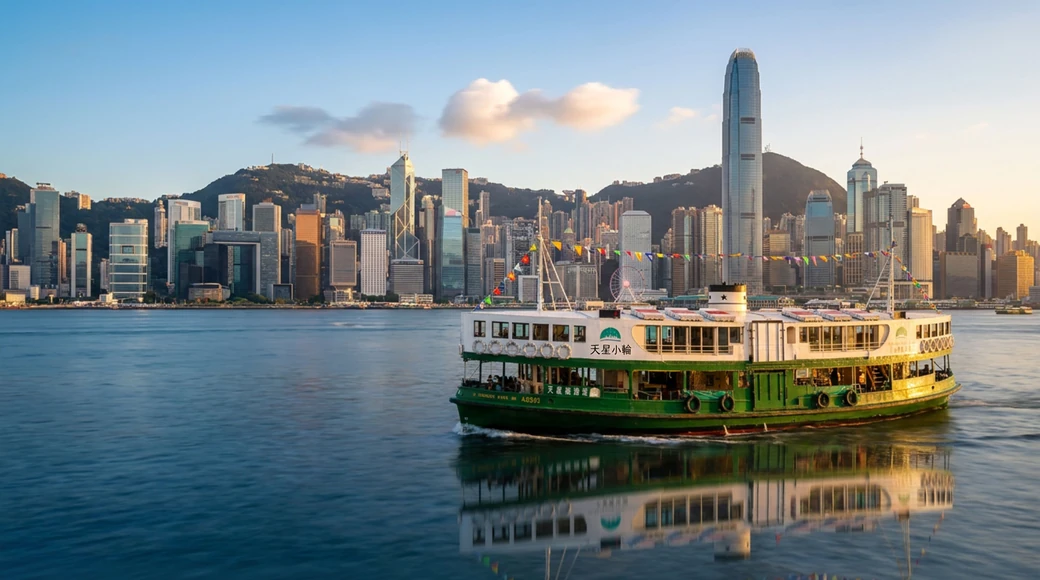
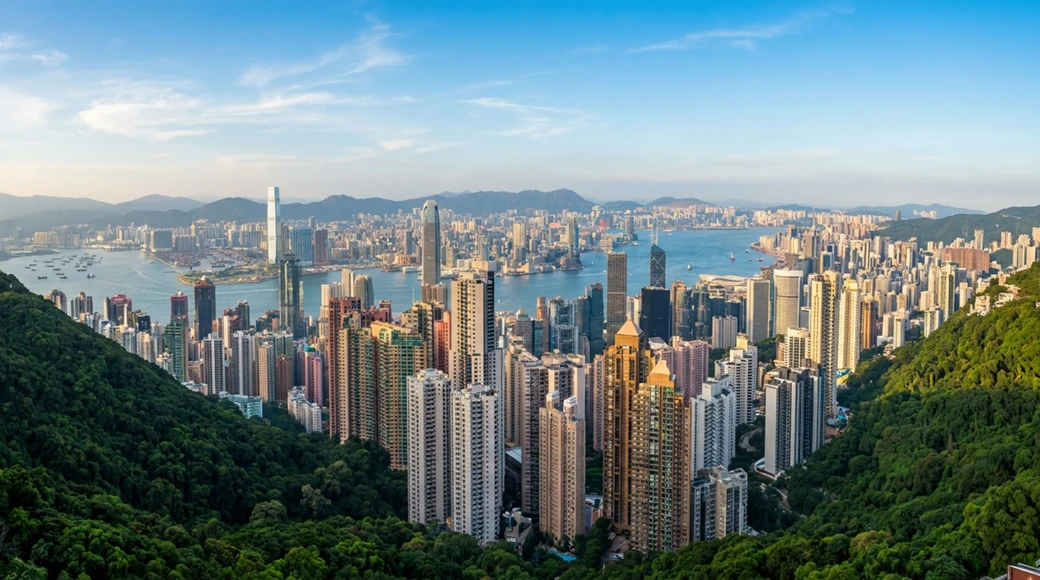
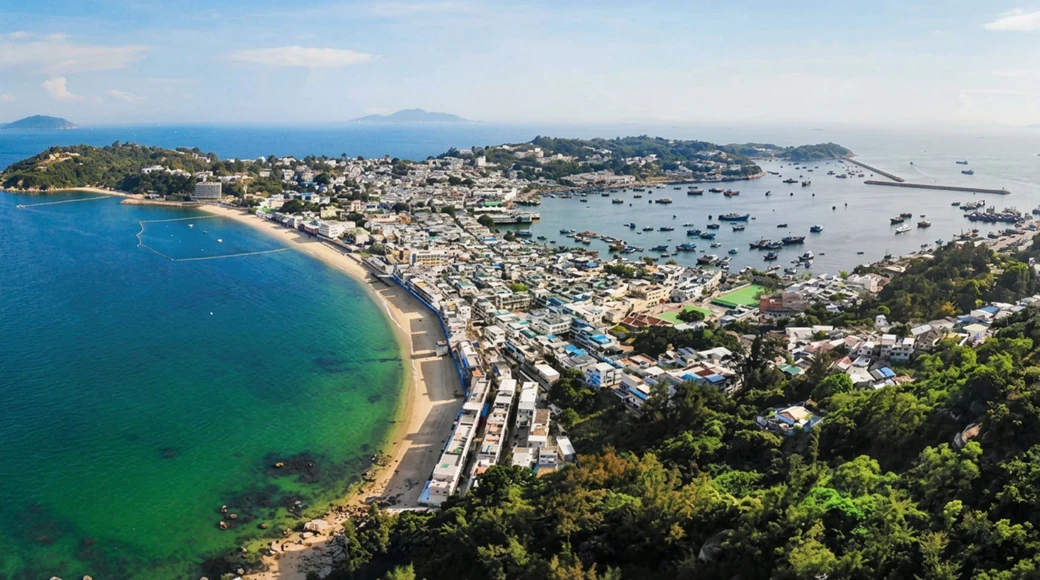
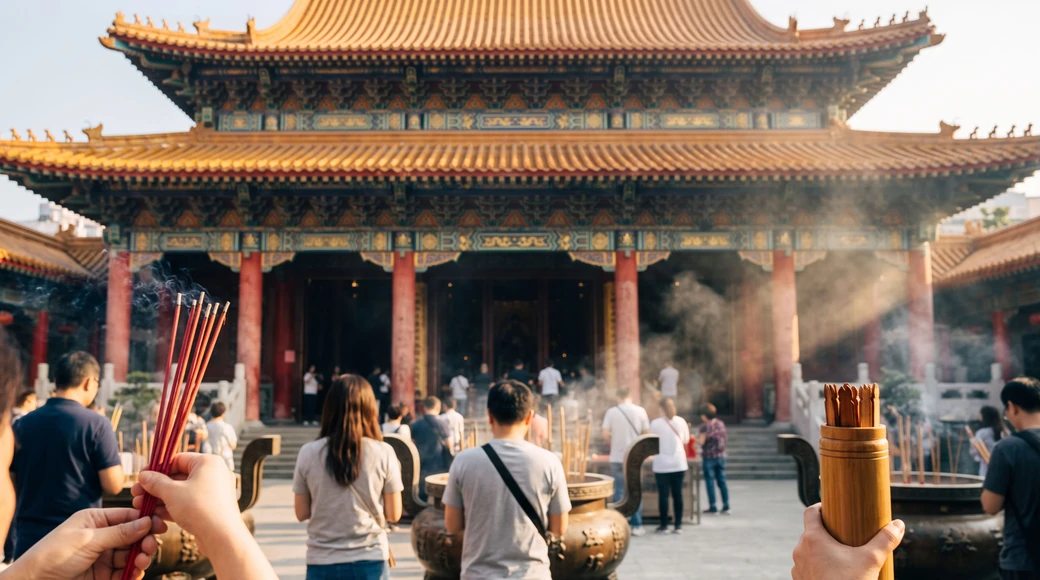
Hong Kong is a city where green mountains rise straight out of a glittering harbour, and a forest of skyscrapers shares the horizon with incense-scented temples and a tramway that has been rolling for more than a century. Few places pack so much variety into so little space: you can begin the morning among lantern-lit shrines, ride a historic funicular to a mountaintop panorama by afternoon, and watch the skyline shimmer across the water after dark. The energy here is warm, welcoming and endlessly photogenic, and every district, from the Kowloon waterfront to the lanes of Sheung Wan, gives you a fresh reason to fall in love with it.
Hong Kong’s places come with remarkable firsts and superlatives. The Peak Tram (the funicular up Victoria Peak) has been climbing the hill since 1888, and the city’s double-decker trams, running since 1904, make up the largest fleet of their kind still in service. According to the Council on Tall Buildings and Urban Habitat, Hong Kong has more buildings of 150 metres or taller than any other city, while the Central–Mid-Levels Escalator (linking the business district of Central with the hillside Mid-Levels neighbourhood), roughly 800 metres long, is among the longest outdoor covered escalator systems anywhere. Visitor venues fall into a few clear groups: world-class museums such as M+ (a museum of contemporary visual culture) and the Hong Kong Palace Museum, heritage compounds like Tai Kwun (a restored former police station and prison, now a heritage and arts centre), temples and gardens, harbour viewpoints and sky decks, and theme parks and nature escapes just beyond the centre.
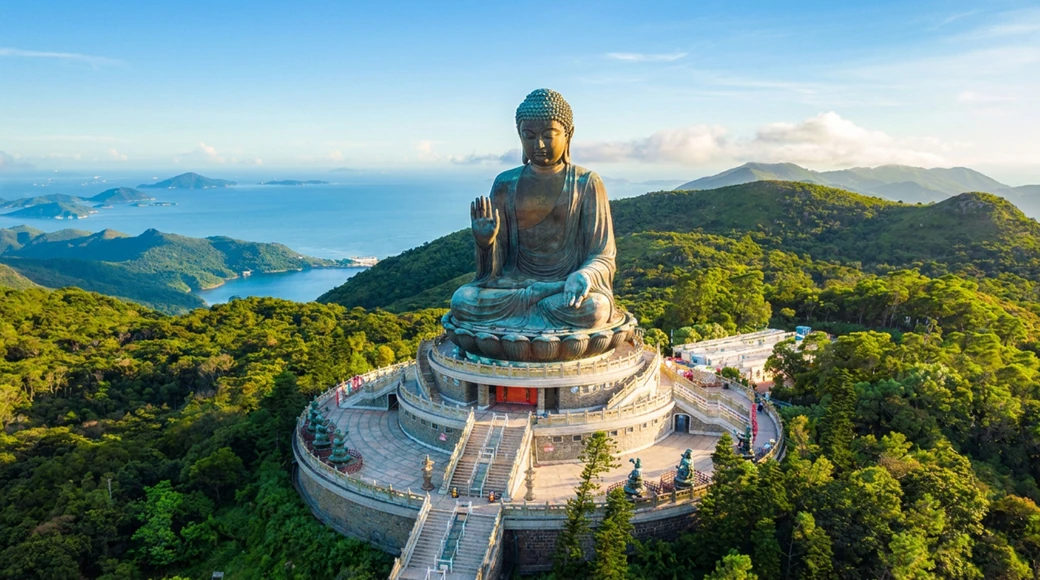
Photographers will find a ready-made shortlist: the rainbow-coloured Choi Hung Estate, the densely stacked apartment blocks of Quarry Bay known as the “Monster Building”, Sky Terrace 428 (an observation deck 428 metres above sea level) and the Lugard Road lookout on Victoria Peak, the hanging incense coils of Man Mo Temple (a historic temple honouring the gods of literature and war), the courtyards of Tai Kwun, the Tsim Sha Tsui harbourfront, Chi Lin Nunnery with its neighbour Nan Lian Garden (a classical-style garden), the stilt houses of Tai O (a fishing village on Lantau Island) and the giant seated bronze Tian Tan Buddha on the same island. Several of these are lived-in neighbourhoods or active places of worship, so a quiet, considerate approach keeps them welcoming for everyone.
Accommodation and hotel options in Hong Kong
Hotels and apartments in the heart of Hong Kong — book directly through our partners.
Accommodation and hotel options across Hong Kong, with their prices, are shown by Stay22 as a map and a list. Cookies are used. Your consent is remembered on every page; you can turn it off at any time in the cookie settings.
Bank of China Tower is one of Hong Kong's most recognisable skyscrapers, designed by I. M. Pei and completed in 1990. Rising 367 metres, its faceted form of intersecting triangular trusses is often described as echoing the growth of bamboo, and the same geometry carries the building's load against typhoon winds. At night the tower glows against the harbour skyline, and from the nearby pedestrian overpasses and from Cheung Kong Park you can frame it beside the HSBC Main Building and the neighbouring towers of Central. The tower is best enjoyed from the outside, as part of a walk through Central's architectural highlights that also takes in Statue Square, St John's Cathedral and the Peak Tram terminus along Garden Road. The night illumination makes the tower one of the brightest focal points of Central's skyline and a favourite subject for evening photography.
Canton Road is Hong Kong's most glamorous luxury shopping street, running along the Tsim Sha Tsui waterfront where international fashion flagships line the pavements beside Harbour City. Near its southern end stands 1881 Heritage, the Victorian-era former Marine Police Headquarters built in 1881 and declared a monument in 1994, which now houses boutiques, restaurants and a heritage hotel, with its Time Ball Tower and old stables as photo highlights. The plaza looks especially atmospheric when lit at night. The street also leads toward China Hong Kong City, the terminal for ferries to Macau and other ports, and lies just steps from the Star Ferry pier and the Tsim Sha Tsui Promenade. It is a good place to browse designer labels, enjoy a coffee and take in harbour views in a single, easy walk.
Causeway Bay is Hong Kong Island's great shopping and entertainment district, where department stores, malls and street-level boutiques crowd the lanes around Hennessy Road. Times Square and Fashion Walk sit within a few minutes' walk of each other, and the Food Street at Fashion Walk offers alfresco dining, while small side streets hide tiny shops, tea cafés and street snacks. The neighbourhood is also known for Victoria Park, the district's large green space that hosts events such as the annual Hong Kong Flower Show. The MTR (Hong Kong's metro) station connects directly to the shopping core, and trams add a nostalgic touch as they rumble along the main streets. Shops stay open into the evening, so the district feels most alive at dusk, when lights, crowds and the aroma of street food fill the air. When you need a break, a nearby tea café is a pleasant place to pause.
The Central–Mid-Levels Escalator is an 800-metre chain of covered escalators and walkways, opened in October 1993, that climbs about 135 metres from Central up to the Mid-Levels and is regarded as the world's longest outdoor covered escalator system. It runs downhill in the morning and uphill from mid-morning until midnight, and riding it offers a lively glimpse into windows, shopfronts and street life. Hop off along the way to reach Hollywood Road, a historic street of antique and curio shops, galleries and cafés, home to Man Mo Temple and close to Tai Kwun. The ride is free, and the surrounding lanes are rich in dining spots. Riding uphill in the late morning and strolling back down the stairs lets you explore side streets and cafés at your own pace.
Cha chaan teng, literally "tea restaurants", are Hong Kong's casual, fast-moving diners where East meets West on a single menu, from milk tea and coffee to macaroni soup, French toast and set meals. Tea arrives as soon as you sit down, and tables are often shared in a lively, bustling room. The star drinks and snacks include Hong Kong-style milk tea, brewed through a cloth filter and mixed with evaporated milk, yuenyeung (a blend of coffee and tea), the pineapple bun, named for the grid pattern on top that resembles pineapple skin, and the egg tart. Milk tea, yuenyeung, pineapple buns and egg tarts were entered in Hong Kong's Intangible Cultural Heritage Inventory in 2014, and the milk-tea technique joined the Representative List in 2017. A cha chaan teng is a delicious way to see everyday Hong Kong. A cup of milk tea with a pineapple bun is the everyday breakfast of many locals, and the quick service makes it an easy stop at any time of day.
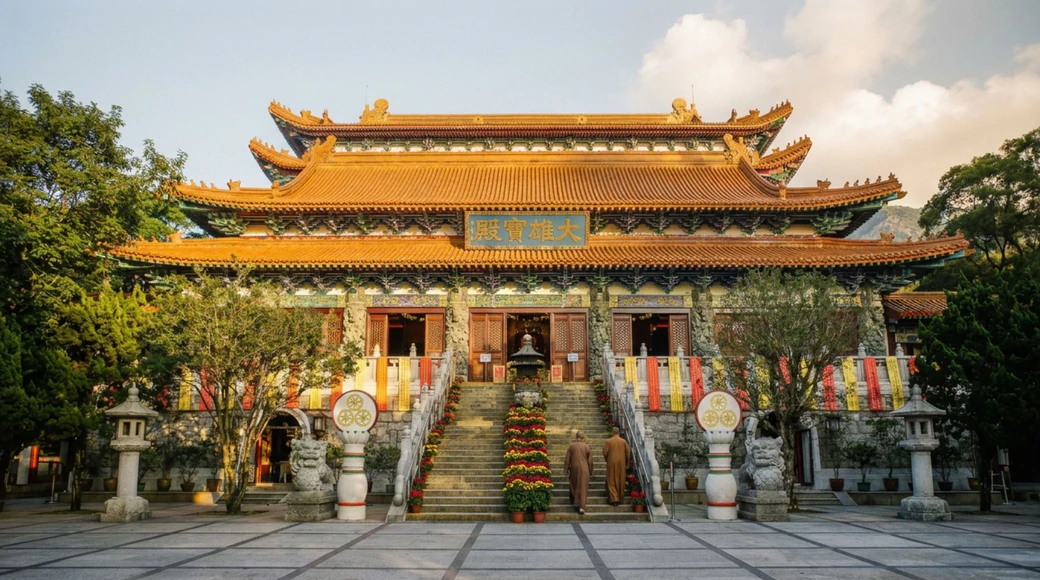
Chi Lin Nunnery is a serene Buddhist complex in Diamond Hill, founded in 1934 as a retreat for nuns and rebuilt in the 1990s in the architectural style of the Tang dynasty. Its timber halls, courtyards and lotus ponds create a calm world just beyond the surrounding high-rises, and statues of Sakyamuni Buddha, the goddess of mercy Guanyin and other bodhisattvas (enlightened beings who help others) fill the main halls. The temple halls and the Chinese garden in front are free to enter. Nan Lian Garden, a Tang-style classical garden, lies right next door, making the pair a perfect quiet morning in Kowloon. Visitors are asked to dress modestly and speak softly. Allow an hour or more to wander the courtyards slowly; the lotus ponds in bloom season and the soft light on the timber halls are especially photogenic.
Dai pai dong, literally "big licence stalls", are the open-air street kitchens that once defined everyday eating in Hong Kong and now survive as a cherished piece of local heritage. After the war the government issued licences to selected families, and the stalls peaked in the 1960s and 1970s; today fewer than thirty licensed dai pai dong remain, mostly in Central and Sham Shui Po, with a few in Wan Chai and Tai O. Cooks work over roaring woks to deliver wok hei (the smoky "breath of the wok"), serving salt-and-pepper seafood, sweet-and-sour pork ribs, clams, fried rice and noodles to diners seated at simple folding tables. Come early or at off-peak hours, expect to share a table, and enjoy the lively, no-frills atmosphere that is so typically Hong Kong.
Dim sum, bite-sized dishes served in bamboo steamers, is the heart of Hong Kong's yum cha (literally "drinking tea") tradition, a relaxed social meal built around pots of tea. Classics include har gow (translucent shrimp dumplings), siu mai (open-topped pork and shrimp dumplings), char siu bao (barbecue pork buns) and egg tarts, and the making of dim sum is listed in Hong Kong's Intangible Cultural Heritage Inventory. Some teahouses still use rolling carts, while modern restaurants offer order sheets, and in both cases a table of friends can sample many dishes. A custom is to tap two fingers on the table to thank whoever pours your tea. Good dim sum houses can be found across Central, Sheung Wan, Tsim Sha Tsui and Mong Kok, and weekend mornings are lively. Sipping tea slowly alongside the dishes brings out the unhurried spirit of Hong Kong tea-house dining, a lovely way to meet family and friends.
Dragon's Back is Section 8 of the Hong Kong Trail, a ridge walk in Shek O Country Park on the south-east of Hong Kong Island. Its undulating spine, which gives the route its name, leads to Shek O Peak at 284 metres, where wide views stretch over Shek O, Big Wave Bay, Tai Tam Bay and the South China Sea. TIME Asia once rated it the best urban hiking trail in Asia, and it is easy to reach: take bus 9 from Shau Kei Wan MTR (Hong Kong's metro) station to the To Tei Wan stop, where the path begins. Starting early avoids the heat and weekend crowds, and the walk can continue down to Big Wave Bay beach. Bring water, snacks and sun protection for the whole walk, and wear comfortable shoes for the rock steps at the start; on a bright day the clear views reward every step.
Elements is a modern shopping mall above Kowloon MTR station, opened on 1 October 2007 and designed around the five Chinese elements of fire, water, earth, wood and metal, each of which gives a zone its own colours and atmosphere. With more than a million square feet of space, it brings together international and local brands, restaurants, cafés and a cinema under one roof. Its location is its great strength: it connects directly to the Airport Express and the MTR (Hong Kong's metro), sits beneath the International Commerce Centre and its Sky100 observation deck, and lies close to the West Kowloon Cultural District with M+ and the Palace Museum. The open, airy layout feels calmer than many crowded city malls, making it a comfortable place to rest, dine and shop on the way to the airport or the harbourfront museums. In the evening, a short walk from the mall to the waterfront lets you enjoy the night lights of Victoria Harbour.
Harbour City is the largest shopping mall in Hong Kong, stretching along Canton Road on the Tsim Sha Tsui waterfront with hundreds of shops, dozens of restaurants and cafés, hotels, a cinema and a cruise terminal. Its oldest part, Ocean Terminal, opened on 22 March 1966 and is regarded as the city's first shopping mall; today the complex is made up of five sections, from Ocean Terminal to the Gateway Arcade. International fashion flagships line Canton Road outside, while inside you will find toys, sports, beauty and family shopping under one roof. The free Ocean Terminal Deck on the roof gives a wide panorama of Victoria Harbour, a lovely spot at sunset. The Star Ferry pier and Tsim Sha Tsui MTR (Hong Kong's metro) station are only a short walk away. Plan half a day to browse slowly, rest at a waterfront café, and head up to the rooftop deck for sunset.
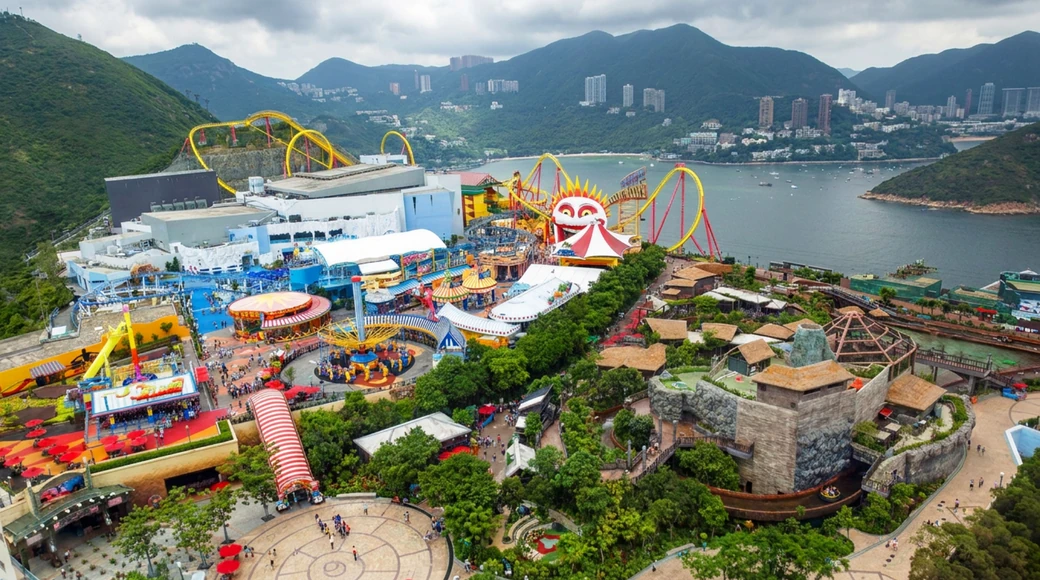
Hong Kong Disneyland opened on Lantau Island in 2005 and remains a compact, easy-to-navigate resort that suits families, couples and first-time Disney visitors alike. Main Street, U.S.A. (the park's old-fashioned entrance avenue) leads to themed lands including Adventureland, Toy Story Land, Mystic Point and World of Frozen, while the Castle of Magical Dreams anchors the park and glows during the evening finale. The park blends classic Disney storytelling with local touches, from Chinese-inspired dining to festive celebrations during Lunar New Year. A dedicated MTR (Hong Kong's metro) line from Sunny Bay brings guests to the resort gate in just a few minutes. Weekday visits usually mean shorter queues, and staying for the evening finale makes a fitting end to the day.
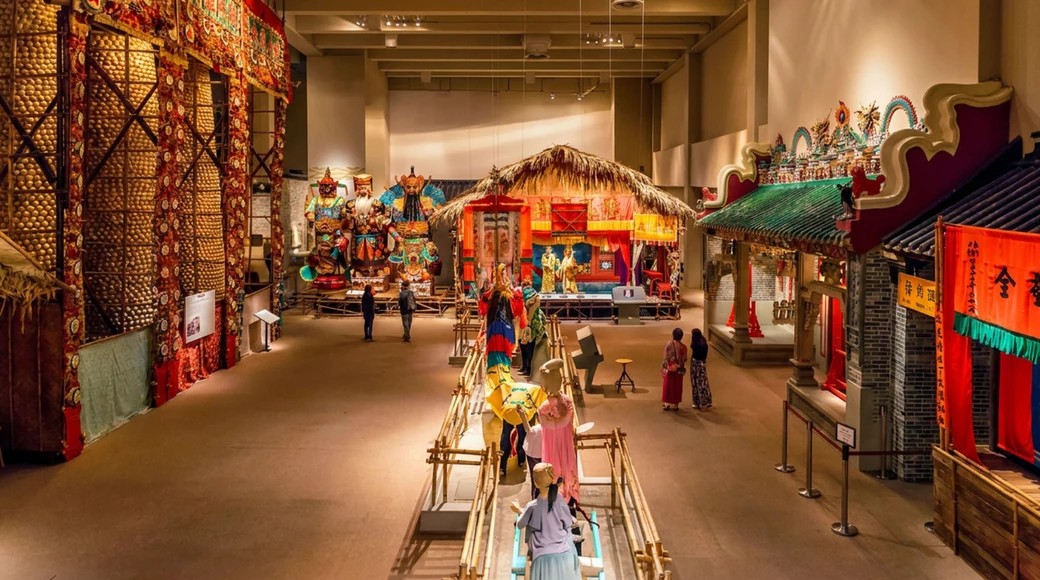
The Hong Kong Heritage Museum in Sha Tin is one of the city's largest museums, built in the style of a si he yuan (a traditional Chinese courtyard house complex) beside the Shing Mun River. Its galleries explore Cantonese opera, Chinese art, the Hong Kong Toy Story with toys made in the city, and popular culture, including a Bruce Lee gallery and a gallery devoted to Jin Yong, the author of celebrated wuxia (martial arts fiction) novels. A children's discovery area and rotating thematic exhibitions suit families. The museum is a short walk from Che Kung Temple MTR (Hong Kong's metro) station, making it a rewarding half-day trip beyond the city centre. Allow two to three hours to explore the galleries, check the programme for current thematic exhibitions, and enjoy the riverside setting afterwards.
The Hong Kong Maritime Museum sits at Central Pier 8 on the harbourfront, beside the Star Ferry, and tells more than two thousand years of seafaring history in Hong Kong and the Pearl River Delta. Founded in 2003 by the Hong Kong Shipowners Association, it opened in 2005 at Murray House in Stanley and moved to its Central home in 2013. More than a thousand objects, including ship models, paintings and Chinese artefacts, fill its galleries, with sections on trade, navigation, pirates, today's shipping and marine conservation. A telescope and a rooftop café overlook Victoria Harbour, and a marine traffic display shows the ships moving through the port. Combine your visit with a Star Ferry crossing from the neighbouring pier and a walk along the Central waterfront.
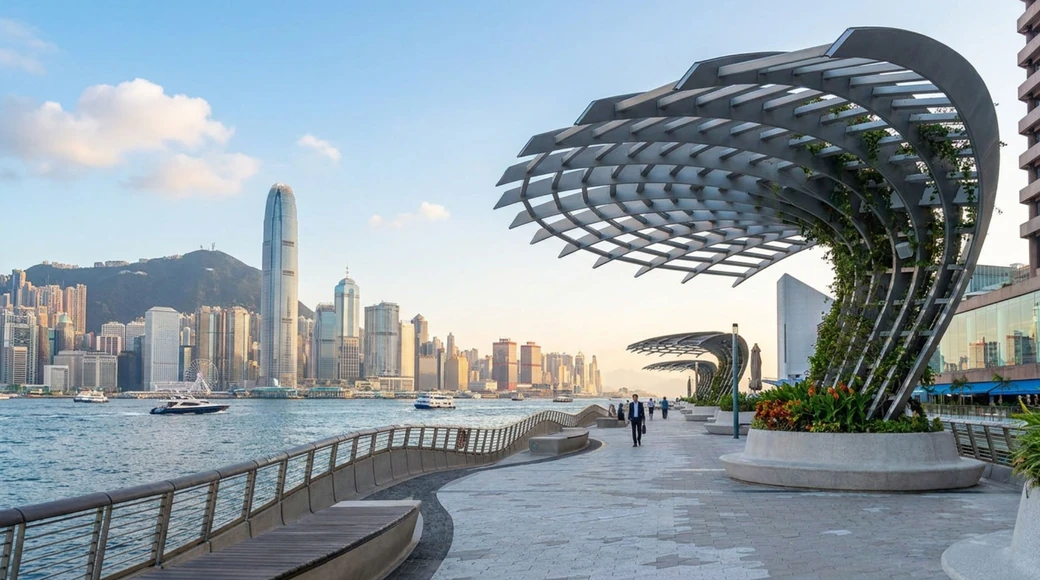
The Hong Kong Museum of Art, established in 1962 as the city's first public art museum, moved to its Tsim Sha Tsui waterfront home in 1991 and reopened in November 2019 after a major renovation. Its collection of more than 16,000 works includes Chinese painting and calligraphy, antiquities, China trade art and works by Hong Kong artists, spread across several floors with views of Victoria Harbour. Rotating thematic exhibitions keep every visit fresh, and the museum offers lockers and rest spots that make a long visit comfortable. It sits next to the Space Museum and the Cultural Centre along the Tsim Sha Tsui promenade, making it a natural stop on a waterfront stroll. Visiting in the late afternoon lets you step outside at dusk to see the lights of Hong Kong Island across Victoria Harbour; allow at least three hours to cover the floors.
The Hong Kong Observation Wheel rises about 60 metres above the Central harbourfront, with air-conditioned cabins that turn slowly for several rotations and open up wide views of Victoria Harbour, the Kowloon skyline and the skyscrapers of Hong Kong Island. Dusk and nighttime are popular, when the city lights begin to glow across the water. The wheel stands beside the Central Piers (the ferry terminals), an easy walk from Central MTR (Hong Kong's metro) station, with covered footbridges leading through the IFC mall toward the waterfront. Each cabin holds several passengers, and sitting on the harbour side gives the best outlook. It pairs naturally with a stroll along the Central harbourfront, a Star Ferry crossing and a visit to the nearby Maritime Museum.
The Hong Kong Palace Museum opened on 2 July 2022 on the waterfront of the West Kowloon Cultural District, and its architecture evokes the grandeur of Beijing's Forbidden City. Developed with the Palace Museum in Beijing, it presents imperial treasures from the Forbidden City alongside loans from other major institutions and collections from Hong Kong. Nine galleries combine thematic exhibitions on Chinese art and culture with rotating special exhibitions, and multimedia installations bring the stories to life. An audio guide helps first-time visitors, and the building offers wonderful views over Victoria Harbour. Galleries 6 and 7 highlight Chinese art collections from Hong Kong itself, and the neighbouring M+ makes a natural pairing for a full West Kowloon day.
Hong Kong Park, opened on 23 May 1991, is an eight-hectare green oasis between Central and Admiralty where waterfalls, ponds and landscaped gardens sit in the shadow of skyscrapers. Its highlight is the Edward Youde Aviary, a walk-through aviary of about 3,000 square metres where birds fly freely among the treetops, alongside the Forsgate Conservatory, a greenhouse of roughly 1,400 square metres that shelters plants from different climate regions. Flagstaff House Museum of Tea Ware, in a colonial building dating from 1846, and the Visual Arts Centre add culture, while the Tai Chi Garden and a children's playground invite a slower pace. Entry to the park is free, and it is a short walk from Admiralty MTR station. The park's calm, fresh air suits an afternoon stroll or photography, and it offers a quiet pause in a busy itinerary.
The Hong Kong Science Museum in Tsim Sha Tsui East is an interactive science centre spread over several floors, with hands-on exhibits on physics, technology, energy, life sciences and the future. Favourites include the earthquake simulator, a moving dinosaur display on the ground floor, an illusion and mirror zone, and a children's gallery on the top floor where young visitors learn through play. Families and curious adults can easily spend two to three hours exploring, and special exhibitions rotate through the year. The museum is a comfortable choice on a rainy day and an excellent stop for families. Plan a morning visit to enjoy the interactive displays before crowds build.
The Hong Kong Space Museum is easy to spot on the Tsim Sha Tsui waterfront thanks to its distinctive egg-shaped dome, which houses the Stanley Ho Space Theatre, a large dome cinema screening astronomy and nature films. The Hall of Space Exploration and the Hall of the Cosmos present spacecraft, astronomy and humanity's journeys beyond Earth through models, hands-on displays and a replica of a space shuttle nose and cockpit. The museum also offers night-sky talks, astronomy activities and live images from its solar telescope. Space Theatre shows need separate tickets that can sell out, so booking ahead is wise. It stands beside the Museum of Art and the Cultural Centre, a good pairing for a rainy day. Allow one to two hours for the exhibition halls, plus extra time for a Space Theatre show, and check the show schedule before you go.
Hong Kong UNESCO Global Geopark protects some of the world's finest hexagonal volcanic rock columns, formed around 140 million years ago in the Early Cretaceous period. Centred on the Sai Kung Volcanic Rock Region at High Island Reservoir, its columns, sea stacks, sea caves and white-sand beaches are among Hong Kong's most dramatic landscapes. The High Island Formation was chosen as one of the first 100 IUGS Geological Heritage Sites in 2022. The geopark joined the UNESCO Global Geoparks Network in 2011, and visitors can walk the East Dam, join a boat tour from Sai Kung Pier or hike coastal trails. The East Dam area is reached by taxi, minibus or guided tour, so arranging transport in advance is worthwhile. Bring water and snacks, as toilets are available on site, and allow time for a boat trip to see the sea stacks and sea caves up close.
Hong Kong Wetland Park, opened in May 2006 in Tin Shui Wai, is a 61-hectare ecotourism park beside the Mai Po Inner Deep Bay Ramsar Site, created to promote wetland conservation and education. The Visitor Centre, about 10,000 square metres in size, has themed exhibition galleries, a theatre, a café and a play area, while the 60-hectare Wetland Reserve offers boardwalks, educational trails and bird hides above re-created habitats for waterbirds. Migratory birds visit in winter, lotus blooms line the channels in spring and summer, and in winter the bald cypress trees turn golden. Allow half a day, bring binoculars and sun protection, and check opening days before you go, since the park is open Monday and Wednesday to Sunday, and on public holidays. Visitors can reach it from Tin Shui Wai MTR (Hong Kong's metro) station by light rail. The fresh air makes it pleasant to walk slowly and observe nature, and it suits children too.
Established in 1864, the Hong Kong Zoological and Botanical Gardens is the oldest park in Hong Kong, covering about 5. 6 hectares on the northern slope of Victoria Peak just above Central. The gardens are divided into an East section, the old park with a children's playground, aviary, greenhouse and fountain terrace garden, and a West section, linked by a pedestrian tunnel. More than a thousand plant species grow along shaded paths, while birds, primates and reptiles live in the zoo enclosures. Entry is free, which makes it an easy and relaxing stop for families, and it sits close to Hong Kong Park and the Central–Mid-Levels Escalator. A small snack kiosk offers light refreshments inside, and Central's many restaurants are close by for a full meal before or after. Strolling the shaded paths lets you see birds and primates up close and admire tropical plants in the greenhouse, making it a relaxed morning with children.
The HSBC Main Building, designed by Norman Foster and completed on 18 November 1985, is one of the most celebrated works of modern architecture in Hong Kong. Its 52-storey steel structure is suspended from giant trusses and has no conventional internal supports, so lifts stop only at certain levels and escalators link the floors beneath a soaring atrium lit by sunlight reflected from a bank of large mirrors. The ground floor is a two-storey walk-through public plaza with an exhibition on the bank's history and an illuminated map that shows how land reclamation reshaped Central. Outside, the bronze lions Stephen and Stitt guard the entrance, and according to popular belief rubbing their paws brings good luck. Step into the lobby and look up into the open atrium to feel the architect's emphasis on light and openness, and look out for the exhibition and map on the ground floor.
Kowloon Mosque and Islamic Centre, on Nathan Road beside Kowloon Park, is a landmark of Tsim Sha Tsui with its white marble, central dome and four 11-metre minarets. A mosque on the site was first built in 1896 for Indian Muslim soldiers of the British army, and the present building opened for prayers on 11 May 1984 after the old structure was replaced; it has three prayer halls and a community centre and is the largest mosque in Hong Kong. Visitors are welcome with respect: dress modestly, remove footwear, ask for permission before entering and plan your visit outside prayer times. Hong Kong's oldest mosque, Jamia Mosque on Shelley Street in Mid-Levels, close to the Central–Mid-Levels Escalator, dates from the 1840s and was expanded in 1915; together the two buildings tell the story of the city's Muslim community. Visit with a calm mind and take time to appreciate the architecture.
Kowloon Park is one of Hong Kong's largest urban green spaces, a peaceful retreat in the heart of Tsim Sha Tsui just steps from Nathan Road. It occupies the site of a British military encampment established in the 1860s and today offers wide lanes, fountains, a lotus pond, a maze garden and sculpture walks. Flamingos and other birds live around the bird lakes, the Kung Fu Court stages martial-arts shows on Sundays, and the Avenue of Comic Stars adds colour for younger visitors. The Hong Kong Heritage Discovery Centre, set in a former barracks, tells the story of the site. In the early morning you can watch locals practising tai chi, and the park stays open late into the evening. Entry is free. Wander the wide paths, pause by the bird lakes and rest on a bench for a relaxed afternoon in the middle of busy Tsim Sha Tsui.
Kowloon Walled City Park stands on the site of a fortified garrison town built by Qing-dynasty officials between 1846 and 1847 to guard the coast. The walled city later grew into one of the most densely built communities in the world, with narrow alleyways and stacked buildings, before it was cleared in the 1990s and replaced by this garden, which opened on 22 December 1995. The park is designed in the style of an early Qing Jiangnan garden, with pavilions, ponds, rockeries and shaded paths. At its centre the Yamen (the old official residence), the only Qing building left, hosts exhibitions with photographs and recorded voices of former residents, and carved granite plaques from the original South Gate are displayed nearby. Entry is free. The quiet gardens invite a slow visit through the layers of history.
Ladies' Market is a lively street market along Tung Choi Street in Mong Kok, where stalls stretch block after block from midday into the late evening. Shoppers browse clothing, bags, accessories, gemstone bracelets, toys, phone cases and souvenirs, and haggling politely is part of the experience. The market sits a two-to-four-minute walk from Mong Kok MTR (Hong Kong's metro) station, close to the Goldfish Market and the Flower Market, so it combines easily with a wider stroll through one of Hong Kong's most energetic neighbourhoods. Evenings bring the biggest crowds and the liveliest atmosphere. Browsing a few stalls before choosing, and keeping a friendly tone while bargaining, usually brings the best results, and the surrounding streets add many snack stops.
Lamma Island offers a relaxed escape from the city, with no cars on its lanes and a rhythm set by ferries, footpaths and the sea. Ferries from Central reach Yung Shue Wan, a village of cafés, small shops and craft stalls, while the Family Trail, a gentle coastal walk of around one to two hours, leads across the island to Sok Kwu Wan, famed for its waterfront seafood restaurants. Beaches, hillside viewpoints and quiet fishing-village scenes fill the stretch in between. It is an easy half-day or full-day trip from Central or Aberdeen, and sunset from the pier at Yung Shue Wan is a lovely finish. Wear comfortable shoes, check the return ferry timetable, and consider staying for a seafood meal at Sok Kwu Wan before heading back.
Lei Yue Mun, a name that means "carp gate", is a traditional fishing village at the narrow channel on the eastern edge of Kowloon, famous for its seafood street. Tanks and baskets line the lanes with live fish, prawns, crabs, shellfish and the local mantis shrimp, and the custom is to choose your own seafood from a shop and then have a nearby restaurant cook it the way you like. Along the way you can also visit a Tin Hau Temple (a temple of the sea goddess), watch fishing boats in the harbour and stroll the waterfront promenade with its murals. It is easiest to reach from Yau Tong MTR (Hong Kong's metro) station, and a clear agreement on weight and cooking method before ordering keeps the experience smooth. In the evening the harbour lights come on and the sea breeze adds to the fishing-village atmosphere.
M+ is a museum of contemporary visual culture in the West Kowloon Cultural District, opened in 2021 and designed by Herzog & de Meuron. Its collections span visual art, design and architecture, moving image and Hong Kong visual culture, including the celebrated M+ Sigg Collection of Chinese contemporary art. The inverted T-shaped building is a landmark in itself: its façade is one of the largest LED screens in the world and shows commissioned artworks across the skyline every evening. The Roof Garden offers wide views of Victoria Harbour, and the Grand Stair (the building's monumental staircase), cinema and cafés make it easy to spend half a day here. At night the facade's artworks shine against the lights of Hong Kong Island, and the West Kowloon waterfront promenade and the neighbouring Hong Kong Palace Museum make a natural continuation.
Nathan Road, nicknamed the Golden Mile, is Kowloon's main avenue, running north from the Tsim Sha Tsui waterfront through Yau Ma Tei and Mong Kok. It is named after Sir Matthew Nathan, a governor of Hong Kong, and today it is lined with shopping arcades, jewellery and electronics shops, hotels and restaurants, as well as landmarks such as the Kowloon Mosque and Kowloon Park. Park Lane Shopper's Boulevard, a tree-shaded stretch with large banyan trees and a bronze sculpture by the artist Van Lau, offers a gentle pause from the crowds. Neon signs and busy pavements give the avenue an energetic, very Hong Kong atmosphere, especially after dark, and the MTR (Hong Kong's metro) stations at Tsim Sha Tsui, Jordan and Yau Ma Tei make it easy to explore on foot, section by section. After dark the neon lights bring the avenue alive, making it a fine evening walk.
Sky100 Hong Kong Observation Deck sits on the 100th floor of the International Commerce Centre (ICC), Hong Kong's tallest building at 484 metres, offering 360-degree indoor views from 393 metres above sea level. A high-speed double-decker lift reaches the deck in about 60 seconds, and from the glass you can trace Victoria Harbour, the skyscrapers of Hong Kong Island and the hills beyond. Interactive displays and telescopes help identify landmarks, while Café 100 serves refreshments with the same skyline backdrop. Late afternoon is a favourite time to visit, watching the city shift from daylight to evening lights. The deck sits above Elements mall and Kowloon MTR (Hong Kong's metro) station. On clear days the view stretches past Victoria Harbour to the hills of the New Territories, and arriving in late afternoon lets you enjoy both daylight and the city lights.
St John's Cathedral is the oldest surviving Western church building in Hong Kong, completed in 1849 and still an active Anglican cathedral. Its Gothic Revival style, stained-glass windows and calm interior create a peaceful pause among the skyscrapers of Central, and the garden around it is a quiet place to sit. The cathedral stands on Garden Road, near the Zoological and Botanical Gardens and the lower terminus of the Peak Tram (the funicular railway to Victoria Peak), so it fits easily into a walk from Central. Visitors are welcome outside service times, and respectful dress and quiet voices are appreciated. Look out for the stained-glass windows, including post-war windows, and enjoy the cool, quiet interior as a break from the heat.
Tai Kwun, which means “big station” in Cantonese, is the former Central Police Station compound on Hollywood Road, now a centre for heritage and arts. Its sixteen historic buildings, built between 1841 and 1925, include three declared monuments: the old police station, the Central Magistracy (court building) and Victoria Prison. Visitors can step into the preserved cell blocks, stroll across the Parade Ground (the former drill yard) and browse free exhibitions, contemporary art galleries and performances. Restaurants, bars and lunchtime concerts fill the courtyards, and a footbridge links the compound to the Central–Mid-Levels Escalator. The restoration earned an Award of Excellence in the 2019 UNESCO Asia-Pacific Awards for Cultural Heritage Conservation. In the evening the courtyards glow softly, and setting aside half a day lets you step into the historic buildings one by one.
Tai Long Wan, on the Sai Kung Peninsula, is a chain of four sweeping sandy beaches, Sai Wan, Ham Tin, Tai Wan and Tung Wan, framed by green hills in Sai Kung East Country Park and often named among Hong Kong's most beautiful shores. Its name means "big wave bay", a name it shares with a smaller beach on Hong Kong Island. The beaches are reached on foot along a stretch of the MacLehose Trail, or by speedboat from Sai Kung Pier to the nearest sands, and there are small restaurants at Sai Wan and Ham Tin. Surfers come for the waves, campers pitch tents above the sand, and hikers enjoy the long ridges and clear views. Pack water, food and sun protection to enjoy the quiet, remote sands in comfort, and store your food securely, since wild boar and cattle live in the area.
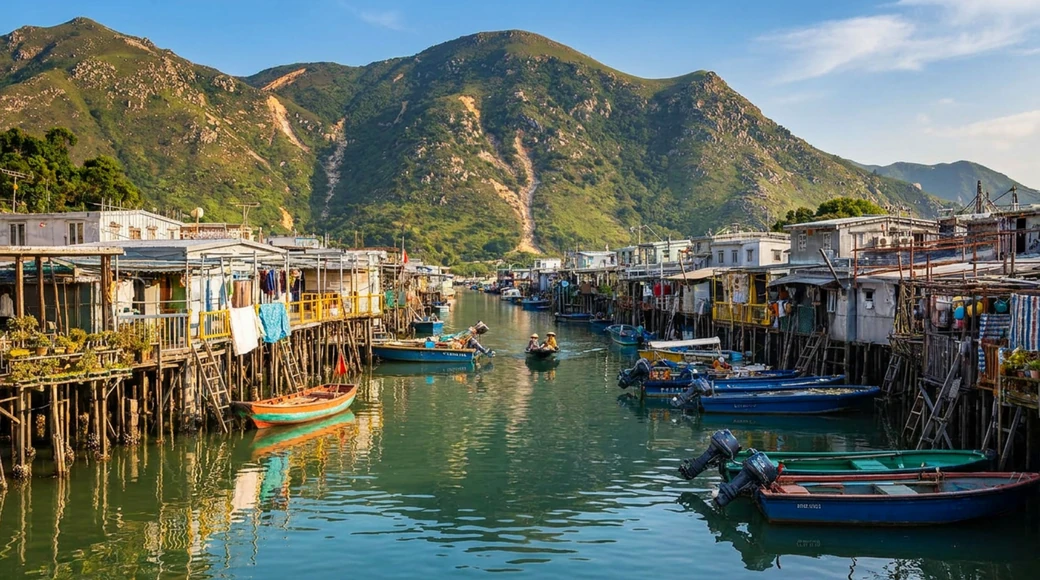
Tai O is a traditional fishing village on the western coast of Lantau Island, where pang uk (stilt houses built over the water) rise above a tidal creek and daily life still follows the rhythm of the sea. Lanes lined with stalls sell dried seafood, shrimp paste and salted fish, along with snacks such as giant fish balls. Small boat trips glide past the stilt houses and out toward open water, where, with a little luck, Chinese white dolphins may be spotted. Hung Shing Temple and other shrines add a spiritual note, and the waterfront promenade is lovely at sunset. Buses connect Tai O with Tung Chung and Ngong Ping. During the Dragon Boat Festival the village hosts a traditional water parade of decorated boats, and weekday mornings are quieter for strolling and photography.
Temple Street Night Market comes alive in the late afternoon and evening along a lively stretch of Yau Ma Tei and Jordan in Kowloon. Rows of stalls sell souvenirs, clothing, accessories, gadgets and handicrafts, and friendly bargaining is part of the fun. Food stalls near the Jordan end serve grilled seafood, pan-fried dumplings and claypot dishes (rice and stews cooked in clay pots), while fortune tellers and, on some evenings, Cantonese opera (traditional Chinese sung theatre) singers add a distinctly local soundtrack. The street takes its name from the nearby Tin Hau Temple (temple of the sea goddess), and the market sits within an easy walk of both Jordan and Yau Ma Tei MTR stations. After dark the neon and stall lights give the street its classic Hong Kong nightlife look, and a bowl of noodles or a cup of herbal tea at a roadside shop is a good way to rest and watch the bustle.
Times Square, opened in 1994, is one of Causeway Bay's best-known shopping landmarks, a multi-level complex of sixteen floors, including two basements, with more than two hundred shops, restaurants and a cinema. It sits directly above Causeway Bay MTR (Hong Kong's metro) station, surrounded by buses, trams and constant foot traffic, so it has long been a natural meeting point for locals. Fashion, lifestyle and electronics brands share the floors with dining options ranging from casual noodle shops to Chiu Chow (Teochew) restaurants and dim sum houses, and the plaza outside often hosts seasonal displays and photo spots. Combine a visit with a stroll along nearby Hennessy Road and Fashion Walk for a full shopping afternoon on Hong Kong Island, and note that the mall is open into the evening. After dusk, the lights and crowds show Causeway Bay's energy at its most vivid.
Two IFC, completed in 2003, rises about 412 metres above Victoria Harbour and was Hong Kong's tallest building until the International Commerce Centre overtook it in 2007. At its foot, the IFC Mall at 8 Finance Street spreads over several levels with international brands, restaurants and cafés, some with views across the harbour. It is directly linked to Hong Kong MTR (the metro) station and the Airport Express, and covered footbridges lead from the mall to the Central Piers, the Observation Wheel and the Star Ferry, so it works well as a comfortable air-conditioned stop between harbourfront sights. Visitors can browse, rest with a coffee, or simply admire the tower's sleek glass profile, a symbol of Hong Kong's financial district. In the evening, the mall's harbour-view restaurants overlook the lights coming on along both shores of Victoria Harbour, a relaxing end to a day of sightseeing.
Bank of China Tower is one of Hong Kong's most recognisable skyscrapers, designed by I. M. Pei and completed in 1990. Rising 367 metres, its faceted form of intersecting triangular trusses is often described as echoing the growth of bamboo, and the same geometry carries the building's load against typhoon winds. At night the tower glows against the harbour skyline, and from the nearby pedestrian overpasses and from Cheung Kong Park you can frame it beside the HSBC Main Building and the neighbouring towers of Central. The tower is best enjoyed from the outside, as part of a walk through Central's architectural highlights that also takes in Statue Square, St John's Cathedral and the Peak Tram terminus along Garden Road. The night illumination makes the tower one of the brightest focal points of Central's skyline and a favourite subject for evening photography.
Canton Road is Hong Kong's most glamorous luxury shopping street, running along the Tsim Sha Tsui waterfront where international fashion flagships line the pavements beside Harbour City. Near its southern end stands 1881 Heritage, the Victorian-era former Marine Police Headquarters built in 1881 and declared a monument in 1994, which now houses boutiques, restaurants and a heritage hotel, with its Time Ball Tower and old stables as photo highlights. The plaza looks especially atmospheric when lit at night. The street also leads toward China Hong Kong City, the terminal for ferries to Macau and other ports, and lies just steps from the Star Ferry pier and the Tsim Sha Tsui Promenade. It is a good place to browse designer labels, enjoy a coffee and take in harbour views in a single, easy walk.
Causeway Bay is Hong Kong Island's great shopping and entertainment district, where department stores, malls and street-level boutiques crowd the lanes around Hennessy Road. Times Square and Fashion Walk sit within a few minutes' walk of each other, and the Food Street at Fashion Walk offers alfresco dining, while small side streets hide tiny shops, tea cafés and street snacks. The neighbourhood is also known for Victoria Park, the district's large green space that hosts events such as the annual Hong Kong Flower Show. The MTR (Hong Kong's metro) station connects directly to the shopping core, and trams add a nostalgic touch as they rumble along the main streets. Shops stay open into the evening, so the district feels most alive at dusk, when lights, crowds and the aroma of street food fill the air. When you need a break, a nearby tea café is a pleasant place to pause.
Central–Mid-Levels Escalator and Hollywood RoadFree Entry
The Central–Mid-Levels Escalator is an 800-metre chain of covered escalators and walkways, opened in October 1993, that climbs about 135 metres from Central up to the Mid-Levels and is regarded as the world's longest outdoor covered escalator system. It runs downhill in the morning and uphill from mid-morning until midnight, and riding it offers a lively glimpse into windows, shopfronts and street life. Hop off along the way to reach Hollywood Road, a historic street of antique and curio shops, galleries and cafés, home to Man Mo Temple and close to Tai Kwun. The ride is free, and the surrounding lanes are rich in dining spots. Riding uphill in the late morning and strolling back down the stairs lets you explore side streets and cafés at your own pace.
Cha Chaan Teng (Hong Kong-Style Tea Restaurants)Free Entry
Cha chaan teng, literally "tea restaurants", are Hong Kong's casual, fast-moving diners where East meets West on a single menu, from milk tea and coffee to macaroni soup, French toast and set meals. Tea arrives as soon as you sit down, and tables are often shared in a lively, bustling room. The star drinks and snacks include Hong Kong-style milk tea, brewed through a cloth filter and mixed with evaporated milk, yuenyeung (a blend of coffee and tea), the pineapple bun, named for the grid pattern on top that resembles pineapple skin, and the egg tart. Milk tea, yuenyeung, pineapple buns and egg tarts were entered in Hong Kong's Intangible Cultural Heritage Inventory in 2014, and the milk-tea technique joined the Representative List in 2017. A cha chaan teng is a delicious way to see everyday Hong Kong. A cup of milk tea with a pineapple bun is the everyday breakfast of many locals, and the quick service makes it an easy stop at any time of day.
Chi Lin Nunnery is a serene Buddhist complex in Diamond Hill, founded in 1934 as a retreat for nuns and rebuilt in the 1990s in the architectural style of the Tang dynasty. Its timber halls, courtyards and lotus ponds create a calm world just beyond the surrounding high-rises, and statues of Sakyamuni Buddha, the goddess of mercy Guanyin and other bodhisattvas (enlightened beings who help others) fill the main halls. The temple halls and the Chinese garden in front are free to enter. Nan Lian Garden, a Tang-style classical garden, lies right next door, making the pair a perfect quiet morning in Kowloon. Visitors are asked to dress modestly and speak softly. Allow an hour or more to wander the courtyards slowly; the lotus ponds in bloom season and the soft light on the timber halls are especially photogenic.
Dai pai dong, literally "big licence stalls", are the open-air street kitchens that once defined everyday eating in Hong Kong and now survive as a cherished piece of local heritage. After the war the government issued licences to selected families, and the stalls peaked in the 1960s and 1970s; today fewer than thirty licensed dai pai dong remain, mostly in Central and Sham Shui Po, with a few in Wan Chai and Tai O. Cooks work over roaring woks to deliver wok hei (the smoky "breath of the wok"), serving salt-and-pepper seafood, sweet-and-sour pork ribs, clams, fried rice and noodles to diners seated at simple folding tables. Come early or at off-peak hours, expect to share a table, and enjoy the lively, no-frills atmosphere that is so typically Hong Kong.
Dim sum, bite-sized dishes served in bamboo steamers, is the heart of Hong Kong's yum cha (literally "drinking tea") tradition, a relaxed social meal built around pots of tea. Classics include har gow (translucent shrimp dumplings), siu mai (open-topped pork and shrimp dumplings), char siu bao (barbecue pork buns) and egg tarts, and the making of dim sum is listed in Hong Kong's Intangible Cultural Heritage Inventory. Some teahouses still use rolling carts, while modern restaurants offer order sheets, and in both cases a table of friends can sample many dishes. A custom is to tap two fingers on the table to thank whoever pours your tea. Good dim sum houses can be found across Central, Sheung Wan, Tsim Sha Tsui and Mong Kok, and weekend mornings are lively. Sipping tea slowly alongside the dishes brings out the unhurried spirit of Hong Kong tea-house dining, a lovely way to meet family and friends.
Dragon's Back is Section 8 of the Hong Kong Trail, a ridge walk in Shek O Country Park on the south-east of Hong Kong Island. Its undulating spine, which gives the route its name, leads to Shek O Peak at 284 metres, where wide views stretch over Shek O, Big Wave Bay, Tai Tam Bay and the South China Sea. TIME Asia once rated it the best urban hiking trail in Asia, and it is easy to reach: take bus 9 from Shau Kei Wan MTR (Hong Kong's metro) station to the To Tei Wan stop, where the path begins. Starting early avoids the heat and weekend crowds, and the walk can continue down to Big Wave Bay beach. Bring water, snacks and sun protection for the whole walk, and wear comfortable shoes for the rock steps at the start; on a bright day the clear views reward every step.
Elements is a modern shopping mall above Kowloon MTR station, opened on 1 October 2007 and designed around the five Chinese elements of fire, water, earth, wood and metal, each of which gives a zone its own colours and atmosphere. With more than a million square feet of space, it brings together international and local brands, restaurants, cafés and a cinema under one roof. Its location is its great strength: it connects directly to the Airport Express and the MTR (Hong Kong's metro), sits beneath the International Commerce Centre and its Sky100 observation deck, and lies close to the West Kowloon Cultural District with M+ and the Palace Museum. The open, airy layout feels calmer than many crowded city malls, making it a comfortable place to rest, dine and shop on the way to the airport or the harbourfront museums. In the evening, a short walk from the mall to the waterfront lets you enjoy the night lights of Victoria Harbour.
Harbour City is the largest shopping mall in Hong Kong, stretching along Canton Road on the Tsim Sha Tsui waterfront with hundreds of shops, dozens of restaurants and cafés, hotels, a cinema and a cruise terminal. Its oldest part, Ocean Terminal, opened on 22 March 1966 and is regarded as the city's first shopping mall; today the complex is made up of five sections, from Ocean Terminal to the Gateway Arcade. International fashion flagships line Canton Road outside, while inside you will find toys, sports, beauty and family shopping under one roof. The free Ocean Terminal Deck on the roof gives a wide panorama of Victoria Harbour, a lovely spot at sunset. The Star Ferry pier and Tsim Sha Tsui MTR (Hong Kong's metro) station are only a short walk away. Plan half a day to browse slowly, rest at a waterfront café, and head up to the rooftop deck for sunset.
Hong Kong Disneyland opened on Lantau Island in 2005 and remains a compact, easy-to-navigate resort that suits families, couples and first-time Disney visitors alike. Main Street, U.S.A. (the park's old-fashioned entrance avenue) leads to themed lands including Adventureland, Toy Story Land, Mystic Point and World of Frozen, while the Castle of Magical Dreams anchors the park and glows during the evening finale. The park blends classic Disney storytelling with local touches, from Chinese-inspired dining to festive celebrations during Lunar New Year. A dedicated MTR (Hong Kong's metro) line from Sunny Bay brings guests to the resort gate in just a few minutes. Weekday visits usually mean shorter queues, and staying for the evening finale makes a fitting end to the day.
The Hong Kong Heritage Museum in Sha Tin is one of the city's largest museums, built in the style of a si he yuan (a traditional Chinese courtyard house complex) beside the Shing Mun River. Its galleries explore Cantonese opera, Chinese art, the Hong Kong Toy Story with toys made in the city, and popular culture, including a Bruce Lee gallery and a gallery devoted to Jin Yong, the author of celebrated wuxia (martial arts fiction) novels. A children's discovery area and rotating thematic exhibitions suit families. The museum is a short walk from Che Kung Temple MTR (Hong Kong's metro) station, making it a rewarding half-day trip beyond the city centre. Allow two to three hours to explore the galleries, check the programme for current thematic exhibitions, and enjoy the riverside setting afterwards.
The Hong Kong Maritime Museum sits at Central Pier 8 on the harbourfront, beside the Star Ferry, and tells more than two thousand years of seafaring history in Hong Kong and the Pearl River Delta. Founded in 2003 by the Hong Kong Shipowners Association, it opened in 2005 at Murray House in Stanley and moved to its Central home in 2013. More than a thousand objects, including ship models, paintings and Chinese artefacts, fill its galleries, with sections on trade, navigation, pirates, today's shipping and marine conservation. A telescope and a rooftop café overlook Victoria Harbour, and a marine traffic display shows the ships moving through the port. Combine your visit with a Star Ferry crossing from the neighbouring pier and a walk along the Central waterfront.
The Hong Kong Museum of Art, established in 1962 as the city's first public art museum, moved to its Tsim Sha Tsui waterfront home in 1991 and reopened in November 2019 after a major renovation. Its collection of more than 16,000 works includes Chinese painting and calligraphy, antiquities, China trade art and works by Hong Kong artists, spread across several floors with views of Victoria Harbour. Rotating thematic exhibitions keep every visit fresh, and the museum offers lockers and rest spots that make a long visit comfortable. It sits next to the Space Museum and the Cultural Centre along the Tsim Sha Tsui promenade, making it a natural stop on a waterfront stroll. Visiting in the late afternoon lets you step outside at dusk to see the lights of Hong Kong Island across Victoria Harbour; allow at least three hours to cover the floors.
The Hong Kong Observation Wheel rises about 60 metres above the Central harbourfront, with air-conditioned cabins that turn slowly for several rotations and open up wide views of Victoria Harbour, the Kowloon skyline and the skyscrapers of Hong Kong Island. Dusk and nighttime are popular, when the city lights begin to glow across the water. The wheel stands beside the Central Piers (the ferry terminals), an easy walk from Central MTR (Hong Kong's metro) station, with covered footbridges leading through the IFC mall toward the waterfront. Each cabin holds several passengers, and sitting on the harbour side gives the best outlook. It pairs naturally with a stroll along the Central harbourfront, a Star Ferry crossing and a visit to the nearby Maritime Museum.
The Hong Kong Palace Museum opened on 2 July 2022 on the waterfront of the West Kowloon Cultural District, and its architecture evokes the grandeur of Beijing's Forbidden City. Developed with the Palace Museum in Beijing, it presents imperial treasures from the Forbidden City alongside loans from other major institutions and collections from Hong Kong. Nine galleries combine thematic exhibitions on Chinese art and culture with rotating special exhibitions, and multimedia installations bring the stories to life. An audio guide helps first-time visitors, and the building offers wonderful views over Victoria Harbour. Galleries 6 and 7 highlight Chinese art collections from Hong Kong itself, and the neighbouring M+ makes a natural pairing for a full West Kowloon day.
Hong Kong Park, opened on 23 May 1991, is an eight-hectare green oasis between Central and Admiralty where waterfalls, ponds and landscaped gardens sit in the shadow of skyscrapers. Its highlight is the Edward Youde Aviary, a walk-through aviary of about 3,000 square metres where birds fly freely among the treetops, alongside the Forsgate Conservatory, a greenhouse of roughly 1,400 square metres that shelters plants from different climate regions. Flagstaff House Museum of Tea Ware, in a colonial building dating from 1846, and the Visual Arts Centre add culture, while the Tai Chi Garden and a children's playground invite a slower pace. Entry to the park is free, and it is a short walk from Admiralty MTR station. The park's calm, fresh air suits an afternoon stroll or photography, and it offers a quiet pause in a busy itinerary.
The Hong Kong Science Museum in Tsim Sha Tsui East is an interactive science centre spread over several floors, with hands-on exhibits on physics, technology, energy, life sciences and the future. Favourites include the earthquake simulator, a moving dinosaur display on the ground floor, an illusion and mirror zone, and a children's gallery on the top floor where young visitors learn through play. Families and curious adults can easily spend two to three hours exploring, and special exhibitions rotate through the year. The museum is a comfortable choice on a rainy day and an excellent stop for families. Plan a morning visit to enjoy the interactive displays before crowds build.
The Hong Kong Space Museum is easy to spot on the Tsim Sha Tsui waterfront thanks to its distinctive egg-shaped dome, which houses the Stanley Ho Space Theatre, a large dome cinema screening astronomy and nature films. The Hall of Space Exploration and the Hall of the Cosmos present spacecraft, astronomy and humanity's journeys beyond Earth through models, hands-on displays and a replica of a space shuttle nose and cockpit. The museum also offers night-sky talks, astronomy activities and live images from its solar telescope. Space Theatre shows need separate tickets that can sell out, so booking ahead is wise. It stands beside the Museum of Art and the Cultural Centre, a good pairing for a rainy day. Allow one to two hours for the exhibition halls, plus extra time for a Space Theatre show, and check the show schedule before you go.
Hong Kong UNESCO Global Geopark – Sai KungFree Entry
Hong Kong UNESCO Global Geopark protects some of the world's finest hexagonal volcanic rock columns, formed around 140 million years ago in the Early Cretaceous period. Centred on the Sai Kung Volcanic Rock Region at High Island Reservoir, its columns, sea stacks, sea caves and white-sand beaches are among Hong Kong's most dramatic landscapes. The High Island Formation was chosen as one of the first 100 IUGS Geological Heritage Sites in 2022. The geopark joined the UNESCO Global Geoparks Network in 2011, and visitors can walk the East Dam, join a boat tour from Sai Kung Pier or hike coastal trails. The East Dam area is reached by taxi, minibus or guided tour, so arranging transport in advance is worthwhile. Bring water and snacks, as toilets are available on site, and allow time for a boat trip to see the sea stacks and sea caves up close.
Hong Kong Wetland Park, opened in May 2006 in Tin Shui Wai, is a 61-hectare ecotourism park beside the Mai Po Inner Deep Bay Ramsar Site, created to promote wetland conservation and education. The Visitor Centre, about 10,000 square metres in size, has themed exhibition galleries, a theatre, a café and a play area, while the 60-hectare Wetland Reserve offers boardwalks, educational trails and bird hides above re-created habitats for waterbirds. Migratory birds visit in winter, lotus blooms line the channels in spring and summer, and in winter the bald cypress trees turn golden. Allow half a day, bring binoculars and sun protection, and check opening days before you go, since the park is open Monday and Wednesday to Sunday, and on public holidays. Visitors can reach it from Tin Shui Wai MTR (Hong Kong's metro) station by light rail. The fresh air makes it pleasant to walk slowly and observe nature, and it suits children too.
Hong Kong Zoological and Botanical GardensFree Entry
Established in 1864, the Hong Kong Zoological and Botanical Gardens is the oldest park in Hong Kong, covering about 5. 6 hectares on the northern slope of Victoria Peak just above Central. The gardens are divided into an East section, the old park with a children's playground, aviary, greenhouse and fountain terrace garden, and a West section, linked by a pedestrian tunnel. More than a thousand plant species grow along shaded paths, while birds, primates and reptiles live in the zoo enclosures. Entry is free, which makes it an easy and relaxing stop for families, and it sits close to Hong Kong Park and the Central–Mid-Levels Escalator. A small snack kiosk offers light refreshments inside, and Central's many restaurants are close by for a full meal before or after. Strolling the shaded paths lets you see birds and primates up close and admire tropical plants in the greenhouse, making it a relaxed morning with children.
The HSBC Main Building, designed by Norman Foster and completed on 18 November 1985, is one of the most celebrated works of modern architecture in Hong Kong. Its 52-storey steel structure is suspended from giant trusses and has no conventional internal supports, so lifts stop only at certain levels and escalators link the floors beneath a soaring atrium lit by sunlight reflected from a bank of large mirrors. The ground floor is a two-storey walk-through public plaza with an exhibition on the bank's history and an illuminated map that shows how land reclamation reshaped Central. Outside, the bronze lions Stephen and Stitt guard the entrance, and according to popular belief rubbing their paws brings good luck. Step into the lobby and look up into the open atrium to feel the architect's emphasis on light and openness, and look out for the exhibition and map on the ground floor.
Kowloon Mosque and Islamic Centre, on Nathan Road beside Kowloon Park, is a landmark of Tsim Sha Tsui with its white marble, central dome and four 11-metre minarets. A mosque on the site was first built in 1896 for Indian Muslim soldiers of the British army, and the present building opened for prayers on 11 May 1984 after the old structure was replaced; it has three prayer halls and a community centre and is the largest mosque in Hong Kong. Visitors are welcome with respect: dress modestly, remove footwear, ask for permission before entering and plan your visit outside prayer times. Hong Kong's oldest mosque, Jamia Mosque on Shelley Street in Mid-Levels, close to the Central–Mid-Levels Escalator, dates from the 1840s and was expanded in 1915; together the two buildings tell the story of the city's Muslim community. Visit with a calm mind and take time to appreciate the architecture.
Kowloon Park is one of Hong Kong's largest urban green spaces, a peaceful retreat in the heart of Tsim Sha Tsui just steps from Nathan Road. It occupies the site of a British military encampment established in the 1860s and today offers wide lanes, fountains, a lotus pond, a maze garden and sculpture walks. Flamingos and other birds live around the bird lakes, the Kung Fu Court stages martial-arts shows on Sundays, and the Avenue of Comic Stars adds colour for younger visitors. The Hong Kong Heritage Discovery Centre, set in a former barracks, tells the story of the site. In the early morning you can watch locals practising tai chi, and the park stays open late into the evening. Entry is free. Wander the wide paths, pause by the bird lakes and rest on a bench for a relaxed afternoon in the middle of busy Tsim Sha Tsui.
Kowloon Walled City Park stands on the site of a fortified garrison town built by Qing-dynasty officials between 1846 and 1847 to guard the coast. The walled city later grew into one of the most densely built communities in the world, with narrow alleyways and stacked buildings, before it was cleared in the 1990s and replaced by this garden, which opened on 22 December 1995. The park is designed in the style of an early Qing Jiangnan garden, with pavilions, ponds, rockeries and shaded paths. At its centre the Yamen (the old official residence), the only Qing building left, hosts exhibitions with photographs and recorded voices of former residents, and carved granite plaques from the original South Gate are displayed nearby. Entry is free. The quiet gardens invite a slow visit through the layers of history.
Ladies' Market is a lively street market along Tung Choi Street in Mong Kok, where stalls stretch block after block from midday into the late evening. Shoppers browse clothing, bags, accessories, gemstone bracelets, toys, phone cases and souvenirs, and haggling politely is part of the experience. The market sits a two-to-four-minute walk from Mong Kok MTR (Hong Kong's metro) station, close to the Goldfish Market and the Flower Market, so it combines easily with a wider stroll through one of Hong Kong's most energetic neighbourhoods. Evenings bring the biggest crowds and the liveliest atmosphere. Browsing a few stalls before choosing, and keeping a friendly tone while bargaining, usually brings the best results, and the surrounding streets add many snack stops.
Lamma Island offers a relaxed escape from the city, with no cars on its lanes and a rhythm set by ferries, footpaths and the sea. Ferries from Central reach Yung Shue Wan, a village of cafés, small shops and craft stalls, while the Family Trail, a gentle coastal walk of around one to two hours, leads across the island to Sok Kwu Wan, famed for its waterfront seafood restaurants. Beaches, hillside viewpoints and quiet fishing-village scenes fill the stretch in between. It is an easy half-day or full-day trip from Central or Aberdeen, and sunset from the pier at Yung Shue Wan is a lovely finish. Wear comfortable shoes, check the return ferry timetable, and consider staying for a seafood meal at Sok Kwu Wan before heading back.
Lei Yue Mun, a name that means "carp gate", is a traditional fishing village at the narrow channel on the eastern edge of Kowloon, famous for its seafood street. Tanks and baskets line the lanes with live fish, prawns, crabs, shellfish and the local mantis shrimp, and the custom is to choose your own seafood from a shop and then have a nearby restaurant cook it the way you like. Along the way you can also visit a Tin Hau Temple (a temple of the sea goddess), watch fishing boats in the harbour and stroll the waterfront promenade with its murals. It is easiest to reach from Yau Tong MTR (Hong Kong's metro) station, and a clear agreement on weight and cooking method before ordering keeps the experience smooth. In the evening the harbour lights come on and the sea breeze adds to the fishing-village atmosphere.
M+ is a museum of contemporary visual culture in the West Kowloon Cultural District, opened in 2021 and designed by Herzog & de Meuron. Its collections span visual art, design and architecture, moving image and Hong Kong visual culture, including the celebrated M+ Sigg Collection of Chinese contemporary art. The inverted T-shaped building is a landmark in itself: its façade is one of the largest LED screens in the world and shows commissioned artworks across the skyline every evening. The Roof Garden offers wide views of Victoria Harbour, and the Grand Stair (the building's monumental staircase), cinema and cafés make it easy to spend half a day here. At night the facade's artworks shine against the lights of Hong Kong Island, and the West Kowloon waterfront promenade and the neighbouring Hong Kong Palace Museum make a natural continuation.
Nathan Road, nicknamed the Golden Mile, is Kowloon's main avenue, running north from the Tsim Sha Tsui waterfront through Yau Ma Tei and Mong Kok. It is named after Sir Matthew Nathan, a governor of Hong Kong, and today it is lined with shopping arcades, jewellery and electronics shops, hotels and restaurants, as well as landmarks such as the Kowloon Mosque and Kowloon Park. Park Lane Shopper's Boulevard, a tree-shaded stretch with large banyan trees and a bronze sculpture by the artist Van Lau, offers a gentle pause from the crowds. Neon signs and busy pavements give the avenue an energetic, very Hong Kong atmosphere, especially after dark, and the MTR (Hong Kong's metro) stations at Tsim Sha Tsui, Jordan and Yau Ma Tei make it easy to explore on foot, section by section. After dark the neon lights bring the avenue alive, making it a fine evening walk.
Sky100 Hong Kong Observation Deck sits on the 100th floor of the International Commerce Centre (ICC), Hong Kong's tallest building at 484 metres, offering 360-degree indoor views from 393 metres above sea level. A high-speed double-decker lift reaches the deck in about 60 seconds, and from the glass you can trace Victoria Harbour, the skyscrapers of Hong Kong Island and the hills beyond. Interactive displays and telescopes help identify landmarks, while Café 100 serves refreshments with the same skyline backdrop. Late afternoon is a favourite time to visit, watching the city shift from daylight to evening lights. The deck sits above Elements mall and Kowloon MTR (Hong Kong's metro) station. On clear days the view stretches past Victoria Harbour to the hills of the New Territories, and arriving in late afternoon lets you enjoy both daylight and the city lights.
St John's Cathedral is the oldest surviving Western church building in Hong Kong, completed in 1849 and still an active Anglican cathedral. Its Gothic Revival style, stained-glass windows and calm interior create a peaceful pause among the skyscrapers of Central, and the garden around it is a quiet place to sit. The cathedral stands on Garden Road, near the Zoological and Botanical Gardens and the lower terminus of the Peak Tram (the funicular railway to Victoria Peak), so it fits easily into a walk from Central. Visitors are welcome outside service times, and respectful dress and quiet voices are appreciated. Look out for the stained-glass windows, including post-war windows, and enjoy the cool, quiet interior as a break from the heat.
Tai Kwun, which means “big station” in Cantonese, is the former Central Police Station compound on Hollywood Road, now a centre for heritage and arts. Its sixteen historic buildings, built between 1841 and 1925, include three declared monuments: the old police station, the Central Magistracy (court building) and Victoria Prison. Visitors can step into the preserved cell blocks, stroll across the Parade Ground (the former drill yard) and browse free exhibitions, contemporary art galleries and performances. Restaurants, bars and lunchtime concerts fill the courtyards, and a footbridge links the compound to the Central–Mid-Levels Escalator. The restoration earned an Award of Excellence in the 2019 UNESCO Asia-Pacific Awards for Cultural Heritage Conservation. In the evening the courtyards glow softly, and setting aside half a day lets you step into the historic buildings one by one.
Tai Long Wan, on the Sai Kung Peninsula, is a chain of four sweeping sandy beaches, Sai Wan, Ham Tin, Tai Wan and Tung Wan, framed by green hills in Sai Kung East Country Park and often named among Hong Kong's most beautiful shores. Its name means "big wave bay", a name it shares with a smaller beach on Hong Kong Island. The beaches are reached on foot along a stretch of the MacLehose Trail, or by speedboat from Sai Kung Pier to the nearest sands, and there are small restaurants at Sai Wan and Ham Tin. Surfers come for the waves, campers pitch tents above the sand, and hikers enjoy the long ridges and clear views. Pack water, food and sun protection to enjoy the quiet, remote sands in comfort, and store your food securely, since wild boar and cattle live in the area.
Tai O is a traditional fishing village on the western coast of Lantau Island, where pang uk (stilt houses built over the water) rise above a tidal creek and daily life still follows the rhythm of the sea. Lanes lined with stalls sell dried seafood, shrimp paste and salted fish, along with snacks such as giant fish balls. Small boat trips glide past the stilt houses and out toward open water, where, with a little luck, Chinese white dolphins may be spotted. Hung Shing Temple and other shrines add a spiritual note, and the waterfront promenade is lovely at sunset. Buses connect Tai O with Tung Chung and Ngong Ping. During the Dragon Boat Festival the village hosts a traditional water parade of decorated boats, and weekday mornings are quieter for strolling and photography.
Temple Street Night Market comes alive in the late afternoon and evening along a lively stretch of Yau Ma Tei and Jordan in Kowloon. Rows of stalls sell souvenirs, clothing, accessories, gadgets and handicrafts, and friendly bargaining is part of the fun. Food stalls near the Jordan end serve grilled seafood, pan-fried dumplings and claypot dishes (rice and stews cooked in clay pots), while fortune tellers and, on some evenings, Cantonese opera (traditional Chinese sung theatre) singers add a distinctly local soundtrack. The street takes its name from the nearby Tin Hau Temple (temple of the sea goddess), and the market sits within an easy walk of both Jordan and Yau Ma Tei MTR stations. After dark the neon and stall lights give the street its classic Hong Kong nightlife look, and a bowl of noodles or a cup of herbal tea at a roadside shop is a good way to rest and watch the bustle.
Times Square, opened in 1994, is one of Causeway Bay's best-known shopping landmarks, a multi-level complex of sixteen floors, including two basements, with more than two hundred shops, restaurants and a cinema. It sits directly above Causeway Bay MTR (Hong Kong's metro) station, surrounded by buses, trams and constant foot traffic, so it has long been a natural meeting point for locals. Fashion, lifestyle and electronics brands share the floors with dining options ranging from casual noodle shops to Chiu Chow (Teochew) restaurants and dim sum houses, and the plaza outside often hosts seasonal displays and photo spots. Combine a visit with a stroll along nearby Hennessy Road and Fashion Walk for a full shopping afternoon on Hong Kong Island, and note that the mall is open into the evening. After dusk, the lights and crowds show Causeway Bay's energy at its most vivid.
Two IFC, completed in 2003, rises about 412 metres above Victoria Harbour and was Hong Kong's tallest building until the International Commerce Centre overtook it in 2007. At its foot, the IFC Mall at 8 Finance Street spreads over several levels with international brands, restaurants and cafés, some with views across the harbour. It is directly linked to Hong Kong MTR (the metro) station and the Airport Express, and covered footbridges lead from the mall to the Central Piers, the Observation Wheel and the Star Ferry, so it works well as a comfortable air-conditioned stop between harbourfront sights. Visitors can browse, rest with a coffee, or simply admire the tower's sleek glass profile, a symbol of Hong Kong's financial district. In the evening, the mall's harbour-view restaurants overlook the lights coming on along both shores of Victoria Harbour, a relaxing end to a day of sightseeing.
What to Know Before You Go
Free Entry Days and Hours at Hong Kong’s Top Places
Many of Hong Kong’s best-loved places can be enjoyed at no cost. The permanent exhibitions of the Hong Kong Museum of Art, the Hong Kong Museum of History and the Hong Kong Heritage Museum are open to everyone without a ticket, and the Science Museum and Space Museum offer free entry to their permanent exhibition halls every Wednesday. At M+ (a museum of contemporary visual culture), the Mediatheque (a viewing room for moving-image works), the Grand Stair and the Roof Garden are free to explore, while the courtyards and heritage buildings of Tai Kwun (a restored former police station and prison) welcome visitors without a ticket. Temples, the Tsim Sha Tsui harbourfront and the Central–Mid-Levels Escalator are free as well. Special exhibitions are ticketed, and most museums close on one weekday: the Museum of Art and the Science Museum on Thursdays, the Palace Museum on Tuesdays and M+ on Mondays, so check the official schedule before you go.
City Passes and Combo Tickets: Do They Really Save Money?
Because so many museums and viewpoints are free, Hong Kong rewards a pick-and-choose approach to passes. Digital “choose your attractions” passes bundle headline paid experiences such as the Peak Tram (a historic hillside funicular) with Sky Terrace 428 (a hilltop observation deck), the Ngong Ping cable car (a mountain cable car on Lantau Island) and the large theme parks; they generally pay off only when you plan three or more of these higher-priced sights within a few days. For museum-focused trips, the Museum Pass from the Leisure and Cultural Services Department (the public body that runs the city’s museums) adds little, because the main permanent galleries are already free; it helps mainly with special exhibitions, with the Science and Space Museums on days other than Wednesday, and with repeat visits across a year. The combined Peak Tram and Sky Terrace 428 ticket is the best-known single combo and suits almost every first visit. Compare each pass’s current inclusions with your own wish list, and add up the sights you truly want before buying.
Practical Tips for Visiting Places and Choosing Where to Stay
Public transport reaches nearly every sight: the MTR (the metro) and the Octopus card (a tap-and-go travel card) make hopping between districts effortless, and the Star Ferry (the historic harbour ferry) offers a scenic crossing. Summers are warm and humid and interiors are generously air-conditioned, so a light layer is handy; when typhoon signal No. 8 or higher (a high-level storm warning) is raised, museums and many attractions pause until it is lowered, so a flexible plan works best. For your stay, Tsim Sha Tsui places you beside the harbourfront and museums, near the Peninsula Hong Kong, the city’s oldest operating hotel, welcoming guests since 1928; Central and Sheung Wan sit beside heritage sites and the escalator; Wan Chai and Causeway Bay are superbly connected. Heritage lovers can stay at the Tai O Heritage Hotel, set in a former marine police station. Rooms are compact and cleverly designed, and short stays are hosted by licensed hotels and guesthouses listed in an official public register. Many buildings leave out floors containing the number 4, while 8 is cherished as a lucky number, so a lift panel that skips from 3 to 5 is perfectly normal.
Late-Opening Museums and Evening Views
Hong Kong stays lively after sunset, and several venues keep their doors open late. M+ (a museum of contemporary visual culture) opens into the late evening on Fridays, with its cinema programme and an LED facade glowing over the harbour; the Hong Kong Palace Museum extends its hours on Fridays, Saturdays and public holidays; the Museum of Art and the Science Museum stay open into the evening on weekends and public holidays; and the Peak Tram (hillside funicular) and Sky Terrace 428 (observation deck) run until late, with the whole skyline sparkling below. The courtyards of Tai Kwun are a pleasant place to wander once the day cools. This page covers venues only, as nightlife has its own page, and since opening hours are adjusted from time to time, a quick look at each venue’s official website before heading out is a good habit.
Guided Tours in Hong Kong
Skip-the-line tickets, small-group walks, and curated experiences