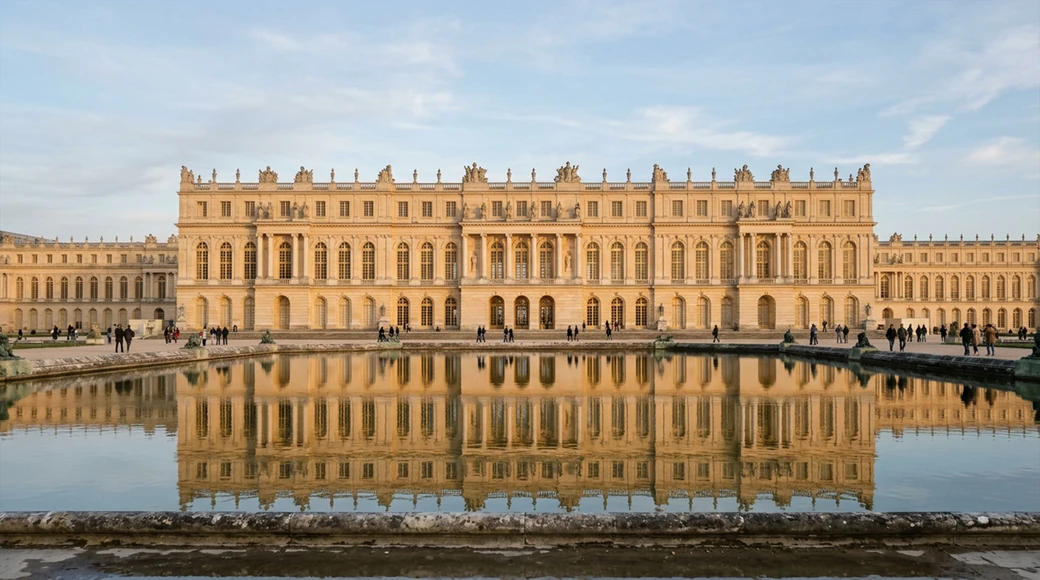
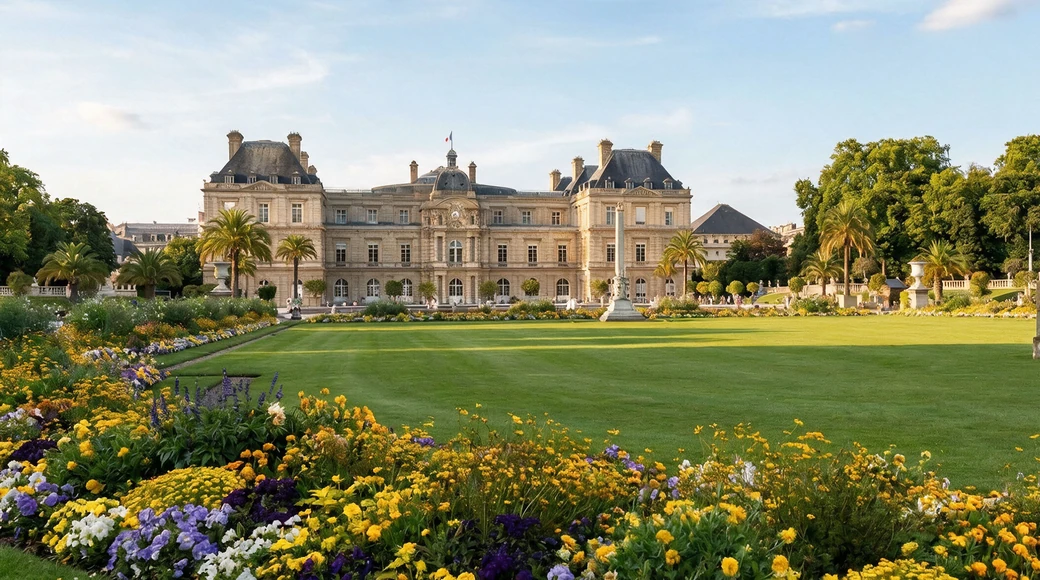
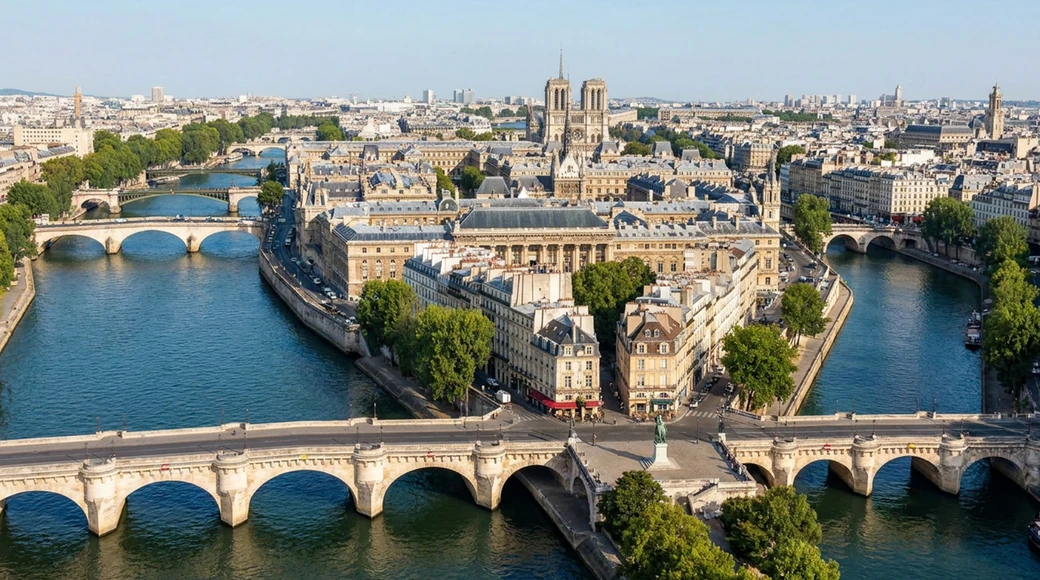
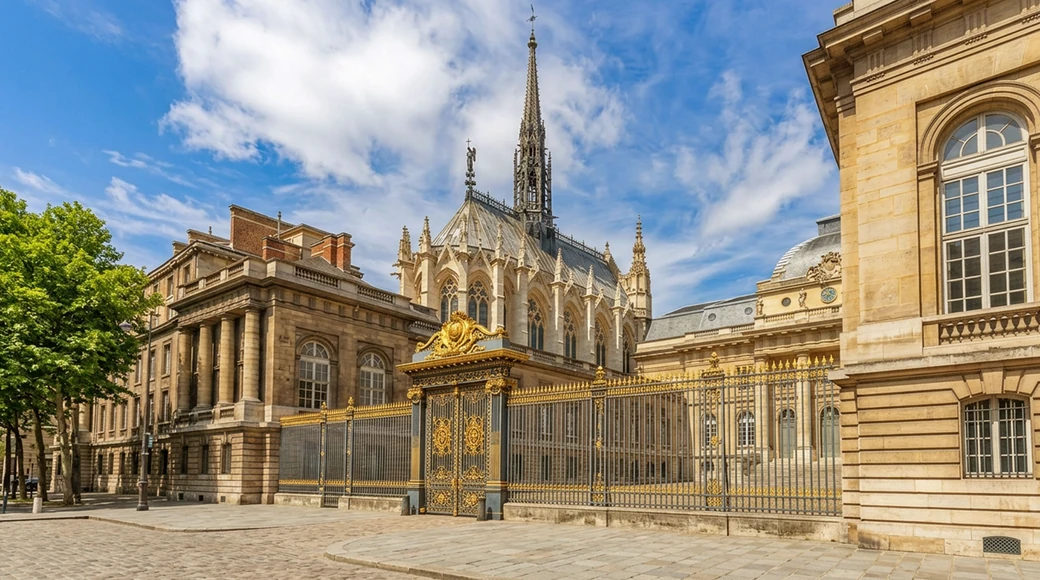
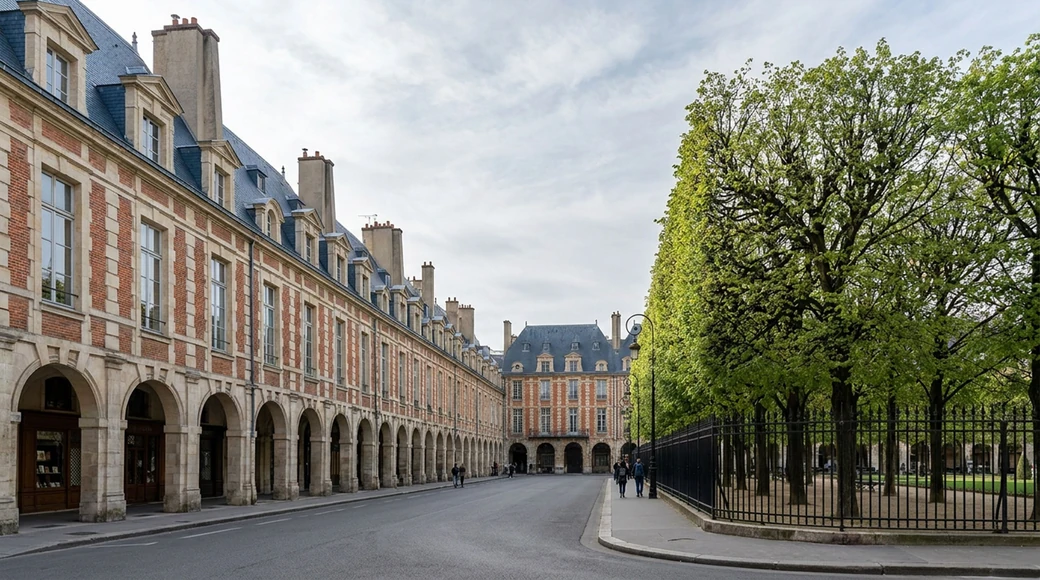
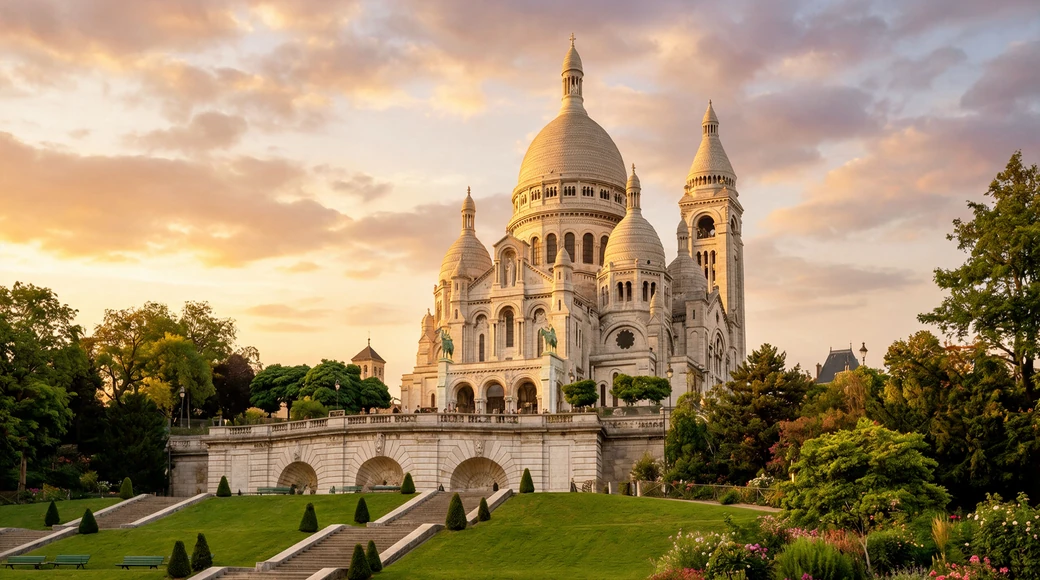
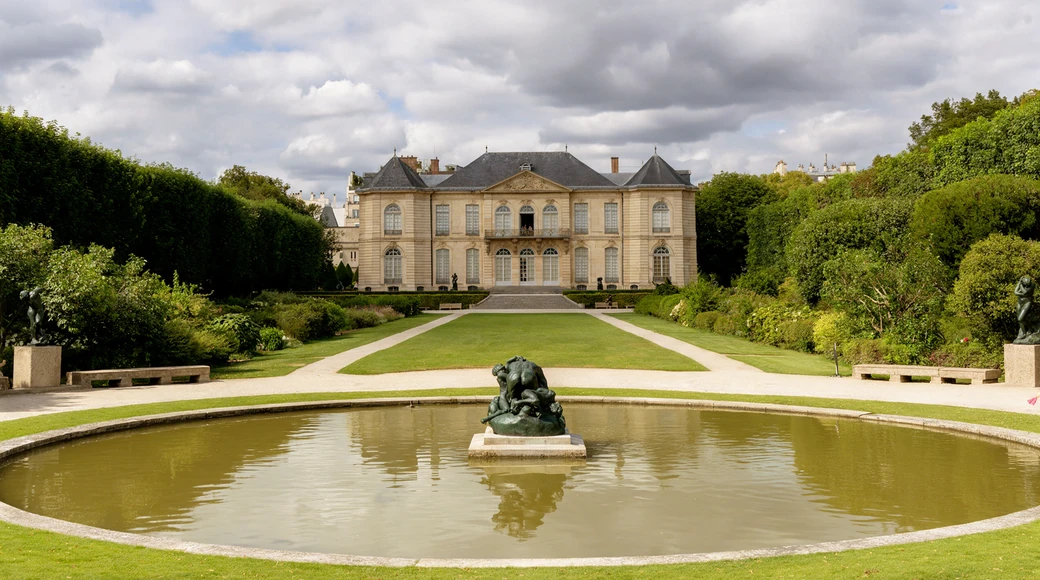
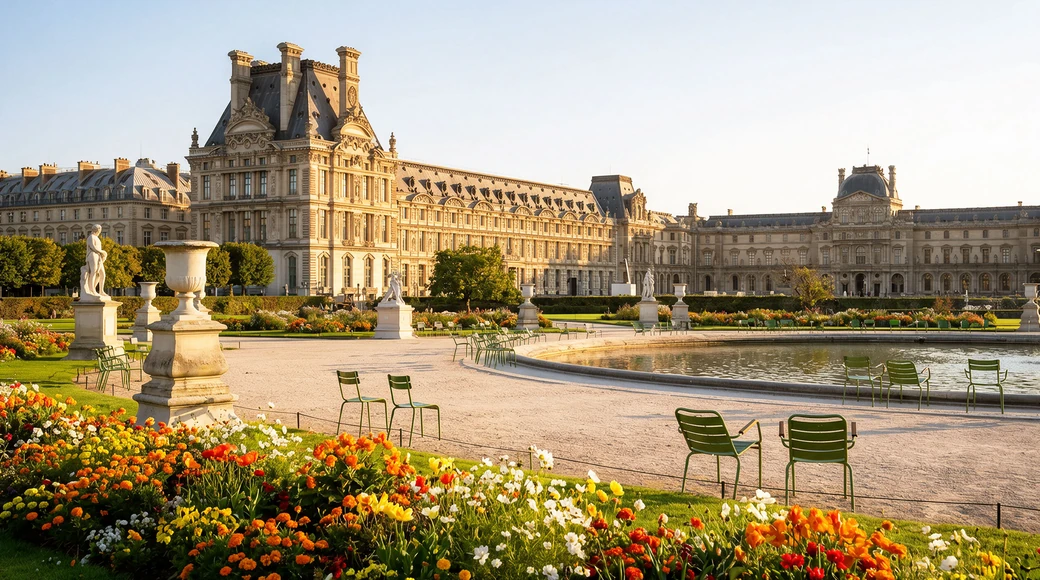
Paris earned its reputation as one of the world's most beautiful cities one stone at a time. Wide nineteenth-century boulevards open onto gilded domes and wrought-iron balconies, the Seine curls past centuries of honey-colored facades, and even the ordinary corners, a quiet courtyard, a stone stairwell, a row of chestnut trees, seem to have been composed with the same care as the grand monuments. It is this layering of beauty, era upon era, that turns simply walking through the city into part of the experience.
This eye for place goes far beyond a handful of famous names. The Louvre, opened in 1793 inside a former royal palace, is both the largest and the most-visited art museum in the world, while the Musee d'Orsay occupies a former railway station that was the first electrified urban terminal in the world before becoming home to the largest collection of Impressionist and post-Impressionist art anywhere. Beyond these record-holders, Paris's fabric of venues spans grand national museums, former royal residences turned galleries, Gothic cathedrals and Baroque churches, formal gardens and quiet squares, historic cemeteries that double as open-air sculpture parks, and the city's nineteenth-century covered passages, of which the Passage des Panoramas, built in 1799, is the oldest survivor.
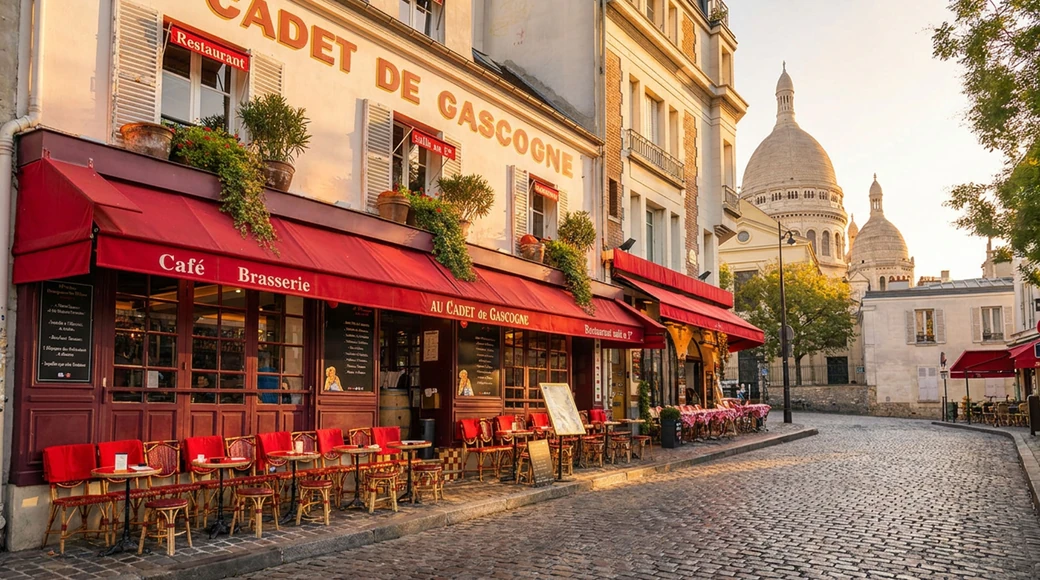
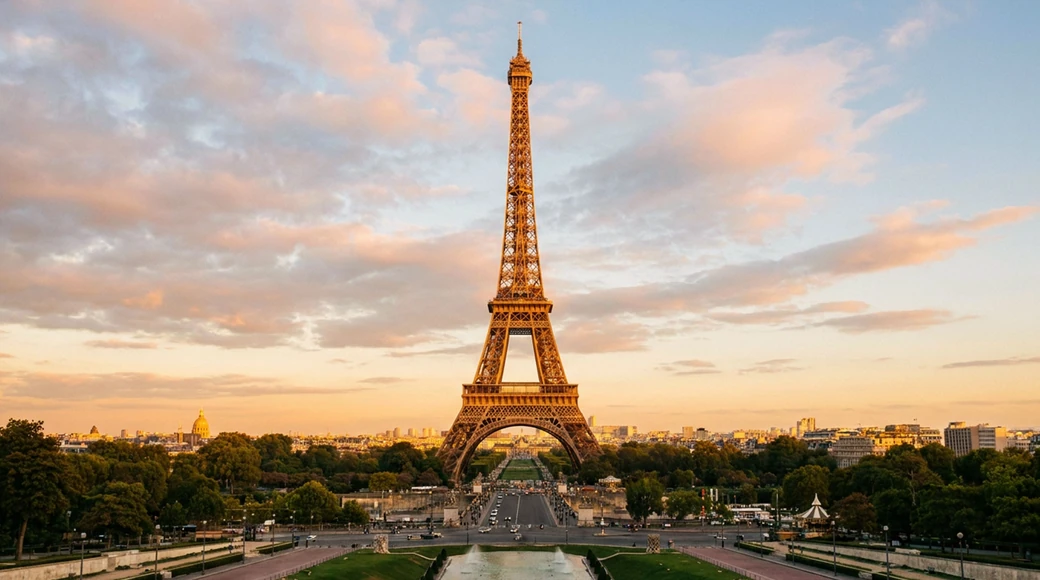
For the city's most photographed views, head to the Trocadero esplanade for the classic Eiffel Tower postcard shot, the gilded lamps and statues of the Pont Alexandre III, the striped columns of the Palais-Royal courtyard, the cobbled Rue de l'Abreuvoir on the Montmartre hillside, and the bridges around the Ile de la Cite for the Seine's most photogenic bends. Browse the places below to plan which ones fit your visit.
Accommodation and hotel options in Paris
Hotels and apartments in the heart of Paris — book directly through our partners.
Accommodation and hotel options across Paris, with their prices, are shown by Stay22 as a map and a list. Cookies are used. Your consent is remembered on every page; you can turn it off at any time in the cookie settings.
Departing from the Port de la Conférence beside the Pont de l'Alma, the Bateaux-Mouches have carried sightseers along the Seine since 1949 aboard glass-topped boats designed for unobstructed views. The roughly one-hour round trip glides past the Eiffel Tower, the Louvre, Notre-Dame, and the Musée d'Orsay, offering a completely different perspective on the city's landmarks. Daytime sightseeing cruises run frequently, while evening and dinner cruises add lights, music, and a formal meal for a more romantic outing. The company was founded in 1949 by Jean Bruel, and the name of its boats is said to come from the Mouche district of Lyon, where early river shuttles were built. The loop takes in the Pont Alexandre III, the Pont Neuf, the oldest standing bridge in Paris, and the two islands at the city's historic heart, the Île de la Cité and the Île Saint-Louis. Recorded commentary in several languages accompanies the trip, and after dark the passage beneath the sparkling Eiffel Tower is the highlight of the evening sailings.
Bibliothèque nationale de France – François-Mitterrand
Rising beside the Seine in the 13th arrondissement, the François-Mitterrand site of the Bibliothèque nationale de France opened in 1996 to a design by Dominique Perrault. Its four L-shaped glass towers, standing at the corners of a vast wooden esplanade like open books, hold a large share of a collection of more than 14 million printed volumes. At the centre lies a sunken forest garden planted with mature trees brought from Normandy, a calm green world visible from the reading rooms. The Hall des Globes displays the monumental celestial and terrestrial globes made by Vincenzo Coronelli for Louis XIV, and the Simone-de-Beauvoir footbridge links the library to the Parc de Bercy across the river.
Covering some 845 hectares on the western edge of Paris, the Bois de Boulogne is a remnant of the ancient Rouvray Forest that Napoleon III gave to the city in 1852. Inspired by London's Hyde Park, engineer Adolphe Alphand reshaped it with winding paths, lakes and the Grande Cascade. Visitors can row across the Lac Inférieur to the Chalet des Îles, wander the celebrated rose garden of the Parc de Bagatelle, whose little château was built in about 64 days after a wager between the Comte d'Artois and Marie Antoinette, or explore the Shakespeare Garden in the Pré Catelan. The Jardin d'Acclimatation, the Longchamp racecourse and the Fondation Louis Vuitton complete the scene.
Stretching over roughly 995 hectares on the eastern edge of the city, the Bois de Vincennes is the largest green space in Paris. Once a royal hunting ground, it was given to the city by Napoleon III in 1860 and landscaped by Adolphe Alphand. Rowing boats glide around the islands of Lac Daumesnil, where a romantic temple crowns a little grotto, while the Parc Floral delights with seasonal gardens and summer concerts. The Paris Zoological Park, renewed in 2014, is dominated by its famous Great Rock, and the Pagoda of Vincennes, a Buddhist temple housed in a former 1931 exhibition pavilion, adds a serene touch. Trotting races at the Vincennes racecourse and the Cartoucherie theatres complete its varied charms.
Ordered by Napoleon Bonaparte to bring fresh water into Paris and ease river congestion, the Canal Saint-Martin was built between 1802 and 1825, stretching 4.6 kilometers with nine locks that link the Canal de l'Ourcq to the Seine. In the mid-19th century, its southern stretch was covered over to create Boulevard Richard-Lenoir, while the open section further north became one of Paris's most beloved neighborhoods, lined with plane trees, iron footbridges, and cafés. Locals gather along its cobbled quays to picnic, stroll, and watch boats pass through the working locks. On the Quai de Jemmapes stands the Hôtel du Nord, made famous by Marcel Carné's 1938 film of the same name. Along its course the canal drops some 25 metres through its locks, and two swing bridges still pivot to let boats pass. Leisure cruises link the Bassin de l'Arsenal near Bastille with the Bassin de la Villette, gliding through a long vaulted tunnel lit by skylights beneath Boulevard Richard-Lenoir.
Beneath the streets of the 14th arrondissement lie the Catacombs of Paris, a network of former limestone quarries that became an underground ossuary starting in 1786, when overflowing cemeteries such as the Cimetière des Innocents were emptied for public health reasons. The official visitor circuit winds nearly 1.5 kilometers past the bones and skulls of an estimated six million Parisians, arranged in deliberate patterns by 19th-century workers. A carved inscription above the ossuary entrance warns visitors: "Stop, this is the empire of death." The visit begins at Place Denfert-Rochereau with a descent of 131 steps to around 20 metres below the surface, where the air stays cool all year round. Galleries were first opened to curious visitors in 1809, after the quarry inspector Louis-Étienne Héricart de Thury had the bones stacked into walls and added plaques, altars and poetic inscriptions. Along the way, carved stone models of fortresses and the geological layers of the ancient quarries reveal another side of the city's underground history.
Stretching some 24 hectares between the Eiffel Tower and the École Militaire, the Champ de Mars takes its name from Mars, the Roman god of war, because it was laid out in the 18th century as the military school's parade ground. On 14 July 1790 it hosted the Fête de la Fédération, and from the 19th century onwards several World's Fairs were held here, including that of 1889, for which the Eiffel Tower was built. Today its long lawns and tree-lined paths are a favourite picnic spot with an unobstructed view of the tower, especially after dark, when it sparkles at the start of every hour. In 2024 the park also hosted Olympic beach volleyball.
A royal and imperial residence for over seven centuries, the Château de Fontainebleau began as a medieval hunting lodge before François I transformed it in the 16th century into a Renaissance palace decorated by Italian artists, creating what became known as the Fontainebleau School of decorative art. Unlike Versailles, it was continuously inhabited and remodeled by nearly every French monarch through Napoleon III, giving it an unusually layered mix of architectural styles across its 1,500 rooms. Napoleon Bonaparte favored it above all his other residences and bid farewell to his imperial guard on its horseshoe-shaped staircase in 1814 before his first exile. Located about 55 kilometers southeast of Paris, the château is set within a vast surrounding forest popular for hiking and rock climbing.
A royal residence from the 12th to the 18th century, the Château de Vincennes on the eastern edge of Paris is one of the largest and best-preserved medieval fortresses in France. Its keep, completed under Charles V in the 1370s and rising about 52 metres, is the tallest medieval fortified tower in Europe; inside, rooms that once held the king's books and treasures are open to visitors. Facing it stands the Sainte-Chapelle of Vincennes, a Gothic chapel finished in the Renaissance with superb stained glass, alongside the classical pavilions built by Louis Le Vau for the young Louis XIV. A walk along the ramparts reveals a site where centuries of French history meet.
Occupying a wing of the Palais de Chaillot, built for the 1937 International Exhibition, the Cité de l'Architecture et du Patrimoine opened in 2007 and is among the world's largest centres devoted to architecture. Its roots go back to the museum of comparative sculpture founded in 1882 at the instigation of Viollet-le-Duc, and its gallery of casts still lets visitors stand face to face with full-size plaster copies of the portals, tympanums and statues of great French cathedrals. Another gallery reproduces Romanesque and Gothic wall paintings, while the modern section even includes a reconstructed flat from Le Corbusier's Cité Radieuse in Marseille. Terraces and windows look straight across to the Eiffel Tower.
Opened in 1986 in the Parc de la Villette, the Cité des Sciences et de l'Industrie is often described as the largest science museum in Europe. Architect Adrien Fainsilber transformed an unfinished auction hall of the former La Villette slaughterhouses into a vast glass-and-steel space devoted to curiosity. Interactive exhibitions explore space, energy, the human brain, robots and much more, while the planetarium takes visitors on journeys across the universe. The Cité des Enfants offers dedicated hands-on areas for younger explorers, and outside you can board the Argonaute, a real 1950s French Navy submarine, or admire the Géode, a gleaming mirrored sphere that houses a hemispherical cinema.
Opened on 12 April 1992 in Marne-la-Vallée, about 32 kilometers east of central Paris, Disneyland Paris is one of Europe's most-visited destinations. The resort spans two adjoining theme parks, Disneyland Park with its fairy-tale castle and classic rides, and the neighboring park built around cinema and adventure themes, plus Disney hotels and a shopping and entertainment district. Parades, fireworks, and seasonal events run year-round, making it a full-day trip best reached by RER train from the city. At the heart of Disneyland Park stands Sleeping Beauty Castle, whose dungeon hides a giant animatronic dragon. The park is divided into five lands, Main Street U.S.A., Frontierland, Adventureland, Fantasyland and Discoveryland, with favourites such as Big Thunder Mountain, set on an island in the middle of a lake. The Marne-la-Vallée–Chessy station, served by RER A and high-speed trains, sits right at the park gates.
Founded in 1984 by Alain Dominique Perrin at the suggestion of the sculptor César, the Fondation Cartier pour l'art contemporain has championed living artists from every continent for four decades. In October 2025 it moved to 2 Place du Palais-Royal, directly opposite the Louvre, into a Haussmann-era building that opened in 1855 as the Grand Hôtel du Louvre and later housed department stores and an antiques centre. Architect Jean Nouvel, who had already designed its glass headquarters on Boulevard Raspail in 1994, reinvented the interior with five mobile platforms that rise and fall to reshape the galleries, while vast glass bays open the exhibitions to the street. The programme blends art, architecture, science and the living world.
Opened in October 2014 in the Bois de Boulogne, the Fondation Louis Vuitton is a contemporary art museum designed by architect Frank Gehry and commissioned by LVMH chairman Bernard Arnault. Its twelve glass "sails," curving like a ship in full wind, make it one of the most photographed buildings in Paris. Inside, rotating exhibitions of modern and contemporary art are shown alongside a growing permanent collection, and a rooftop terrace offers sweeping views over the park and the city skyline. Gehry's sails are made of some 3,600 curved glass panels, wrapped around a body of white concrete blocks nicknamed the icebergs. The building stands beside the Jardin d'Acclimatation and its pools reflect the structure, while a cascade of water steps down along its base. The foundation has staged landmark exhibitions, including the Shchukin collection of modern masters, and its auditorium hosts concerts and performances throughout the year.
Opened in 1823 just steps from the Palais-Royal gardens, the Galerie Vivienne is often called the most elegant of Paris's passages couverts (glass-roofed shopping arcades of the 19th century, forerunners of department stores). Beneath its glass canopy, a neoclassical décor of arches, statues and a small rotunda rises above mosaic floors that still sparkle after two centuries. Its boutiques mix fashion, decoration and gifts with long-standing institutions such as the Librairie Jousseaume, a secondhand bookshop trading here since 1826, a historic wine merchant and inviting tea rooms. Listed as a historic monument, it makes a quiet, photogenic detour between the Palais-Royal and the Richelieu site of the National Library.
Built for the 1900 World's Fair by a team of architects including Henri Deglane and Charles Girault, the Grand Palais is famed for its soaring glass-and-iron nave, one of the largest in the world, crowned by an Art Nouveau glass roof. After an extensive renovation, it reopened to host major art exhibitions, fashion shows, and cultural events beneath its luminous vault. Its main stone facade on Avenue Winston-Churchill, facing the Petit Palais, features a monumental Ionic colonnade, while bronze quadrigas by Georges Récipon crown its corners, making the building itself as much a spectacle as the exhibitions it hosts. Its great nave covers some 13,500 square metres beneath a glass roof rising about 45 metres high. During the 2024 Olympic Games it hosted the fencing and taekwondo competitions.
Completed in 1926 as a tribute to the roughly 100,000 Muslim soldiers from France's colonial territories who died fighting for France in the First World War, the Grande Mosquée de Paris is built in the Hispano-Moorish style, with a 33-meter minaret modeled on the Zitouna Mosque in Tunis. Visitors can wander the Andalusian-style courtyard with its fountains and mosaic tilework, then relax in the attached tea salon, restaurant, or traditional hammam, all tucked into the Latin Quarter. The mosque was inaugurated on 15 July 1926 in the presence of French President Gaston Doumergue and Sultan Moulay Youssef of Morocco. Moroccan craftsmen carved its cedar-wood ceilings and doors and laid the zellige (glazed mosaic tilework) that covers its walls and fountains. The prayer hall, adorned with rich carpets and a great chandelier, opens onto a patio inspired by the Alhambra, and according to many accounts the mosque offered shelter to people in danger during the Second World War.
Inaugurated in 1987 by President François Mitterrand, the Institut du Monde Arabe was designed by Jean Nouvel with Architecture-Studio and is dedicated to Arab history, art, and civilization. Its south facade is famous for 240 photosensitive metal apertures inspired by traditional mashrabiya lattice screens, which open and close like camera diaphragms to regulate sunlight. Beyond the museum collection, a rooftop terrace offers one of the best panoramic views of Notre-Dame and the Seine, especially at sunset. The institute was created through a partnership between France and the member countries of the Arab League to make Arab culture better known in Europe. Its north facade, facing the Île Saint-Louis, is a glass surface printed with motifs that echo the Paris skyline, symbolically joining the two worlds. Inside, a spiralling Tower of Books holds the library, and the museum guides visitors from pre-Islamic antiquity to contemporary Arab art through ceramics, astrolabes, manuscripts and textiles.
Founded in 1635 as the royal garden of medicinal plants and opened to the public in 1640, the Jardin des Plantes is Paris's main botanical garden, stretching along the Seine on the edge of the Latin Quarter. Formal flower beds, a rose garden, an alpine garden and the great glasshouses of tropical and desert plants line its alleys, while the Ménagerie, created in 1794, is among the oldest zoos in the world still in operation. A winding path climbs the labyrinth to the Gloriette de Buffon, one of the city's oldest metal structures. Nearby stands a Cedar of Lebanon planted in 1734; legend has it that the botanist Bernard de Jussieu carried the sapling from England in his hat.
Rising 110 meters at the western end of Paris's historic axis, which runs from the Louvre through the Arc de Triomphe, the Grande Arche was completed in 1989 to mark the bicentennial of the French Revolution. Designed by Danish architect Johan Otto von Spreckelsen with engineer Erik Reitzel, and completed by Paul Andreu after Spreckelsen's death, the cube-shaped monument is large enough to enclose Notre-Dame Cathedral. It anchors the modern skyscrapers of the La Défense business district, France's largest purpose-built office quarter. Officially named the Grande Arche de la Fraternité, the monument is clad in Carrara marble and glass and was inaugurated on 14 July 1989. It is turned at an angle of about six degrees to the historic axis, and a light canopy nicknamed the cloud is suspended in its great void. Around it, the esplanade of La Défense forms an open-air gallery with works such as Alexander Calder's red stabile, Joan Miró's colourful figures and César's giant thumb.
Originally conceived by Louis XV in 1763 and repeatedly redesigned over the following decades, La Madeleine took its final form when Napoleon Bonaparte ordered it rebuilt in 1806 as a Temple to the Glory of the Grand Army, modeled on a Greek temple. After his fall, the building was redirected back to religious use and finally consecrated as a church in 1842. Architect Pierre-Alexandre Vignon's design surrounds the entire structure with 52 towering Corinthian columns, while the bronze doors depict the Ten Commandments and the interior holds sculptures and frescoes by leading 19th-century artists. The church remains a popular venue for concerts and funerals of notable French cultural figures.
Opened in 1825 in a former gypsum quarry at the foot of the Butte Montmartre, the Cimetière de Montmartre is a peaceful, leafy world of cobbled lanes, chapels and sculpted tombs spread over some 11 hectares. Its residents include the composers Hector Berlioz and Jacques Offenbach, the painter Edgar Degas, the writers Stendhal, Alexandre Dumas fils and Heinrich Heine, the dancer Vaslav Nijinsky, the filmmaker François Truffaut and Adolphe Sax, inventor of the saxophone. The singer Dalida's grave, with its life-size statue, is one of the most visited. Émile Zola's monument remains here even though his remains were moved to the Panthéon, and the iron bridge of Rue Caulaincourt passes overhead. Cats roam freely among the tombs.
Opened in 1824 in the 14th arrondissement, Montparnasse Cemetery is the final resting place of many of France's most celebrated writers, artists, and thinkers, spread across roughly 19 hectares shaded by linden and chestnut trees. Visitors can find the graves of philosophers Jean-Paul Sartre and Simone de Beauvoir, buried side by side, as well as poet Charles Baudelaire, singer Serge Gainsbourg, playwright Samuel Beckett, and writer Susan Sontag. Quieter and less visited than Père Lachaise, its tree-lined avenues make for a reflective stroll through two centuries of French intellectual and artistic history. Rue Émile-Richard divides the cemetery into two sections, and maps at the entrances help visitors locate famous graves, including those of Guy de Maupassant, Man Ray, Jean Seberg and the filmmakers Agnès Varda and Jacques Demy. Constantin Brancusi's sculpture The Kiss adorns one of the tombs, and admirers often leave metro tickets on Gainsbourg's grave in tribute to his song about a ticket puncher.
Opened in 1889 at the foot of Montmartre, the Moulin Rouge is the world's most famous cabaret, instantly recognizable by its red windmill above Boulevard de Clichy. It helped popularize the can-can and was immortalized in posters by Henri de Toulouse-Lautrec. Today the venue stages "Féerie," a glittering nightly revue with elaborate costumes, a live orchestra, and acrobatic numbers, drawing visitors into the glamour of belle-époque Paris nightlife in the heart of Pigalle. Founded by Joseph Oller and Charles Zidler, the cabaret launched the careers of dancers such as La Goulue and Jane Avril, and later welcomed stars including Mistinguett, Édith Piaf and Yves Montand. The current revue, performed since 1999, features around a thousand costumes of feathers, rhinestones and sequins, and every show ends with the famous French cancan. Baz Luhrmann's 2001 film carried the cabaret's legend to a new generation of admirers around the world.
Spread across two adjoining mansions in the heart of the Marais, the Renaissance Hôtel Carnavalet and the late 17th-century Hôtel Le Peletier de Saint-Fargeau, the Musée Carnavalet traces the entire history of Paris from its Gallo-Roman origins to the present day. Highlights include reconstructed period rooms, Revolutionary-era relics, prehistoric artifacts unearthed locally, and Art Nouveau shop interiors salvaged from demolished Parisian buildings. Novelist Madame de Sévigné once lived in the original mansion, adding a literary layer to a museum already rich in civic memory. Opened in 1880 and reopened in 2021 after a major renovation, the museum holds some 625,000 objects, among them Marcel Proust's bedroom and the Art Nouveau jewellery shop designed by Alphonse Mucha for Georges Fouquet. Its courtyards and formal gardens make a peaceful pause in the heart of the Marais.
Combining a well-preserved set of 2nd-century Gallo-Roman baths with a late-15th-century Gothic mansion built for the abbots of Cluny, this museum in the Latin Quarter opened in 1843 after collector Alexandre du Sommerard's medieval holdings were acquired by the French state. Its centerpiece is the celebrated "Lady and the Unicorn" tapestry series, six exquisite late-medieval weavings, displayed alongside Visigothic votive crowns, Gothic stained glass, and the original stone heads from Notre-Dame's Gallery of Kings, defaced during the Revolution and rediscovered in 1977. A major renovation completed in 2022 modernized the galleries while preserving the building's medieval character. The vaulted frigidarium, the cold room of the baths, still rises about 14 metres high and shelters the Pillar of the Boatmen, a 1st-century monument considered the oldest in Paris.
Set in the Passy wing of the Palais de Chaillot on Place du Trocadéro, the Musée de l'Homme explores where humans come from, how we evolved and how societies live together. Founded in 1937 by the ethnologist Paul Rivet and fully reimagined before reopening in 2015, it presents prehistoric and anthropological collections among the richest in the world, including Cro-Magnon fossils and the ivory Venus of Lespugue. In 1940 its staff formed one of France's first Resistance networks. Interactive displays suit all ages, and the windows and café frame some of the finest views of the Eiffel Tower across the Seine.
Occupying the Rohan and Marsan wings of the Louvre Palace along Rue de Rivoli, the Musée des Arts Décoratifs traces the history of French design and craftsmanship from the Middle Ages to contemporary fashion across seven floors. Its collections include period-furnished rooms, Art Nouveau and Art Deco interiors, toys, wallpaper, glassware, and an extensive fashion and textile department featuring haute couture pieces. Founded in 1905 by the Union centrale des arts décoratifs, the museum also hosts rotating exhibitions on design, advertising, and fashion, making it a favorite reference point for the city's designers and architecture students. Its collections number around 1.5 million objects, and among the most admired spaces are the reconstructed private apartments of the couturier Jeanne Lanvin, designed in the 1920s by Armand-Albert Rateau. Large fashion retrospectives here regularly draw record crowds.
Founded in 1794 and housed in the former priory of Saint-Martin-des-Champs, the Musée des Arts et Métiers, now known as MuAM, is one of the oldest museums of science and technology in the world. Its seven sections, from scientific instruments to transport, trace human ingenuity through treasures such as Pascal's calculating machine, Lavoisier's laboratory, Cugnot's steam carriage and Clément Ader's bat-winged Avion III. The highlight is the medieval church, where early cars and aircraft share the space beneath Gothic vaults and Foucault's pendulum swings to show the Earth's rotation. The nearby Arts et Métiers metro station, clad in copper like a submarine, makes a fitting finale.
Opened in 2006 on the initiative of President Jacques Chirac and designed by architect Jean Nouvel, this museum near the Eiffel Tower is dedicated to the arts, cultures, and civilizations of Africa, Asia, Oceania, and the Americas, holding several hundred thousand objects. Its most photographed feature is the "mur végétal," a living wall of some 15,000 plants created by botanist Patrick Blanc that covers the north facade. Renamed in Chirac's honor in 2016, the museum overlooks the Seine along the Quai Branly. Around the building stretches a wild garden designed by Gilles Clément, screened from the busy quay by a tall glass wall that lets passers-by glimpse the greenery. Inside, a long white ramp winds upward towards the main gallery, where masks, textiles, sculptures and musical instruments are displayed in softly lit, earth-toned spaces. On the rooftop, the restaurant Les Ombres (The Shadows) offers a striking view of the Eiffel Tower, especially beautiful at nightfall.
Opened in 1882 on the initiative of journalist Arthur Meyer and caricaturist Alfred Grévin, the Musée Grévin is Paris's celebrated wax museum on the Grands Boulevards. Visitors pose alongside lifelike wax figures of historical icons and contemporary celebrities, set within ornate Belle Époque halls. A highlight is the Palais des Mirages, a kaleidoscopic hall of mirrors created for the 1900 World's Fair that transforms its lighting and imagery every few minutes. Around two hundred wax figures fill the museum, each one shaped by sculptors, hair specialists and make-up artists over several months to capture a lifelike expression. The tour also passes through the Théâtre Grévin, an intimate Italian-style auditorium from 1900 adorned with a bas-relief by Antoine Bourdelle and a stage curtain painted by Jules Chéret. Themed rooms move from French history, with scenes of kings and revolutionaries, to film, music and sport, making it a playful stop for families.
Founded by industrialist Émile Guimet and inaugurated in 1889, the Musée national des arts asiatiques-Guimet houses one of the largest collections of Asian art outside Asia, spanning works from Afghanistan and India to China, Japan, and Southeast Asia. The collection grew from Guimet's own travels through Japan, China, and India in the 1870s and was later enriched by Asian holdings transferred from the Louvre in 1945. Highlights include Khmer sculpture from Angkor, Japanese Buddhist art, and Chinese ceramics, displayed in galleries near Place d'Iéna renovated by architects Henri and Bruno Gaudin and reopened in 2001. In the museum's circular library, the dancer Mata Hari gave her first Paris performance in 1905, and the nearby Hôtel d'Heidelbach annex houses a Buddhist pantheon with a tranquil Japanese garden.
Built in 1875 as the private mansion of banker Édouard André and painter Nélie Jacquemart, this opulent residence on Boulevard Haussmann became a museum in 1913 after being bequeathed to the Institut de France. Its lavish period rooms display an exceptional collection of Italian Renaissance masterpieces, French 18th-century furniture and paintings, and Dutch Golden Age works, gathered by the couple during decades of travel. Visitors can also see the original dining room, winter garden, and private apartments, offering a rare glimpse into the refined lifestyle of Belle Époque Paris. Its Italian Museum gathers masterpieces by Botticelli, Mantegna, Bellini and Paolo Uccello, whose Saint George and the Dragon is a highlight, while Rembrandt and Fragonard star among the northern and French works. Frescoes by Giambattista Tiepolo crown the grand staircase, and the former dining room now serves as an elegant café.
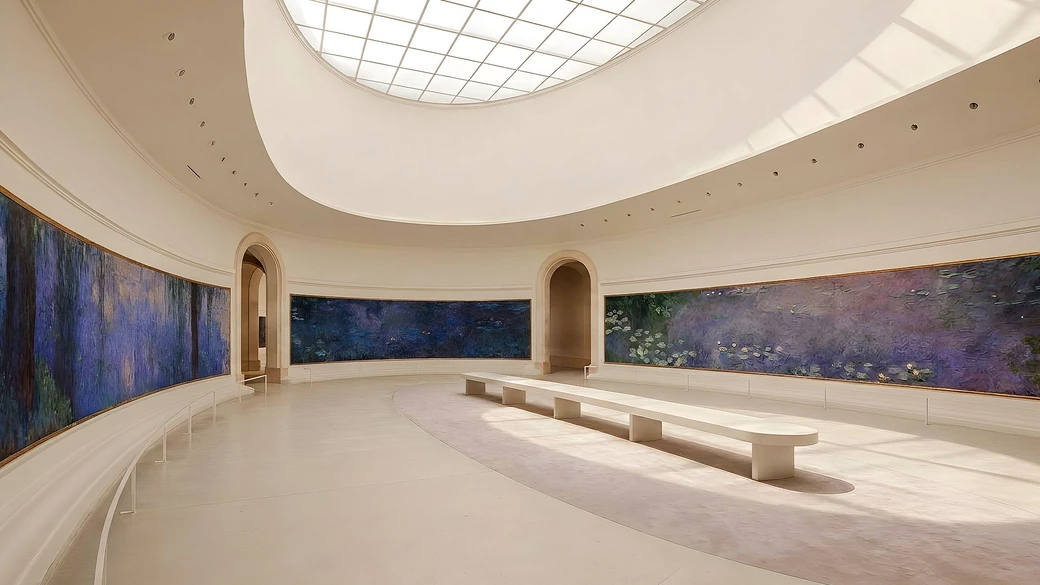
Housed in a former 19th-century hunting lodge in the Passy district, the Musée Marmottan Monet holds the world's largest collection of works by Claude Monet, more than one hundred paintings donated by his son Michel in 1966. Among them is "Impression, Sunrise" (1872), the very canvas that gave the Impressionist movement its name. The museum also displays major works by Berthe Morisot and a collection of illuminated medieval manuscripts, making it a quieter alternative to the city's larger Impressionist collections. The museum owes its name to the art historian Paul Marmottan, who bequeathed his house and his collections of First Empire furniture and paintings to the Académie des Beaux-Arts in 1932. A specially designed basement gallery presents Monet's late Water Lilies and garden views from Giverny in an immersive, softly lit setting. The house stands beside the peaceful Ranelagh Gardens, making a walk through the quiet streets of the 16th arrondissement a natural extension of the visit.
Housed in the elegant Second Empire townhouse at 5 Avenue Marceau, where Yves Saint Laurent's haute couture house created its collections from 1974 to 2002, this museum opened on 3 October 2017 to preserve the designer's legacy. It is run by the Fondation Pierre Bergé – Yves Saint Laurent, whose archive holds thousands of haute couture garments, accessories and sketches. The route leads through the former salons where clients once attended the collection presentations and up to the studio, the creative heart where every collection was conceived. Exhibitions celebrate icons such as Le Smoking, the tuxedo suit for women of 1966, the Mondrian dress and the safari jacket, revealing Saint Laurent's revolutionary influence on modern fashion. A sister museum opened the same year in Marrakech, beside the Jardin Majorelle.
National Museum of Natural History (Muséum national d'Histoire naturelle)
The Muséum national d'Histoire naturelle, created in 1793 from the royal garden of medicinal plants, is one of the world's great natural science institutions, and its galleries line the Jardin des Plantes in the Latin Quarter. Pride of place goes to the Grande Galerie de l'Évolution, an iron-and-glass hall from 1889 reborn in 1994, where a procession of African savanna animals crosses the central nave beside the skeleton of a great whale, under lighting that shifts like the passing of a day. The Gallery of Palaeontology and Comparative Anatomy amazes with hundreds of skeletons and dinosaur casts, while the Gallery of Mineralogy and Geology dazzles with giant crystals and precious stones from every continent.
Inaugurated on 13 July 1989 to mark the bicentennial of the French Revolution, the Opéra Bastille was designed by Uruguayan-Canadian architect Carlos Ott as a modern counterpart to the ornate Palais Garnier, giving Paris a large, technically advanced venue for opera. Its sleek glass-and-granite curved facade overlooks Place de la Bastille, site of the fortress stormed in 1789. The auditorium seats nearly 2,700 spectators for opera and ballet performances, and visitors can also explore backstage areas, rehearsal rooms, and the stage machinery on guided tours offered when performances allow. Its facade is clad in grey-blue granite from Brittany, and behind the auditorium lies one of the largest stage complexes in the world, where several sets can be prepared and moved into place at once. Together with the Palais Garnier, it forms the Opéra national de Paris and presents most of the company's large-scale opera productions. Across the square rises the July Column, crowned by the gilded Genius of Liberty, commemorating the Revolution of 1830.
Built for the 1937 International Exhibition, the Palais de Tokyo owes its name to the old Quai de Tokio along the Seine. Its west wing became a centre for contemporary creation in 2002, when architects Lacaton & Vassal stripped the interiors back to raw concrete, and after its 2012 expansion it covers some 22,000 square metres, making it one of Europe's largest spaces for contemporary art. With no permanent collection, it constantly reinvents itself through bold exhibitions, installations, performances and night-time events, staying open late into the evening. The east wing houses the Musée d'Art Moderne de Paris, and the terraces between them offer splendid views of the Eiffel Tower.
Commissioned by Napoleon III and designed by architect Charles Garnier, this opulent opera house was built between 1861 and 1875 in a lavish Beaux-Arts style, crowned by a bronze-and-copper dome. Its Grand Staircase and gilded Grand Foyer rank among the most sumptuous interiors in Paris, while the auditorium ceiling was repainted by Marc Chagall in 1964. The building inspired Gaston Leroux's novel "The Phantom of the Opera" and today hosts the Paris Opera Ballet on Place de l'Opéra. Charles Garnier was only 35 when he won the 1861 design competition, chosen from 171 entries. Above the auditorium hangs a bronze and crystal chandelier weighing around eight tonnes, and beneath the building lies a vast water tank that helped stabilise the foundations and fed the legend of the phantom's underground lake. On the main facade, Jean-Baptiste Carpeaux's sculpture group La Danse (The Dance) is today a copy, its original being displayed at the Musée d'Orsay.
Built between 1633 and 1639 for Cardinal Richelieu, who bequeathed it to King Louis XIII, the Palais-Royal became a royal residence and later the elegant heart of 18th-century Parisian social life after Louis Philippe II added arcaded galleries lined with shops in the 1780s. The formal garden, first laid out in 1629 and later redesigned by André Le Nôtre, remains a tranquil public park framed by uniform stone facades. In its central courtyard stands "Les Deux Plateaux," the striped black-and-white columns installed by artist Daniel Buren in 1986, now among Paris's most photographed contemporary artworks. Today the palace houses the Conseil d'État (Council of State), the Constitutional Council and the Ministry of Culture, while its garden welcomes strollers every day.
On the edge of the Bois de Boulogne, the Parc des Princes has been a temple of Parisian sport since 1897, when a velodrome opened here; for decades it was the finish line of the Tour de France. The current stadium, inaugurated in 1972, is the work of architect Roger Taillibert, whose 50 curved concrete ribs hold up the roof without a single pillar, so every one of its roughly 48,000 seats enjoys a clear view of the pitch. Home of Paris Saint-Germain since 1974, it has staged European Championship finals, World Cup matches and Olympic football. Stadium tours open the dressing rooms, the players' tunnel, the dugouts and the trophy room to fans.
Père Lachaise Cemetery (Cimetière du Père-Lachaise)
Opened in 1804 and named after King Louis XIV's confessor, Père François de la Chaise, this 44-hectare cemetery was the first in Europe designed as a landscaped garden, with winding cobbled paths shaded by mature trees. It is the final resting place of Frédéric Chopin, Oscar Wilde, Jim Morrison, Édith Piaf, and Molière, among thousands of elaborate tombs and mausoleums. At first Parisians were reluctant to be buried so far from the centre, so in 1804 and 1817 the remains of La Fontaine, Molière and the medieval lovers Abélard and Héloïse were transferred here to raise its prestige. The strategy worked, and today some 70,000 burial plots form an open-air museum of funerary sculpture, where visitors also seek out the graves of Balzac, Proust, Delacroix and Modigliani. In the eastern corner, the Communards' Wall recalls the final days of the Paris Commune in 1871. Maps at the entrances help visitors find their way through its hilly lanes.
Built by architect Charles Girault for the 1900 World's Fair, the Petit Palais stands opposite the Grand Palais on Avenue Winston Churchill and today houses the City of Paris's fine arts museum. Its curved Beaux-Arts facade, mosaic-tiled dome, and peaceful interior garden courtyard frame a rich permanent collection spanning ancient Greek and Egyptian antiquities, medieval and Renaissance objects, and 19th-century French paintings by artists such as Courbet, Cézanne, and Monet. Visitors enter through a monumental gilded wrought-iron gate beneath the dome, and inside a sweeping spiral staircase and painted ceilings lead to galleries holding some 40,000 works. Highlights include Courbet's Young Ladies on the Banks of the Seine, Art Nouveau jewellery and furniture, and a fine group of Orthodox icons. At the heart of the building, a semicircular garden lined with mosaic-paved colonnades and a café offers one of the most peaceful pauses near the Champs-Élysées.
Opened in 2015 on the edge of the Parc de la Villette, the Philharmonie de Paris is a bold concert hall designed by Jean Nouvel, its shimmering facade covered with hundreds of thousands of bird-shaped aluminium tiles. At its heart, the 2,400-seat Grande Salle Pierre Boulez wraps the audience around the stage in floating balconies, so that no listener sits far from the musicians and the acoustics feel remarkably intimate. Home to the Orchestre de Paris, it welcomes the world's great orchestras alongside jazz, world music and pop. Together with Christian de Portzamparc's neighbouring Cité de la Musique, which houses the Musée de la Musique, it forms one of Europe's liveliest music hubs.
Founded in 558 by King Childebert I to house holy relics, the abbey church of Saint-Germain-des-Prés is the oldest church in Paris, and its bell tower, dating to the 11th century, is the city's oldest surviving tower. The surrounding Left Bank quarter became the beating heart of Parisian intellectual life in the 20th century, when Jean-Paul Sartre, Simone de Beauvoir, and Ernest Hemingway held court at nearby cafés Les Deux Magots and Café de Flore. Several Merovingian kings were buried in the abbey, and the philosopher René Descartes rests in one of its side chapels. In the 19th century the painter Hippolyte Flandrin covered the nave with murals, and a recent restoration revived the deep blues, golds and star-studded vaults of its painted decoration. Beside the church, the little Square Laurent-Prache shelters a bronze head by Picasso dedicated to his friend, the poet Guillaume Apollinaire, while the Brasserie Lipp completes the quarter's trio of legendary addresses.
Saint-Ouen Flea Market (Marché aux Puces de Saint-Ouen)
Just beyond the Porte de Clignancourt, the Marché aux Puces de Saint-Ouen is often described as the largest antiques market in the world, gathering well over a thousand dealers across a dozen distinct markets. Its story began in the late 19th century, when rag-and-bone men settled outside the city walls; legend has it that the name puces (fleas) came from the insects said to lurk in the old clothes and furniture they sold. Today each market has its own character, from the winding alleys of Vernaison, the oldest, to the design and vintage treasures of the 20th century at Paul Bert Serpette. Between bargaining over lamps, mirrors and old posters, the cafés play jazz manouche (a lively swing guitar style inspired by Django Reinhardt).
Construction of Saint-Sulpice began in 1646 and dragged on for over two centuries, finally finishing in 1870, which left the church with two mismatched towers—the more classical north tower and an unfinished south tower whose intended third level was never built. Its facade, designed by Giovanni Servandoni, was inspired by London's St Paul's Cathedral. Inside, the second-largest church in Paris after Notre-Dame houses murals painted by Eugène Delacroix between 1855 and 1861, an 18th-century gnomon used to calculate the date of Easter, and a monumental organ built by Aristide Cavaillé-Coll in 1862, long considered one of the finest in the world.
Opened in 1951 by American expatriate George Whitman under the name Le Mistral, this legendary English-language bookshop was renamed Shakespeare and Company in 1964, honoring both Sylvia Beach's original 1920s bookshop and William Shakespeare's birthday. Tucked into an early 17th-century building, originally a monastery, facing Notre-Dame across the Seine, it became famous for hosting "Tumbleweeds," aspiring writers who slept among the shelves in exchange for helping in the shop and reading a book a day. Over the decades, more than 30,000 Tumbleweeds have stayed here, and writers such as Allen Ginsberg and William Burroughs were among the shop's early visitors. Painted above a doorway, Whitman's motto invites guests to be kind to strangers, for they may be angels in disguise. Since 2006 the shop has been run by his daughter, Sylvia Whitman, who added a literary festival and readings, and in 2015 a café opened next door. Many visitors ask for the shop's stamp inside the books they buy as a keepsake of their visit.
Built for the 1998 FIFA World Cup, whose final France won on home turf, the Stade de France opened on 28 January 1998 in Saint-Denis just north of the city. With a capacity of 81,338, it is the largest stadium in France and hosts matches for the national football and rugby teams alongside major concerts and athletics events. Guided tours take visitors through the locker rooms, media zones, and pitch-side areas even when no event is scheduled. Its elliptical roof, weighing around 13,000 tonnes, appears to float above the stands, and part of the lower tier can slide back to reveal an athletics track. The stadium has hosted the finals of the Rugby World Cup in 2007 and 2023, the final of Euro 2016 and several UEFA Champions League finals, as well as the athletics events of the 2024 Olympic Games. Its giant concerts have welcomed the world's biggest music stars.
Built in 1928 to host the Davis Cup final after France's "Four Musketeers" had won the trophy the year before, the Stade Roland-Garros bears the name of the aviator who first flew across the Mediterranean in 1913. Each spring it hosts the French Open, the only Grand Slam tournament played on clay, its famous ochre surface made from a thin layer of crushed brick over limestone. The Court Philippe-Chatrier now has a retractable roof, while the Court Simonne-Mathieu sits among the glasshouses of the Jardin des Serres d'Auteuil. Year-round guided tours lead visitors into press rooms, locker rooms and the players' tunnel, and the Tenniseum museum traces the history of the game.
Departing from the Port de la Conférence beside the Pont de l'Alma, the Bateaux-Mouches have carried sightseers along the Seine since 1949 aboard glass-topped boats designed for unobstructed views. The roughly one-hour round trip glides past the Eiffel Tower, the Louvre, Notre-Dame, and the Musée d'Orsay, offering a completely different perspective on the city's landmarks. Daytime sightseeing cruises run frequently, while evening and dinner cruises add lights, music, and a formal meal for a more romantic outing. The company was founded in 1949 by Jean Bruel, and the name of its boats is said to come from the Mouche district of Lyon, where early river shuttles were built. The loop takes in the Pont Alexandre III, the Pont Neuf, the oldest standing bridge in Paris, and the two islands at the city's historic heart, the Île de la Cité and the Île Saint-Louis. Recorded commentary in several languages accompanies the trip, and after dark the passage beneath the sparkling Eiffel Tower is the highlight of the evening sailings.
Bibliothèque nationale de France – François-MitterrandFree Entry
Rising beside the Seine in the 13th arrondissement, the François-Mitterrand site of the Bibliothèque nationale de France opened in 1996 to a design by Dominique Perrault. Its four L-shaped glass towers, standing at the corners of a vast wooden esplanade like open books, hold a large share of a collection of more than 14 million printed volumes. At the centre lies a sunken forest garden planted with mature trees brought from Normandy, a calm green world visible from the reading rooms. The Hall des Globes displays the monumental celestial and terrestrial globes made by Vincenzo Coronelli for Louis XIV, and the Simone-de-Beauvoir footbridge links the library to the Parc de Bercy across the river.
Covering some 845 hectares on the western edge of Paris, the Bois de Boulogne is a remnant of the ancient Rouvray Forest that Napoleon III gave to the city in 1852. Inspired by London's Hyde Park, engineer Adolphe Alphand reshaped it with winding paths, lakes and the Grande Cascade. Visitors can row across the Lac Inférieur to the Chalet des Îles, wander the celebrated rose garden of the Parc de Bagatelle, whose little château was built in about 64 days after a wager between the Comte d'Artois and Marie Antoinette, or explore the Shakespeare Garden in the Pré Catelan. The Jardin d'Acclimatation, the Longchamp racecourse and the Fondation Louis Vuitton complete the scene.
Stretching over roughly 995 hectares on the eastern edge of the city, the Bois de Vincennes is the largest green space in Paris. Once a royal hunting ground, it was given to the city by Napoleon III in 1860 and landscaped by Adolphe Alphand. Rowing boats glide around the islands of Lac Daumesnil, where a romantic temple crowns a little grotto, while the Parc Floral delights with seasonal gardens and summer concerts. The Paris Zoological Park, renewed in 2014, is dominated by its famous Great Rock, and the Pagoda of Vincennes, a Buddhist temple housed in a former 1931 exhibition pavilion, adds a serene touch. Trotting races at the Vincennes racecourse and the Cartoucherie theatres complete its varied charms.
Ordered by Napoleon Bonaparte to bring fresh water into Paris and ease river congestion, the Canal Saint-Martin was built between 1802 and 1825, stretching 4.6 kilometers with nine locks that link the Canal de l'Ourcq to the Seine. In the mid-19th century, its southern stretch was covered over to create Boulevard Richard-Lenoir, while the open section further north became one of Paris's most beloved neighborhoods, lined with plane trees, iron footbridges, and cafés. Locals gather along its cobbled quays to picnic, stroll, and watch boats pass through the working locks. On the Quai de Jemmapes stands the Hôtel du Nord, made famous by Marcel Carné's 1938 film of the same name. Along its course the canal drops some 25 metres through its locks, and two swing bridges still pivot to let boats pass. Leisure cruises link the Bassin de l'Arsenal near Bastille with the Bassin de la Villette, gliding through a long vaulted tunnel lit by skylights beneath Boulevard Richard-Lenoir.
Beneath the streets of the 14th arrondissement lie the Catacombs of Paris, a network of former limestone quarries that became an underground ossuary starting in 1786, when overflowing cemeteries such as the Cimetière des Innocents were emptied for public health reasons. The official visitor circuit winds nearly 1.5 kilometers past the bones and skulls of an estimated six million Parisians, arranged in deliberate patterns by 19th-century workers. A carved inscription above the ossuary entrance warns visitors: "Stop, this is the empire of death." The visit begins at Place Denfert-Rochereau with a descent of 131 steps to around 20 metres below the surface, where the air stays cool all year round. Galleries were first opened to curious visitors in 1809, after the quarry inspector Louis-Étienne Héricart de Thury had the bones stacked into walls and added plaques, altars and poetic inscriptions. Along the way, carved stone models of fortresses and the geological layers of the ancient quarries reveal another side of the city's underground history.
Stretching some 24 hectares between the Eiffel Tower and the École Militaire, the Champ de Mars takes its name from Mars, the Roman god of war, because it was laid out in the 18th century as the military school's parade ground. On 14 July 1790 it hosted the Fête de la Fédération, and from the 19th century onwards several World's Fairs were held here, including that of 1889, for which the Eiffel Tower was built. Today its long lawns and tree-lined paths are a favourite picnic spot with an unobstructed view of the tower, especially after dark, when it sparkles at the start of every hour. In 2024 the park also hosted Olympic beach volleyball.
A royal and imperial residence for over seven centuries, the Château de Fontainebleau began as a medieval hunting lodge before François I transformed it in the 16th century into a Renaissance palace decorated by Italian artists, creating what became known as the Fontainebleau School of decorative art. Unlike Versailles, it was continuously inhabited and remodeled by nearly every French monarch through Napoleon III, giving it an unusually layered mix of architectural styles across its 1,500 rooms. Napoleon Bonaparte favored it above all his other residences and bid farewell to his imperial guard on its horseshoe-shaped staircase in 1814 before his first exile. Located about 55 kilometers southeast of Paris, the château is set within a vast surrounding forest popular for hiking and rock climbing.
A royal residence from the 12th to the 18th century, the Château de Vincennes on the eastern edge of Paris is one of the largest and best-preserved medieval fortresses in France. Its keep, completed under Charles V in the 1370s and rising about 52 metres, is the tallest medieval fortified tower in Europe; inside, rooms that once held the king's books and treasures are open to visitors. Facing it stands the Sainte-Chapelle of Vincennes, a Gothic chapel finished in the Renaissance with superb stained glass, alongside the classical pavilions built by Louis Le Vau for the young Louis XIV. A walk along the ramparts reveals a site where centuries of French history meet.
Occupying a wing of the Palais de Chaillot, built for the 1937 International Exhibition, the Cité de l'Architecture et du Patrimoine opened in 2007 and is among the world's largest centres devoted to architecture. Its roots go back to the museum of comparative sculpture founded in 1882 at the instigation of Viollet-le-Duc, and its gallery of casts still lets visitors stand face to face with full-size plaster copies of the portals, tympanums and statues of great French cathedrals. Another gallery reproduces Romanesque and Gothic wall paintings, while the modern section even includes a reconstructed flat from Le Corbusier's Cité Radieuse in Marseille. Terraces and windows look straight across to the Eiffel Tower.
Opened in 1986 in the Parc de la Villette, the Cité des Sciences et de l'Industrie is often described as the largest science museum in Europe. Architect Adrien Fainsilber transformed an unfinished auction hall of the former La Villette slaughterhouses into a vast glass-and-steel space devoted to curiosity. Interactive exhibitions explore space, energy, the human brain, robots and much more, while the planetarium takes visitors on journeys across the universe. The Cité des Enfants offers dedicated hands-on areas for younger explorers, and outside you can board the Argonaute, a real 1950s French Navy submarine, or admire the Géode, a gleaming mirrored sphere that houses a hemispherical cinema.
Opened on 12 April 1992 in Marne-la-Vallée, about 32 kilometers east of central Paris, Disneyland Paris is one of Europe's most-visited destinations. The resort spans two adjoining theme parks, Disneyland Park with its fairy-tale castle and classic rides, and the neighboring park built around cinema and adventure themes, plus Disney hotels and a shopping and entertainment district. Parades, fireworks, and seasonal events run year-round, making it a full-day trip best reached by RER train from the city. At the heart of Disneyland Park stands Sleeping Beauty Castle, whose dungeon hides a giant animatronic dragon. The park is divided into five lands, Main Street U.S.A., Frontierland, Adventureland, Fantasyland and Discoveryland, with favourites such as Big Thunder Mountain, set on an island in the middle of a lake. The Marne-la-Vallée–Chessy station, served by RER A and high-speed trains, sits right at the park gates.
Founded in 1984 by Alain Dominique Perrin at the suggestion of the sculptor César, the Fondation Cartier pour l'art contemporain has championed living artists from every continent for four decades. In October 2025 it moved to 2 Place du Palais-Royal, directly opposite the Louvre, into a Haussmann-era building that opened in 1855 as the Grand Hôtel du Louvre and later housed department stores and an antiques centre. Architect Jean Nouvel, who had already designed its glass headquarters on Boulevard Raspail in 1994, reinvented the interior with five mobile platforms that rise and fall to reshape the galleries, while vast glass bays open the exhibitions to the street. The programme blends art, architecture, science and the living world.
Opened in October 2014 in the Bois de Boulogne, the Fondation Louis Vuitton is a contemporary art museum designed by architect Frank Gehry and commissioned by LVMH chairman Bernard Arnault. Its twelve glass "sails," curving like a ship in full wind, make it one of the most photographed buildings in Paris. Inside, rotating exhibitions of modern and contemporary art are shown alongside a growing permanent collection, and a rooftop terrace offers sweeping views over the park and the city skyline. Gehry's sails are made of some 3,600 curved glass panels, wrapped around a body of white concrete blocks nicknamed the icebergs. The building stands beside the Jardin d'Acclimatation and its pools reflect the structure, while a cascade of water steps down along its base. The foundation has staged landmark exhibitions, including the Shchukin collection of modern masters, and its auditorium hosts concerts and performances throughout the year.
Opened in 1823 just steps from the Palais-Royal gardens, the Galerie Vivienne is often called the most elegant of Paris's passages couverts (glass-roofed shopping arcades of the 19th century, forerunners of department stores). Beneath its glass canopy, a neoclassical décor of arches, statues and a small rotunda rises above mosaic floors that still sparkle after two centuries. Its boutiques mix fashion, decoration and gifts with long-standing institutions such as the Librairie Jousseaume, a secondhand bookshop trading here since 1826, a historic wine merchant and inviting tea rooms. Listed as a historic monument, it makes a quiet, photogenic detour between the Palais-Royal and the Richelieu site of the National Library.
Built for the 1900 World's Fair by a team of architects including Henri Deglane and Charles Girault, the Grand Palais is famed for its soaring glass-and-iron nave, one of the largest in the world, crowned by an Art Nouveau glass roof. After an extensive renovation, it reopened to host major art exhibitions, fashion shows, and cultural events beneath its luminous vault. Its main stone facade on Avenue Winston-Churchill, facing the Petit Palais, features a monumental Ionic colonnade, while bronze quadrigas by Georges Récipon crown its corners, making the building itself as much a spectacle as the exhibitions it hosts. Its great nave covers some 13,500 square metres beneath a glass roof rising about 45 metres high. During the 2024 Olympic Games it hosted the fencing and taekwondo competitions.
Completed in 1926 as a tribute to the roughly 100,000 Muslim soldiers from France's colonial territories who died fighting for France in the First World War, the Grande Mosquée de Paris is built in the Hispano-Moorish style, with a 33-meter minaret modeled on the Zitouna Mosque in Tunis. Visitors can wander the Andalusian-style courtyard with its fountains and mosaic tilework, then relax in the attached tea salon, restaurant, or traditional hammam, all tucked into the Latin Quarter. The mosque was inaugurated on 15 July 1926 in the presence of French President Gaston Doumergue and Sultan Moulay Youssef of Morocco. Moroccan craftsmen carved its cedar-wood ceilings and doors and laid the zellige (glazed mosaic tilework) that covers its walls and fountains. The prayer hall, adorned with rich carpets and a great chandelier, opens onto a patio inspired by the Alhambra, and according to many accounts the mosque offered shelter to people in danger during the Second World War.
Inaugurated in 1987 by President François Mitterrand, the Institut du Monde Arabe was designed by Jean Nouvel with Architecture-Studio and is dedicated to Arab history, art, and civilization. Its south facade is famous for 240 photosensitive metal apertures inspired by traditional mashrabiya lattice screens, which open and close like camera diaphragms to regulate sunlight. Beyond the museum collection, a rooftop terrace offers one of the best panoramic views of Notre-Dame and the Seine, especially at sunset. The institute was created through a partnership between France and the member countries of the Arab League to make Arab culture better known in Europe. Its north facade, facing the Île Saint-Louis, is a glass surface printed with motifs that echo the Paris skyline, symbolically joining the two worlds. Inside, a spiralling Tower of Books holds the library, and the museum guides visitors from pre-Islamic antiquity to contemporary Arab art through ceramics, astrolabes, manuscripts and textiles.
Founded in 1635 as the royal garden of medicinal plants and opened to the public in 1640, the Jardin des Plantes is Paris's main botanical garden, stretching along the Seine on the edge of the Latin Quarter. Formal flower beds, a rose garden, an alpine garden and the great glasshouses of tropical and desert plants line its alleys, while the Ménagerie, created in 1794, is among the oldest zoos in the world still in operation. A winding path climbs the labyrinth to the Gloriette de Buffon, one of the city's oldest metal structures. Nearby stands a Cedar of Lebanon planted in 1734; legend has it that the botanist Bernard de Jussieu carried the sapling from England in his hat.
Rising 110 meters at the western end of Paris's historic axis, which runs from the Louvre through the Arc de Triomphe, the Grande Arche was completed in 1989 to mark the bicentennial of the French Revolution. Designed by Danish architect Johan Otto von Spreckelsen with engineer Erik Reitzel, and completed by Paul Andreu after Spreckelsen's death, the cube-shaped monument is large enough to enclose Notre-Dame Cathedral. It anchors the modern skyscrapers of the La Défense business district, France's largest purpose-built office quarter. Officially named the Grande Arche de la Fraternité, the monument is clad in Carrara marble and glass and was inaugurated on 14 July 1989. It is turned at an angle of about six degrees to the historic axis, and a light canopy nicknamed the cloud is suspended in its great void. Around it, the esplanade of La Défense forms an open-air gallery with works such as Alexander Calder's red stabile, Joan Miró's colourful figures and César's giant thumb.
Originally conceived by Louis XV in 1763 and repeatedly redesigned over the following decades, La Madeleine took its final form when Napoleon Bonaparte ordered it rebuilt in 1806 as a Temple to the Glory of the Grand Army, modeled on a Greek temple. After his fall, the building was redirected back to religious use and finally consecrated as a church in 1842. Architect Pierre-Alexandre Vignon's design surrounds the entire structure with 52 towering Corinthian columns, while the bronze doors depict the Ten Commandments and the interior holds sculptures and frescoes by leading 19th-century artists. The church remains a popular venue for concerts and funerals of notable French cultural figures.
Montmartre Cemetery (Cimetière de Montmartre)Free Entry
Opened in 1825 in a former gypsum quarry at the foot of the Butte Montmartre, the Cimetière de Montmartre is a peaceful, leafy world of cobbled lanes, chapels and sculpted tombs spread over some 11 hectares. Its residents include the composers Hector Berlioz and Jacques Offenbach, the painter Edgar Degas, the writers Stendhal, Alexandre Dumas fils and Heinrich Heine, the dancer Vaslav Nijinsky, the filmmaker François Truffaut and Adolphe Sax, inventor of the saxophone. The singer Dalida's grave, with its life-size statue, is one of the most visited. Émile Zola's monument remains here even though his remains were moved to the Panthéon, and the iron bridge of Rue Caulaincourt passes overhead. Cats roam freely among the tombs.
Montparnasse Cemetery (Cimetière du Montparnasse)Free Entry
Opened in 1824 in the 14th arrondissement, Montparnasse Cemetery is the final resting place of many of France's most celebrated writers, artists, and thinkers, spread across roughly 19 hectares shaded by linden and chestnut trees. Visitors can find the graves of philosophers Jean-Paul Sartre and Simone de Beauvoir, buried side by side, as well as poet Charles Baudelaire, singer Serge Gainsbourg, playwright Samuel Beckett, and writer Susan Sontag. Quieter and less visited than Père Lachaise, its tree-lined avenues make for a reflective stroll through two centuries of French intellectual and artistic history. Rue Émile-Richard divides the cemetery into two sections, and maps at the entrances help visitors locate famous graves, including those of Guy de Maupassant, Man Ray, Jean Seberg and the filmmakers Agnès Varda and Jacques Demy. Constantin Brancusi's sculpture The Kiss adorns one of the tombs, and admirers often leave metro tickets on Gainsbourg's grave in tribute to his song about a ticket puncher.
Opened in 1889 at the foot of Montmartre, the Moulin Rouge is the world's most famous cabaret, instantly recognizable by its red windmill above Boulevard de Clichy. It helped popularize the can-can and was immortalized in posters by Henri de Toulouse-Lautrec. Today the venue stages "Féerie," a glittering nightly revue with elaborate costumes, a live orchestra, and acrobatic numbers, drawing visitors into the glamour of belle-époque Paris nightlife in the heart of Pigalle. Founded by Joseph Oller and Charles Zidler, the cabaret launched the careers of dancers such as La Goulue and Jane Avril, and later welcomed stars including Mistinguett, Édith Piaf and Yves Montand. The current revue, performed since 1999, features around a thousand costumes of feathers, rhinestones and sequins, and every show ends with the famous French cancan. Baz Luhrmann's 2001 film carried the cabaret's legend to a new generation of admirers around the world.
Spread across two adjoining mansions in the heart of the Marais, the Renaissance Hôtel Carnavalet and the late 17th-century Hôtel Le Peletier de Saint-Fargeau, the Musée Carnavalet traces the entire history of Paris from its Gallo-Roman origins to the present day. Highlights include reconstructed period rooms, Revolutionary-era relics, prehistoric artifacts unearthed locally, and Art Nouveau shop interiors salvaged from demolished Parisian buildings. Novelist Madame de Sévigné once lived in the original mansion, adding a literary layer to a museum already rich in civic memory. Opened in 1880 and reopened in 2021 after a major renovation, the museum holds some 625,000 objects, among them Marcel Proust's bedroom and the Art Nouveau jewellery shop designed by Alphonse Mucha for Georges Fouquet. Its courtyards and formal gardens make a peaceful pause in the heart of the Marais.
Combining a well-preserved set of 2nd-century Gallo-Roman baths with a late-15th-century Gothic mansion built for the abbots of Cluny, this museum in the Latin Quarter opened in 1843 after collector Alexandre du Sommerard's medieval holdings were acquired by the French state. Its centerpiece is the celebrated "Lady and the Unicorn" tapestry series, six exquisite late-medieval weavings, displayed alongside Visigothic votive crowns, Gothic stained glass, and the original stone heads from Notre-Dame's Gallery of Kings, defaced during the Revolution and rediscovered in 1977. A major renovation completed in 2022 modernized the galleries while preserving the building's medieval character. The vaulted frigidarium, the cold room of the baths, still rises about 14 metres high and shelters the Pillar of the Boatmen, a 1st-century monument considered the oldest in Paris.
Set in the Passy wing of the Palais de Chaillot on Place du Trocadéro, the Musée de l'Homme explores where humans come from, how we evolved and how societies live together. Founded in 1937 by the ethnologist Paul Rivet and fully reimagined before reopening in 2015, it presents prehistoric and anthropological collections among the richest in the world, including Cro-Magnon fossils and the ivory Venus of Lespugue. In 1940 its staff formed one of France's first Resistance networks. Interactive displays suit all ages, and the windows and café frame some of the finest views of the Eiffel Tower across the Seine.
Occupying the Rohan and Marsan wings of the Louvre Palace along Rue de Rivoli, the Musée des Arts Décoratifs traces the history of French design and craftsmanship from the Middle Ages to contemporary fashion across seven floors. Its collections include period-furnished rooms, Art Nouveau and Art Deco interiors, toys, wallpaper, glassware, and an extensive fashion and textile department featuring haute couture pieces. Founded in 1905 by the Union centrale des arts décoratifs, the museum also hosts rotating exhibitions on design, advertising, and fashion, making it a favorite reference point for the city's designers and architecture students. Its collections number around 1.5 million objects, and among the most admired spaces are the reconstructed private apartments of the couturier Jeanne Lanvin, designed in the 1920s by Armand-Albert Rateau. Large fashion retrospectives here regularly draw record crowds.
Founded in 1794 and housed in the former priory of Saint-Martin-des-Champs, the Musée des Arts et Métiers, now known as MuAM, is one of the oldest museums of science and technology in the world. Its seven sections, from scientific instruments to transport, trace human ingenuity through treasures such as Pascal's calculating machine, Lavoisier's laboratory, Cugnot's steam carriage and Clément Ader's bat-winged Avion III. The highlight is the medieval church, where early cars and aircraft share the space beneath Gothic vaults and Foucault's pendulum swings to show the Earth's rotation. The nearby Arts et Métiers metro station, clad in copper like a submarine, makes a fitting finale.
Opened in 2006 on the initiative of President Jacques Chirac and designed by architect Jean Nouvel, this museum near the Eiffel Tower is dedicated to the arts, cultures, and civilizations of Africa, Asia, Oceania, and the Americas, holding several hundred thousand objects. Its most photographed feature is the "mur végétal," a living wall of some 15,000 plants created by botanist Patrick Blanc that covers the north facade. Renamed in Chirac's honor in 2016, the museum overlooks the Seine along the Quai Branly. Around the building stretches a wild garden designed by Gilles Clément, screened from the busy quay by a tall glass wall that lets passers-by glimpse the greenery. Inside, a long white ramp winds upward towards the main gallery, where masks, textiles, sculptures and musical instruments are displayed in softly lit, earth-toned spaces. On the rooftop, the restaurant Les Ombres (The Shadows) offers a striking view of the Eiffel Tower, especially beautiful at nightfall.
Opened in 1882 on the initiative of journalist Arthur Meyer and caricaturist Alfred Grévin, the Musée Grévin is Paris's celebrated wax museum on the Grands Boulevards. Visitors pose alongside lifelike wax figures of historical icons and contemporary celebrities, set within ornate Belle Époque halls. A highlight is the Palais des Mirages, a kaleidoscopic hall of mirrors created for the 1900 World's Fair that transforms its lighting and imagery every few minutes. Around two hundred wax figures fill the museum, each one shaped by sculptors, hair specialists and make-up artists over several months to capture a lifelike expression. The tour also passes through the Théâtre Grévin, an intimate Italian-style auditorium from 1900 adorned with a bas-relief by Antoine Bourdelle and a stage curtain painted by Jules Chéret. Themed rooms move from French history, with scenes of kings and revolutionaries, to film, music and sport, making it a playful stop for families.
Founded by industrialist Émile Guimet and inaugurated in 1889, the Musée national des arts asiatiques-Guimet houses one of the largest collections of Asian art outside Asia, spanning works from Afghanistan and India to China, Japan, and Southeast Asia. The collection grew from Guimet's own travels through Japan, China, and India in the 1870s and was later enriched by Asian holdings transferred from the Louvre in 1945. Highlights include Khmer sculpture from Angkor, Japanese Buddhist art, and Chinese ceramics, displayed in galleries near Place d'Iéna renovated by architects Henri and Bruno Gaudin and reopened in 2001. In the museum's circular library, the dancer Mata Hari gave her first Paris performance in 1905, and the nearby Hôtel d'Heidelbach annex houses a Buddhist pantheon with a tranquil Japanese garden.
Built in 1875 as the private mansion of banker Édouard André and painter Nélie Jacquemart, this opulent residence on Boulevard Haussmann became a museum in 1913 after being bequeathed to the Institut de France. Its lavish period rooms display an exceptional collection of Italian Renaissance masterpieces, French 18th-century furniture and paintings, and Dutch Golden Age works, gathered by the couple during decades of travel. Visitors can also see the original dining room, winter garden, and private apartments, offering a rare glimpse into the refined lifestyle of Belle Époque Paris. Its Italian Museum gathers masterpieces by Botticelli, Mantegna, Bellini and Paolo Uccello, whose Saint George and the Dragon is a highlight, while Rembrandt and Fragonard star among the northern and French works. Frescoes by Giambattista Tiepolo crown the grand staircase, and the former dining room now serves as an elegant café.
Housed in a former 19th-century hunting lodge in the Passy district, the Musée Marmottan Monet holds the world's largest collection of works by Claude Monet, more than one hundred paintings donated by his son Michel in 1966. Among them is "Impression, Sunrise" (1872), the very canvas that gave the Impressionist movement its name. The museum also displays major works by Berthe Morisot and a collection of illuminated medieval manuscripts, making it a quieter alternative to the city's larger Impressionist collections. The museum owes its name to the art historian Paul Marmottan, who bequeathed his house and his collections of First Empire furniture and paintings to the Académie des Beaux-Arts in 1932. A specially designed basement gallery presents Monet's late Water Lilies and garden views from Giverny in an immersive, softly lit setting. The house stands beside the peaceful Ranelagh Gardens, making a walk through the quiet streets of the 16th arrondissement a natural extension of the visit.
Housed in the elegant Second Empire townhouse at 5 Avenue Marceau, where Yves Saint Laurent's haute couture house created its collections from 1974 to 2002, this museum opened on 3 October 2017 to preserve the designer's legacy. It is run by the Fondation Pierre Bergé – Yves Saint Laurent, whose archive holds thousands of haute couture garments, accessories and sketches. The route leads through the former salons where clients once attended the collection presentations and up to the studio, the creative heart where every collection was conceived. Exhibitions celebrate icons such as Le Smoking, the tuxedo suit for women of 1966, the Mondrian dress and the safari jacket, revealing Saint Laurent's revolutionary influence on modern fashion. A sister museum opened the same year in Marrakech, beside the Jardin Majorelle.
National Museum of Natural History (Muséum national d'Histoire naturelle)€13
The Muséum national d'Histoire naturelle, created in 1793 from the royal garden of medicinal plants, is one of the world's great natural science institutions, and its galleries line the Jardin des Plantes in the Latin Quarter. Pride of place goes to the Grande Galerie de l'Évolution, an iron-and-glass hall from 1889 reborn in 1994, where a procession of African savanna animals crosses the central nave beside the skeleton of a great whale, under lighting that shifts like the passing of a day. The Gallery of Palaeontology and Comparative Anatomy amazes with hundreds of skeletons and dinosaur casts, while the Gallery of Mineralogy and Geology dazzles with giant crystals and precious stones from every continent.
Inaugurated on 13 July 1989 to mark the bicentennial of the French Revolution, the Opéra Bastille was designed by Uruguayan-Canadian architect Carlos Ott as a modern counterpart to the ornate Palais Garnier, giving Paris a large, technically advanced venue for opera. Its sleek glass-and-granite curved facade overlooks Place de la Bastille, site of the fortress stormed in 1789. The auditorium seats nearly 2,700 spectators for opera and ballet performances, and visitors can also explore backstage areas, rehearsal rooms, and the stage machinery on guided tours offered when performances allow. Its facade is clad in grey-blue granite from Brittany, and behind the auditorium lies one of the largest stage complexes in the world, where several sets can be prepared and moved into place at once. Together with the Palais Garnier, it forms the Opéra national de Paris and presents most of the company's large-scale opera productions. Across the square rises the July Column, crowned by the gilded Genius of Liberty, commemorating the Revolution of 1830.
Built for the 1937 International Exhibition, the Palais de Tokyo owes its name to the old Quai de Tokio along the Seine. Its west wing became a centre for contemporary creation in 2002, when architects Lacaton & Vassal stripped the interiors back to raw concrete, and after its 2012 expansion it covers some 22,000 square metres, making it one of Europe's largest spaces for contemporary art. With no permanent collection, it constantly reinvents itself through bold exhibitions, installations, performances and night-time events, staying open late into the evening. The east wing houses the Musée d'Art Moderne de Paris, and the terraces between them offer splendid views of the Eiffel Tower.
Commissioned by Napoleon III and designed by architect Charles Garnier, this opulent opera house was built between 1861 and 1875 in a lavish Beaux-Arts style, crowned by a bronze-and-copper dome. Its Grand Staircase and gilded Grand Foyer rank among the most sumptuous interiors in Paris, while the auditorium ceiling was repainted by Marc Chagall in 1964. The building inspired Gaston Leroux's novel "The Phantom of the Opera" and today hosts the Paris Opera Ballet on Place de l'Opéra. Charles Garnier was only 35 when he won the 1861 design competition, chosen from 171 entries. Above the auditorium hangs a bronze and crystal chandelier weighing around eight tonnes, and beneath the building lies a vast water tank that helped stabilise the foundations and fed the legend of the phantom's underground lake. On the main facade, Jean-Baptiste Carpeaux's sculpture group La Danse (The Dance) is today a copy, its original being displayed at the Musée d'Orsay.
Built between 1633 and 1639 for Cardinal Richelieu, who bequeathed it to King Louis XIII, the Palais-Royal became a royal residence and later the elegant heart of 18th-century Parisian social life after Louis Philippe II added arcaded galleries lined with shops in the 1780s. The formal garden, first laid out in 1629 and later redesigned by André Le Nôtre, remains a tranquil public park framed by uniform stone facades. In its central courtyard stands "Les Deux Plateaux," the striped black-and-white columns installed by artist Daniel Buren in 1986, now among Paris's most photographed contemporary artworks. Today the palace houses the Conseil d'État (Council of State), the Constitutional Council and the Ministry of Culture, while its garden welcomes strollers every day.
On the edge of the Bois de Boulogne, the Parc des Princes has been a temple of Parisian sport since 1897, when a velodrome opened here; for decades it was the finish line of the Tour de France. The current stadium, inaugurated in 1972, is the work of architect Roger Taillibert, whose 50 curved concrete ribs hold up the roof without a single pillar, so every one of its roughly 48,000 seats enjoys a clear view of the pitch. Home of Paris Saint-Germain since 1974, it has staged European Championship finals, World Cup matches and Olympic football. Stadium tours open the dressing rooms, the players' tunnel, the dugouts and the trophy room to fans.
Père Lachaise Cemetery (Cimetière du Père-Lachaise)Free Entry
Opened in 1804 and named after King Louis XIV's confessor, Père François de la Chaise, this 44-hectare cemetery was the first in Europe designed as a landscaped garden, with winding cobbled paths shaded by mature trees. It is the final resting place of Frédéric Chopin, Oscar Wilde, Jim Morrison, Édith Piaf, and Molière, among thousands of elaborate tombs and mausoleums. At first Parisians were reluctant to be buried so far from the centre, so in 1804 and 1817 the remains of La Fontaine, Molière and the medieval lovers Abélard and Héloïse were transferred here to raise its prestige. The strategy worked, and today some 70,000 burial plots form an open-air museum of funerary sculpture, where visitors also seek out the graves of Balzac, Proust, Delacroix and Modigliani. In the eastern corner, the Communards' Wall recalls the final days of the Paris Commune in 1871. Maps at the entrances help visitors find their way through its hilly lanes.
Built by architect Charles Girault for the 1900 World's Fair, the Petit Palais stands opposite the Grand Palais on Avenue Winston Churchill and today houses the City of Paris's fine arts museum. Its curved Beaux-Arts facade, mosaic-tiled dome, and peaceful interior garden courtyard frame a rich permanent collection spanning ancient Greek and Egyptian antiquities, medieval and Renaissance objects, and 19th-century French paintings by artists such as Courbet, Cézanne, and Monet. Visitors enter through a monumental gilded wrought-iron gate beneath the dome, and inside a sweeping spiral staircase and painted ceilings lead to galleries holding some 40,000 works. Highlights include Courbet's Young Ladies on the Banks of the Seine, Art Nouveau jewellery and furniture, and a fine group of Orthodox icons. At the heart of the building, a semicircular garden lined with mosaic-paved colonnades and a café offers one of the most peaceful pauses near the Champs-Élysées.
Opened in 2015 on the edge of the Parc de la Villette, the Philharmonie de Paris is a bold concert hall designed by Jean Nouvel, its shimmering facade covered with hundreds of thousands of bird-shaped aluminium tiles. At its heart, the 2,400-seat Grande Salle Pierre Boulez wraps the audience around the stage in floating balconies, so that no listener sits far from the musicians and the acoustics feel remarkably intimate. Home to the Orchestre de Paris, it welcomes the world's great orchestras alongside jazz, world music and pop. Together with Christian de Portzamparc's neighbouring Cité de la Musique, which houses the Musée de la Musique, it forms one of Europe's liveliest music hubs.
Founded in 558 by King Childebert I to house holy relics, the abbey church of Saint-Germain-des-Prés is the oldest church in Paris, and its bell tower, dating to the 11th century, is the city's oldest surviving tower. The surrounding Left Bank quarter became the beating heart of Parisian intellectual life in the 20th century, when Jean-Paul Sartre, Simone de Beauvoir, and Ernest Hemingway held court at nearby cafés Les Deux Magots and Café de Flore. Several Merovingian kings were buried in the abbey, and the philosopher René Descartes rests in one of its side chapels. In the 19th century the painter Hippolyte Flandrin covered the nave with murals, and a recent restoration revived the deep blues, golds and star-studded vaults of its painted decoration. Beside the church, the little Square Laurent-Prache shelters a bronze head by Picasso dedicated to his friend, the poet Guillaume Apollinaire, while the Brasserie Lipp completes the quarter's trio of legendary addresses.
Saint-Ouen Flea Market (Marché aux Puces de Saint-Ouen)Free Entry
Just beyond the Porte de Clignancourt, the Marché aux Puces de Saint-Ouen is often described as the largest antiques market in the world, gathering well over a thousand dealers across a dozen distinct markets. Its story began in the late 19th century, when rag-and-bone men settled outside the city walls; legend has it that the name puces (fleas) came from the insects said to lurk in the old clothes and furniture they sold. Today each market has its own character, from the winding alleys of Vernaison, the oldest, to the design and vintage treasures of the 20th century at Paul Bert Serpette. Between bargaining over lamps, mirrors and old posters, the cafés play jazz manouche (a lively swing guitar style inspired by Django Reinhardt).
Construction of Saint-Sulpice began in 1646 and dragged on for over two centuries, finally finishing in 1870, which left the church with two mismatched towers—the more classical north tower and an unfinished south tower whose intended third level was never built. Its facade, designed by Giovanni Servandoni, was inspired by London's St Paul's Cathedral. Inside, the second-largest church in Paris after Notre-Dame houses murals painted by Eugène Delacroix between 1855 and 1861, an 18th-century gnomon used to calculate the date of Easter, and a monumental organ built by Aristide Cavaillé-Coll in 1862, long considered one of the finest in the world.
Opened in 1951 by American expatriate George Whitman under the name Le Mistral, this legendary English-language bookshop was renamed Shakespeare and Company in 1964, honoring both Sylvia Beach's original 1920s bookshop and William Shakespeare's birthday. Tucked into an early 17th-century building, originally a monastery, facing Notre-Dame across the Seine, it became famous for hosting "Tumbleweeds," aspiring writers who slept among the shelves in exchange for helping in the shop and reading a book a day. Over the decades, more than 30,000 Tumbleweeds have stayed here, and writers such as Allen Ginsberg and William Burroughs were among the shop's early visitors. Painted above a doorway, Whitman's motto invites guests to be kind to strangers, for they may be angels in disguise. Since 2006 the shop has been run by his daughter, Sylvia Whitman, who added a literary festival and readings, and in 2015 a café opened next door. Many visitors ask for the shop's stamp inside the books they buy as a keepsake of their visit.
Built for the 1998 FIFA World Cup, whose final France won on home turf, the Stade de France opened on 28 January 1998 in Saint-Denis just north of the city. With a capacity of 81,338, it is the largest stadium in France and hosts matches for the national football and rugby teams alongside major concerts and athletics events. Guided tours take visitors through the locker rooms, media zones, and pitch-side areas even when no event is scheduled. Its elliptical roof, weighing around 13,000 tonnes, appears to float above the stands, and part of the lower tier can slide back to reveal an athletics track. The stadium has hosted the finals of the Rugby World Cup in 2007 and 2023, the final of Euro 2016 and several UEFA Champions League finals, as well as the athletics events of the 2024 Olympic Games. Its giant concerts have welcomed the world's biggest music stars.
Built in 1928 to host the Davis Cup final after France's "Four Musketeers" had won the trophy the year before, the Stade Roland-Garros bears the name of the aviator who first flew across the Mediterranean in 1913. Each spring it hosts the French Open, the only Grand Slam tournament played on clay, its famous ochre surface made from a thin layer of crushed brick over limestone. The Court Philippe-Chatrier now has a retractable roof, while the Court Simonne-Mathieu sits among the glasshouses of the Jardin des Serres d'Auteuil. Year-round guided tours lead visitors into press rooms, locker rooms and the players' tunnel, and the Tenniseum museum traces the history of the game.
What to Know Before You Go
Know the Free-Entry Rules
The permanent collections of the city's own museums, such as the Petit Palais, the Musee d'Art Moderne de Paris and the Maison de Victor Hugo, are free year-round. Many national museums also offer free admission on the first Sunday of the month, though the exact months vary by site, and under-18s and EU residents under 26 get free entry at most venues. It's worth checking each place's own policy before you go.
Work Out Whether a City Pass Pays Off
A combined ticket or city pass can be worth it if you plan to visit several major paid sites in a short time and want to skip ticket lines, since the price is usually pitched against visiting a handful of paid attractions. If your pace is slower, if you'll rely on free-entry days, or if you mostly plan to visit the city's free museums, buying individual tickets can work out cheaper. Add up the specific places you actually intend to visit before deciding.
Visit Museums in the Evening
Several of Paris's major museums, including the Louvre and the Musee d'Orsay, extend their opening hours into the evening on select weekdays. Visiting during these later hours usually means smaller crowds and a quieter, more atmospheric way to see the collections.
Guided Tours in Paris
Skip-the-line tickets, small-group walks, and curated experiences