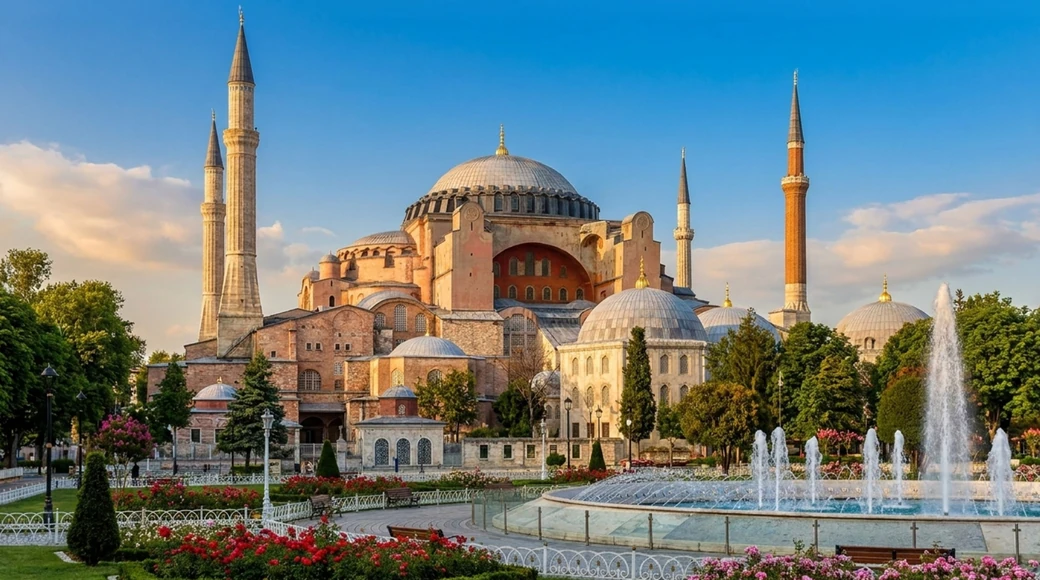
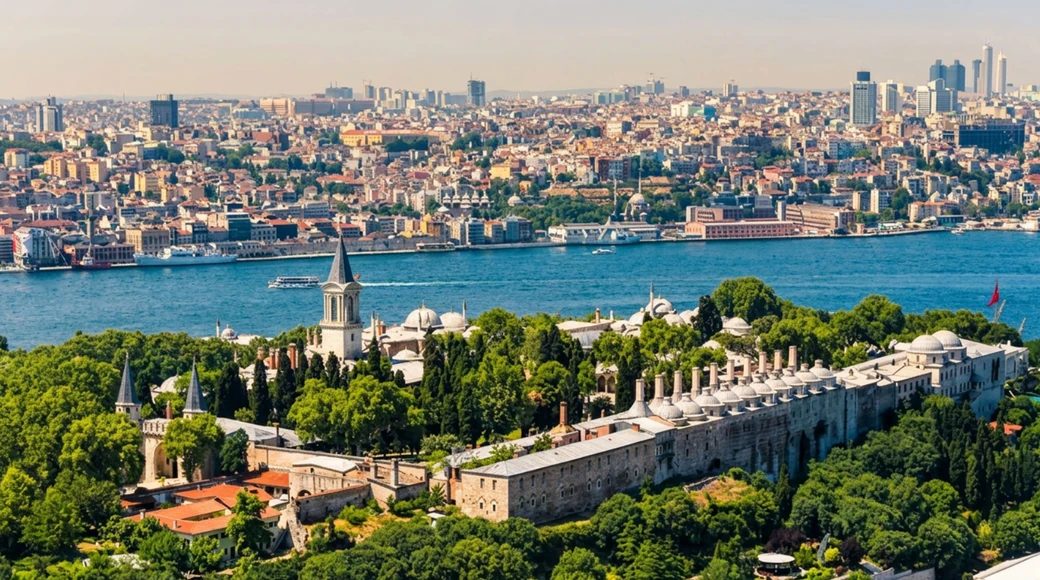
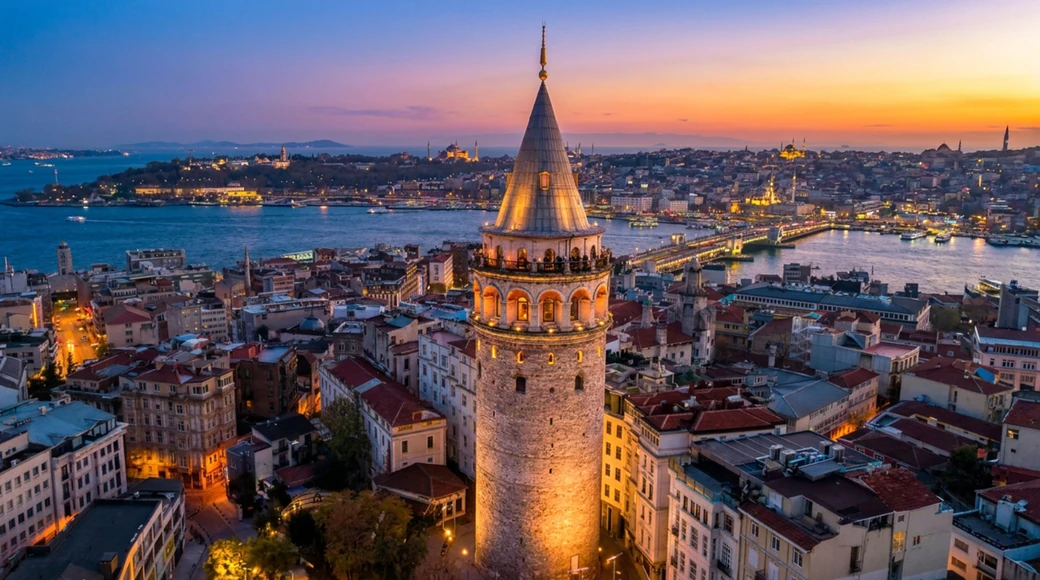
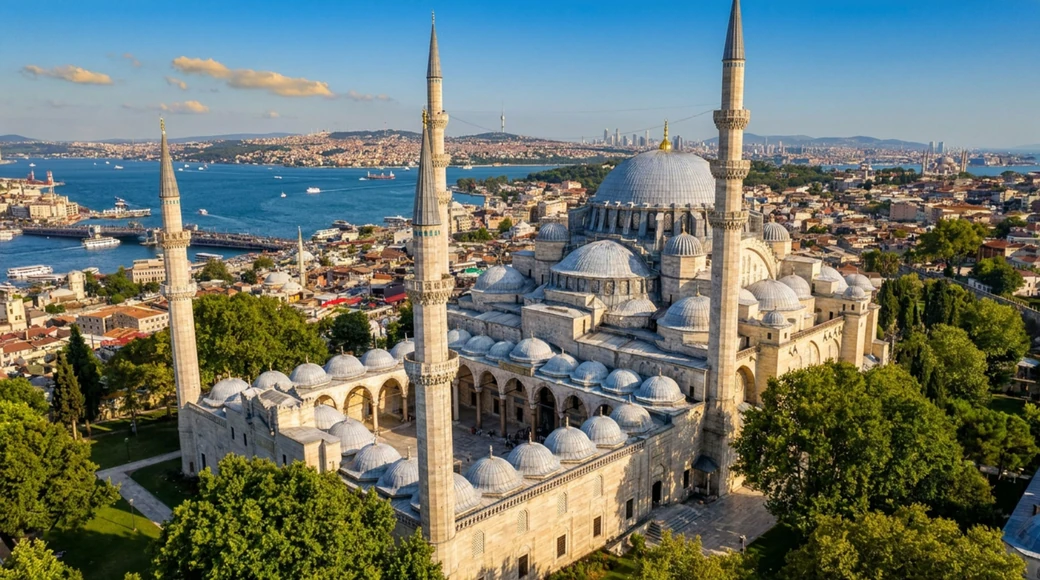
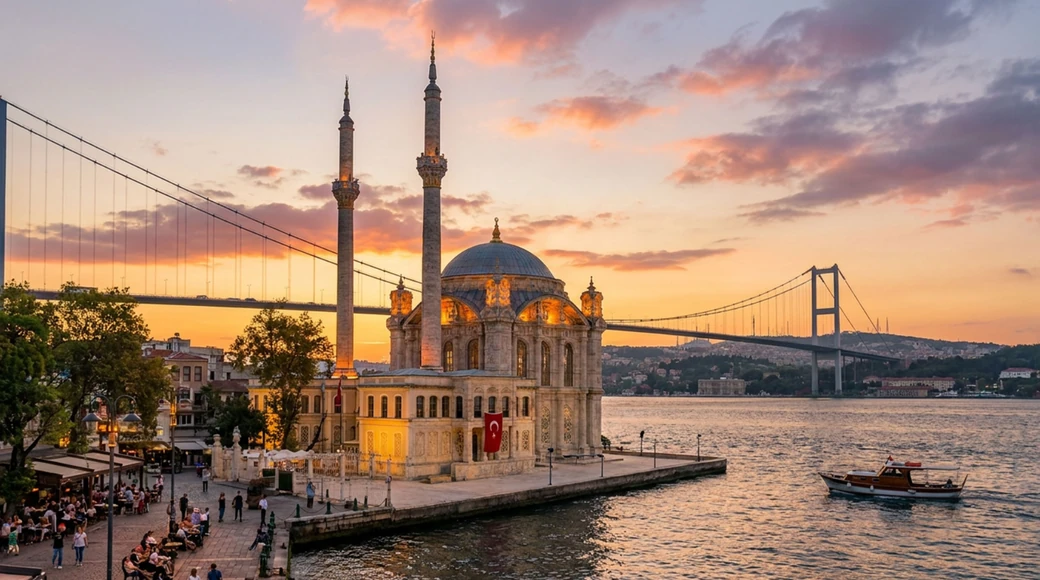
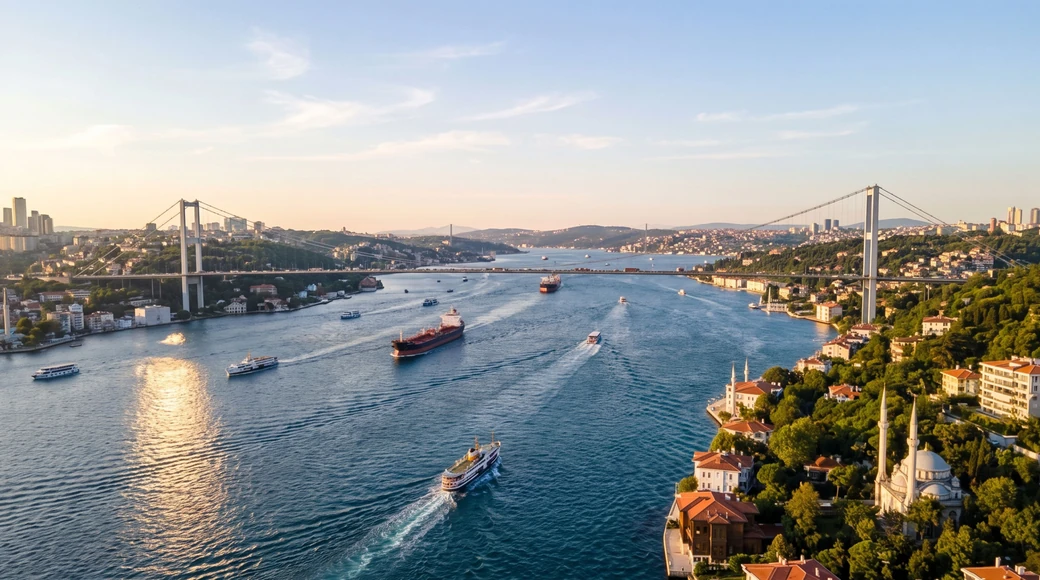
Few cities ask as much wonder of a traveller as Istanbul. It sits on two continents with the Bosphorus flowing between them, and for centuries it was the capital of the Roman, Byzantine and Ottoman empires, leaving a skyline of domes and minarets that rewards every glance. Here a 6th-century dome, a sultan's palace and a contemporary art gallery can share a single afternoon, and the evening light on the water turns even a simple ferry ride into a memory you carry home.
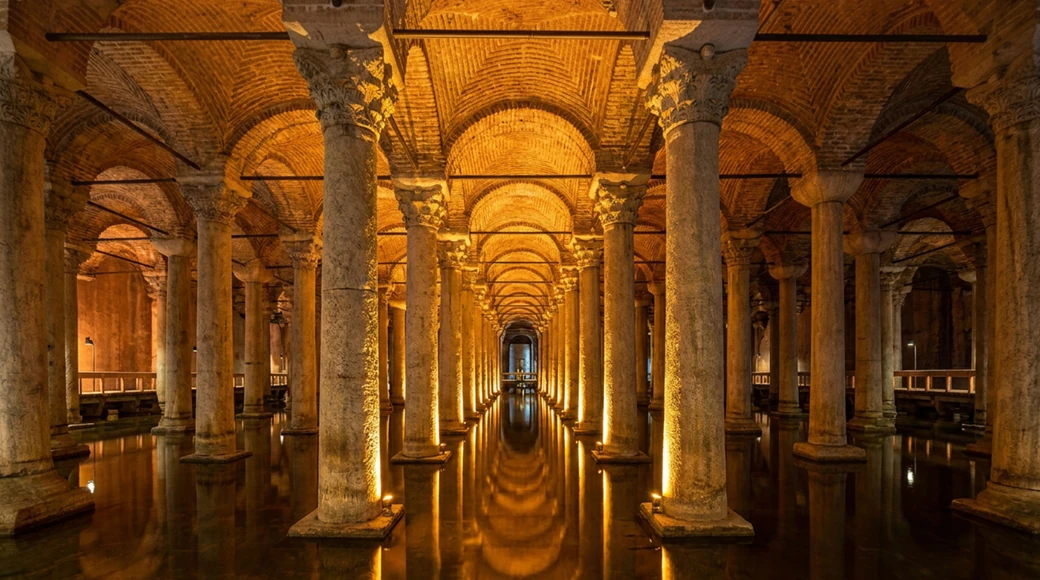
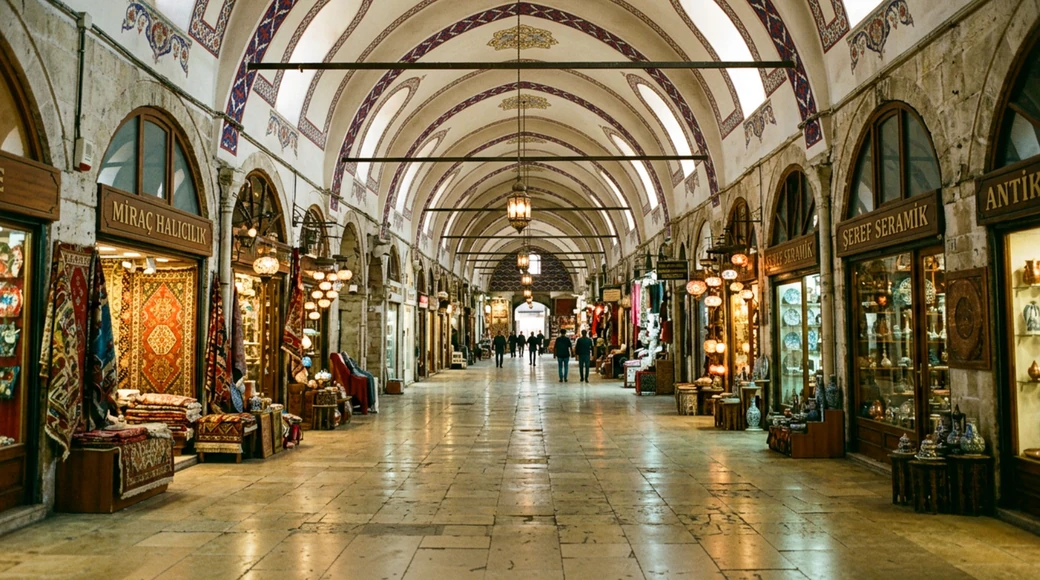
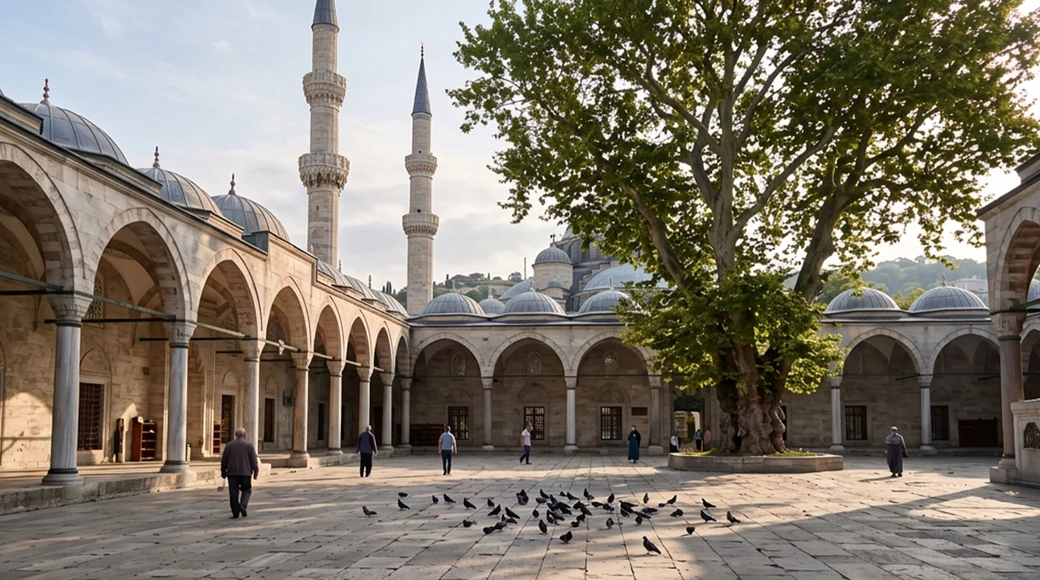
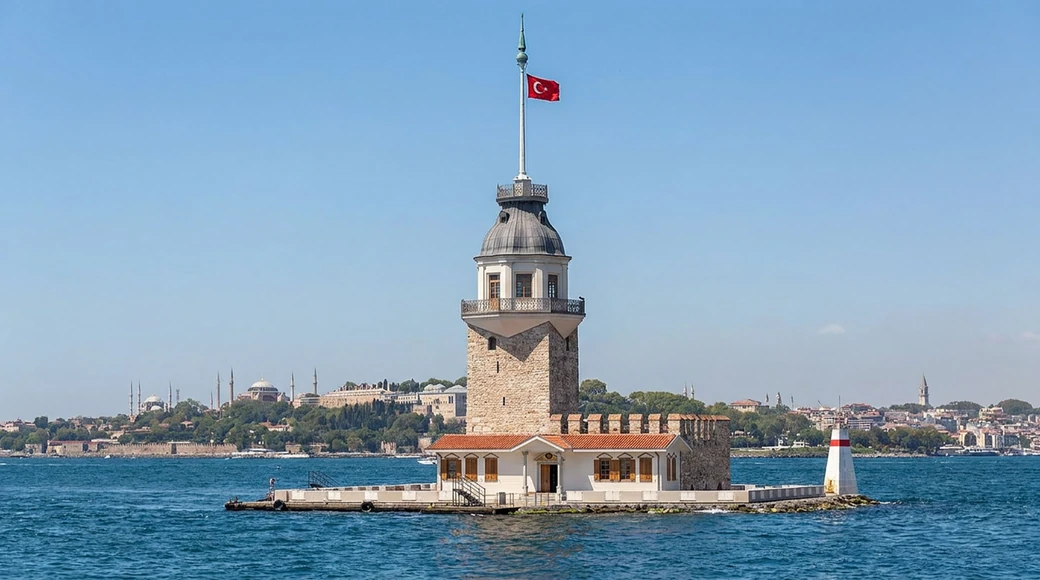
The city's venues fall into a few clear clusters. The Historic Peninsula holds Hagia Sophia, Topkapi Palace, the Basilica Cistern, the Blue Mosque and the Grand Bazaar; Karakoy, Galata and Beyoglu hold the art museums and the Galata Tower; and the Bosphorus shores add waterfront palaces, fortresses and Maiden's Tower. Istanbul loves its records: the Archaeological Museums are Turkey's first museum, Istanbul Modern was the country's first modern art museum, the Basilica Cistern stands on 336 columns, and the Grand Bazaar is among the largest covered markets in the world. Working mosques such as the Blue Mosque and Suleymaniye are free to enter, but cover shoulders and knees, remove your shoes and avoid prayer times. Several museums also close one day a week.
Smart planning saves both time and money. Museum passes pay off only if your list is made of the venues they actually cover, and some of the biggest names sit outside them; private museums often run free hours on certain days or evenings; and after dark Istanbul quietly keeps selected museums, towers and cisterns open late, which makes for far calmer visits. For photographers the best frames are well known, from Balat's colourful lanes to Galata Bridge at sunset and the Suleymaniye terrace, and the tips below show how to catch them without the crowds.
Accommodation and hotel options in Istanbul
Hotels and apartments in the heart of Istanbul — book directly through our partners.
Accommodation and hotel options across Istanbul, with their prices, are shown by Stay22 as a map and a list. Cookies are used. Your consent is remembered on every page; you can turn it off at any time in the cookie settings.
At the northern end of the Bosphorus, where the strait opens into the Black Sea, a fishing village sits beneath a ruined castle on the headland above. Yoros was fortified because whoever held this hill controlled the entrance to the strait; the surviving walls and the pair of towers flanking its marble gate are largely Byzantine, and the Genoese held the site for a time in the fourteenth century. The climb from the village takes around half an hour on foot and the reward is a wide view: the Black Sea on one side, the Bosphorus winding south on the other, with the northernmost bridge in the distance. Below, Anadolu Kavağı is the turnaround point of the long Bosphorus ferry tour, and its waterfront is lined with fish restaurants. Entry to the castle grounds is free; wear shoes with grip.
The Turkish name means a thousand and one columns, which is a generous count: there were originally two hundred and twenty-four and a little over two hundred still stand. Even so, this is the second largest covered cistern in the old city, a broad low hall just west of the Hippodrome. Its builders solved the problem of height by stacking two column shafts on top of each other and binding the joint with a stone collar, a detail you can trace along every row. Tradition attributes it to a senator who came from Rome with Constantine in the fourth century. After the Ottoman conquest the chamber was drained and put to work as a silk-spinning workshop, and over the centuries the floor level rose by several metres. Today it is restored, lit low and used for exhibitions and events as much as for visits.
Built in 1741 on the slope between Hagia Sophia and the Grand Bazaar, this is the last great double bathhouse raised in the Ottoman capital: shortly afterwards new baths were forbidden in the city, because heating them consumed too much firewood and water. Its income was endowed to a library, which is why it was built on such a scale. Architecturally it sits at the hinge between the classical tradition and the baroque taste then arriving from Europe, with a domed hot room carried on columns and arches, a marble navel stone at the centre and shafts of light falling through star-shaped openings in the dome. Men's and women's sections are separate, each with its own street entrance. Visits are sold as packages that include the steam room, a scrub and a foam wash; towels are provided and you can book ahead online.
Rising to around 268 metres above Üsküdar, Çamlıca is the highest of the hills ringing the Bosphorus and the one place where you can take in both sides of Istanbul at once. From the terraces the Bosphorus unrolls below with its bridges, the Princes' Islands float in the Marmara to the south, and on a clear day the minarets of the Historic Peninsula are picked out across the water. The hill has been a destination for far longer than the view suggests: Ottoman court society came here for picnics and coffee from the eighteenth century onwards, and the pine groves that give the place its name were planted to shade them. Today a landscaped park covers the summit, with tea gardens, walking paths, lawns and a restaurant in a restored pavilion. There is no entrance charge, it is open late, and sunset is the obvious moment to come.
Standing on the Küçük Çamlıca ridge on the Asian side, this broadcasting tower reaches 369 metres with its mast and is the tallest structure in Istanbul. It was built to solve an eyesore: dozens of separate television and radio masts had accumulated on the Çamlıca hills over decades, and the tower gathered them all into one slender, twisting shaft of steel and glass designed by a Turkish architectural practice. It opened in 2021. Visitors ride to observation decks near the top, where the glazing runs floor to ceiling and the panorama takes in the Bosphorus, both continents, the Marmara and, on a clear day, the Princes' Islands. There are cafés and restaurants on the upper levels, plus digital experience rooms aimed at families. Tickets are timed and the viewing levels can fill at sunset, so booking ahead is sensible.
This weathered porphyry column has stood on the same spot since 330, when Constantine dedicated his new capital and raised it at the centre of his forum, topped by a statue of himself. The forum is long gone, the statue fell in a storm in the twelfth century, and fires in the quarter blackened the stone, which is why the monument is also known locally as the burnt column. The Turkish name means hooped stone and refers to the iron bands clamped around the drums to hold them together after earthquakes. What remains is around thirty-five metres of column rising straight out of a modern pavement beside the tram line, hemmed in by shops. It takes two minutes to see, but it is the oldest standing monument of the Roman city. The point from which distances were once measured was the Milion, a fragment of which still stands a few streets away beside Hagia Sophia. A historic bathhouse and a late fifteenth-century mosque stand alongside.
Çırağan Palace is one of the last great Ottoman palaces on the Bosphorus, rising from the waterfront between Beşiktaş and Ortaköy. Built between 1863 and 1867 for Sultan Abdülaziz, its design is credited to the Balyan family of imperial architects. The deposed Murad V spent 28 years under guard here, and in 1909 the Ottoman parliament briefly met in the palace. A fire on 19 January 1910 gutted the building, leaving only its outer walls. It stood in ruins until a major restoration in the early 1990s turned it into the luxury wing of the Çırağan Palace Kempinski hotel. The interior is reserved for hotel guests and diners, but the long façade can be admired from the waterfront promenade or from a Bosphorus ferry. The name comes from the Persian word for torch, a reminder of the lamp-lit tulip festivals once held in the gardens.
Climbing the hillside above the Bosphorus on the European shore, Emirgan is one of the city's largest historic groves, roughly forty-seven hectares of woodland, lawns, ponds and artificial brooks. The name goes back to a seventeenth-century Safavid governor who was granted land here, and the grounds took their present shape in the nineteenth century, when three pavilions were built among the trees: the Yellow, the Pink and the White, each in a different European revival style and each now serving tea and meals. Emirgan is best known for tulips. Hundreds of thousands are planted across the slopes every autumn to flower in April, turning the grove into a patchwork of colour and the busiest park in Istanbul for a few weeks. Outside that season it is a quiet place for a long walk, and entry is free all year.
Fener and Balat are two neighbouring quarters on the southern shore of the Golden Horn, where several communities left their mark on a small stretch of steep streets. Fener, the old Phanar, has been the seat of the Greek Orthodox Ecumenical Patriarchate since around 1600, and above it rises the red-brick Phanar Greek Orthodox College, built in the 1880s. Next door, Balat grew into a Jewish quarter after Sultan Bayezid II welcomed Sephardic refugees from Spain following 1492; the Ahrida Synagogue is among the few that remain in use, and visits require prior arrangement. On the shore stands the Bulgarian St Stephen Church, cast in iron in Vienna and shipped down the Danube. Wander the colourful, hilly lanes, but remember that these are lived-in neighbourhoods.
High on a slope above the Golden Horn, in the lanes between Çarşamba and Balat, stands a building that few visitors find and that rewards those who do. The main church of the Theotokos Pammakaristos goes back to the Komnenian period; around 1310 a widow named Martha added a funerary chapel on its south side in memory of her husband, a general, and had it decorated with mosaics. Apart from Chora, these are the finest late Byzantine mosaics surviving in the city: a Christ Pantokrator in the dome ringed by prophets, a baptism, and saints in gold ground. The chapel is run as a separate museum section and is frequently shut for conservation work, so check before setting out; the mosque itself stays open. For more than a century after 1453 the building housed the Greek Orthodox Patriarchate, before being converted into a mosque in 1591; the name commemorates campaigns in the Caucasus. The walk up through the old timber-house streets is part of the visit.
Galata Bridge links Eminönü and Karaköy across the mouth of the Golden Horn and is one of the most recognisable crossings in Istanbul. The current structure, completed in December 1994, is the fifth bridge on this spot, the first of which opened in 1845. It is about 490 metres long and has a central section that can be raised for tall vessels. The upper deck carries traffic, the T1 tram and wide pavements lined with fishermen who cast their rods at almost any hour. Below, a row of fish restaurants and tea houses looks out over the water. Walk across at sunset for views of the Süleymaniye, the New Mosque and the Galata Tower, and watch ferries crisscross the strait beneath you. It is also an easy, free way to move between the old city and Beyoğlu on foot.
A gate on the steep street running down from the Galata Tower opens onto a walled courtyard, a graveyard of carved tombstones and a wooden hall where dervishes of the Mevlevi order turned for more than four centuries. Founded in 1491, this was the first Mevlevi lodge in the city. The octagonal whirling hall you see today was rebuilt in the 1760s after a fire, and its galleries, where musicians sat, run around the floor on slender columns. The lodge became a museum in the 1970s and was reopened under its present name after restoration. The displays cover the order's history and daily life: reed flutes and drums, illuminated manuscripts, calligraphy, prayer rugs, dervish clothing and the tall felt hats. In the garden, tombstones carved with headgear indicate the rank of those buried beneath.
For most of the twentieth century the shoreline between Karaköy and Tophane was a working dock closed off behind fences. Galataport, opened in 2021, gave that strip back to the city as a continuous public promenade running roughly 1.2 kilometres along the Bosphorus. Its clever trick is underground: the cruise terminal sits below the walkway, and sections of the paving open up only when a ship is berthed and passengers need to be processed, so the waterfront stays walkable the rest of the time. Above ground there are shops, cafés and restaurants, a long row of benches facing the water, and two cultural anchors: Istanbul Modern in its mirrored waterside building, and the restored Ottoman parcel post office. Entry to the promenade is free, there is a security check at the entrances, and the view towards the old city at sunset is one of the best on this shore.
Crowning the Çamlıca ridge above Üsküdar, this is the largest mosque in the country, able to hold tens of thousands of worshippers at once. It opened in 2019 and was designed by two women architects who won an open competition, which is itself a first for a mosque of this scale. The silhouette deliberately recalls the classical Ottoman tradition of Sinan, with a broad central dome carried on semi-domes, but the numbers are modern symbolism: six minarets, four of them 107.1 metres tall, a reference to the year 1071. Underneath the prayer hall the complex houses a museum of Islamic art, a library, an art gallery, a conference hall and a car park. Because it sits at the top of the hill, the terraces give sweeping views over the Bosphorus. Entry is free; dress modestly, remove your shoes and avoid prayer times.
These wooded slopes below Topkapı Palace were the outer garden of the imperial household, closed to everyone but the court, and they became a public park in 1912. The name means house of roses. Old plane trees shade the main avenue, tulips fill the beds in spring, and a path climbs to a terrace café at the tip of the promontory, where the Golden Horn, the Bosphorus and the Sea of Marmara meet in a single view. Inside the grounds stand a Roman column from the third century, raised long before the palace existed, and a museum of the history of Islamic science and technology housed in the former palace stables, with working replicas of early instruments. The park is free, open all day, and the easiest green break between the big monuments of Sultanahmet.
Hagia Irene, meaning Divine Peace, stands in the first courtyard of Topkapı Palace and is traditionally regarded as the first church built in Constantinople, attributed to Constantine in the fourth century. It burned during the Nika riots of 532, was rebuilt under Justinian, and was extensively reconstructed after the earthquake of 740, when the plain black cross on a gold ground was added to the apse. Unlike most Byzantine churches in the city it was never turned into a mosque; the Ottomans used it as an arsenal and, in 1869, as their first museum. Its bare brick interior, rare surviving atrium and semicircular benches in the apse are striking, and the acoustics are so fine that it hosts concerts. It pairs naturally with a visit to Topkapı Palace.
Few buildings announce themselves as confidently as Haydarpaşa, which rises straight out of the water on the Asian shore with two square towers and a steep slate roof. It was built between 1906 and 1908 to German designs, at a moment when the railway running east from here was being extended deep into Anatolia and beyond, and it stands on reclaimed ground held up by more than a thousand timber piles driven into the seabed. For a century it was the point where journeys into Asia began, and generations said their goodbyes under its stained glass. Long-distance services ended in the 2010s, and excavation in front of the building has since turned up remains of much older harbours. The best view is from the deck of a passing ferry, with the façade framed by the sea. There is no charge to walk around the forecourt.
Kadıköy is the lively heart of Istanbul's Asian side, standing on the site of the ancient Greek colony of Chalcedon, said to have been founded by settlers from Megara in the seventh century BC. Ferries from Eminönü and Karaköy arrive at the central pier, from where a short walk leads to the market streets, the Bull statue and a nostalgic tram line. South of the centre lies Moda, a peninsula that became fashionable in the 1870s when wealthy Greek, Armenian and Levantine families built mansions here. Today its leafy streets hold cafés, vintage shops, bookstores and a seaside park with tea gardens and views across the Sea of Marmara to the old city skyline. Sunset is the best time to settle on a bench with a glass of tea.
Kadıköy Market, known locally as the çarşı, is a maze of pedestrian streets just inland from the ferry pier, centred on Güneşlibahçe Sokak. It is a street bazaar rather than a covered hall: fishmongers lay out the catch on crushed ice, greengrocers stack seasonal produce, and shops sell cheeses, olives, nuts, honey, pickles, spices and sweets. The pickle sellers are famous for serving a glass of brine at the counter, and in season the fish counters fill with anchovies, bonito and bluefish. Around the stalls you will find regional Anatolian restaurants, stone-oven lahmacun bakeries, old patisseries and tiny coffee roasters, some run by the same families for generations. Come hungry, walk slowly, and finish with a stroll to Moda.
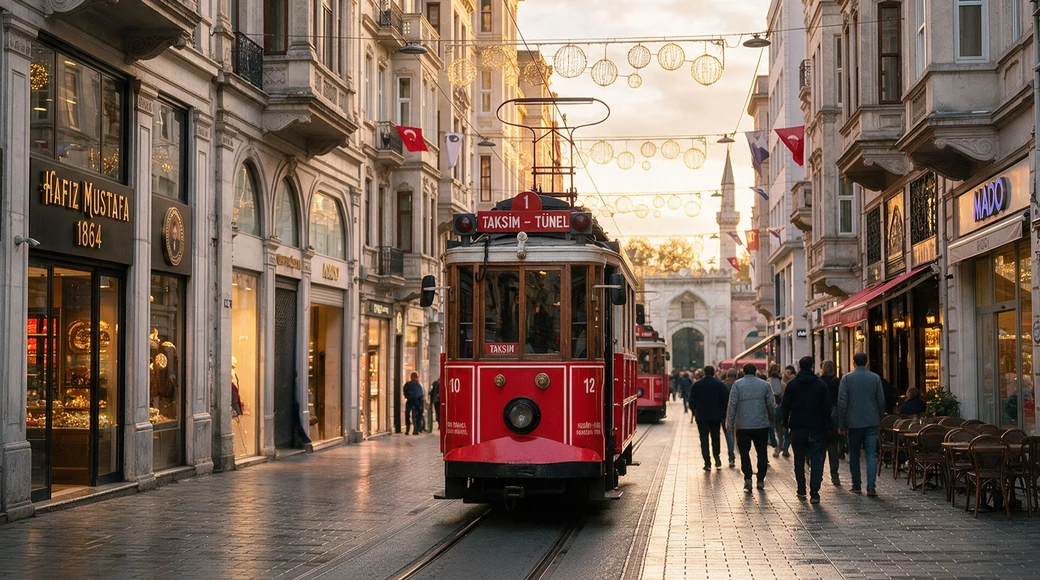
Karaköy sits at the northern foot of the Galata Bridge, where the Golden Horn meets the Bosphorus, and it has been a port district for as long as the city has had ships. This was the heart of Genoese Galata, and the layers are still visible: the lower station of the Tünel, a short underground funicular opened in 1875, climbs from here towards Beyoğlu; Bankalar Caddesi is lined with the grand headquarters of Ottoman-era banks, one of which now houses the SALT Galata cultural centre; and the Camondo Steps, with their curving art nouveau handrails, were a gift from a banking family of the same era. Today the old hardware yards and ship chandlers share the lanes with coffee roasters, galleries, design shops and fish restaurants under the bridge. It is also one of the easiest places to catch a ferry, and the Galata Tower stands just up the hill.
Little Hagia Sophia began as the Church of Saints Sergius and Bacchus, built between 527 and 536 by Emperor Justinian and Empress Theodora near the Sea of Marmara, a few years before the great Hagia Sophia. Its plan, an irregular octagon set inside a rectangle under a ribbed dome, is often seen as a rehearsal for its famous namesake, and the monograms of Justinian and Theodora still decorate the carved capitals. Between 1506 and 1512 the chief eunuch Hüseyin Ağa turned it into a mosque, adding the portico and the cells of a small madrasa that now hold craft and book shops and a leafy tea garden. The mosque is much quieter than the big monuments of Sultanahmet; remove your shoes, dress modestly and avoid prayer times.
A novelist spent years collecting old objects in the junk shops of Çukurcuma, then wrote a novel around them and opened a museum in a narrow nineteenth-century house to display them: book and building were conceived together and finished within a few years of each other. Inside, eighty-three glass cases correspond to the eighty-three chapters of the story, each holding the salt shakers, cinema tickets, bottles, photographs and hairpins of a love affair in Istanbul in the 1970s and 1980s. The first case, famously, holds thousands of cigarette stubs, each annotated. The collection won a European museum prize in 2014. It works best if you have read the novel, but even without it the cases amount to an unusually intimate portrait of middle-class life in the city. Allow an hour; the museum closes on Mondays.
The Museum of Turkish and Islamic Arts occupies the palace of Ibrahim Pasha, built in 1524 for Süleyman the Magnificent's grand vizier on the western edge of the old Hippodrome. Ibrahim Pasha was executed in 1536, and the museum moved here in 1983 from the Süleymaniye soup kitchen. It was the first Turkish museum devoted entirely to Turkish and Islamic art, and its collection spans the eighth to the nineteenth centuries. Highlights include one of the world's finest antique carpet collections, illuminated Qurans, calligraphy, ceramics, carved wooden doors and metalwork. Ethnographic rooms recreate nomadic tents and Seljuk-era interiors. Allow a couple of hours, and look out for the Hippodrome wall sections near the entrance and the view of the Blue Mosque from the upper floor.
The New Mosque dominates the waterfront at Eminönü, where the Golden Horn meets the Bosphorus. Work began in 1597 for Safiye Sultan, mother of Mehmed III, but stalled after her son's death. After the great fire of 1660, Turhan Hatice Sultan, mother of Mehmed IV, had it completed, and it was inaugurated in 1665; the imperial architects involved included Davut Ağa, Dalgıç Ahmed Çavuş and Mustafa Ağa. Its silhouette is a cascade of 66 domes and semi-domes rising to a central dome, with a spacious courtyard in front. Inside, blue and green İznik tiles, stained glass and calligraphy glow beneath the domes. The complex once included the neighbouring Spice Bazaar, the sultan's pavilion and the tomb of Turhan Sultan. It is an active mosque, so visit outside prayer times and dress modestly.
A short walk from the land walls, in a park beside the Topkapı gate, a circular building houses a painted panorama more than two thousand square metres across, wrapped around the inside of a dome and blending at its base into a three-dimensional foreground of earth, cannonballs and weapons. The subject is the siege and capture of Constantinople in 1453, staged from the Ottoman side of the walls, with sound effects of drums and artillery. It is a frankly partisan telling, and the same events carry very different meanings for the Greek and wider Orthodox world, where the date marks the end of the Byzantine Empire; visitors get the most out of it by reading the panorama as one community's memory rather than a neutral account. Lower galleries set out the chronology and show period arms and armour. Allow about an hour, and combine it with a walk along the nearby walls.
On the Golden Horn at Hasköy, this is the country's first museum devoted to industry, transport and communication, opened in 1994 by the industrialist whose name it carries. Half of it occupies the Lengerhane, an Ottoman anchor foundry raised on Byzantine foundations, and half the old Hasköy shipyard across the road. The collection is unusually hands-on for Istanbul: a decommissioned submarine you can walk through, a Douglas DC-3 airliner, steam locomotives and a restored station platform, vintage cars and motorcycles, horse carriages, model railways, scientific instruments, and a working ship's bridge simulator. Cranks, levers and buttons are there to be used, which makes it the easiest museum in the city to visit with children. Set aside two to three hours, note that it closes on Mondays, and consider arriving by ferry for the approach along the water.
Rüstem Pasha Mosque is a small Ottoman jewel tucked above the shops of the Tahtakale quarter, near the Spice Bazaar. Designed by the imperial architect Sinan for Rüstem Pasha, twice grand vizier to Süleyman the Magnificent and husband of Princess Mihrimah, it was completed around 1563, after Rüstem's death in 1561. The mosque stands on a raised terrace, so visitors climb a flight of stairs from the busy street before reaching a quiet porch lined with İznik tile panels. Inside, almost every wall is covered in tiles in a wide variety of floral designs in blue, turquoise and tomato red, and the dome rests on four tile-clad pillars. Many historians call it one of the finest showcases of İznik ceramics in the city. Dress modestly and avoid prayer times.
Smaller and far quieter than its famous neighbour, this underground reservoir was cut beneath the city in the fifth century, under Theodosius II, to hold water carried in along the aqueduct. It measures roughly twenty-four by forty metres, with a ceiling about eleven metres above the floor supported by thirty-two marble columns and forty-five brick vaults; the Corinthian capitals were carved from Marmara Island marble and finished with acanthus leaves. For centuries the chamber lay forgotten beneath later buildings, and it came back to light only when a municipal block above it was demolished. After restoration it opened to the public with a raised walkway, soft lighting and a projection show that plays across the columns and vaults. It takes around half an hour, sits a short walk from the Hippodrome, and is the better choice if you want a cistern without the queues.
If Haydarpaşa was where Asia began, Sirkeci was where Europe ended. Completed in 1890 to the design of a Prussian architect, the station was built as the eastern terminus of the line from Vienna and Paris, and for decades the Orient Express discharged its passengers here, a few minutes' walk from Topkapı Palace. The architect mixed European station engineering with arched windows, banded stonework and rose motifs borrowed from the city around him, producing a building that belongs to neither tradition entirely. Inside, the old waiting hall and a small railway museum of signalling gear, uniforms and station clocks are open to visitors, and a restaurant occupies part of the concourse. Suburban trains still run through beneath, so the platforms remain in use. Wandering the hall and the museum costs nothing.
Sultanahmet Square traces the outline of the Hippodrome of Constantinople, the great chariot stadium begun under Emperor Septimius Severus in the early third century and enlarged by Constantine. It could hold tens of thousands of spectators and served as the stage for races, imperial ceremonies and political unrest. Today the old racetrack is a long paved park between the Blue Mosque and Hagia Sophia, and three ancient monuments still mark its former central spine: the Egyptian Obelisk of Thutmose III, raised here in 390, the bronze Serpent Column brought from Delphi, and the rough-stoned Walled Obelisk. At the northern end stands the ornate German Fountain, a gift from Kaiser Wilhelm II inaugurated in 1901. Visit early in the morning or at dusk, when the monuments are lit and the crowds thin out.
For a thousand years these walls were the reason Constantinople could not be taken. Built in the first half of the fifth century under Theodosius II and reinforced after an earthquake, they run roughly six and a half kilometres across the neck of the peninsula, from the Sea of Marmara to the Golden Horn, and were conceived as a layered system rather than a single barrier: a moat, then a low outer wall, then an inner wall some twelve metres high studded with ninety-six towers. Attackers who cleared one line found themselves trapped between two. The walls are part of the UNESCO-listed historic areas of the city, and long stretches survive. Yedikule, Belgradkapı, Silivrikapı, Topkapı and Edirnekapı offer the most complete sections. Walking beside them, past vegetable gardens still worked in the old moat, is one of the city's great free experiences; keep to well-used paths and go by daylight.
Two tiers of arches stride across the valley between the third and fourth hills of the old city, carrying nothing now but the eye. Completed in 373 during the reign of the emperor Valens, this was the visible, urban end of an extraordinary water network that gathered springs in the forests of Thrace and brought them to the capital along a channel hundreds of kilometres long, among the longest built in antiquity. The surviving stretch runs for most of a kilometre and reaches nearly thirty metres at its highest. It kept working long after the empire that built it: Ottoman engineers, Sinan among them, repaired and extended the system, and water flowed through it into the nineteenth century. A main avenue now passes beneath the arches, which means you can see it from a bus window, though it is better approached on foot from Süleymaniye.
At the southern end of the land walls, where they meet the Sea of Marmara, Mehmed II built a fortress in 1458 by linking three new towers to four that already stood on the Theodosian defences, giving the place its name: seven towers. It was raised around the Golden Gate, the ceremonial arch through which Roman and Byzantine emperors entered the city in triumph, and its marble jambs are still embedded in the walls. The fortress never saw a siege. It served instead as an imperial treasury and later as a place of confinement for envoys and officials, and visitors who climb the ramparts can still read graffiti scratched into the stone by those held here. After a long restoration it reopened to visitors, and the walkway along the battlements gives a rare chance to stand on the walls themselves and look out over the sea.
This wooded hillside between Beşiktaş and Ortaköy was the private garden of the last great Ottoman palace complex, and it still feels like a garden rather than a public park: winding paths under old plane and magnolia trees, ponds, small waterfalls and two nineteenth-century pavilions, Malta and Çadır, now run as cafés with Bosphorus views. At the top stands the Şale, the largest surviving building of the Yıldız complex, built in three stages between 1880 and 1898 as a guest house for visiting heads of state. Its grandest room was designed around a single enormous Hereke carpet, woven on the spot because it could not be carried through any door. The park is free and open daily; the Şale is ticketed and keeps museum hours. Come on a weekday morning, when the paths are quiet.
After Hagia Sophia, this is the largest Byzantine religious building still standing in the city, and almost nobody goes. It began as the monastery of Christ Pantokrator, founded between 1118 and 1136 by Empress Irene, a Hungarian princess by birth, and her husband John II Komnenos. What looks like one church is really three, built one after another and joined: a church to the south, a second to the north, and between them a chapel that served as the burial place of the imperial family. The complex also ran a hospital and a hospice, and parts of its coloured marble floor survive. It became a mosque after 1453, taking its name from the scholar who taught here, and the sloping lanes of timber houses around it make the approach as memorable as the building. It is an active mosque; dress modestly and avoid prayer times.
At the northern end of the Bosphorus, where the strait opens into the Black Sea, a fishing village sits beneath a ruined castle on the headland above. Yoros was fortified because whoever held this hill controlled the entrance to the strait; the surviving walls and the pair of towers flanking its marble gate are largely Byzantine, and the Genoese held the site for a time in the fourteenth century. The climb from the village takes around half an hour on foot and the reward is a wide view: the Black Sea on one side, the Bosphorus winding south on the other, with the northernmost bridge in the distance. Below, Anadolu Kavağı is the turnaround point of the long Bosphorus ferry tour, and its waterfront is lined with fish restaurants. Entry to the castle grounds is free; wear shoes with grip.
Binbirdirek Cistern (Cistern of Philoxenos)TRY 495
The Turkish name means a thousand and one columns, which is a generous count: there were originally two hundred and twenty-four and a little over two hundred still stand. Even so, this is the second largest covered cistern in the old city, a broad low hall just west of the Hippodrome. Its builders solved the problem of height by stacking two column shafts on top of each other and binding the joint with a stone collar, a detail you can trace along every row. Tradition attributes it to a senator who came from Rome with Constantine in the fourth century. After the Ottoman conquest the chamber was drained and put to work as a silk-spinning workshop, and over the centuries the floor level rose by several metres. Today it is restored, lit low and used for exhibitions and events as much as for visits.
Built in 1741 on the slope between Hagia Sophia and the Grand Bazaar, this is the last great double bathhouse raised in the Ottoman capital: shortly afterwards new baths were forbidden in the city, because heating them consumed too much firewood and water. Its income was endowed to a library, which is why it was built on such a scale. Architecturally it sits at the hinge between the classical tradition and the baroque taste then arriving from Europe, with a domed hot room carried on columns and arches, a marble navel stone at the centre and shafts of light falling through star-shaped openings in the dome. Men's and women's sections are separate, each with its own street entrance. Visits are sold as packages that include the steam room, a scrub and a foam wash; towels are provided and you can book ahead online.
Rising to around 268 metres above Üsküdar, Çamlıca is the highest of the hills ringing the Bosphorus and the one place where you can take in both sides of Istanbul at once. From the terraces the Bosphorus unrolls below with its bridges, the Princes' Islands float in the Marmara to the south, and on a clear day the minarets of the Historic Peninsula are picked out across the water. The hill has been a destination for far longer than the view suggests: Ottoman court society came here for picnics and coffee from the eighteenth century onwards, and the pine groves that give the place its name were planted to shade them. Today a landscaped park covers the summit, with tea gardens, walking paths, lawns and a restaurant in a restored pavilion. There is no entrance charge, it is open late, and sunset is the obvious moment to come.
Standing on the Küçük Çamlıca ridge on the Asian side, this broadcasting tower reaches 369 metres with its mast and is the tallest structure in Istanbul. It was built to solve an eyesore: dozens of separate television and radio masts had accumulated on the Çamlıca hills over decades, and the tower gathered them all into one slender, twisting shaft of steel and glass designed by a Turkish architectural practice. It opened in 2021. Visitors ride to observation decks near the top, where the glazing runs floor to ceiling and the panorama takes in the Bosphorus, both continents, the Marmara and, on a clear day, the Princes' Islands. There are cafés and restaurants on the upper levels, plus digital experience rooms aimed at families. Tickets are timed and the viewing levels can fill at sunset, so booking ahead is sensible.
This weathered porphyry column has stood on the same spot since 330, when Constantine dedicated his new capital and raised it at the centre of his forum, topped by a statue of himself. The forum is long gone, the statue fell in a storm in the twelfth century, and fires in the quarter blackened the stone, which is why the monument is also known locally as the burnt column. The Turkish name means hooped stone and refers to the iron bands clamped around the drums to hold them together after earthquakes. What remains is around thirty-five metres of column rising straight out of a modern pavement beside the tram line, hemmed in by shops. It takes two minutes to see, but it is the oldest standing monument of the Roman city. The point from which distances were once measured was the Milion, a fragment of which still stands a few streets away beside Hagia Sophia. A historic bathhouse and a late fifteenth-century mosque stand alongside.
Çırağan Palace is one of the last great Ottoman palaces on the Bosphorus, rising from the waterfront between Beşiktaş and Ortaköy. Built between 1863 and 1867 for Sultan Abdülaziz, its design is credited to the Balyan family of imperial architects. The deposed Murad V spent 28 years under guard here, and in 1909 the Ottoman parliament briefly met in the palace. A fire on 19 January 1910 gutted the building, leaving only its outer walls. It stood in ruins until a major restoration in the early 1990s turned it into the luxury wing of the Çırağan Palace Kempinski hotel. The interior is reserved for hotel guests and diners, but the long façade can be admired from the waterfront promenade or from a Bosphorus ferry. The name comes from the Persian word for torch, a reminder of the lamp-lit tulip festivals once held in the gardens.
Climbing the hillside above the Bosphorus on the European shore, Emirgan is one of the city's largest historic groves, roughly forty-seven hectares of woodland, lawns, ponds and artificial brooks. The name goes back to a seventeenth-century Safavid governor who was granted land here, and the grounds took their present shape in the nineteenth century, when three pavilions were built among the trees: the Yellow, the Pink and the White, each in a different European revival style and each now serving tea and meals. Emirgan is best known for tulips. Hundreds of thousands are planted across the slopes every autumn to flower in April, turning the grove into a patchwork of colour and the busiest park in Istanbul for a few weeks. Outside that season it is a quiet place for a long walk, and entry is free all year.
Fener and Balat are two neighbouring quarters on the southern shore of the Golden Horn, where several communities left their mark on a small stretch of steep streets. Fener, the old Phanar, has been the seat of the Greek Orthodox Ecumenical Patriarchate since around 1600, and above it rises the red-brick Phanar Greek Orthodox College, built in the 1880s. Next door, Balat grew into a Jewish quarter after Sultan Bayezid II welcomed Sephardic refugees from Spain following 1492; the Ahrida Synagogue is among the few that remain in use, and visits require prior arrangement. On the shore stands the Bulgarian St Stephen Church, cast in iron in Vienna and shipped down the Danube. Wander the colourful, hilly lanes, but remember that these are lived-in neighbourhoods.
High on a slope above the Golden Horn, in the lanes between Çarşamba and Balat, stands a building that few visitors find and that rewards those who do. The main church of the Theotokos Pammakaristos goes back to the Komnenian period; around 1310 a widow named Martha added a funerary chapel on its south side in memory of her husband, a general, and had it decorated with mosaics. Apart from Chora, these are the finest late Byzantine mosaics surviving in the city: a Christ Pantokrator in the dome ringed by prophets, a baptism, and saints in gold ground. The chapel is run as a separate museum section and is frequently shut for conservation work, so check before setting out; the mosque itself stays open. For more than a century after 1453 the building housed the Greek Orthodox Patriarchate, before being converted into a mosque in 1591; the name commemorates campaigns in the Caucasus. The walk up through the old timber-house streets is part of the visit.
Galata Bridge links Eminönü and Karaköy across the mouth of the Golden Horn and is one of the most recognisable crossings in Istanbul. The current structure, completed in December 1994, is the fifth bridge on this spot, the first of which opened in 1845. It is about 490 metres long and has a central section that can be raised for tall vessels. The upper deck carries traffic, the T1 tram and wide pavements lined with fishermen who cast their rods at almost any hour. Below, a row of fish restaurants and tea houses looks out over the water. Walk across at sunset for views of the Süleymaniye, the New Mosque and the Galata Tower, and watch ferries crisscross the strait beneath you. It is also an easy, free way to move between the old city and Beyoğlu on foot.
A gate on the steep street running down from the Galata Tower opens onto a walled courtyard, a graveyard of carved tombstones and a wooden hall where dervishes of the Mevlevi order turned for more than four centuries. Founded in 1491, this was the first Mevlevi lodge in the city. The octagonal whirling hall you see today was rebuilt in the 1760s after a fire, and its galleries, where musicians sat, run around the floor on slender columns. The lodge became a museum in the 1970s and was reopened under its present name after restoration. The displays cover the order's history and daily life: reed flutes and drums, illuminated manuscripts, calligraphy, prayer rugs, dervish clothing and the tall felt hats. In the garden, tombstones carved with headgear indicate the rank of those buried beneath.
For most of the twentieth century the shoreline between Karaköy and Tophane was a working dock closed off behind fences. Galataport, opened in 2021, gave that strip back to the city as a continuous public promenade running roughly 1.2 kilometres along the Bosphorus. Its clever trick is underground: the cruise terminal sits below the walkway, and sections of the paving open up only when a ship is berthed and passengers need to be processed, so the waterfront stays walkable the rest of the time. Above ground there are shops, cafés and restaurants, a long row of benches facing the water, and two cultural anchors: Istanbul Modern in its mirrored waterside building, and the restored Ottoman parcel post office. Entry to the promenade is free, there is a security check at the entrances, and the view towards the old city at sunset is one of the best on this shore.
Crowning the Çamlıca ridge above Üsküdar, this is the largest mosque in the country, able to hold tens of thousands of worshippers at once. It opened in 2019 and was designed by two women architects who won an open competition, which is itself a first for a mosque of this scale. The silhouette deliberately recalls the classical Ottoman tradition of Sinan, with a broad central dome carried on semi-domes, but the numbers are modern symbolism: six minarets, four of them 107.1 metres tall, a reference to the year 1071. Underneath the prayer hall the complex houses a museum of Islamic art, a library, an art gallery, a conference hall and a car park. Because it sits at the top of the hill, the terraces give sweeping views over the Bosphorus. Entry is free; dress modestly, remove your shoes and avoid prayer times.
These wooded slopes below Topkapı Palace were the outer garden of the imperial household, closed to everyone but the court, and they became a public park in 1912. The name means house of roses. Old plane trees shade the main avenue, tulips fill the beds in spring, and a path climbs to a terrace café at the tip of the promontory, where the Golden Horn, the Bosphorus and the Sea of Marmara meet in a single view. Inside the grounds stand a Roman column from the third century, raised long before the palace existed, and a museum of the history of Islamic science and technology housed in the former palace stables, with working replicas of early instruments. The park is free, open all day, and the easiest green break between the big monuments of Sultanahmet.
Hagia Irene, meaning Divine Peace, stands in the first courtyard of Topkapı Palace and is traditionally regarded as the first church built in Constantinople, attributed to Constantine in the fourth century. It burned during the Nika riots of 532, was rebuilt under Justinian, and was extensively reconstructed after the earthquake of 740, when the plain black cross on a gold ground was added to the apse. Unlike most Byzantine churches in the city it was never turned into a mosque; the Ottomans used it as an arsenal and, in 1869, as their first museum. Its bare brick interior, rare surviving atrium and semicircular benches in the apse are striking, and the acoustics are so fine that it hosts concerts. It pairs naturally with a visit to Topkapı Palace.
Few buildings announce themselves as confidently as Haydarpaşa, which rises straight out of the water on the Asian shore with two square towers and a steep slate roof. It was built between 1906 and 1908 to German designs, at a moment when the railway running east from here was being extended deep into Anatolia and beyond, and it stands on reclaimed ground held up by more than a thousand timber piles driven into the seabed. For a century it was the point where journeys into Asia began, and generations said their goodbyes under its stained glass. Long-distance services ended in the 2010s, and excavation in front of the building has since turned up remains of much older harbours. The best view is from the deck of a passing ferry, with the façade framed by the sea. There is no charge to walk around the forecourt.
Kadıköy is the lively heart of Istanbul's Asian side, standing on the site of the ancient Greek colony of Chalcedon, said to have been founded by settlers from Megara in the seventh century BC. Ferries from Eminönü and Karaköy arrive at the central pier, from where a short walk leads to the market streets, the Bull statue and a nostalgic tram line. South of the centre lies Moda, a peninsula that became fashionable in the 1870s when wealthy Greek, Armenian and Levantine families built mansions here. Today its leafy streets hold cafés, vintage shops, bookstores and a seaside park with tea gardens and views across the Sea of Marmara to the old city skyline. Sunset is the best time to settle on a bench with a glass of tea.
Kadıköy Market, known locally as the çarşı, is a maze of pedestrian streets just inland from the ferry pier, centred on Güneşlibahçe Sokak. It is a street bazaar rather than a covered hall: fishmongers lay out the catch on crushed ice, greengrocers stack seasonal produce, and shops sell cheeses, olives, nuts, honey, pickles, spices and sweets. The pickle sellers are famous for serving a glass of brine at the counter, and in season the fish counters fill with anchovies, bonito and bluefish. Around the stalls you will find regional Anatolian restaurants, stone-oven lahmacun bakeries, old patisseries and tiny coffee roasters, some run by the same families for generations. Come hungry, walk slowly, and finish with a stroll to Moda.
Karaköy sits at the northern foot of the Galata Bridge, where the Golden Horn meets the Bosphorus, and it has been a port district for as long as the city has had ships. This was the heart of Genoese Galata, and the layers are still visible: the lower station of the Tünel, a short underground funicular opened in 1875, climbs from here towards Beyoğlu; Bankalar Caddesi is lined with the grand headquarters of Ottoman-era banks, one of which now houses the SALT Galata cultural centre; and the Camondo Steps, with their curving art nouveau handrails, were a gift from a banking family of the same era. Today the old hardware yards and ship chandlers share the lanes with coffee roasters, galleries, design shops and fish restaurants under the bridge. It is also one of the easiest places to catch a ferry, and the Galata Tower stands just up the hill.
Little Hagia Sophia Mosque (Küçük Ayasofya)Free Entry
Little Hagia Sophia began as the Church of Saints Sergius and Bacchus, built between 527 and 536 by Emperor Justinian and Empress Theodora near the Sea of Marmara, a few years before the great Hagia Sophia. Its plan, an irregular octagon set inside a rectangle under a ribbed dome, is often seen as a rehearsal for its famous namesake, and the monograms of Justinian and Theodora still decorate the carved capitals. Between 1506 and 1512 the chief eunuch Hüseyin Ağa turned it into a mosque, adding the portico and the cells of a small madrasa that now hold craft and book shops and a leafy tea garden. The mosque is much quieter than the big monuments of Sultanahmet; remove your shoes, dress modestly and avoid prayer times.
A novelist spent years collecting old objects in the junk shops of Çukurcuma, then wrote a novel around them and opened a museum in a narrow nineteenth-century house to display them: book and building were conceived together and finished within a few years of each other. Inside, eighty-three glass cases correspond to the eighty-three chapters of the story, each holding the salt shakers, cinema tickets, bottles, photographs and hairpins of a love affair in Istanbul in the 1970s and 1980s. The first case, famously, holds thousands of cigarette stubs, each annotated. The collection won a European museum prize in 2014. It works best if you have read the novel, but even without it the cases amount to an unusually intimate portrait of middle-class life in the city. Allow an hour; the museum closes on Mondays.
The Museum of Turkish and Islamic Arts occupies the palace of Ibrahim Pasha, built in 1524 for Süleyman the Magnificent's grand vizier on the western edge of the old Hippodrome. Ibrahim Pasha was executed in 1536, and the museum moved here in 1983 from the Süleymaniye soup kitchen. It was the first Turkish museum devoted entirely to Turkish and Islamic art, and its collection spans the eighth to the nineteenth centuries. Highlights include one of the world's finest antique carpet collections, illuminated Qurans, calligraphy, ceramics, carved wooden doors and metalwork. Ethnographic rooms recreate nomadic tents and Seljuk-era interiors. Allow a couple of hours, and look out for the Hippodrome wall sections near the entrance and the view of the Blue Mosque from the upper floor.
The New Mosque dominates the waterfront at Eminönü, where the Golden Horn meets the Bosphorus. Work began in 1597 for Safiye Sultan, mother of Mehmed III, but stalled after her son's death. After the great fire of 1660, Turhan Hatice Sultan, mother of Mehmed IV, had it completed, and it was inaugurated in 1665; the imperial architects involved included Davut Ağa, Dalgıç Ahmed Çavuş and Mustafa Ağa. Its silhouette is a cascade of 66 domes and semi-domes rising to a central dome, with a spacious courtyard in front. Inside, blue and green İznik tiles, stained glass and calligraphy glow beneath the domes. The complex once included the neighbouring Spice Bazaar, the sultan's pavilion and the tomb of Turhan Sultan. It is an active mosque, so visit outside prayer times and dress modestly.
A short walk from the land walls, in a park beside the Topkapı gate, a circular building houses a painted panorama more than two thousand square metres across, wrapped around the inside of a dome and blending at its base into a three-dimensional foreground of earth, cannonballs and weapons. The subject is the siege and capture of Constantinople in 1453, staged from the Ottoman side of the walls, with sound effects of drums and artillery. It is a frankly partisan telling, and the same events carry very different meanings for the Greek and wider Orthodox world, where the date marks the end of the Byzantine Empire; visitors get the most out of it by reading the panorama as one community's memory rather than a neutral account. Lower galleries set out the chronology and show period arms and armour. Allow about an hour, and combine it with a walk along the nearby walls.
On the Golden Horn at Hasköy, this is the country's first museum devoted to industry, transport and communication, opened in 1994 by the industrialist whose name it carries. Half of it occupies the Lengerhane, an Ottoman anchor foundry raised on Byzantine foundations, and half the old Hasköy shipyard across the road. The collection is unusually hands-on for Istanbul: a decommissioned submarine you can walk through, a Douglas DC-3 airliner, steam locomotives and a restored station platform, vintage cars and motorcycles, horse carriages, model railways, scientific instruments, and a working ship's bridge simulator. Cranks, levers and buttons are there to be used, which makes it the easiest museum in the city to visit with children. Set aside two to three hours, note that it closes on Mondays, and consider arriving by ferry for the approach along the water.
Rüstem Pasha Mosque is a small Ottoman jewel tucked above the shops of the Tahtakale quarter, near the Spice Bazaar. Designed by the imperial architect Sinan for Rüstem Pasha, twice grand vizier to Süleyman the Magnificent and husband of Princess Mihrimah, it was completed around 1563, after Rüstem's death in 1561. The mosque stands on a raised terrace, so visitors climb a flight of stairs from the busy street before reaching a quiet porch lined with İznik tile panels. Inside, almost every wall is covered in tiles in a wide variety of floral designs in blue, turquoise and tomato red, and the dome rests on four tile-clad pillars. Many historians call it one of the finest showcases of İznik ceramics in the city. Dress modestly and avoid prayer times.
Smaller and far quieter than its famous neighbour, this underground reservoir was cut beneath the city in the fifth century, under Theodosius II, to hold water carried in along the aqueduct. It measures roughly twenty-four by forty metres, with a ceiling about eleven metres above the floor supported by thirty-two marble columns and forty-five brick vaults; the Corinthian capitals were carved from Marmara Island marble and finished with acanthus leaves. For centuries the chamber lay forgotten beneath later buildings, and it came back to light only when a municipal block above it was demolished. After restoration it opened to the public with a raised walkway, soft lighting and a projection show that plays across the columns and vaults. It takes around half an hour, sits a short walk from the Hippodrome, and is the better choice if you want a cistern without the queues.
If Haydarpaşa was where Asia began, Sirkeci was where Europe ended. Completed in 1890 to the design of a Prussian architect, the station was built as the eastern terminus of the line from Vienna and Paris, and for decades the Orient Express discharged its passengers here, a few minutes' walk from Topkapı Palace. The architect mixed European station engineering with arched windows, banded stonework and rose motifs borrowed from the city around him, producing a building that belongs to neither tradition entirely. Inside, the old waiting hall and a small railway museum of signalling gear, uniforms and station clocks are open to visitors, and a restaurant occupies part of the concourse. Suburban trains still run through beneath, so the platforms remain in use. Wandering the hall and the museum costs nothing.
Sultanahmet Square (Hippodrome of Constantinople)Free Entry
Sultanahmet Square traces the outline of the Hippodrome of Constantinople, the great chariot stadium begun under Emperor Septimius Severus in the early third century and enlarged by Constantine. It could hold tens of thousands of spectators and served as the stage for races, imperial ceremonies and political unrest. Today the old racetrack is a long paved park between the Blue Mosque and Hagia Sophia, and three ancient monuments still mark its former central spine: the Egyptian Obelisk of Thutmose III, raised here in 390, the bronze Serpent Column brought from Delphi, and the rough-stoned Walled Obelisk. At the northern end stands the ornate German Fountain, a gift from Kaiser Wilhelm II inaugurated in 1901. Visit early in the morning or at dusk, when the monuments are lit and the crowds thin out.
For a thousand years these walls were the reason Constantinople could not be taken. Built in the first half of the fifth century under Theodosius II and reinforced after an earthquake, they run roughly six and a half kilometres across the neck of the peninsula, from the Sea of Marmara to the Golden Horn, and were conceived as a layered system rather than a single barrier: a moat, then a low outer wall, then an inner wall some twelve metres high studded with ninety-six towers. Attackers who cleared one line found themselves trapped between two. The walls are part of the UNESCO-listed historic areas of the city, and long stretches survive. Yedikule, Belgradkapı, Silivrikapı, Topkapı and Edirnekapı offer the most complete sections. Walking beside them, past vegetable gardens still worked in the old moat, is one of the city's great free experiences; keep to well-used paths and go by daylight.
Two tiers of arches stride across the valley between the third and fourth hills of the old city, carrying nothing now but the eye. Completed in 373 during the reign of the emperor Valens, this was the visible, urban end of an extraordinary water network that gathered springs in the forests of Thrace and brought them to the capital along a channel hundreds of kilometres long, among the longest built in antiquity. The surviving stretch runs for most of a kilometre and reaches nearly thirty metres at its highest. It kept working long after the empire that built it: Ottoman engineers, Sinan among them, repaired and extended the system, and water flowed through it into the nineteenth century. A main avenue now passes beneath the arches, which means you can see it from a bus window, though it is better approached on foot from Süleymaniye.
Yedikule Fortress (Fortress of the Seven Towers)TRY 400
At the southern end of the land walls, where they meet the Sea of Marmara, Mehmed II built a fortress in 1458 by linking three new towers to four that already stood on the Theodosian defences, giving the place its name: seven towers. It was raised around the Golden Gate, the ceremonial arch through which Roman and Byzantine emperors entered the city in triumph, and its marble jambs are still embedded in the walls. The fortress never saw a siege. It served instead as an imperial treasury and later as a place of confinement for envoys and officials, and visitors who climb the ramparts can still read graffiti scratched into the stone by those held here. After a long restoration it reopened to visitors, and the walkway along the battlements gives a rare chance to stand on the walls themselves and look out over the sea.
This wooded hillside between Beşiktaş and Ortaköy was the private garden of the last great Ottoman palace complex, and it still feels like a garden rather than a public park: winding paths under old plane and magnolia trees, ponds, small waterfalls and two nineteenth-century pavilions, Malta and Çadır, now run as cafés with Bosphorus views. At the top stands the Şale, the largest surviving building of the Yıldız complex, built in three stages between 1880 and 1898 as a guest house for visiting heads of state. Its grandest room was designed around a single enormous Hereke carpet, woven on the spot because it could not be carried through any door. The park is free and open daily; the Şale is ticketed and keeps museum hours. Come on a weekday morning, when the paths are quiet.
Zeyrek Mosque (Monastery of the Pantokrator)Free Entry
After Hagia Sophia, this is the largest Byzantine religious building still standing in the city, and almost nobody goes. It began as the monastery of Christ Pantokrator, founded between 1118 and 1136 by Empress Irene, a Hungarian princess by birth, and her husband John II Komnenos. What looks like one church is really three, built one after another and joined: a church to the south, a second to the north, and between them a chapel that served as the burial place of the imperial family. The complex also ran a hospital and a hospice, and parts of its coloured marble floor survive. It became a mosque after 1453, taking its name from the scholar who taught here, and the sloping lanes of timber houses around it make the approach as memorable as the building. It is an active mosque; dress modestly and avoid prayer times.
What to Know Before You Go
Do museum passes really pay off?
Add up the venues you genuinely plan to enter, not the ones you would like to. The state-issued Museum Pass Istanbul covers places such as Topkapi Palace with its Harem (the sultan's private quarters), the Archaeological Museums and the Museum of Turkish and Islamic Arts; it starts at first entry, lasts several days and allows one entry per venue. Hagia Sophia, the Basilica Cistern, Dolmabahce Palace and most private museums have their own tickets. If your list is Topkapi plus two or three covered museums, the pass usually wins; if it is mostly the uncovered headliners, single tickets make more sense. Check the current list of covered venues before you buy.
Museums after dark and free evening hours
In the warmer months, selected state venues such as the Archaeological Museums, the Museum of Turkish and Islamic Arts and Galata Tower stay open into the evening, the Basilica Cistern keeps long hours, and Topkapi Palace has at times offered guided Saturday-evening visits. Pera Museum opens its doors free of charge to everyone on Friday evenings. Note that this page covers venues and museums only, not nightlife, and that pass rules for evening openings can differ, so ask at the entrance. Hours change with the season, so confirm them on the official sites before you go.
Istanbul's photo spots and the right light
Walk the steep, colourful lanes of Balat and Fener early on a weekday morning; take Galata Bridge and the Suleymaniye terrace at sunset, Ortakoy Mosque framed by the Bosphorus Bridge in the blue hour, and the city panorama from Camlica Hill. The dim lighting of the Basilica Cistern rewards a steady hand. Never photograph worshippers inside mosques, and expect tripods to be restricted in museums. For empty frames, the first hours of the morning are unbeatable.
Guided Tours in Istanbul
Skip-the-line tickets, small-group walks, and curated experiences